Best Places to Visit in Croatia: Coast, Islands and Parks
The best places to visit in Croatia grouped by region: Istria's Venetian towns, Split and Dubrovnik, the islands and the waterfall parks, with how each connects.
On this page
The best places to visit in Croatia fall into four clusters: the Venetian-and-Roman north around Istria, the waterfall parks inland of the Dalmatian coast, the harbour cities of Zadar, Split and Dubrovnik, and the islands strung between them. Picking two or three neighbouring clusters and connecting them by ferry or bus beats collecting a top-ten list, because the coach and catamaran timetables reward short hops rather than long leaps. This guide works down the coast, naming what each place is best at and how it fits a route of a week or a fortnight.
What ties these places together is a shared building palette: pale limestone, terracotta roofs and a waterfront Riva, layered over Roman remains and Venetian-era squares. Croatia's variety is the point, from Istrian seaside towns and Roman ruins to island chains and national parks where waterfalls feed turquoise lakes. If you want a single page of headline sights before choosing a base, start with the things to do in Croatia and then come back here to place them on a map.
What the best places in Croatia have in common
Most of the famous stops are coastal towns with an old core on a peninsula or beside a harbour, plus a fortress or cathedral on the high point. Inland, the draw is karst: rivers cutting through limestone to make terraced lakes and waterfalls. That combination is why a Croatian trip usually alternates a town day with a park or island day rather than spending a week in one place.
Regional planning also solves the transport problem. The coast runs roughly north-west to south-east, so a route from Istria down through Dalmatia to Dubrovnik is a straight line, while inland Zagreb and Kopački Rit sit on a separate axis better treated as its own trip. The best towns in Croatia are spread along that coastal line, which is why the order you visit them in matters as much as which ones you choose. For the southern stretch, use our Dalmatian Coast Guide: Where to Go and How Long to Stay to decide how many days each harbour city deserves.
Late spring and early autumn are the sweet spot for this kind of route: May, June and September keep the historic centres open and the sea warm enough to swim, while July and August are beautiful but bring the highest prices and the biggest peak-season buzz in old towns such as Hvar and Dubrovnik.
Istria: Rovinj's peninsula old town and Pula's Roman Arena
Rovinj is the postcard of Istria: a tight knot of colour-washed houses climbing a peninsula, crowned by the church of St Euphemia and its bell tower, with a harbour of fishing boats at its foot. It rewards slow wandering more than ticked sights, and the car-free old core makes it an easy half-day on foot. The Venetian layer is obvious in the campanile and the loggia-lined squares.
Is Split or Dubrovnik better for a first trip? Split works better as a base because it combines Diocletian's Palace with a major ferry hub on the coast, so you can add islands without moving hotels. Dubrovnik is the stronger single sight, but it is at the far south of the coast and gets very crowded when cruise ships are in port, so many travellers end there rather than start.
Which is the most beautiful part of Croatia? That depends on what you find beautiful. Rovinj's peninsula old town and Korčula's walled lanes are the classic Venetian postcards, while Plitvice Lakes and Skradinski buk are the standout natural sights.
Should I visit Plitvice Lakes or Krka National Park? Krka fits a coastal route more easily because it is close to Šibenik and Split, and Skradinski buk is reachable as a day trip. Plitvice is a UNESCO World Heritage site that sits inland between Zagreb and the coast, and it deserves its own day and a nearby overnight stay.
Pula, a short drive south, holds the Roman counterweight: a large amphitheatre still used as a venue, plus Roman gates and a forum that anchor the town's everyday life. Seeing both in one Istrian base works well because the distances are short and the roads good, so you can pair Roman ruins one day with a Venetian harbour the next.
Istria also sits closest to Italy, which makes it a natural first stop if you arrive by sea from the Veneto, and a sensible place to pick up a rental car for the inland hill towns. Use the Croatian coast guide to judge how much of the peninsula fits alongside the Dalmatian south.
Plitvice Lakes National Park: terraced lakes and boardwalks
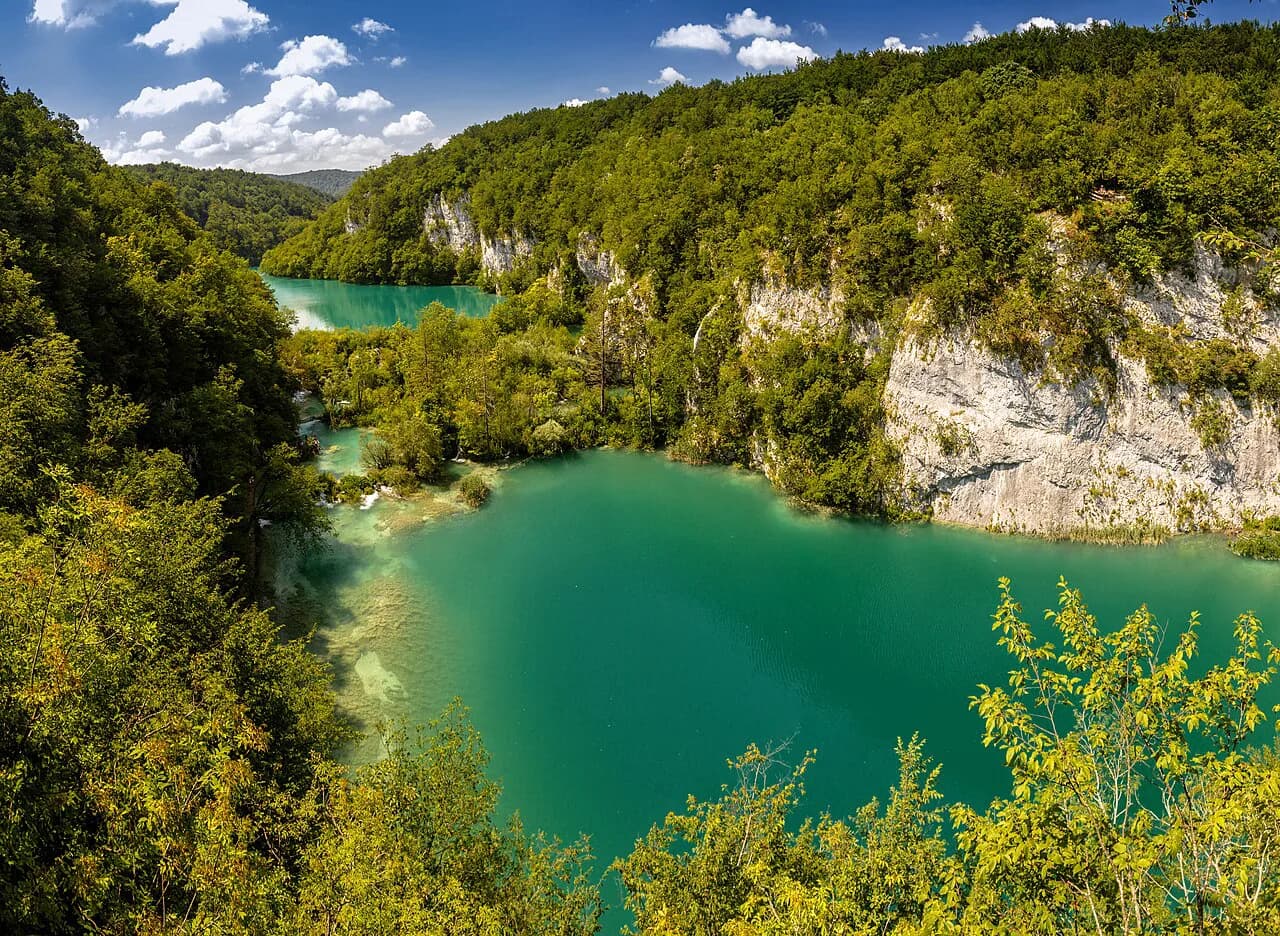
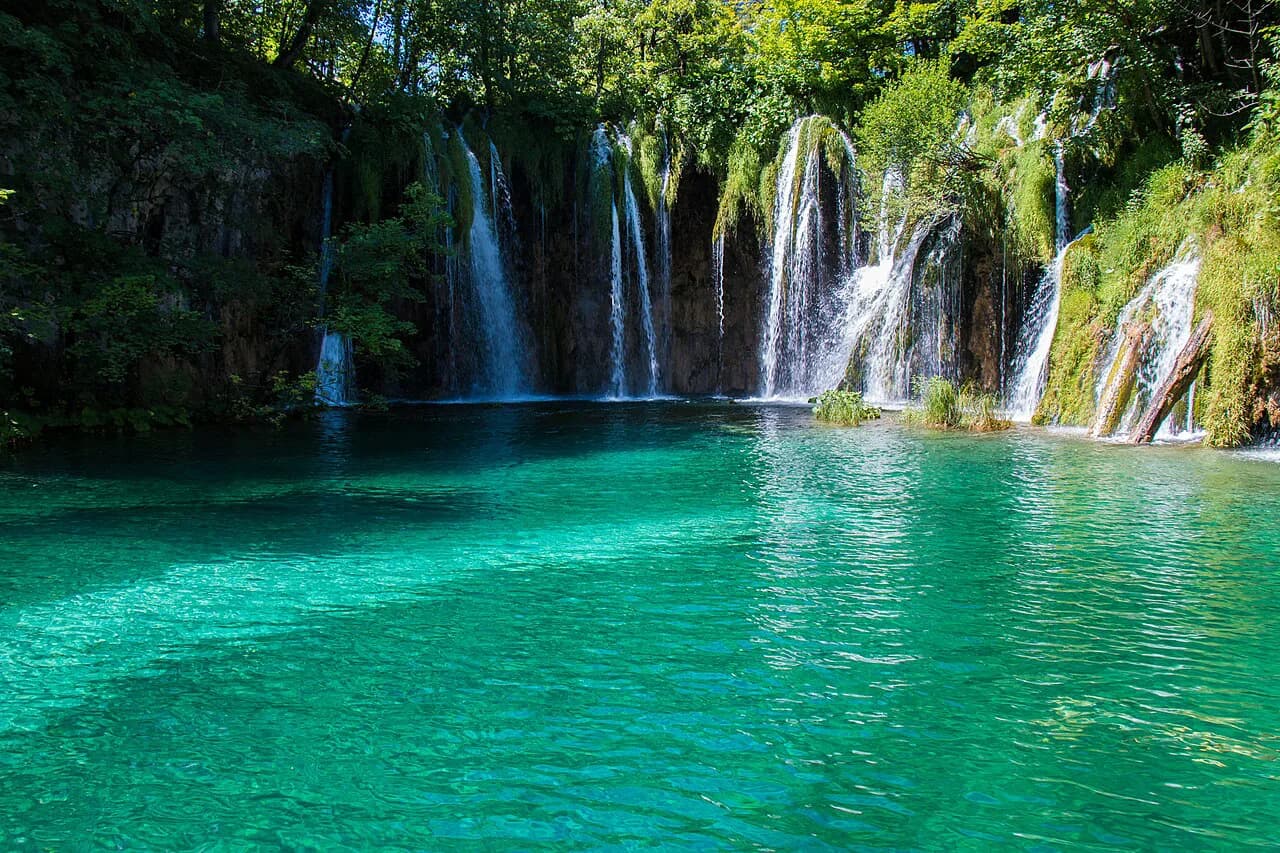
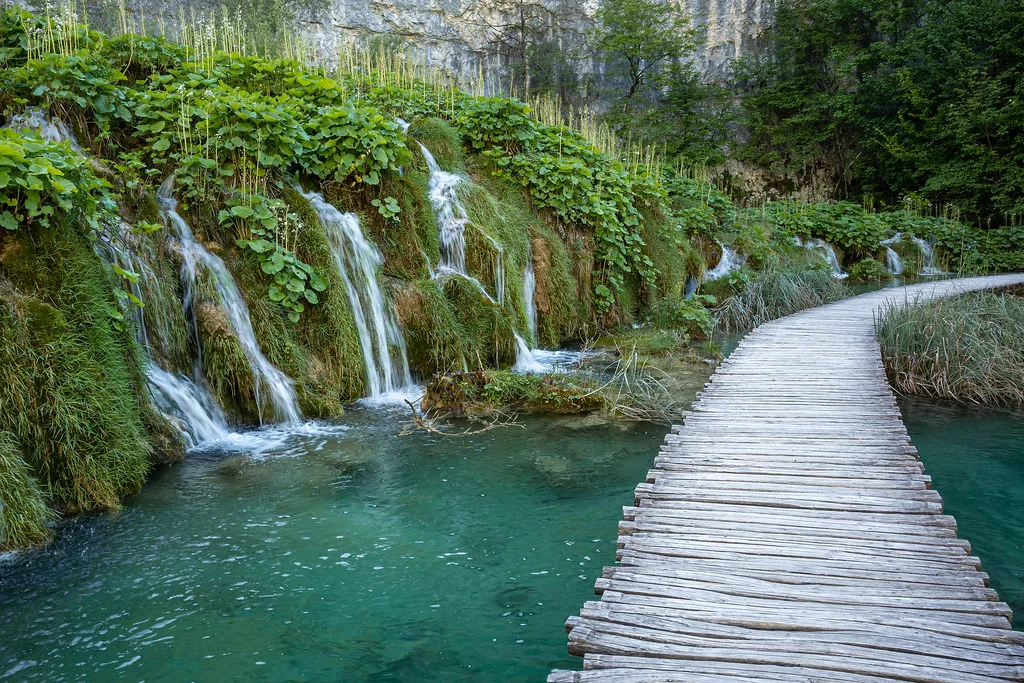
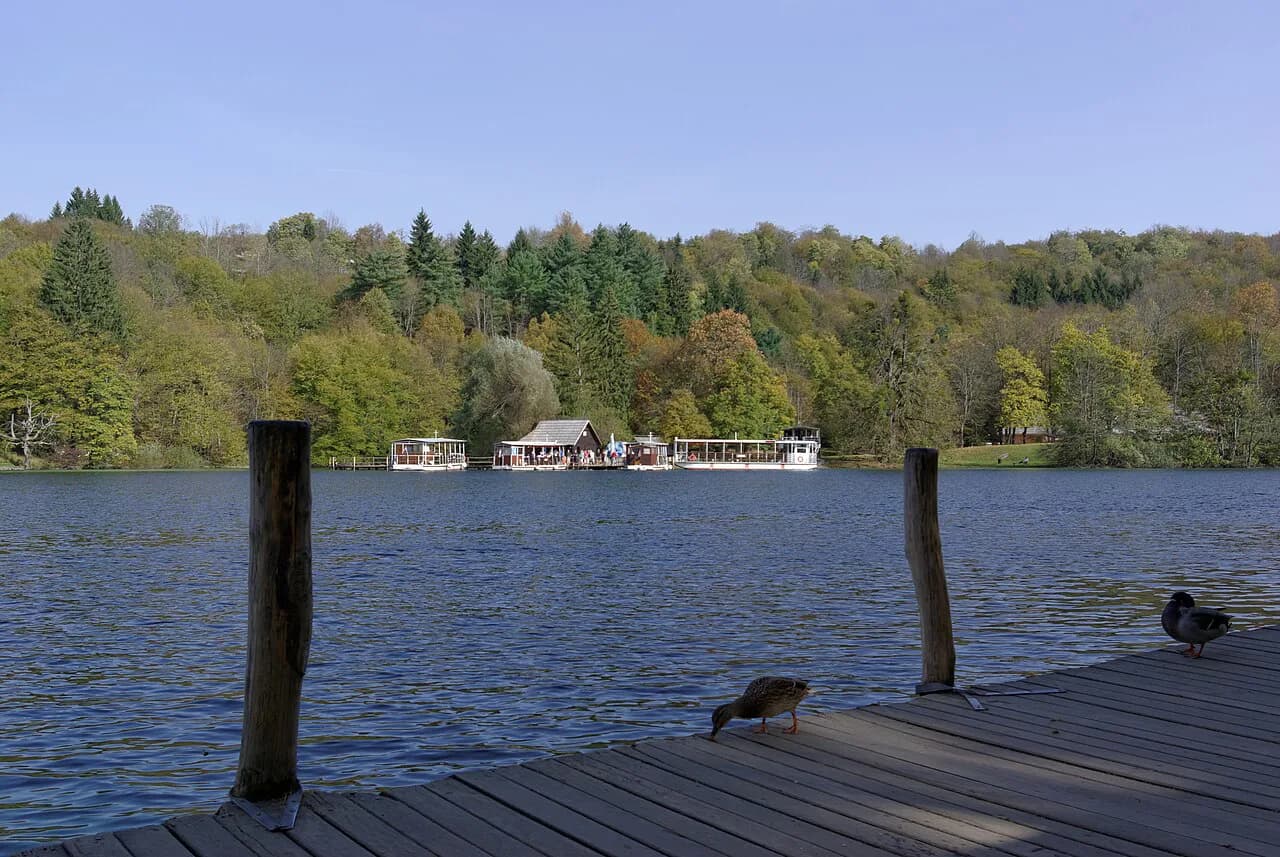
Plitvice Lakes National Park is the country's headline natural sight: sixteen lakes linked by waterfalls and cascades, with boardwalks threading between them. It is a UNESCO World Heritage site, and the scale is the reason to give it a full day rather than a photo stop. The lakes are the main event, so build the day around them instead of squeezing them into a transfer; for opening hours and what a visit actually involves, our Plitvice Lakes guide covers it in detail.
Its position inland, between Zagreb and the Dalmatian coast, makes it tempting to slot into a driving day, but that undersells it: the walking between viewpoints takes time, and arriving late leaves you rushed. Base yourself nearby for a night so you can start early. The same logic applies to Krka further south, so pick your waterfall park rather than racing between both.
If waterfalls are your priority, plan the rest of the trip around them rather than the other way around. The broader Croatia travel guide is the place to work out how a park day fits a coastal itinerary.
Zadar and the Sea Organ
Zadar breaks the run between the northern and southern coast, and it earns the stop for more than convenience. Its peninsula old town holds Roman forum remains and Venetian fortifications, and the waterfront ends in the Sea Organ (Morske orgulje), where waves push air through pipes set into the steps to make a low, constant music. It is the rare sight that is best at sunset with nothing to buy.
Zadar also works as a ferry and catamaran base for the islands immediately offshore, which makes it a useful hinge rather than a one-night pause. Stay a night, walk the Riva in the evening and use the morning for the old town before heading south.
Krka National Park and Skradinski buk
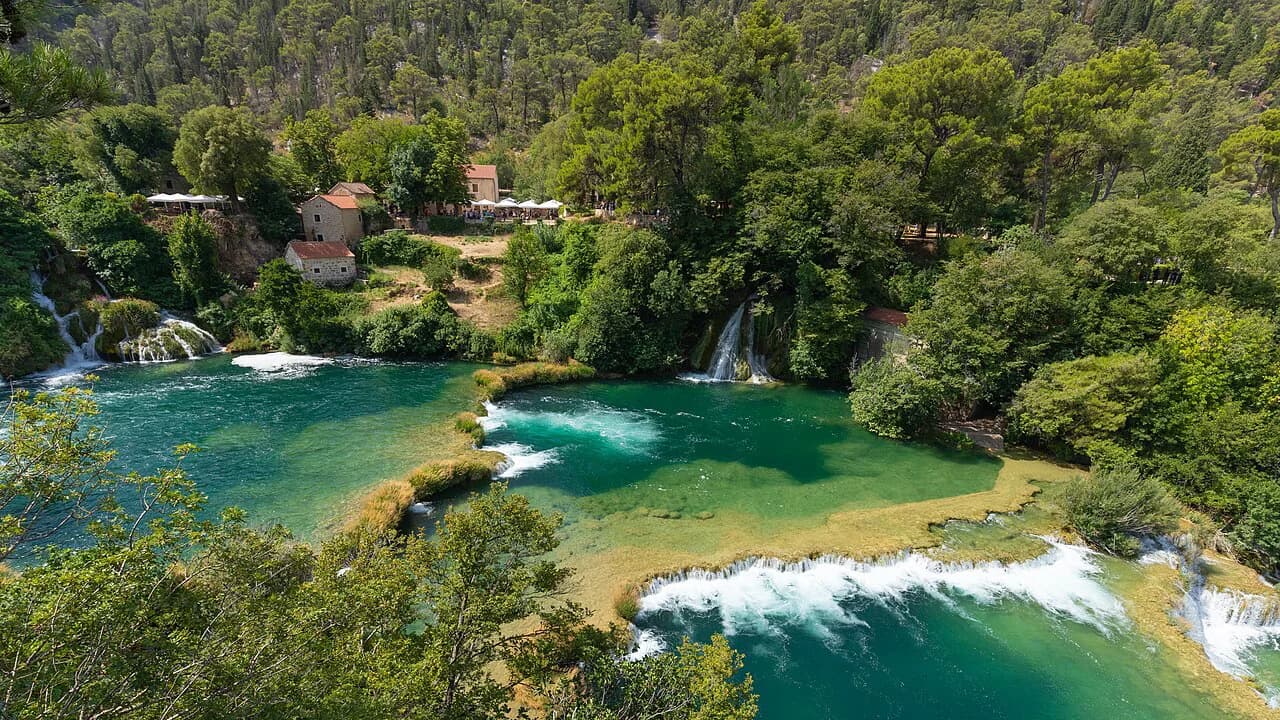
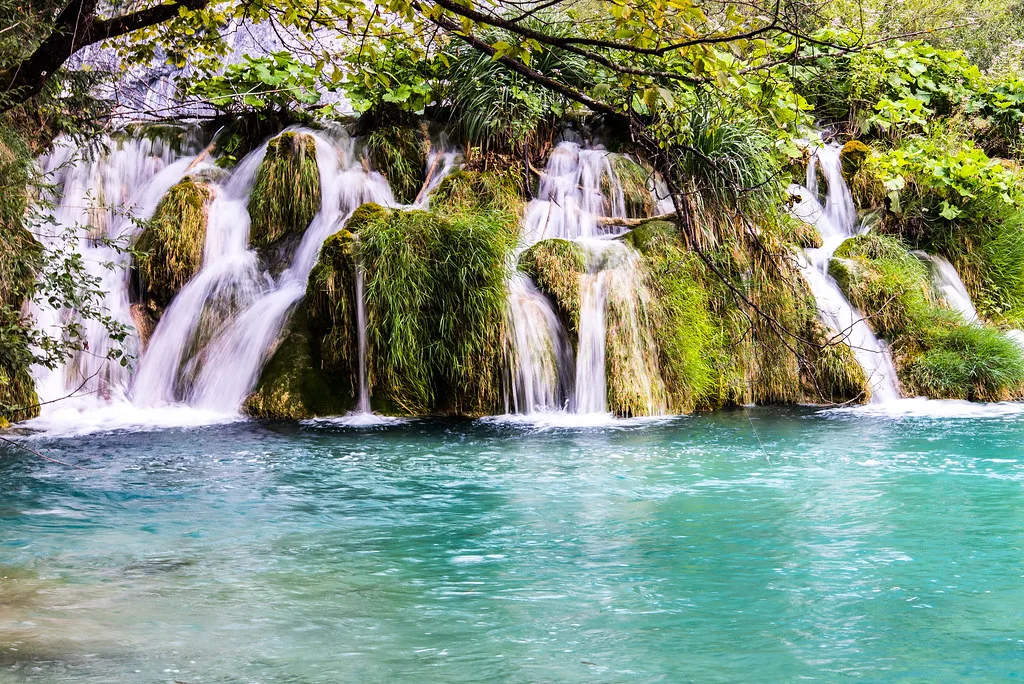
Krka National Park is the waterfall park closest to the Dalmatian coast, and Skradinski buk is its centrepiece: a wide staircase of falls that you can view from boardwalks and bridges. It fits a day from Split or Šibenik far more easily than Plitvice does, which makes it the pragmatic choice if your itinerary is coastal.
The trade-off is that convenience brings company: Krka draws day-trippers from the coast, so early starts pay off. Pair it with Šibenik rather than trying to see both parks in one trip, and keep the rest of the day light given the walking.
Split and Diocletian's Palace
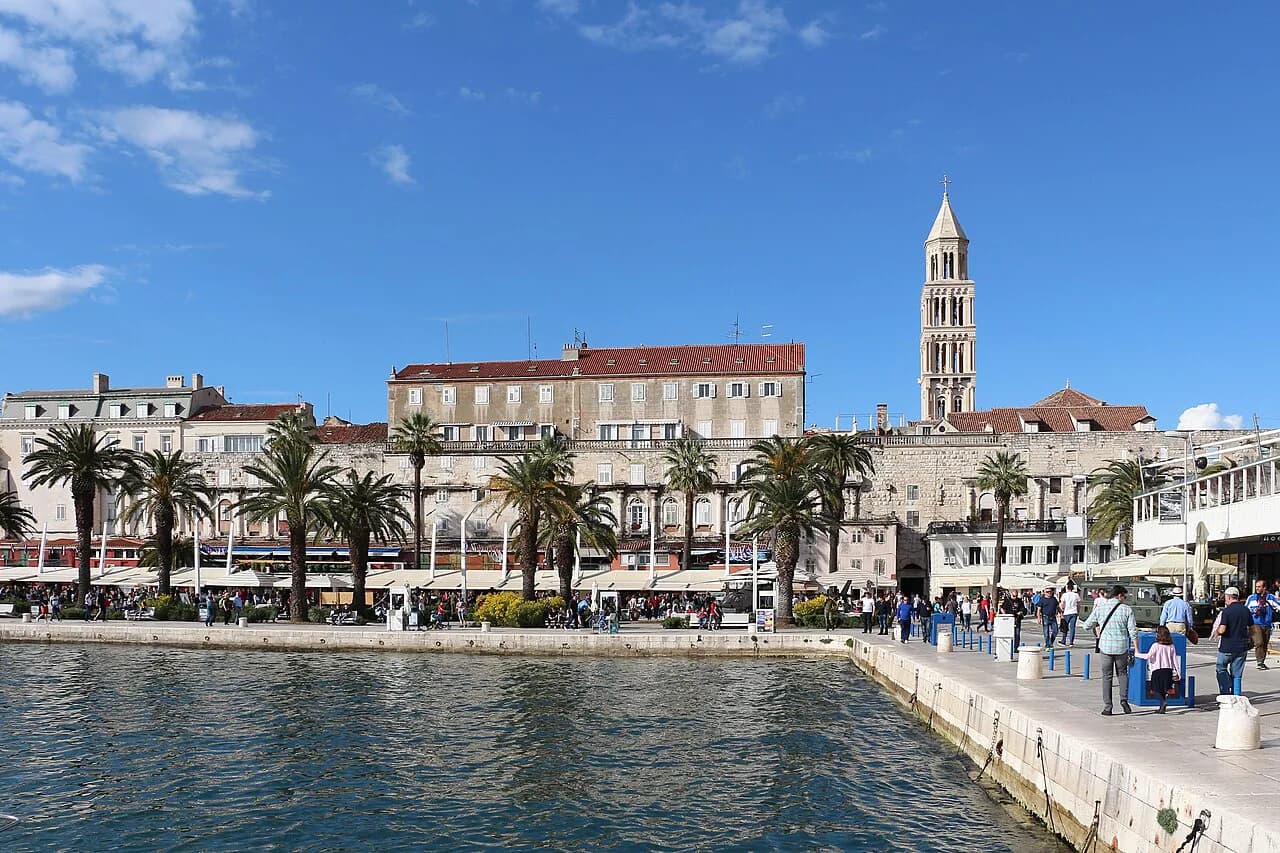
Split is built around Diocletian's Palace, a Roman emperor's retirement complex that became a living town: the peristyle is a square, the substructures hold shops, and apartments fill the upper walls. That layering is what makes it worth more than a quick lap, and it also makes Split a major ferry hub on the coast, with boats and catamarans leaving for the islands from the harbour beside the old town.
Use Split as a base rather than a stop: the palace rewards an evening and an early morning before the day-trippers arrive, and the Riva gives you a waterfront to come back to. From there, Klis fortress and the Marjan hill walks fill a spare half-day without a car.
Šibenik and its Venetian old town
Šibenik is the coastal town most itineraries skip, and it is the better for it. The old town climbs steeply around the cathedral of St James, a Venetian-era masterpiece in pale stone, with lanes that turn into stairways and squares that open without warning. It feels lived-in rather than staged, and it pairs naturally with Krka because the park gates are close by.
Give Šibenik a night rather than a lunch stop: the evening light on the cathedral and the quiet morning lanes are the point. From here you can also reach the Kornati islands and the Zlarin and Prvić islets by excursion boat.
Brač, Zlatni Rat and Korčula Town
Brač is the island for travellers who want a big, varied landscape: the white-peaked Vidova gora above the coast, stone-working villages such as Pučišća, and Zlatni Rat, the shingle spit near Bol that shifts shape with the wind and current. Ferries and catamarans from Split make it an easy first island, and the island is large enough to justify a car or a scooter.
Korčula Town is the opposite pleasure: a walled peninsula of stone lanes, with the house traditionally linked to Marco Polo and a cathedral square that fans out like a fishbone. It is compact, so a day covers the core, but a night lets you see the walls without the ferry crowds. Reaching it usually means a catamaran from Split or a ferry via the Pelješac peninsula.
Korčula also gives access to Pelješac and its walled seaside villages, which makes the southern islands a natural next leg towards Dubrovnik. Check which operator runs your route: Jadrolinija, Krilo and TP Line each cover different lines.
Hvar Town and Vis Island
Hvar Town is one of Croatia's best-known island towns: a long harbour lined with cafés, a hilltop fortress, and a Renaissance square that fills with boats in summer. It is beautiful and it knows it, so the trade-off is crowds and prices in July and August. Visit in the shoulder months or stay outside the harbour core to get the best of it.
Vis is the counterweight: the most detached of the main islands, reached by catamaran from Split, with Komiža as a fishing harbour and the Blue Cave on the nearby islet of Biševo as its headline boat trip. It rewards a slower stay and feels quieter because the crossing is longer.
Mljet and Cres: two quieter island alternatives
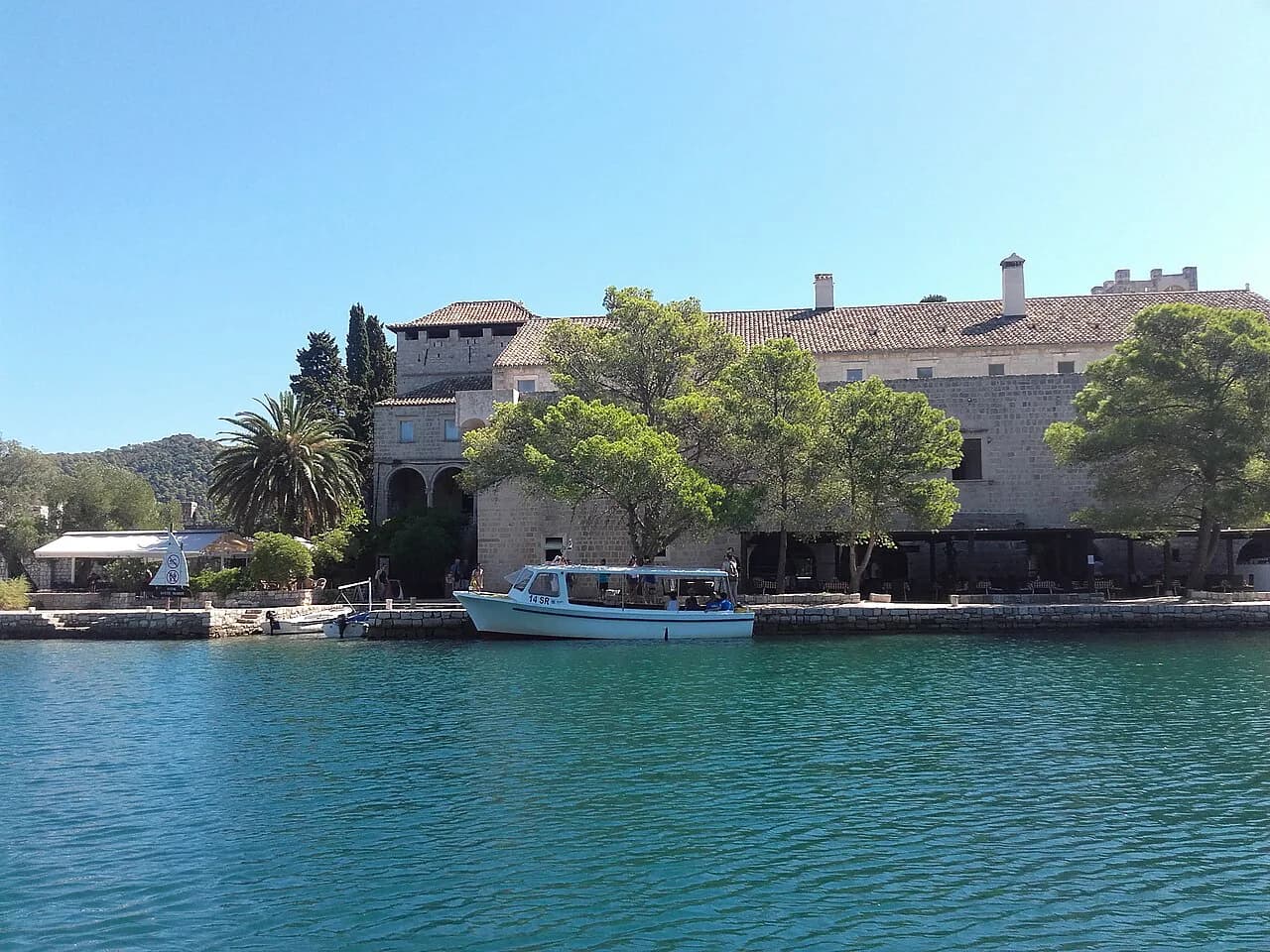
Mljet is the greenest of the southern islands, with a National Park covering two saltwater lakes and a small islet monastery, and it suits travellers who want walking and swimming rather than nightlife. Reaching it means a ferry from the Pelješac peninsula or Dubrovnik, so plan the crossing around your route south.
Cres, in the north, offers the same quietness for travellers who never get south of Istria: a long, sparsely populated island with a Venetian-style harbour town and griffon vultures over the cliffs. Ferries from the Kvarner coast make it a realistic extension of an Istrian trip.
Dubrovnik and its city walls
Dubrovnik is the finale for most coastal routes: a walled city on a limestone promontory, with the city walls as the main event and the Stradun as its polished spine. Walking the walls is best done early or late, because they have almost no shade in the middle of the day.
Cruise-ship days change the experience entirely: when ships are in port, the Stradun and the walls fill, and the difference is dramatic. Check the port schedule for your dates and plan either a very early wall walk or a day trip out of the city.
Zagreb, Zagorje and Kopački Rit
Inland Croatia is a separate trip rather than padding for the coast. Zagreb offers a compact capital with a lively café culture around the Dolac market and the upper town, while Zagorje to the north gives you castles, vineyards and thermal springs in rolling hills. Kopački Rit Nature Park, near Osijek in Slavonia, is a wetland of channels and floodplain forest best seen by boat.
Allow three or four days for this inland loop, and travel between Zagreb and Osijek by train or car rather than trying to bolt it onto a coastal itinerary.
How the pieces connect
Along the coast, buses are reliable for getting between the major towns, and they are the simplest option if you don't want to drive. Ferries and catamarans link the islands to the mainland, with Split as a major hub; a car is useful in Istria and on the larger islands such as Brač. The sea is why a Croatian itinerary reads as a sequence along one coast rather than a spread.
In a week, choose one region: Istria, or Split with one island, or Dubrovnik with Korčula. In two weeks, work down the coast from Istria to Dubrovnik with two or three islands and one waterfall park. The Croatia Map for Travellers is the place to sketch that route out.
When to go: late spring and early autumn
The best time to visit Croatia depends on your priorities. Late spring and early autumn keep everything open and the sea warm enough for swimming, with fewer cruise-ship crowds in old towns. July and August deliver the most reliable beach weather and the biggest crowds and prices.
Shoulder months suit Plitvice Lakes National Park particularly well, since walking the boardwalks in high summer heat is tiring. For a first trip, aim for June or September and book ferries once you've fixed the route.
Which route should you build?
If you have a week, pick one region and go deep: Istria with Rovinj and Pula, or Split with one island, or Dubrovnik with Korčula. If you have a fortnight, run north to south from Istria through Zadar, Split, Šibenik and Korčula to Dubrovnik, slotting Plitvice or Krka in as a full day.
Whichever route you choose, book ferries and catamarans once the order of stops is fixed, and check schedules with the ferry company close to departure because seasonal timetables change.
Explore more Croatia guides
Frequently Asked Questions
Is Split or Dubrovnik better for a first trip?
Split works better as a base because it combines Diocletian's Palace with a major ferry hub on the coast, so you can add islands without moving hotels. Dubrovnik is the stronger single sight, but it is at the far south of the coast and gets very crowded when cruise ships are in port, so many travellers end there rather than start.
Which is the most beautiful part of Croatia?
That depends on what you find beautiful. Rovinj's peninsula old town and Korčula's walled lanes are the classic Venetian postcards, while Plitvice Lakes and Skradinski buk are the standout natural sights. For many travellers the islands, particularly Hvar and Vis, combine both.
Should I visit Plitvice Lakes or Krka National Park?
Krka fits a coastal route more easily because it is close to Šibenik and Split, and Skradinski buk is reachable as a day trip. Plitvice is a UNESCO World Heritage site that sits inland between Zagreb and the coast, and it deserves its own day and a nearby overnight stay.
Sources
Notes from the Croatian coast
Optional updates when our guides change.
You might also like
Continue reading
More guides you'll find useful