Croatia’s National Parks: The Eight Parks and How to Visit
Croatia has eight national parks, from Plitvice Lakes to Mljet. See what each one is like, which fit a coastal trip and how tickets and boats work.
On this page
For a first trip, pick Plitvice Lakes for terraced lakes and tufa barriers and Krka for waterfalls within reach of Šibenik; add Mljet if your route runs down the southern Dalmatian coast. Those three do most of the work for coastal travellers, while Kornati and Brijuni reward anyone willing to book a boat and treat the crossing as part of the visit. This guide covers all eight parks, what each one actually asks of you in time and transport, and how tickets, entrances and seasonal timetables differ.
Croatia’s parks fall into three practical groups: inland lake and waterfall parks, island and archipelago parks reached by boat, and mountain parks for walkers. Knowing which group a park belongs to settles most planning questions before you look at a single ticket price, because it tells you whether you need a car, a ferry booking or a full day on foot.
The eight parks at a glance
The eight are Plitvice Lakes, Krka, Kornati, Brijuni, Mljet, Paklenica, Risnjak and Northern Velebit. Plitvice Lakes is the oldest and largest, declared Croatia’s first National Park on 8 April 1949 and inscribed on the UNESCO World Heritage List on 26 October 1979 for the tufa-forming process that built its barriers and lakes.
Roughly, Plitvice and Krka are the waterfall parks, Kornati, Brijuni and Mljet are the sea parks, and Paklenica, Risnjak and Northern Velebit are the mountain parks. That split matters more than any ranking: it decides whether a park fits between two coastal towns or needs its own day, car and early start.
No single park suits every trip. Plitvice is the one most travellers picture, Krka is the most convenient from the coast, Mljet is the one that feels most like an island day out, and the mountain parks ask for boots and a plan rather than a camera and a queue ticket.
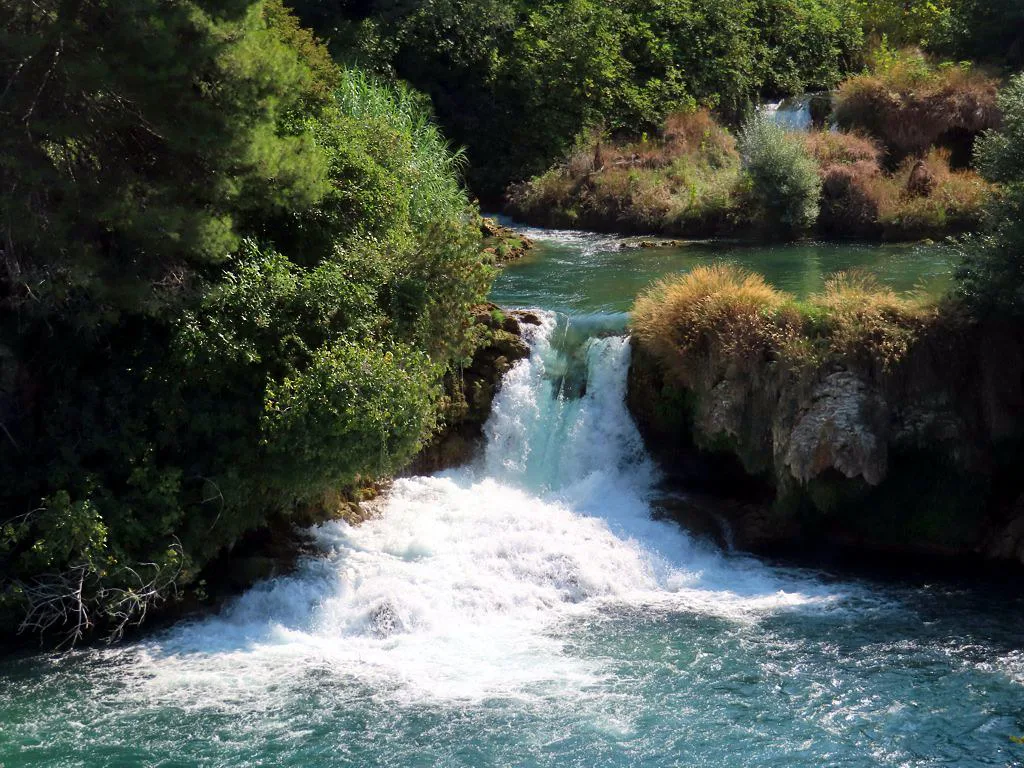
Plitvice Lakes: terraced lakes and tufa barriers
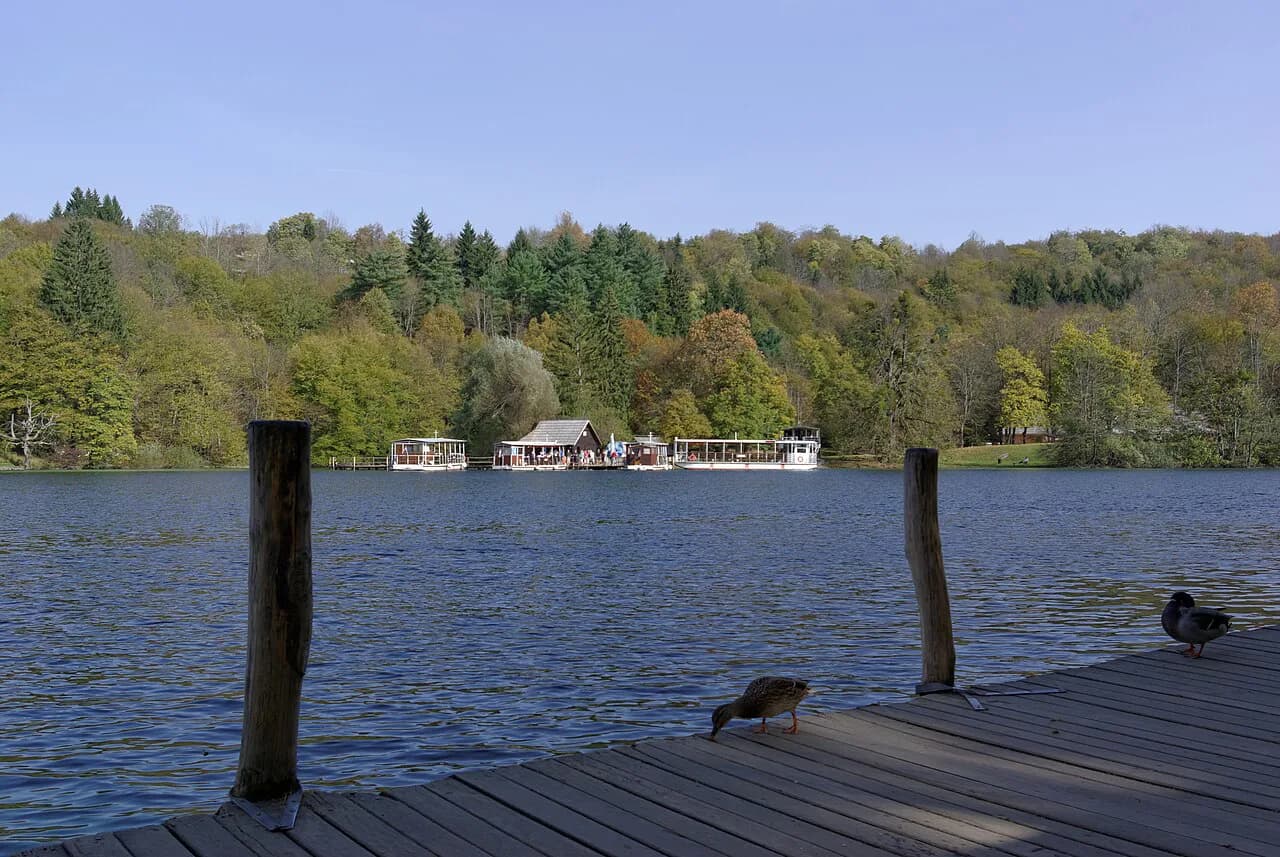
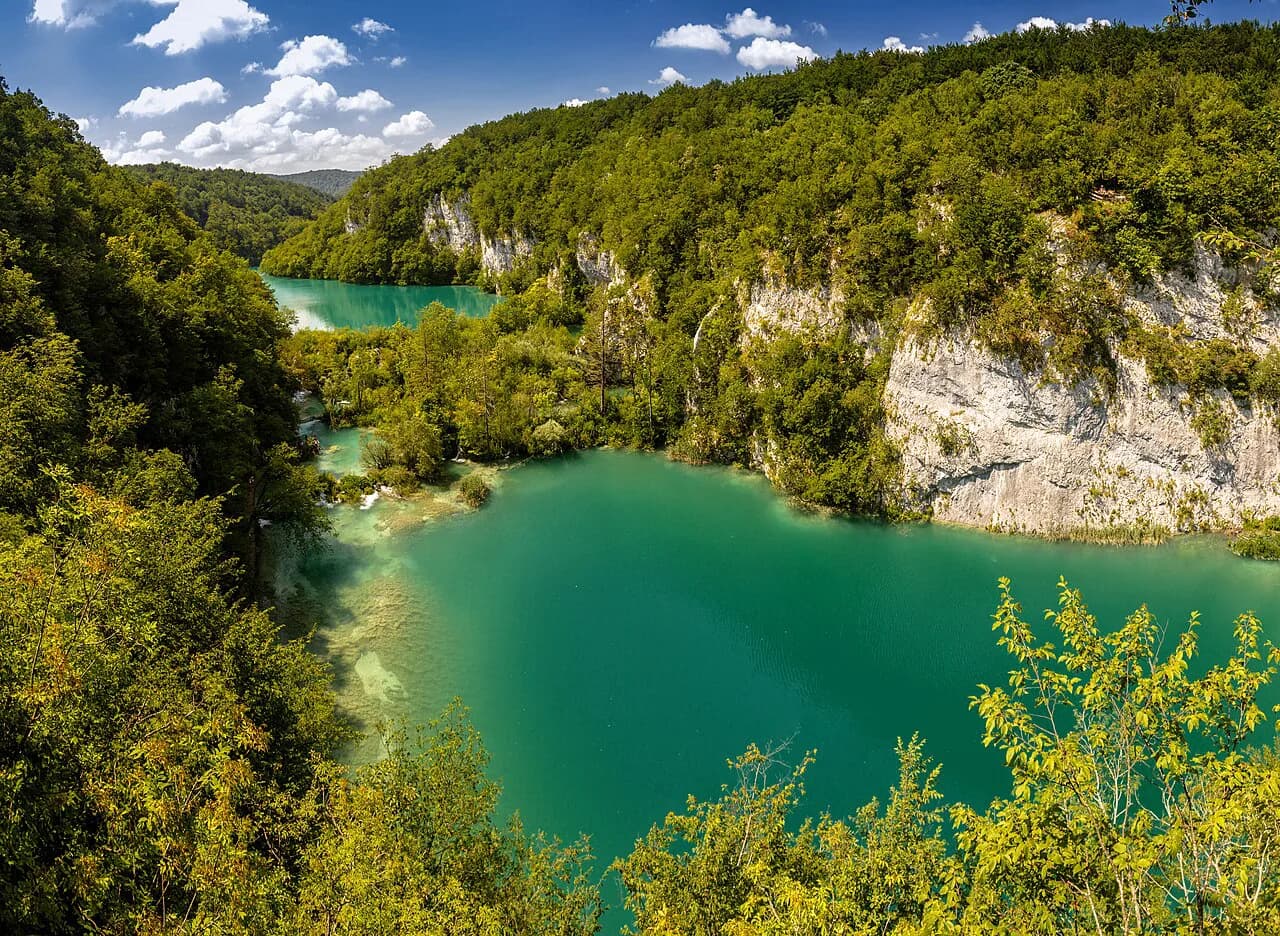
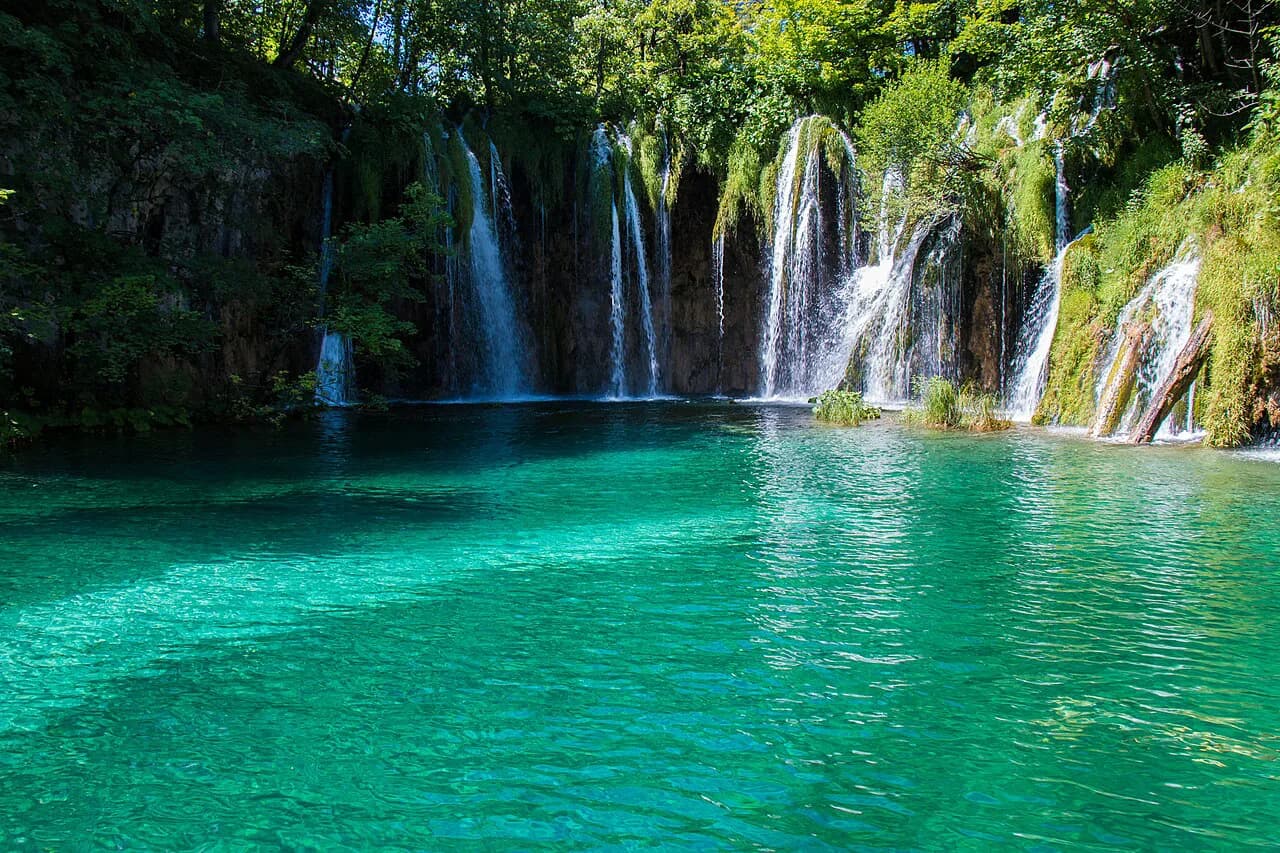
Plitvice Lakes is a chain of lakes stepped down through tufa barriers, connected by boardwalks and marked trails, and it sits inland in the karst country between Zagreb and the Dalmatian coast. The park publishes lake tour programmes, hiking and cycling options separately from the trails, so you can choose a shorter circuit or a longer one depending on how much of the water you want to see.
Which Croatian National Park is easiest to reach from the coast? Krka is the park that fits most neatly into a coastal itinerary: it is a day trip from Šibenik, Split and the surrounding coast rather than a detour inland, and the park has ten entrances so you can approach it from different sides. Buy tickets online before you travel and use the park's own price list and working hours pages for the season you are visiting.
What does a Mljet National Park ticket include? According to the park's 2026 price list, one ticket includes a return trip on the solar boat to Sveta Marija, a single visit to the park's land localities, the marked trails around Veliko and Malo jezero and the forest trails, parking at Vrbovica for day visitors, and travel on the electric train to the published schedule. Visits after 16:00 get a 25% reduction on adult, child (7 to 18) and student day tickets bought at the park, and groups of more than nine must give written notice to the park's tourist service beforehand.
When was Plitvice Lakes made a National Park and a UNESCO site? Plitvice Lakes was declared Croatia's first National Park on 8 April 1949, and it is the oldest and largest National Park in the country. It was inscribed on the UNESCO World Heritage List on 26 October 1979 for the tufa-forming process that builds its barriers and lakes.
Because the lakes run in sequence rather than around a single viewpoint, the visit is a walking day built around the park's lake tour programmes rather than a short stop. Plan on arriving early, and treat the upper and Lower Lakes as two halves of one route rather than alternatives.
Tickets are sold through the park, and the price list and working hours are published on the official site rather than fixed here, since they change through the year. Use the official site's price list and working hours pages for the date you plan to visit, and book ahead for summer dates.
The bura and heavy rain can close boardwalk sections, and the park recommends checking current conditions by phone before arrival. If your visit falls in a windy spell, keep a flexible day in the plan rather than a fixed transfer out of the region.
Krka: waterfalls near Šibenik
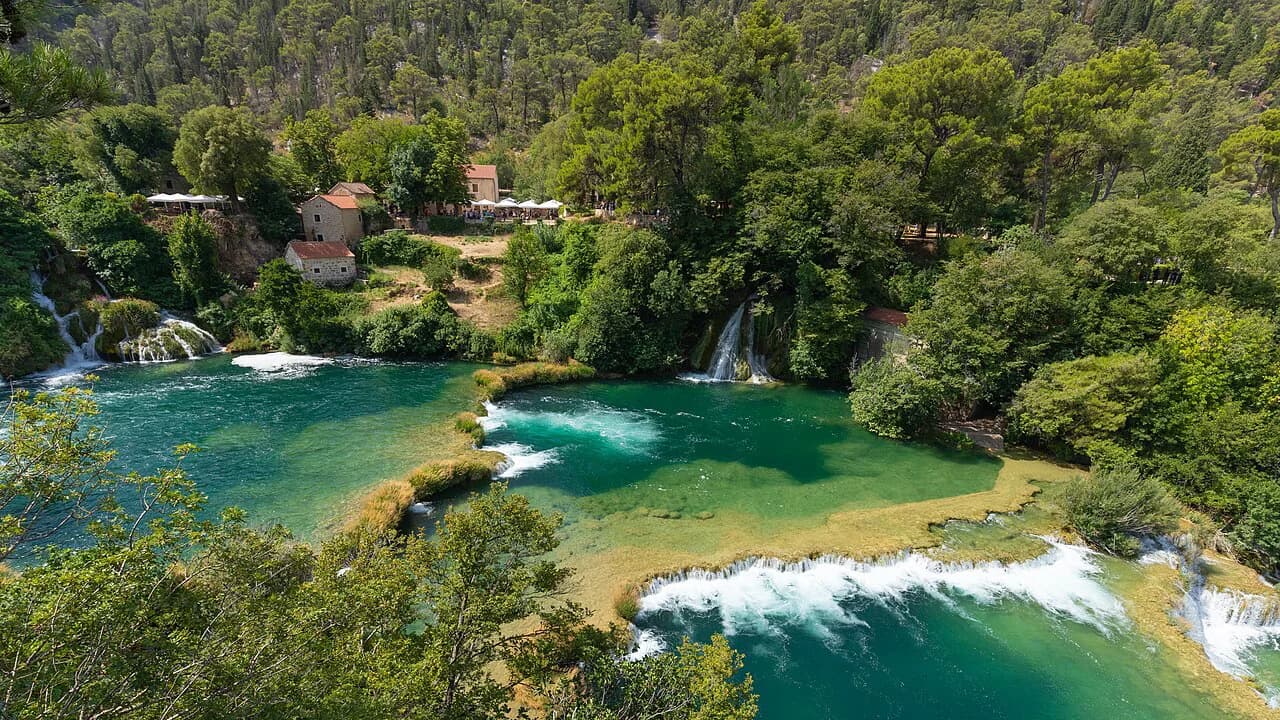
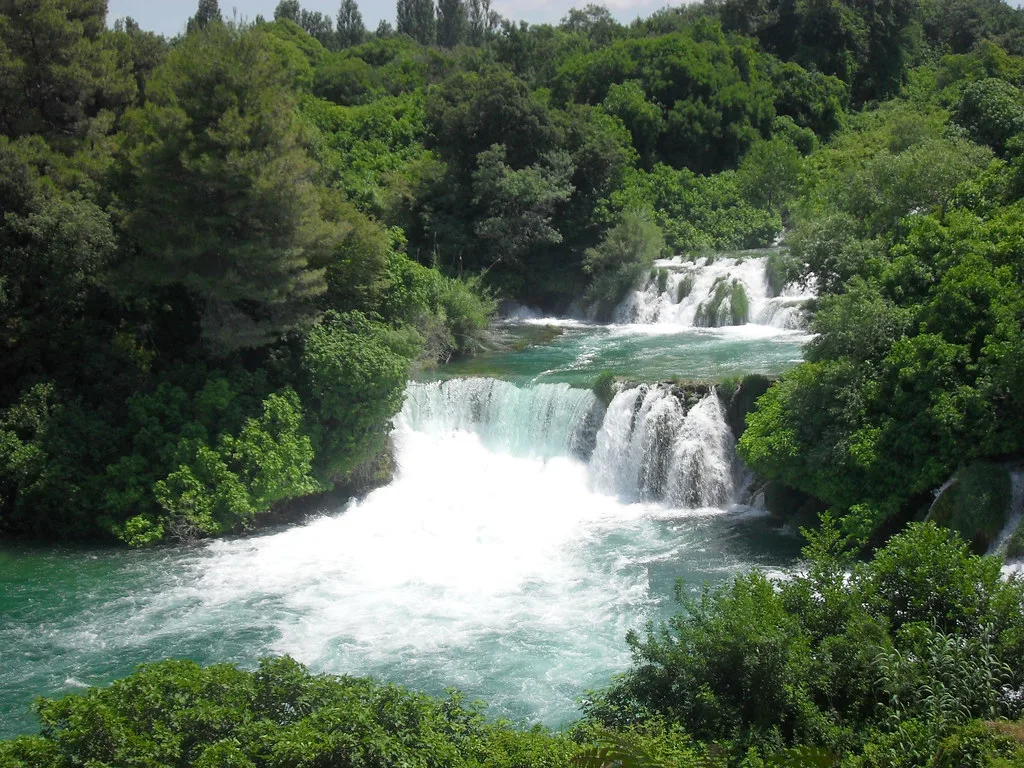
Krka National Park covers 109 square kilometres around the river, with seven waterfalls, ten entrances, 47 km of hiking trails and 388 km of bike routes according to the park's visitor pages. Skradinski buk and Roški slap are the two headline falls, and the ten entrances mean you can approach from different sides rather than all filing through one gate. Our national parks map puts the eight parks in their coastal and inland context.
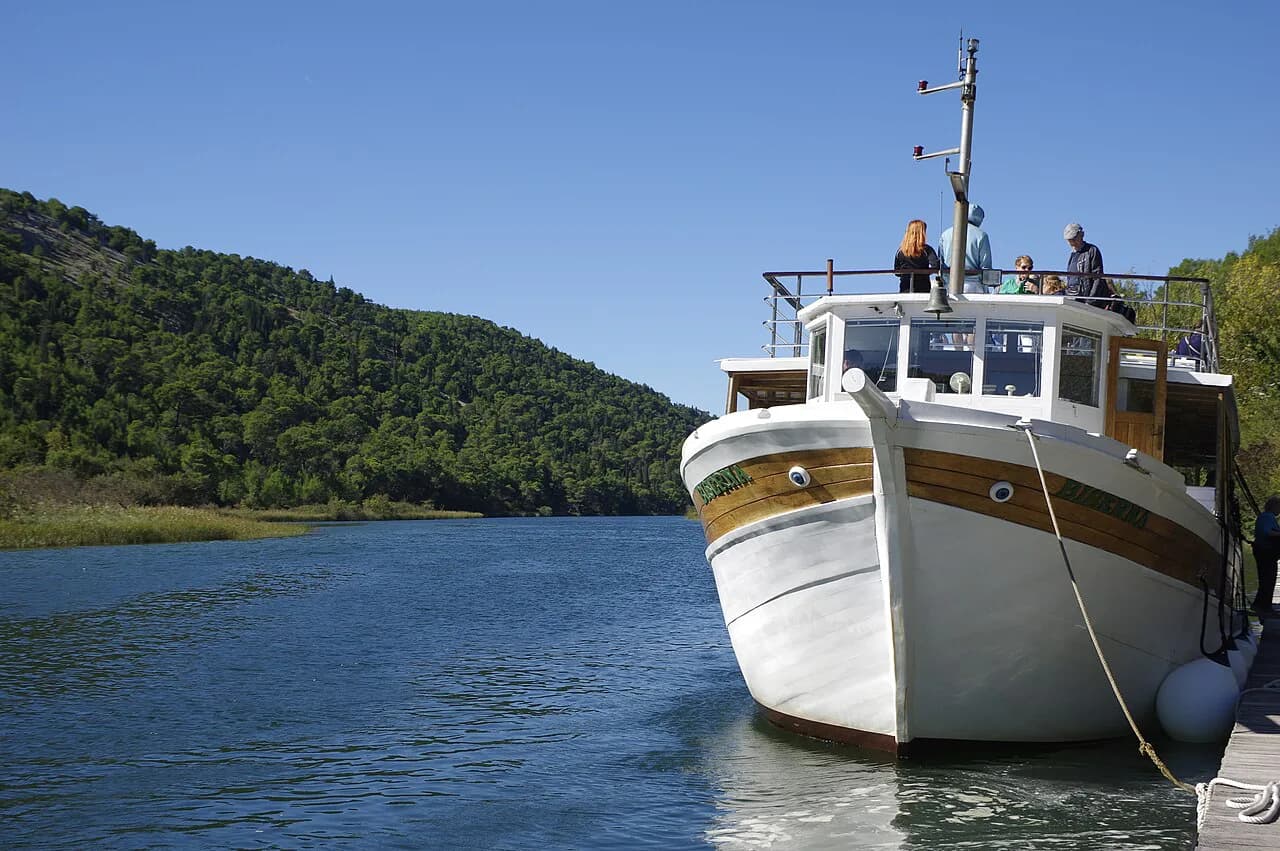
Skradinski buk is the busiest of the falls and the easiest to pair with a day from Šibenik and the coast, while Roški slap suits anyone who wants a quieter stretch of river and is willing to drive further. The park lists boat excursions and viewpoints separately from the walking trails on its visitor pages, so decide before you arrive whether you are walking the falls or taking to the water.
Krka fits most neatly into a coastal itinerary: it works as a day out from Šibenik, Split and the surrounding coast rather than a detour deep inland. Buy tickets online before you travel, and use the park's own price list and working hours pages for the season you are visiting.
Mljet: the island park in southern Dalmatia
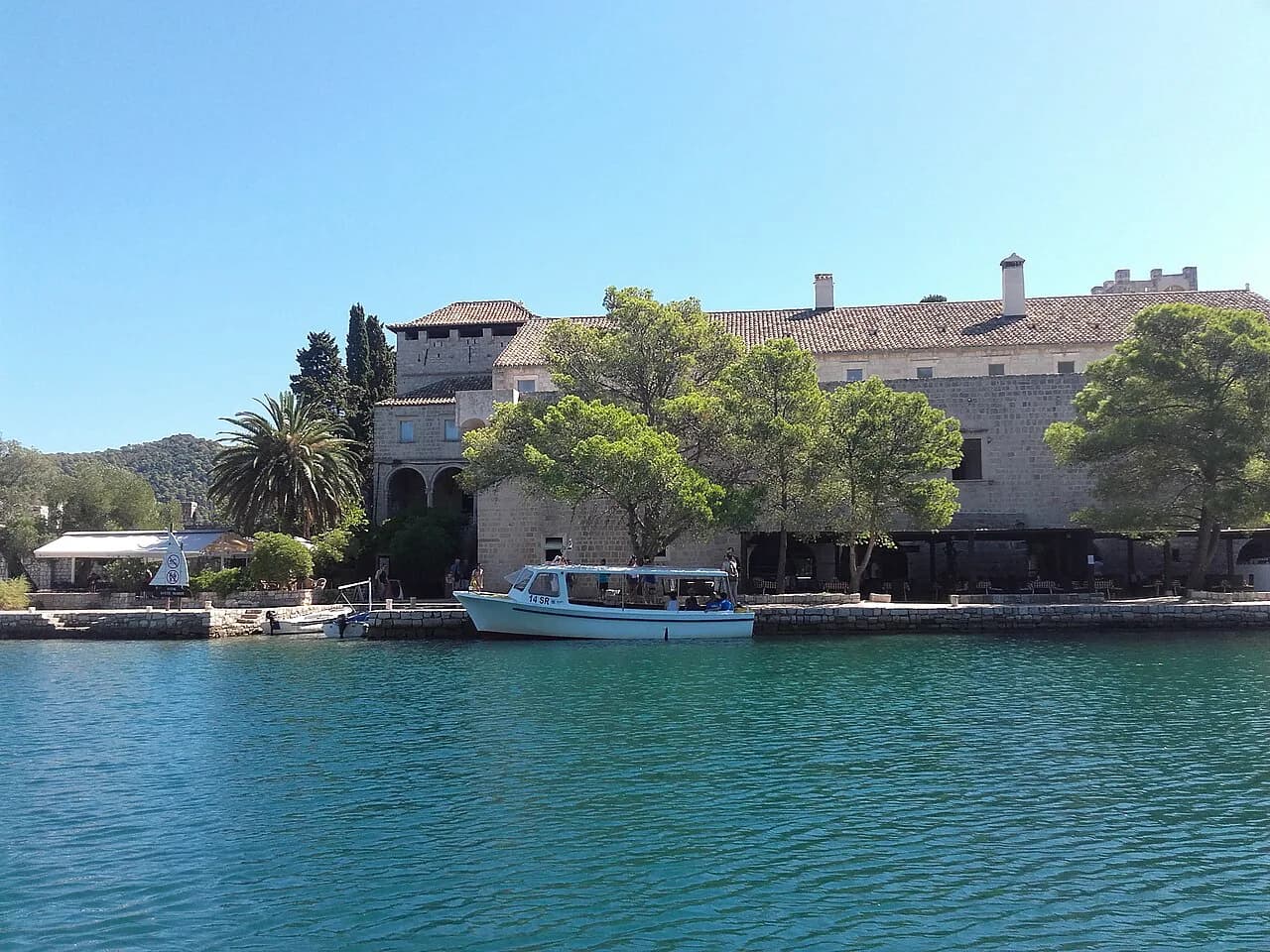
Mljet is the island park, wrapped around Veliko jezero and Malo jezero, two connected salt lakes, with the islet of Sveta Marija in the larger one. The park ticket is designed around that geography: it includes one return trip on the solar boat to Sveta Marija, a single visit to the land localities, the marked trails around both lakes, parking at Vrbovica for day visitors and electric-train transport on the published schedule.
That inclusive ticket changes how you plan the day. Rather than buying separate boat and entry tickets, you buy one park ticket and the boat crossing and train ride come with it, so the sensible move is to arrive, park and start on the water before the trails. The park’s own price list sets out the current inclusions and any reductions.
Visits after 16:00 take 25% off adult, child (aged 7 to 18) and student day tickets bought at the park, according to the park's 2026 price list. That discount suits anyone staying overnight on the island, but it leaves little daylight for the lakes in the shoulder months.
Groups of more than nine people must give written notice to the park's tourist service before arriving, partly to limit queues for the boat. Independent travellers should build the crossing to Sveta Marija into the middle of the day and keep the trails for either side of it. Our Mljet National Park guide covers the lake layout, the walking times and the boat to Sveta Marija in more detail.
The island is easy to combine with the rest of the southern coast, and it rewards an overnight stay more than a rushed morning. Our guide to the Odysseus Cave adds the island's other famous stop.
Kornati and Brijuni: parks you reach by boat
Kornati National Park is an archipelago of bare, deeply indented islands in the Adriatic off the Dalmatian coast, and there is no road in: you arrive by excursion boat or in your own craft. The visit is the archipelago itself, the cliffs and the water, rather than a set of sights to tick off on foot. It sits next to the Telašćica Nature Park, which is a separate, non-national protected area on Dugi Otok. Our Kornati National Park guide covers the islands in more detail.
Brijuni National Park lies off the Istrian coast near Pula and is visited from the mainland by boat. Its appeal is different from Kornati's: parkland, archaeological remains and a gentler landscape that suits a half day rather than a full day at sea. Our Brijuni National Park guide covers the islands in more detail.
For both parks, transport is the constraint. Boat operators, crossing times and what is included in the trip vary, so choose the boat company first and build the day around its departure, since you cannot assume you can turn up and cross. Schedules and fares change, so check current times before you travel.
If you are weighing the two, pick Kornati for a full day of islands and open water, and Brijuni for something calmer that fits around a stay in Istria or Rovinj. Neither park competes with Plitvice or Krka, because they offer sea and islands rather than waterfalls.
Paklenica, Risnjak and Northern Velebit: the walking parks
Paklenica, Risnjak and Northern Velebit are for walkers, and they sit away from the holiday coast rather than beside it. Paklenica lies near the Velebit range above the Dalmatian coast and is known for its gorges and rock, Risnjak covers forested mountain country in Gorski kotar inland from Rijeka, and Northern Velebit protects high ground in the same range. All three need boots, weather judgement and a proper day, so they suit a dedicated detour rather than a break in a coastal itinerary.
Which parks fit a coastal trip
If your trip runs down the coast, Krka and Mljet are the two parks that slot in without a car-heavy detour. Krka works as a day from Šibenik and the central Dalmatian coast, and Mljet works from the southern Dalmatian ferry routes and the Pelješac crossing.
Plitvice Lakes needs its own day and usually an overnight nearby, because it sits inland and the walking takes several hours. Treat it as a deliberate stop between Zagreb and the coast rather than something to bolt onto a beach day.
Kornati, Brijuni and the three mountain parks are the ones that ask for a dedicated decision: a booked boat for Kornati or Brijuni, or a planned inland stay for Paklenica, Risnjak or Northern Velebit. Building one of those into a coastal week is realistic; squeezing in two is not.
How park tickets work
Each park sets its own ticket, and what the ticket covers differs sharply. Mljet is the clearest example: one ticket includes the solar boat return to Sveta Marija, one visit to the land localities, the marked trails, parking at Vrbovica and electric-train transport, with reductions for late entry and for some visitor categories.
At Plitvice and Krka, the park ticket covers entry to the trail and lake network, and the parks publish their own price lists and working hours by season. Krka lists boat excursions and viewpoints separately from the walking trails; at Plitvice, choose a lake tour programme first, then read the price list and working hours together before booking.
Parks publish their price lists and hours before the season, so book online ahead for high-season dates and take the confirmation with your transport details.
Boats, entrances and getting around
Plan each park around what the official pages list. Plitvice publishes lake tour programmes, hiking, cycling and other visit activities between lake sections, Krka lists boat excursions separately from its walking trails and has ten separate entrances, and Mljet folds the solar boat and electric train into the ticket. Entrance choice at Krka is a real decision, not a detail, because the gate you use sets how much walking you do before the falls.
On the islands, ferries and catamarans are the link to the mainland, and operators such as Jadrolinija publish their own timetables and seasonal schedules. For Mljet, arrivals come by ferry to Sobra, with Polače on the northern shore close to the lakes for anyone driving across.
For Kornati and Brijuni, excursions replace public transport as the normal way in, and operators set their own departure points and durations. Check what the trip includes before paying, particularly whether time ashore is included or the boat simply circles the islands.
When to go: crowds, spring and autumn
Summer brings the fullest boats, the longest queues at Mljet's lake crossing and the busiest boardwalks at Plitvice and Skradinski buk. Arriving for opening remains the simplest way to see the main falls before the coach groups, and Mljet's 25% reduction on visits after 16:00 suits anyone staying overnight.
Spring and early autumn are the better trade-off for the waterfall parks: the water still runs, the walking is cooler and the ticket pressure eases outside peak dates. Working hours change with the season, so check the park's own working-hours page for the day you plan to visit.
On the coast, July and August also fill the ferries and the boats to Kornati, so book crossings and excursions before you arrive. May, June and September give you more room on the water and a better chance of an unhurried day at Mljet’s lakes.
Practical constraints: the bura, timetables and closures
The bura is a cold, gusty northerly wind that can shut boardwalks and cancel boat crossings, and it arrives with little notice. Coastal parks and the islands feel it most: keep a road-based option such as Krka or Plitvice in reserve if a boat trip to Kornati or Mljet looks doubtful.
Boat schedules and opening hours change with the season, and each park publishes its own working hours. Use the park's official site for the season you are travelling rather than relying on last year's timetable.
Which park earns your day?
For most coastal trips the answer is Krka for an easy waterfall day, Mljet if your route reaches the southern islands, and Plitvice Lakes if you are crossing inland anyway. Kornati and Brijuni earn their day only if you are ready to book the boat and treat the crossing as the visit itself. If you are still settling the wider route, our guide to the best places to visit in Croatia sets these parks alongside the coast and islands.
Leave Paklenica, Risnjak and Northern Velebit for a trip built around walking. Choosing two parks rather than four keeps the plan honest, and building one flexible day into the itinerary covers the bura and any seasonal timetable change.
Explore more Croatia guides
Frequently Asked Questions
Which Croatian National Park is easiest to reach from the coast?
Krka is the park that fits most neatly into a coastal itinerary: it is a day trip from Šibenik, Split and the surrounding coast rather than a detour inland, and the park has ten entrances so you can approach it from different sides. Buy tickets online before you travel and use the park's own price list and working hours pages for the season you are visiting.
What does a Mljet National Park ticket include?
According to the park's 2026 price list, one ticket includes a return trip on the solar boat to Sveta Marija, a single visit to the park's land localities, the marked trails around Veliko and Malo jezero and the forest trails, parking at Vrbovica for day visitors, and travel on the electric train to the published schedule. Visits after 16:00 get a 25% reduction on adult, child (7 to 18) and student day tickets bought at the park, and groups of more than nine must give written notice to the park's tourist service beforehand.
When was Plitvice Lakes made a National Park and a UNESCO site?
Plitvice Lakes was declared Croatia's first National Park on 8 April 1949, and it is the oldest and largest National Park in the country. It was inscribed on the UNESCO World Heritage List on 26 October 1979 for the tufa-forming process that builds its barriers and lakes.
Can I buy Croatian National Park tickets online?
The park authorities sell tickets through their official sites and publish price lists and working hours by season, so buy tickets and check the day's hours before you travel. Take the confirmation with your transport details in case of a boat or timetable change.
Sources
Notes from the Croatian coast
Optional updates when our guides change.
You might also like
Continue reading
More guides you'll find useful