Things to Do in Pula: Roman Ruins, Old Town and Fortress
Plan what to see in Pula, from the Arena and Forum to the Arch of the Sergii and Kaštel fortress, with a walking order and honest time budgets.
On this page
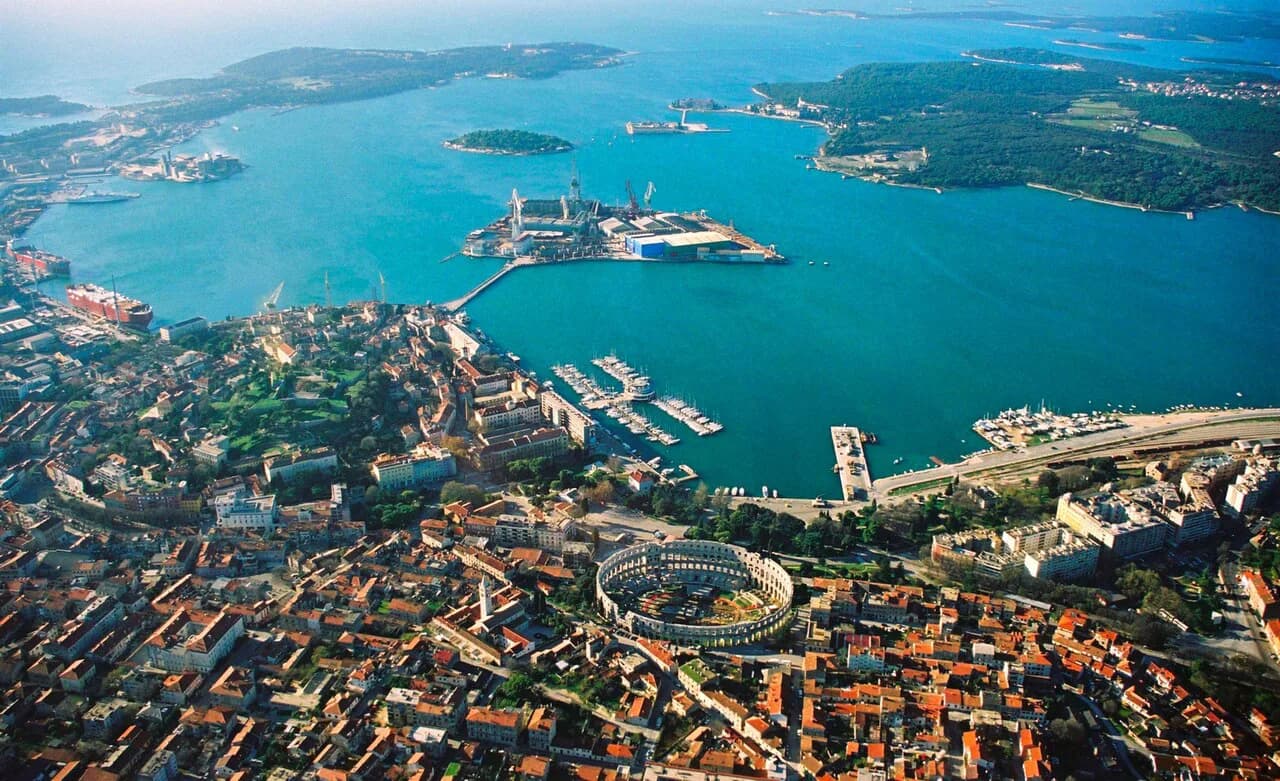
Pula is a half-day city that rewards a full day: the Arena, the Forum, the Roman gates, the Zerostrasse tunnels and the Kaštel fortress all sit within roughly a square kilometre of the harbour. Start at the Arena, work inland to the Forum, then climb to the fortress for the view back over everything you have walked. This guide sets out that order, gives honest time budgets for each stop, and explains where the free exterior is enough and where paying to go inside is worth it.
The Roman sights are the reason most travellers come, but Pula is not only Roman: the old town holds a cathedral, a Franciscan monastery and a Habsburg-era fortress, and the waterfront gives you somewhere to end the evening. The sections below separate the Roman circuit from the later layers so you know what you are choosing to skip.
What to see in Pula, and in what order
The efficient route runs west to east: Arena first, then through the old town gates to the Forum, then uphill to Kaštel, finishing down on the waterfront. This avoids backtracking because each sight sits slightly further inland from the previous one. A brisk circuit of the exteriors takes about two hours; with interiors and a fortress climb, allow five to six hours.
Treat the stops as two groups. The Roman group is the Arena, the Arch of the Sergii, the Twin Gates, the Hercules Gate, the Temple of Augustus and the floor mosaic; the later group is the cathedral, the Franciscan monastery and the fortress. If you have only half a day, take the Roman group and the fortress view, and leave the cathedral for a second visit.
Start with the Arena, Pula's defining Roman monument
The Pula Arena is one of the best-preserved Roman amphitheatres anywhere, with its outer walls and side towers still largely intact, a short walk from the old town. Its underground chambers, once used for gladiators and animals, now hold a small exhibition. It is the sight most travellers choose to pay to enter.
The trade-off is simple: a public footpath loops right around the outside, letting you see the arches and the scale for nothing, with cafés on the upper side for a drink in view of the stone. Paying gets you into the interior and the underground exhibition. Go early or in the late afternoon for better light and thinner crowds, and check the day's ticket price and closing time before you commit, since both move with the season.
The Arena doubles as a concert venue, so staging and seating can occupy part of the interior on event days. The city tourism office lists Arena concerts through 2026 and 2027, which confirms the building is in active use; it does not confirm which days the interior is clear.
The Forum and Temple of Augustus
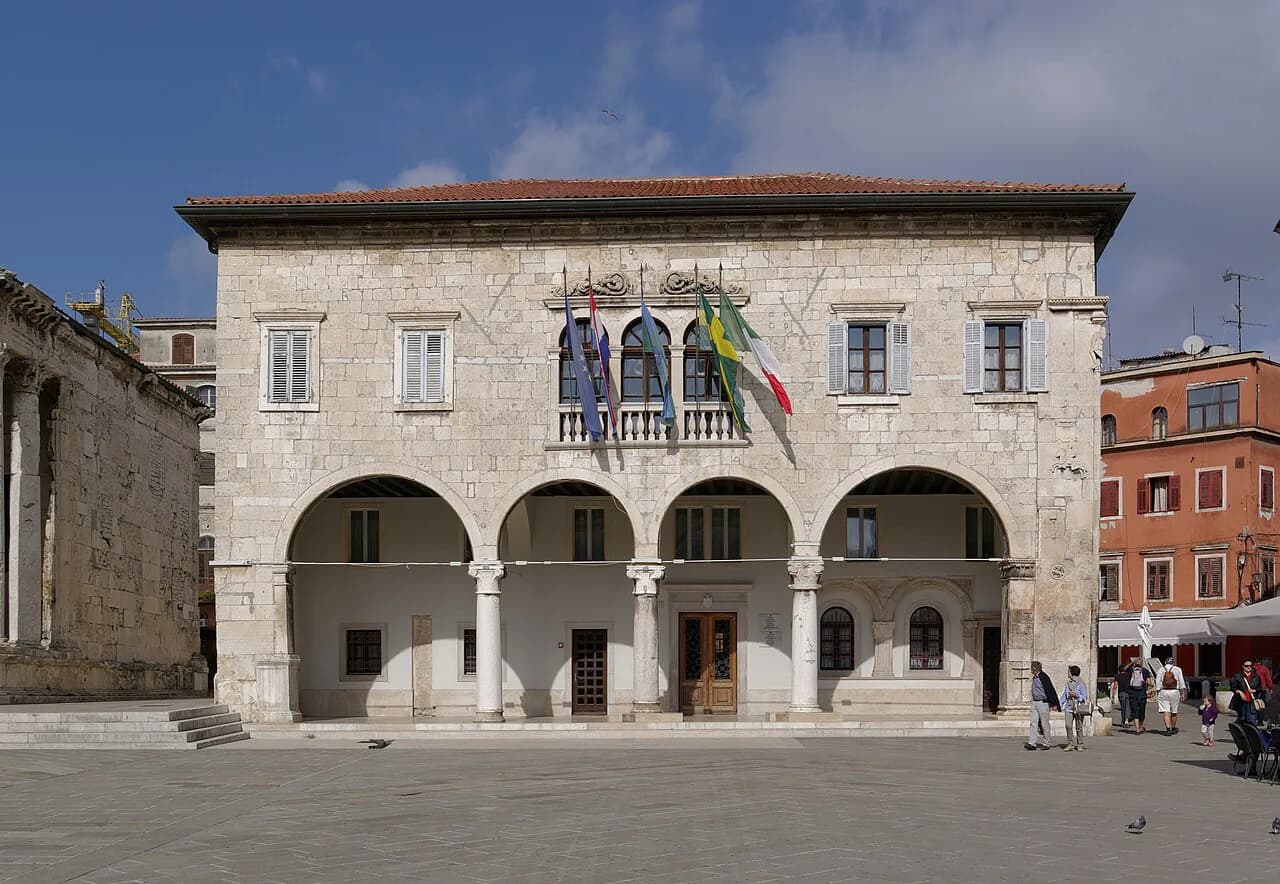
The Forum is the square at the heart of the old town, lined with civic buildings and cafés, and it has been the city's centre since Roman times. The Temple of Augustus, built in the early 1st century AD, stands at one end, its columns intact and its portico incorporated into later buildings. The pleasure here is in sitting on the steps and watching the town go about its business rather than in any formal visit.
Pair the Forum with the Franciscan monastery just above it, a complex built in 1314 with a shaded cloister garden that offers a genuinely quiet break from the summer heat. It is the kind of stop that takes twenty minutes and resets a hot afternoon.
Twin Gates, Hercules Gate and the Arch of the Sergii
The Arch of the Sergii is the showpiece of the gate circuit, a 1st-century BC triumphal arch built to honour a member of a prominent local family, with the donor's name still carved into the stone. It now stands beside the Twin Gates, having been relocated to its present position in 1826; the Twin gate itself is a medieval structure, not Roman.
The Twin Gates and the Hercules Gate are smaller, quicker stops on the same walk. The Hercules Gate sits slightly off the main route, which makes it quieter and easier for photographs. None of the gates needs a ticket; the cost is the time you spend lingering.
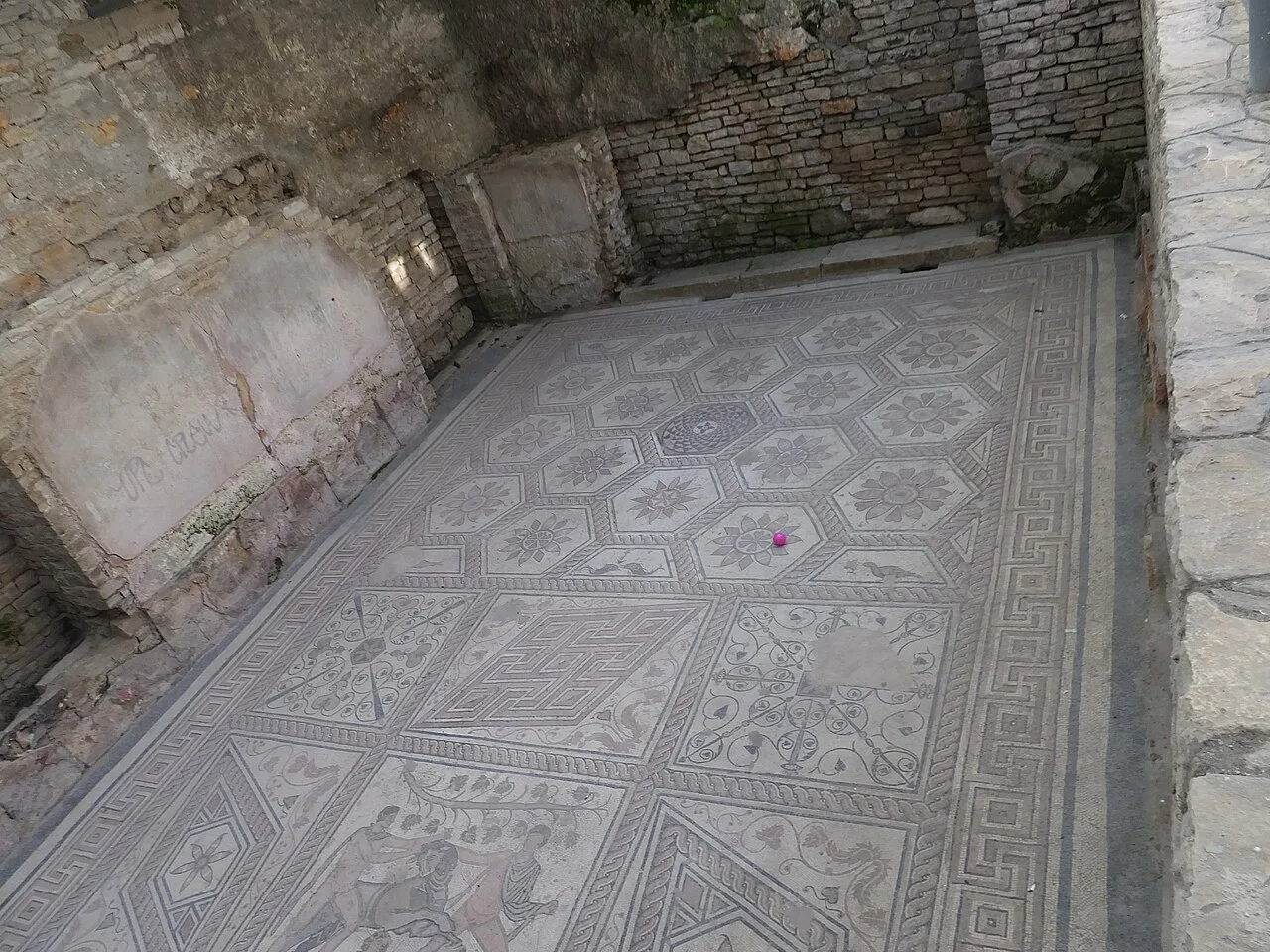
The Roman floor mosaic known as The Punishment of Dirce is the least obvious sight in Pula: it sits behind a car park off the narrow streets, marked by a small brown sign that is easy to miss. The mosaic was rediscovered after a World War II bomb, and a look takes five minutes.
Underground war tunnels: Zerostrasse
Zerostrasse is a network of First World War tunnels running beneath much of the city, used for exhibitions and as a cool refuge from the summer sun. A visit takes roughly twenty to thirty minutes and is a sensible stop in the middle of a hot day. The tunnels are the clearest reminder that Pula's layers run well past antiquity into the Habsburg era.
Entry is charged, and the figures circulating for it predate Croatia's switch to the euro, so ignore any kuna amount you see quoted and confirm the current euro price at the entrance. Treat the tunnels as a weather-dependent add-on rather than a fixed stop on the walking route.
Fortress Kaštel and the view over the harbour and the Arena
Fortress Kaštel sits on the hill above the old town, a fort built on the site of earlier defences, and the climb is short enough to fit into any itinerary. The reward is the view over the harbour, the rooftops and the Arena's arches. Go late in the day when the light softens and the climb is cooler.
The fortress also holds the city's historical collections, so it works as a museum stop as well as a viewpoint. If you are short on time, the terrace alone justifies the walk; the galleries are the optional extra.
Pula Cathedral and the quieter old-town corners
The Cathedral of the Assumption sits outside the main Roman circuit, on the slope between the Forum and the fortress, and it is easy to fold into the walk uphill. The building has been reworked over centuries, so it reads as a layered history rather than a single period.
Nearby, the Small Roman Theatre and the City Walls are minor stops that fill gaps between the headline sights without adding much distance. The market hall and green market are the best place to see everyday Pula rather than tourist Pula, and they are worth ten minutes in the morning.
Srebrna and Sergijevaca streets and the waterfront in the evening
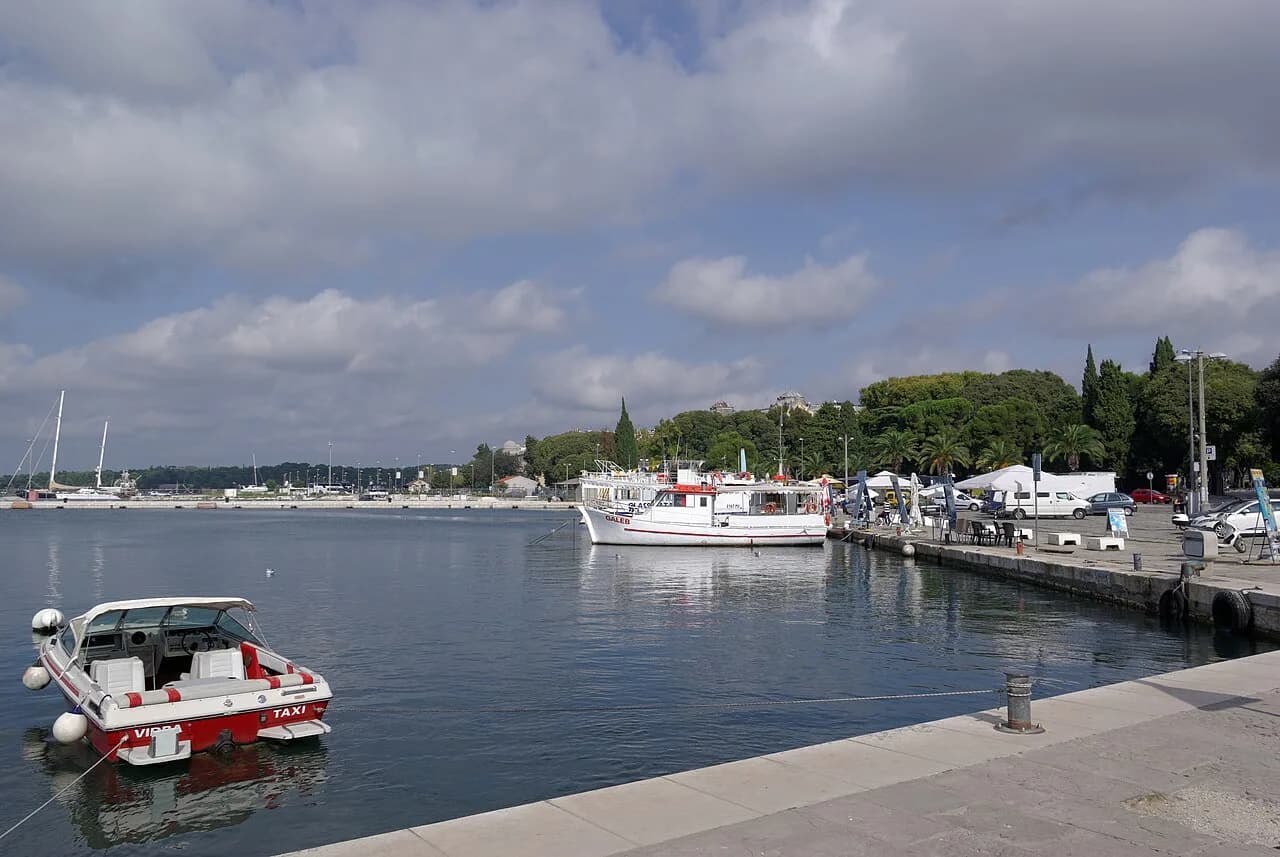
Sergijevaca and Kandlerova are the old town's main pedestrian streets, running between the Forum and the Arch of the Sergii, and they come into their own in the evening when the day-trippers have gone. Srebrna and the surrounding lanes reward aimless wandering. End on the waterfront below the old town, where the harbour lights and the Arena's silhouette close the day.
If your trip continues along the coast, the same logic applies elsewhere: Poreč has a compact old town with its own Roman and Venetian layers, and the things to do in Poreč follow a similarly walkable pattern. For a Venetian rather than Roman counterpoint, the Rovinj guide covers the bell tower and harbour a short drive south.
How long Pula is worth: half a day versus a full day
Half a day covers the Arena, the Arch of the Sergii, the Forum and the Temple of Augustus at an unhurried pace, with time for coffee. A full day adds the Zerostrasse tunnels, the Kaštel fortress and the cathedral, plus a proper evening on the waterfront. Two days lets you add Brijuni or Cape Kamenjak without squeezing Pula itself.
Party size and walking speed, not distance, set the pace: the centre is compact enough that the limiting factor is how long you linger at each stop. Anyone with mobility concerns should plan around the fortress climb, which is the only sustained uphill section of the walking route.
When to go: summer crowds, event days and the bura wind
July and August bring the crowds and the heat, and the Arena, Forum and gates are busiest in the middle of the day. Shoulder months are more comfortable for walking, and early mornings are the best time to see the Roman sights without company. The bura, the cold northerly wind, can arrive at any time of year and makes exposed squares and the harbour front uncomfortable, so keep a layer handy.
Event days at the Arena change what you can see, because staging occupies the interior. The city tourism office publishes its Arena concert listings well ahead, so check the week of your visit before planning the Arena as an interior stop.
Getting around: the centre on foot, with buses to the coast
Everything in the old town is walkable, and staying anywhere near the centre puts the Arena, the Forum and the seafront within easy reach. Local buses run out to the coastal districts and the Verudela peninsula, which is where the city's beaches are. For beaches, restaurants and bars, other guides cover the detail; this route is about the sights.
Pula is also the start of a wider Istrian circuit. Rovinj and the hill towns are day trips by road, while the islands and national parks further south reward a longer stay; the Things to Do in Hvar guide shows how the same Roman-and-Venetian pattern plays out on a Dalmatian island.
Day trips that work from Pula
Brijuni National Park lies just offshore and is reached by boat from Fažana, a short bus or drive from Pula; it suits a full day rather than an afternoon. Cape Kamenjak, at the tip of the Istrian peninsula, is a Nature Park with rugged coastline, best reached with your own transport. Rovinj, with its Venetian bell tower and harbour, is the most rewarding town day trip and works as a half day if you leave early.
The decision comes down to time and transport: Brijuni needs a booked boat and a full day, Kamenjak needs a car, and Rovinj is the easiest to reach without either. Pick one and give it proper time rather than trying to combine two.
Which Pula sights deserve your money and time
Pay for the Arena interior and the fortress terrace; take the gates, the Forum and the mosaic for free. Use the morning for the Roman circuit and the late afternoon for the fortress and the waterfront, and keep one day spare for Brijuni or Rovinj. That order gives you the city's best sights without doubling back or wasting the hottest hours on a climb.
For the individual sights in more detail, the Pula Attractions: 5 Visitor Guides hub breaks out the Arena, the fortress and the old town into separate pages.
Explore more Pula guides
Frequently Asked Questions
Is Pula, Croatia worth visiting?
Yes, if you want Roman monuments without Dubrovnik's crowds. The Arena is one of the best-preserved amphitheatres in the Roman world, and the Forum, Temple of Augustus, Roman gates and Zerostrasse tunnels are all within a short walk of each other. It works best as a one-day stop on an Istrian itinerary rather than a week-long base.
How many days in Pula is enough?
One full day covers the Roman circuit, the Zerostrasse tunnels and the fortress. Add a second day for Brijuni National Park or Rovinj. Half a day is enough only if you limit yourself to the Arena, the Forum and the gates.
What does Pula mean in Croatia?
Pula is the Croatian name for the city; its Italian form, Pola, is also still used locally. Both refer to the same Istrian port city.
Sources
Notes from the Croatian coast
Optional updates when our guides change.
You might also like
Continue reading
More guides you'll find useful