Pula History: A Short Timeline Told Through Its Buildings
Pula's history in a short timeline, from Roman Pietas Iulia to the Habsburg era, told through the Arena, the Temple of Augustus and the Arch of the Sergii.
On this page
Pula's history is best understood as a Roman city that later empires built on top of, not around. The Romans made it the administrative centre of Istria, and the Arena, the Temple of Augustus and the Arch of the Sergii still stand within a few minutes of each other in the compact old core. This guide gives you a short timeline, ties every period to a surviving building, and sets out a walking order for the Roman layer with a realistic time estimate.
What Pula's history comes down to in one answer
Pula was a Roman colony of real consequence, and its surviving monuments are the reason the city rewards a history-minded visit rather than a quick photo stop. It has been the administrative centre of Istria since Roman times, which explains why the civic buildings cluster so tightly on the central hill. Later Venetian and Habsburg rule added layers, but the Roman street plan and the Forum still organise how you move through the centre.
Why Pula was Roman Pietas Iulia and what survives
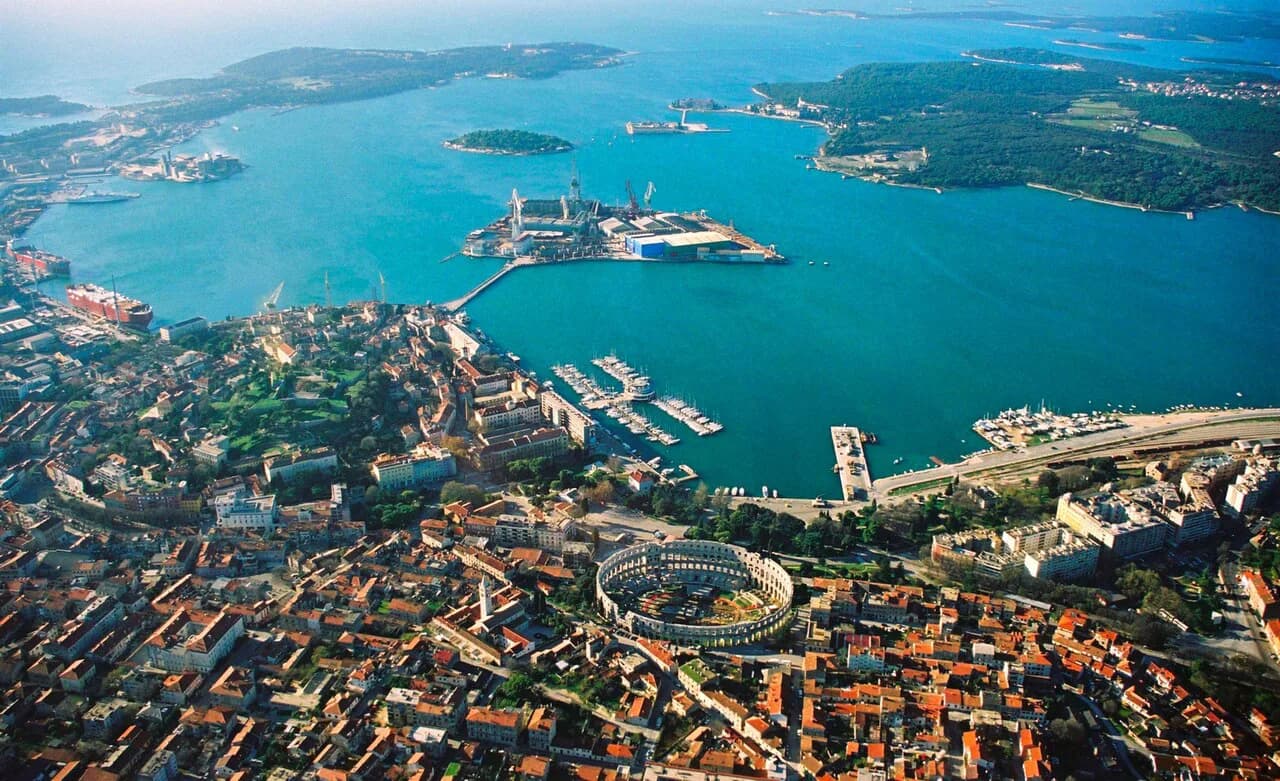
The Roman name Pietas Iulia marks Pula as a colonial foundation, and the city grew into the region's administrative hub. For a visitor, the practical point is that the Roman remains are not isolated ruins scattered across a modern suburb: the Forum, the temple, the triumphal arch and the amphitheatre all sit in or beside the walkable centre. Plan your day around that cluster and the history reads in sequence rather than as a checklist.
The Pula Arena: what the amphitheatre says about the city's scale
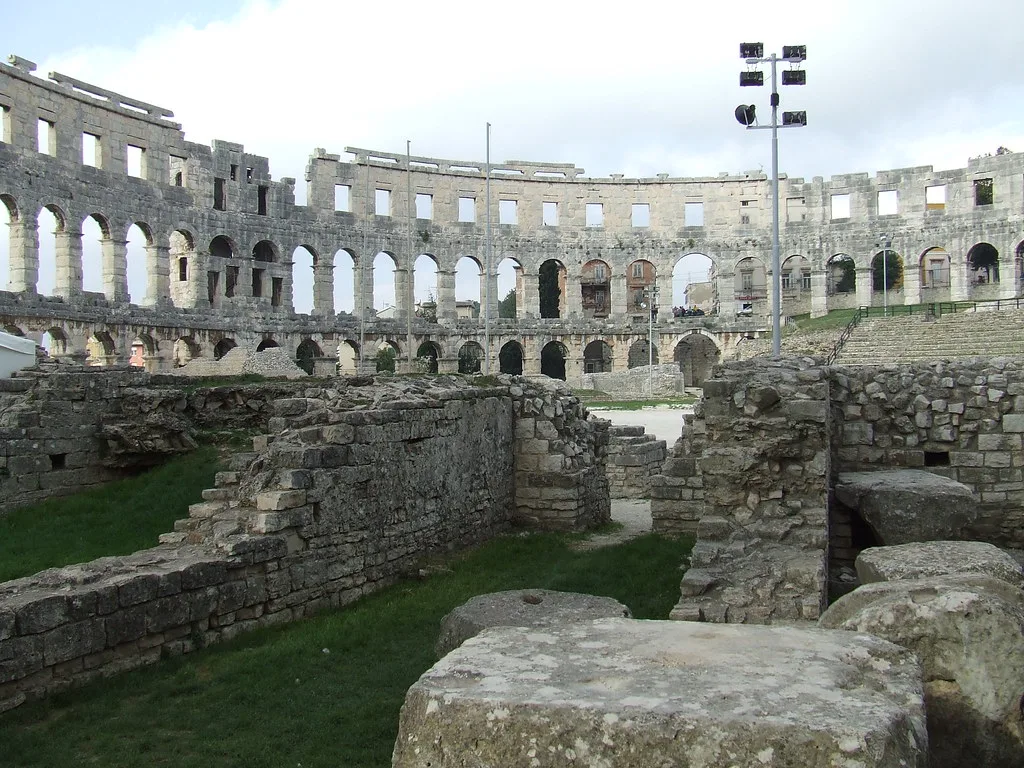
The Pula Arena is one of the best-preserved Roman amphitheatres anywhere, a limestone structure built in the 1st century AD. Historical estimates put its capacity at more than 20,000 spectators, a figure that tells you how large Roman Pula was and how much imperial money flowed through the Istrian peninsula. Walk the outside first to read the arcading and the sheer height of the facade, then decide whether to go inside; the exterior alone carries most of the historical argument.
The Forum and the Temple of Augustus: Pula's Roman civic centre
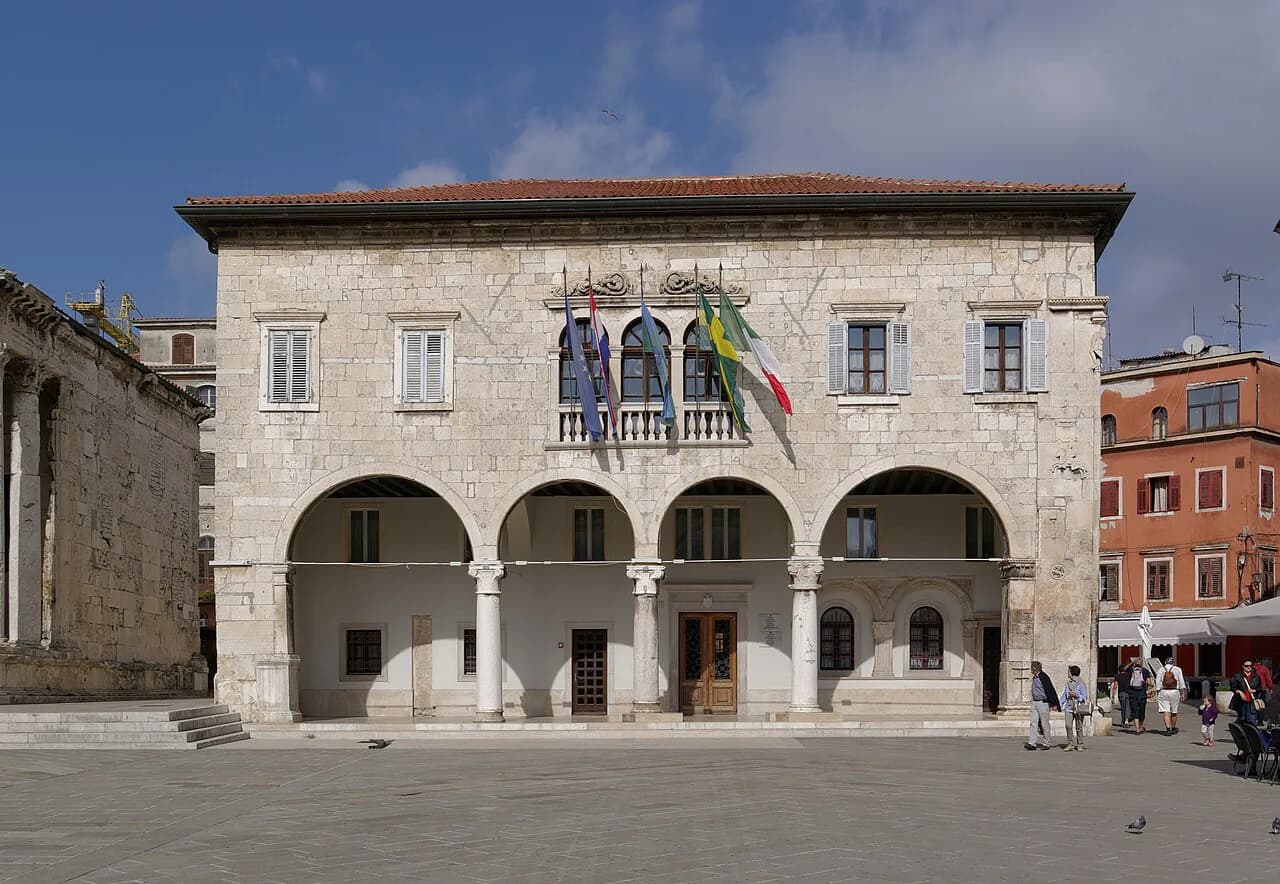
The Forum was the central square of Roman Pula, and the Temple of Augustus, dedicated to the first emperor, still fronts it with Corinthian columns and a decorated frieze. The temple was constructed between 2 BC and AD 14, which places it in the first generation of imperial cult buildings. Stand on the square and look at how the temple relates to the surrounding buildings: this is the clearest place in the city to understand that Pula's civic life has occupied the same ground for two millennia.
The Arch of the Sergii and the Golden Gate: who built it and why
The Arch of the Sergii was erected around 29–27 BC by a prominent local family who backed Octavian before he became Augustus. That date and patronage matter: this is a monument to a family's political alignment as much as to military victory, and the carved inscriptions and motifs commemorate their role in Roman campaigns. It stands at the end of the Golden Gate, so approach it from the old town side and the arch works as a threshold between the city and its Roman past.
The Roman floor mosaic and the Roman Theatre: the remains most visitors miss
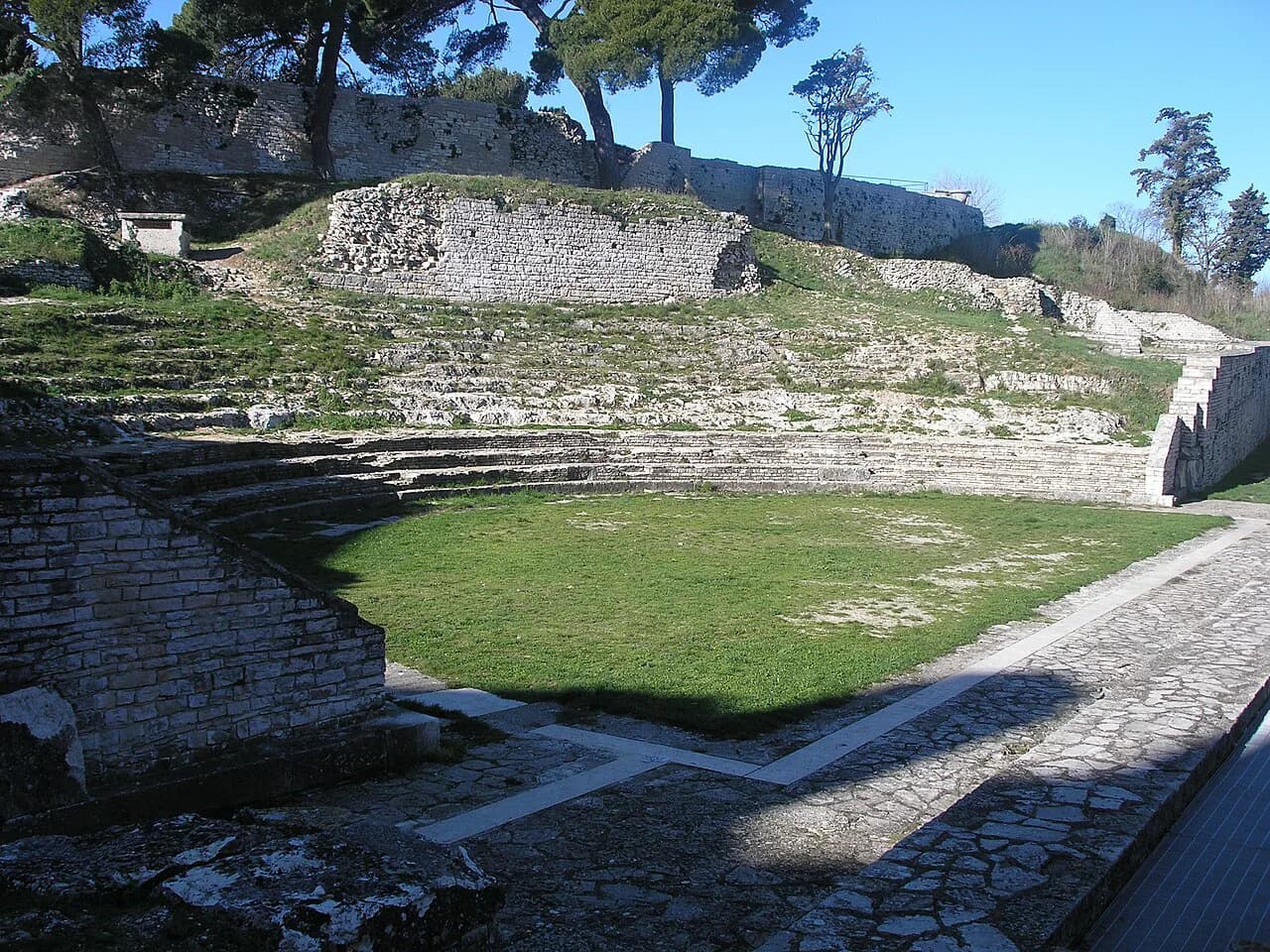
Two Roman remains sit on the edge of most itineraries. The Roman floor mosaic near the Forum, originally part of a Roman house, depicts the punishment of Dirce from Greek myth and was rediscovered by chance after bombing in the Second World War; the craftsmanship justifies a five-minute detour. The Roman Theatre nestles on the hillside beneath the castle, less preserved than the Arena but still legible in outline, and far quieter. Treat the two as one short add-on rather than separate outings.
The Venetian fortress on the central hill and the Historical and Maritime Museum of Istria
Start at the Arena, then walk towards the centre to the Forum and the Temple of Augustus, continue to the Arch of the Sergii at the Golden Gate, and finish with the mosaic and the Roman Theatre before climbing to the fortress museum. Done at an unhurried pace, with time to read the inscriptions and stand inside the temple, the Roman layer is a comfortable half-day; adding the museum makes it a full day. The distances are short, but the hill to the fortress is the one real climb, so keep that for when you still have patience for it. If you are still planning what to see beyond the Roman layer, our Things to Do in Pula guide sets out the rest, and the Pula Old Town guide covers the streets between the monuments.
How to walk the Roman layer of Pula in a sensible order
Start at the Arena, then walk towards the centre to the Forum and the Temple of Augustus, continue to the Arch of the Sergii at the Golden Gate, and finish with the mosaic and the Roman Theatre before climbing to the fortress museum. Done at an unhurried pace, with time to read the inscriptions and stand inside the temple, the Roman layer is a comfortable half-day; adding the museum makes it a full day. The distances are short, but the hill to the fortress is the one real climb, so keep that for when you still have patience for it.
Where to see the later layers of the city alongside the Roman ones
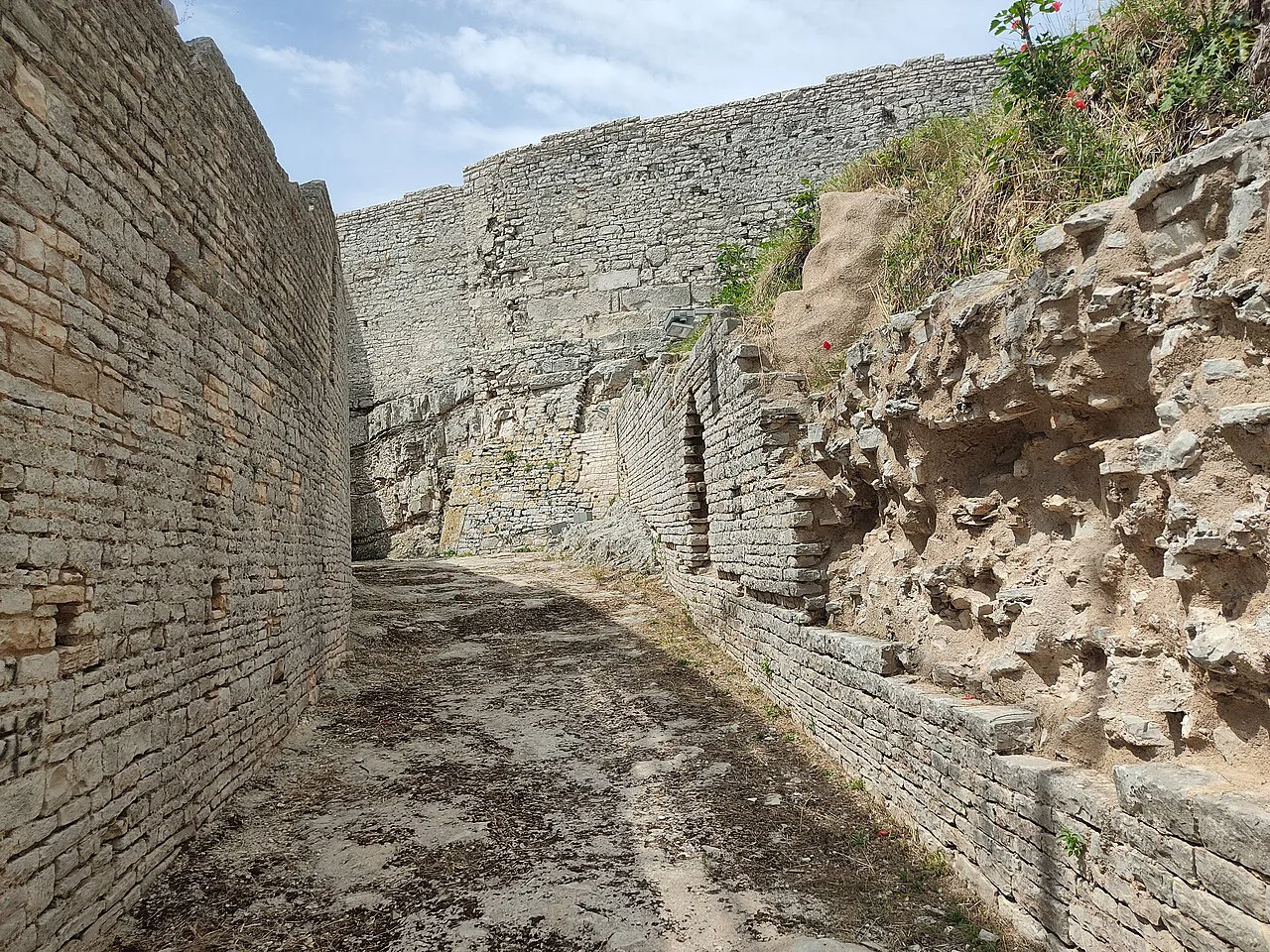
The Venetian fortress is the most straightforward place to see what came after Rome, because its walls and its museum collection both belong to later centuries. Beyond that, read the old town fabric itself: the medieval and Habsburg street pattern sits on top of the Roman plan, and the Forum remains the hinge between the two. If your interest is mainly Roman, one pass through the fortress is enough, and the rest of your time is better spent at the Arena and the temple.
How many days in Pula is enough for the historic core
One full day covers the Roman layer and the fortress museum without rushing. Two days lets you repeat the Forum in the evening light, add the Roman Theatre and mosaic properly, and still leave the afternoon free. Anything beyond that is about using Pula as a base for the rest of Istria rather than seeing more of the city's history. If you are choosing between sights, the Arena, the temple and the arch are the three that carry the story.
Which Pula sights carry the history best
If you see only three things, make them the Arena, the Temple of Augustus and the Arch of the Sergii, because each one anchors a different part of the Roman story: imperial spectacle, civic religion and family politics. Add the fortress museum if you want the centuries after Rome explained rather than inferred, and the mosaic and Roman Theatre if you have an hour to spare. That order turns a scatter of old stones into a readable timeline.
Explore more Pula guides
Frequently Asked Questions
Was Croatia ever part of the Roman Empire?
Yes, and Pula is one of the clearest places to see it. The city was a Roman colony known as Pietas Iulia and served as the administrative centre of Istria in Roman times, leaving the Arena, the Temple of Augustus and the Arch of the Sergii still standing in the centre.
Is Pula worth visiting for its history alone?
The Roman monuments are unusually concentrated: an amphitheatre, a temple, a triumphal arch and a mosaic all within a short walk. If Roman civic architecture interests you, Pula delivers more per square metre than most Adriatic towns, and one full day covers the core.
Sources
Notes from the Croatian coast
Optional updates when our guides change.
You might also like
Continue reading
More guides you'll find useful