Pula Roman Ruins: What to See and How to Walk Them
Pula's Roman ruins run from the Arena and Forum temples to the Golden Gate and the small Roman theatre. Here is what each one was and how to walk them.
On this page
Pula's Roman ruins are compact enough to walk in one loop of about two to three hours, starting at the Arena and finishing at the Archaeological Museum of Istria. The amphitheatre, Forum temples, Golden Gate and surviving wall stretches all sit within the old town, so you need no transport between them. Here is the order that avoids backtracking and what each ruin originally was.
The Roman layer sits on and under the everyday streets of the centre, which is why a temple's back wall turns up inside the Town Hall and a theatre hides below a Venetian fortress. What looks like a random slab of stone usually had a Roman job behind it. Pair this walk with the wider things to do in Pula if you want to fill the rest of the day.
What survives of Roman Pula, and where it sits
The surviving monuments cluster in the old town, with the Arena on its edge and the Forum, Golden Gate and Twin Gates inside the line of the walls. That layout is what makes one walk work: you start among the amphitheatre's arches and move steadily through the gates into the centre.
The Forum was the administrative, religious and commercial heart of Roman Pula, laid out on ground reclaimed from the shore. The tourism office records that it was built in the 1st century BC by infilling the coast, and that it carried the city's religious, judicial, administrative and commercial functions. Treat the route as layers rather than a museum: Roman work, medieval rebuilding and Venetian fortification share the same few streets.
The Kaštel above the theatre dates from 1630 and is not Roman, but it explains how the theatre below survived in its present shape. Seeing the two together on one hillside is the clearest lesson in how Pula was built over rather than cleared.
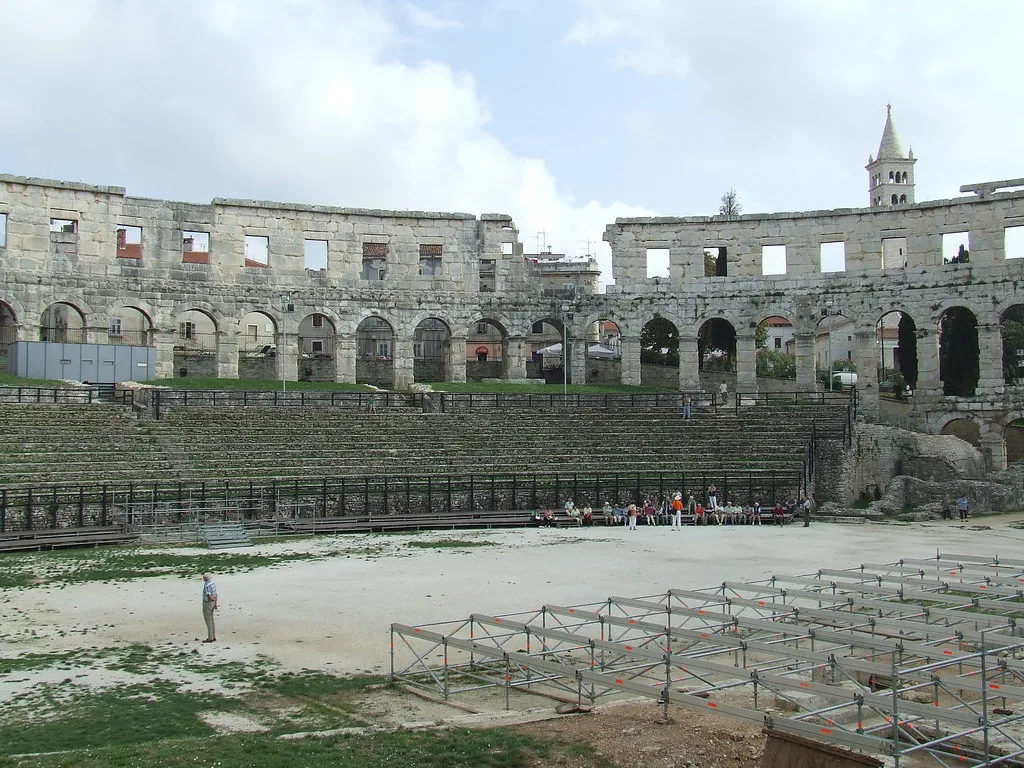
The Pula Arena: the amphitheatre that frames the city
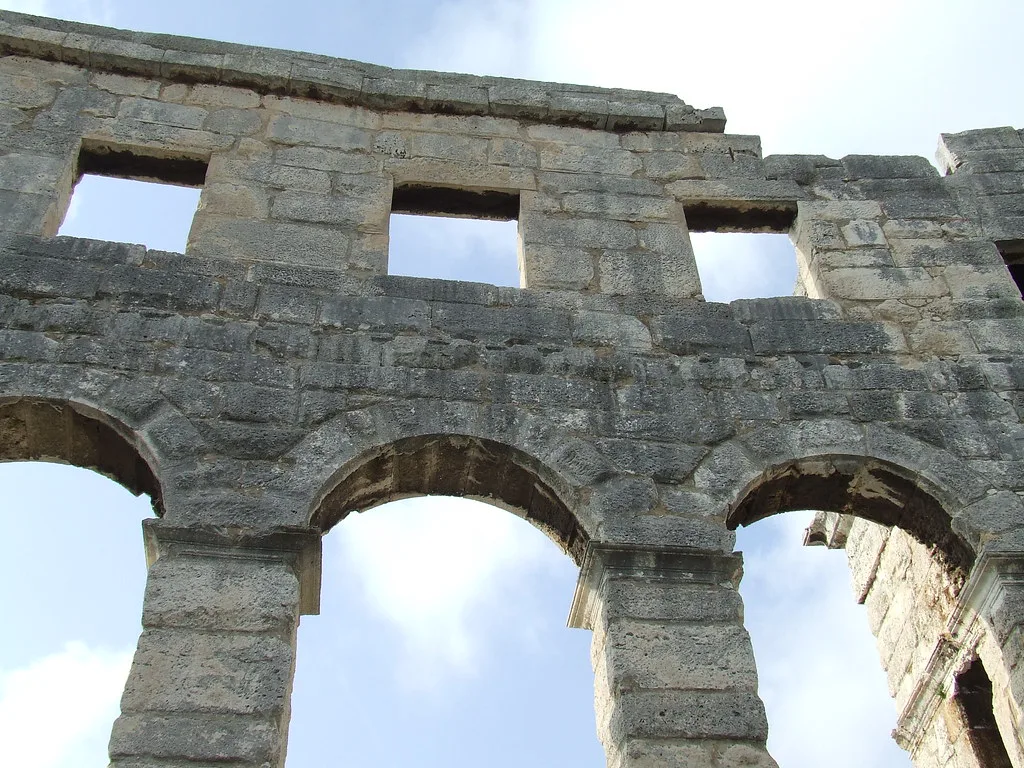
The Arena is where most visits begin and end, and it is the one sight you can appreciate without buying anything. Walking the full exterior takes perhaps fifteen minutes and shows the tall outer arcades on the seaward side and the lower rings where those arches have gone. Go early or late for the cleanest light on the stone and the thinnest crowds.
You are looking at an amphitheatre built into a slope, with tiered seating rising inside the oval. The tourism office describes the Arena as the city's best-known and most significant monument, and as the building from which every tour of Pula starts and finishes.
Going inside is a separate decision. Tickets and opening months change through the year, and the tourism office keeps current visitor information rather than a fixed year-round figure. If you only want the photograph, the exterior arches deliver it; to stand on the seating tiers, allow time for the interior too.
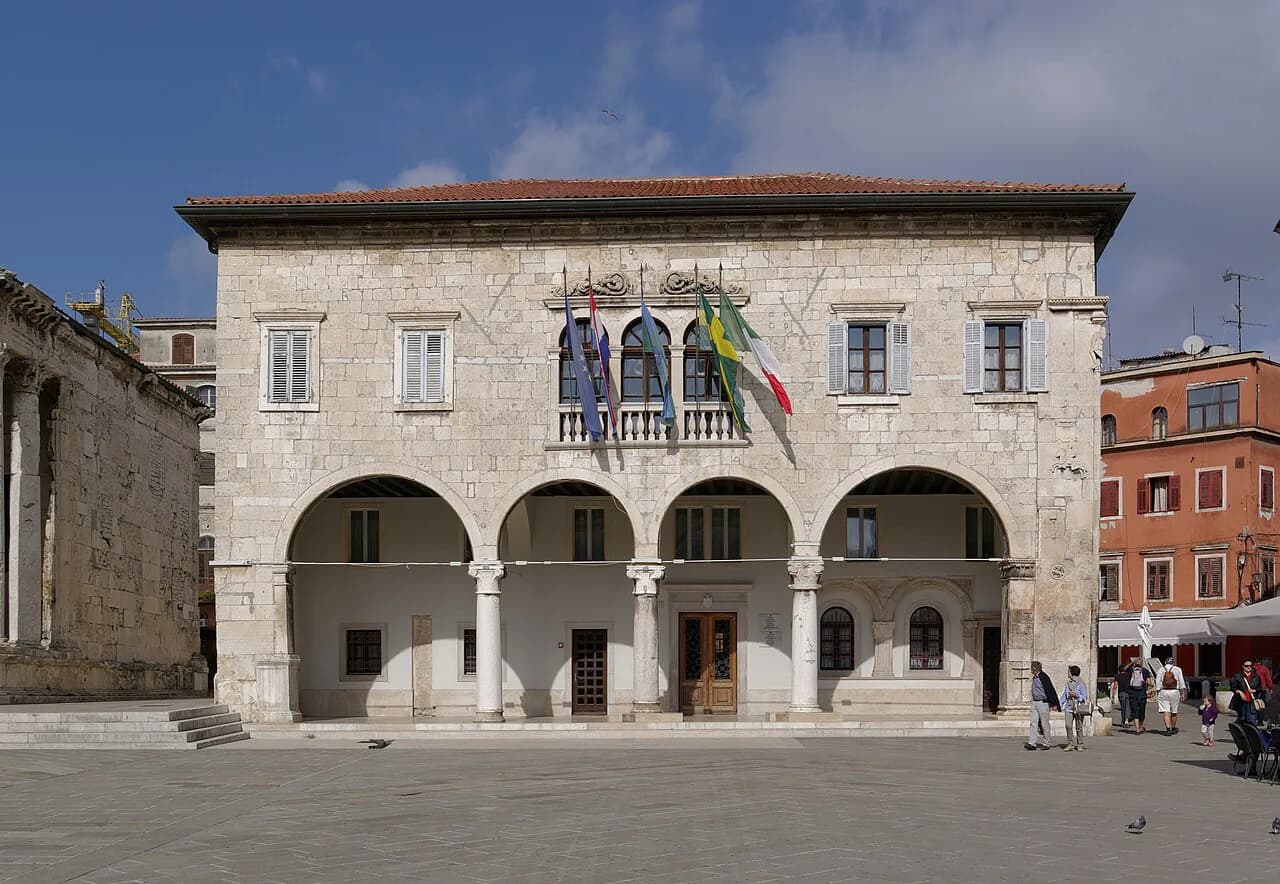
The Forum: the Temple of Augustus and the Town Hall
The Forum is where Roman Pula makes most sense, because its buildings still stand or partly stand in their original positions. The northern side held two matching side temples flanking a central temple to Jupiter, Juno and Minerva. The Temple of Augustus survives intact, while the second side temple is reduced to its rear wall.
That rear wall was reused in the 13th century when the city council building went up against it, which is why the Town Hall forms one edge of the square today. Look for the join: a plain medieval facade on the square side, Roman masonry behind. The Temple of Augustus is dedicated to the goddess Roma and the emperor Augustus.
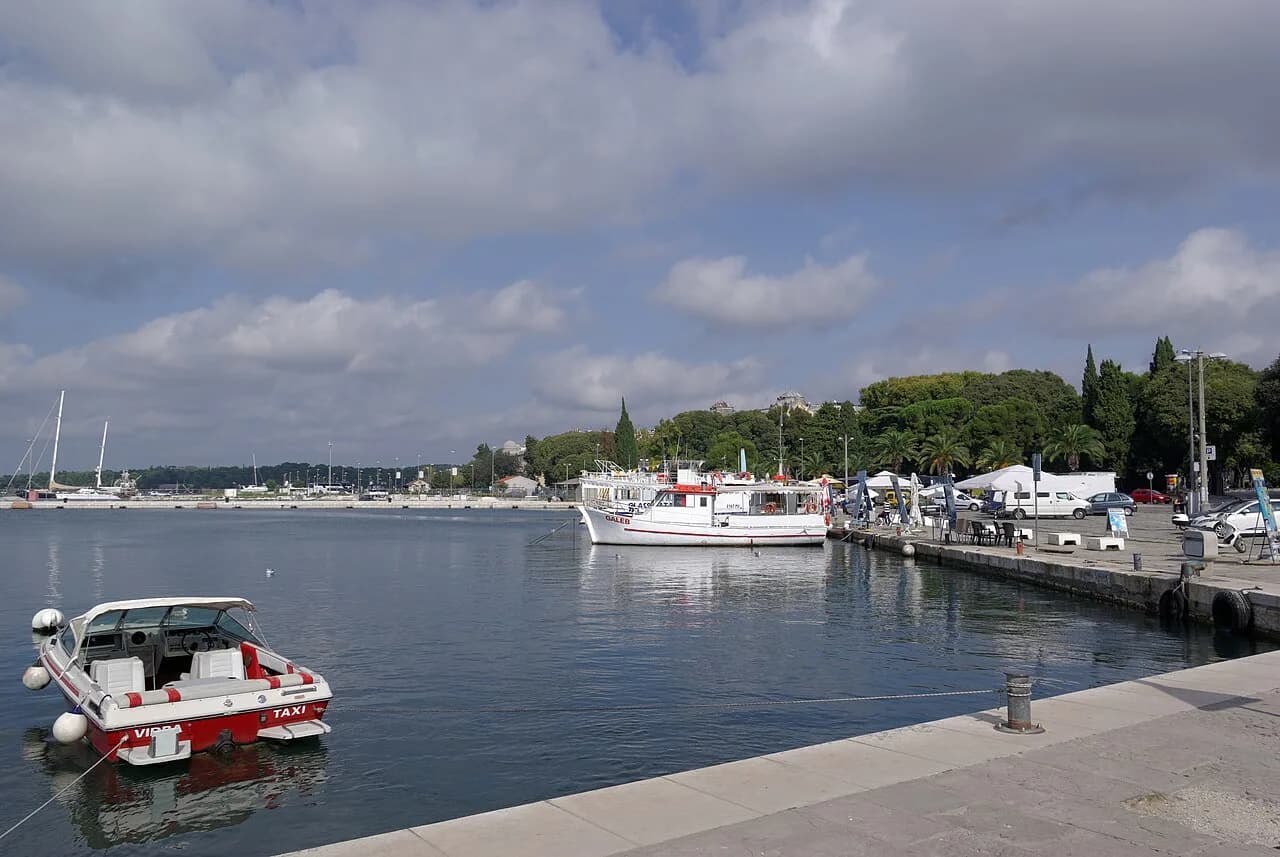
The Forum is the most exposed stretch of this walk. In high summer the stone throws heat back by mid-morning, and it is where larger groups gather. Cross it early, rest on the temple steps briefly, then move into the shaded streets behind; the square sits at the foot of the city hill on the western side, close to the water.
The Sergii Arch (Golden Gate) and the city walls
The Golden Gate, properly the Arch of the Sergii, was raised by the Sergii family in honour of members who held high office in Pula. It is free to walk under and stands on the street leading out of the old town, so it fits between the Forum and the eastern gates. The carving on the outer face is the reason to stop rather than stride through.
Parts of the ancient and medieval wall circuit survive between the Twin Gates and the Giardini square, giving you a second free sight on the same loop. The Twin Gates are a Roman gate later absorbed into the fortifications. Walk that stretch slowly; it is the easiest place to see how the street plan was sealed and rebuilt, and the polished pavements are slick after rain.
The Small Roman Theatre below the Kaštel
The Small Roman Theatre sits in the slope below the Kaštel, on the hill above the old town, and is easy to miss because the streets close in around it. The tourism office calls it one of the most spectacular performance spaces in this part of Europe, and it still reads as a theatre: semicircular seating, a compact stage area, the city rising behind.
Climb to it after the Forum rather than before, because the gradient is steady and the reward is shade and quiet after the open square. Allow a quarter of an hour rather than a rushed look, and take in the 1630 fortress above while you are there.
Zerostrasse and the underground galleries on Carrarina
The underground galleries known as Zerostrasse have entrances on Carrarina street, at Carrarina 3 and Carrarina 1, and they are the part of Pula most day visitors never see. The tunnels run beneath the city as shelter and storage space, giving a cool, dark contrast to the sunlit Forum. They are also a sensible choice when the bura blows or rain sets in.
Treat the galleries as a weather-dependent add-on rather than a fixed stop, since access follows the season and the tourism office lists them with the city's other museums and galleries. The same listing covers the Historical and Maritime Museum of Istria, the Museum of Contemporary Art of Istria and the Museum Olei Histriae.
The Archaeological Museum of Istria
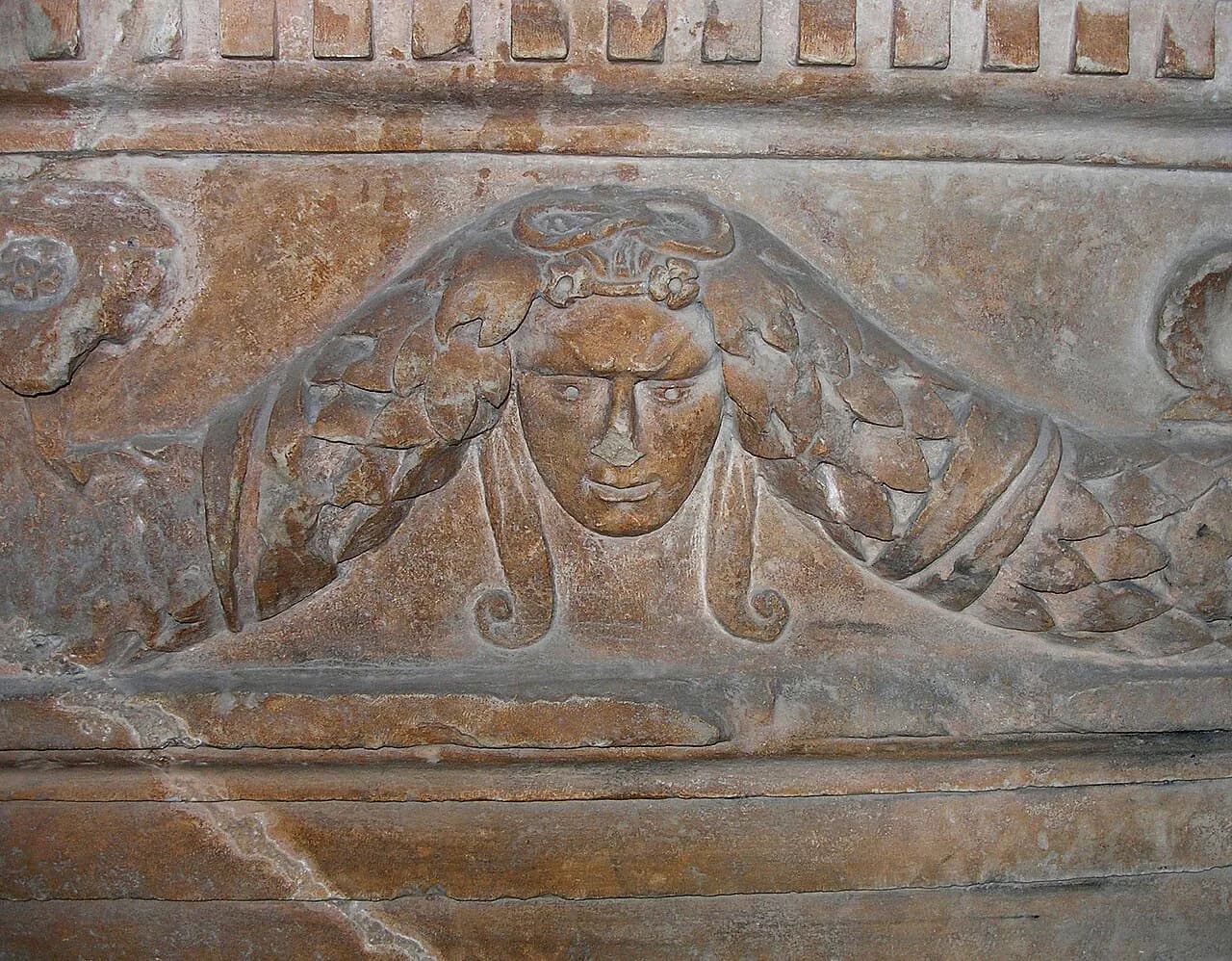
The Archaeological Museum of Istria is the place to finish, because it explains the stones you have just walked past. Its collection began in 1802, when Marshal Marmont started gathering stone monuments in the Temple of Augustus. Several pieces now indoors once stood on the Forum itself.
Go round it after the walk rather than before, so the inscriptions, capitals and fragments have something to attach to. Admission and seasonal hours are given in the city's museums and galleries listing. If your time in Pula is short, drop this first, since the buildings themselves carry the story.
Mosaics and Roman houses: Dirce and Agrippina
Two domestic remains reward a small detour: the mosaic of the Punishment of Dirce, whose central scene shows the mythological punishment of Dirce, and Agrippina's House, both listed among the city's museum and gallery sites. These are floor-level remains rather than standing buildings, so they need a few minutes of looking down rather than a circuit.
Slot them between the Forum and the Golden Gate if you follow the walk in order, or save them for a second morning. If you want to stretch the Roman theme beyond the city, the Brijuni archipelago lies about 6 km offshore and is reached by a regular daily boat from Fažana; the islands were proclaimed a National Park in 1983.
Roman Pula in one continuous walk
Start at the Arena and circle the exterior before deciding whether to go in. Head into the old town to the Forum for the Temple of Augustus, the second temple's back wall and the Town Hall, then continue to the Golden Gate. Loop east to the Twin Gates and the wall stretch towards Giardini, climb to the Small Roman Theatre below the Kaštel, and finish downhill via Carrarina for the galleries or the museum.
That order keeps you moving one way through the core and puts the uphill work in the middle rather than the end. It also puts the exposed Forum early, which matters in July and August. If you would rather build the day around one anchor, the Arena and the Forum justify the trip on their own.
For orientation, the tourist office is at Forum 3, 52100 Pula, and answers visitor questions by telephone and email. A current map and the wider list of city sights help you place the non-Roman stops around the same route.
How long the circuit takes
An efficient pass over the free exteriors and the Forum takes about two hours on foot, without going inside anything. Add the Arena interior, the theatre climb and the museum and you are looking at most of a day. Splitting it works well: Arena and Forum on the first morning, then the gates, theatre, galleries and mosaic on the second, since the latter pair are indoor stops that suit a hot or unsettled day.
When to go: summer heat, crowds and the bura
Late spring and early autumn give the best balance: warmth enough to sit on the temple steps without the full summer press. In July and August, start at the Arena before the day heats up and be through the Forum before midday. The square has almost no shade, and the Arena's outer ring offers more than its interior.
Crowds follow the ships and coach groups, and the Forum is where they concentrate. Working the route in reverse, or breaking at the galleries during the busiest hours, keeps you out of the crush. The bura, the cold north-easterly wind, funnels along the waterfront and through open squares, making the Arena pavement and the Forum uncomfortable even on a bright day.
The tourism office runs an events calendar for the city, which matters because Arena and Forum concerts can close or crowd parts of the route. Concerts at the Arena appear on that calendar, so glance at it before a day that depends on going inside.
Ticket prices, seasonal access and what to skip
Entrance charges at the Arena, the galleries and the Archaeological Museum of Istria are set by the sites and change with the season, so confirm the current euro price at the entrance or through the tourism office. Check the official figure rather than a forum post, since rates quoted by other travellers go out of date. The free part of the walk, the Arena exterior, Forum square, Golden Gate, Twin Gates and wall stretch, covers the essentials.
With an hour, do the Arena exterior and the Forum and stop there; those two give you the amphitheatre and the temples. With half a day, add the Golden Gate and the Small Roman Theatre. Leave the museum and galleries for a return visit rather than sprinting through them.
Is the Roman circuit worth a full day?
Yes, if you go inside the Arena and add the museum; no, if you only want the headline sights. The free walk over the Forum, through the Golden Gate and up to the Small Roman Theatre delivers most of the Roman story in about two hours. The ticketed stops deepen it rather than replace it.
Build the day around the Arena and the Forum, put the uphill stretch to the theatre in the middle, and hold the galleries and museum as wet-weather or second-morning options. That structure survives heat, crowds and a change in the wind.
Explore more Pula guides
Frequently Asked Questions
Are the Pula Roman ruins free to visit?
Several are. The Arena can be seen from the surrounding pavement and its outer arcades, the Forum is an open square, and the Golden Gate, Twin Gates and surviving wall stretches are public streets. The Arena interior, the Zerostrasse galleries and the Archaeological Museum of Istria are ticketed, so confirm the current euro price at the entrance rather than relying on older figures.
Where is Pula located?
Pula sits at the southern tip of Istria on Croatia's north Adriatic coast, with the Brijuni archipelago about 6 km offshore across the Fažana Channel. The Roman monuments are concentrated within the old town, which is why the Arena, Forum, gates and theatre can all be walked in one loop.
Sources
Notes from the Croatian coast
Optional updates when our guides change.
You might also like
Continue reading
More guides you'll find useful