How Many Days in Pula? What 1, 2 and 3 Days Cover
Two full days covers Pula's Roman sights and old town at an easy pace. See what one, two and three days add, and when Pula works better as a base.
On this page
Two full days is enough for Pula. Day one takes in the Roman core — the Arena, the Forum with the Temple of Augustus, the Arch of the Sergii and the Archaeological Museum — while day two adds the Zerostrasse tunnels, the Pula Cathedral and the coast at Punta Verudela south of the centre. This guide sets out what one, two and three days actually cover, how the city's layout affects your timing, and when Pula works better as a stop than a base. For the full menu of sights, see Things to Do in Pula, and for the lanes themselves see Pula Old Town.
How many days in Pula: the short answer
A second day lets you slow down, go underground at Zerostrasse and reach the coast, which sits on a separate peninsula rather than at the end of the old-town streets. Plan around four Roman sights — the amphitheatre, the temple, the triumphal arch and the main square on the site of the old Roman Forum — and the rest of the town fits in the gaps.
Pula is Istria's largest city, and its historic centre mixes Roman relics with an unpretentious working-port atmosphere rather than resort polish. If you are content with the Roman core plus a wander through the lanes, two days leaves slack; if you want swimming, the tunnels and a boat trip, three days is the more comfortable shape.
What one day in Pula covers: the Arena, the Forum and the old town
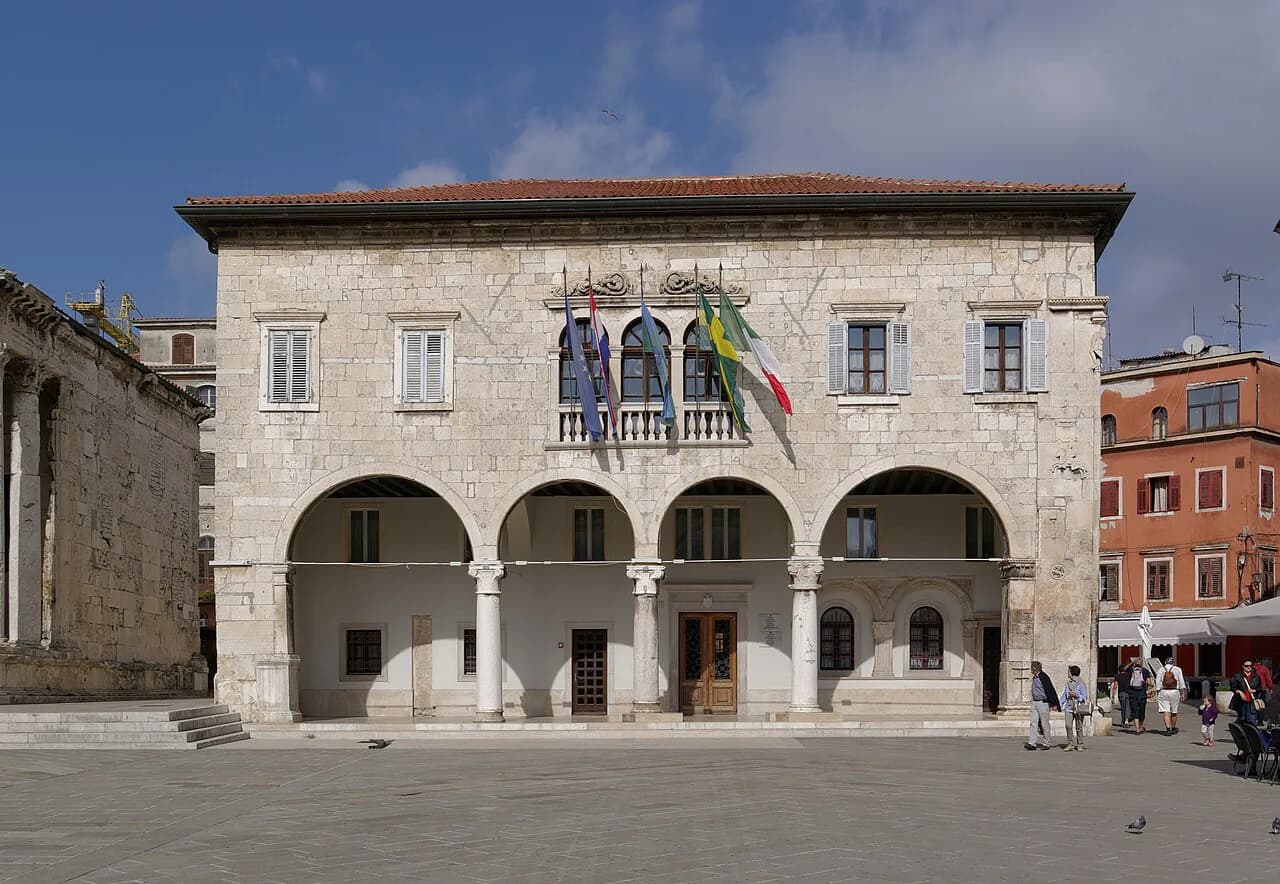
One day belongs to the Romans. Start at the Pula Arena, the city's star attraction and one of the largest Roman amphitheatres anywhere, and give the facade and the interior proper time. From there walk into the old town for the Temple of Augustus, the Arch of the Sergii and the main piazza, which occupies the site of the Roman Forum.
The Archaeological Museum and the Pula Cathedral sit close enough to fold into the same circuit. The old town's lanes are narrow and cobbled, so a morning for the Arena and an afternoon for the Forum side works better than trying to sprint between them.
Treat the Arena as more than a monument. It doubles as an events venue: the Pula Film Festival, held in summer, uses the amphitheatre for screenings, so an evening event can reshape your day. Check what is on during your dates before fixing your itinerary.
What two days add: Zerostrasse, the cathedral and the Verudela coast
The second day goes beneath and beyond the Roman core. Zerostrasse is a network of underground tunnels built for storage and protection during the First World War, and it gives the city a different dimension from the sunlit squares above. Pair it with a slower pass through the Pula Cathedral and the lanes you skipped on day one.
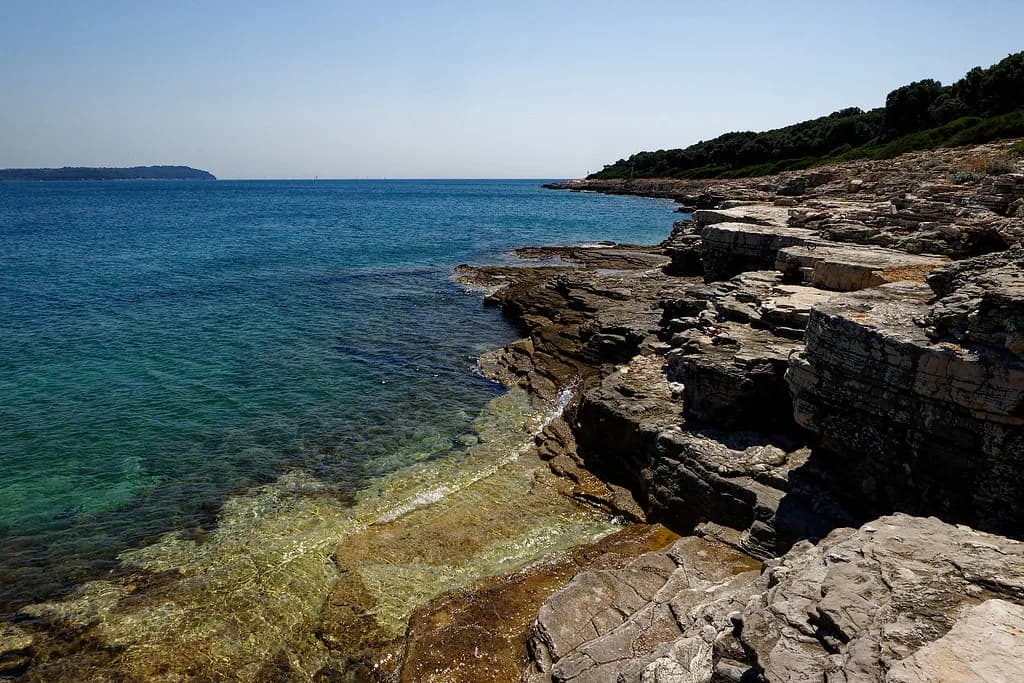
Then head south to Punta Verudela, the peninsula below the city, where rocky bays provide the easiest swimming close to town. The coast sits on its own peninsula south of the centre rather than at the end of the old-town streets, so the trip out and back eats into the day. Budget a half-day if you want both a swim and a proper look at the peninsula.
Further south, Rt Kamenjak is a wilder, more secluded stretch of coast, known for swimming, sunbathing and scuba diving, that suits travellers with a car and a spare afternoon. Decide between Verudela and Kamenjak rather than attempting both.
What a third day adds: Brijuni boat trips and the wider Istrian coast
A third day earns its place if you want to get on the water. Boat trips run from Pula to the Brijuni Islands, an offshore archipelago that makes a natural full-day excursion and a complete change of pace from the city's stone streets. Treat it as a day of its own rather than squeezing it into an afternoon.
Alternatively, use the extra day for the surrounding wine-region villages, which sit inland from Pula. That is a day of driving and slow stops rather than sightseeing, and it only makes sense if you have a car; travellers relying on public buses will find the coast and the city easier to string together.
Beyond Pula, Rovinj is the obvious second Istrian town, and an itinerary split between the two gives you a Roman city and a harbour town in one trip. The distances are short, which is why the pairing works.
How Pula's layout affects your timing: from the Roman Forum to Punta Verudela
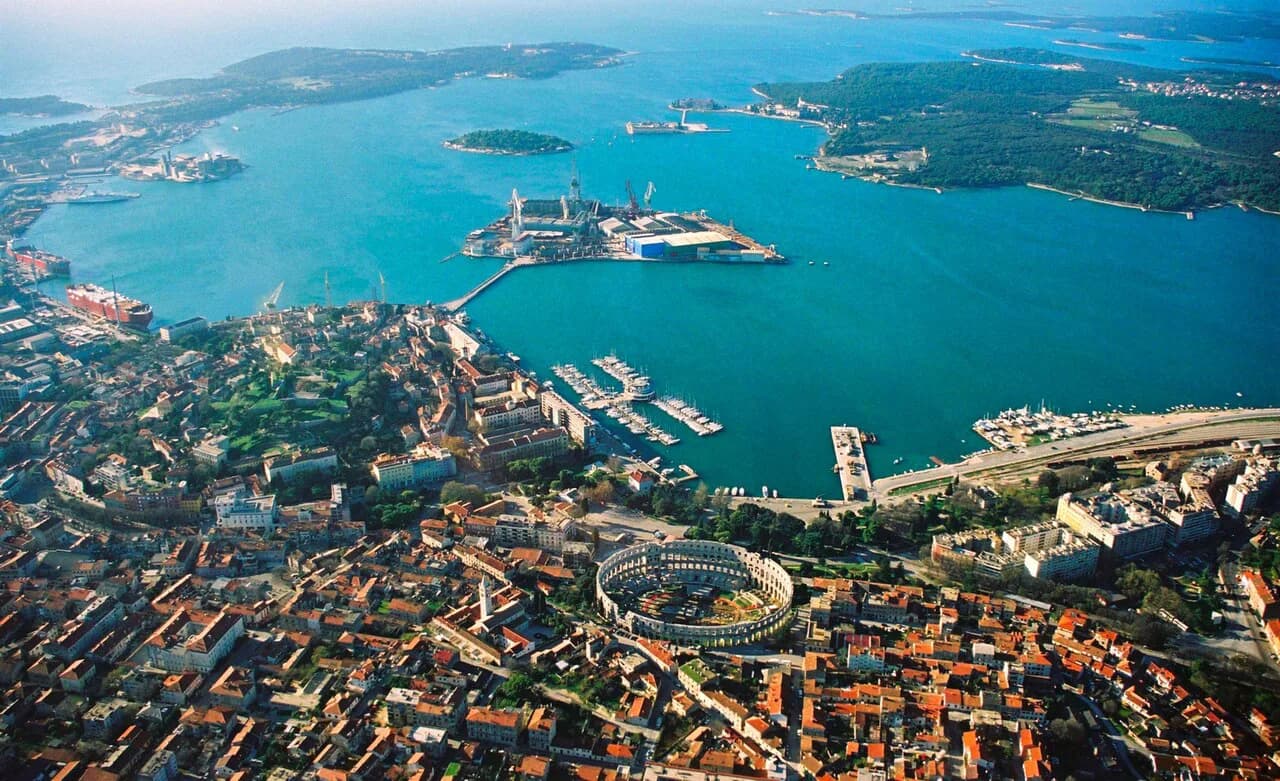
The old town core is dense and walkable, with the Arena, the Forum, the temple and the arch all within a compact area, which is why the headline sights fit into a single day. The coast is spread along the Punta Verudela peninsula to the south, and public buses also link the city with other Istrian towns and resorts.
That split is the single biggest factor in how many days you need. Two half-days in the centre plus one half-day on the coast is more realistic than trying to combine them.
Weather and season: when the days stretch and when the town is busiest
Pula has a Mediterranean climate, which makes it a beach destination as much as a monument one, with rocky bays around Punta Verudela and swimming, sunbathing and scuba diving on the agenda for much of the warm season. In the height of summer the days are long, so you can pair a morning of sightseeing with an afternoon on the coast without hurrying.
Summer is also when the Arena hosts events. The Pula Film Festival uses the amphitheatre for screenings in summer, and the Outlook Music Festival, held in late summer and dedicated to bass music, is extremely popular, so an event can change how the centre feels and how quickly you can move through it.
Shoulder months suit travellers who want the monuments without the peak-season press, though the sea is cooler. Check opening months for any sight you are building a day around, since a single closure can tilt the balance towards an extra day in town.
Should Pula be a base or a stop on an Istria trip?
Pula works well as a stop of two nights, and less well as a week-long base unless you have a car. The city's own sights concentrate in the centre, while Brijuni, Rt Kamenjak and the hill villages need transport to reach. Without wheels, you end up relying on boat trips and buses, which narrows what a base actually buys you.
As a stop, Pula slots neatly into an Istria route: arrive, spend two full days, then move on to Rovinj or inland. As a base, it suits travellers who want a city with a working port, a compact old town and access to the peninsula's beaches, and who are happy to take day trips rather than chase a new hotel every night.
Getting there is straightforward. Pula has its own international airport, and from other Croatian destinations such as Zagreb or Rijeka you can use a train or bus, while local public buses link the city to other Istrian towns and resorts.
When to move on: fitting Pula into a longer Istria itinerary
Move on once you have done the Roman core, seen the coast and either taken a boat trip or explored the wine-region villages. In practice that is two full days for most travellers and three if the water or the interior appeals. Beyond that, extra days are better spent elsewhere in Istria, where Rovinj and the inland villages offer a different flavour within a short drive.
The mistake to avoid is treating Pula as a one-night fly-by. The Arena, the Forum and the temple deserve a full day, and arriving late and leaving early leaves you with a rushed circuit and no time for the tunnels or the water.
Two days, or three with a boat trip?
Book two full days in Pula and add a third only if a Brijuni boat trip or a day in the Istrian interior matters to you. Anything less and you will be choosing between the Arena and the coast rather than seeing both.
If you are still deciding how to fill those days, start with the Roman core and build outward towards the water, then check the Arena's event programme for your dates before you lock in an evening. For the full menu of sights across the city, see Things to Do in Pula.
Explore more Pula guides
Frequently Asked Questions
Is Pula worth visiting for a short break?
Yes, if you want Roman monuments in a working port city rather than a polished resort. The Arena, the Temple of Augustus, the Arch of the Sergii and the Forum square sit close together, so a short break covers a lot of ground without long transfers.
Do you need a car in Pula?
Not for the city itself, which is compact and walkable, and boat trips reach the Brijuni Islands. A car helps for Rt Kamenjak, a wild stretch of coast south of the city that suits travellers with their own transport, and for the surrounding wine-region villages.
Sources
Notes from the Croatian coast
Optional updates when our guides change.
You might also like
Continue reading
More guides you'll find useful