
Pula Arena: A Visitor's Guide to Pula's Roman Amphitheatre
Pula Arena is worth an hour of your time and is easy to fold into a half-day in Pula: it sits on Flavijevska Street, a short walk from the old town, and it is one of the best-preserved Roman amphitheatres anywhere. Its outer walls and towers survive in a way few Roman arenas do, which is what makes the visit more than a quick photo stop. This guide covers what you are looking at, how to walk there, what to see inside, seasonal hours, euro ticket prices, free extras and the event days that can shut the site.
What Pula Arena is and why it stands out
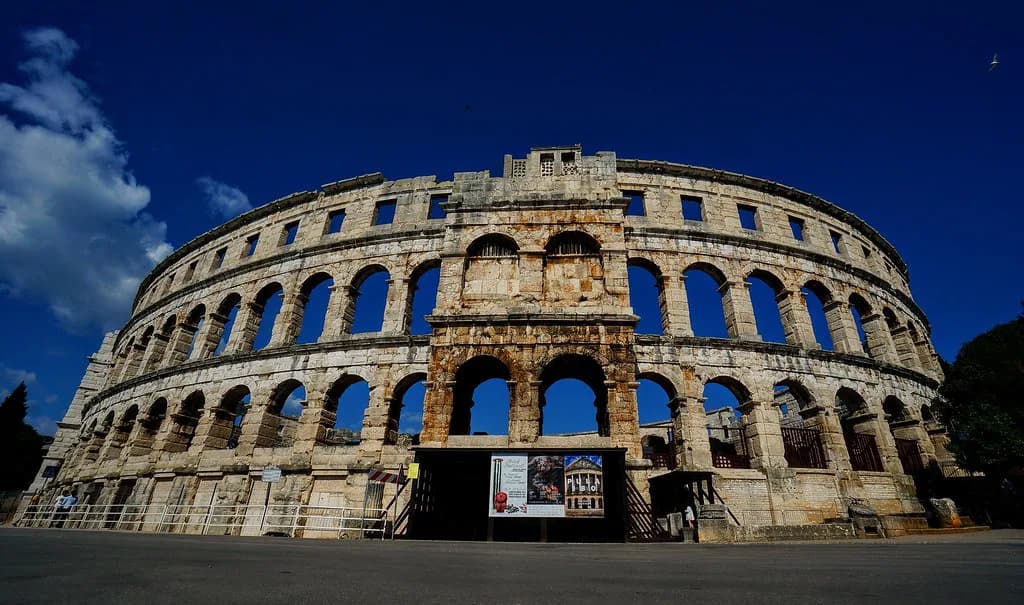
The Arena is a first-century amphitheatre built when Pula was a Roman colonial centre known as Colonia Pietas Iulia Pola, and its name comes from the Latin harena, the sand that covered the central floor. Construction is dated to between 27 BC and AD 14, which places it in the early imperial building boom that also produced Rome's own amphitheatres. What survives here is exceptional: the site is valued for its towers and preserved outer walls, the elements that give the building its distinctive silhouette against the Pula skyline.
It is a cultural property of national significance rather than a ruin you wander over at will, and the Archaeological Museum of Istria manages it alongside a set of other historic sites in and around the city. That management shows in the visitor rules: no climbing on the raised structures, out of concern for both safety and damage to the stone.

Where Pula Arena is and how to get there
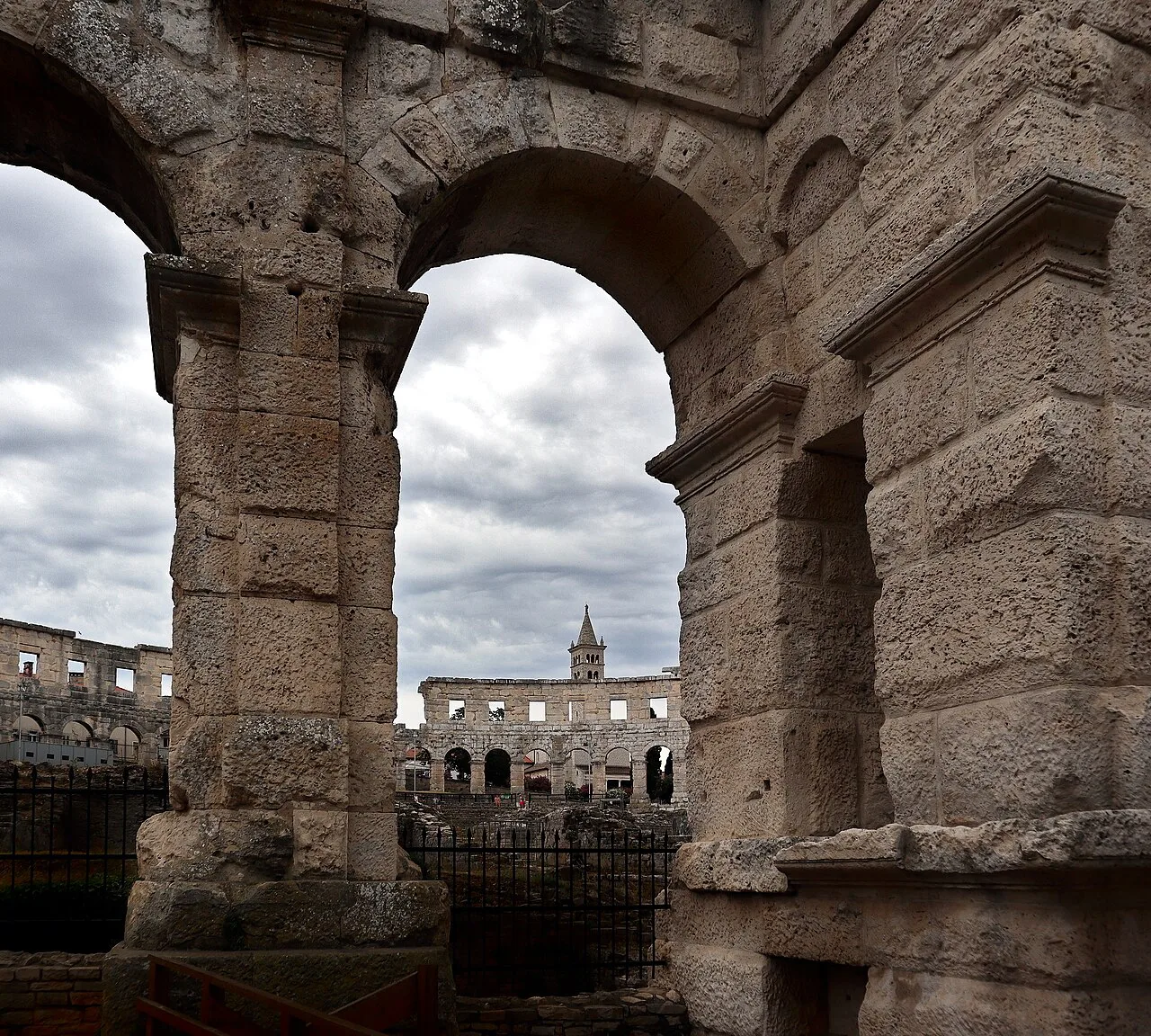
The address is Arena, Flavijevska Street (no street number), 52100 Pula, on the north-west side of the old town centre. From the Riva, Pula's waterfront promenade, you walk inland past the harbour buildings and up towards the amphitheatre; the outer ring is visible well before you reach the entrance, so navigation is straightforward. Allow a comfortable stroll rather than a taxi ride, and treat the Arena as the first or last stop on a walking circuit of the centre. You can plan the rest of the day with our Pula Attractions: 5 Visitor Guides.
If you need to confirm anything before setting out, the ticket office number is +385 52 219-028 and the email is arena@ami-pula.hr; the museum that runs the site is at Carrara Street 3 in Pula. Coming from the Forum and the Temple of Augustus, the walk takes you through the same compact grid of streets, so the two sights pair naturally on foot.
What to see inside the Arena
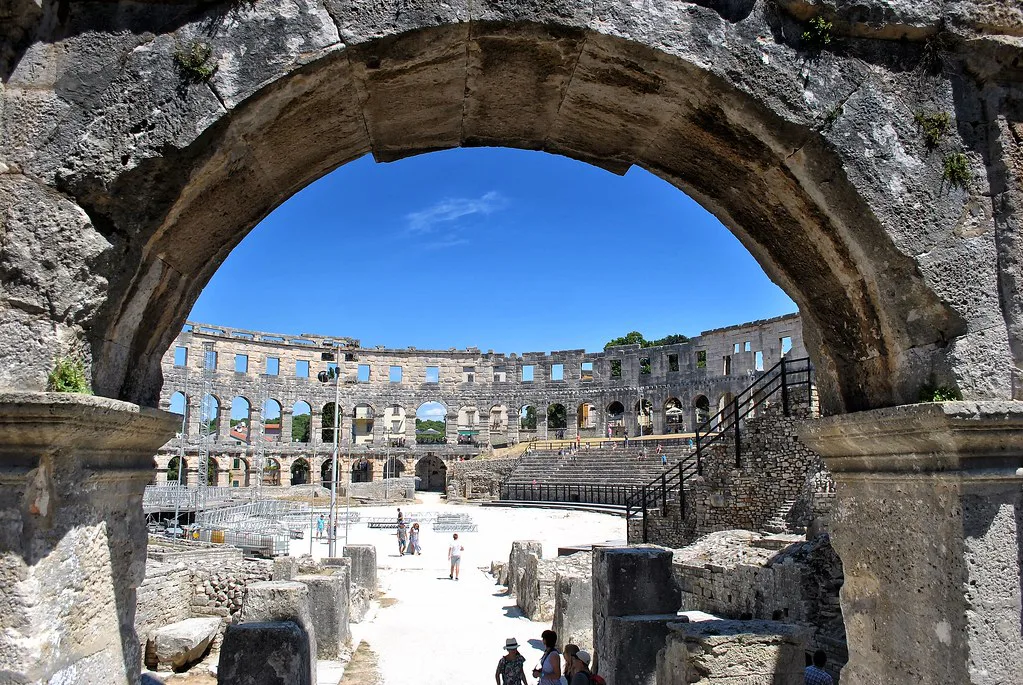
Work your way round four things. The cavea, the stepped seating that rises around the ellipse, gives you the best sense of scale and the classic view down onto the Arena floor; the floor itself, the sand-covered centre, is where you appreciate how much of the building's structure is original; the outer ring, with its arches and towers, is the reason this amphitheatre looks unlike most Roman ruins; and the underground galleries, the service spaces beneath the Arena, show the working machinery behind the spectacle.
Opening hours by season
Hours run in monthly bands, with the longest days in June to August, when the site opens at 08:00 and closes at 22:00. April runs 08:00 to 20:00, May and September 08:00 to 21:00, October 08:00 to 19:00, and November to March 09:00 to 17:00. The trap to plan around is the ticket office, which shuts one hour before the site does, so a late-afternoon arrival near closing time can be turned away even though the gates are still open; the Archaeological Museum of Istria, which manages the Arena, publishes all working-hour changes on its Opening Hours page.
Ticket prices in euros
Standard admission is €10 for adults and €5 for children, pupils and students, with the same €5 for adults with disabilities and €2.50 for children, pupils and students with disabilities. An accompanying person for a visitor with disabilities goes free, children under five go free, entrance to the Amphitheater Gallery is free, and groups of more than ten get a 15% discount. Tickets are sold at the entrance and online, and the Arena's ticket office recommends buying online to cut queueing time, which matters most in high summer.
Audio guides are free: you scan QR codes at the entrance and at marked positions around the amphitheatre to get commentary in several languages. That makes the paid audio-guide add-on you might expect at a comparable site unnecessary here, and it means a smartphone and headphones are worth carrying.
How long to allow and when to go
An hour covers the seating, floor, outer ring and galleries at an unhurried pace; add twenty minutes if you listen to the audio guide throughout. The summer evening window, when the site stays open until 22:00, is the most comfortable time to be on the exposed seating, and it also fits neatly before a walk back down to the Riva.
Event days and disruption
The amphitheatre doubles as a venue, so it can close to visitors for events, and the Arena website asks you to check updated information before travelling on a day when something is scheduled. Even when the site stays open, concert sound checks, stage assembly and equipment set-up can run during visitor hours, which changes the atmosphere and can block parts of the Arena. Build flexibility into your day rather than treating the Arena as a fixed slot.
Accessibility
The amphitheatre is partially accessible to wheelchair users, and the Archaeological Museum of Istria, which manages the site, publishes an accessibility map and further detail for visitors with disabilities. Read that page before you go if step-free routes matter to your group, because the cavea and outer ring are ancient stone structures rather than a purpose-built modern site.
What to see nearby
The Archaeological Museum of Istria, at Carrara Street 3, holds material from prehistory to the modern era and manages the Arena and other monuments in the city and its surroundings, so it is the logical follow-on if you want the finds that came out of Roman Pula. Allow an hour or so there and treat the two as a single archaeology morning.
Back in the centre, the Pula forum is the other Roman anchor of a half-day, with the Temple of Augustus, Pula on its north side and the cathedral a few streets away near the harbour side of the old town. Photographs are permitted in all areas of the Arena, but you are asked not to climb on the raised structures.
Is the Arena worth an hour of your day?
Yes, particularly if you buy online, arrive with an hour to spare before the ticket office closes, and pair it with the Archaeological Museum of Istria or the forum. The free audio guide and free gallery entry mean the €10 adult ticket buys more than a walk round the seating, and the outer walls are the part that justifies the trip on their own. Check the site's working-hours page on the day if a concert is scheduled, since event set-up can close the Arena or change what you can see.
Explore more Pula guides
Frequently Asked Questions
Is Pula Arena bigger than the Colosseum?
No. The Colosseum in Rome is the largest amphitheatre ever built, and Pula Arena is smaller. What sets Pula apart is preservation rather than size: it retains its outer walls and towers to a degree that most Roman amphitheatres, the Colosseum included, no longer do.
Why is there a Roman amphitheatre in Pula?
Pula was a Roman colonial centre called Colonia Pietas Iulia Pola, and the town built its amphitheatre in the first century, when such venues were standard equipment for a prosperous Roman city. Construction is dated to between 27 BC and AD 14. The building is now a cultural property of national significance managed by the Archaeological Museum of Istria.
What is the concert capacity of Pula Arena?
The Arena is used as a concert and event venue, but its visitor pages do not publish a capacity figure. If you are planning around a specific event, contact the ticket office on +385 52 219-028 or at arena@ami-pula.hr, and see the programmes section of the official site for what is scheduled during your dates.