
Temple of Augustus, Pula: what to see and how long to allow

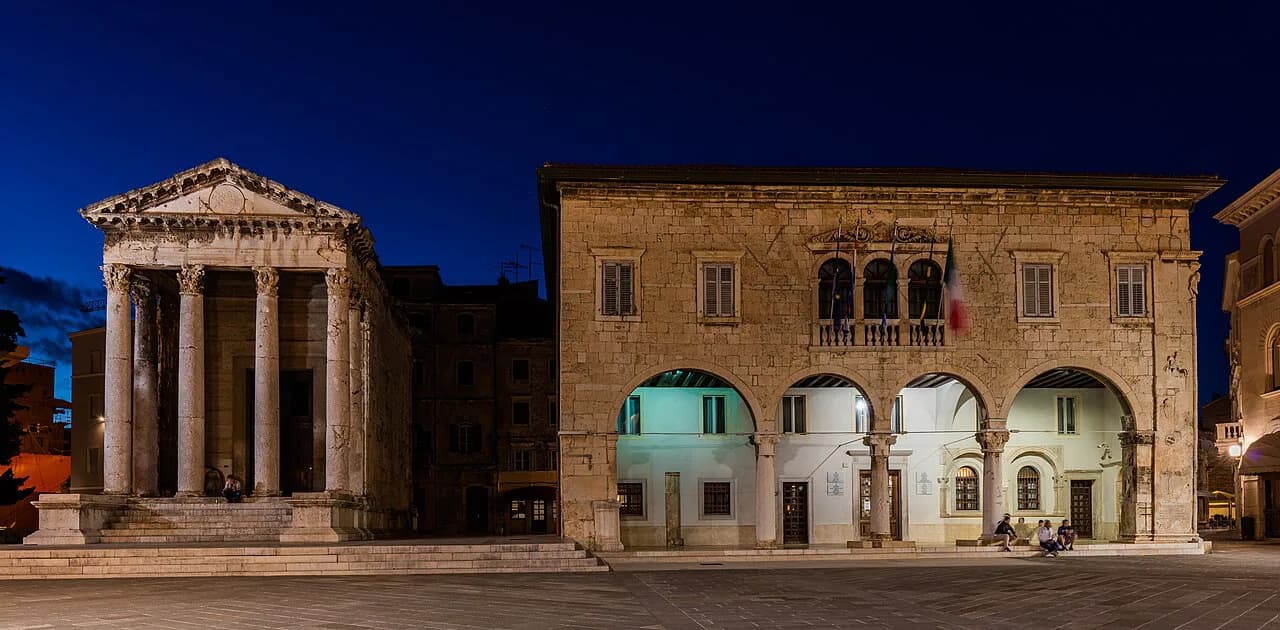
The Temple of Augustus is a compact Roman temple on the old Forum in the centre of Pula, and it needs about 20 to 30 minutes rather than a half-day. You come for the Corinthian columns, the decorated frieze and the nail holes where a bronze dedication once sat, not for an exhibition on the scale of a museum. This guide sets out where the temple stands, how to reach it on foot, what to look for and what else is within a couple of minutes' walk.
Where the Temple of Augustus stands in Pula
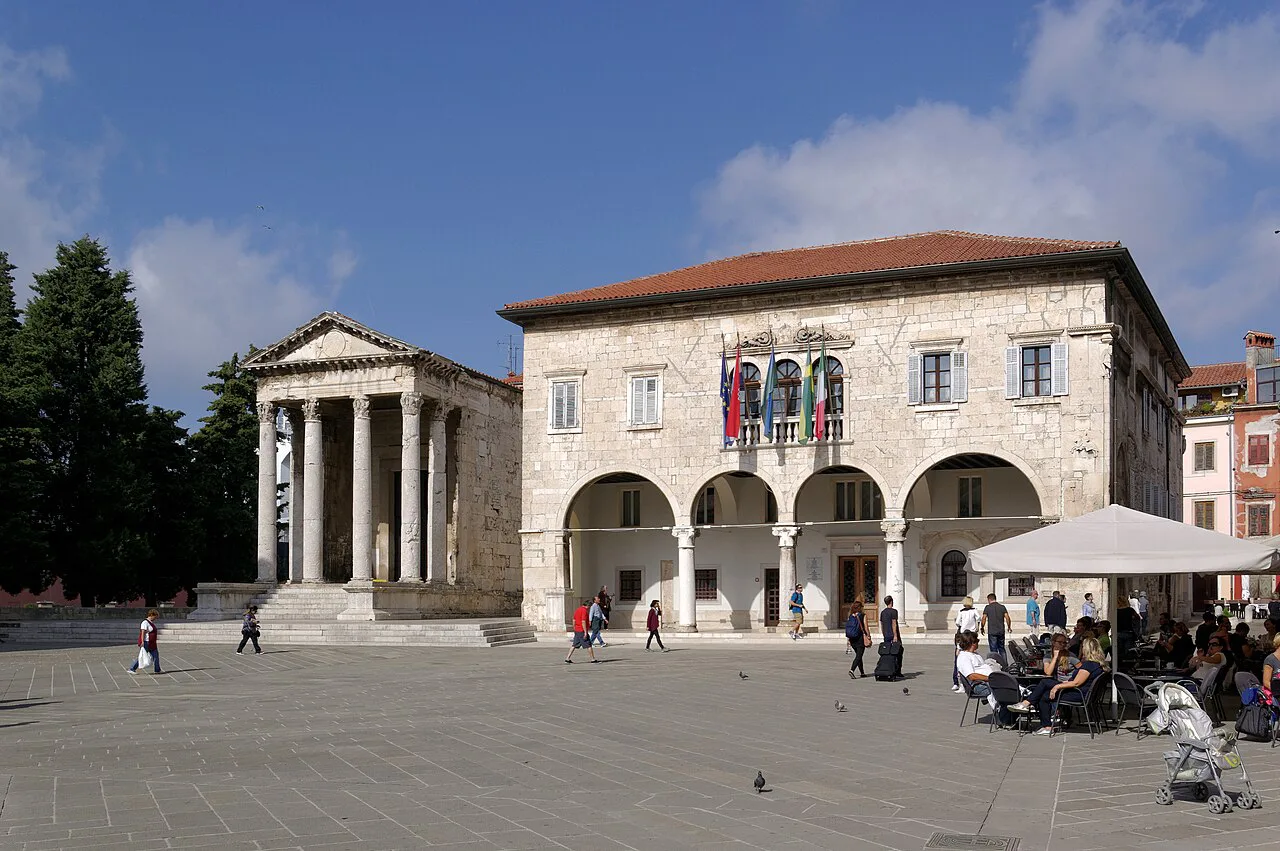
The temple sits on the old Roman Forum in the heart of Pula's historic centre, which is why car parking nearby is limited and arriving on foot makes sense. Treat the Forum as your landmark rather than a street number: the temple faces the open square, with the Communal Palace close beside it. If you are coming from the harbour or the bus station, aim first for the Forum and the temple will be in front of you.
How to get there on foot
Walking is the practical way in. Pula's old town is compact and parking in the historic centre is limited, so leave the car outside the core and finish the approach on foot. The temple is one stop within a short circuit that also takes in the Arena, the cathedral and the old town gates, and the Pula Attractions: 5 Visitor Guides page shows how the pieces fit together.

What the temple is
This is a well-preserved Roman temple dedicated to the first emperor, Augustus, built in the city the Romans called Pola. It was probably constructed during Augustus's lifetime, at some point between 2 BC and his death in AD 14. It stands on a podium with a porch of four Corinthian columns, measures roughly 8 by 17.3 metres and rises about 14 metres, and its rich frieze is often compared with the Maison Carrée in Nîmes.
The building has had a long second life: it served as a church under Byzantine rule, later as a granary, and was struck by a bomb in an Allied air raid in 1944 before being reconstructed in 1947. That history explains why a temple this old survives so completely in a working city centre.
What to look for on the facade
Start at the columns and work upwards. The Corinthian capitals and the richly decorated frieze are the details worth slowing down for, and the frieze is the element most often linked to the Maison Carrée. Stand back across the Forum to take in the whole porch before you move in close.
Then look at the architrave for the small holes where bronze letters were once fixed with nails. The letters themselves are gone and much of the text with them, but the pattern of holes is what remains of the original dedication, which also named the goddess Roma. It is the kind of detail most visitors walk past, so look up deliberately.
The Forum triad and the Temple of Diana
The Temple of Augustus was one of three temples on the Forum. It stood on the left side of the central temple, with a similar temple of Diana on the other side. The central temple has not survived, which is why the square reads as a pair of monuments rather than a matched set.
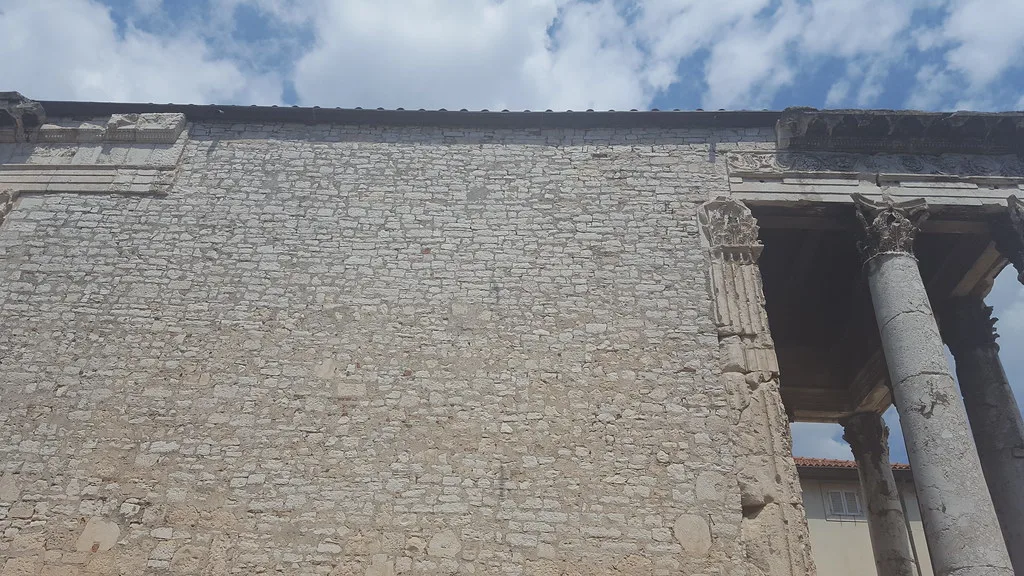
The Temple of Diana is the harder of the two to picture, because its rear wall was built into the Communal Palace in 1296 and survives inside later masonry. Once you know that, the palace beside the temple stops being background architecture and becomes part of the Roman story. Read the two together as one stop, with the Pula Forum guide covering the square they share.
Inside today: the lapidarium
The temple now functions as a lapidarium, displaying pieces of Roman sculpture. The interior is small, so the sculpture is a short add-on to the facade rather than a separate museum visit; budget a few minutes rather than a gallery-length stop. If you want a fuller Roman collection, plan the Arena as the bigger Roman sight of the day.
How long to allow and the best time of day
Allow 20 to 30 minutes for the temple and the immediate Forum, or closer to an hour if you read the lapidarium properly and sit on the square. The monument is small, so it works best folded into a wider old-town walk rather than treated as a destination in itself. Morning and late afternoon give softer light on the columns; midday is when the square is busiest with groups.
Nearby: the rest of the Forum and the old town
Everything else worth seeing in the centre is within a few minutes. The Pula cathedral, properly the Cathedral of the Assumption of the Blessed Virgin Mary, is a short walk away, and the old town gates are close enough to include on the same loop. On the Forum side, the palace wall that holds the Diana fragment is part of the same stop.
Opening hours, tickets and how to check them
The temple's status as a lapidarium tells you there is an interior to enter, but check the current opening hours, admission price and any booking rules at the entrance before you build your day around the temple, and carry euros rather than assuming a card is accepted.
Is the Temple of Augustus worth the stop?
Yes, as a 20-to-30-minute stop folded into a walk through Pula's old town. The pull is the completeness of the temple and the details most people miss: the frieze, the nail holes in the architrave and the Diana wall inside the palace next door. Pair it with the Arena for the fuller Roman picture and keep the Forum as the anchor of your route.
Frequently Asked Questions
What is the Temple of Augustus in Pula?
It is a well-preserved Roman temple dedicated to the emperor Augustus, standing on the old Roman Forum in the centre of Pula. It was probably built between 2 BC and AD 14, served as a church and later a granary, was damaged by bombing in 1944 and reconstructed in 1947. It now houses a lapidarium of Roman sculpture.
How much time should I give the Temple of Augustus?
Twenty to thirty minutes covers the facade, the architrave detail and a quick look at the lapidarium, with time on the Forum square. Add more if you want to read the sculpture displays properly or use the square as a rest stop.
Are there other Roman ruins in Pula?
Yes. Pula has a Roman amphitheatre, the Arena, as well as the Forum itself and old town gates. The Temple of Augustus and the Arena together give the fullest picture in a single day, and both sit within the compact centre.