Things to Do in Hvar: Town Sights, Fortress and Island Trips
Plan your days in Hvar with the old town squares, the Španjola fortress climb, the Franciscan monastery and the quieter towns of Stari Grad, Jelsa and Vrboska.
On this page
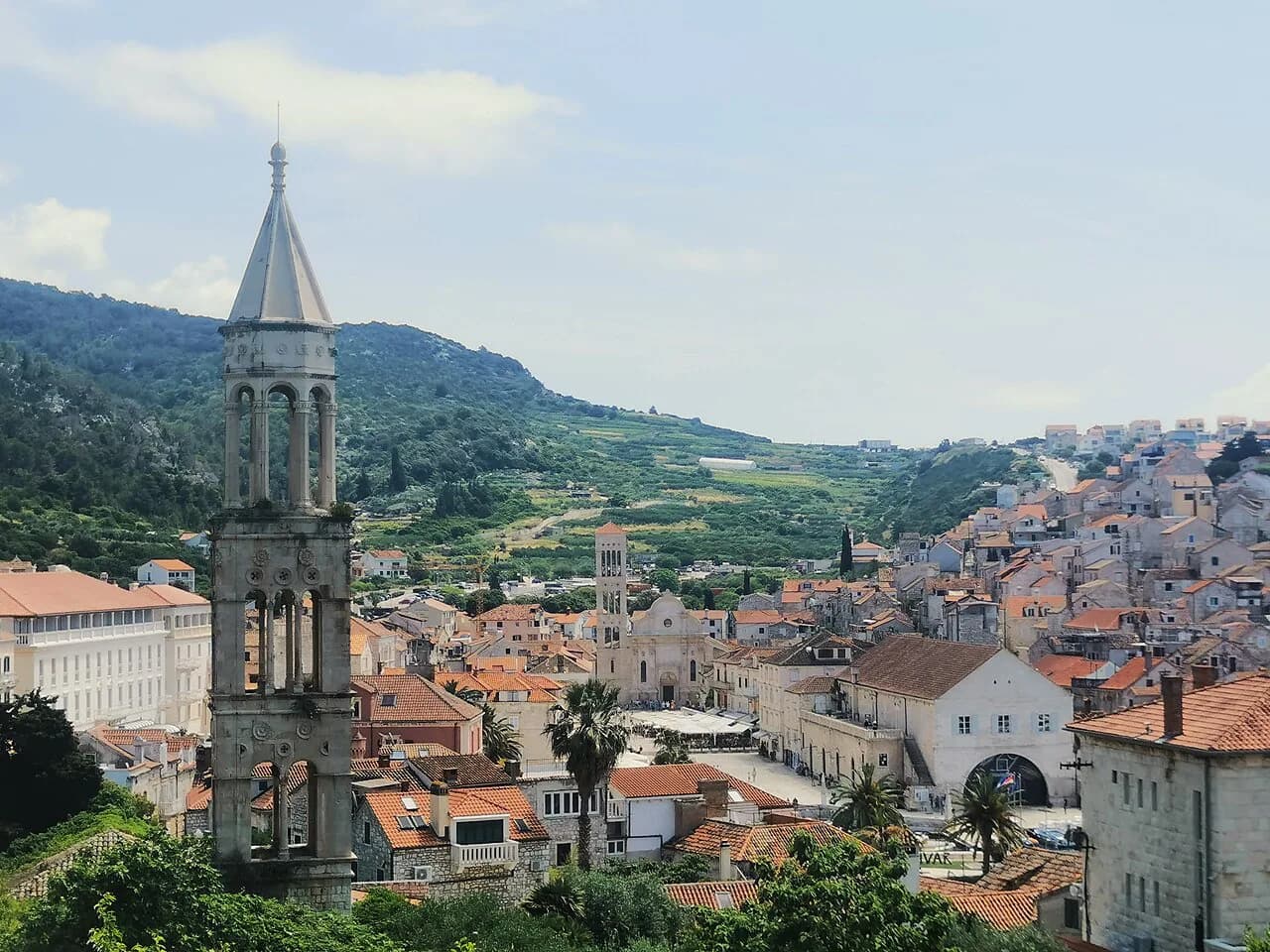
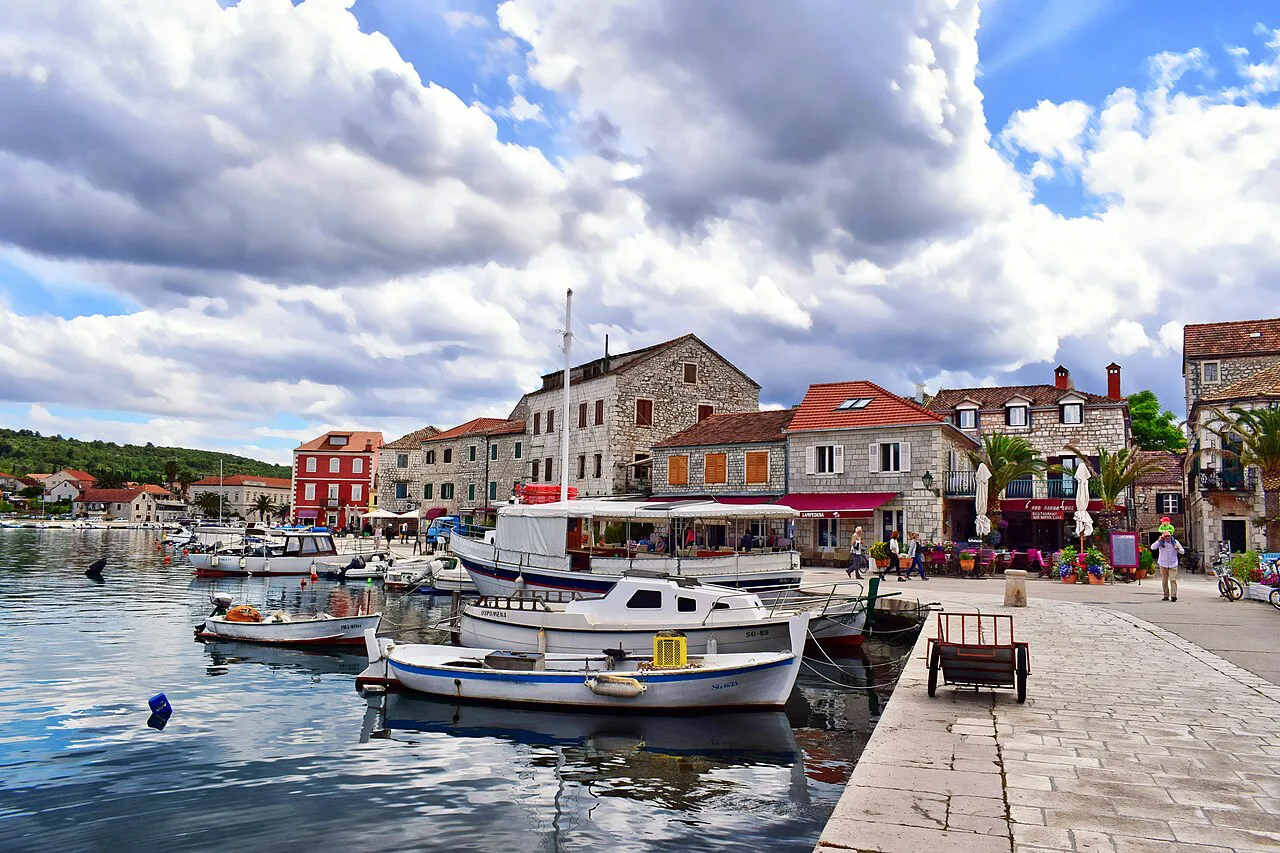
Give Hvar Town one full day and you can see its core on foot: St Stephen's Square, the Cathedral of St Stephen, the Arsenal theatre and the climb to Fortica, the fortress above the roofs. Add a second or third day for Stari Grad, Jelsa and Vrboska, or for a boat out to the Pakleni islands. This guide splits the island by base so you can decide where to linger and what to skip, starting with Hvar Old Town.
Hvar is one of the longest islands on the Croatian coast, and the main sights are spread between the west end, where Hvar Town sits, and the older settlements around the Starogradski polje plain. That geography is the main planning constraint: a day trip lands you in the town, not in the island's quieter half, and there is no airport on Hvar, so ferries and catamarans are how you arrive.
What to see in Hvar Town in a day
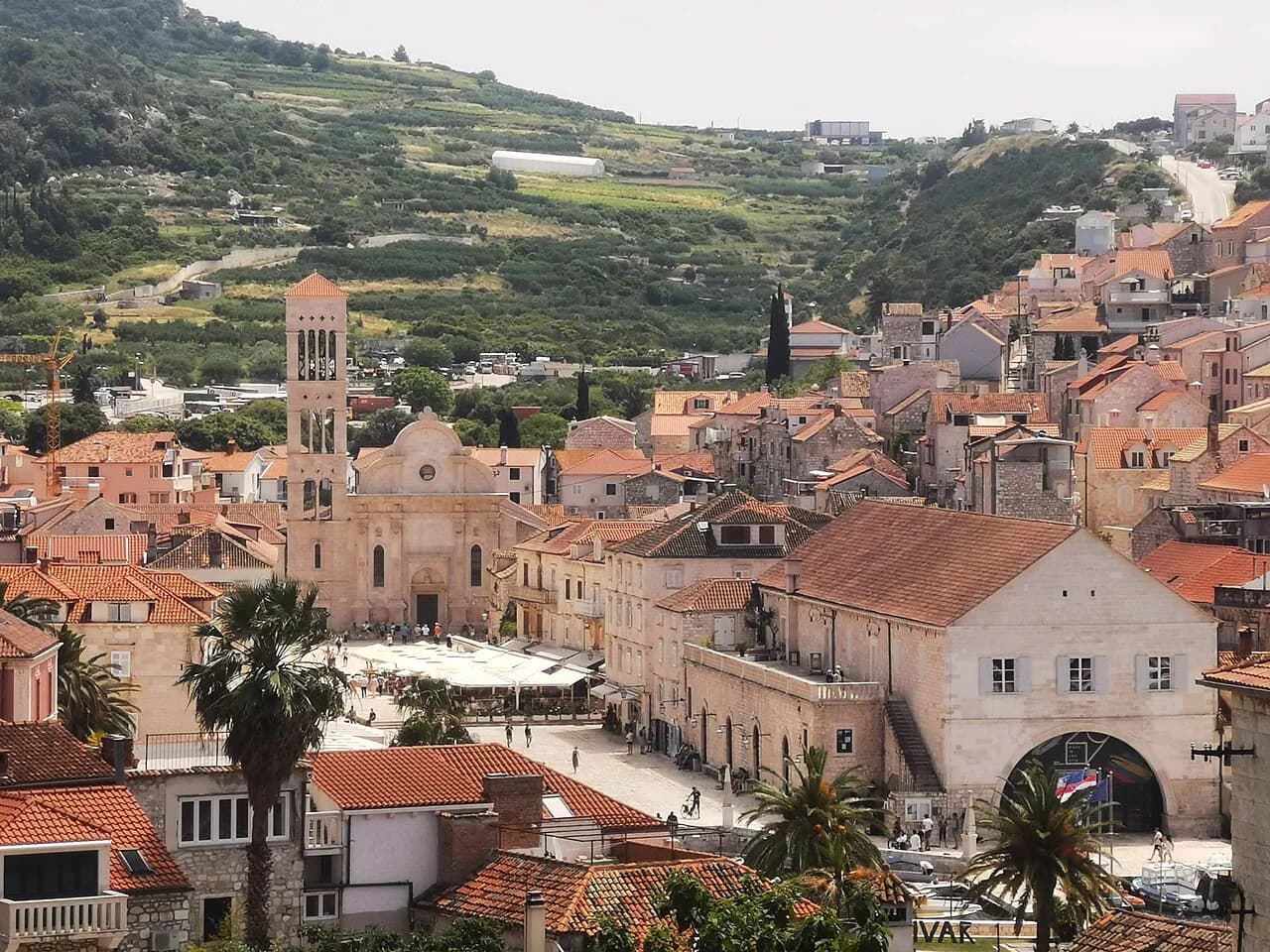
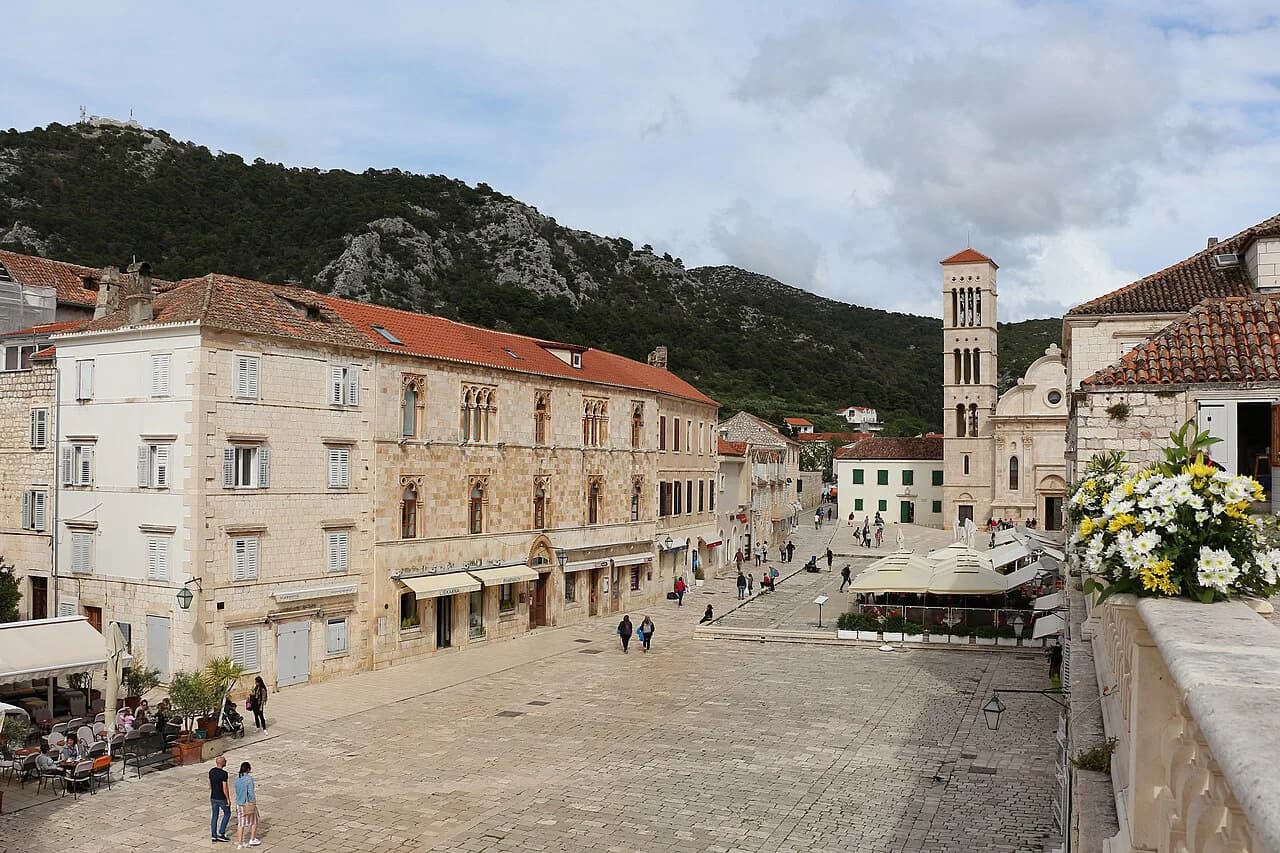
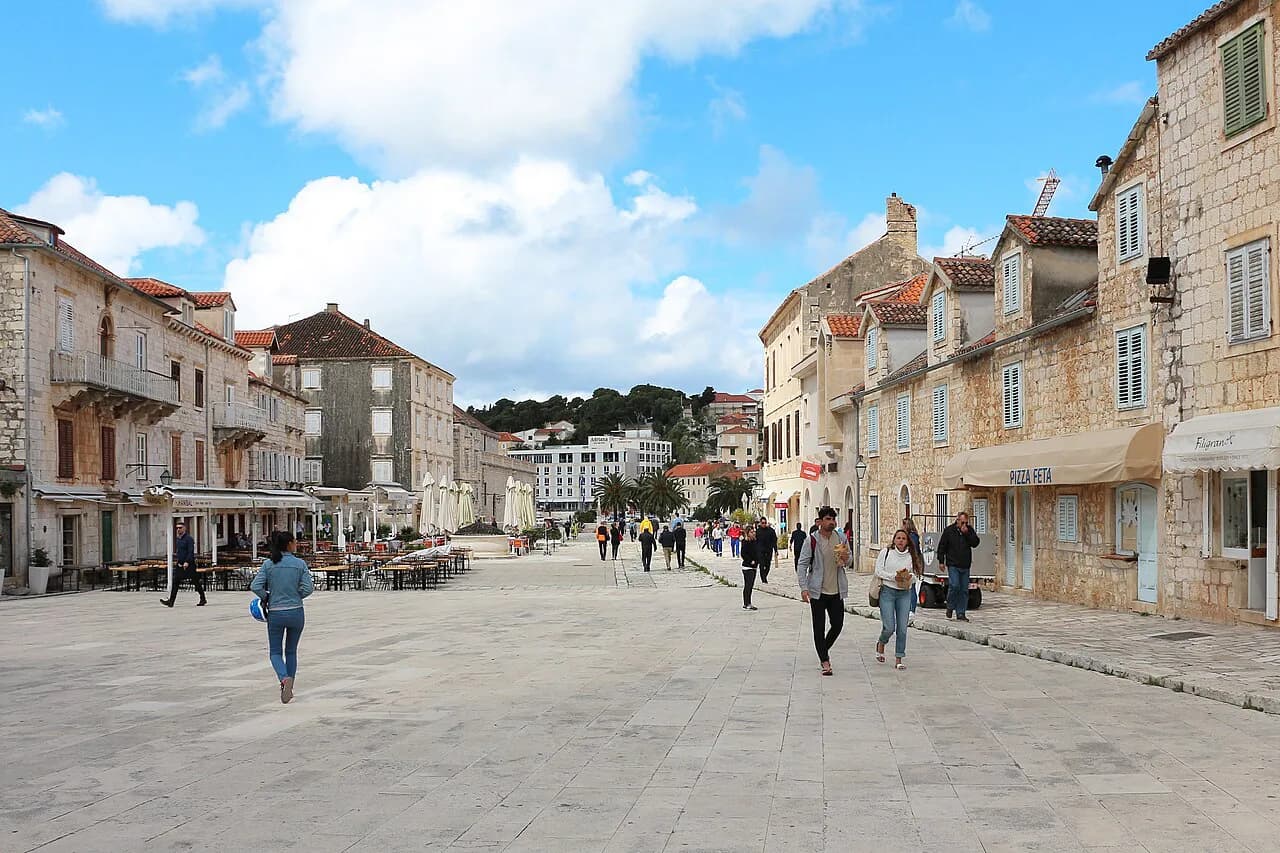
Start at St Stephen's Square, the broad paved piazza that most of the old town's lanes funnel into. The Cathedral of St Stephen closes the far end with its Renaissance bell tower, and the square is lined with cafés that make it easy to orient yourself before wandering. The lanes behind the square climb in stone steps through shops, courtyards and houses, so wear shoes you can walk stairs in.
The Arsenal theatre sits just off the square and is often described as one of the oldest theatres in Europe, built above the Venetian Arsenal building. Entry to the old town itself costs nothing; you simply walk it. Budget your morning here and keep the afternoon for the fortress, because the light and the heat both shift sharply after midday.
Climbing to Fortica (Španjola): the walk and the view
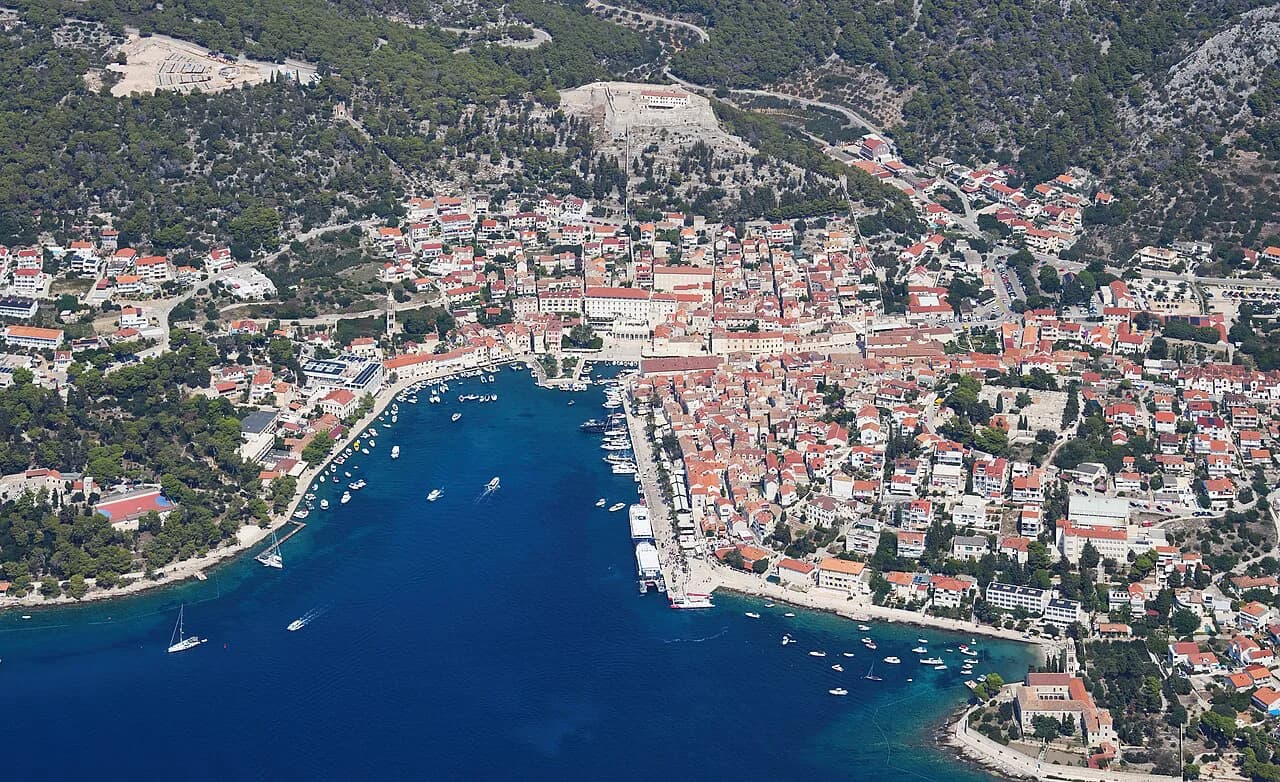
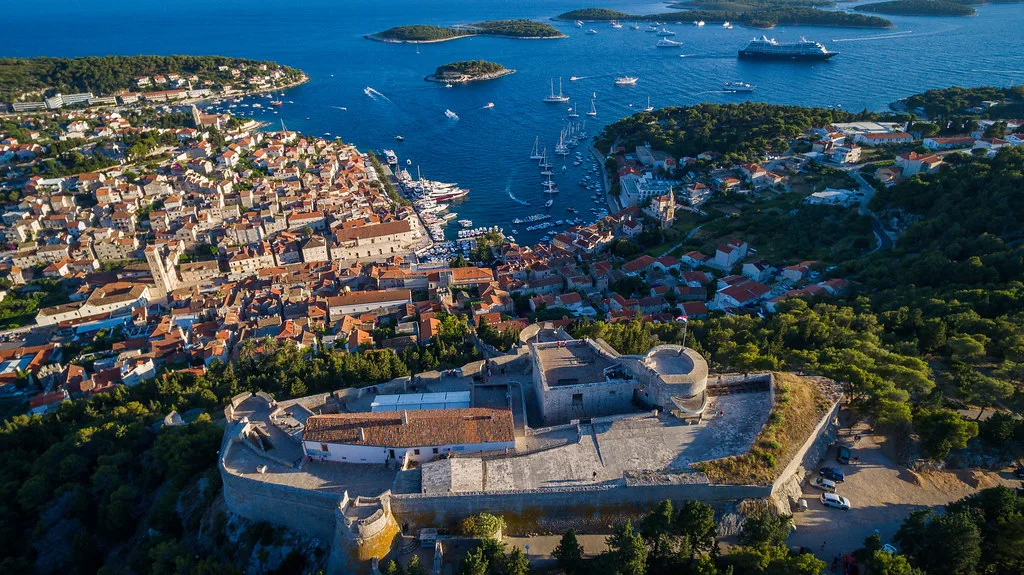
Fortica, also called Španjola, sits on the hill directly above Hvar Town, built during Venetian rule in the sixteenth century. The path leaves the old town and winds up through pine forest, taking roughly 25 to 30 minutes at an easy pace, with benches on the way. Inside you find ramparts, stone tunnels, an old prison and a small museum, plus the best view down over the town and the Pakleni islands.
Treat the climb as an effort decision rather than a photo stop. The path is exposed in stretches and gets hot in summer, so go early or late and carry water. If the heat or knees are against you, the view is the reward and the museum is a bonus, not the reason to go.
The Franciscan Monastery on the waterfront
The Franciscan Monastery stands on the waterfront at the edge of Hvar Town, a fifteenth-century stone church with a courtyard, a bell tower and cypress trees. Inside hangs a large Last Supper painting by Matej Ponzoni, and the small museum holds manuscripts, coins and nautical maps. It is a short, cool stop on the way back from the harbour and pairs naturally with an evening walk along the Riva.
Beyond the town: Stari Grad, Jelsa and Vrboska
Stari Grad, at the head of a deep bay on the north side, is the island's older settlement and the gateway to the Starogradski polje, the plain the ancient Greeks divided into parcels that are still visible. Jelsa, further east along the north coast, is a harbour town with a quieter waterfront. Vrboska, a short hop from Jelsa, is known for its small canal and stone bridges.
These towns are what most day-trippers skip, and that is the argument for staying longer. They reward slow walking rather than ticked-off sights: a harbour, a church, a lane, a coffee. If you only have one day, stay in Hvar Town; if you have three, base yourself on the island for at least one night and see it after the catamarans leave.
The Pakleni islands and boat trips from the harbour
The Pakleni islands sit just off Hvar Town, a scatter of wooded islets with coves and clear water that you reach by taxi boat from the harbour rather than by road. Treat this as a boat decision: pick your operator at the harbour and agree the return time before you go. The crossing is short, so the trade-off is crowds on the popular coves rather than travel time.
Boats also run along the island's south coast for swimming stops, but the honest advice is to match the trip to the wind. When the bura blows from the north-east it can make the exposed south side uncomfortable. Ask at the harbour on the morning you plan to sail.
How long Hvar needs: a day or several
One day is enough for Hvar Town: the square, the cathedral, the lanes, the Franciscan Monastery and the Fortica climb. Two days lets you add a boat trip to the Pakleni islands or a half-day in Stari Grad. Three days or more is when the island opens up, with Jelsa and Vrboska and the plain between them.
The trade-off is simple. A day trip from Split buys you the town at its busiest and little else. An overnight stay buys you the early morning and the evening, when the light on the fortress is at its best and the day-trippers have gone.
When to go: summer crowds and the bura wind
Hvar's climate is hot-summer Mediterranean, with long sunny stretches and warm sea through the season, which is why the island fills in July and August. Those months bring the crowds, especially when cruise calls and day-trippers coincide at midday. May, June, September and early October give you the same sights with room to walk.
The bura is the north-easterly wind that can arrive quickly and cool the island, roughening the sea on exposed coasts and cancelling small-boat trips. Build one flexible day into your plan so a windy morning does not cost you the boat trip. The fortress and the old town are the sensible fallback when the sea is up.
Getting around the island and where ferries land
There is no airport on Hvar, so ferries and catamarans are the only way to arrive, landing foot passengers and drivers at the island's ports. Hvar Town's harbour and Stari Grad on the north coast are the main points of arrival, and a bay can separate where you land from where you are staying. That split matters: arrange your onward transfer before you sail, not after.
On the island, the roads are slow and winding, and Hvar Town sits at the western end while Stari Grad and Jelsa lie along the north coast. If you are seeing several towns, a car gives you the day on your own terms; if you are staying in the town, you do not need one. Check current ferry and catamaran sailings with Jadrolinija and the other coastal operators before you travel, as timetables change by season.
One day in town or several across the island?
Choose one day in Hvar Town if you are travelling from Split and want the square, the cathedral, the Franciscan Monastery and the Fortica view. Choose three days or more if you want Stari Grad, Jelsa and Vrboska without clock-watching, or a boat out to the Pakleni islands on a calm morning.
Either way, walk the town first, climb to Fortica while it is cool, and leave the boat decision until you have seen the wind. Different islands on the same coast suit different plans, and the Euphrasian Basilica in Poreč shows how far the Venetian layer stretches along this shore.
Explore more Hvar guides
Frequently Asked Questions
Does Hvar have sandy beaches?
Hvar's swimming is mostly from rocks, pebbles and concrete platforms along the shore, with coves on the Pakleni islands reached by boat. If sand matters to you, plan around the coves rather than expecting a long sandy strand in Hvar Town.
Sources
Notes from the Croatian coast
Optional updates when our guides change.
You might also like
Continue reading
More guides you'll find useful