Humac Hvar Guide: Abandoned Village & Grapčeva Cave
Humac is an abandoned shepherds' village in central Hvar, 7km east of Jelsa. What you'll find, how Grapčeva Cave tours work and what to expect.
On this page
Humac is worth a half-day from Jelsa, and the reason to build that half-day around a 9am start is Grapčeva Cave. The abandoned shepherd's village sits about 7km east of Jelsa in the interior of Hvar, a cluster of stone ruins with long sea views, and the cave above it is a Neolithic site reached on guided tours in high season. This guide covers where Humac is, how the dirt-road approach affects timing, what you actually see among the ruins, and how the cave departures work.
The trip suits travellers who have already seen Hvar Town and the coast and want the island's inland history. It does not suit anyone expecting a serviced attraction: the village has no water and no electricity, so you carry what you need. The schedule below is the summer pattern rather than a year-round guarantee, so confirm the departure before you set out.
What Humac is and where it sits
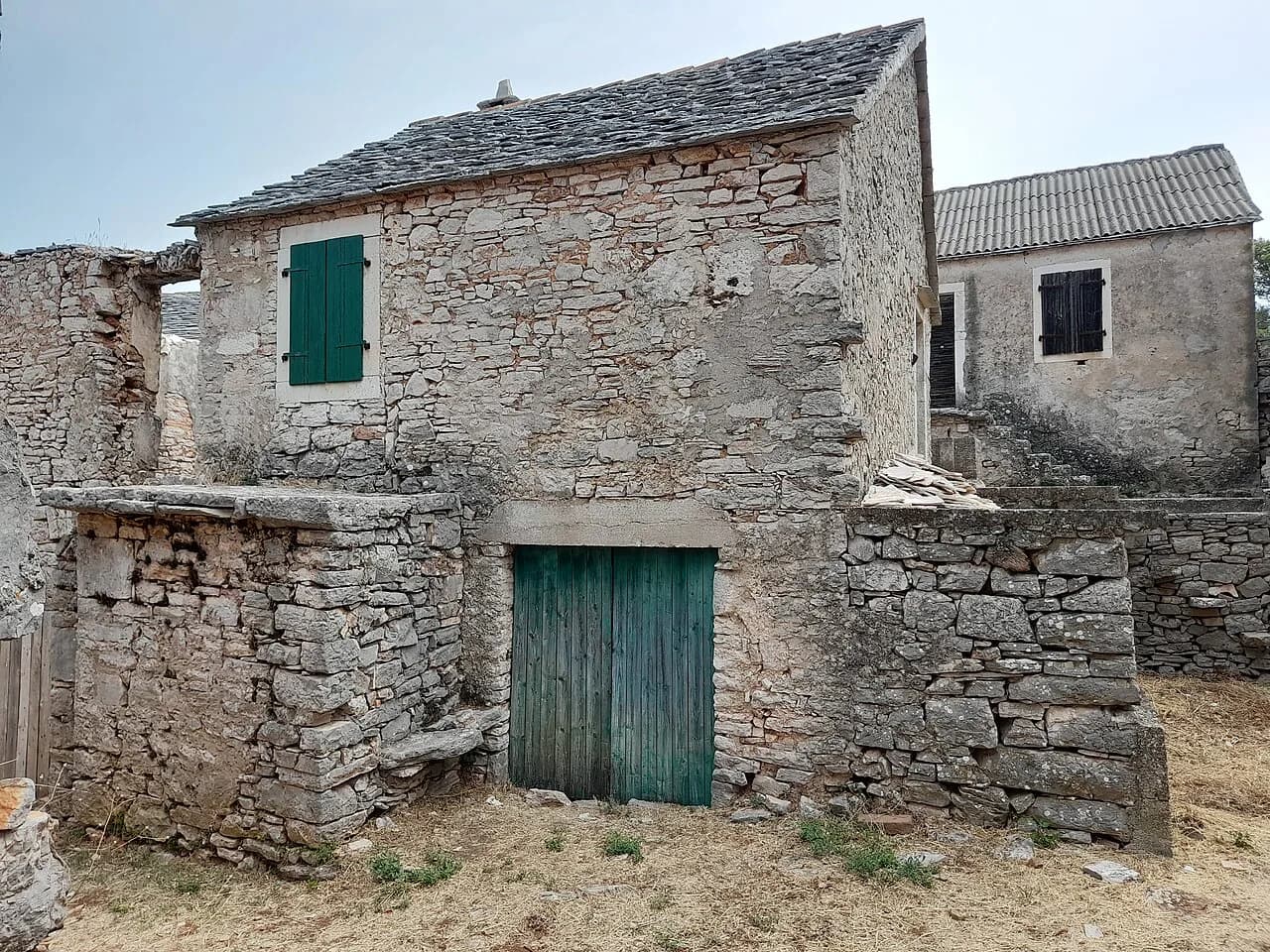
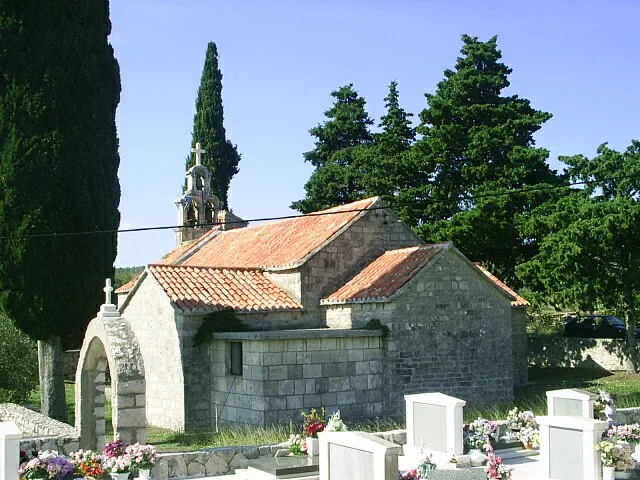
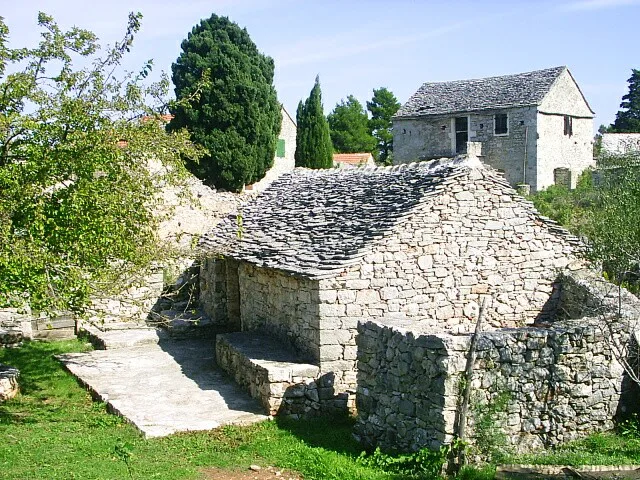
Humac is an abandoned shepherd's village dating back to the 15th century, set in the interior of Hvar roughly 7km east of Jelsa. Its stone houses stand ruined among the hills, with sea views opening up on the approach, and the tourist board calls it arguably the most authentic village on the island. Locals from the village of Vrisnik, whose inhabitants are the major landowners, still come up to the land.
The village has no water or electricity, which shapes the whole visit. It comes to life on 26 June, when islanders gather for the feast of St John and St Paul, and stays quiet the rest of the summer apart from day visitors. Plan on carrying your own water.
Do not confuse this Humac with Gornji Humac on Brač, a different settlement on a different island that turns up in the same searches. If you are reading about stone villages near Pučišća or the Brač interior, that is the other one. This page is only about the inland village on Hvar, reached from Jelsa.
How to get there and how long it takes
You reach Humac by road from Jelsa, and the final stretch is a dirt track. That surface, not the distance, is what stretches the journey: expect to drive slowly and to add time for the rough approach in either direction, particularly in a low-slung car. Coming from Hvar Town adds the cross-island drive to Jelsa before you even start the climb inland.
Allow a half-day for the whole outing: the drive in, time among the ruins and the sea views, and the drive back. If you are joining a cave tour, that half-day is fixed by the 9am departure, so leave Jelsa with enough margin to park and walk to the meeting point. Travellers based elsewhere on the island should treat the early start as the constraint on the day.
A car covers the approach most flexibly, and organised excursions from elsewhere on Hvar run to the village and cave during the season. For the rest of the island's sights, see the wider guide to Things to Do on Hvar Island, which covers the coast and the towns as well as the inland villages.
What you actually see in the village
The village is a scatter of stone ruins, dry walls and ruined houses, with wide views over the interior and the sea beyond. There is a small museum in the church, and the village restaurant keeps the keys. Beyond that there is nothing to visit in the conventional sense: the appeal is the emptiness and the setting.
Because there is no water and no power, the heat dictates how you move through the village. Go early, walk the ruins before the sun is high, and save the long views for the moment you arrive rather than the end. Sturdy footwear matters on loose stone and the uneven track.
If you want more Hvar context before or after, the island's archaeology and history are covered in the wider Hvar Attractions: 11 Visitor Guides collection, which helps place a Neolithic cave visit alongside the island's other sights.
Grapčeva Cave: why it is the main reason to come
Grapčeva Cave, or Grapčeva špilja, is a Neolithic site dated to around 2,500 BC and one of the oldest discoveries in the region. It has two rooms: an entrance hall of roughly 13.5m by 5m and a larger chamber of about 23m by 22m, surrounded by further chambers. Stalactites and stalagmites fill the interior, and candlelight is what makes them spectacular.
Access is not the easiest, and that is part of the trade-off: the cave rewards effort rather than convenience. The quiet inside is its own attraction, and the site works best for travellers interested in prehistory rather than spectacle alone. Objects from the period, including flint knives, hammers, arrows, bones, shells and pottery, are held at the Museum of Archeology in Hvar Town, which makes a sensible pairing with the cave.
How the cave tours work
The cave is visited on guided tours that leave at 9am from in front of the Humac restaurant on Mondays, Wednesdays and Saturdays. That pattern runs from 15 June to 15 September, so the cave is a summer proposition rather than a year-round one. Build the rest of the day around the 9am start rather than planning to arrive whenever you like.
Outside that season, the route is to arrange a visit by telephone on +385 (0)99 577 17 70. No ticket price or tour fee is given in the published visitor details, so ask about the cost when you book or at the meeting point. Confirm the departure is running before you drive up, since the schedule is seasonal.
The village restaurant is the departure point and also keeps the keys to the small museum in the church, and it is the starting point for cave tours. Treat the restaurant as incidental to the visit rather than the reason to come. Your priority should be arriving at the meeting point on time.
The trade-offs: rough access, heat and silence
The rough track and the absence of water and power are the price of the quiet. In summer the interior of Hvar gets hot, there is no water on site, and you should carry your own supplies. Travellers who need a café, a toilet and full services will find the village uncomfortable.
Set against that, you get one of the least developed corners of the island, with the ruins, the sea views and the cave above. The village is at its most vibrant on 26 June, when islanders gather for the feast, and correspondingly busy for that one day. Any other summer day, the crowd is whatever the cave departure brings.
Practical points for the day
Wear sturdy footwear for loose stone and the dirt approach, carry your own water, and take sun protection because the site has no water or power. Time your arrival for the cave departure if you want the cave; if not, come early in the morning and leave before the heat peaks.
If the cave is your priority, treat the 9am departure as fixed and the rest of the day as flexible. If the village is your priority, go on a quiet morning for the calmest experience. Either way, check the departure is running before you set off.
For the rest of the island in the same trip, browse Things to Do on Hvar Island before planning the day.
Is Humac worth the detour?
Yes, if you go for Grapčeva Cave and accept the rough approach, the heat and the lack of facilities. The village alone is a short stop; the cave is what justifies the drive inland from Jelsa.
Build the day around a 9am departure in the 15 June to 15 September window, carry your own water, and telephone ahead out of season on +385 (0)99 577 17 70. Leave the rest of the afternoon free for the coast. For the practical details, see the Stari Grad.
Explore more Hvar guides
Frequently Asked Questions
Do I need a guide to see Grapčeva Cave?
Yes. The cave is visited on guided tours that leave at 9am from in front of the Humac restaurant on Mondays, Wednesdays and Saturdays between 15 June and 15 September. Out of season, arrange a visit by telephone on +385 (0)99 577 17 70.
Is Humac the same as Gornji Humac on Brač?
No. Humac is an abandoned shepherds' village in the interior of Hvar, about 7km east of Jelsa. Gornji Humac is a separate settlement on the island of Brač, and searches for one often return the other.
Can I visit Humac outside the summer cave season?
You can drive to the village, but the scheduled cave tours run from 15 June to 15 September. Outside that window, telephone +385 (0)99 577 17 70 to arrange a cave visit rather than turning up.
Are there facilities at Humac?
There is no water or electricity in the village, so bring your own supplies from Jelsa. There is a restaurant that keeps the keys to the small church museum, but nothing else on site in the way of services.
Sources
Notes from the Croatian coast
Optional updates when our guides change.
You might also like
Continue reading
More guides you'll find useful