Hvar History: What to See in Hvar Town and Stari Grad
Hvar's history runs from Greek Stari Grad and Venetian Hvar Town to the Fortica fortress. See which sites survive today and which town to explore first.
On this page
Hvar's history is best read as two towns rather than a list of dates: Stari Grad, the island's older settlement with Greek and early Christian roots, and Hvar Town, whose Venetian core you can walk in an afternoon. With one day, give it to Hvar Town for St Stephen's Square, the cathedral and the Fortica views; add Stari Grad if you want the island's deeper past.
This guide links each period to a named, visitable place, from the Stari Grad Plain to the theatre above the harbour, and flags the practical trade-offs: summer crowds in the square, the climb to the fortress and the fact that ferry times and site hours shift with the season.
What Hvar's history left behind, in one short answer
The island's past survives in a compact set of places: a working Greek-designed agricultural plain at Stari Grad, a fortified Venetian town at Hvar Town, and a 16th-century fortress looking down on it all. Hvar is the fourth-largest Croatian island and sits in central Dalmatia, which explains why Venetian, Habsburg and earlier powers all left their mark here.
Treat Hvar Town and Stari Grad as separate half-days rather than one loop, because they sit on opposite sides of the island and are linked by road or by ferry to different mainland ports. The island's main resorts also include Jelsa, Vrboska and Sućuraj, each with its own smaller heritage, but the two headline towns carry the story most visitors come for.
Greek Stari Grad and the Stari Grad Plain
The Stari Grad Plain is the island's outstanding historical landscape: it was laid out in the 4th century BC by Greek settlers and is still farmed in much the same grid today. It is UNESCO-protected as Croatia's seventh listed site, and the key point for visitors is that this is a working agricultural landscape, not a fenced museum with a turnstile.
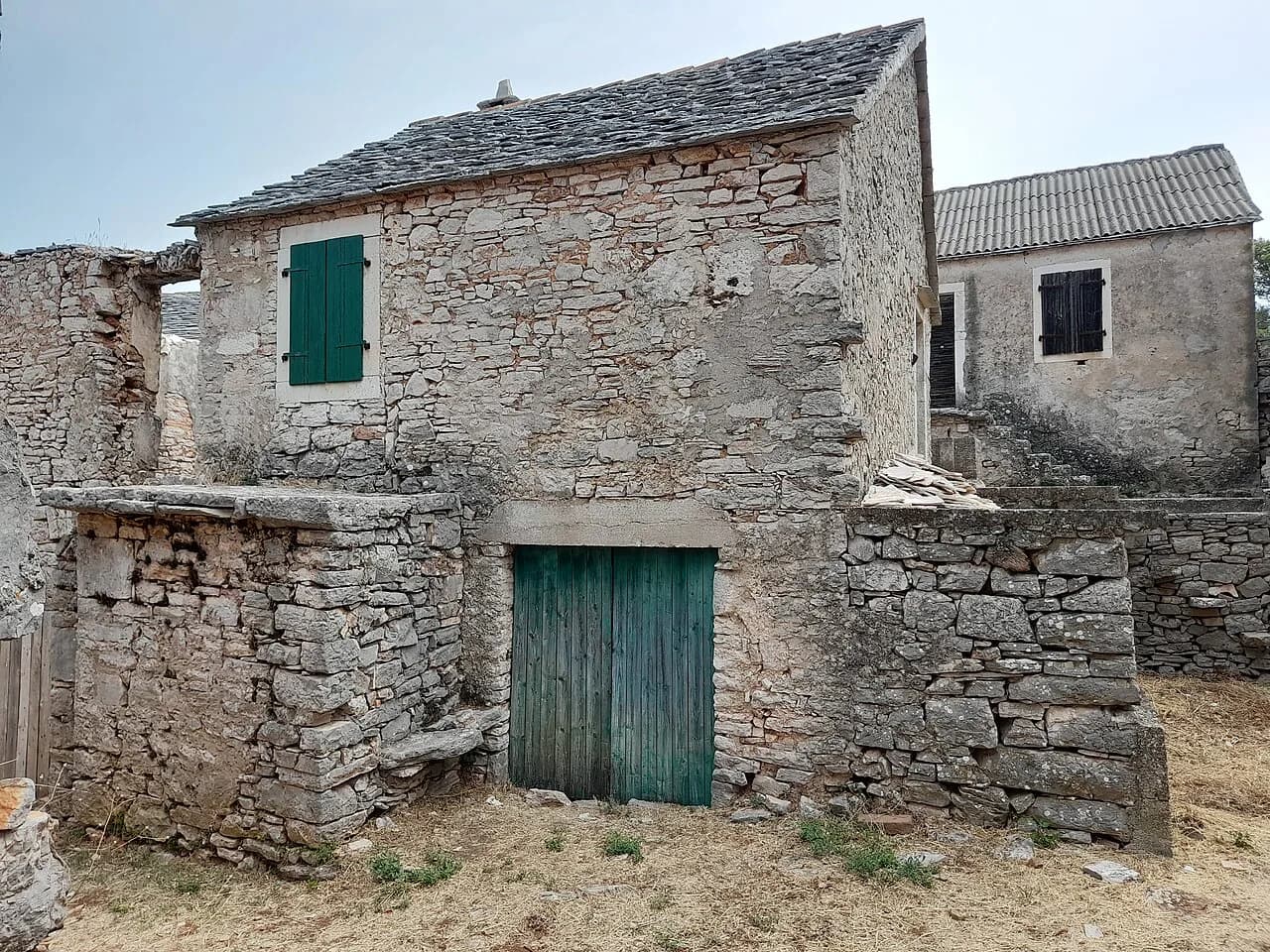
You see the plain by driving or cycling its lanes between Stari Grad and the surrounding villages, with dry-stone walls and small field shelters marking the ancient divisions. Wear proper shoes and carry water, since there is little shade.
Roman and early Christian traces on the island
Stari Grad's Church of St John carries fabric that partly dates to the 6th century, which makes it one of the clearest early Christian survivals most visitors can see on a short trip. Pair it with the Tvrdalj on the same wander through the older settlement.
Elsewhere on the island, Roman and later medieval layers are folded into parish churches and village cores rather than presented as excavated sites, so the rewarding approach is to look at what is still in use. Jelsa's St John's Church, for instance, dates back to the 15th century and anchors that town's centre.
Venetian Hvar Town: St Stephen's Square and the cathedral
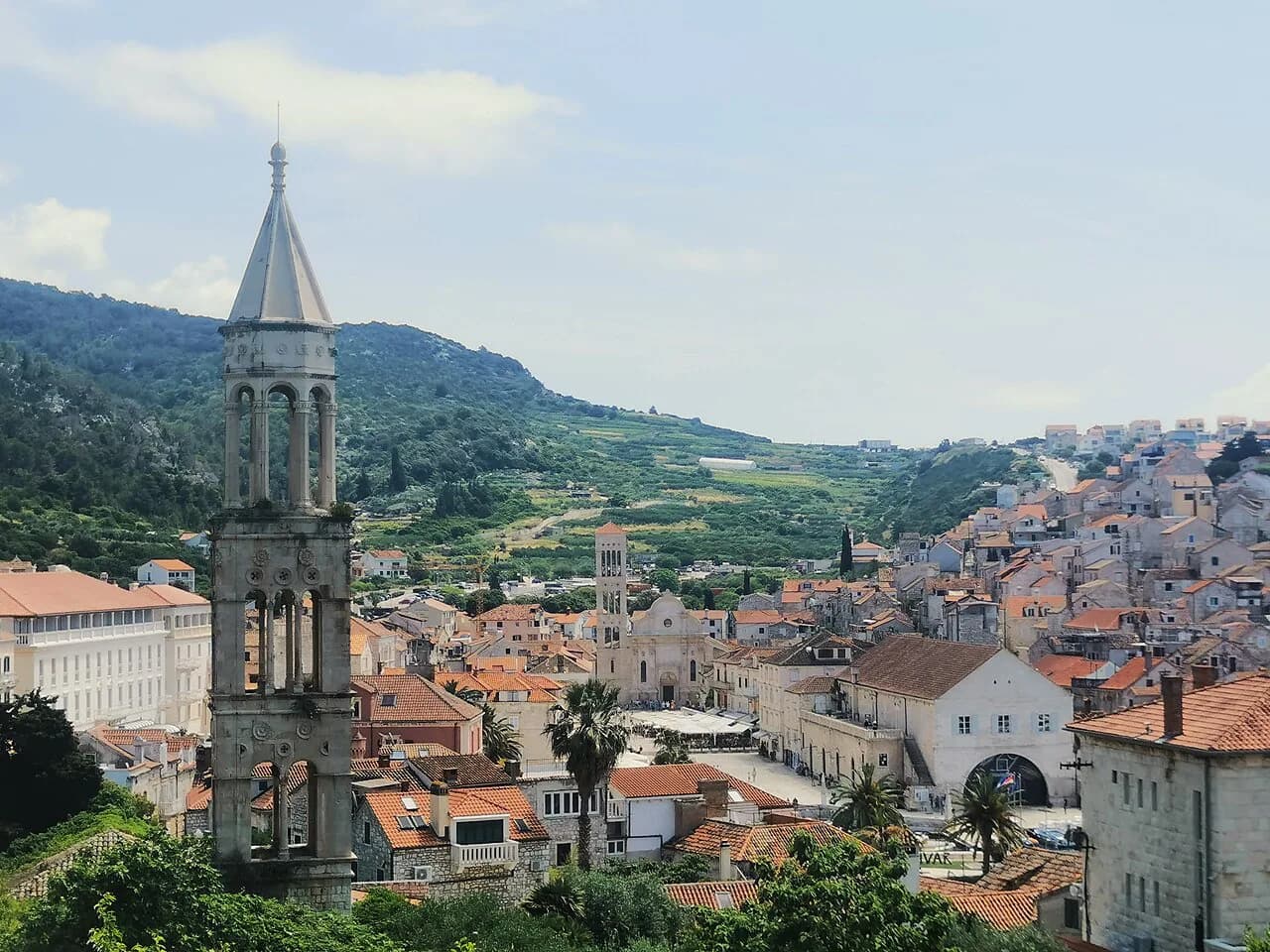
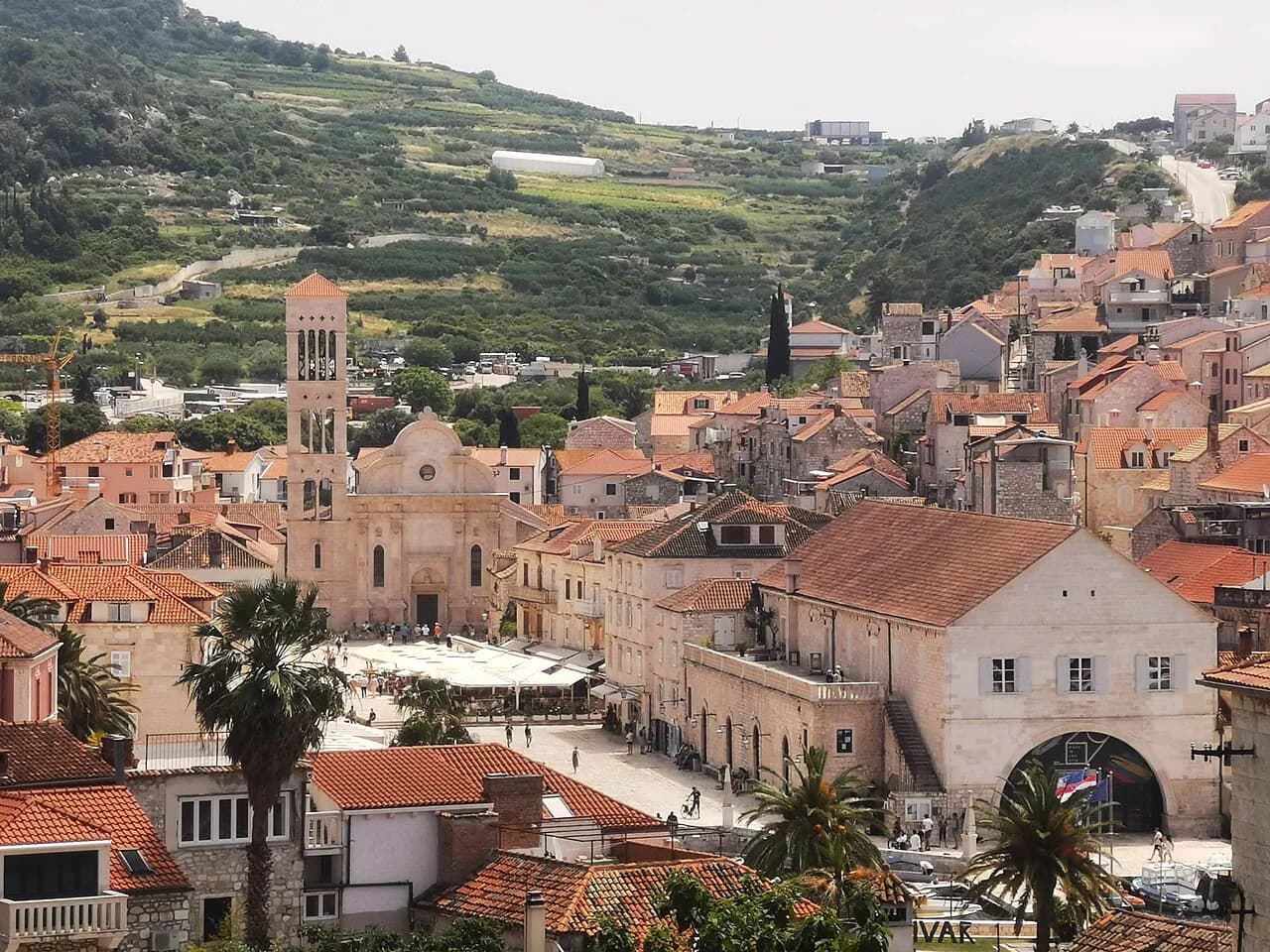
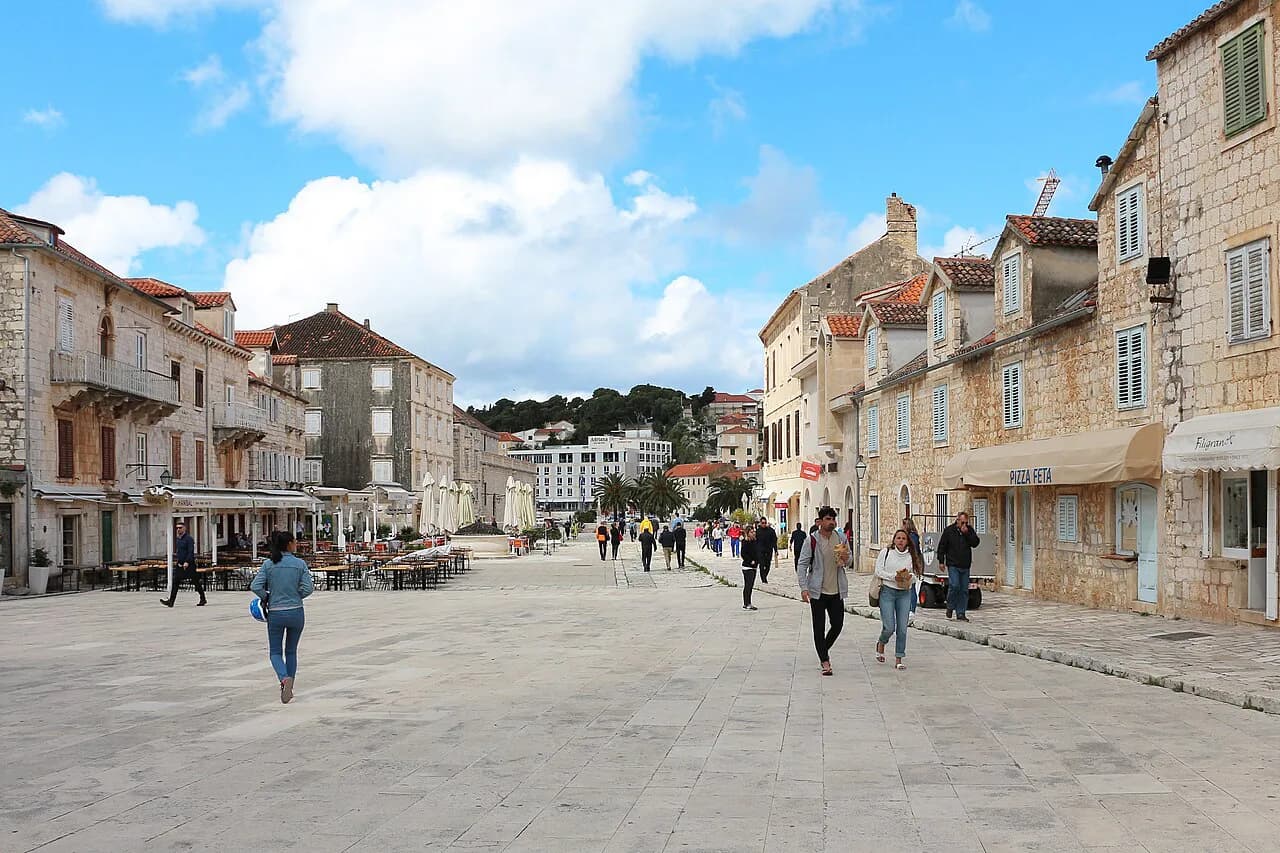
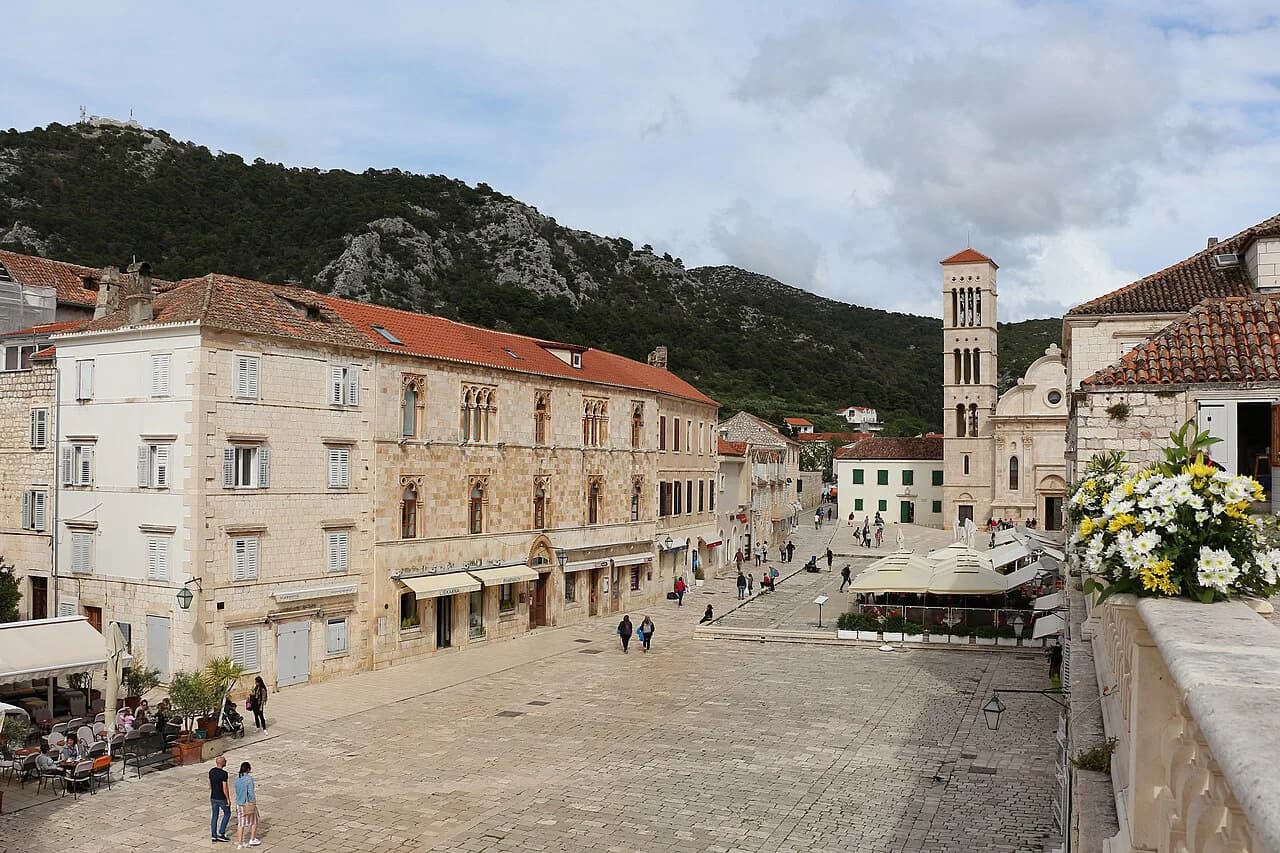
Hvar Town's Venetian character is concentrated around St Stephen's Square, a broad paved space that opens off the harbour promenade and ends at St Stephen's Cathedral and its bell tower. The cathedral was built across the 16th and 17th centuries, and the square remains the town's living room rather than a roped-off monument.
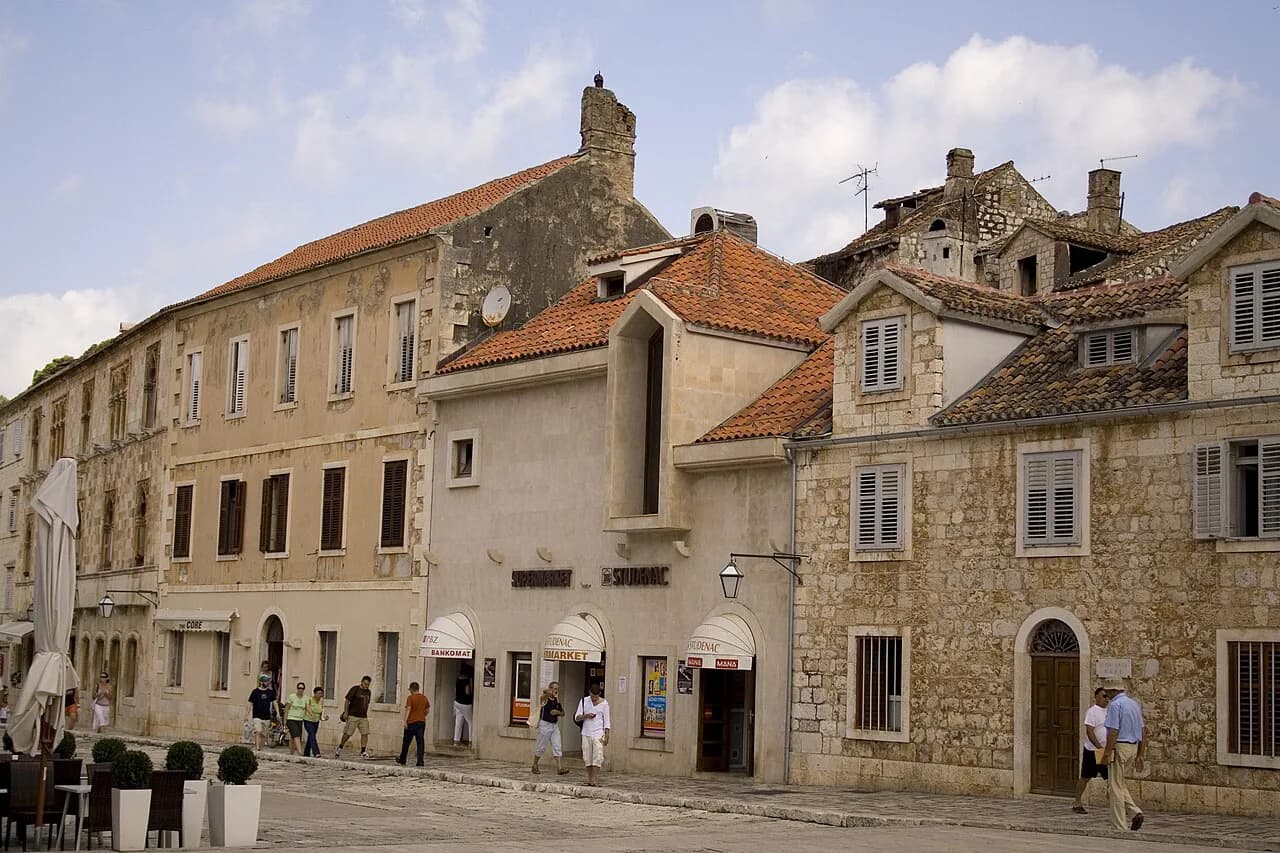
The wider town is characterised by Gothic palaces and marble-paved streets, which reward a slow walk rather than a checklist. Come early in the morning or in the evening for the square at its calmest; midday in high summer brings the heaviest foot traffic.
The Fortica fortress above Hvar Town
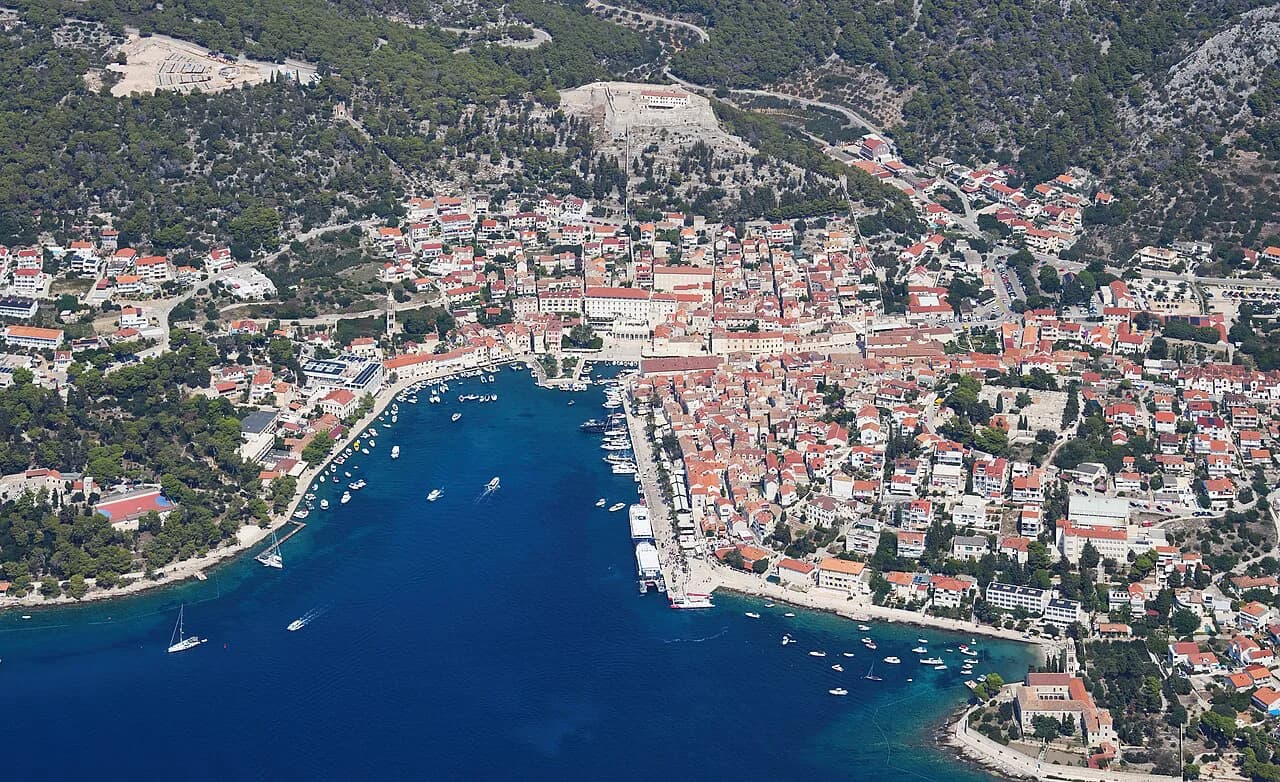
The Fortica is the 16th-century fortress on the hill above Hvar Town, and it gives the best wide views of the town, the harbour and the sea beyond. The climb is steady rather than technical, but it is a climb: allow time, go in cooler hours and take water.
Check the fortress's current opening months and ticket price locally before you set out, since these shift with the season and are not fixed year-round.
Croatia's first theatre and the Arsenal
Hvar Town's theatre, housed in the Arsenal building, was established in 1612 by Duke Petar Semitecolo so that all feudal classes could attend performances. That makes it one of the earliest community theatres in Europe and the most surprising historical stop in town for many visitors.
The theatre sits just off the main square, so it fits naturally into a circuit of the cathedral, the Arsenal and the harbour front. Confirm access hours on arrival, as the building is also used for other purposes.
Stari Grad's Tvrdalj and the Church of St John
The Tvrdalj is the fortified summer residence built by the poet Petar Hektorović, and it is Stari Grad's signature historical building. Pair it with the Church of St John and a walk along Stari Grad's own harbour for a compact half-day.
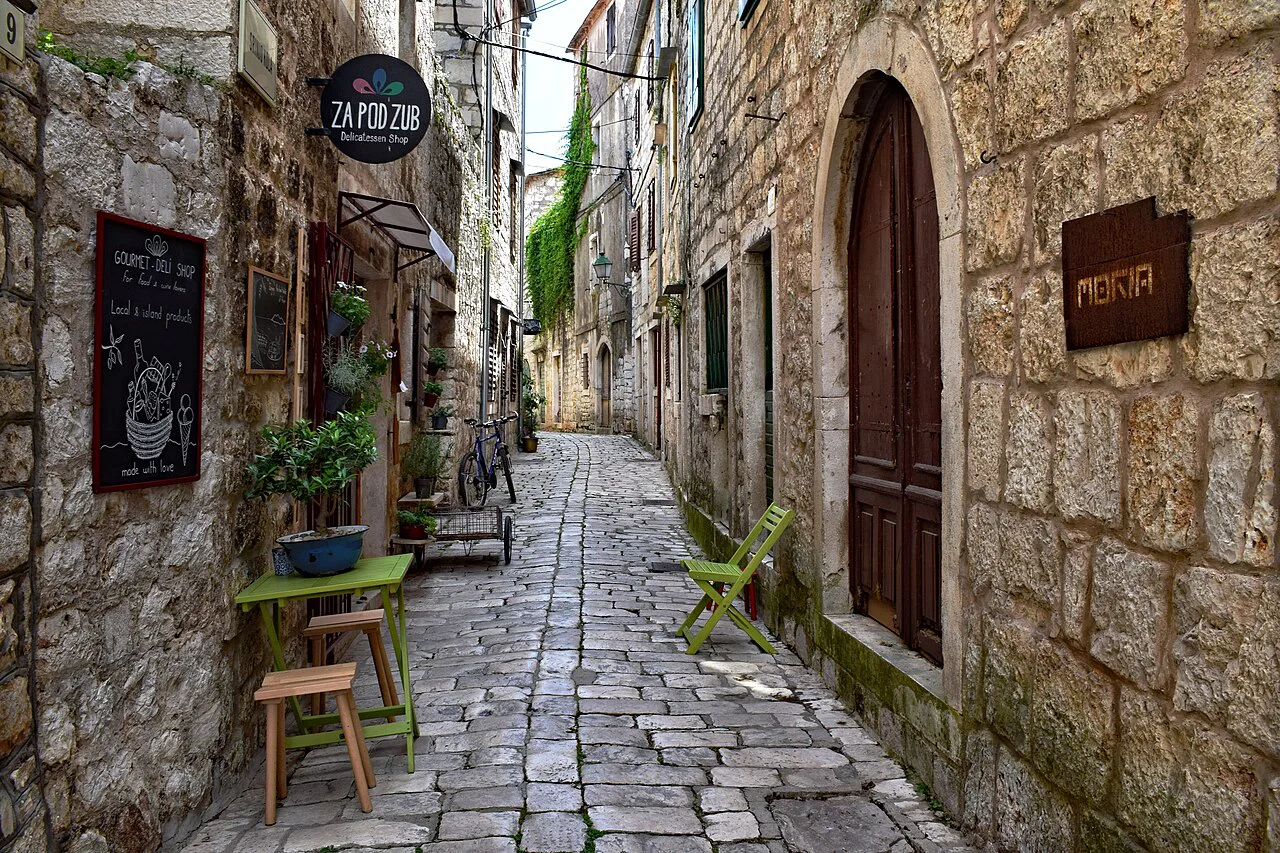
Stari Grad's lanes are themselves the historical experience rather than a prelude to it: wandering its old streets between the Tvrdalj and the harbour is the point, not a checklist of sights.
The Pakleni Islands and the harbour front
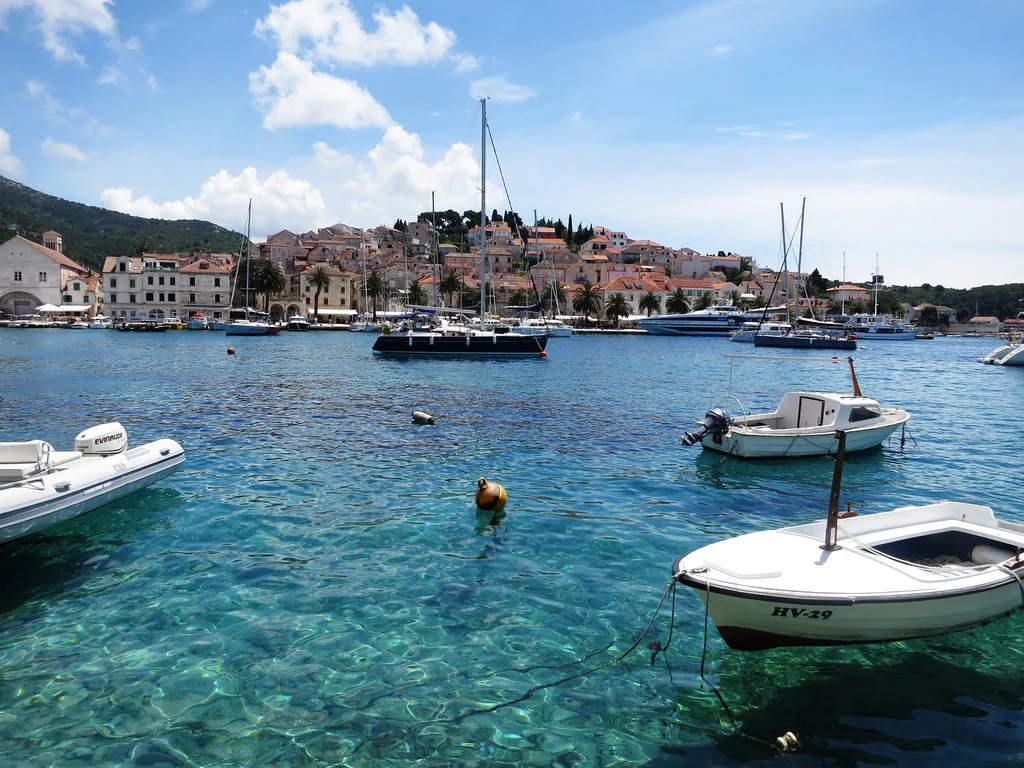
Hvar Town's harbour promenade, lined with small boats and larger yachts, is where the island's maritime history meets its present-day sailing culture. The Pakleni Islands lie just offshore and are reached by taxi boat, making them an easy add-on after a morning among the buildings.
Jadrolinija runs a car ferry from Split to Stari Grad, while catamarans link Split with Hvar Town and other services connect Dubrovnik and Drvenik. Timetables change by season, so confirm the sailing you want with Jadrolinija before fixing your itinerary.
How long the history sites take and when to go
Allow a full morning for Hvar Town's square, cathedral, Arsenal theatre and the Fortica climb, and a separate half-day for Stari Grad's Tvrdalj, Church of St John and the plain. Late spring and early autumn give good weather with smaller crowds than midsummer, which matters most in St Stephen's Square.
Hvar's reputation for sunshine is well founded, with almost 2,800 hours a year claimed locally, so build shade and water into any walking plan. The bura wind can make exposed walks and boat crossings uncomfortable, so keep a flexible day in reserve.
What Hvar's history sites cost
Croatia uses the euro, and the main free sights are the squares, harbours and streets themselves, which cost nothing to walk. Ticketed interiors and the Fortica carry charges that vary by season and are best confirmed on arrival rather than assumed from older guides.
Check the current price at the ticket desk before you commit, particularly for the fortress and any theatre or museum interior you want to see.
Which town should you give your day to?
Choose Hvar Town if you want the Venetian set piece: St Stephen's Square, the cathedral, the 1612 theatre and the Fortica views, all within a short walk of the harbour. Choose Stari Grad if you want the island's older, quieter story, with the Tvrdalj, the early Christian Church of St John and the 4th-century-BC plain.
With two days, do both and use the ferry or road link between them; with one, take Hvar Town and save Stari Grad for a return visit. For the practical details, see the Hvar old town.
Explore more Hvar guides
Frequently Asked Questions
Is Hvar very expensive?
Hvar Town is one of the pricier spots on the Dalmatian coast in high summer, while Stari Grad and the smaller villages tend to be gentler. Many of the history sights are streets, squares and harbours that cost nothing, and ticketed interiors should be priced at the desk on the day.
Where is Hvar island located?
Hvar lies in the Adriatic off central Dalmatia, the fourth-largest Croatian island, with Hvar Town on the western side and Stari Grad on the north coast. Catamarans and ferries connect it to Split, and services also run from Dubrovnik and Drvenik.
Sources
Notes from the Croatian coast
Optional updates when our guides change.
You might also like
Continue reading
More guides you'll find useful