Things to Do on Hvar Island: Where to Go and What to See
Things to do on Hvar island, from Hvar Town's St Stephen's Square and Fortica fortress to Stari Grad, Jelsa and boat trips to the Pakleni Islands.
On this page
Plan on one full day for Hvar Town and a second for the rest of the island if you can. Hvar Town holds the headline sights — St Stephen's Square, the Cathedral of St Stephen, the Arsenal Theatre and the Fortica fortress above the rooftops — while Stari Grad, Jelsa and Vrboska sit in the island's quieter north and west. This guide splits the island by town, gives walking times and boat logic, and sets out what fits into one day, two days or three.
Getting around decides your itinerary more than any list of sights. Hvar Town sits at the western end of the island, Stari Grad faces the north coast and Jelsa and Vrboska lie east of it along the same shore. Crossings from Split take one to two hours, so check which port your sailing uses before booking accommodation.
Why Hvar island rewards more than a day trip
Hvar is one of Croatia's longest islands, roughly 68 km from end to end, and the roads wind between stone villages, lavender fields and cliff edges rather than running straight along the coast. That length is why a day trip from Split usually means Hvar Town and nothing else. Add a night, or base yourself in Stari Grad, and the island opens up.
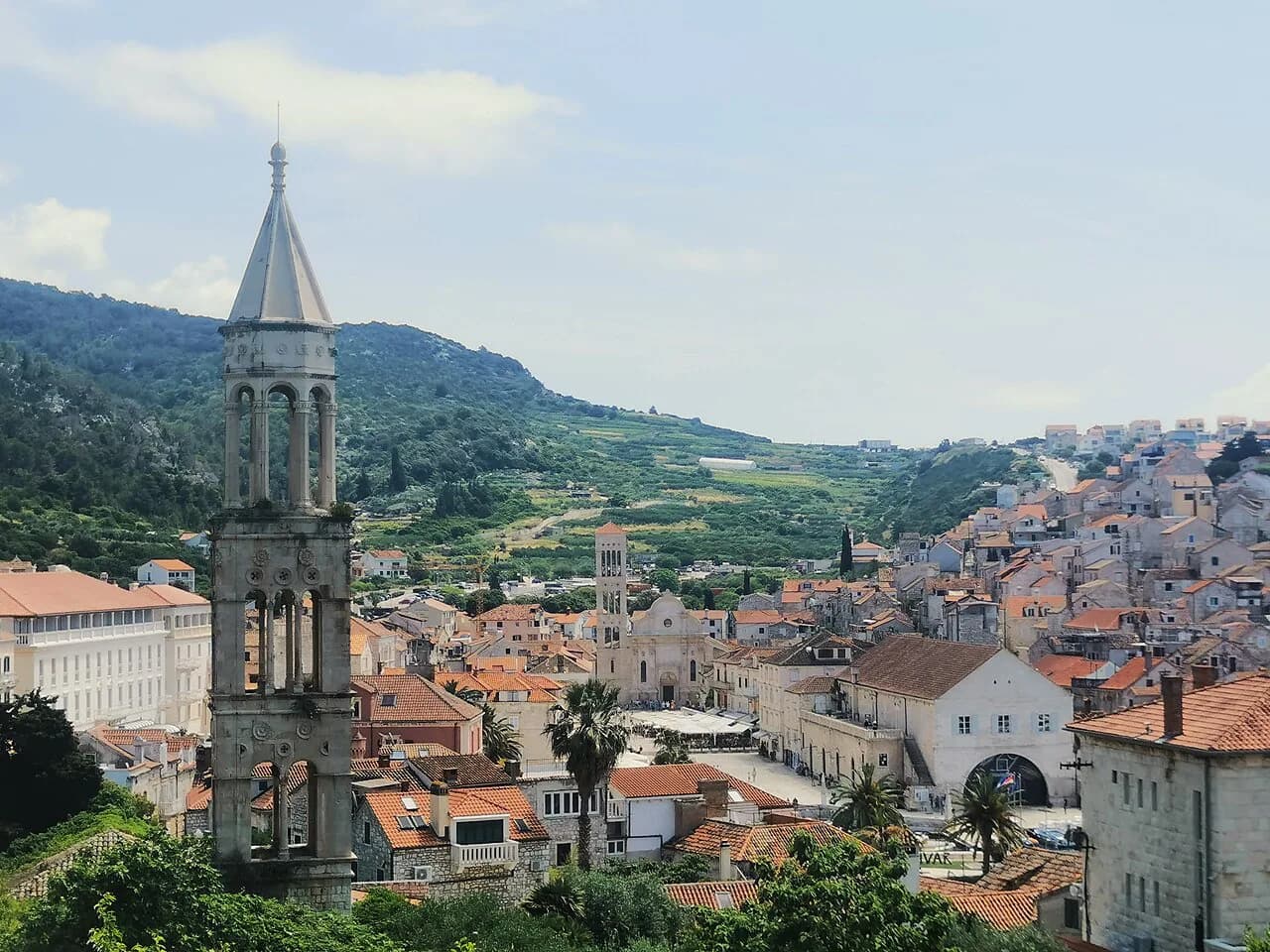
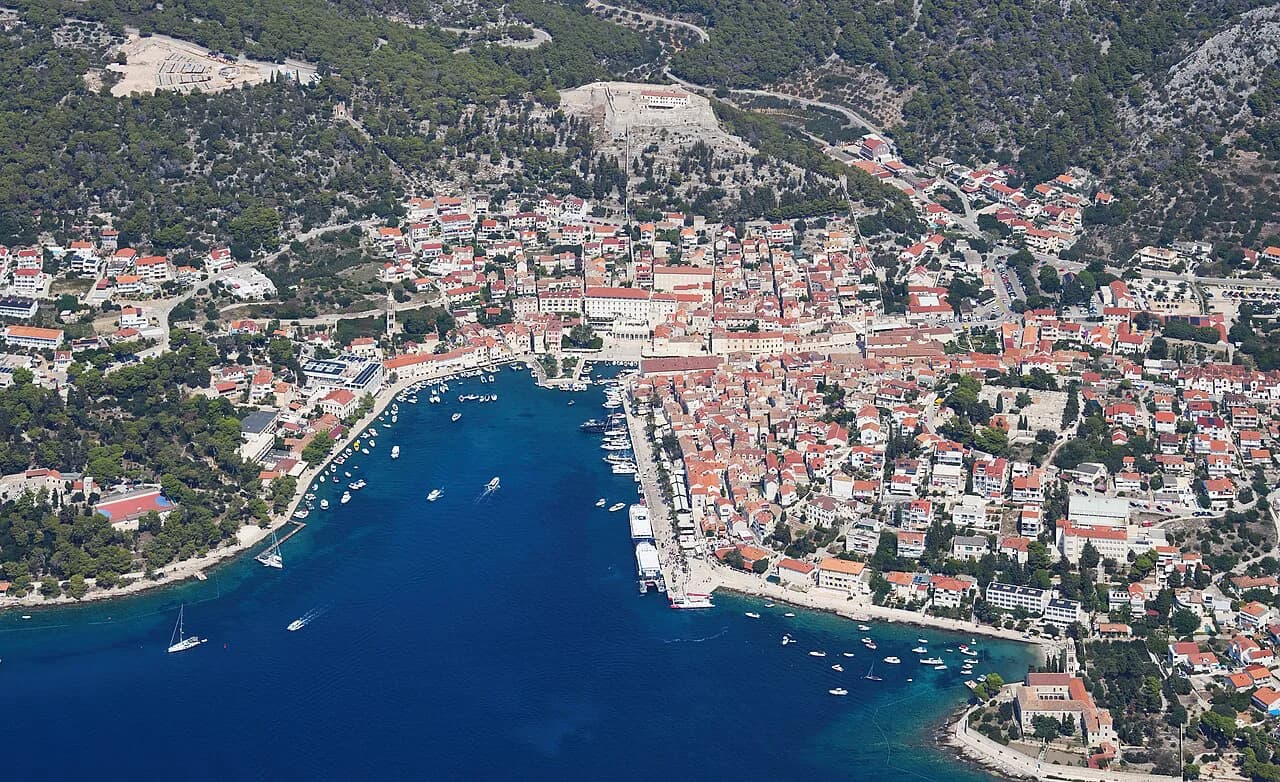
Hvar Town is the hub: the harbour fills with yachts and tour boats, the old town climbs the hillside behind St Stephen's Square, and the fortress looks down on the Pakleni Islands. Stari Grad, on the north coast, has a sheltered harbour and an old grid of streets that feels calmer. Jelsa and Vrboska, further east, are small stone towns that suit a slow half-day rather than a checklist.
Use the Hvar Attractions: 11 Visitor Guides hub to compare the individual sights before you commit time to any one of them. Hvar Town's centre is compact and free to wander, which makes it easy to combine the square, the cathedral and the waterfront monastery in a single morning.
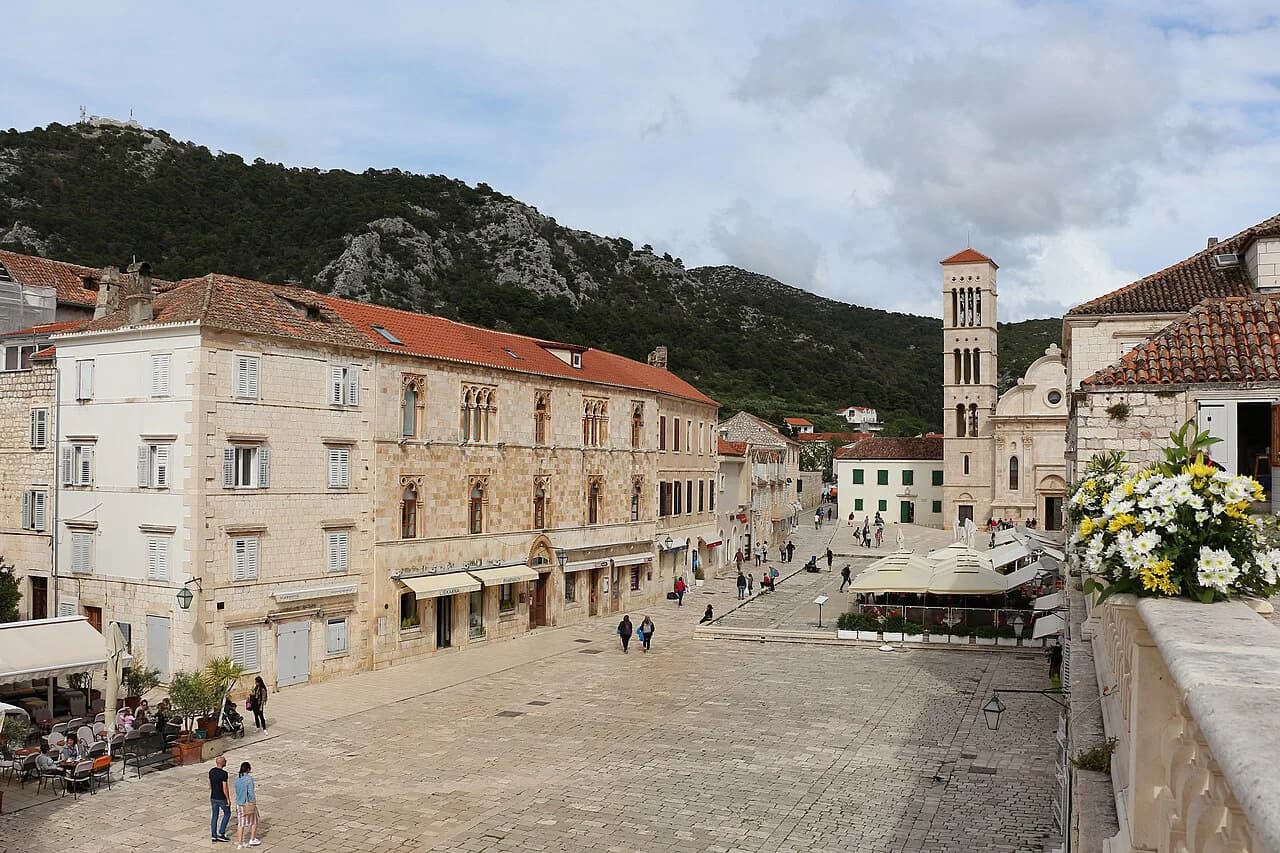
Hvar Town: St Stephen's Square, the cathedral and the Arsenal Theatre
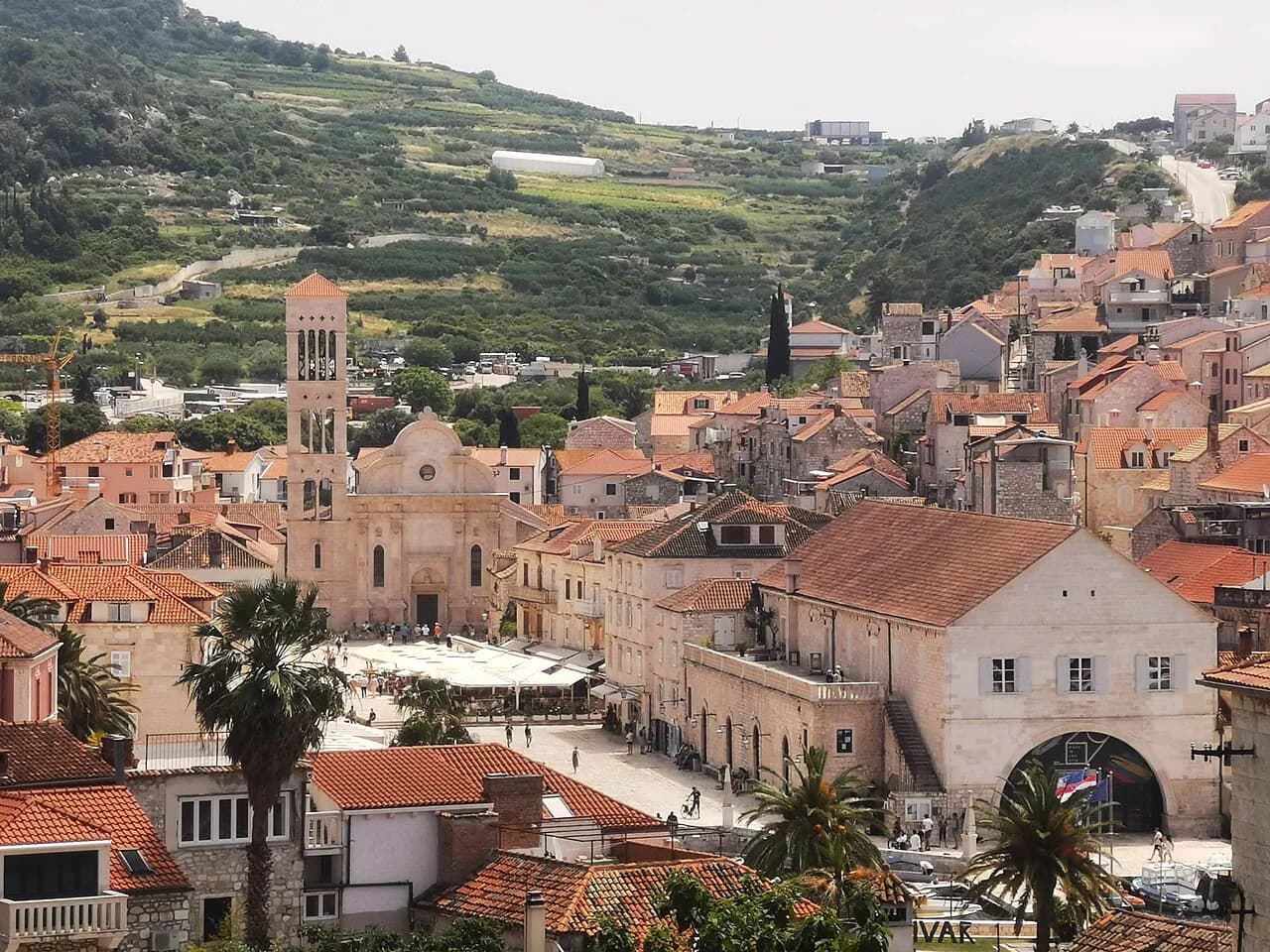
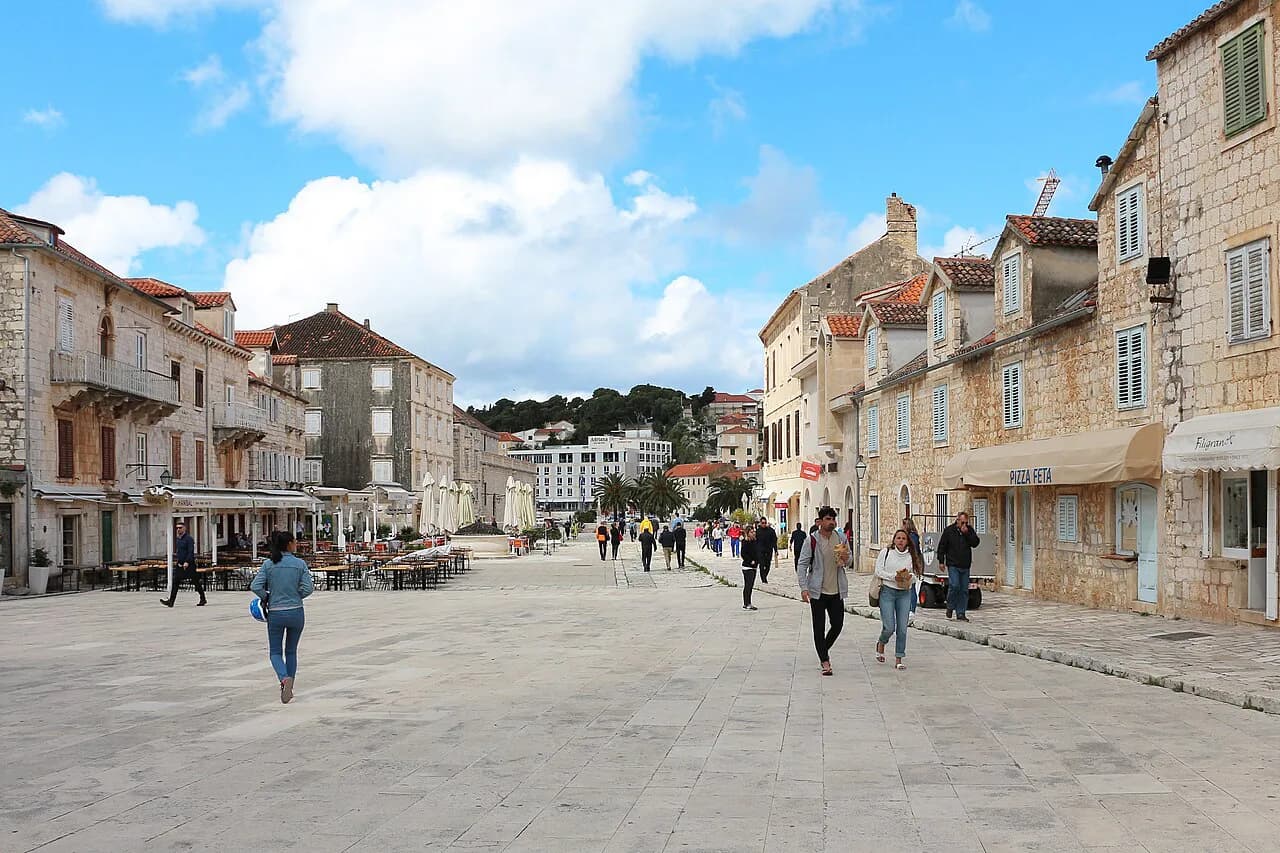
St Stephen's Square, known locally as Hvarska Pjaca, is the largest square in Dalmatia and most of the old town's lanes funnel into it. Cafés and restaurants line the pale cobbles, with the harbour at one end and the Cathedral of St Stephen at the other. It is the natural place to start, and the place to return to for a coffee when the midday heat peaks.
The cathedral's Renaissance bell tower closes the square, and the Bishop's Palace and the Hvar Theatre, built in 1612, stand along the same open space. The theatre is housed in the Arsenal, one of the oldest theatres in Europe, and is worth a look even if you skip the performances.
Beyond the square, narrow cobbled alleys and stone staircases climb into the hills, passing shop doors, courtyards and people's front doors. Give the old town an hour of unplanned wandering rather than treating it as a corridor between sights.
Climb to Fortica (Španjola) above Hvar Town
The walk from the old town to Fortica, also called Španjola, takes about 25 to 30 minutes up a path through pine forest, with benches and views along the way. The fortress was built in the 16th century under Venetian rule and holds ramparts, stone tunnels, an old prison and a small museum across several levels. The reward is the view down over Hvar Town's rooftops and out to the Pakleni Islands.
Time the climb for early morning or late afternoon. The path is exposed in places and gets very hot in high summer, so carry more water than you think you need and avoid the middle of the day. If the heat is against you, the walking paths partway up already give a good view of the town, so the climb still pays even if you turn back before the gate.
Ticket prices and opening hours at Fortica change with the season, so confirm the current entry fee and hours before you set out rather than relying on an old figure.
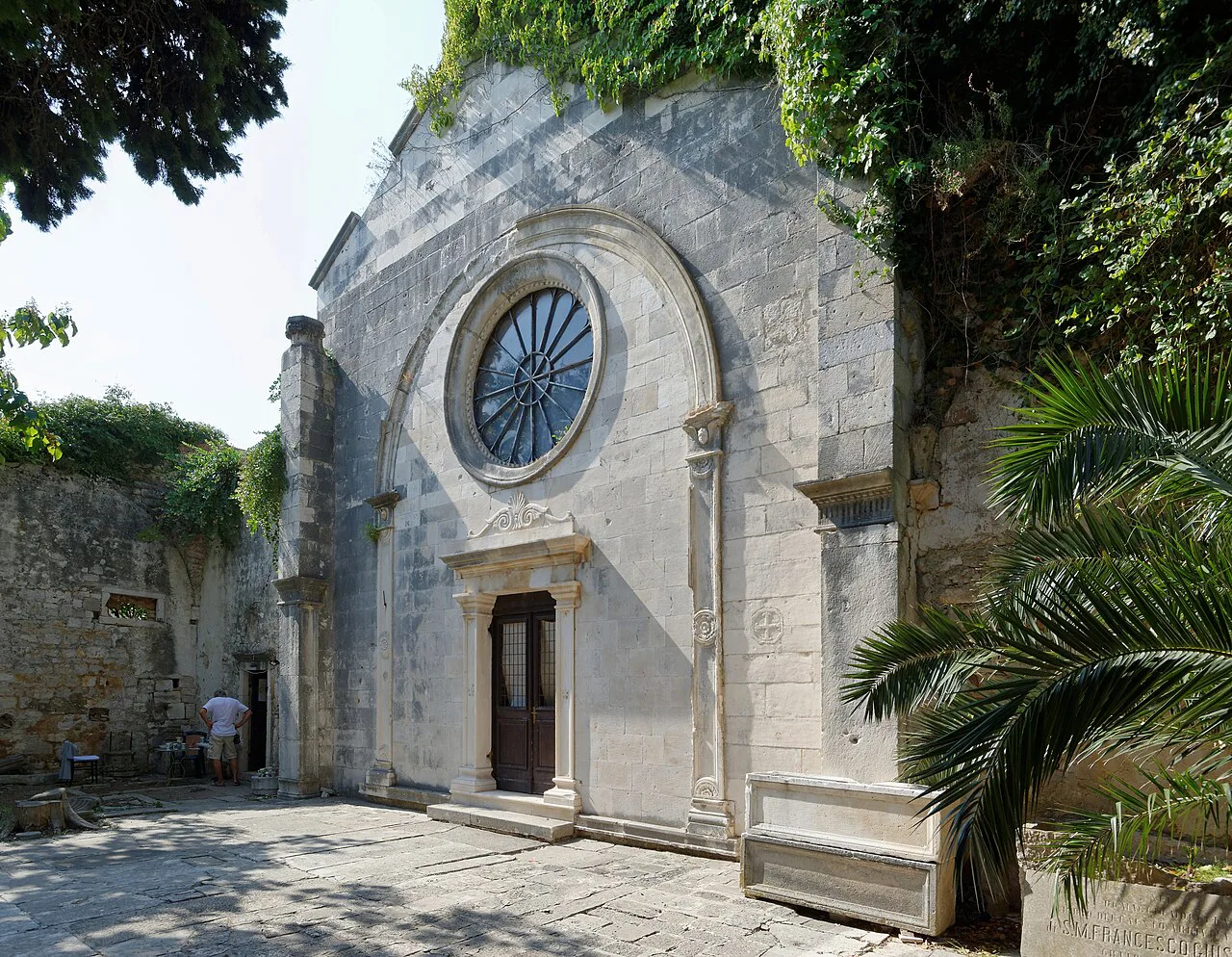
The Franciscan Monastery on the Hvar Town waterfront
The Franciscan Monastery sits on the waterfront, a 15th-century stone church with a courtyard, bell tower, cypress trees and Renaissance works. Inside hangs a large painting of the Last Supper by Matej Ponzoni, and the small museum holds manuscripts, coins and nautical maps. It makes a quiet, cool pause between the harbour and the old town lanes.
The museum keeps limited hours rather than all-day opening, so check the times on arrival in Hvar Town and plan the monastery visit around them, not the other way round.
Stari Grad: the old grid and harbour as an alternative base
Stari Grad sits at the head of a deep bay on the north coast, with a harbour, a waterfront and an old town laid out on a grid behind it. It is a genuine working town rather than a stage set, and staying here puts you closer to the island's quieter half while keeping you within reach of Hvar Town.
Use Stari Grad as a base if you want evenings that are not built around a harbour full of yachts. The town's flat old centre is easier walking than Hvar Town's staircases, which matters if you are travelling with anyone who finds steps tiring. From here, Jelsa and Vrboska are short onward hops rather than a separate expedition.
Jelsa and Vrboska: a slower half-day
Jelsa and Vrboska lie east along the same north-coast shore and pair naturally into one half-day. Jelsa has a broad waterfront and a stone core behind it; Vrboska is smaller, strung along a narrow inlet. Neither demands a checklist — the pleasure is in the pace, so leave room to sit rather than ticking off sights.
If you are weighing up which island to add to a wider Croatian route, the Brač Island Guide covers the ferry crossing from Split and the inland villages around Bol, while the Vis Island Guide covers the further island and its own port towns. Hvar fits comfortably between the two on a longer coastal itinerary.
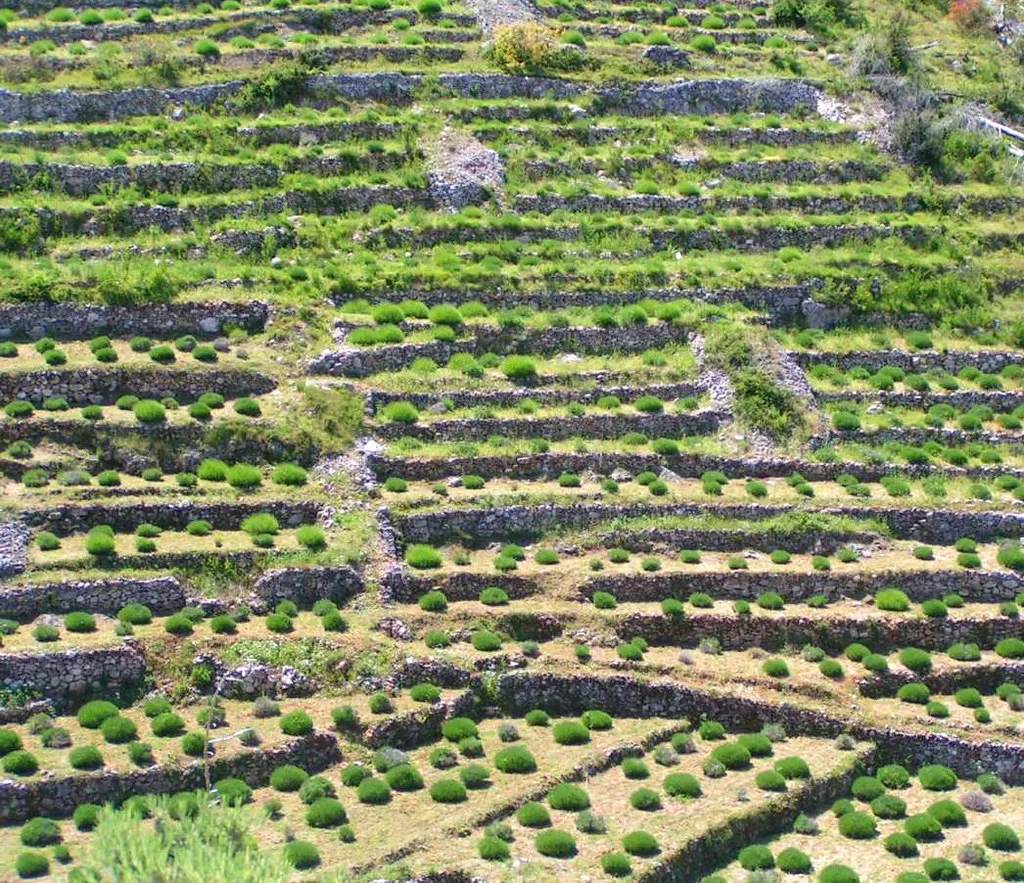
Inland Hvar: lavender villages and cliff-edge roads
Inland Hvar is hill country: lavender fields, stone villages and roads that wind along cliff edges rather than hugging the coast. Driving here gives you a side of the island that ferry day-trippers never see, and the villages reward a stop for a coffee more than a specific sight.
Allow half a day for a loop through the interior and back to the coast, and drive carefully: the roads are narrow and the drop-offs real. If you are relying on buses, the interior villages are harder to reach, so treat the inland loop as a reason to hire a car for a day rather than a bus itinerary.
The Pakleni Islands by boat from Hvar Town
The Pakleni Islands lie just off Hvar Town, within sight of the harbour and the fortress above the town. They are the closest island group to Hvar Town and the obvious boat outing if you have only an afternoon to spare.
Boats leave from Hvar Town's own harbour rather than a terminal outside town, so you can walk from St Stephen's Square to the quay in minutes. Check the departure point and return time with your ferry or excursion company before you set off, as services and timings vary by season.
For a longer day on the water, some travellers book a multi-island hopping tour covering several Dalmatian islands in one run rather than staying on the Pakleni group. That option suits people based on the mainland, but it means less time in Hvar Town itself.
How many days on Hvar: one, two or three
With one day, stay in Hvar Town: St Stephen's Square, the cathedral, the Franciscan Monastery waterfront and, if the heat allows, the Fortica climb. That fills a day without rushing and keeps you close to the ferry or catamaran back to Split.
With two days, add Stari Grad and one of Jelsa or Vrboska, and take the short boat crossing to the Pakleni Islands on the afternoon of the second day. With three days, you can add the inland lavender villages and give the old towns the unhurried hours they deserve.
Getting to Hvar: ferries and catamarans from Split
Hvar is about 25 miles from Split, which makes it a one- to two-hour crossing, and there is no airport on the island, so ferries, catamarans and boats are the only way to arrive. The sailing you choose determines which port you land at, so match your accommodation to that port instead of treating Hvar Town as the default landing point.
Services thin out outside the summer season, so off-season travellers should check the sailing list before fixing dates instead of counting on a daily departure. Book accommodation around the port you actually arrive at, not around Hvar Town by default.
When to go: summer heat, crowds and the fortress path
Hvar has a hot-summer Mediterranean climate, with long sun and high summer temperatures. The island's reputation draws crowds and yachts into Hvar Town in July and August, when the harbour and the square are at their fullest.
If you want to climb to Fortica without the full midday heat, go early in the morning or in the late afternoon and keep the middle of the day for the shaded lanes of the old town or the monastery courtyard. Shoulder-season weeks give you the same views with fewer people on the path.
Getting around the island: buses and whether you need a car
Getting between Hvar Town, Stari Grad and Jelsa without a car takes planning: the towns are strung along the coast and public transport across the island is limited outside the main season. If you are staying in Hvar Town and want a day in Stari Grad or Jelsa, sort out your transport before you go rather than assuming a frequency, and remember that parking in the old harbours is tight.
A car earns its keep for the inland villages and cliff-edge roads, where buses are thin. If you hire one, plan a loop that returns you to the coast before dark and keep the driving day separate from the boat day.
Should you base yourself in Hvar Town or Stari Grad?
Choose Hvar Town if this is your first visit and you want St Stephen's Square, the cathedral, the monastery and the Fortica climb within walking distance of your bed. It is the busiest and most expensive end of the island, but it is also where the boats to the Pakleni Islands leave from.
Choose Stari Grad if you want a calmer base, flatter walking and easier access to Jelsa and Vrboska. Either way, give the island two days rather than one: the second day is what turns Hvar from a harbour stop into an island.
Explore more Hvar guides
Frequently Asked Questions
Is Hvar very expensive?
Hvar Town is the priciest part of the island, with harbour-front cafés and yacht traffic pushing up what you pay for a coffee or a meal. Stari Grad, Jelsa and Vrboska are generally gentler on the wallet. Prices change by season, so check menus and ticket boards where you are rather than budgeting from old figures.
What are the best beaches on Hvar island?
Hvar has plenty of pebbled coves and clear water, and the Pakleni Islands just off Hvar Town are the easiest swimming to reach by boat. Which cove suits you depends on whether you want to walk in or arrive by taxi boat.
Which is the prettier base, Hvar Town or Stari Grad?
Hvar Town is the more dramatic: a harbour of yachts, a wide square and a fortress above the rooftops. Stari Grad is quieter, with a working harbour and a grid of old streets. The right pick depends on whether you want buzz or calm in the evening.
Sources
Notes from the Croatian coast
Optional updates when our guides change.
You might also like
Continue reading
More guides you'll find useful