Brač Island Guide: Bol, Supetar, Stone Villages and Ferries
Plan a trip to Brač island: ferries from Split, how Bol and Supetar differ, the stone villages of Pučišća and Škrip, and how long you need.
On this page
Brač is the largest island in Dalmatia and the third largest in Croatia, reached by ferry from Split and easier to reach than Hvar or Korčula. Many travellers treat it as the home of Zlatni Rat and little else, which sells short an island of quarry villages, Illyrian walls and quiet harbours. This guide covers the ferry ports, Supetar against Bol as a base, the stone villages, the interior, getting around and how long to give it.
What Brač is and where it fits a Croatian coast trip
Brač sits off the Dalmatian coast in front of Split, close enough for a day trip and large enough to justify several nights. It is the third largest island in Croatia, so distances between the ports, Bol and the inland villages add up. Compared with Hvar and Korčula it has a quieter, less worldly feel: pine forest, Mediterranean macchia and steep cliffs dropping to the sea rather than a single showpiece town.
The island's identity is stone. Quarrying was once one of its main industries, and the white limestone from around Pučišća went into Diocletian's Palace in Split and the White House in Washington. That gives a Brač trip a different shape from a beach island: you spend mornings in villages built from the same stone and afternoons on the water.
How to reach Brač: which ferry port to book
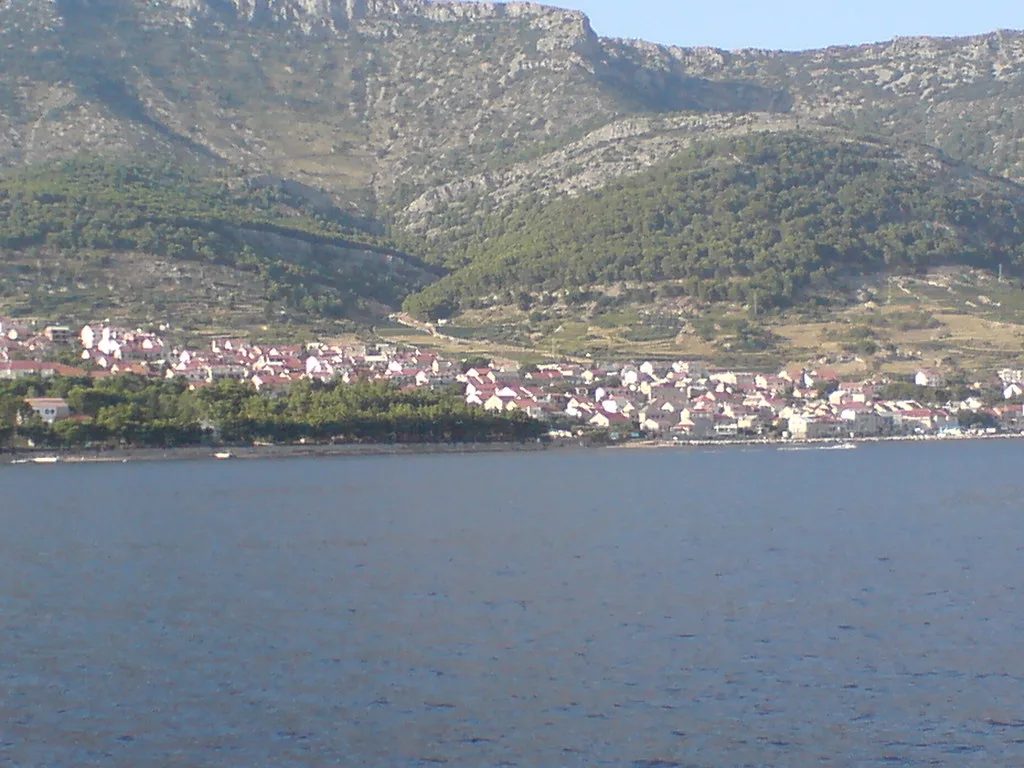
Mainland ferries arrive at Supetar, the island's principal port of entry, where Croatian families and international visitors alike step off and head for the surrounding beaches. Book the Split–Supetar route if you want the north coast, the capital and the inland villages. Timetables and fares change with the season, so check Jadrolinija's own site for the date you travel.
Decide where you sleep before booking a crossing, because Supetar and Bol sit at opposite ends of the island and a wrong port turns into a long transfer rather than a short one. The Supetar: A Guide to Brač's Ferry Town covers the arrival side, and the Bol, Croatia guide covers the southern resort.
Work out whether you need a vehicle before booking, because a car crossing and a foot-passenger crossing are priced and booked differently. The car ferry and any fast passenger boat may leave from different berths in Split, so check Jadrolinija's own departure point for your sailing.
Supetar: the main port and a base without a car
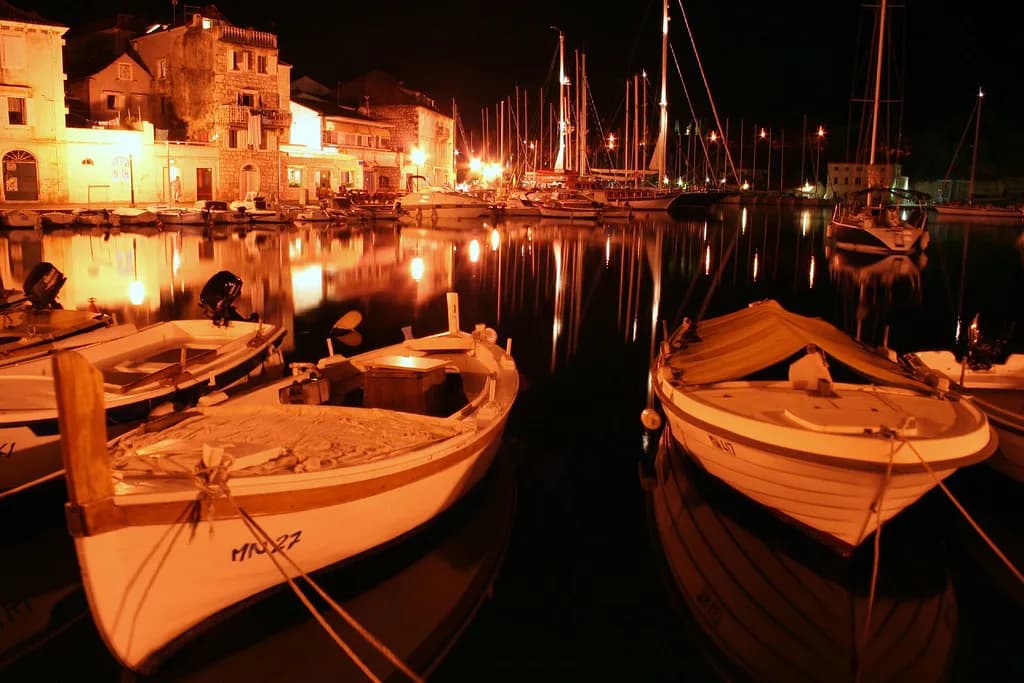
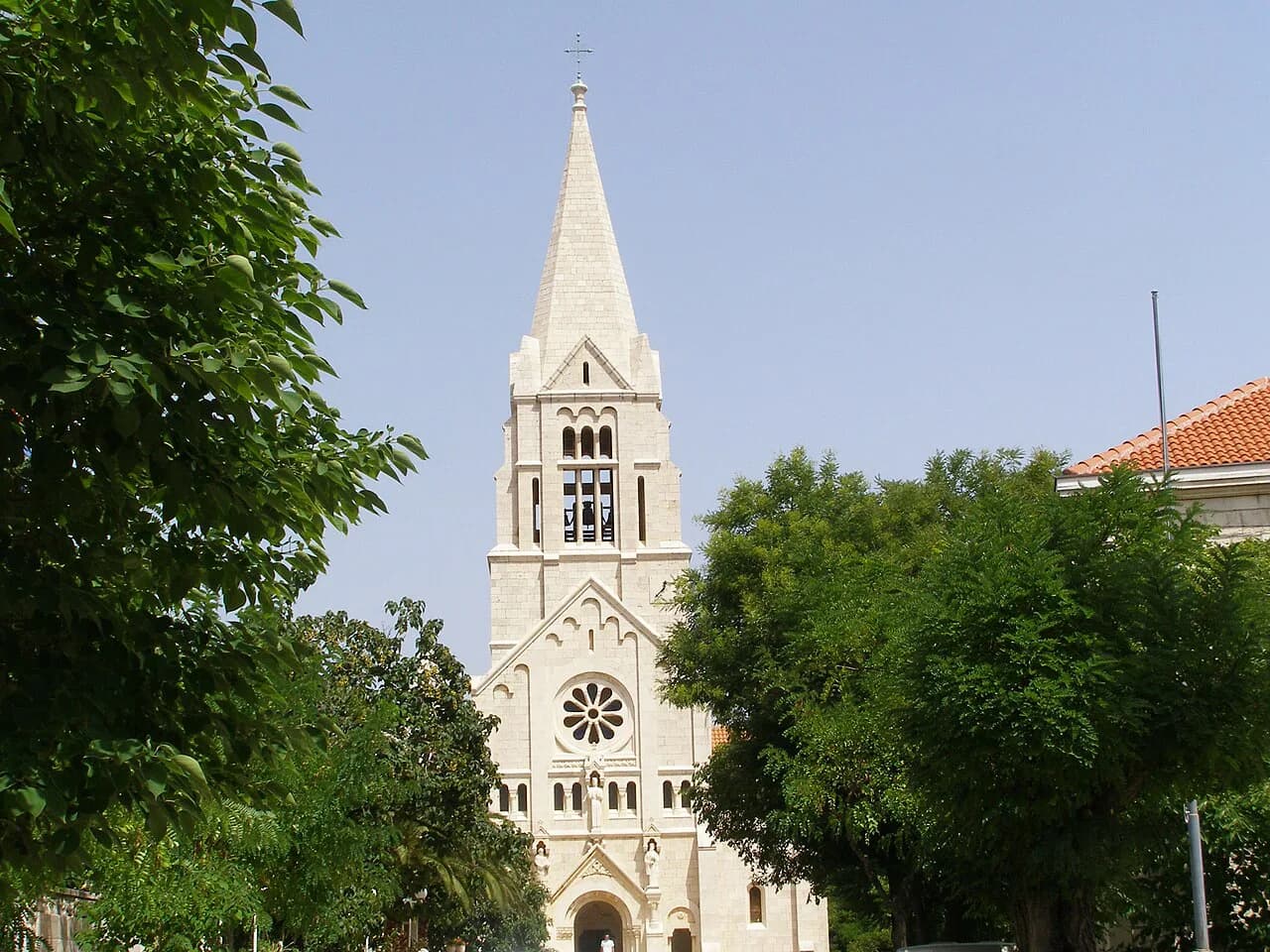
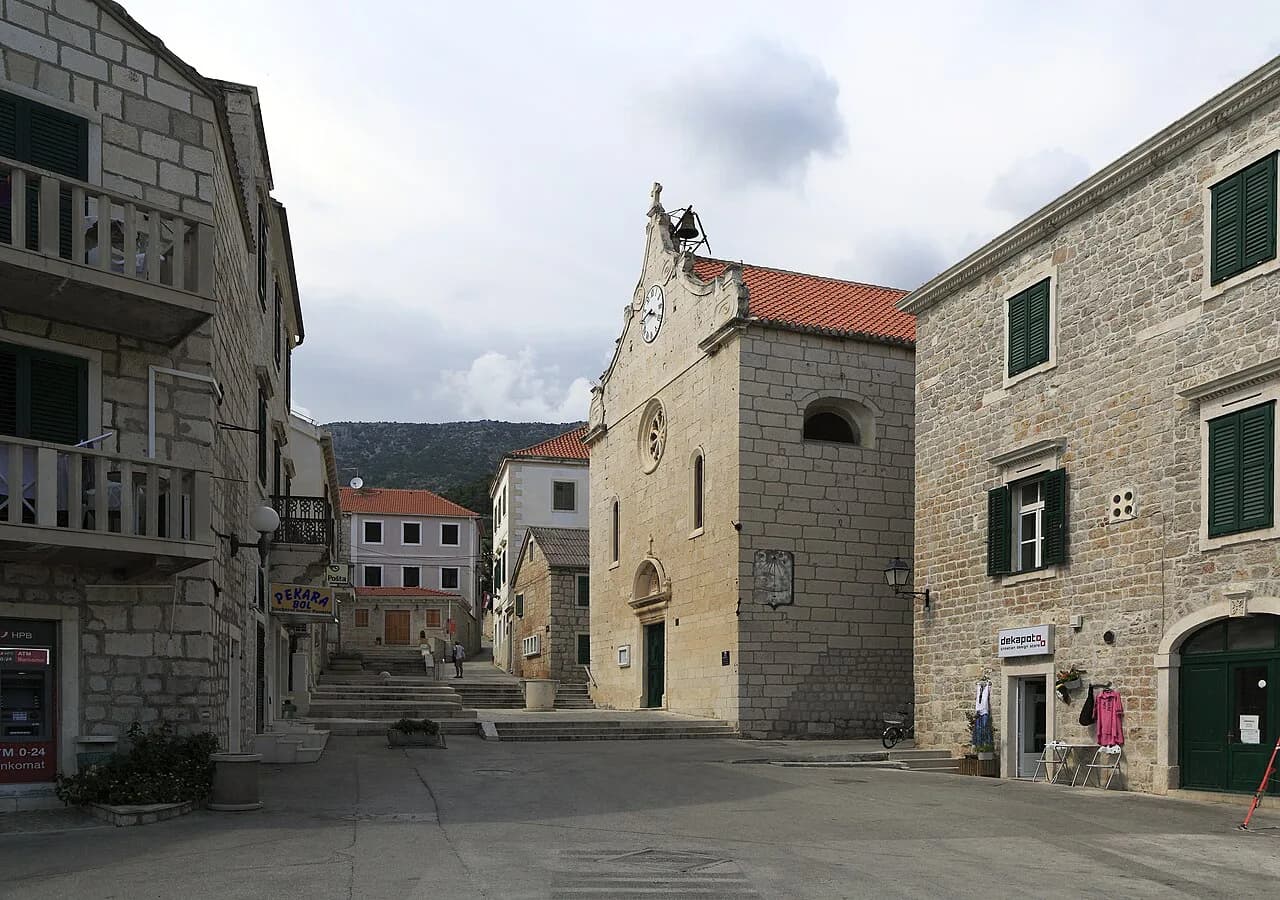
Supetar is the administrative capital as well as the main port, and its centre is genuinely pleasant: narrow stone streets, Austrian-style buildings, a small harbour and an imposing church. Everything a car-free traveller needs sits within a short walk of the ferry, which makes it the least stressful place to base yourself on arrival. For the full layout of the town, see the Supetar: A Guide to Brač's Ferry Town.
The town works as a base because the coast around it is usable. There are five rocky beaches along the Supetar shoreline, with Vrilo only about 100 m from the old town centre and Vlačica, Banj, Bili Rat and Vela Luka further west. That means you can swim before breakfast without hiring anything.
In summer the town puts on outdoor cultural events, often free, including classical and traditional music concerts, dance and theatre. Families gravitate here for the relaxed atmosphere and the absence of any dress code, which is a real contrast with Bol's promenade scene.
Bol and the Zlatni Rat spit
Bol sits on the southern side of the island, a coastal village that became a resort once word spread about its beach. The old town is small and easy to walk, while the hotels along the centre are linked by a seaside promenade. It is the liveliest place on Brač in summer and the one most exposed to day-trippers arriving for the beach. The Bol, Croatia guide covers the promenade, the harbour and the walks out of the village.
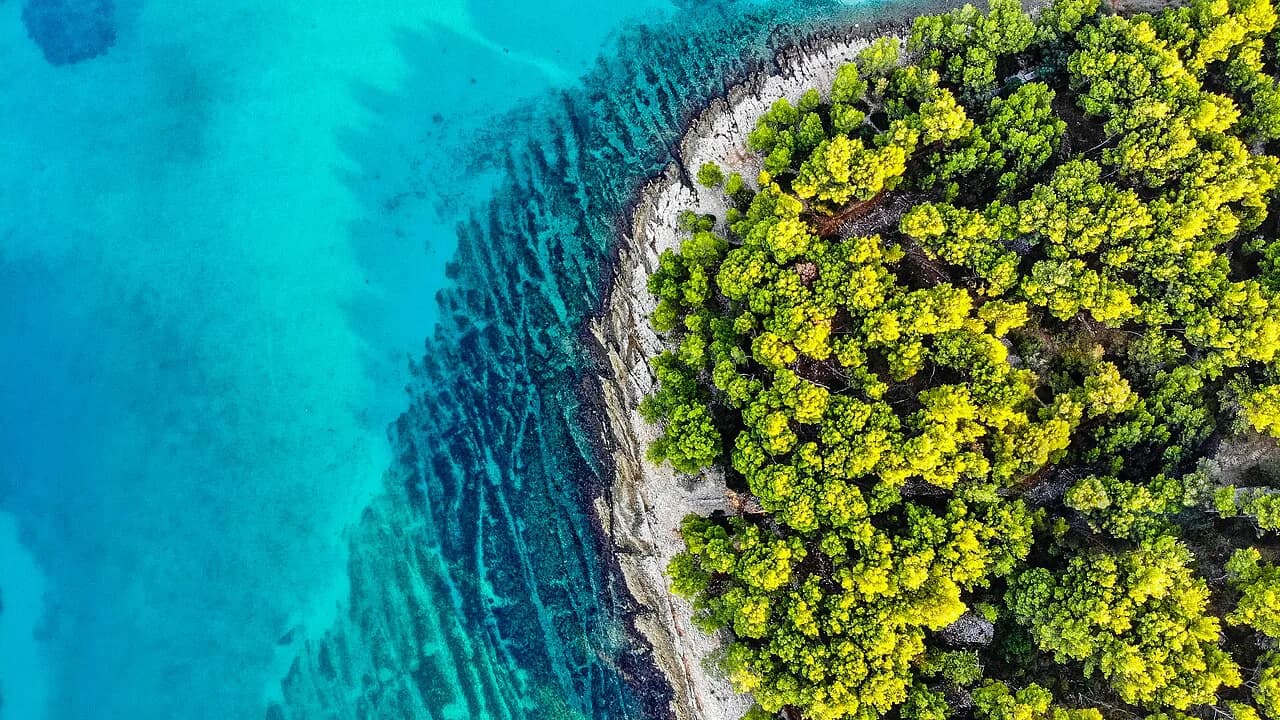
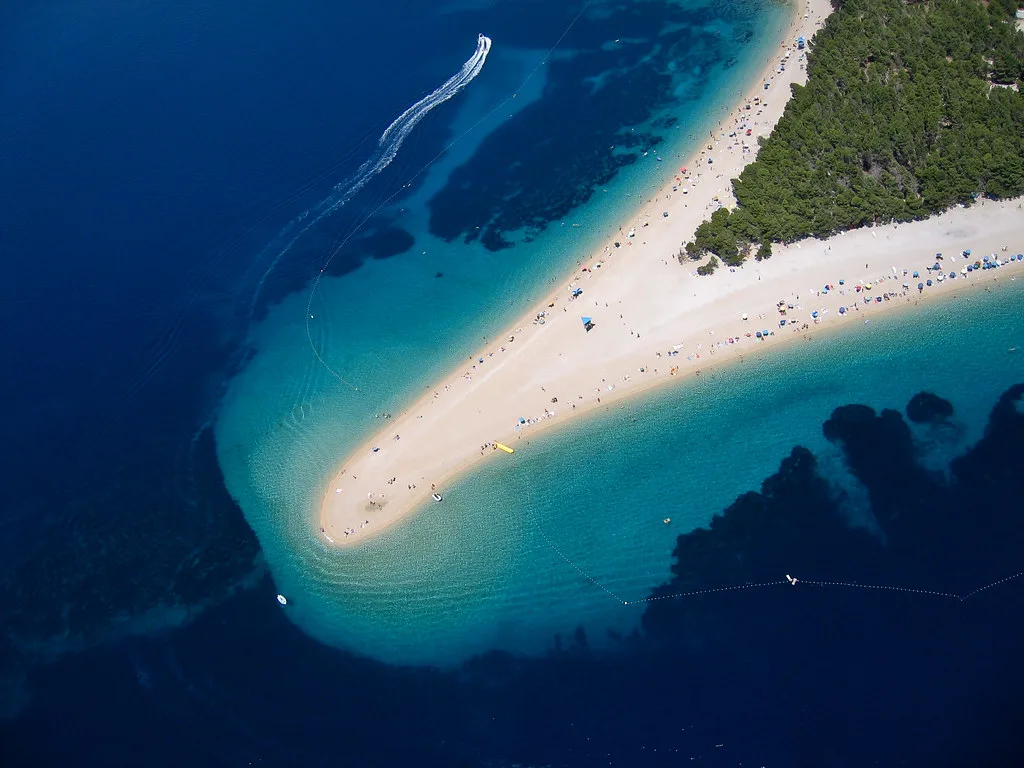
Zlatni Rat is the pebble tongue jutting a few hundred metres into the sea that appears on every Croatian tourism brochure. Its shape shifts with the waves and wind, so the spit you photograph is not the one in the poster, and the water turns from azure to deep blue within a few steps. It is not sand, and it is not a secret — see the Bol, Croatia guide for the beach and the town around it.
Above and behind Bol, Vidova gora is the standard half-day outing from the village and the high point of the island's interior. A 5 km walk from Bol leads to the Dragon's Cave (Zmajeva špilja), whose walls carry bas-reliefs of angels, animals and a dragon whose origin is unclear. The cave is open to the public only on guided tours run by the local tourist office, so plan around their schedule rather than turning up.
Pučišća and the white-stone quarries
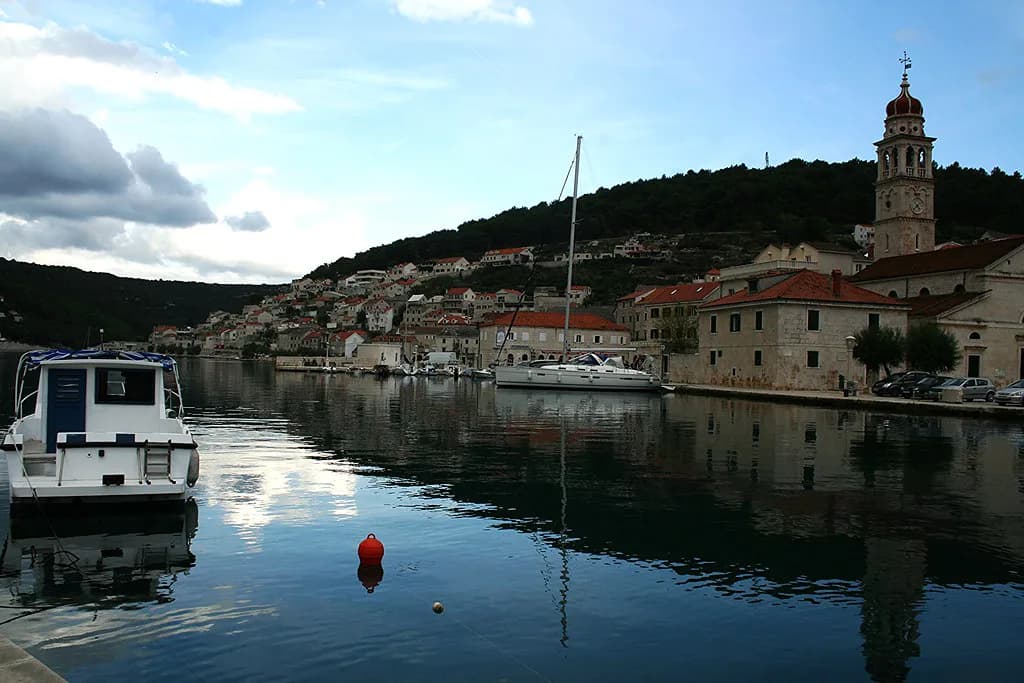
Pučišća on the northern side of the island is the quarry village, and the stone taken from the workings around it built local homes as well as Diocletian's Palace and the White House. The village is the strongest argument for leaving the beaches: a harbour of pale stone, a working craft tradition and far fewer people than Bol.
Allow time to walk the waterfront rather than photographing it from the road. The stone is the sight here, and the village pairs naturally with Škrip and the inland villages on a single loop by car.
Škrip and the island's oldest settlement
Škrip, about 8 km from the centre of Supetar, is the oldest inhabited settlement on the island and still holds remains of the ancient Illyrians and Romans. The Illyrian settlement walls date from the 3rd century, and the place has the layered, slightly neglected feel of somewhere people actually live rather than present.
It is an easy half-day from Supetar by car or bus, and the kind of stop that rewards an hour of slow walking more than a checklist. Read the Škrip, Brač guide before you go for the castle and tower details.
Milna, Splitska, Postira, Povlja and Sumartin
If you want a quiet holiday away from the crowds of Bol, the small coastal villages of Sumartin, Splitska, Milna and Pučišća are the obvious choices. Each has a harbour, a handful of streets and far less summer pressure. They suit travellers who plan to cook, read and swim rather than move between bars.
Milna, on the western end, is the classic sheltered harbour and a sensible base if you arrive by boat or want evening walks along the water. The Milna, Brač guide covers the harbour layout and the waterfront.
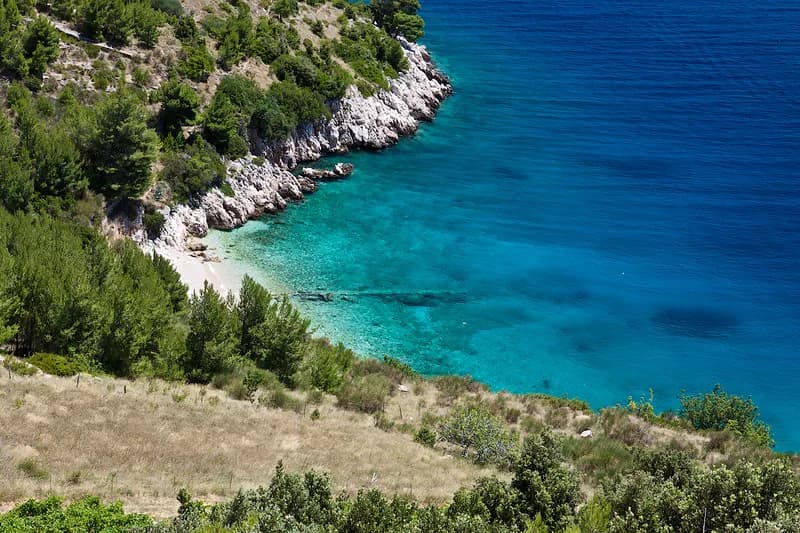
Sumartin gives access to the coves at Radovnja, Zvirje, Rasotica and Studena. Lovrečina, in the northern part of the island, is a quiet sandy bay with a bar and a small harbour, and it makes a gentler swim stop than the Bol beaches.
Inland Brač: Nerežišća, Donji Humac and the pasture country
Behind the coast the island turns into pasture, vineyards and cypress, with goats grazing on aromatic grasses that give their cheese its particular taste. Nerežišća and Donji Humac sit in this inland belt, and driving through takes you past the small-scale farming that still underpins island life.
This is where Blaca hermitage belongs on an itinerary, reached on foot or by a rough track rather than on a coastal drive. Read the Blaca Hermitage on Brač guide for access before committing a morning to it.
Getting around the island
A car makes a real difference if Škrip, Pučišća and the inland villages are on your list. Hire in Split and bring it across on the car ferry, or pick one up on the island. Distances between the villages are modest, and the Brač Island Map shows how the roads link the ports, Bol and the interior.
For orientation before booking anything, the Brač Island Map is the quickest way to see how the ports, villages and coast relate to each other.
Selca sits above Sumartin in the east and works as a base for the quieter side of the island. The Selca on Brač guide covers the village itself.
How long Brač needs
A day trip from Split covers Supetar and one other place, usually Bol, and leaves you rushed. Two to three nights lets you see the coast properly: a morning in Supetar, an afternoon at Zlatni Rat, and a drive through Pučišća and Škrip on the way back. Longer stays add the interior, Vidova gora and Blaca hermitage without spending the whole time in a car.
If you are choosing between Dalmatian islands, treat Brač as the quiet one and save Hvar Town for a livelier stop. The things to do on Hvar island guide shows how different the pitch is there.
Vis island is the further, wilder option if you have more time and want a contrast to Brač's villages. The Vis Island Guide covers its two ports and the interior.
When to go and what summer really costs
Summer is high season, and Bol carries the crowds, especially when day-trippers arrive for the beach. The shoulder months are quieter, so build a flexible day into any plan that depends on boats, and check the Jadrolinija sailing times for your dates.
Croatia uses the euro, so prices are quoted in euros rather than kuna. Ferry fares vary by route, season and vehicle, so Jadrolinija's own booking page is the only reliable figure for your dates. Confirm the sailing type before you pay, particularly if you are bringing a car.
The bigger costs on Brač are the ferry and a hire car if you want to reach the villages. Check current details for the Dragon's Cave guided tour with the local tourist office before you set out.
Which port should you book, and for how long?
Choose Supetar if you want to arrive and walk to your base, and pick Bol only if the promenade and the beach are the point of your trip. In the east, Selca above Sumartin gives you a quieter base and a different side of the island. Either way, give the island two or three nights rather than a rushed day.
The return you get from Brač comes from the inland and northern villages as much as the coast. One afternoon in Pučišća and an hour in Škrip will stay with you longer than a second day on a pebble spit.
Explore more Brač guides
Sources
Notes from the Croatian coast
Optional updates when our guides change.
You might also like

Continue reading
More guides you'll find useful