Croatia Itinerary: Plan a First Trip From 7 Days to 2 Weeks
Plan a Croatia itinerary around the coast and islands: how long to allow, which regions to combine, and how ferries and national parks shape a 7, 10 or 14-day route.
On this page
Seven days gives you one coastal spine with a single island; ten days buys you an inland-to-coast route via Plitvice plus two islands; a fortnight lets you add either Istria or the far south without rushing the ferries. Almost every good Croatia itinerary is really a decision about how much coastline to cover and which crossings you build the trip around. This guide sets out the geography that shapes the route, then three named plans, and shows how the national parks, ferries and summer crowds change the sums.
How many days you need, and what changes between 7, 10 and 14 days
Croatia rewards a slower line rather than a longer one. With a week, pick a single stretch — Split to Dubrovnik, or Istria with the Kvarner Gulf — and accept that you will leave the rest for another trip. Ten days lets you link Zagreb, an inland park and the southern coast, a shape that appears among the ten-day itineraries listed on kimkim, including one covering Zagreb, Plitvice, Hvar and Dubrovnik.
Two weeks is where the arithmetic changes: you can add either Istria and the Kvarner or the islands between Split and Dubrovnik without spending every other day in transit. Our 2 weeks in Croatia plan treats the fortnight as two halves, coast and islands, rather than a single unbroken march south. The practical rule is that each extra stop costs roughly half a day of moving, checking in and settling, so three bases in a week always feel rushed.
If you have only a week, keep the number of bases to two and use day trips for the rest. Seven days works well as Split with a Hvar or Brač excursion, or as Rovinj with inland Istria and a Kvarner crossing; our 7 days in Croatia plan shows how much a single coastline can absorb without a wasted afternoon.
Published route collections tend to assume a fast pace, so read them for shape rather than as a fixed schedule. A common ten-day pattern starts in the capital, spends a night at the lakes, then works down through Zadar, Šibenik and Split to Dubrovnik. That sequence is sound mainly because it moves steadily south-east with the coast, not because each stop needs the same time.
The geography that decides your route: Zagreb, Istria, Kvarner, Dalmatia and the islands
Croatia's coast bends like a bow. Istria and the Kvarner Gulf sit at the northern end around Rovinj and Rijeka; Dalmatia runs south-east through Zadar, Šibenik, Split and Dubrovnik; the islands lie offshore in a long parallel chain. Zagreb is inland, and Plitvice Lakes sits between the capital and the coast, which is why so many routes run Zagreb to the lakes to Dalmatia in one line.
What language do they speak in Croatia? Croatian is the official language, written in the Latin Alphabet. English is widely understood in hotels, ferry terminals and old-town restaurants along the coast, but a few words of Croatian go a long way in smaller places and on the islands.
Which month is best to visit Croatia? June and September offer the best balance of warm sea, full ferry services and manageable crowds. July and August are busiest, especially in Dubrovnik and Split, while the shoulder months bring occasional rain and some seasonal closures on smaller islands.
What part of Croatia is the most beautiful? That depends on what you want from the trip. Dubrovnik and Split have the strongest stone cities, Istria has Venetian hill towns and Rovinj's waterfront, and the islands between Split and Dubrovnik offer quieter harbours and clear water; most first trips combine two of the three.
The interior-to-coast axis and the coastal axis are different trips, and mixing them mid-holiday costs a day. A sound first-trip route either runs inland then down the coast once, or stays on the coast and hops between islands. Trying to do Istria, Plitvice and Dubrovnik in ten days means most of your hours go to the road.
For island choices, Hvar, Korčula and Brač are the easiest to reach from Split, while Vis sits further out and Šolta is the short hop. If you are weighing which to include, our guide to the best islands in Croatia compares them by character and access rather than by beach. Pairing two adjacent islands is almost always better than two at opposite ends of the chain.
Route one: Zagreb, Plitvice, Hvar and Dubrovnik for a first trip
This is the classic first-timer's line: fly into Zagreb, collect a car or take a bus to Plitvice, then continue south to Split and finish in Dubrovnik with Hvar in between. It works because you see the capital, a karst lake landscape and the two strongest stone cities in one direction of travel. The cost is two long transfer days, one inland and one down the coast.
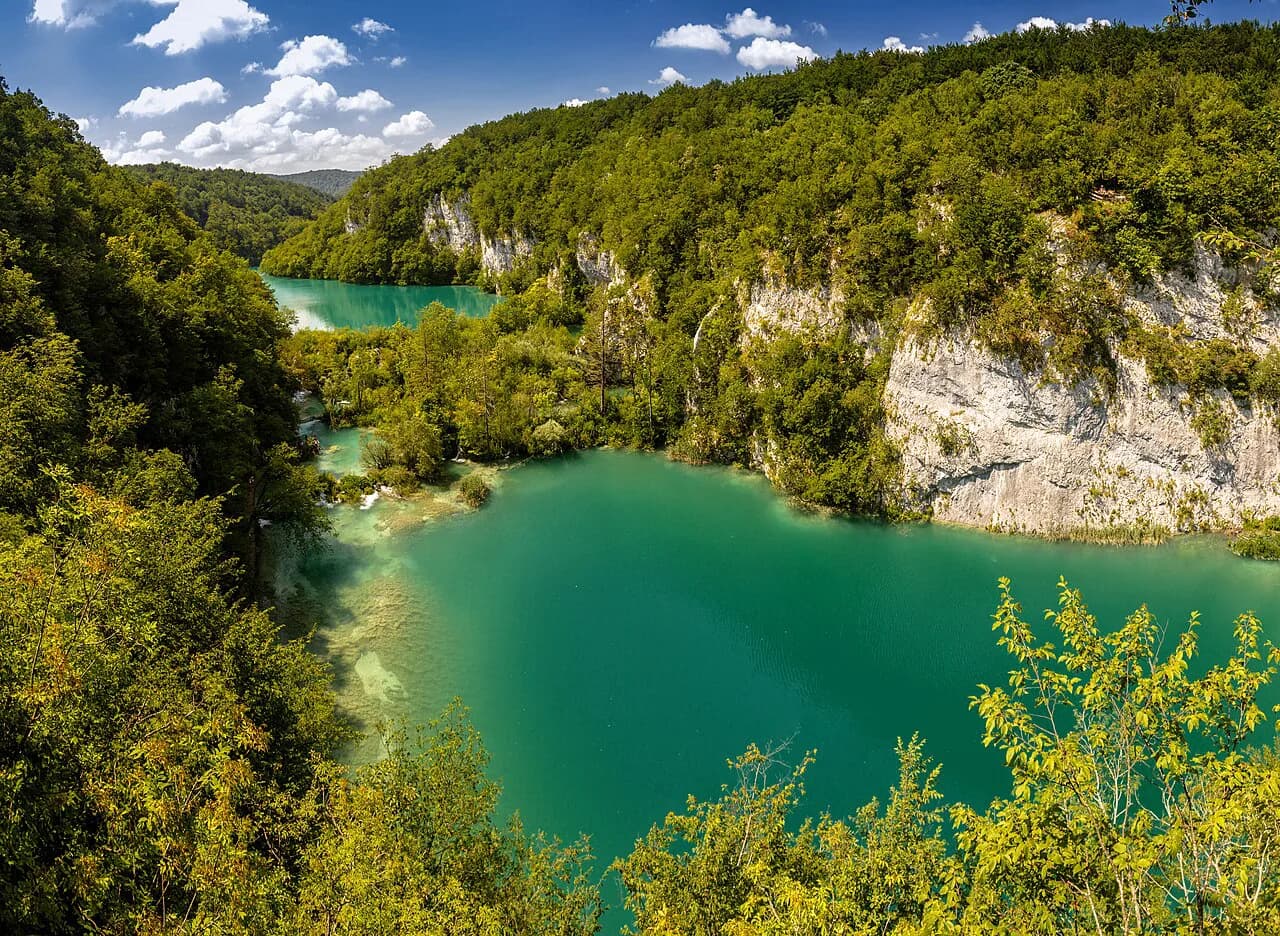
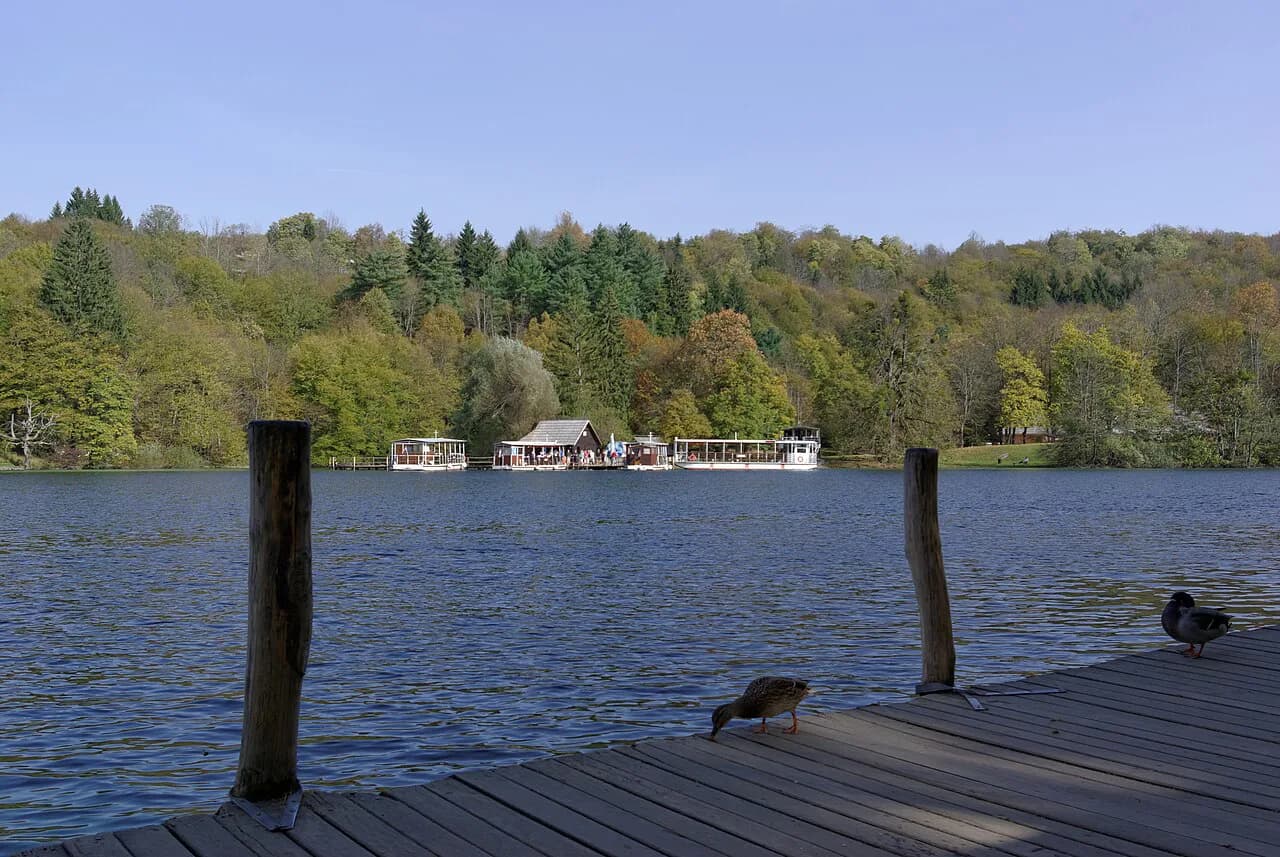
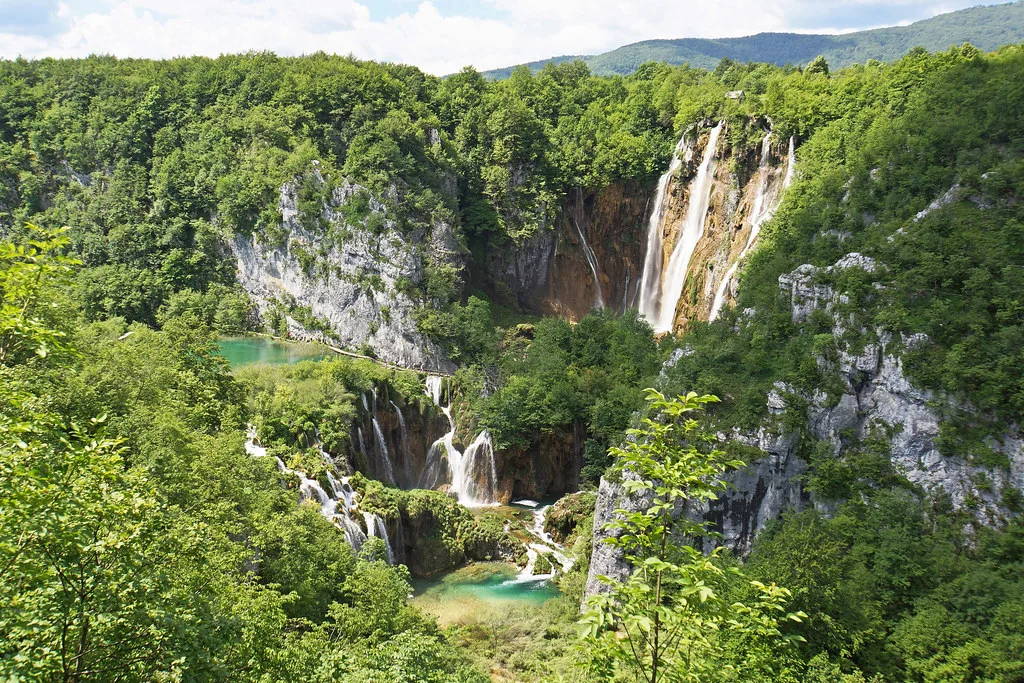
Allow a full day at Plitvice Lakes, and start early: the boardwalks and boats inside the park reward the first hours, before the tour coaches fill the paths. Our 10 days in Croatia plan builds the lakes in as a proper overnight stop rather than a drive-through, which is the single biggest improvement most people can make to this route.
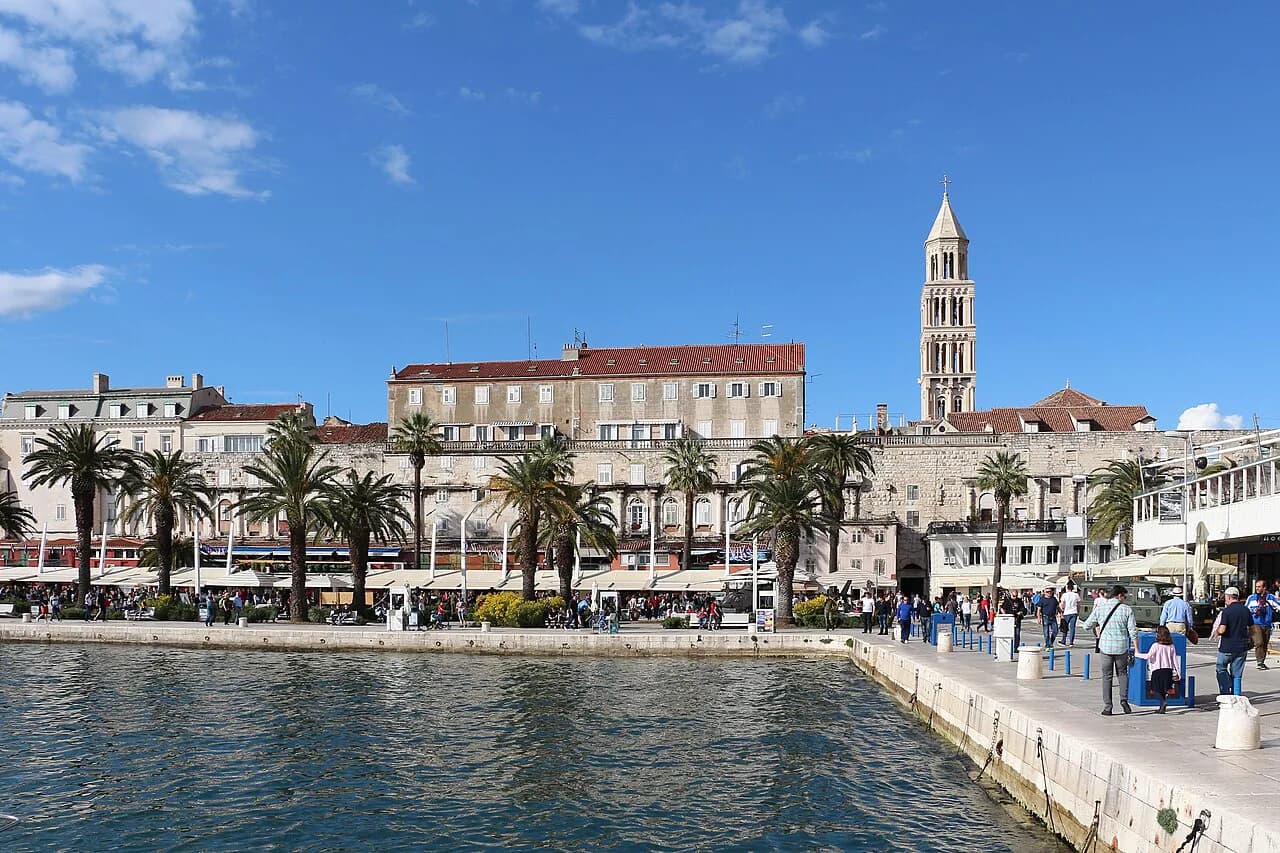
Split deserves at least a night for Diocletian's Palace, whose cellars, peristyle and lanes sit inside the Roman walls, plus the Riva for an evening walk. From Split, Hvar is a straightforward ferry or catamaran crossing, and two nights there leaves room for the Pakleni Islands and the climb to the fortress above the town. Finish with two nights in Dubrovnik so the city walls and the old-town lanes are not squeezed into an arrival afternoon.
Route two: the southern Dalmatian coast from Split to Dubrovnik, with Korčula and Hvar
If you would rather not drive inland at all, base the trip on the southern coast and let ferries do the work. Fly into Split, take in Diocletian's Palace and the old town, then cross to Hvar and continue to Korčula before finishing in Dubrovnik. This route has more time on the water and less on the motorway, and ten-day plans listed on kimkim cover the same stretch, combining Dubrovnik, Korčula, Hvar and Split with Krka.
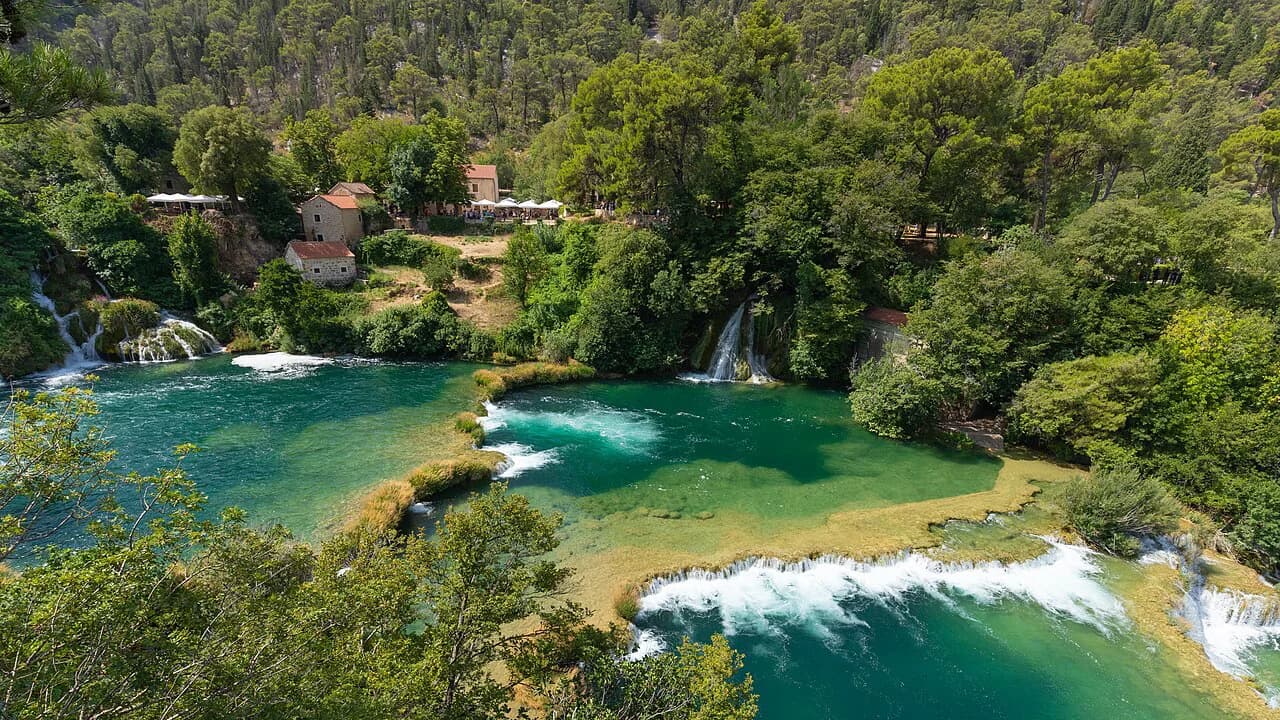
Korčula's walled town is compact and its island is long, so a hire car or a local bus helps if you want more than the old town. Trogir, north of Split, is worth a half-day for its Venetian lanes and cathedral, and fits neatly on the way to or from the airport. Krka National Park, with Skradinski buk among its waterfalls, commonly features as a day stop on ten-day Split–Dubrovnik itineraries rather than a separate overnight.
The trade-off here is that you skip the inland parks entirely, and the islands add ferry bookings to your plan. In return you get short hops, longer evenings in stone towns and a route that mirrors the coast. It suits travellers who prefer three nights in one place to a new room every night.
Route three: Istria and the Kvarner Gulf, using Rovinj as a base
The northern Adriatic is a different trip: Venetian-looking Rovinj, the hill towns of inland Istria, Pula's Roman amphitheatre, and the Kvarner islands beyond. Using Rovinj as a base keeps the driving short and lets you take day trips rather than move hotels. It also sidesteps the southern crowds in August, when Istria is busy but rarely as congested as Dubrovnik.
Pula Arena is the headline Roman sight in Istria and justifies a full half-day in the city, and the Brijuni islands off the coast are reachable on an organised boat trip from Fažana. From Rovinj it is a straightforward drive to the Kvarner Gulf and a ferry onward to the islands, or a longer transfer south to Dalmatia if you want to link both regions.
This route suits a slower first trip or a second visit. It gives you fewer headline sights but more comfortable days, and it is the easiest route to do without a car if you base yourself well and use buses between the towns.
Where the national parks fit: Plitvice Lakes and Krka
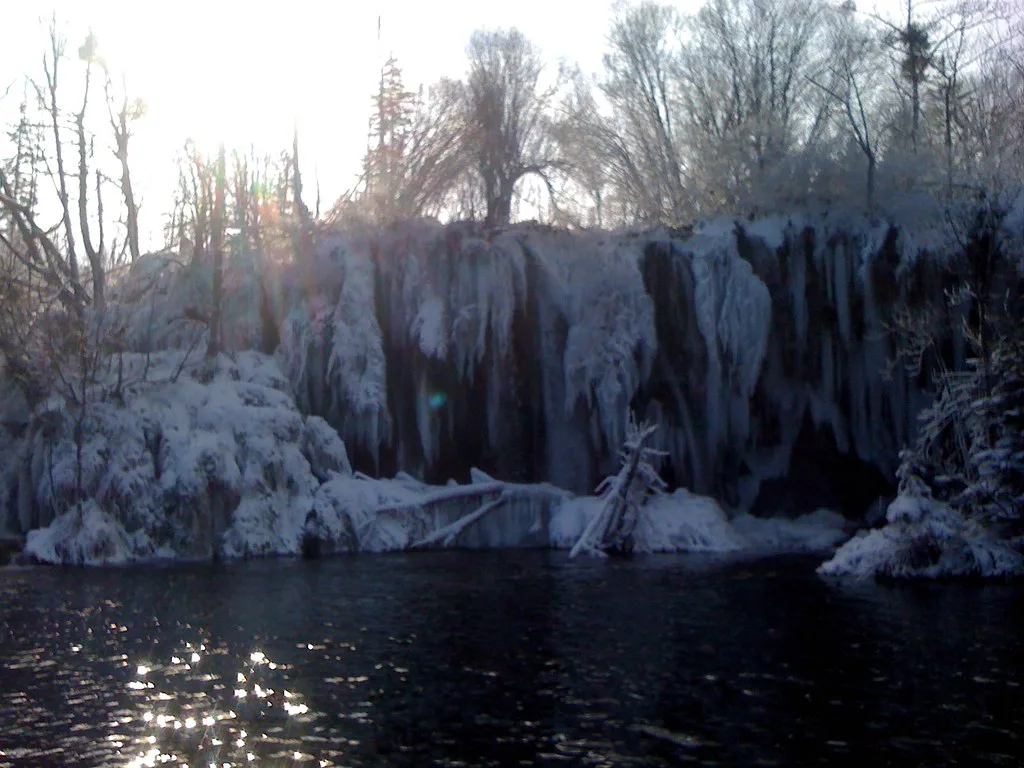
Plitvice Lakes sits inland between Zagreb and the coast, so it belongs on a transfer day rather than as a coastal excursion. Krka, by contrast, is close to Šibenik and Skradin and works as a day trip from Split or as a stop between Zadar and Split. Neither park needs more than a day, and both are easier to enjoy outside the busiest midday hours.
If you only have a week, choose one. Plitvice fits an inland-to-coast route via Zagreb; Krka fits a Split-based route with Šibenik and Trogir. Trying to do both in a week means a lot of driving and little time on the boardwalks, and the two parks are far enough apart that combining them rarely pays.
Building the trip around ferries and catamarans rather than against them
Ferries and catamarans are the real timetable of a Croatian island itinerary, and services multiply in summer and thin out in winter, so your route should follow the published timetable rather than the other way round.
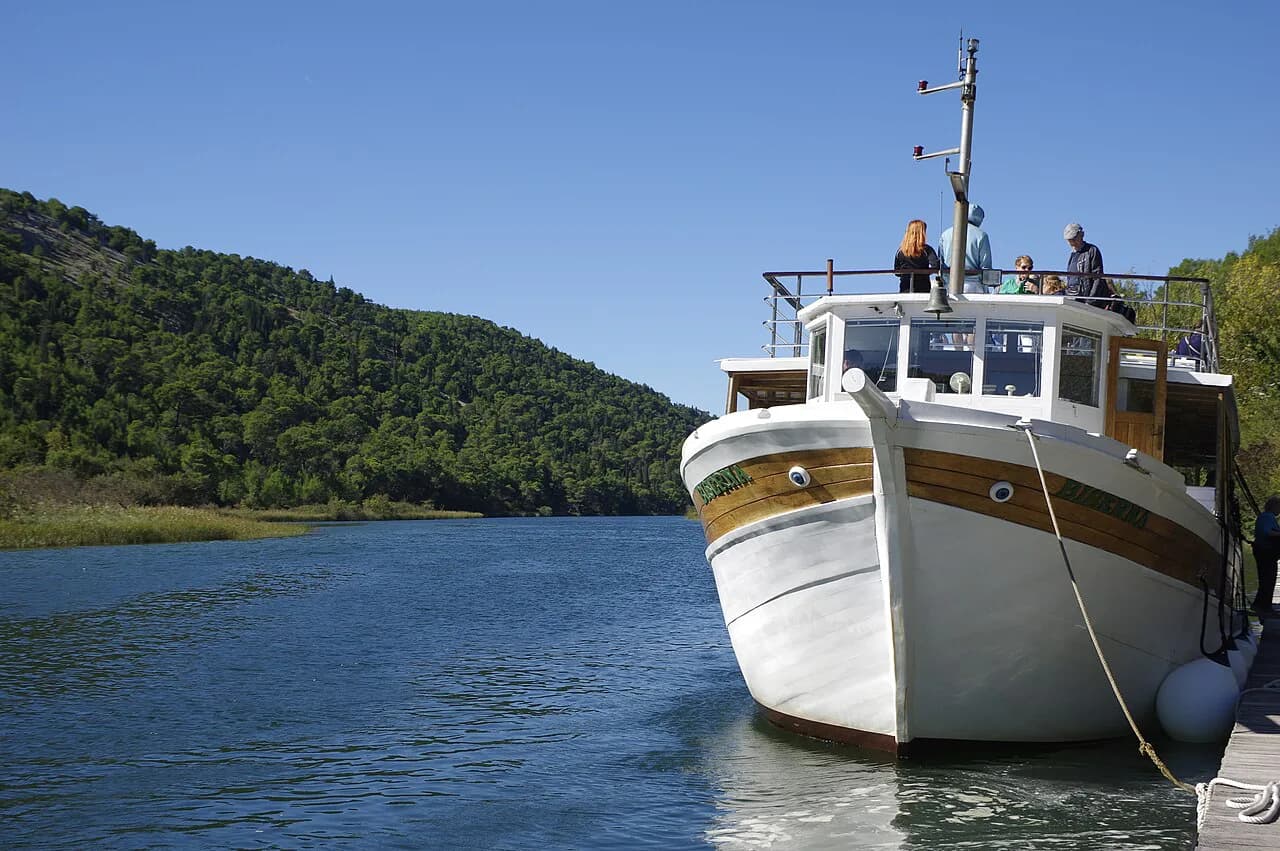
Book the long crossings once your dates are fixed, and leave the short hops flexible. Arriving at a port the evening before an early catamaran is usually better than chancing a morning bus from inland. If you plan to island-hop between the best islands on the Dalmatian chain, a foot-passenger route is often simpler than taking a car on and off the ferries.
If you are travelling with a vehicle, bear in mind that car spaces on popular crossings sell out first and that some island roads are narrow enough to make a small car preferable. A Croatia road trip built around the coast needs ferry bookings timed to your driving days, not squeezed into the end of an afternoon.
Travelling by campervan adds height and length limits to the equation, and some crossings carry only a handful of larger vehicles. Croatia by Campervan covers how to plan around that, including which stretches reward a slower pace.
Whether to drive, take buses or join a multi-day tour
Driving gives you the inland parks, hill towns and quiet coastal stops that buses skip, at the price of parking in stone towns and one-way systems in Split and Dubrovnik. Buses are reliable between the main coastal cities and cheaper to run, but they tie you to a timetable and drop you at stations that are often a walk from the old town. Ferries carry foot passengers and cars, so you can mix modes.
Multi-day tours remove the logistics and cover a lot of ground, and marketplace itineraries such as those listed on kimkim show what a guided version of the Zagreb, Plitvice, Hvar and Dubrovnik line looks like. The trade-off is less freedom to linger where you like and a fixed pace that suits some travellers better than others; our own 10 days in Croatia plan shows how to build the same route yourself.
For a first trip without a car, base yourself in Split and Dubrovnik, use catamarans for the islands and take a bus or organised transfer for Krka. That combination keeps the trip simple without confining you to one city.
How the seasons change a Croatia itinerary, including crowds and cruise-ship days
June and September are the sweet spot for a first itinerary: warm sea, open ferries and fewer people than in high summer. July and August bring the fullest ferry timetables but also the densest crowds in Dubrovnik and Split, and the bura wind can sweep the northern Adriatic in winter and shoulder seasons. It helps to plan old-town visits around the days when the big cruise ships are in port, and our guide to the best time to visit Croatia sets out how the seasons change the coast.
In practice, shift the walled cities to mornings and use afternoons for islands, museums or a longer lunch. Dubrovnik's city walls, Split's palace lanes and Trogir's cathedral square all feel different before ten o'clock. The same logic applies to Plitvice and Krka, where early boardwalks are the quietest.
Shoulder months bring occasional rain and a few seasonal closures, particularly on the smaller islands, but they also bring cheaper rooms and a calmer coast. A short flight time from the UK makes a long weekend in one city a sensible way to test the water before committing to a longer route.
Croatia itineraries by length: 7, 10 and 14 days at a glance
A 7 days plan is one coastline and one island: Split with Hvar, or Rovinj with inland Istria. A 10 days plan adds the inland parks and a second island, usually via Zagreb and Plitvice before the southern coast. A 2 weeks plan splits the holiday into two halves, so you are not moving every second day.
A 10 days in Croatia plan often works best as an island-heavy version, with three nights on Hvar or Korčula and a shorter stay on the mainland. That choice trades the inland lakes for beach and boat time, and it is the better route for travellers who value slow mornings over new sights.
Whichever length you choose, fix the long crossings and the National Park day first, then fill in the towns. Everything else in Croatia can flex around those two anchors.
Which Croatia itinerary should you book?
Pick Route one if this is your first visit and you want both the lakes and the southern cities; pick Route two if you would rather stay on the water and skip the inland drive; pick Route three if you want a slower northern trip with Istria as your base. If your dates are fixed by flights, let the ferry timetable decide the rest, and use our 7 Days in Croatia plan when the trip has to be short.
Explore more Croatia guides
Frequently Asked Questions
What language do they speak in Croatia?
Croatian is the official language, written in the Latin Alphabet. English is widely understood in hotels, ferry terminals and old-town restaurants along the coast, but a few words of Croatian go a long way in smaller places and on the islands.
Which month is best to visit Croatia?
June and September offer the best balance of warm sea, full ferry services and manageable crowds. July and August are busiest, especially in Dubrovnik and Split, while the shoulder months bring occasional rain and some seasonal closures on smaller islands.
What part of Croatia is the most beautiful?
That depends on what you want from the trip. Dubrovnik and Split have the strongest stone cities, Istria has Venetian hill towns and Rovinj's waterfront, and the islands between Split and Dubrovnik offer quieter harbours and clear water; most first trips combine two of the three.
Sources
Notes from the Croatian coast
Optional updates when our guides change.
You might also like
Continue reading
More guides you'll find useful