2 Weeks in Croatia: A Day-by-Day Coast Itinerary
Plan two weeks in Croatia with a day-by-day route from Pula to Dubrovnik, linking Split, Brač, Korčula and the old towns by car and ferry.
On this page
Two weeks in Croatia lets you run the whole coast from Istria in the north to Dubrovnik in the south, linking old towns with island ferries rather than racing between two or three bases. This route starts in Pula, moves south through Zadar, Split, Brač and Korčula, and finishes inside Dubrovnik's walls, with the last days left loose so ferry timings, the bura wind or a crowded old town can reshape them without wrecking the trip.
The plan assumes a car for the mainland leg and ferries for the islands, which is the most flexible combination for a north-to-south line. If you would rather skip the car, the same stops work by catamaran and bus, but you lose the ability to stop at viewpoints and small harbours between the big names.
Choose your transport: car or ferries
A self-drive route gives you the freedom to leave the motorway for Istrian hill towns and reach Bol or Korčula's old town on your own schedule. It also means paying for ferry crossings with the car and queuing in July and August, and finding parking outside walled towns such as Dubrovnik, where you leave the car and walk.
The ferry-and-catamaran version suits travellers who want to read, sleep or watch the islands slide past instead of concentrating on the road. Croatia's coastal ferry and catamaran network links the mainland ports with the islands, and in peak season the popular crossings fill up. The trade-off is that you plan around sailing times rather than your own curiosity, and a late cancellation can cost you a day.
Days 1–2: Pula and the Istrian coast
Start in Pula, where the Roman amphitheatre sits right in the city, and use the first day to walk the old centre and the harbour before the drive south. Istria then gives way to the coast: the Venetian streets of Poreč and the hill towns inland hint at the region's layers without needing a change of base.
What language do they speak in Croatia? Croatian is the official language, written in the Latin Alphabet. English is widely spoken in tourist areas, especially in hotels, ferry terminals and restaurants along the coast.
Is Croatia worth visiting for a week? A week is enough for one section of the coast, such as Split, Brač and Dubrovnik, but not for the whole route from Istria to Dubrovnik. If you only have seven days, pick either the northern or the southern half and accept that you will miss the other.
Driving from Istria towards Zadar takes most of a day if you stop, so treat the transfer as part of the trip rather than a chore. The coastal road and the motorway run in parallel, and choosing the slower road buys you sea views at the cost of time. Pack a bag for one night so you are not hauling luggage into every stop.
Day 3: Zadar and the Riva
Zadar rewards an afternoon and an evening. Walk the Roman forum, listen to the Sea Organ (Morske orgulje) on the waterfront, and stay for sunset on the Riva, the promenade where the whole city seems to gather. The old town sits on a peninsula, so you can cross it on foot in twenty minutes and still find squares you missed.
Zadar is also the gateway to the northern islands, but on this route it is a single overnight. Keep the car parked outside the peninsula and walk in, because the lanes inside the old town are narrow and parking is scarce.
Days 4–5: Split and Diocletian's Palace
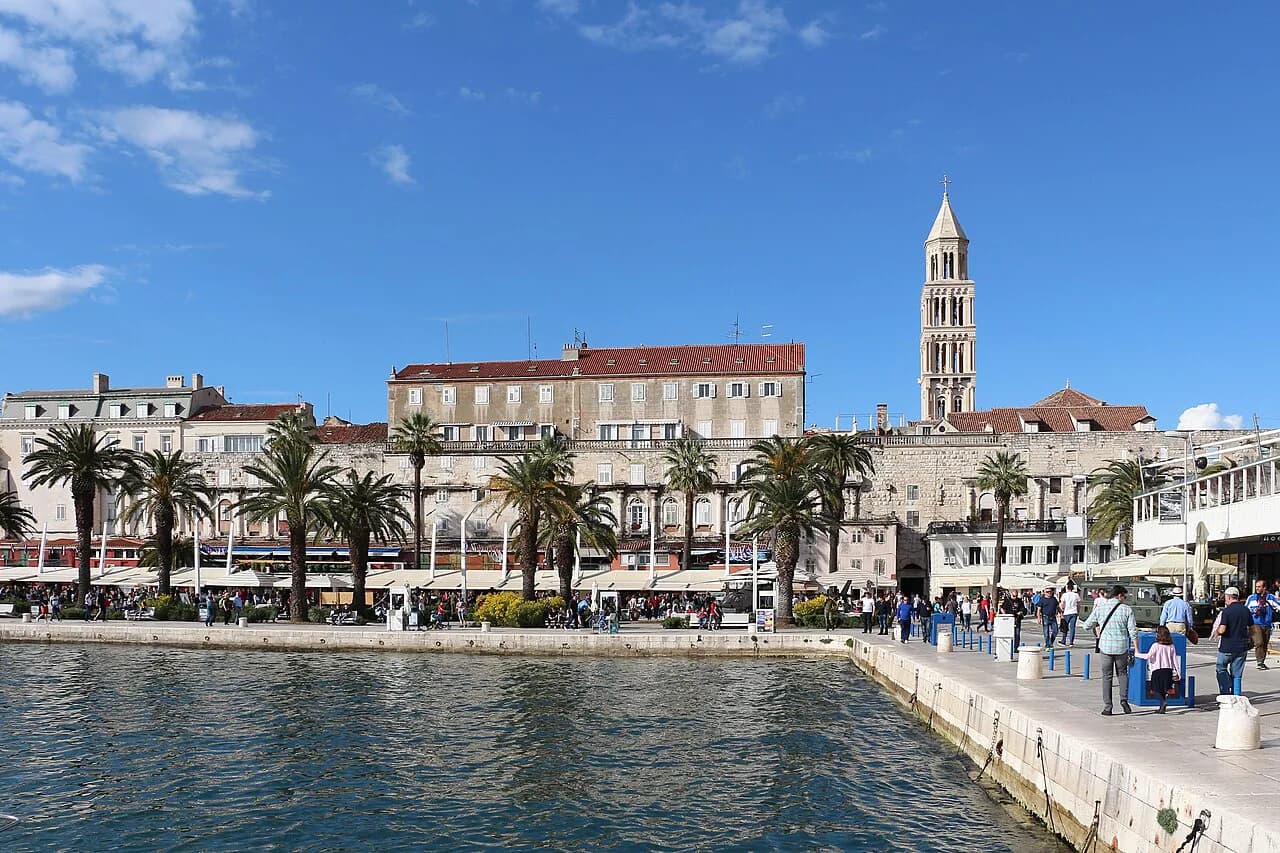
Split deserves a full day, not an afternoon. Diocletian's Palace is a living neighbourhood rather than a museum, and the Kalelarga is the main pedestrian spine that runs through it. Walk the peristyle in the morning before the tour groups arrive, then use the afternoon for the Riva and the green Marjan hill if you want a view back over the harbour.
Day five is your buffer: a slow breakfast, the fish market, or a short boat trip to one of the nearby islands if the weather holds. Split is also where the ferry and catamaran network fans out to Brač, Hvar, Korčula and Vis, so check sailing times for the next day before you settle in. If you are building a longer trip, our Croatia itinerary shows how Split fits with the national parks and the northern coast.
Day 6: Ferry to Brač, Bol and Zlatni Rat
Take the ferry from Split to Supetar on Brač, then drive across the island to Bol. The crossing is short, but the drive gives you a sense of Brač's interior: stone villages, olive groves and the white limestone the island is known for. Bol is the island base for the night, and Zlatni Rat is a short walk from the centre.
Brač is known for its stone, and the island rewards a slower pace than a day trip allows. On this route Brač is a single night on the way south, so pick one inland village or a quiet cove rather than trying to circle the whole island.
Day 7: Korčula Island and the old town
From Brač, drive back to the ferry and cross to Korčula, or take the catamaran if you are travelling without a car. Korčula's old town is a compact oval of lanes and squares, and the walk around the walls takes under an hour. Give yourself the afternoon to wander, and stay the night so you see the town after the day-trippers leave.
Korčula is also the ferry link to Orebić on the Pelješac peninsula, which is the road route south towards Dubrovnik. Check the current ferry schedule and road route before you set off, since crossing times and connections change by season.
Days 8–9: Dubrovnik and Lokrum
Dubrovnik's old town is the reason many travellers come to Croatia, and it deserves two days rather than one. Walk the city walls early or late to avoid the heat and the cruise-ship crowds, then spend the afternoon inside the walls on the Stradun and the side lanes. A boat to Lokrum gives you a quiet counterpoint: the island is a short hop from the old harbour and makes a gentle half-day.
The city walls charge admission, and the price and opening times change by season, so check the official Dubrovnik city walls information before you go. If you are travelling in peak July or August, plan the walls for the first hour after opening and keep the afternoon for the island. Our Croatia itinerary explains how Dubrovnik fits with the rest of the coast.
Days 10–11: Dubrovnik Riviera and Konavle Valley
After the walled city, slow down on the Dubrovnik Riviera. The Konavle Valley, south of the city, is greener and quieter than the coast. It is a good place to spend a day without a fixed plan: drive the lanes, stop for lunch, and return to the coast for the evening.
This is also the point to leave slack in the schedule. If the wind picks up or a ferry is cancelled, days ten and eleven are the ones you can move without losing a highlight.
Days 12–14: slack at the end
The last three days should stay loose. Use them for a return to whichever place you loved, a slow day on the Riviera, or a short boat trip from Dubrovnik harbour. Keeping the final days unplanned means a delayed ferry or a windy day does not force you to skip something you came for.
If you are flying home from Dubrovnik, leave a full day between your last island and your flight. The catamaran and ferry timings are seasonal, and a late arrival can mean a missed connection.
Where to add or cut days
For a 10-day version, cut the Istrian leg and start in Zadar or Split, keeping Brač, Korčula and Dubrovnik; our 10 days in Croatia itinerary shows the same coast with fewer stops. For 7 days, choose either the northern half (Istria, Zadar, Split) or the southern half (Split, Brač, Korčula, Dubrovnik) and accept that you will not see both. Our 7 Days in Croatia guide follows a shorter coastal route stop by stop.
The Croatia Itinerary pillar ties these options together, and the Croatia road trip guide covers the mainland driving route in more detail. For campervan travellers, Croatia by Campervan explains how to combine the coast with the national parks, while the 7 Days in Croatia guide shows how the coast works in a single week.
Rough costs in euros
Croatia has used the euro since 2023, so you can budget in euros without converting from kuna. The main costs are accommodation, car hire, fuel, ferries and admission to the walls, parks and museums. Ferry prices depend on the route and whether you take a car, and the ferry company's website gives the current fare when you book, so check current prices and timetables before you travel.
For scale, one tour operator's own published price for its two-week Island Hopping in Croatia family itinerary starts at £3,250 per person, excluding international flights. That is a guided, operator-run trip rather than a DIY budget, so treat it only as a rough comparison point and price your own ferry, fuel and admission costs separately.
When to go
July and August are the busiest and most expensive months, with cruise ships in Dubrovnik and packed ferries. June and September give you warm sea and fewer crowds, while May and October are quieter but some island ferries run less often. The bura wind can blow in any season, so build slack into the last days.
If you want the national parks, consider a shoulder-month trip and check the park authority's opening times before you go. Our Croatia itinerary includes National Park detours if you want to add them to the coast.
Which version of the route fits your fortnight?
Two weeks is enough for the full Istria-to-Dubrovnik line, but only if you resist the urge to add every island. The route works best with a car for the mainland and ferries for Brač and Korčula, and with the final days left unplanned.
If you have less time, cut the north or the south rather than trying to compress both. The 10 days in Croatia and 7 Days in Croatia guides show how to shorten the same coast without losing the old towns.
Frequently Asked Questions
What language do they speak in Croatia?
Croatian is the official language, written in the Latin Alphabet. English is widely spoken in tourist areas, especially in hotels, ferry terminals and restaurants along the coast.
Is Croatia worth visiting for a week?
A week is enough for one section of the coast, such as Split, Brač and Dubrovnik, but not for the whole route from Istria to Dubrovnik. If you only have seven days, pick either the northern or the southern half and accept that you will miss the other.
Sources
Notes from the Croatian coast
Optional updates when our guides change.
You might also like
Continue reading
More guides you'll find useful