Things to Do in Rijeka: Old Town, Trsat Castle & More
Plan a Rijeka city break around the Korzo, the Clock Tower, Trsat Castle and the Molo Longo, with honest notes on steep climbs, ferries and timing.
On this page
Give Rijeka two nights and a full day of walking, or one long day if you are passing through to the islands. The centre is compact enough to cross on foot, but it stacks a Habsburg-era high street, a tight old town, a hilltop castle and a working port into a small area, so the order you tackle them in matters more than the distance. This guide arranges the city into walking blocks and says plainly where the climbs bite.
Rijeka sits on Kvarner Bay at the head of the Adriatic, just outside the Istrian peninsula, and is Croatia's third-largest city. It is also a serious seaport, which is why many travellers see the ferry terminal and little else; the old town is a short walk inland from the water. Treat it as both a sightseeing city and a transport hub and you will get far more out of it.
Where Rijeka is and how the centre fits together
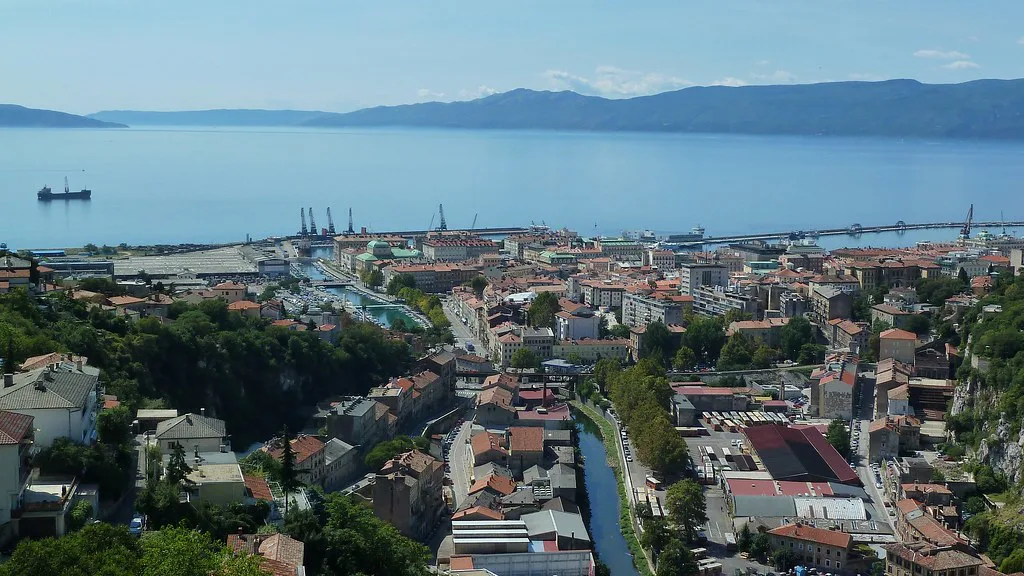
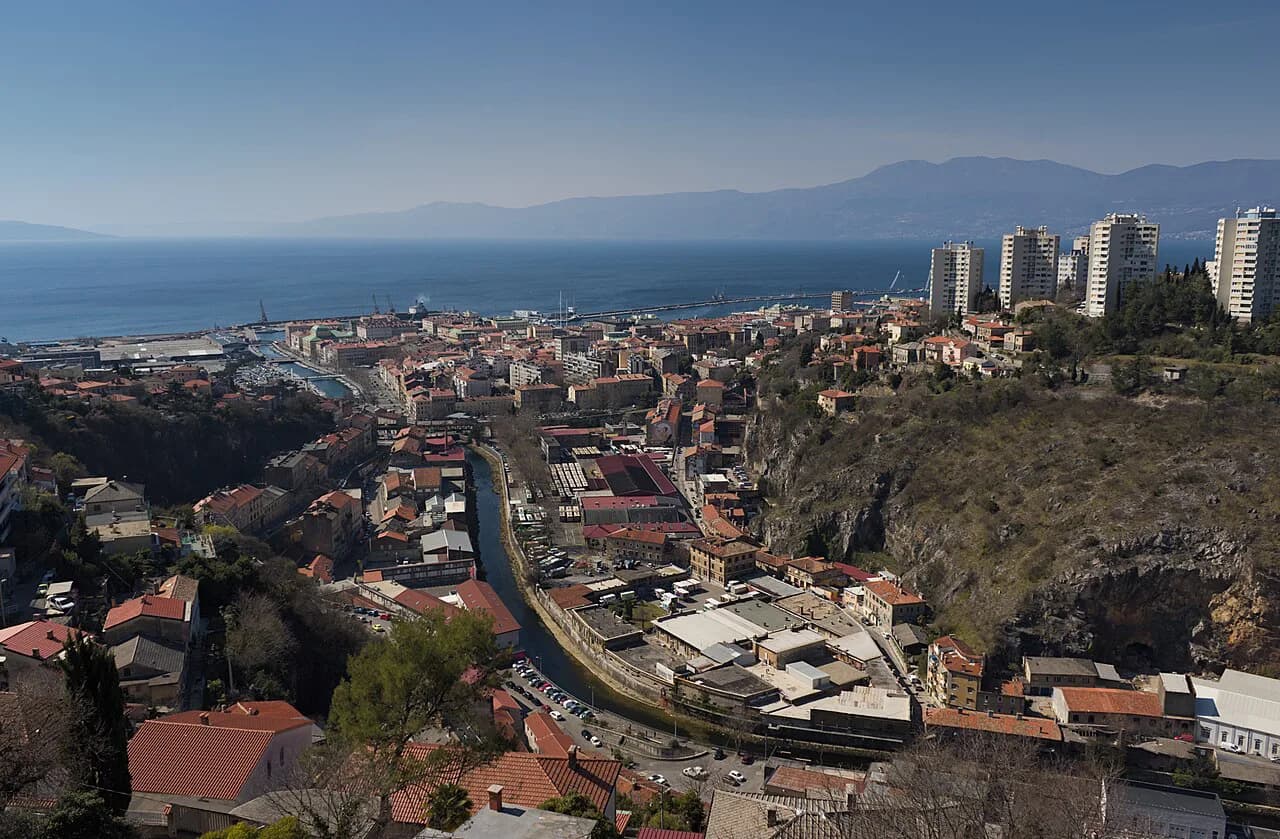
The city wraps around the bay in layers: the harbour and ferry berths at sea level, the Korzo running parallel to the water a street or two inland, and the old town climbing behind it towards the hill. Trsat Castle sits separately on a hill above the city to the east, reached by bus or on foot. The result is a centre you can cross in twenty minutes, but only if you accept the gradients.
Rijeka is noticeably hilly, and the climbs are real rather than cosmetic, especially with luggage on arrival from the station or bus stops. Plan your first hour around getting bags dropped before you walk anywhere, and keep the steepest lanes for when you are unencumbered. The city rewards travellers who build the uphill sections into a single block rather than scattering them through the day.
Start on the Korzo and the City Clock Tower
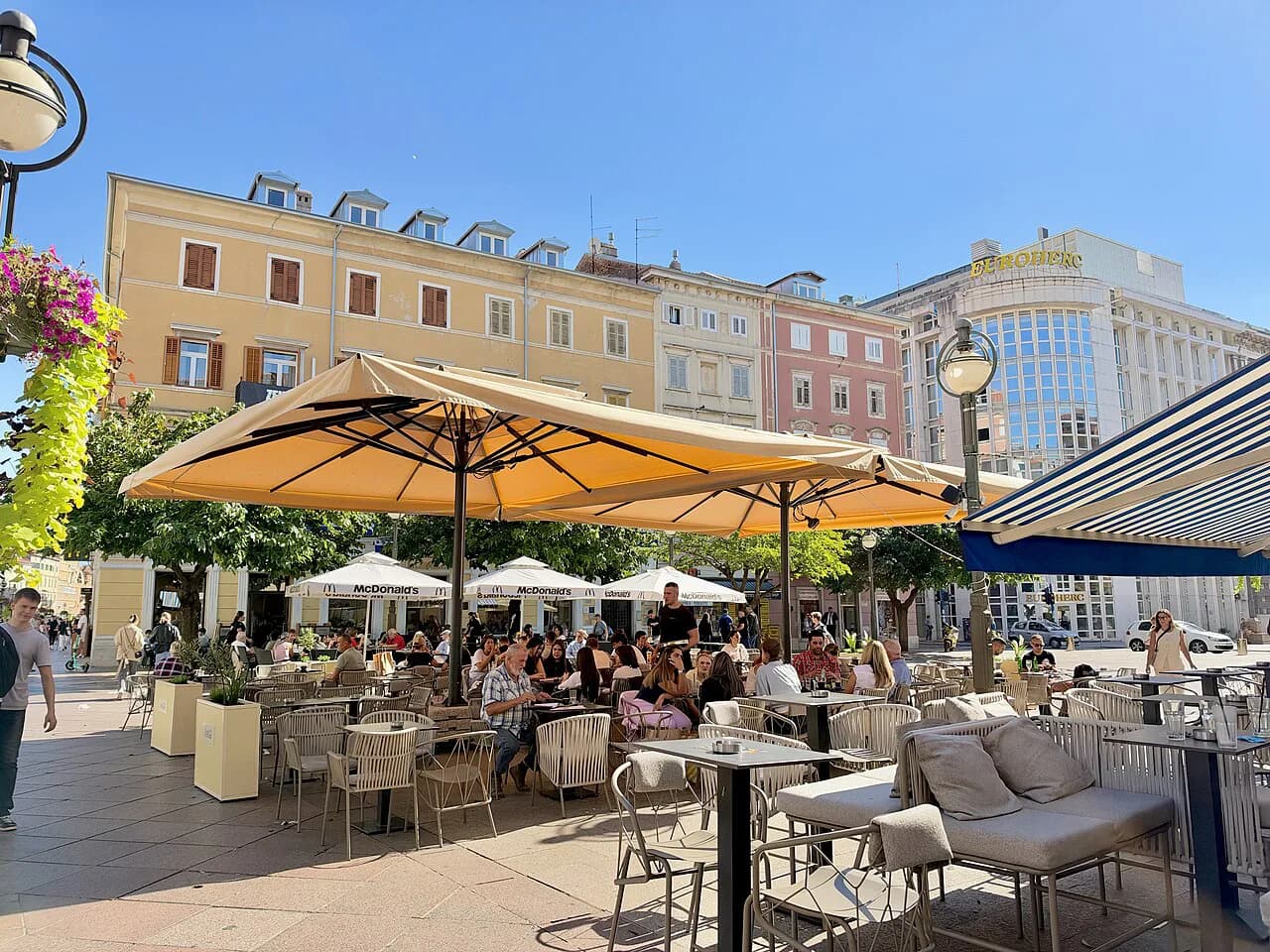
The Korzo is Rijeka's main pedestrian street and the natural place to begin: a long, café-lined thoroughfare of Austro-Hungarian buildings, fountains and everyday city life. It is a working high street rather than a polished tourist set piece, and that is the appeal. Walk it end to end once to get your bearings, then use the side streets as shortcuts for the rest of your stay.
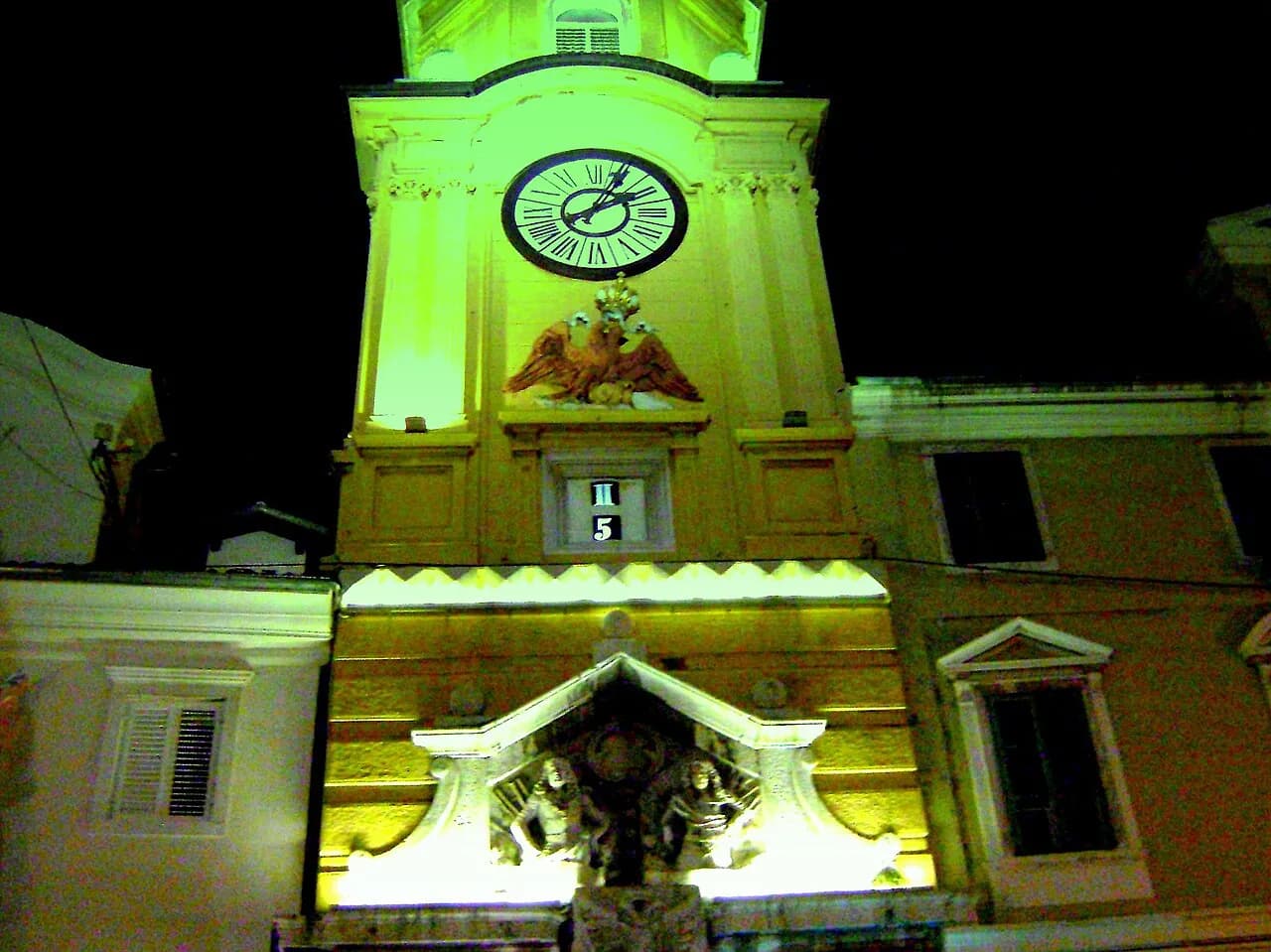
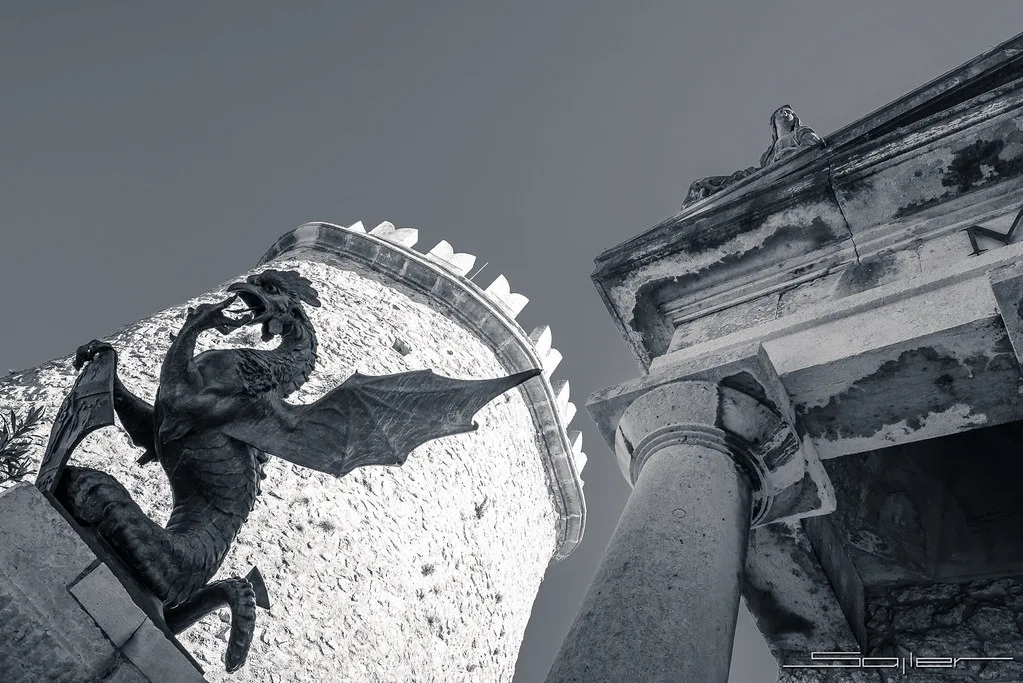
At one end stands the City Clock Tower, a yellow-faced landmark whose archway was once the gateway into the old town. Look up for the bronze figures that strike the bell and the city coat of arms, then walk through the arch into the quieter lanes behind. It takes minutes to see, so there is no reason to skip it.
The old town lanes and the Roman arch
Behind the Clock Tower the streets narrow and quieten, with worn facades, small bakeries and second-hand bookshops replacing the Korzo's cafés. This is the part of Rijeka that feels oldest, and it is best wandered without a fixed route for half an hour. Keep an eye out for the Roman arch in the old town, a small remnant that most passers-by miss.
Allow roughly an hour for the lanes if you like architecture, less if you are counting sights. The surfaces are uneven and some stretches are stepped or steep, so this is not a block for wheeled luggage. Pair it with the Korzo and Clock Tower in one loop rather than treating it as a separate outing.
St Vitus Cathedral and the Church of the Assumption
St Vitus Cathedral is the city's principal church, a domed rotunda that sits close to the old town and the Korzo. Step inside if it is open when you pass; the interior is short to see and makes a natural pause in a walking loop. It anchors the ecclesiastical side of the centre alongside the other churches nearby.
The Church of the Assumption comes with Rijeka's own leaning tower, a tilt that gives the skyline an unexpected quirk. It is a quick stop rather than a destination in its own right, and it fits neatly between the old town lanes and the theatre. Look at it from the street before deciding whether to go in.
The Croatian National Theatre and Habsburg Rijeka
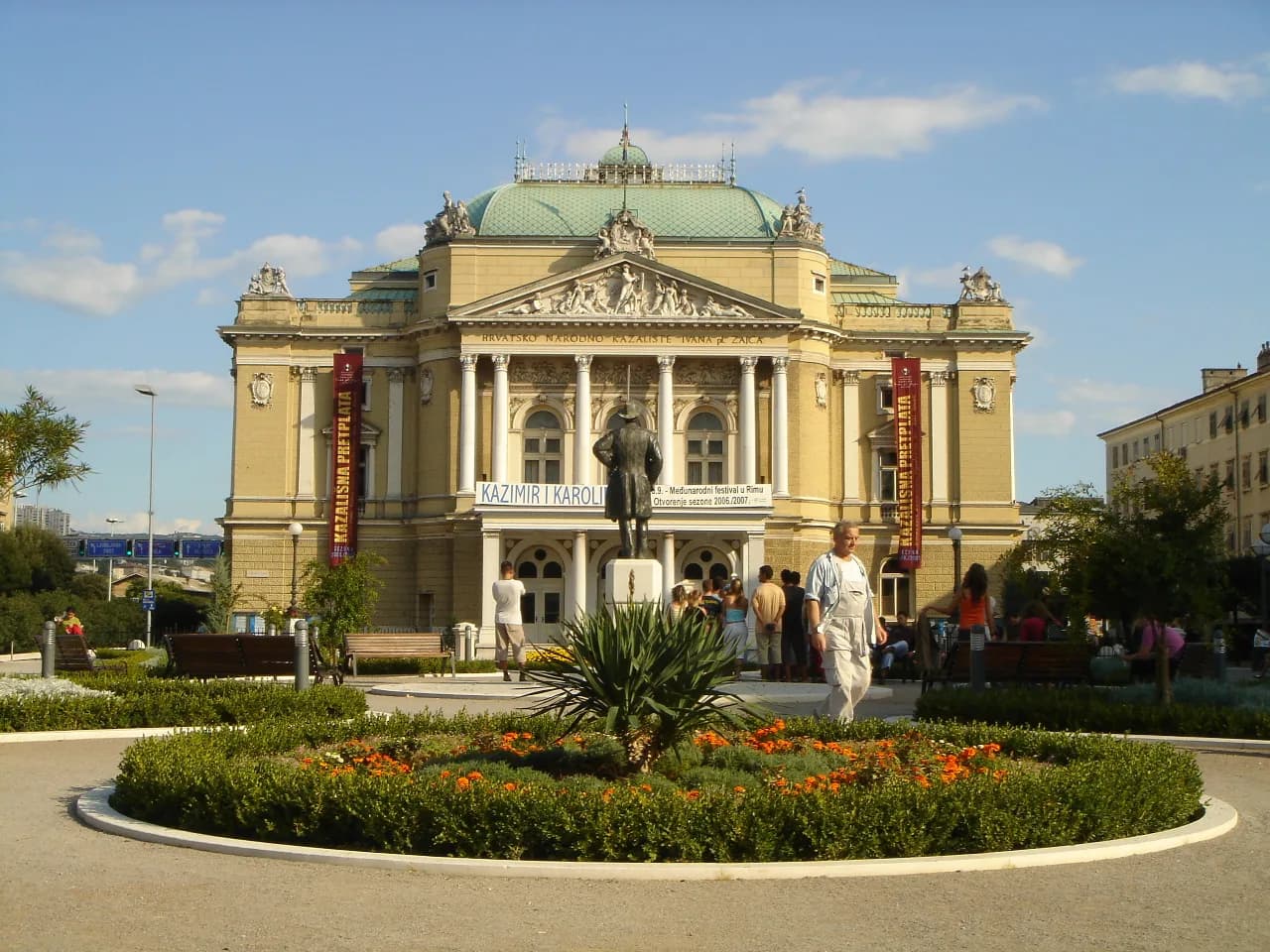
The Croatian National Theatre is one of the grand Habsburg-era buildings that give central Rijeka its slightly imperial air, and it is worth a look from the outside even if you are not seeing a performance. The surrounding streets hold more of the same: substantial nineteenth-century facades, some restored and some worn. Architecture lovers should budget an extra half hour around here.
Some visitors describe Rijeka as Zagreb by the sea, and the comparison holds in the café culture and the heavy nineteenth-century streetscape. If you have come from Split or Dubrovnik, expect a different city: less polished, more everyday, and all the more interesting for it. That contrast is part of the reason to stop here rather than pass straight through to the islands.
Trsat Castle and the Petar Kružić Stairway
Trsat Castle stands on a hill above the city with sweeping views over Rijeka and Kvarner Bay, an open courtyard and a café terrace on the ramparts. The castle itself is small; the panorama is the point. Go late in the afternoon for softer light and thinner crowds, and bring water if you are climbing on foot.
The Petar Kružić Stairway is the celebrated way up, a long flight of stone steps with small chapels along the route. It is steep and sustained, so choose it only if you are fit and the weather is cool; otherwise take the bus up and walk down. Either way, treat Trsat as a half-day block rather than tacking it onto the end of a long walking day.
The Rijeka Tunnel and a walking route that uses it
The Rijeka Tunnel is a pedestrian passage cut through the hill, and it earns its place by linking parts of the city you would otherwise climb around. Use it to shortcut between the centre and the slopes above, which is especially welcome in summer heat or rain. It takes minutes to walk through, so build it into a route rather than making a special trip.
A sensible order is Korzo, Clock Tower, the old town lanes and the churches in the morning, the tunnel as a connector, then Trsat in the afternoon. That keeps the uphill work together and leaves the level waterfront for the evening. If you only have one day, this is the loop to follow.
Molo Longo and the harbour outlook
Molo Longo is the long breakwater promenade that reaches out into the harbour, and it gives the best sea-level view of Rijeka as a working port. Walk out for the outlook over the bay and back for the city skyline; it is flat, open and easy, which makes it a good counterweight to the climbs. Wind off the water can be sharp even on a sunny day.
Pair the Molo Longo with the ferry terminal so you understand the city's geography before you travel onward. Seeing the berths and the water in one go makes the Kvarner island routes far easier to picture. Allow half an hour for the walk out and back.
Rijeka's markets and everyday city life
The central market is where Rijeka feels most like itself, with local produce, seafood and everyday shopping rather than souvenirs. The fish market is a particular draw for anyone self-catering, and it is the kind of place worth visiting early while the stalls are full. Go to look and shop, not to tick off a sight.
If you are staying in an apartment, the markets make cooking a realistic option and give you a reason to linger beyond the headline sights. They are also a reminder that Rijeka is a lived-in city with a large working population. Budget twenty minutes for a browse.
How many days Rijeka needs
One full day covers the centre and Trsat if you start early and take the bus up the hill: Korzo, Clock Tower, old town, the churches, the theatre, the tunnel and the Molo Longo all fit into a long walking day. Two days let you split the centre from Trsat and add the markets at a relaxed pace. Three days starts to feel generous unless you are using the city as a ferry base.
The trade-off is straightforward: the centre is flat and fast, Trsat is uphill and slow. Trying to do both without a break is what makes Rijeka feel tiring rather than easy. Build in a café stop on the Korzo between the two blocks and the day works.
Rijeka as a ferry port for the Kvarner islands
Rijeka's port is the gateway to the northern Croatian islands, and Jadrolinija ferries connect the city with island destinations across the Kvarner Gulf. That makes Rijeka a practical base: sightsee for a day, then sail out rather than backtracking. Check sailing times with Jadrolinija for your dates, as schedules change with the season. If you plan to island-hop, see our Kvarner guide for the islands on the other side of the water.
Arriving by train or bus and leaving by ferry is a workable combination, but the walk between the transport points and the berths is hilly with bags. Croatian trains are limited but generally punctual, so build a buffer before a sailing. If you have time to spare, the Molo Longo walk is the best way to wait.
When to go: summer crowds and the bura wind
Summer brings the crowds and the heat, and the city's steep lanes are hardest work in July and August. Spring and early autumn are kinder for walking, with Trsat and the old town far more comfortable to explore. The bura, the cold northerly wind, can arrive at any time of year and makes the waterfront and the Molo Longo genuinely unpleasant, so keep a layer handy even in warm months.
The city's event calendar is busiest in the warmer months, and the Rijeka Carnival is a major winter fixture with a 2027 edition already flagged. If you are planning around an event, confirm dates with the tourist board before booking transport. Otherwise, treat Rijeka as a shoulder-season city where the sights are open and the streets are walkable.
Opatija and the Kvarner coast as a short add-on
Opatija, the Habsburg-era seaside resort on the coast just outside Rijeka, makes an easy half-day add-on with its seafront promenade and elegant villas. It is a short ride from the city and a complete change of register from Rijeka's working port atmosphere. Go for the promenade and the architecture rather than for a beach day.
If you are building a wider Croatian itinerary, Rijeka works as a northern anchor before you head south or across to Istria. From here you can reach Istrian towns and island ferry routes without retracing your steps. Compare that with a base further south, such as things to do in Poreč, before you commit.
Should Rijeka get a day or a stopover?
Give Rijeka a day and a night if you can: the Korzo, the old town behind the Clock Tower, Trsat Castle and the Molo Longo make a coherent and rewarding city break, and the ferry port makes it a natural launch point for the Kvarner islands. If you only have a few hours, do the centre and skip Trsat rather than rushing both.
The climbs are the deciding factor. Anyone with limited mobility or heavy luggage should base themselves near the Korzo and take the bus to Trsat. Everyone else can walk it, provided they keep the uphill sections together and leave the waterfront for the evening.
Explore more Rijeka guides
Frequently Asked Questions
Is Rijeka expensive compared with other Croatian cities?
Rijeka is a working city rather than a resort, and much of what you will want to see, including the Korzo, the old town lanes, the Rijeka Tunnel and the Molo Longo, is outdoor walking rather than ticketed sightseeing. Trsat Castle is an outdoor visit with an open courtyard. Prices for food, drink and transport change, so check current rates locally.
Is Rijeka safe for a city break?
Rijeka is a normal European city with a busy port and a central pedestrian area, and the usual city precautions apply, particularly late at night around the harbour. Keep an eye on bags in crowded parts of the Korzo in summer. No special risks apply beyond those of any comparable city.
Can you walk from Rijeka's centre to Trsat Castle?
Yes, via the Petar Kružić Stairway, a long stone staircase with chapels along the route, or by a longer road route. The stairway is steep and sustained, so many visitors take the bus up and walk down instead. Allow half a day for Trsat including the climb and the views.
How do you reach the Kvarner islands from Rijeka?
Jadrolinija ferries run from Rijeka's port to island destinations across the Kvarner Gulf. Sailing times vary by season and route, so check the operator's timetable for your dates before planning the rest of your trip. The port is a short but hilly walk from the centre.
Sources
Notes from the Croatian coast
Optional updates when our guides change.
You might also like
Continue reading
More guides you'll find useful