
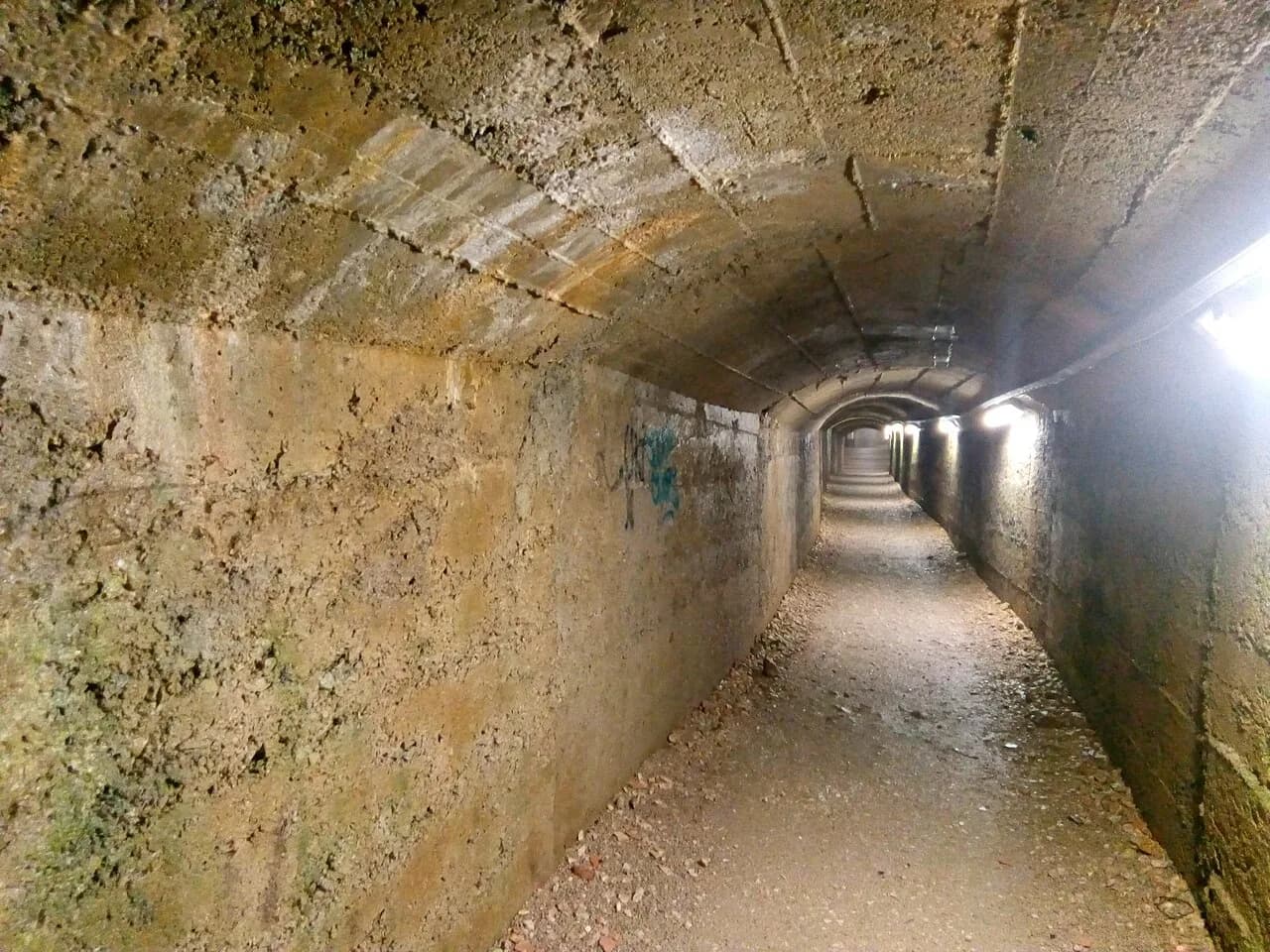
Rijeka Tunnel: A Visitor's Guide to the WWII Passage Under the Old Town

The Rijeka Tunnel is worth 20 to 30 minutes of an Old Town walk: a 330-metre bare military passage dug by the Italian Army at the start of the Second World War to shelter citizens from bombing, now open to visitors in the city centre. Its draw is not spectacle but atmosphere — original wartime signage, low concrete and the knowledge that the passage ran beneath the streets you have just walked. This guide covers where the entrances are, how to reach them from the centre, published hours and euro prices, and what you actually see underground.
A wartime shelter beneath the Old Town
The tunnel (Riječki tunel) lies directly under Rijeka's Old Town, close to the Cathedral of St. Vitus. It was dug at the beginning of the Second World War as a public air-raid shelter, and the present entrance sits in the heart of the historic core. Allow for a sight that is short and plain rather than a museum with displays: the passage itself is the exhibit.
Inside, the passage retains original signage reading "Reserved for air defence" in a few places, a small detail that gives the space its weight. Visit Rijeka notes that the tunnel was used during the Allied air attacks on the city in 1944 and 1945, which is the context worth holding in mind as you walk through. Look for the lettering rather than expecting an exhibition; for the surrounding streets, see our guide to Korzo, Rijeka.
Where the entrances are and how to find them
The visitor entrance is at Grivica, beside the Cathedral of St. Vitus, with the passage running beneath the Old Town to the courtyard of Dolac Primary School at the other end. That second exit matters when planning your walk: you can enter near the cathedral and come out at the school courtyard, or work the route in reverse.
From the main pedestrian street, head into the Old Town and look for the cathedral; the tunnel mouth sits beside it rather than on a wide public square. If you are coming from the other side of the old core, the school courtyard end is the alternative way in, so you can choose whichever end suits your route.
Use the cathedral spire as your landmark rather than a street number, since the entrance is signed at the site itself. Allow a few minutes to find it on a first visit; the Old Town lanes are narrow and the entrance is easy to pass.

Opening hours and what it costs
Visit Rijeka lists the tunnel as open Monday to Saturday from 9 a.m. to 5 p.m. and closed on Sundays. Those are the hours of the ticketed visitor passage rather than the surrounding streets, so plan a weekday or Saturday slot if the tunnel is the reason for the detour.
Prices are seasonal in euros. From 1 October to 31 March, adults pay €1.50, children aged 7 to 18, students and pensioners €0.50, and a family ticket for two adults and two children over seven is €3.50. From 1 April to 30 September those figures rise to €2.00, €1.00 and €5.00 respectively. Children under seven and persons with disabilities enter free in both seasons, and groups of 15 or more get a 10% discount.
At these levels the tunnel is one of the cheapest indoor stops in the city, which makes it easy to justify even for a short look. Budget cash or card for a small sum and treat the ticket as part of an Old Town hour rather than a destination in itself.
What you see inside
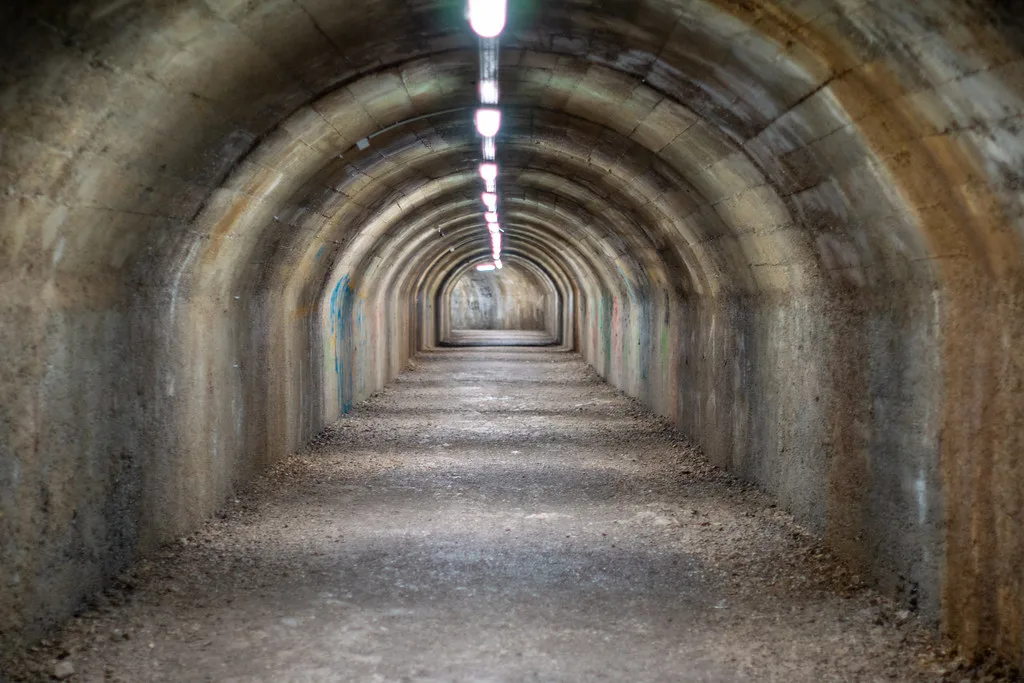
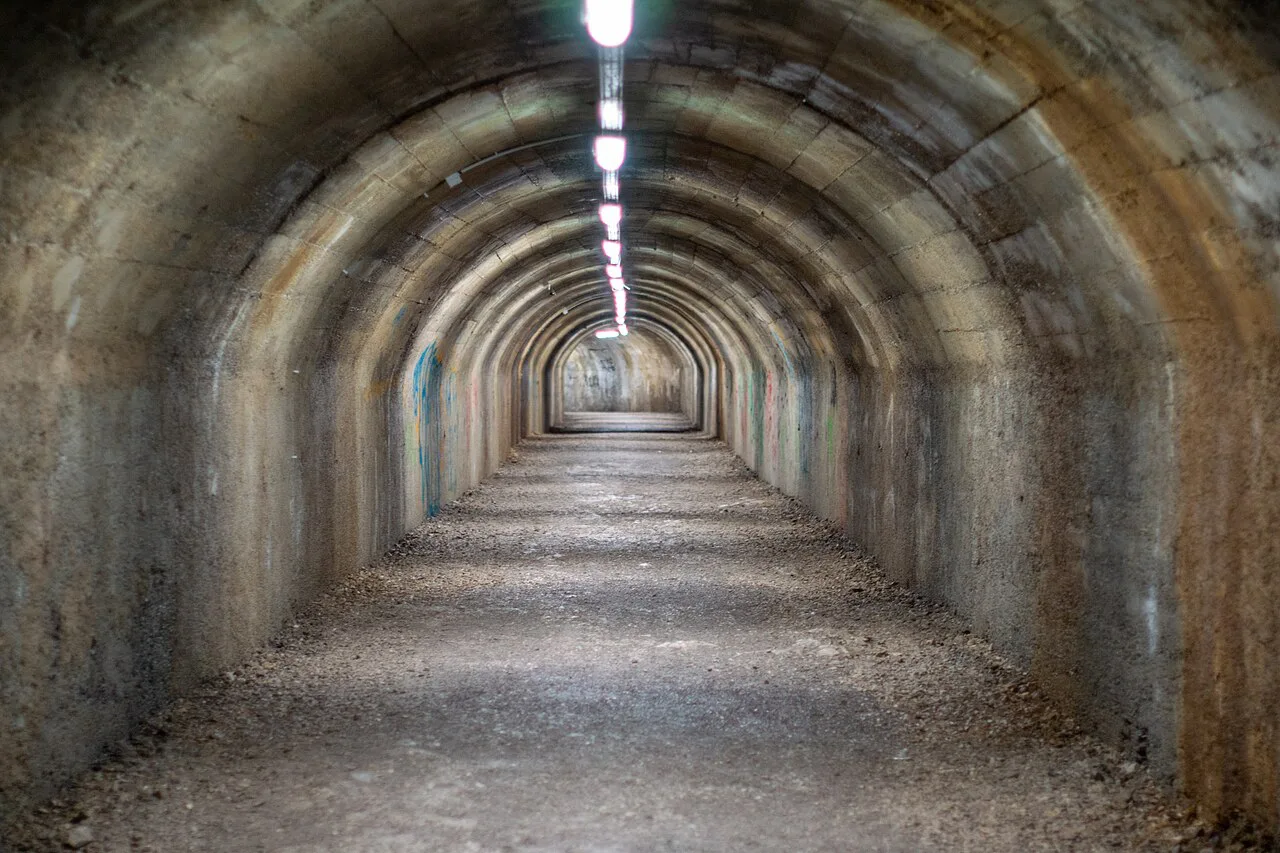
Expect a long, unadorned pedestrian passage: concrete walls, original wartime lettering and little else in the way of interpretation. The appeal is the sense of standing inside a civil-defence structure rather than a curated gallery, and the whole visit is essentially a walk from one end to the other.
Because it is a shelter dug for civilians, the passage reads as infrastructure rather than architecture — worth a pause to look at the surviving signs and the finish of the walls. Photographers will find the light and bare surfaces more documentary than picturesque, so set expectations accordingly.
How long to allow
Treat the tunnel as a 20 to 30 minute addition to an Old Town walk, including the time to find the entrance and read the signage. The 330-metre length is a few minutes of walking, so most of the visit is spent looking rather than covering ground.
The passage is a flat, level route between its two ends, which keeps the walking itself simple. For anything beyond that — step-free access at the entrances, lighting, or how the space handles wheelchairs and pushchairs — ask at the Tourist Information Centre on Korzo or at the entrance before buying a ticket, as no published accessibility details are given.
Pairing it with the Old Town and Korzo
The natural pairing is the cathedral first, then the tunnel, then a slow loop through the Old Town back down to the pedestrian street. Add the Rijeka clock tower on the way through, since it sits on the same lower-town circuit and takes only minutes to see.
If you have an afternoon rather than an hour, take the bus or a taxi up to Trsat Castle for the view over the city and the bay, then come back down for the tunnel. That splits the day between an outdoor panorama and an underground space, which suits mixed weather.
For a longer walk, the Molo Longo breakwater gives you sea air and a view back at the port after the enclosed passage. It is a straightforward way to end an Old Town morning without adding another ticketed sight.
The best time to go
The passage is narrow and enclosed, so a weekday morning close to the 9 a.m. opening gives the quietest experience; Sundays are closed in any case. In July and August, aim for the first hour rather than midday, when the Old Town lanes are busiest and the tunnel fills quickly.
Off season the tunnel is cheaper and calmer: the adult ticket is €1.50 from 1 October to 31 March against €2.00 from 1 April to 30 September, so you pay less and share the passage with fewer people. Rainy days are the exception: the tunnel is covered, which makes it a sensible fallback when the bura or a shower rules out the waterfront.
Is the tunnel worth the stop?
Yes, if you are already in the Old Town and want something short, cheap and genuinely of the place. It is not a stand-alone attraction and does not need a dedicated trip, but as a 20 to 30 minute add-on beside St. Vitus Cathedral it earns its small ticket price and gives the streets above a second layer.
Build it into a walk that also takes in the clock tower and the waterfront, and check the current hours and seasonal prices on the Visit Rijeka page before you set out.
Explore more Rijeka guides
Frequently Asked Questions
Is the Rijeka Tunnel free?
No. Visit Rijeka publishes a seasonal charge for adults, children, students and pensioners, plus a family ticket and a group discount for 15 or more people. Children under seven and persons with disabilities enter free. Current figures are listed on the Visit Rijeka tunnel page.
How long is the Rijeka Tunnel?
The passage runs 330 metres beneath the Old Town, from Grivica beside the Cathedral of St. Vitus to the courtyard of Dolac Primary School. Walking it takes only a few minutes, so allow 20 to 30 minutes in total with the entrance and the signage.
When is the Rijeka Tunnel open?
Visit Rijeka lists opening Monday to Saturday from 9 a.m. to 5 p.m., with Sundays closed. Because these are seasonal visitor hours, confirm them on the official page before travelling.
Where is the entrance to the Rijeka Tunnel?
The visitor entrance is at Grivica, next to the Cathedral of St. Vitus in the Old Town, a short climb from the Korzo pedestrian street. The passage comes out at the courtyard of Dolac Primary School, so you can walk it in either direction.