
Molo Longo, Rijeka: What to See on the City's Long Breakwater

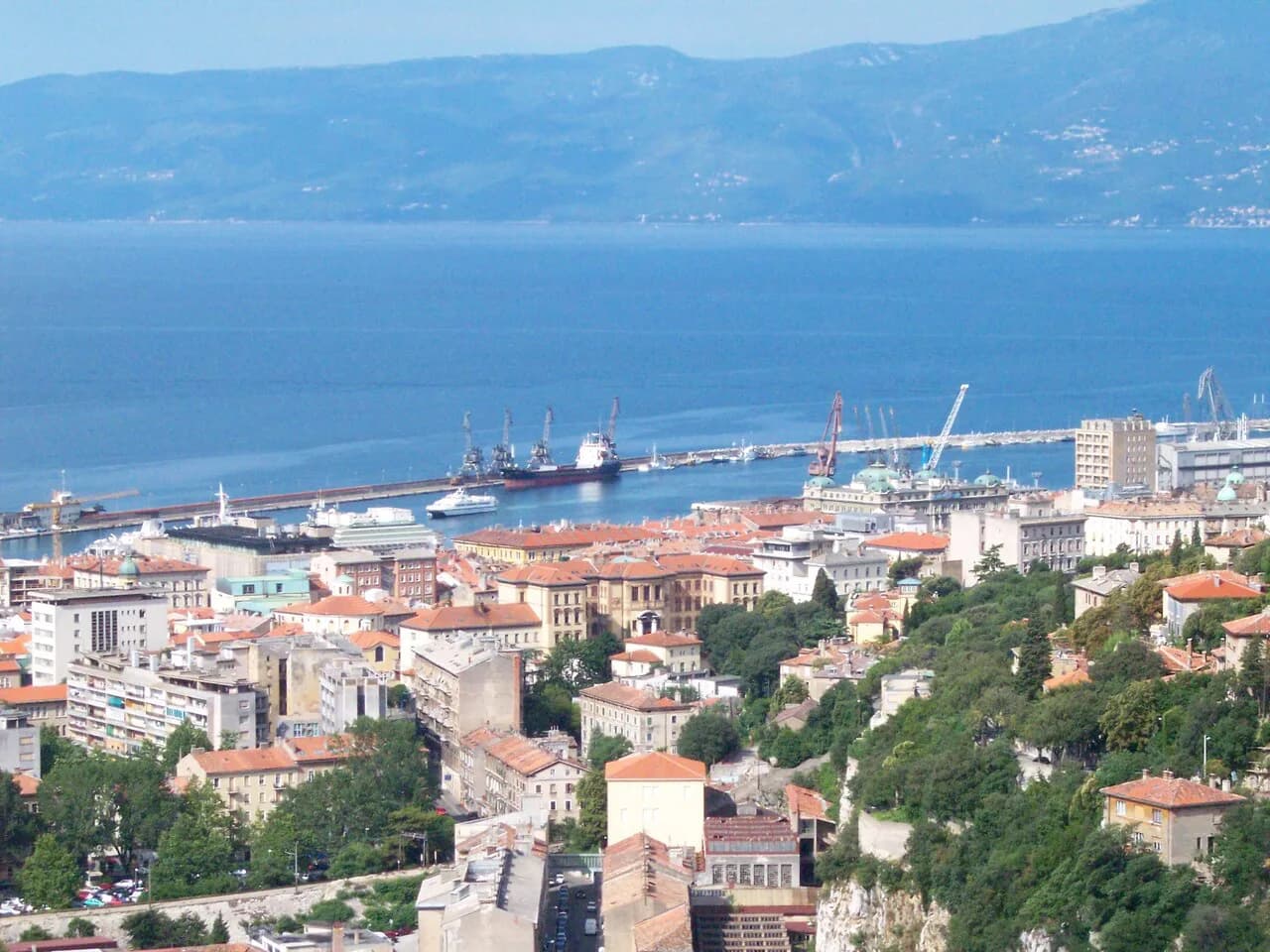
Molo Longo is Rijeka's main breakwater: a 1,707-metre stone arm at the head of the harbour basin that the city describes as now serving as a passenger terminal and a coastal promenade. Walking the whole length and back takes roughly an hour at an easy pace. This guide covers where the breakwater begins, how to reach it from the city centre, what you see along the way, how much time to allow and why the wind matters more here than on the sheltered streets.
What Molo Longo actually is
The City of Rijeka describes the existing breakwater of the main harbour basin as popularly called Molo longo because of its 1,707-metre length, and notes that it functions today as a passenger terminal and a coastal promenade. That double role is the thing to hold in your head before you set out: this is working port ground with a public walk along it, not a landscaped park. Expect bollards, mooring hardware, port buildings and the occasional vehicle alongside the pedestrians.
Searches for Molo Longo also return apartments and rooms trading under a similar name in Rijeka, some of them in the central cluster near the Maritime and History Museum of the Croatian Littoral. Those are accommodation listings and have nothing to do with the breakwater itself. If you are looking for the walk, you want the stone arm reaching into the sea, not a building.
Where the breakwater starts
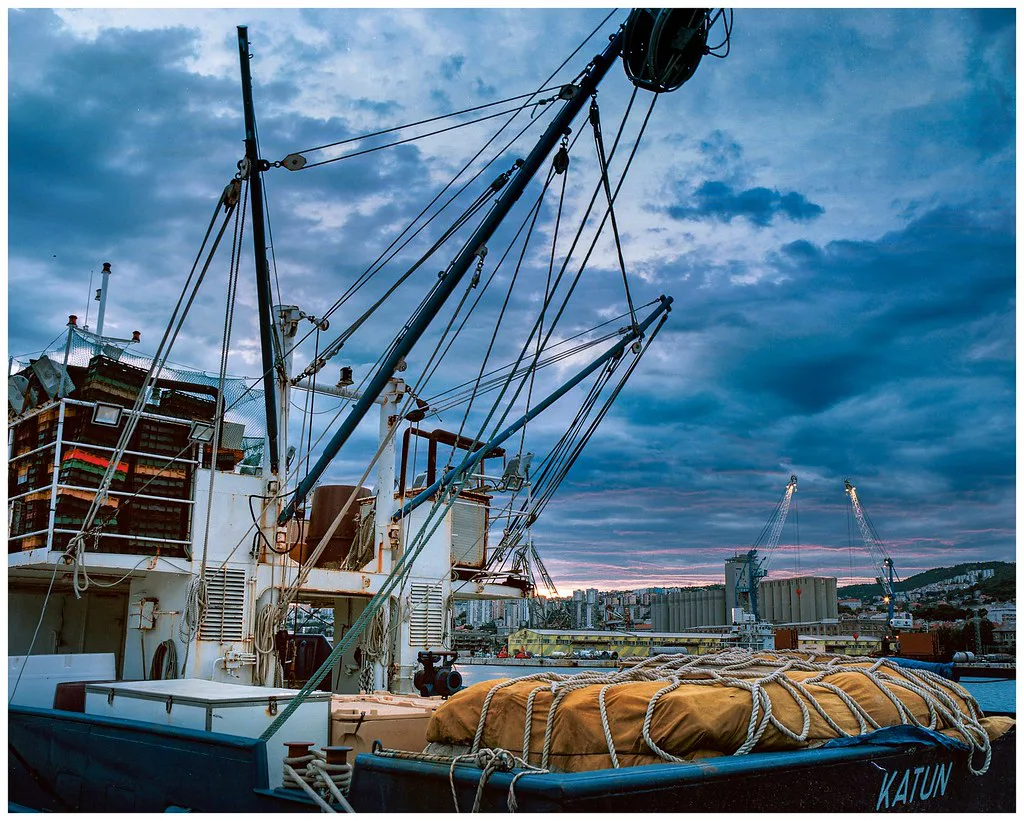
Molo Longo runs out into the sea from the harbour front, on the seaward side of Rijeka's centre. The compact grid of the old town and the shopping streets sits immediately behind the waterfront, so the walk from the edge of the centre to the root of the breakwater is short rather than a journey. Come down towards the water and follow the quay until the stone arm begins.
The Maritime and History Museum of the Croatian Littoral sits close to the harbour front and is the obvious landmark on the landward side; one of the apartment properties trading under the Molo Longo name is listed about 500 metres from it, in the same central cluster. From the museum quarter, follow the quay towards the water until the stone arm begins.

Getting there on foot from the Korzo and the old town
Most visitors arrive on foot, and that is the sensible way to do it. Come down through the old town from the Korzo, the central pedestrian spine of the city, and continue towards the harbour until the water opens out in front of you. The whole approach from the shopping streets is short enough to fold into a morning rather than a separate expedition.
If you are building a half-day in the centre, pair the breakwater with the streets behind it rather than treating the walk as a standalone trip. The Rijeka clock tower and the cathedral area sit in the same compact grid, and the Rijeka tunnel gives you a shortcut through the hill when you have had enough of the wind.
Walking the full 1,707 metres
The breakwater is 1,707 metres long, so a full out-and-back is a little over three kilometres on the flat. At an unhurried pace allow around forty minutes to an hour of walking, plus whatever time you spend stopping to look back at the city. If you only want the view and a breath of sea air, walking a few hundred metres out and turning round cuts that to fifteen or twenty minutes.
Once you are out on the arm the way back is the way you came, so decide at the root whether you are going the whole way. A useful rule: if the wind is already pushing you sideways at the entrance, the far end will be worse. The walk is flat and undemanding underfoot, which makes it easy to overcommit on a fine morning; carry water and use the facilities in the centre before you set out.
What you see from the breakwater
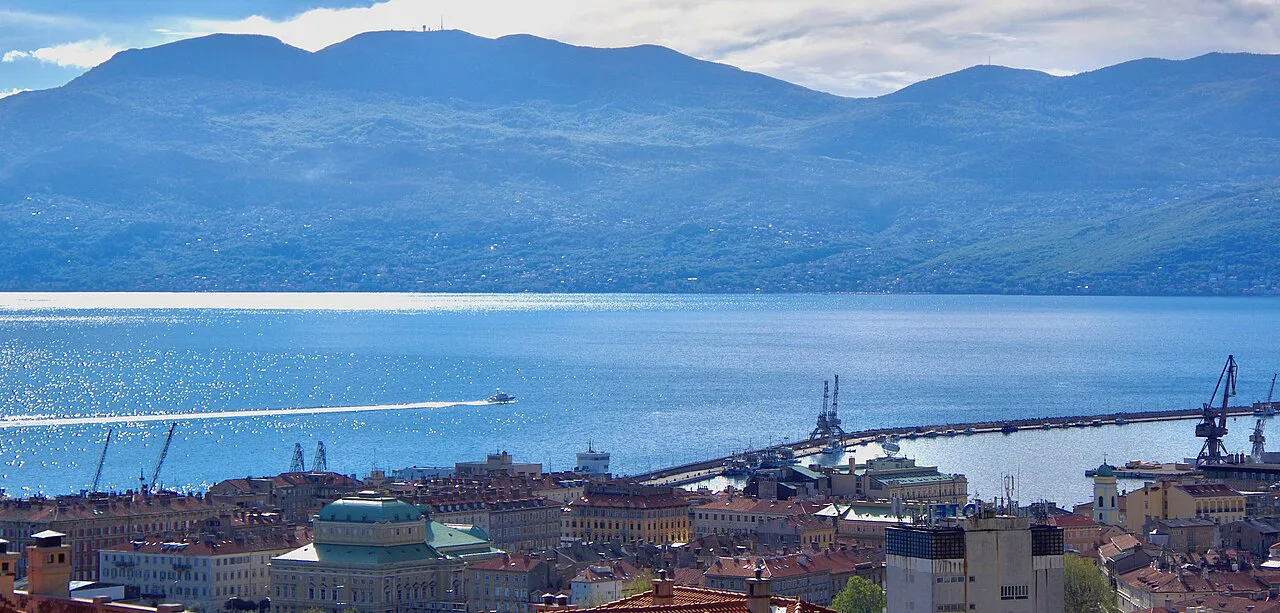
The best reason to walk out is the view back. From the arm you follow Rijeka's development from the ancient settlement by the Rječina through to the dense maritime and industrial city that grew up around the port, with the city rising in tiers behind the quays. You get the cranes, the basin and the working waterfront in one frame, which is a side of Rijeka the old town hides completely.
Look for the surviving historic warehouses on the quays behind you: seven of the roughly twenty original port stores are still standing and are protected as cultural property. On the breakwater itself, rowing clubs have kept boat sheds, club rooms and terraces here since the early twentieth century. The original lighthouse no longer stands at the head of the arm; it was moved to the Mlaka district in the west of the city.
The breakwater's history in brief
Planning and preparatory works for the present breakwater began in 1872, and it was completed in 1888. It was designed by the Hungarian architect Antal Hajnal for the Hungarian administration and named Molo Maria Teresa in honour of the empress. A closing pier was added in 1908 and the breakwater received its final extension in 1934.
The timing explains the scale. Rijeka was Hungary's only sea outlet, the Budapest–Zagreb–Rijeka railway arrived in 1873, and the port was rebuilt on a grand plan with new quays and warehouses. The breakwater was the engineering that made the basin usable by large ships, and the bathing establishment built on it in 1912–13 was proclaimed the best in the empire on the eve of the First World War.
The bura and exposed weather
This is the least sheltered walk in central Rijeka. The breakwater pushes straight out into open water, so there is nothing between you and the wind, and the bura in particular arrives as a cold, gusting blast funnelling down to the coast. On a bura day the same walk that feels pleasant in the old town can be genuinely unpleasant two hundred metres out.
Treat the sheltered streets as the fallback rather than the breakwater. If the wind is up, the Governor's Palace and the museum quarter give you a proper indoor half-day, and the city's museums fill the time comfortably. Save the arm for a calm morning, when the water is flat and the view back to the city is at its clearest.
Nearby sights on the landward side
The Maritime and History Museum of the Croatian Littoral is the natural pairing, since it sits close to the harbour front and explains the port you have just walked around. The Museum of Modern and Contemporary Art Rijeka (MMSU) and the Natural History Museum Rijeka are both in the centre and work well as a second stop if the weather turns.
If you want a contrast in height, Trsat Castle sits above the city on the hill across the Rječina and gives you the reverse view: the harbour, the breakwater and the whole port laid out below. It is a separate trip rather than a stroll from the waterfront, so plan it as its own outing. The Astronomical Centre Rijeka is another option further out from the centre.
Practical points for the walk
The city describes the breakwater as functioning today both as a passenger terminal and as a coastal promenade, so treat it as working port ground that you walk along rather than a landscaped park. Keep to the walkway and expect to share the space with port traffic and vessel movements. Because terminal operations can affect parts of the arm, check the city's page on the breakwater for its current status before you set out.
Wear shoes you can walk three kilometres in and take a windproof layer even in high summer, because the temperature out on the water drops once the wind picks up. There are no shops out on the arm, so buy water and use the loos in the centre before you set out. Early morning is the calmest and quietest window.
Should you walk the whole breakwater?
Walk the full 1,707 metres if you have around an hour, the wind is light and you want the view of Rijeka from the water; turn back at the first few hundred metres if it is blowing or you are short of time. Either way, go in the morning and pair it with the Maritime and History Museum and a wander back through the old town.
Frequently Asked Questions
Can you walk out along Molo Longo?
The City of Rijeka describes the breakwater as functioning today as a passenger terminal and a coastal promenade. Because it is working port ground, keep to the walkway and check the city's page on the breakwater for its current status before a visit, since terminal operations can affect parts of the arm.
How long does it take to walk Molo Longo?
The breakwater is 1,707 metres long, so a full out-and-back is a little over three kilometres on the flat. At an easy pace allow roughly forty minutes to an hour of walking, plus stops for the view. A shorter there-and-back of a few hundred metres takes fifteen to twenty minutes.
Why is it called Molo longo?
The long breakwater of Rijeka's main harbour basin is popularly called Molo longo because of its 1,707-metre length. It was formally named Molo Maria Teresa in honour of the empress when it was built in the nineteenth century.
Is Molo Longo the same as the Molo Longo apartments?
No. Apartments and rooms in Rijeka trade under a similar name, some of them in the central cluster near the Maritime and History Museum. The breakwater itself is the stone arm running out into the harbour, not a building.