Museums in Rijeka: Which Ones Are Worth Your Time
A candid guide to museums in Rijeka: what MMSU, the City Museum and the Torpedo Museum hold, how long each needs and where to check prices and hours.
On this page
Two museums in Rijeka justify a deliberate trip and a third suits a spare hour: the Museum of Modern and Contemporary Art (MMSU) for art, the Rijeka City Museum for the city's own story, and the Torpedo Museum for the invention that shaped the harbour. All three sit within a short walk of the centre, so you can pair them rather than choose. This guide sets out what each holds, how long to allow and how to order them on foot.
Rijeka is Croatia's main northern port, wrapped around the top of Kvarner Bay, and its museums sit close to the waterfront rather than out in the suburbs. The reward is a set of collections with a specific local angle — the torpedo, the harbour's commercial history, a two-floor city museum beside the Governor's Palace — rather than a greatest-hits circuit. The walk between them takes a few minutes each time, which is what makes a half-day realistic.
What Rijeka's museums give you that the old town alone doesn't
The old town gives you streets, markets and coffee; the museums give you the reasons behind them. Rijeka's identity is industrial, maritime and mercantile, and the collections lean into that rather than into aristocratic palaces or religious art. If you only have time for streets, see the [Rijeka](/attractions/rijeka) centre; if you want to understand what you're walking through, give the museums two or three hours.
The pleasant surprise is scale. None of these museums is exhausting, and unlike the big national collections in Zagreb or Split, you can take one in properly in under two hours. Follow the museums with other [things to do in Rijeka](/things-to-do-in-rijeka) along the waterfront and you have a full day without rushing.
Museum of Modern and Contemporary Art (MMSU): Krešimirova 26c, the collection and what a visit involves
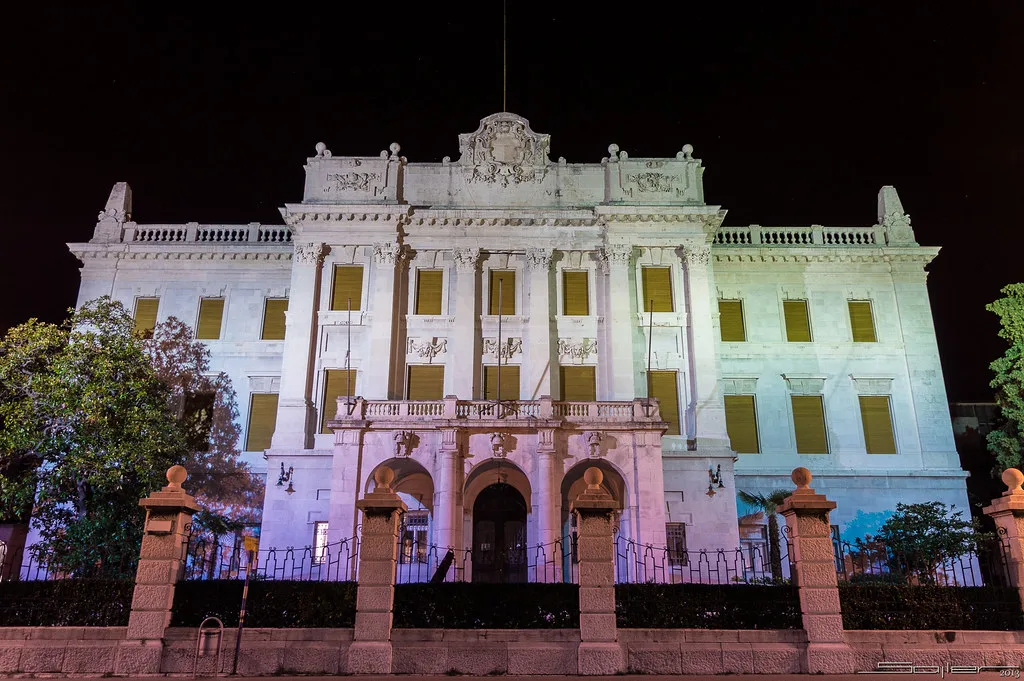
MMSU is the most substantial art stop in the city and the one worth planning around. Its address is Krešimirova 26c, and it works from a collection of modern and contemporary Croatian and regional art. The museum runs a full temporary programme, and its own site lists the exhibition 'Tell Me What You Do and I'll Tell You If You're Young' — Youth Biennial (1960–1991), dated 22.10.–31.1.2026, alongside a Jelena Jureša show and a downloadable essay collection.
Allow around 90 minutes for a proper look at the collection plus one temporary show. The building is calmer and less crowded than the waterfront, which makes it the obvious pick on a wet afternoon or when the bura is blowing and you want to be indoors. Check the temporary programme before you go, since the changing shows are the reason to return rather than the permanent hang.
MMSU opening hours, closed days and the weekday morning group slot
MMSU's regular hours are Tuesday to Friday 12pm–6pm and Saturday to Sunday 12pm–5pm, and the museum closes on holidays. On weekdays between 9am and 12pm the museum opens for group visits by prior appointment, so independent travellers arriving in the morning will find the doors shut until noon. Those hours and the holiday closure are published on the MMSU website.
Plan MMSU for an afternoon rather than a morning. If you're in Rijeka on a Monday, put the art aside and take the City Museum or the Torpedo Museum instead, then come back. The museum posts notices for holiday-period changes, so a quick look at the site the day before a public holiday saves a wasted walk.
Rijeka City Museum: Muzejski trg, the pavilion beside the Governor's Palace
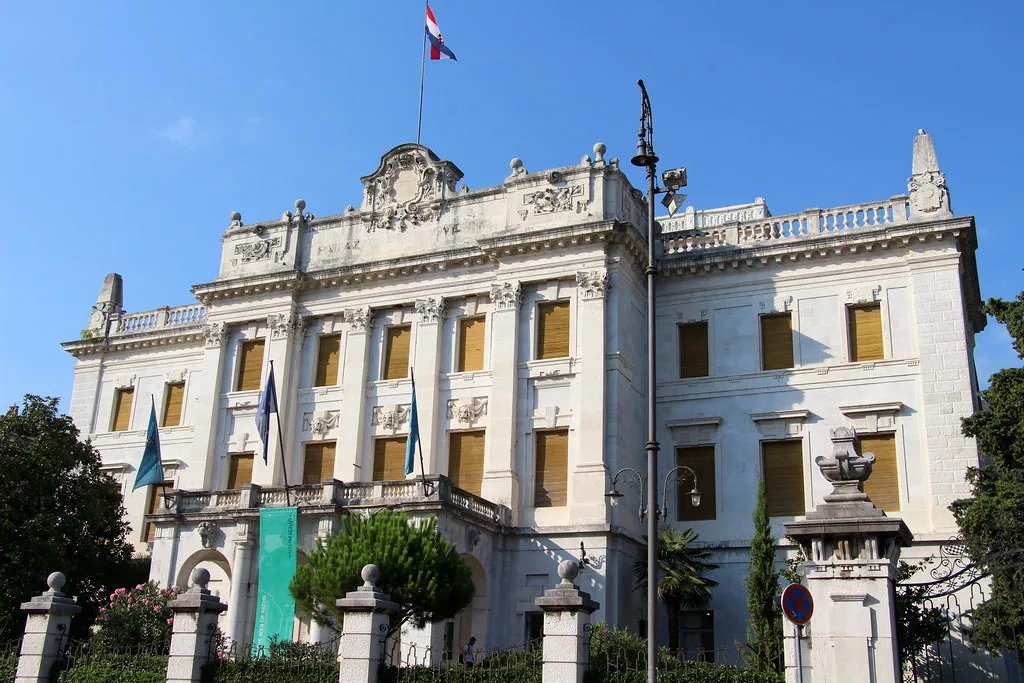
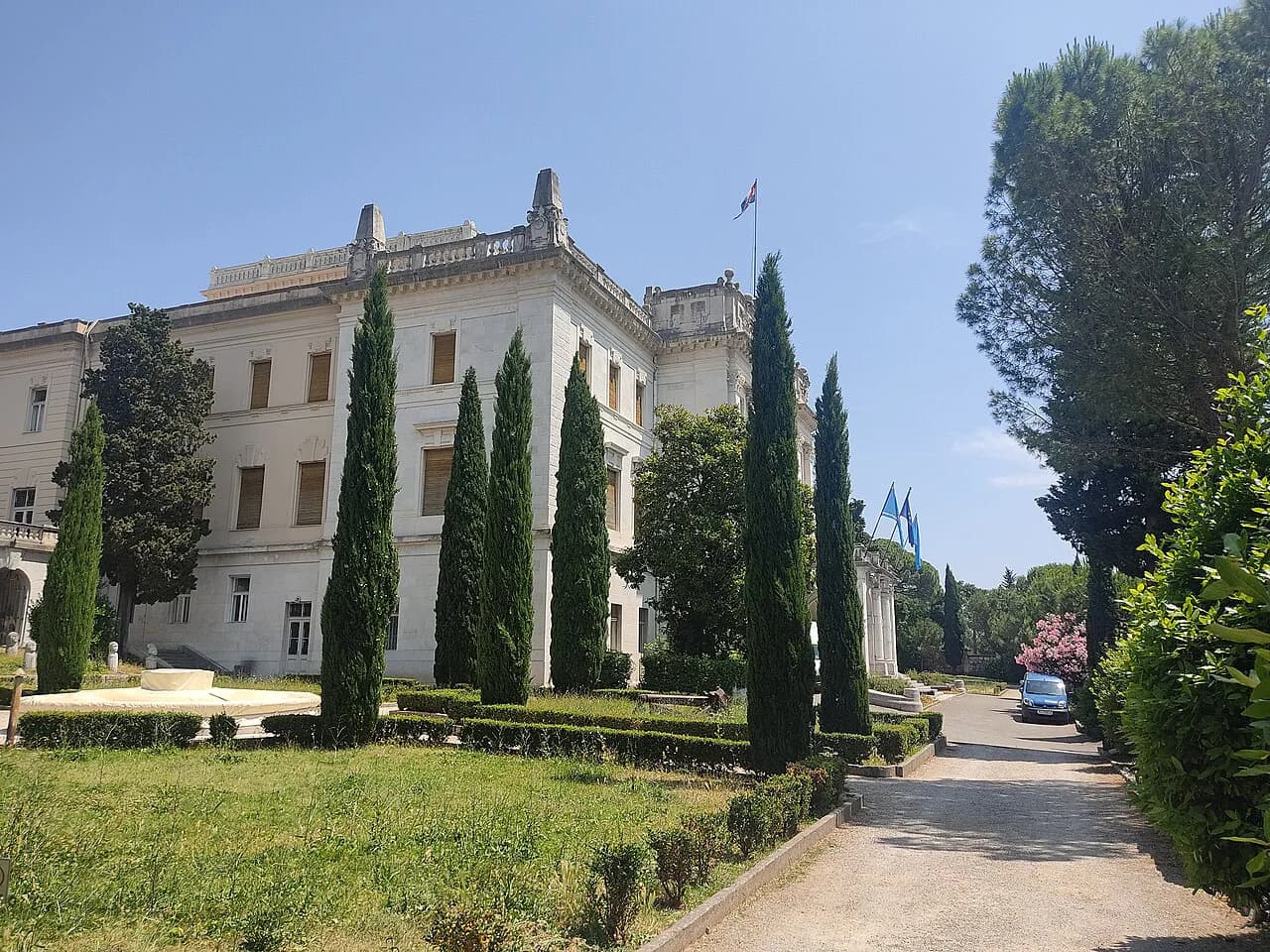
The City Museum occupies a pavilion on Muzejski trg, alongside the Governor's Palace, and spreads a modest permanent exhibition over two floors. The permanent display is not the draw on its own — what lifts the museum is its temporary programme, which has covered subjects such as the development of the torpedo, the history of Rijeka harbour and emigration from Central Europe to America between 1880 and 1914. That address and the pavilion setting are as the Time Out listing describes them.
Set expectations accordingly: come for the changing show and treat the permanent galleries as background. A visit fits neatly into 45 to 60 minutes, which makes it the easiest museum to slot in before lunch. Because the temporary exhibitions change, the museum's own website is the place to confirm what's on and whether the galleries are open when you plan to go.
The Governor's Palace cluster: pairing the City Museum with the History & Maritime Museum
The City Museum's real advantage is its neighbour. Sitting beside the Governor's Palace means it sits beside the History & Maritime Museum too, so two collections in one stop need only one walk and one decision about time. Treat the pair as a single hour-and-a-half block rather than two separate outings, and start with whichever subject pulls you first — the city or the sea.
This is the most efficient museum cluster in Rijeka and the one to choose if you're short of time. The Governor's Palace itself is worth a look from the outside as you cross the square, and the whole stop sits comfortably inside the centre. Pair it with the market streets and the Riva afterwards, when you want daylight rather than exhibits; the [Rijeka attractions guide](/attractions/rijeka) covers the rest of the centre for that stretch of the day.
Torpedo Museum: the torpedo's development story and what the ticket covers
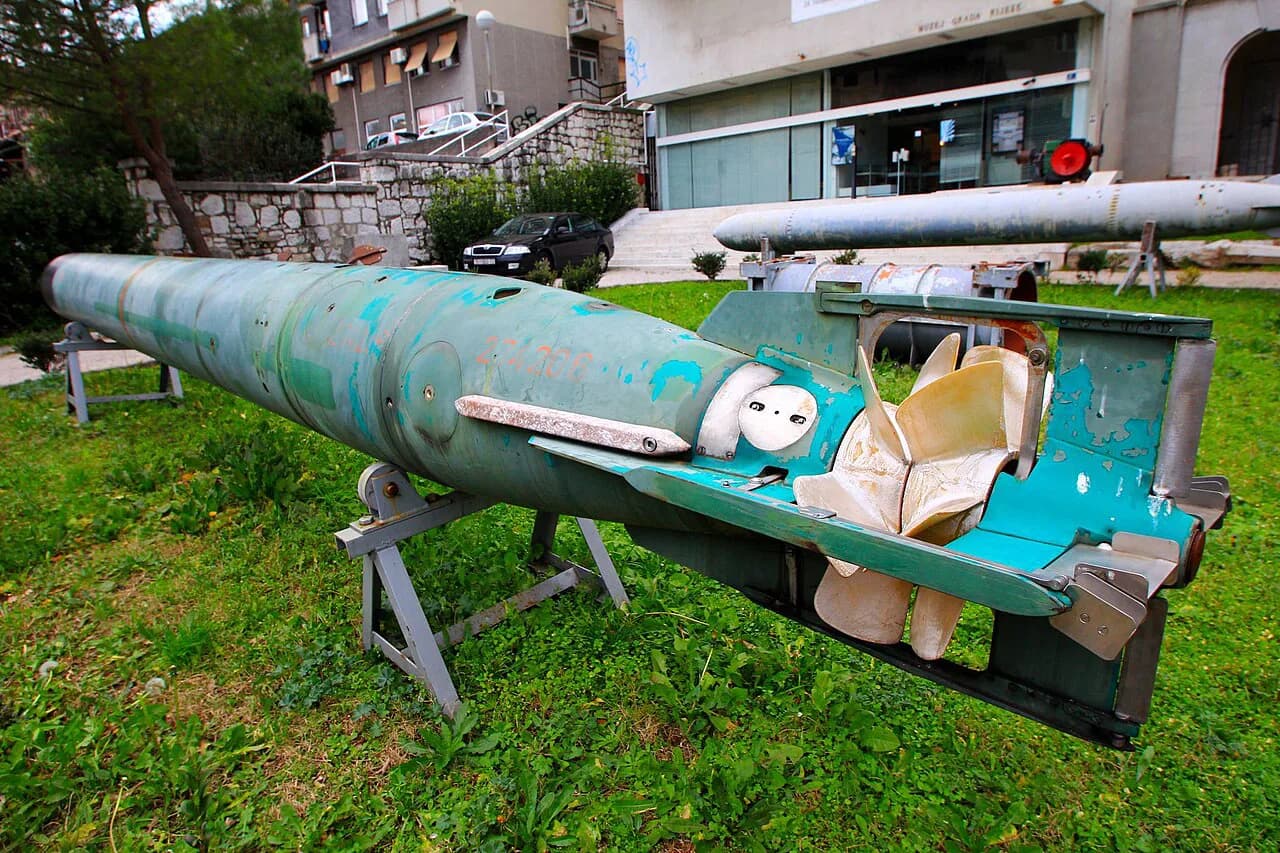
The Torpedo Museum is a single-subject museum, and unapologetically so: it follows the history and development of the torpedo, a weapon with a genuine Rijeka connection through the Whitehead works. The display is technical and compact, and it rewards curiosity about engineering and naval history more than it rewards a general browse. The Torpedo Museum listing shows an adult admission of €5.30 with a €10.60 figure also displayed, so treat any quoted number as indicative and confirm the current ticket at the desk before you commit.
Budget around 45 minutes. It's a natural add-on to the harbour walk rather than a destination in itself, and it works well as the last stop of a museum morning when your attention is starting to fade. If your interests run to art or social history instead, skip it without guilt.
How long each museum needs, and a realistic half-day order on foot
Here's a workable order. Start at MMSU on Krešimirova, which sits north of the centre, at noon when it opens to independent visitors, giving it 90 minutes. Then head down to Muzejski trg and take in the City Museum and, if the subject appeals, the History & Maritime Museum next door for another 90 minutes. Finish at the Torpedo Museum for 45 minutes if you still have appetite.
The sequence works because it moves from the furthest-inland stop towards the water. Total time on foot between the three is a matter of minutes each leg, so the day is limited by your attention rather than by transport. If you only have an afternoon, drop the Torpedo Museum and give the art and the city your full attention.
Which to skip if you have one rainy afternoon
One rainy afternoon belongs to MMSU. It has the most to look at, the calmest rooms and the strongest temporary programme, and it opens through the afternoon when the weather is at its worst. The City Museum is the second choice if you'd rather have local history than art, and the two together fit an afternoon if you move briskly and MMSU isn't showing something you want to linger over.
Skip the Torpedo Museum in that scenario unless naval engineering is your thing. It's small, technical and best enjoyed without time pressure. Have a look at the wider [things to do](/things-to-do-in-rijeka) in the city as a fallback if a museum closes for a holiday.
Practical points: prices in euros, seasonal hours and the bura on the walk
Croatia uses the euro, so ignore any kuna figure on older listings and ask at the desk for each museum's current admission and seasonal hours. MMSU publishes its own hours and holiday notices, and those are the ones to trust before a trip built around it. Ticket prices for the City Museum and the Torpedo Museum are best confirmed directly with each museum.
The walks between these sites are short but exposed, and the bura — the cold north-easterly that funnels down towards the coast — can make the crossing of an open square thoroughly unpleasant. In settled summer weather the same walk is a pleasure. Outside high season, keep a museum in reserve for the days the wind rules out the waterfront.
Which museum should you book your afternoon around?
If you do one thing indoors in Rijeka, make it MMSU: the biggest collection, the most to see and the clearest reason to rearrange a wet afternoon. Add the City Museum on the same walk if you have a second hour, and treat the Torpedo Museum as the optional extra for engineering-minded travellers.
Build the day around an afternoon start at MMSU, check the temporary programme and holiday notices before you go, and keep the Governor's Palace pair as your flexible second stop. The [Rijeka Attractions](/attractions/rijeka) hub covers the rest of the city for the hours when the weather behaves.
Explore more Rijeka guides
Frequently Asked Questions
Do I need to book Rijeka's museums in advance?
Independent visitors generally don't need to book for MMSU or the City Museum, but MMSU's weekday 9am–12pm slot is reserved for groups by prior appointment, so turn up from noon instead. If you're travelling as a group, arrange the morning visit with the museum directly through its website.
How much do museums in Rijeka cost?
Ticket prices are set by each museum and are not published in one place, so check MMSU's own website and ask at the desk for the City Museum and the Torpedo Museum. The Torpedo Museum figure varies between listings, so treat any quoted number as indicative until confirmed in person.
Are Rijeka's museums open on Mondays?
MMSU's published regular hours run Tuesday to Sunday, so Monday is not a museum day there. The City Museum and Torpedo Museum set their own schedules, so confirm opening days with each before planning a Monday visit around them.
Sources
Notes from the Croatian coast
Optional updates when our guides change.
You might also like
Continue reading
More guides you'll find useful