Rovinj Walking Tour: The Old Town on Foot, Stop by Stop
A self-guided Rovinj walking tour through Balbi's Gate, Grisia Street and up to St Euphemia's Church, with the route in order and when a guided tour helps.
On this page
Rovinj is best walked in about two hours, in a single loop from Maršal Tito Square up to St Euphemia's Church and back down through the old town lanes. The old town is compact, so the route below is a sequence rather than a map you need to follow closely; each stop tells you what to look at rather than just where to stand. For the wider layout of the quarter, see the Rovinj Old Town guide.
The walk suits anyone steady on cobbles, but it climbs steadily, so allow more time if you stop for photographs or a drink. What follows covers the route in order, how long it takes, when a paid city tour earns its fee, and how summer crowds change the experience. For a wider set of options around the town, the broader guide to things to do in Rovinj sits alongside this one.
Rovinj walking tour: the short answer
Start at Maršal Tito Square, enter the old town through Balbi's Gate, work through the lanes to Grisia Street, climb to St Euphemia's Church and come down via Carrera Street and the market. That loop takes most people somewhere between ninety minutes and three hours, depending on how long they spend at the church and how often they stop.
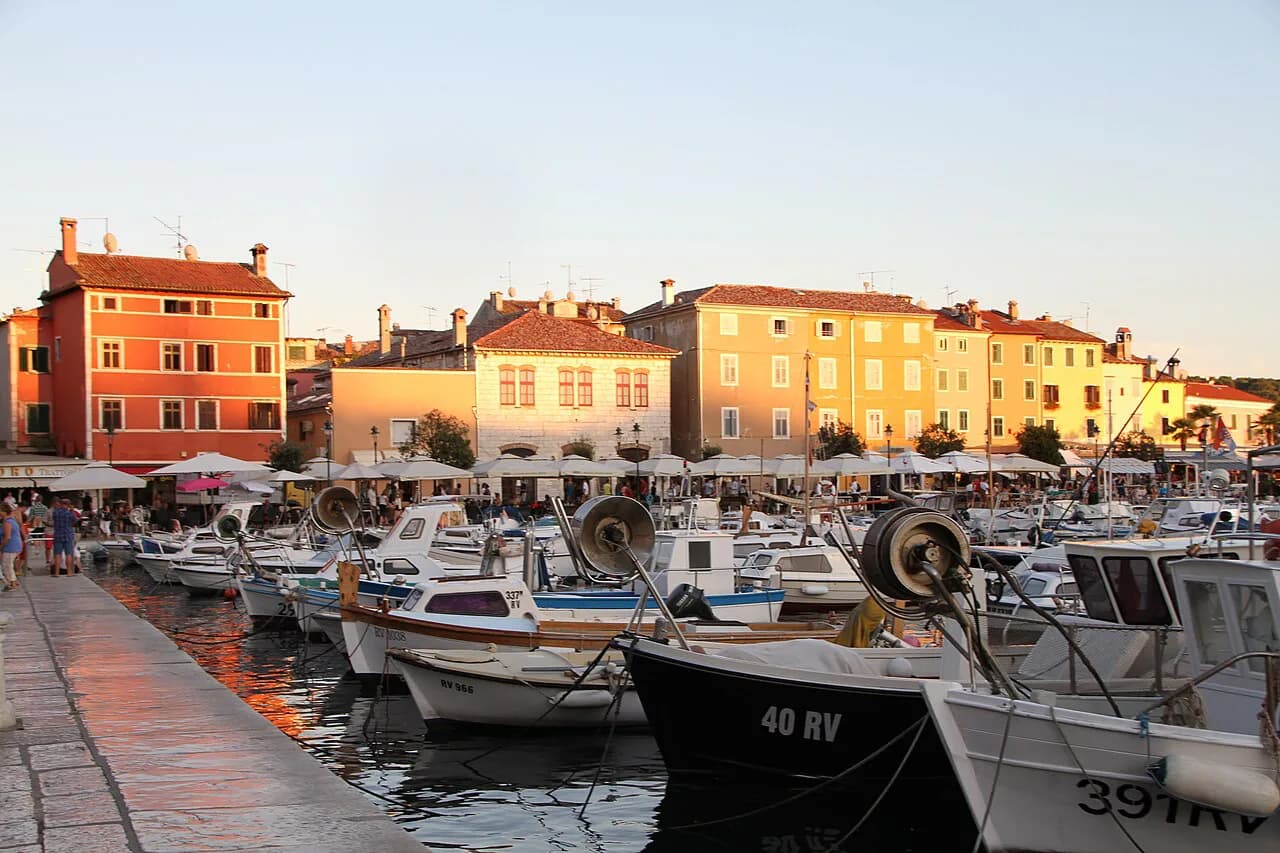
The old town began as an island separated from the mainland by a canal, which explains the tight, twisting layout you are walking through rather than a planned grid. That history is the reason a short loop still feels dense: there is no long straight street and the seafront reappears when you least expect it.
This is a route, not a checklist. If you only have an hour, cut Carrera Street and the market and put the time into the church and the lanes below it.
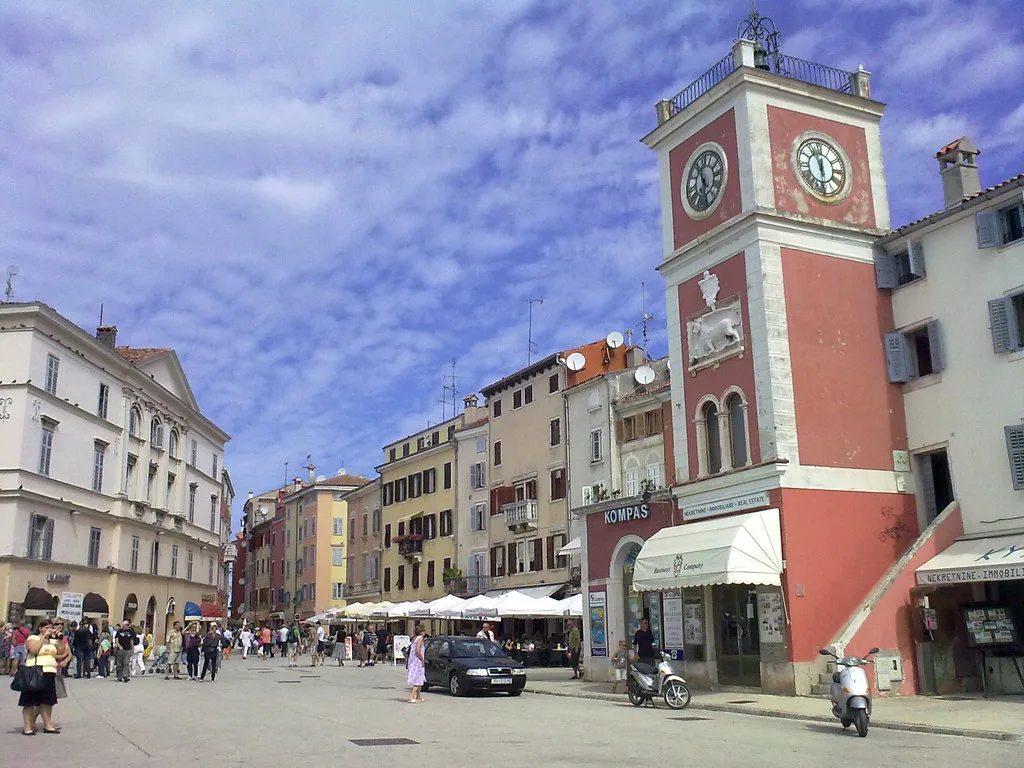
Where the route starts: Maršal Tito Square and Balbi's Gate
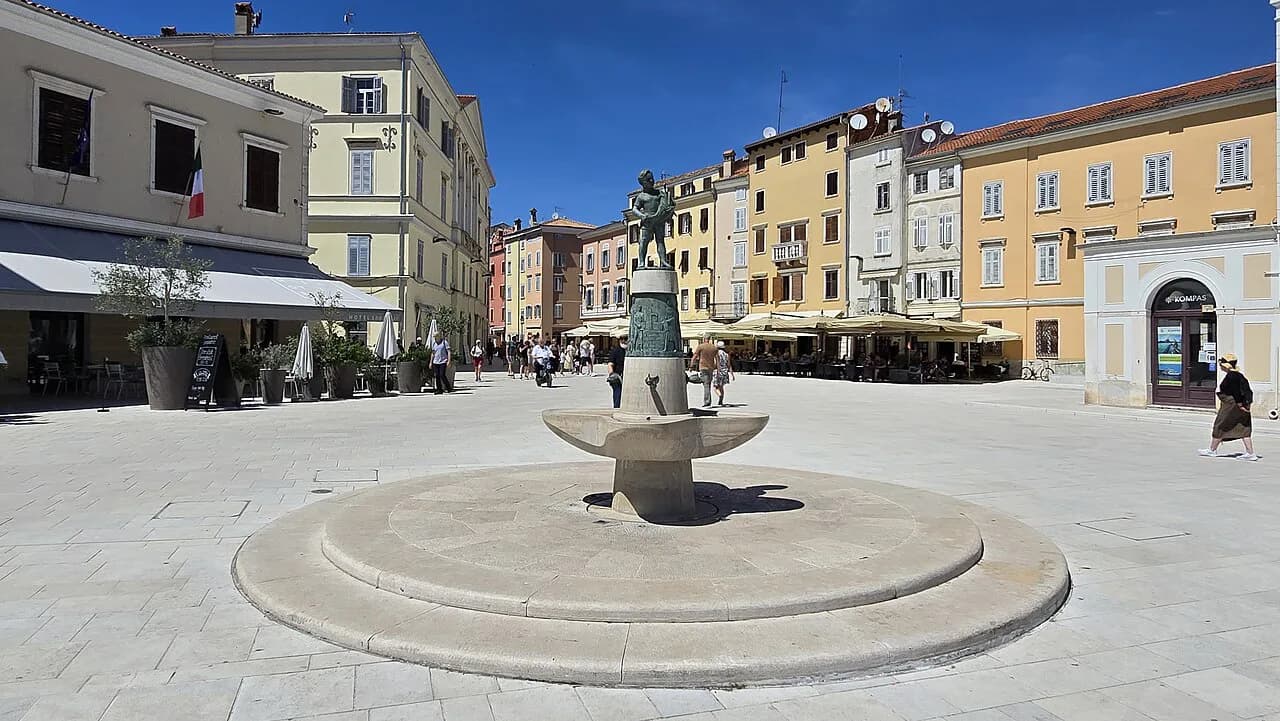
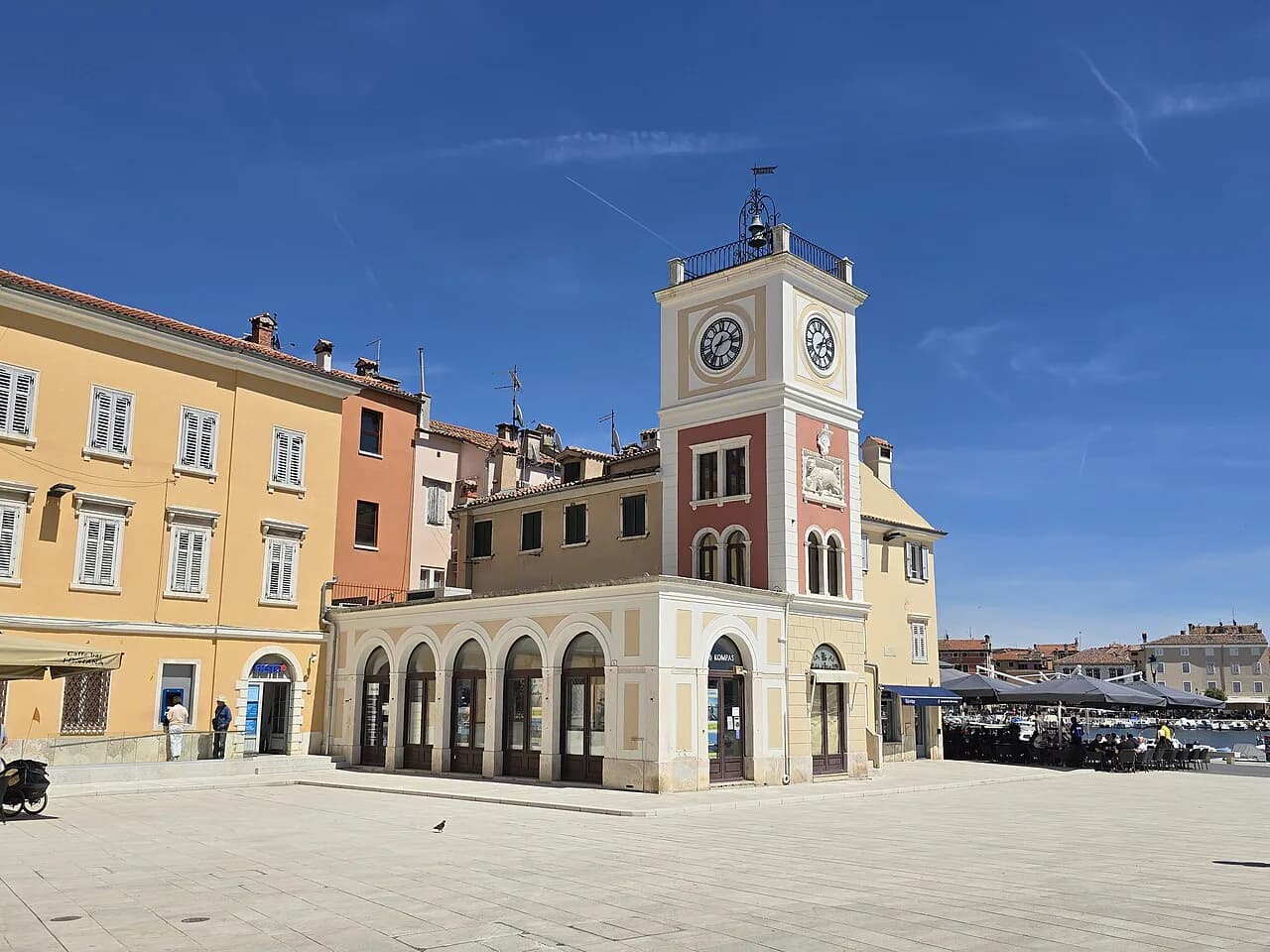
Maršal Tito Square is the obvious meeting point before you enter the old town. The Boy with a Fish statue in front of it is the landmark used by Free Spirit Tours as the assembly point for its city tour, so expect to see small groups gathering there with an orange umbrella.
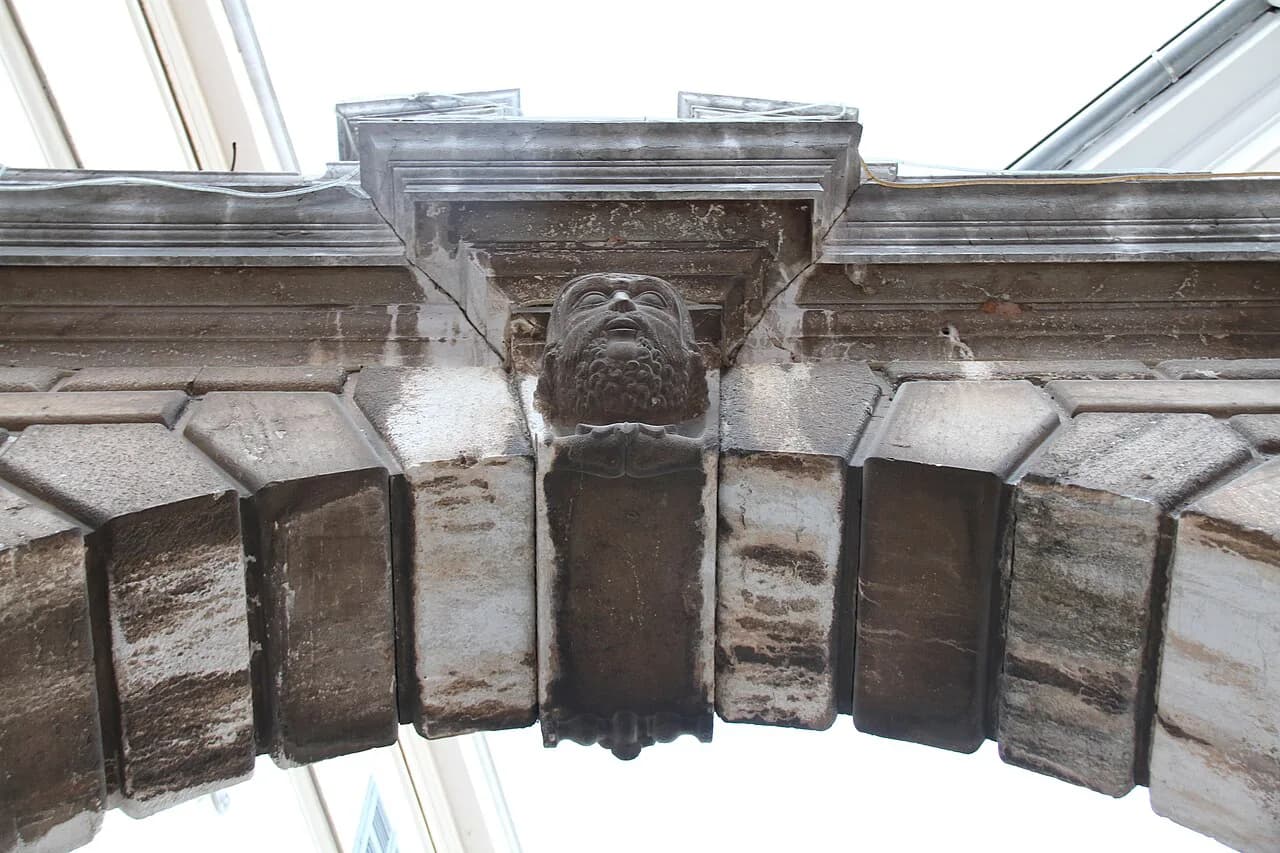
Balbi's Gate is the entry point into the old town and the natural place to start the climb. Walk through it rather than around it: the gate frames the first view of tall buildings and narrow lanes, which is the effect the town was built to produce.
Take a moment here to orientate yourself, because once you are inside the lanes the way up is not obvious. If you would rather walk with a recorded route in hand, a self-guided walking format with stops and challenges is available for Rovinj, though the order below works without one.
The Large Square and the lanes of the old town
The Large Square in Rovinj is small and barely square, hemmed in by tall buildings that make the space feel more like a wide lane. That compression is the point: the buildings are high relative to the street width, which is why the old town photographs so well even in flat midday light.
Beyond the square, the lanes run uphill in every direction and the correct approach is to keep drifting upward rather than trying to follow a fixed line. Getting briefly lost is part of the route, and the lanes open onto glimpses of the sea and the islands offshore.
Look up as you go: shutters and stone details at first-floor level are what distinguish the residential lanes from the busier lower streets.
Grisia Street: the climb through the artists' street
Grisia Street is the steep, cobbled lane that carries you up towards the church, lined with galleries and small studios. Once a year the street hosts an art festival where anyone is welcome to display work, which gives it a different character from the town's permanent shops.
The surface here is polished stone and the gradient is real, so grippy shoes matter more than on the lower lanes. Take the climb slowly and use the galleries as natural pauses rather than pushing straight to the top without stopping.
If you want to break the walk with a museum, the town has several small collections that suit a hot afternoon. Our guide to museums in Rovinj sets out what each one covers so you can pick a single stop rather than trying to fit in all of them.
St Euphemia's Church and the belltower view
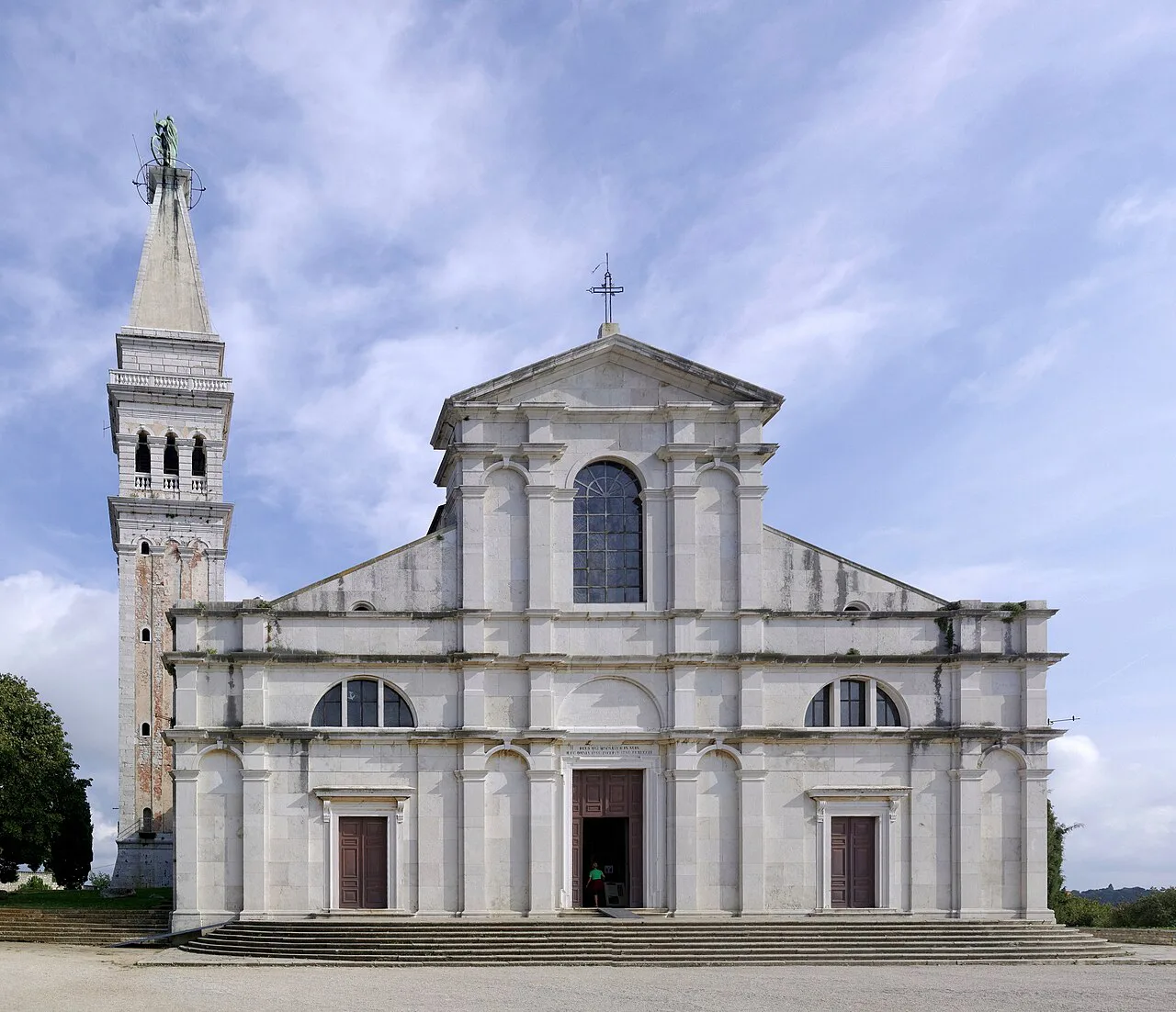
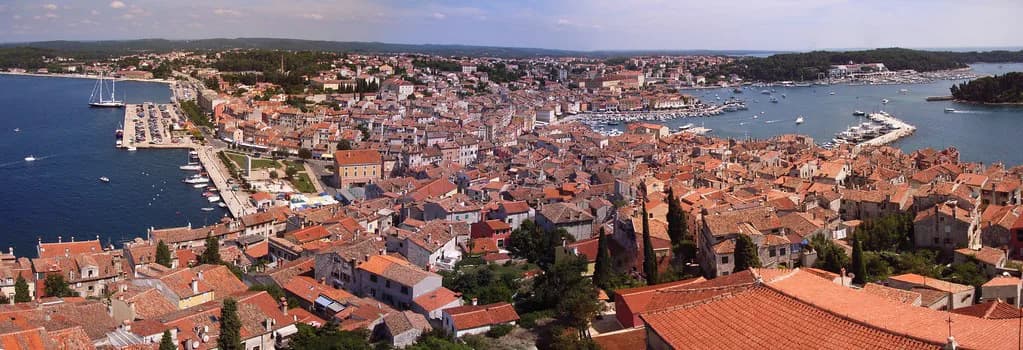
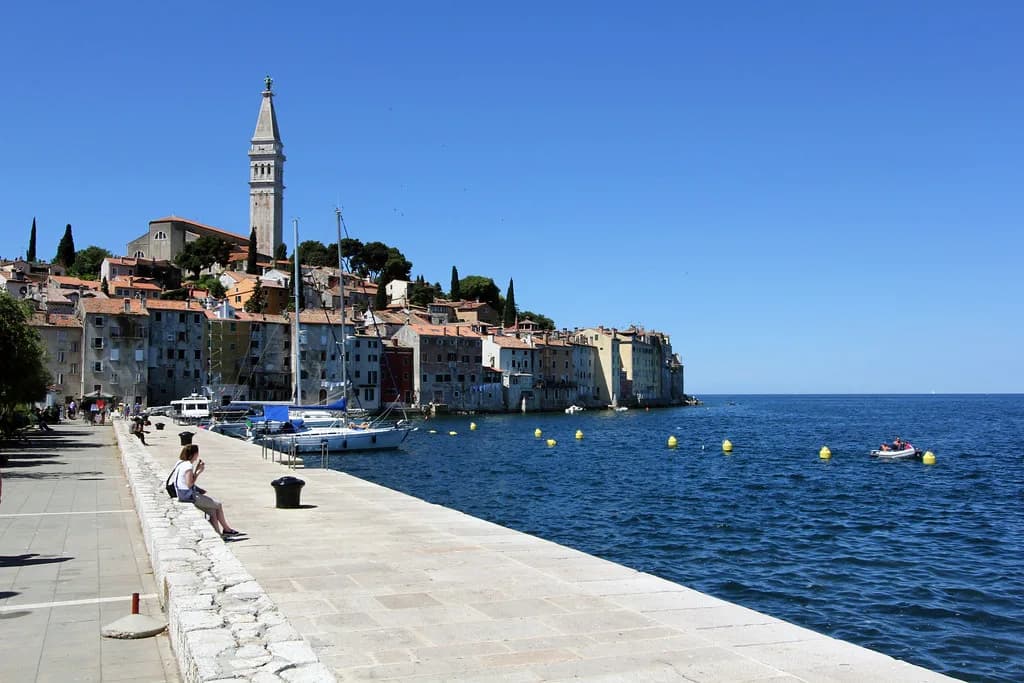
St Euphemia's Church sits at the summit of the old town, and its belltower is described in local touring material as the highest in Istria. Treat the height claim as the town's own billing rather than a measured fact, but do walk up to the church forecourt: the reward is a view over the rooftops, the sea and the islands beyond.
Inside, look for the stone sarcophagus that, according to the legend, floated into Rovinj's harbour. The story is told as legend rather than history, and it is the detail most visitors remember from the church.
From the top, one island is conspicuously absent from the view: Cissa, the supposed Croatian Atlantis, which the town's storytelling insists sank. Whether it ever existed is unresolved, so enjoy the legend without treating it as archaeology.
If the weather turns while you are up here, the church and the lanes immediately below make a sensible shelter stop. More indoor options are collected in our guide to things to do in Rovinj when it rains, which is worth a glance before committing to a long morning on foot.
Carrera Street and the market on the way down
Come down from the church on the far side and you reach Carrera Street, the town's shopping street, where clothes and local products sit alongside ice cream stops. It is the least strenuous stretch of the walk and a good place to slow down after the climb.
The market is the other essential stop on the descent, with fresh fish and seafood, black and white truffles, Istrian wines such as Teran and Malvazija, and olive oil. Istria has repeatedly been picked out by the olive oil guide Flos Olei as the world's best olive oil region, which is why the oil stalls deserve more than a glance.
Prices at the market stalls change with the season and the seller, so ask before buying rather than assuming a posted figure, and carry enough cash for smaller producers who may not take cards.
How long the walk takes and how far it is
Plan on ninety minutes for the bare loop and half a day if you want the church tower, a gallery and the market. Distance is short because the old town is small; time is consumed by the gradient and by stopping, not by kilometres.
The guided city tour run by Free Spirit Tours is advertised as a two-hour introduction meeting at Maršal Tito Square, which gives you a useful benchmark for the self-guided version. If your own loop is running much longer than two hours, you have added substantial stops rather than simply walked slowly.
Wear shoes with grip, carry water in summer and accept that the cobbles are uneven underfoot. The climb to the church is the only sustained effort, and everything after it is downhill.
When a guided tour is worth paying for
Pay for a guide if you want the legends and the town's layered history explained as you walk, or if you are short on time and would rather be led straight to the viewpoints. The Free Spirit Tours city tour covers the whole old town, including the main sights and the smaller corners, which is difficult to replicate on a first visit without preparation.
Walk it yourself if you prefer to linger, revisit the church forecourt or spend an hour in the market. The route above needs no booking and no fixed start time, which matters in high season when you may want to walk early or late.
Walking tours of Rovinj are sold through third-party booking platforms as well as directly, and the listed prices appear in the platform's own currency, so compare in euro at the point of booking rather than relying on a converted figure.
Crowds, cruise-ship days and the best time to walk
Walk early in the morning or in the late afternoon, when the lanes and Grisia Street are passable and the light on the rooftops is better. Midday in high summer concentrates everyone on the same short climb, and the church forecourt becomes difficult to enjoy.
Cruise-ship days change the feel of the lower lanes and the market in particular, so if you have flexibility, save the old town for a day when the waterfront looks quieter. The Rovinj map guide is a useful place to check how the harbour, the old town and the islands fit together before you set out.
Summer heat makes the cobbled climb harder than the distance suggests. Carry a light layer for the top, water for the climb, and keep the walk flexible.
Practicalities: getting to Rovinj and walking conditions
The old town lanes are the heart of the walk, and the seafront Riva is the simplest orientation line back to the harbour. Much of the upper route is cobbled and stepped, so allow for that in what you carry.
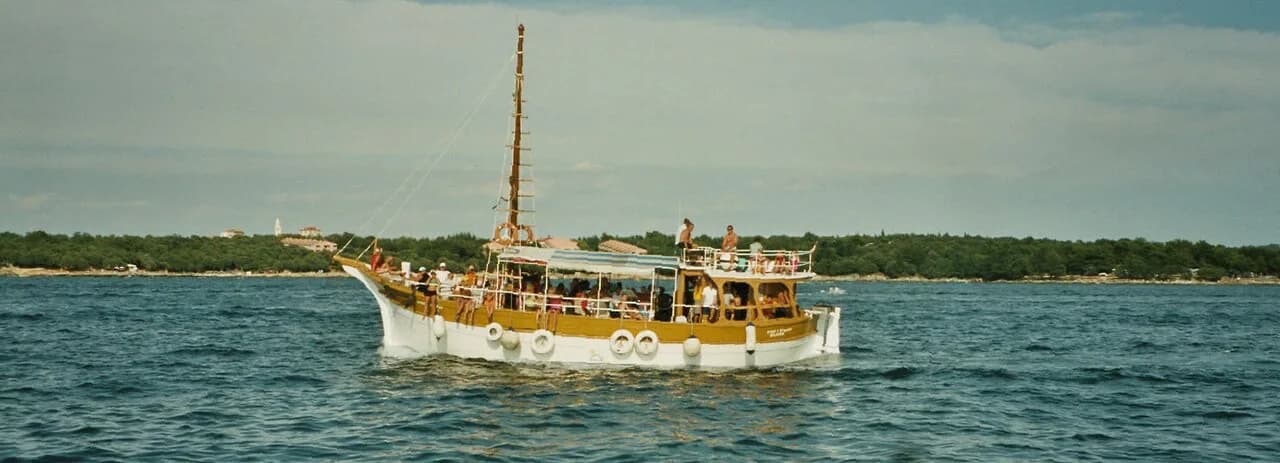
Boats leave from the harbour for the Rovinj archipelago and the nearby islands, so you can pair the walk with a short crossing rather than a full day on the water. Our guide to boat trips from Rovinj sets out the options, and the guide to islands near Rovinj covers Sveta Katarina and the rest of the group offshore.
Allow more time than you think for the climb, and less for the flat streets than you expect. The Rovinj old town guide covers Stari Grad in more depth if you want to extend the loop beyond this route.
Should you walk Rovinj alone or book a guide?
Walk it yourself if you want control over pace and stops, and book a guide if you would rather hear the legends and the history in the right place. Either way, the loop from Maršal Tito Square through Balbi's Gate, up Grisia Street to St Euphemia's and down past Carrera Street and the market is the route that shows you the town in a morning.
If you have time for only part of it, choose the climb and the church over the shopping street. The Rovinj Attractions: 7 Visitor Guides hub gathers the individual sights if you want to add a specific stop to this route.
Frequently Asked Questions
How many days do I need in Rovinj?
One full day covers this walking route, the church and the market comfortably, and a second day gives you room for a boat crossing to the islands or a museum. The old town itself is small, so extra days are about depth and the water rather than more streets.
How do you get to Rovinj?
Most visitors arrive by road from elsewhere in Istria or from further along the coast, and the town's layout means you finish the walk at the waterfront rather than at a station. Seasonal coach and ferry services change, so check current connections before you travel.
Sources
Notes from the Croatian coast
Optional updates when our guides change.
You might also like
Continue reading
More guides you'll find useful