Things to Do in Rovinj When It Rains: Wet-Day Guide
Rain in Rovinj is usually a short Mediterranean shower, so shelter in the old town lanes before switching to museums, churches and a rearranged day.
On this page
Most rain in Rovinj arrives as a short Mediterranean shower rather than a settled wet day, so the best response is often to pause under cover and carry on. Only when the rain sets in for hours does it pay to switch to museums, churches and a rearranged itinerary. This guide separates a passing shower from a genuine wet spell and explains how to reshuffle a short break when the weather turns.
Rovinj's climate is classically Mediterranean: hot, sunny summers and milder winters, with more rain in the cooler months and in autumn, when the town turns cool and rainy. Summer showers tend to be brief, while spring and autumn bring longer spells and the odd windy, overcast day.
What rain in Rovinj actually looks like
The distinction that matters is duration. A summer shower can pass in the time it takes to drink a coffee under an awning, while a multi-day wet spell, more likely in autumn or early spring, removes the coast and the viewpoints for a whole morning at a time and makes a museum plan worthwhile.
Rain here often comes with wind, and the bura, the cold northerly gust, can clear the sky while making exposed spots unpleasant, so a bright but windy morning still wants an indoor anchor. Plan one indoor stop for each day and hold the outdoor stops loosely, so a wet morning costs you an hour rather than the whole plan.
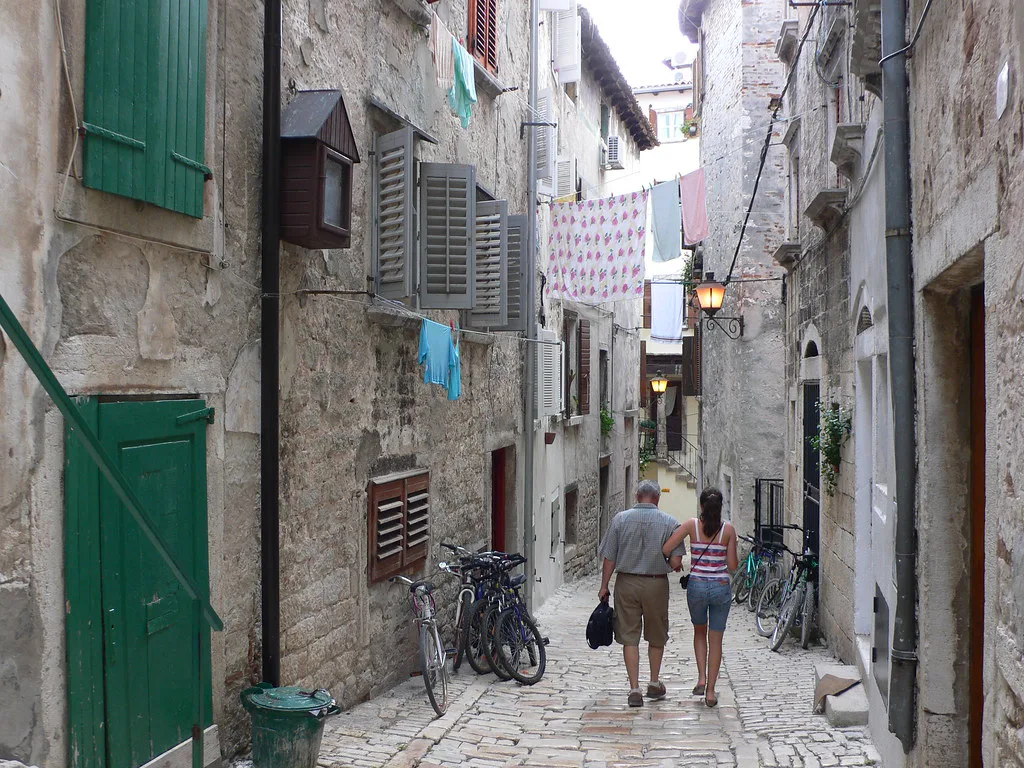
First move: shelter in the old town's narrow lanes around Grisia
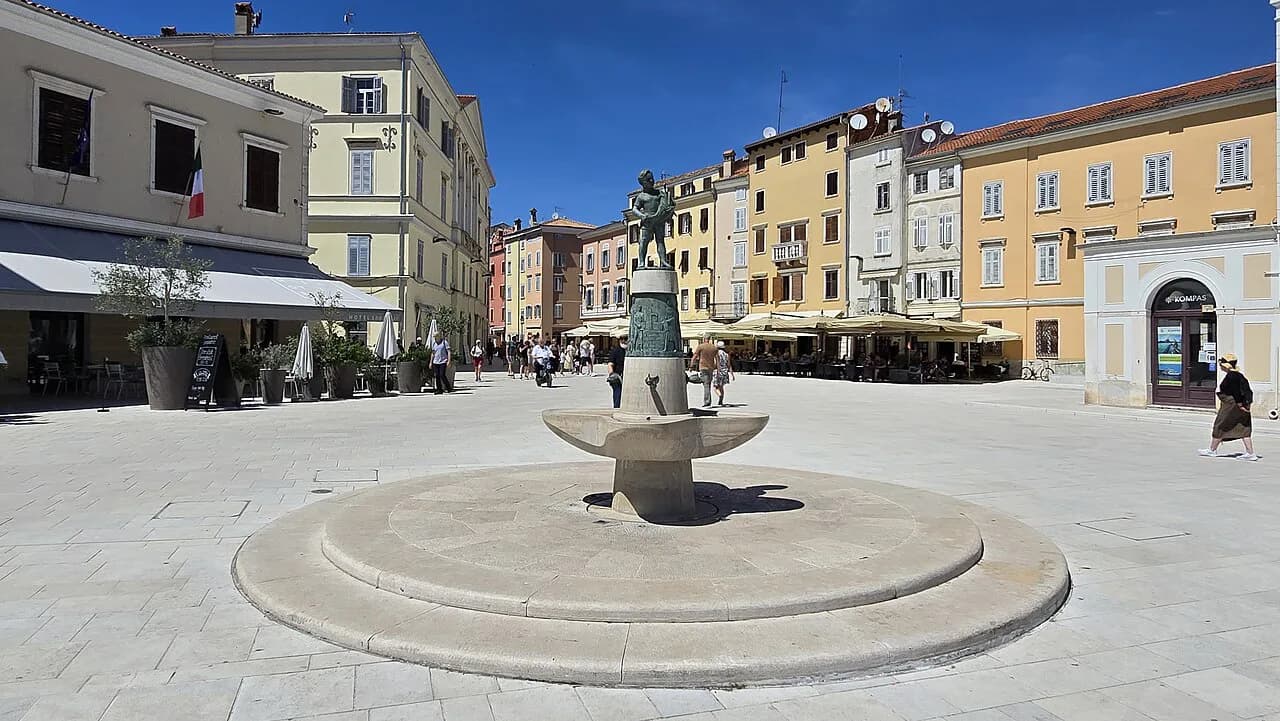
When the first drops arrive, head into the warren of the old town rather than out of it. The lanes climbing towards the church are tight and full of corners, giving you repeated places to pause under cover as you move uphill, with wet cobbles and far fewer people than on a sunny afternoon.
Use the old town as a slow route rather than a sprint, working up through the lanes towards the church and ducking into side alleys when a shower strengthens. The wider guide to things to do in Rovinj sets these stops alongside everything else worth seeing in town.
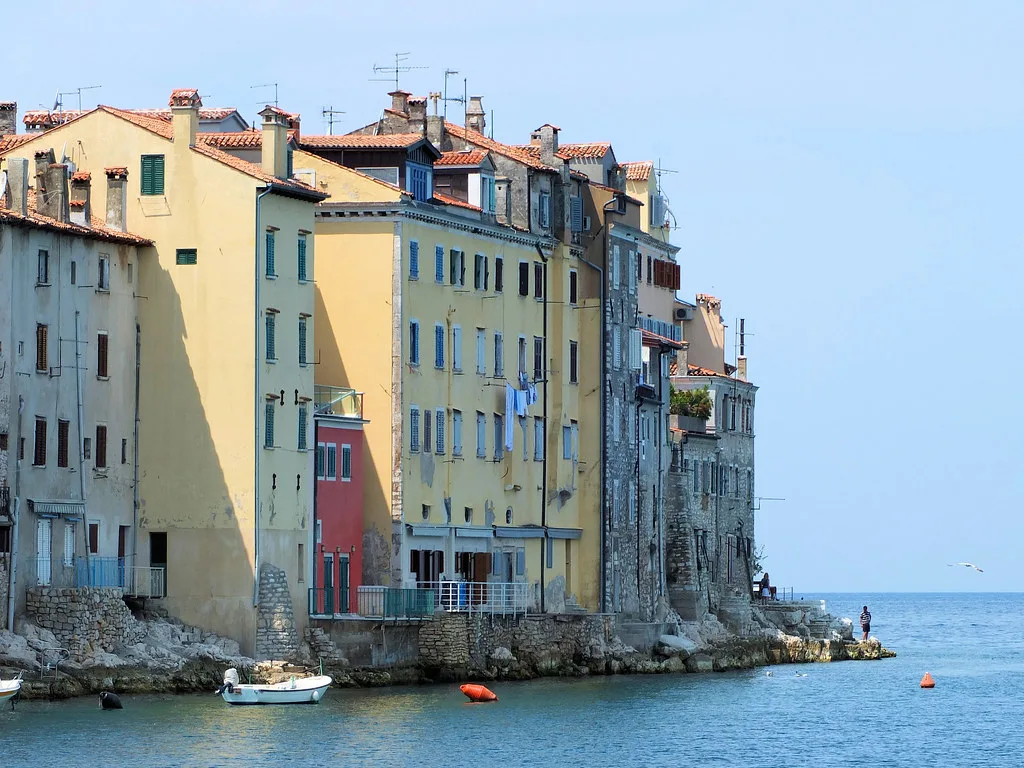
The old town rewards a bit of historical context on a wet day, because the buildings you shelter against are the story. Rovinj grew as an island settlement and took its crowded, tall-house plan from centuries of Venetian rule.
Climb to St Euphemia's church and bell tower
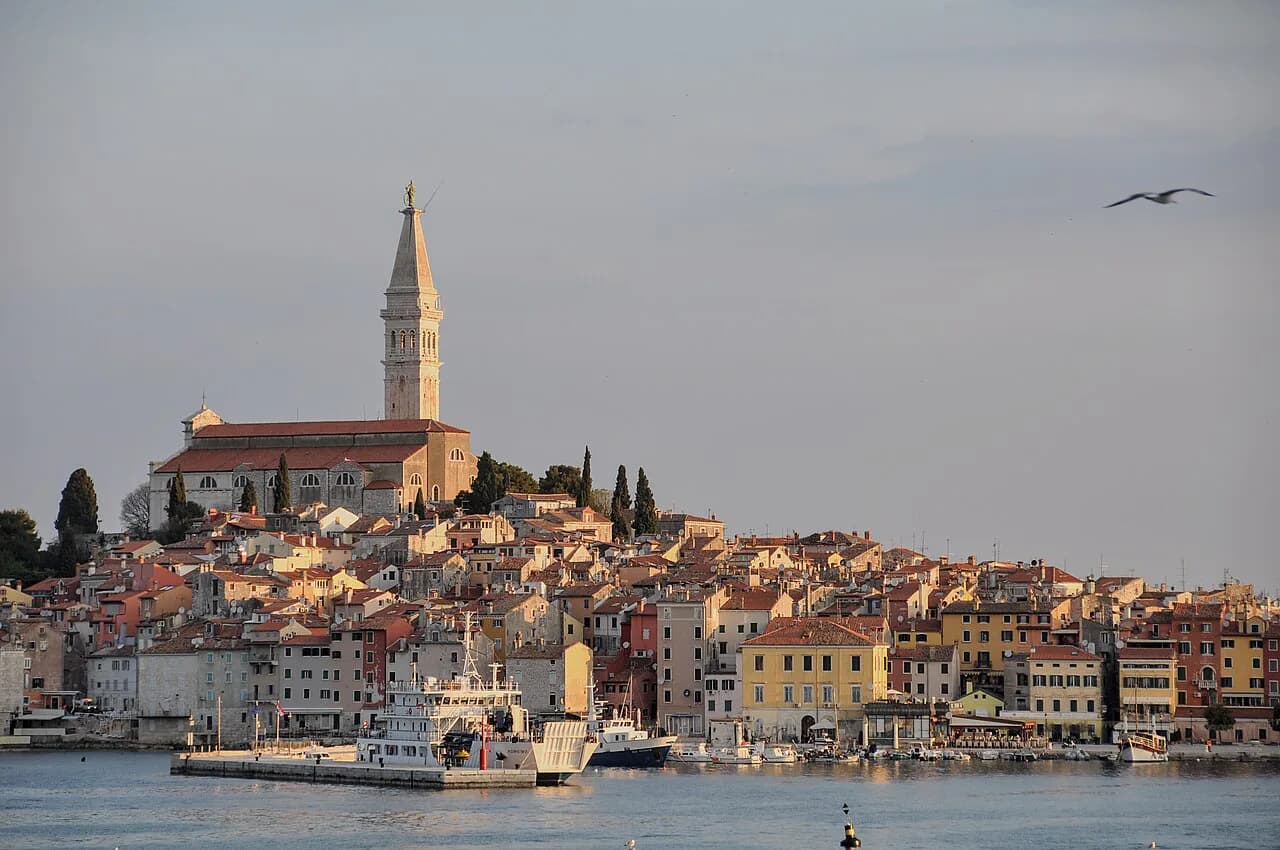
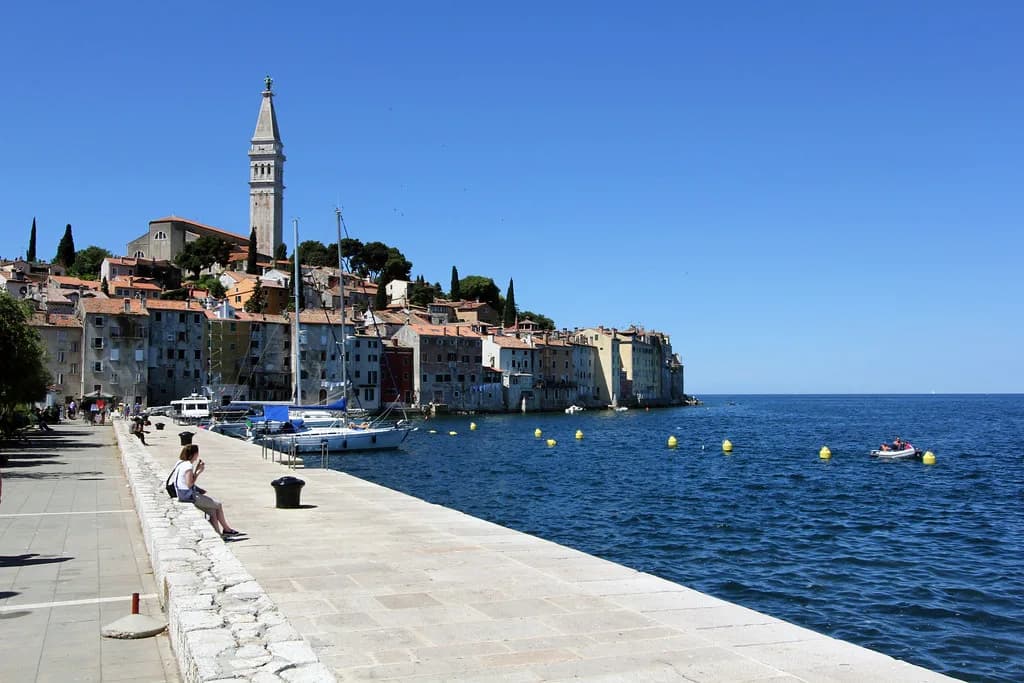
The hilltop Church of St Euphemia is the one stop that works in almost any weather: interior shelter, a landmark to aim for and, if the shower passes, the best view in town from the tower. The climb up through the lanes is short but steep, so build it into the middle of a wet morning and arrive as a shower peaks.
The exterior is the part to treat with care: the tower and terraces are exposed, and the wind up there is stronger than in the lanes, so save them for a break rather than a downpour. If the bura is blowing, accept the church interior and skip the outside climb. The rest of the town's headline sights are set out in the wider guide to things to do in Rovinj, worth skimming while you plan.
Which museums to choose when the rain sets in
The town's museums are the right answer to a set-in wet day, but none is large, so plan two in sequence with a covered coffee stop between them, or pair one museum with the church. Opening days and hours can change by season, so check them on the day you set out, either at the door or through the Rovinj-Rovigno Tourist Board.
Shortlist the collections first, then match the length of a museum to the length of the shower. The Rovinj Heritage Museum is the obvious central pick; with children or only an hour, choose the closest option to where you are sheltering and save the rest for another day.
On a wet day the sensible filter is close, covered and unhurried rather than a big attraction across town. When you are choosing between two options, take the one nearest your shelter and leave the rest for a drier day, and let the full list of Rovinj attractions sort the indoor from the open-air.
Rainy-day walks that still work: Zlatni Rt and the sheltered old town edge
Light rain does not rule out walking if you pick somewhere with cover. Zlatni Rt, the wooded headland south of the centre, is a go-to place for a quiet walk in winter; avoid the exposed shoreline when wind and rain combine, and keep to the wooded paths instead.
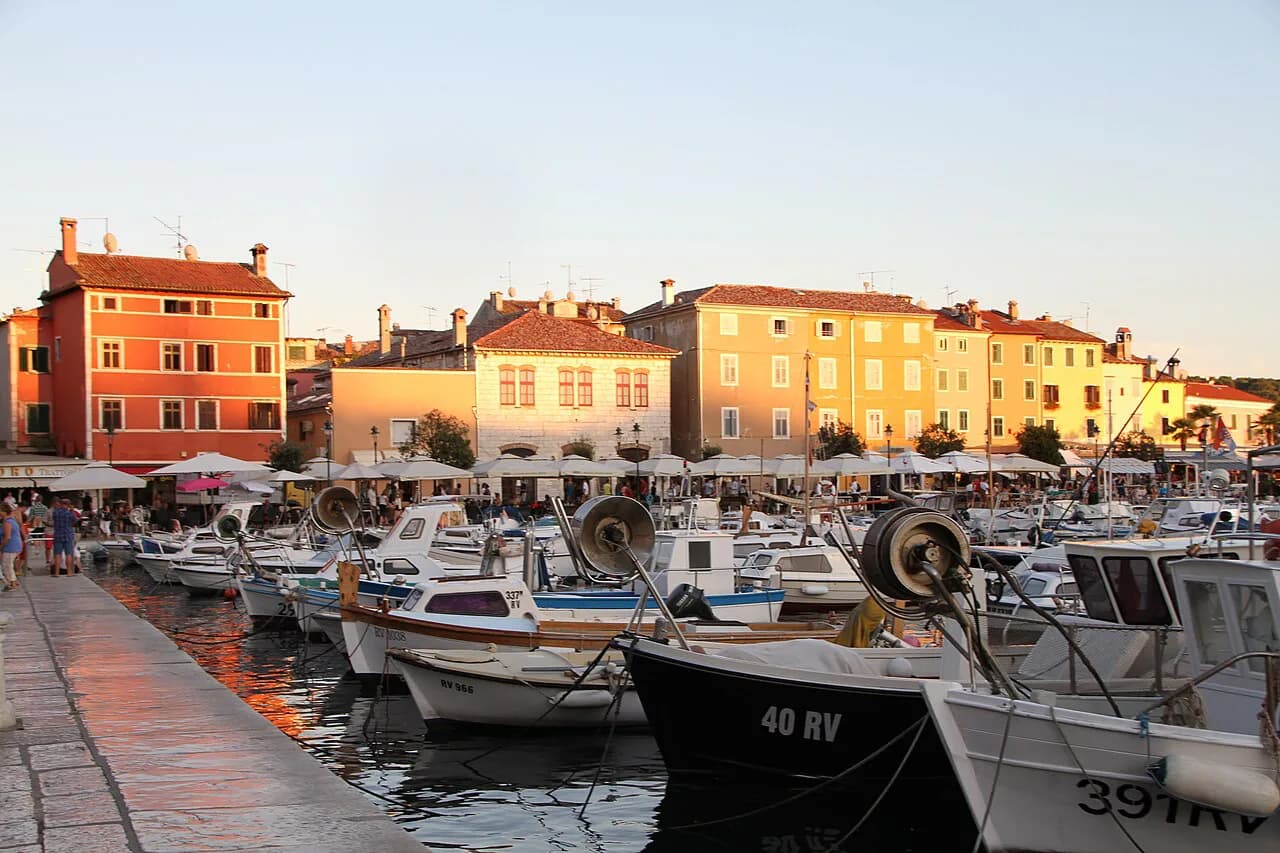
Closer in, the edge of the old town and the waterfront give you a walk with an escape route every fifty metres: walk a stretch, duck into a lane, and repeat. That pattern suits the Riva on a grey day, when the harbour is still worth seeing but you do not want to be pinned against the water in a squall.
If it is the bura rather than rain
The bura removes a different set of options than rain does. It is a dry, cold, gusting wind, so the sky can be clear while the tower, the harbour edge and the park shoreline are unpleasant or unsafe; drop those first and substitute the lanes and a museum, which is exactly what the dense medieval street plan is good for.
Wind also changes how you dress and how long you last outside. A windproof outer layer matters more than an umbrella, which will turn inside out on exposed stretches; if a bura day is your only full day, treat it as an indoor day and bank the outdoor stops for the following morning, when the wind often eases.
How to rearrange a two-day plan when day one is washed out
Do not try to cram both days into one. Give a wet day one museum and the lanes, and keep the walking and viewpoints for day two, so the wet day covers the sights that need no view while the dry day gets the coast and the tower.
If both days look wet, accept a slower trip rather than a failed one. Two half-days of museums, churches and café shelter beat a forced march through rain to tick off a viewpoint you cannot see; keep the evening flexible for a break in the cloud, when the crowds have thinned.
What to do if the rain lasts more than a day
A settled wet spell is the moment to use the car or the bus and change scale. Inland Istria gives you towns and covered sights that do not depend on a sea view, and the road network is good enough for a half-day loop; pick one destination rather than three and leave early enough to be back before the evening.
Closer to the coast, boat trips and the Rovinj archipelago are the first thing to drop in rain or wind, since a rough day at sea leaves no view to salvage and the ride is uncomfortable. Do not book a boat on a marginal forecast day and hope; swap it for an indoor morning and keep the sea for a clear one.
Plan B checklist: what to keep in your bag and what to stay flexible on
Carry a small folding umbrella, a light windproof layer and shoes with grip, because the stone lanes are slippery when wet and the bura makes an umbrella useless. Research one indoor option before you leave the room and charge your phone in the morning, since maps do the heavy lifting on a rearranged day.
Stay flexible on three things: the order of your days, your ticket timing and whether you eat indoors or out. Book nothing that cannot be moved, and confirm current opening days and prices before you set out, particularly outside July and August.
Should you shelter in town or leave Rovinj on a wet day?
Stay in Rovinj unless the rain is clearly set in for the whole day. A passing shower is best spent in the lanes around Grisia, with St Euphemia as your landmark and a museum as escape if it strengthens; only when rain holds for hours does the car or bus to inland Istria make sense, and even then one destination is enough.
The order of decisions is simple: shelter locally first, move to a museum or the church second, and leave town only as a last resort. Keep the tower, the park and any boat trip banked for a clearer day, and a wet day in Rovinj costs you a view, not your trip.
Explore more Rovinj guides
Frequently Asked Questions
Does it rain much in Rovinj?
Rovinj has a Mediterranean climate with hot, sunny summers and a wetter, cooler half of the year. Spring and autumn can bring longer spells, while summer showers tend to be brief. Check a current forecast for your dates rather than relying on averages.
What can I do in Rovinj on a wet day with children?
Keep it short and central: the sheltered old town lanes, the church interior and one museum are enough for a wet morning. Avoid the exposed tower and the waterfront in wind, and keep a covered stop between each outdoor stretch.
Is the church tower open in the rain?
The tower is exposed and the wind up there is stronger than in the lanes, so it is better saved for a break in the weather or a dry day. In strong bura wind, skip the climb and use the church interior instead. Confirm access when you arrive, as arrangements change by season.
Sources
Notes from the Croatian coast
Optional updates when our guides change.
You might also like
Continue reading
More guides you'll find useful