
Church of St Euphemia, Rovinj: What to See and How Long It Takes

The Church of St Euphemia (Crkva sv. Eufemije) is the landmark that gives Rovinj its silhouette, standing on the hilltop at the heart of the old town. Allow about an hour for the church and the surrounding lanes, and add more if you plan to climb the bell tower. This guide covers where the church is, the walking approach, what to see and how to judge the tower climb.
Treat the church visit and the tower climb as two separate decisions. The church itself suits most visitors, while the tower is a shorter, more enclosed effort on top of the hill. Opening times and any admission charges are best confirmed with the parish or the tourist board before you set out.
What the Church of St Euphemia is and why it dominates Rovinj's skyline
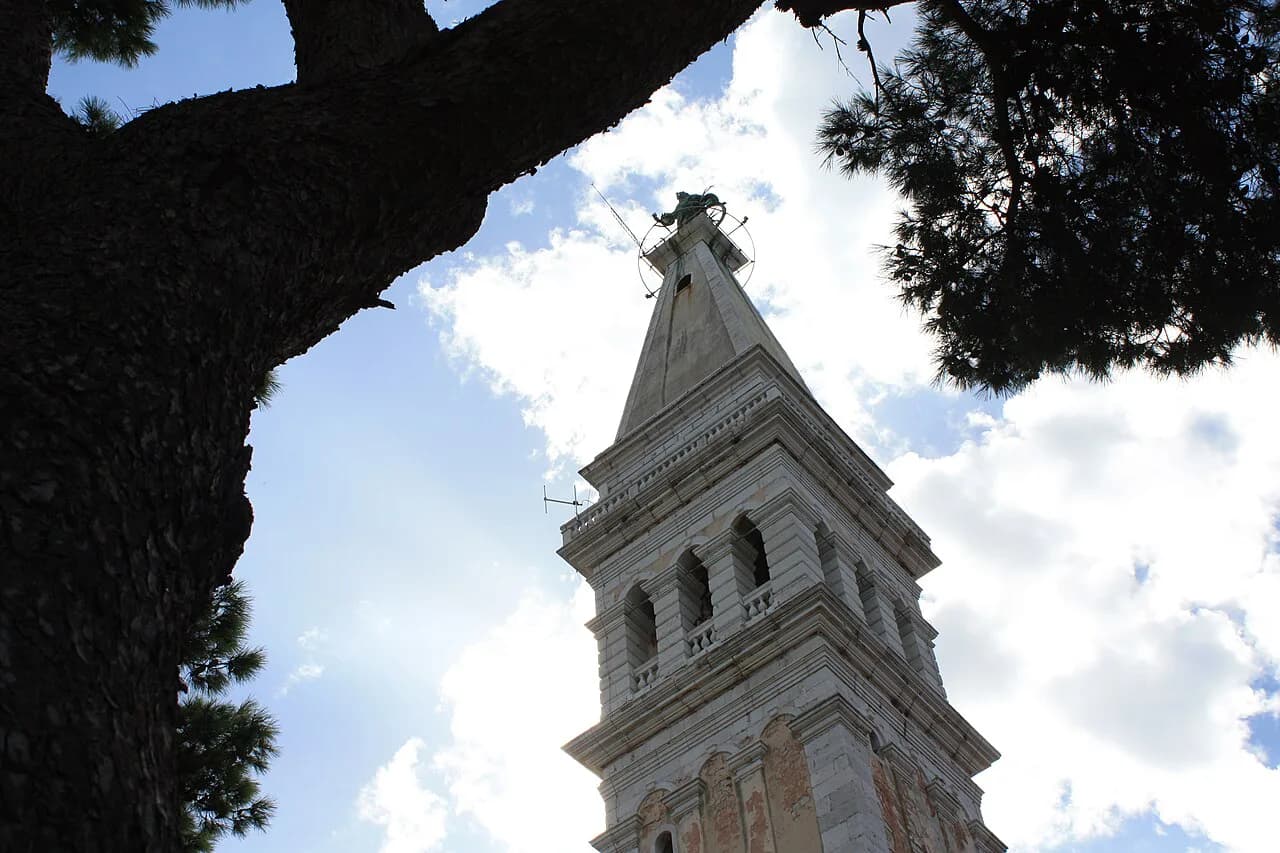
The church is dedicated to St Euphemia, the patron associated with Rovinj, and its tall bell tower rises above the packed roofs of the old town. The tower is topped by a statue of the saint, which is said to turn as a wind vane. That combination of a landmark tower and a weathervane statue is what makes the building easy to orient yourself by from the harbour, and it anchors the wider Rovinj Attractions: 7 Visitor Guides.
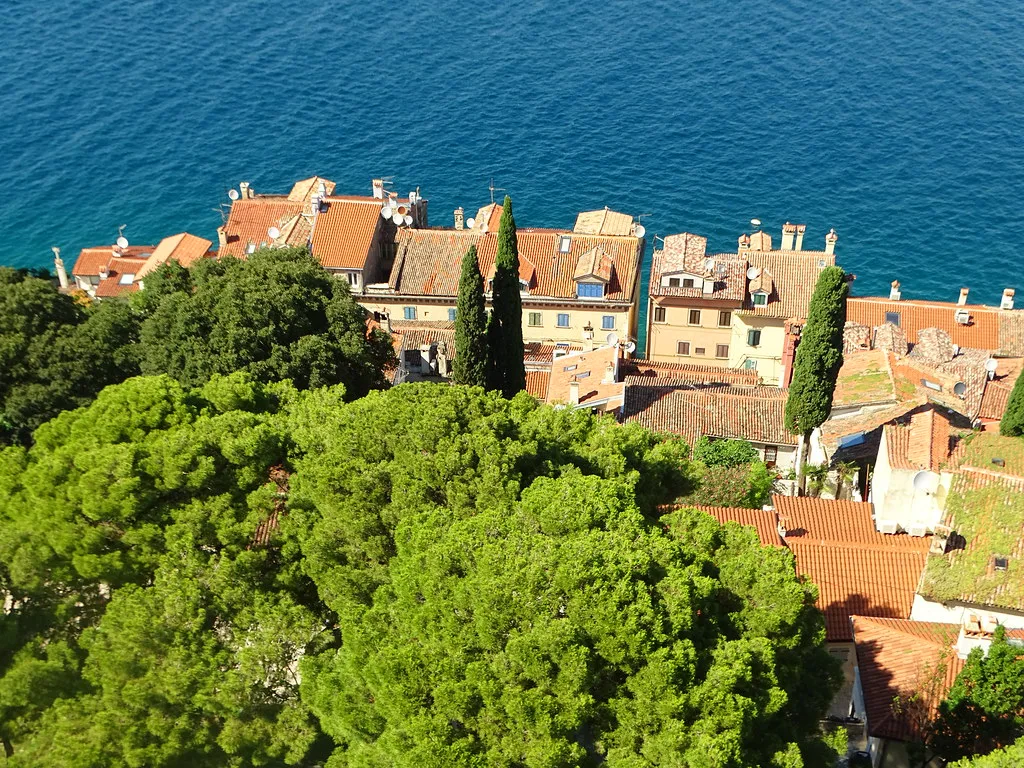
Because the church sits on the highest point of the old town, it is visible from much of the waterfront and from the lanes below. Use it as a compass point when you wander: if you can see the tower, you can work out which way the harbour lies.
Where it is: above the old town on the hilltop
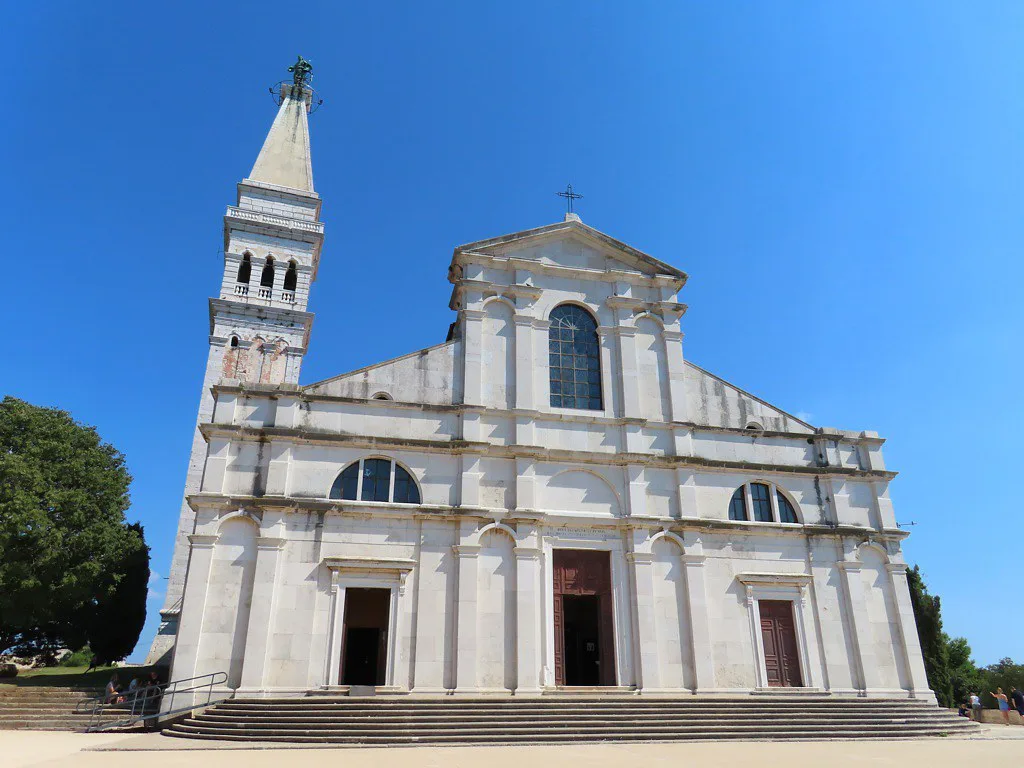
The church stands within the old town centre of Rovinj-Rovigno, on the hill that the historic core is built around. There is no road to the door; you arrive on foot through the lanes, and the final approach is on foot regardless of how you reach the town. If you want the wider picture of the historic core before climbing, read Rovinj Attractions: 7 Visitor Guides first.
Most visitors come up from the harbour side, where the waterfront and the Riva give you a clear view of the tower before you start climbing. From there, the route threads through the old town, past the sort of sights covered in the Rovinj Attractions: 7 Visitor Guides, including the Balbi Arch (Balbijev luk) at the landward entrance to the historic core.
How to get there on foot: the climb from the harbour and Riva
Start from the Riva, the waterfront promenade, and head inland through the old town lanes rather than trying to drive closer. The gradient builds gradually at first, then steepens as you near the church, and the surface is a mix of paving and steps. Wear shoes with grip, because the stone can be slippery when wet.
One of the most pleasant approaches is via Grisia Street, Rovinj, the lane that climbs through the old town and is lined with galleries and studios. It adds a little distance but breaks up the climb with things to look at, and it brings you out near the top without a single punishing flight.
If you are coming from the landward side, the Balbi Arch, Rovinj marks the old entrance to the town, and from there the church is uphill all the way. Budget ten to fifteen minutes for the climb at an easy pace, more if you stop in the lanes.
The bell tower and the statue of St Euphemia on top
The bell tower is the church's defining feature from outside, and the statue of St Euphemia on its summit doubles as a wind vane. Look up before you go in: the figure and the tower's profile are the images most visitors carry away from Rovinj.
The tower was built in the second half of the seventeenth century, to plans attributed to Antonio Manopola, which helps explain its proportions against the later church body. Whether you can go up inside depends on access on the day, so ask at the church itself or at the Tourist Board of Rovinj-Rovigno when planning the climb.
Inside the church: what to look for and how long to allow
Inside, the church is a working place of worship rather than a museum, so keep the visit quiet and modest in dress. Look for the main altar and any side chapels dedicated to the saint, and give yourself twenty to thirty minutes to sit, look and read.
Visitors consistently single out the setting as much as the interior, with the exterior and the views from around the church rated as the strongest part of the experience. Plan your time so that the interior does not crowd out the walk around the outside.
Practical visitor facts: opening times, tickets and where to confirm them
The church is an active parish place of worship, so its opening depends on services and the season. Check current opening hours and any charge for the tower with the Tourist Board of Rovinj-Rovigno before you go, and note whether a service is scheduled at the time you plan to visit.
If attending a service matters to you, treat it as a separate check from the sightseeing visit and confirm the current position with the Tourist Board of Rovinj-Rovigno before you set out, since service times are not published there and change between seasons.
The climb up the bell tower: what it involves and whether it suits you
Climbing the tower is a different proposition from visiting the church, and access is not guaranteed on any given day. Treat the tower as an optional extra that suits confident walkers, and if anyone in your group would rather not attempt it, the view from the ground around the church is still the reason most people come.
Ask at the church whether the tower is open on the day of your visit, and check any charge at the same time. Build the climb into a flexible afternoon rather than a tight schedule, since access can vary with services and weather.
Nearby in the old town: museums and galleries
Once you have come down from the church, the old town's museums are close at hand. The Batana House Eco Museum, dedicated to the traditional Rovinj boat, is in the historic core, and the Rovinj heritage museum collection in Califfi Palace is another option if you want more context on the town's past.
The tourist board lists Batana Center of Visual Arts, the Rovinj Aquarium and the House of Rovinj's Pelinkovac among the town's smaller attractions, and the galleries along Grisia street Rovinj are on the way down. Pick one or two rather than trying to see them all, especially if you have already spent time on the hill.
For a change of pace after the lanes, Carera Street, Rovinj leads you back down towards the town's everyday side, and Punta Corrente (Zlatni Rt) Rovinj gives you a wooded park south of the centre if you want to walk off the climb.
When to go: crowds, cruise-ship days and the bura wind
The church sits at the top of the most-walked route in Rovinj, so midday in high summer is the busiest time on the lanes and around the building. Early morning and late afternoon are calmer, and the low light on the tower is better for photographs at those hours.
Cruise-ship days push more people through the old town at once, so it pays to check the town's events ahead of a visit and plan the hill for a quieter slot. The hilltop is also exposed: when the bura wind blows, the top of the town is where you feel it, so keep a layer handy even on a warm day.
Is the Climb Worth It?
Yes, for most visitors: the Church of St Euphemia is the one sight in Rovinj that explains the whole town's shape, and the walk up through the lanes is part of the experience. Allow an hour for the church and its surroundings, and decide on the tower only once you have seen the access on the day.
Start from the Riva in the morning or late afternoon to avoid the worst of the midday crowd, and combine the visit with one museum or gallery nearby rather than a full circuit of the old town.
Frequently Asked Questions
What is the Church of St Euphemia in Rovinj known for?
It is Rovinj's hilltop parish church, dedicated to the town's patron saint, and its bell tower with the statue of St Euphemia on top is the defining feature of the old town skyline. The statue is said to act as a wind vane.
How long does it take to visit the Church of St Euphemia?
Allow about an hour for the church and the lanes around it, including the climb from the harbour side. Add extra time if you go up the bell tower, since access there depends on the day.
Can you climb the bell tower of St Euphemia in Rovinj?
The tower is the church's landmark, but access depends on the parish and the season. Ask at the church when you arrive, or check with the Tourist Board of Rovinj-Rovigno.