
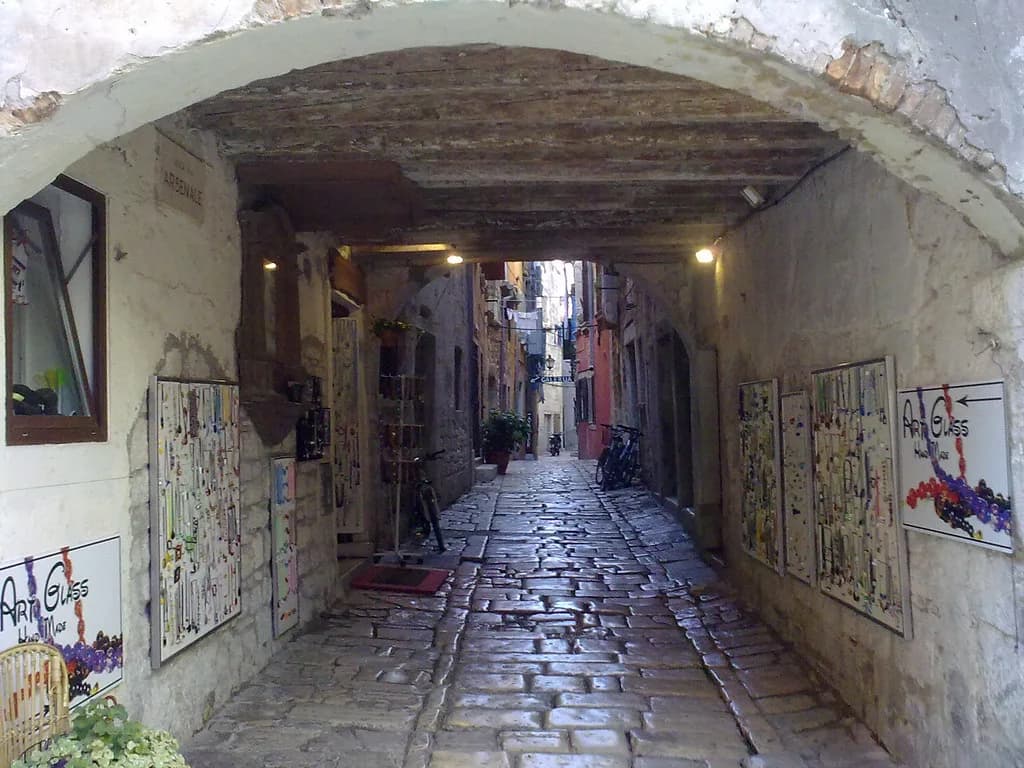
Grisia Street, Rovinj: Rovinj's Artist Lane Below St Euphemia
Grisia Street is worth 30 to 45 minutes of your time in Rovinj, and rather more if you stop to browse the galleries or climb the bell tower above it. The lane runs from Matteotti Square at the bottom to the area around St Euphemia's Church at the top, climbing steadily through the oldest part of the old town. This guide covers the shape of the street, where the artists' displays sit, what the view rewards you with and how to time the walk.
Treat it as one place rather than a route to tick off: Grisia is the spine of the old town, and most of the lanes below the church meet it or run parallel to it. Local guides describe the lane as the artistic heart of town, with open-air galleries turning it into a ribbon of colour in summer. It is pedestrian and cobbled, so the practical question is footwear and timing rather than transport.
What Grisia Street is and where it sits in Rovinj's old town
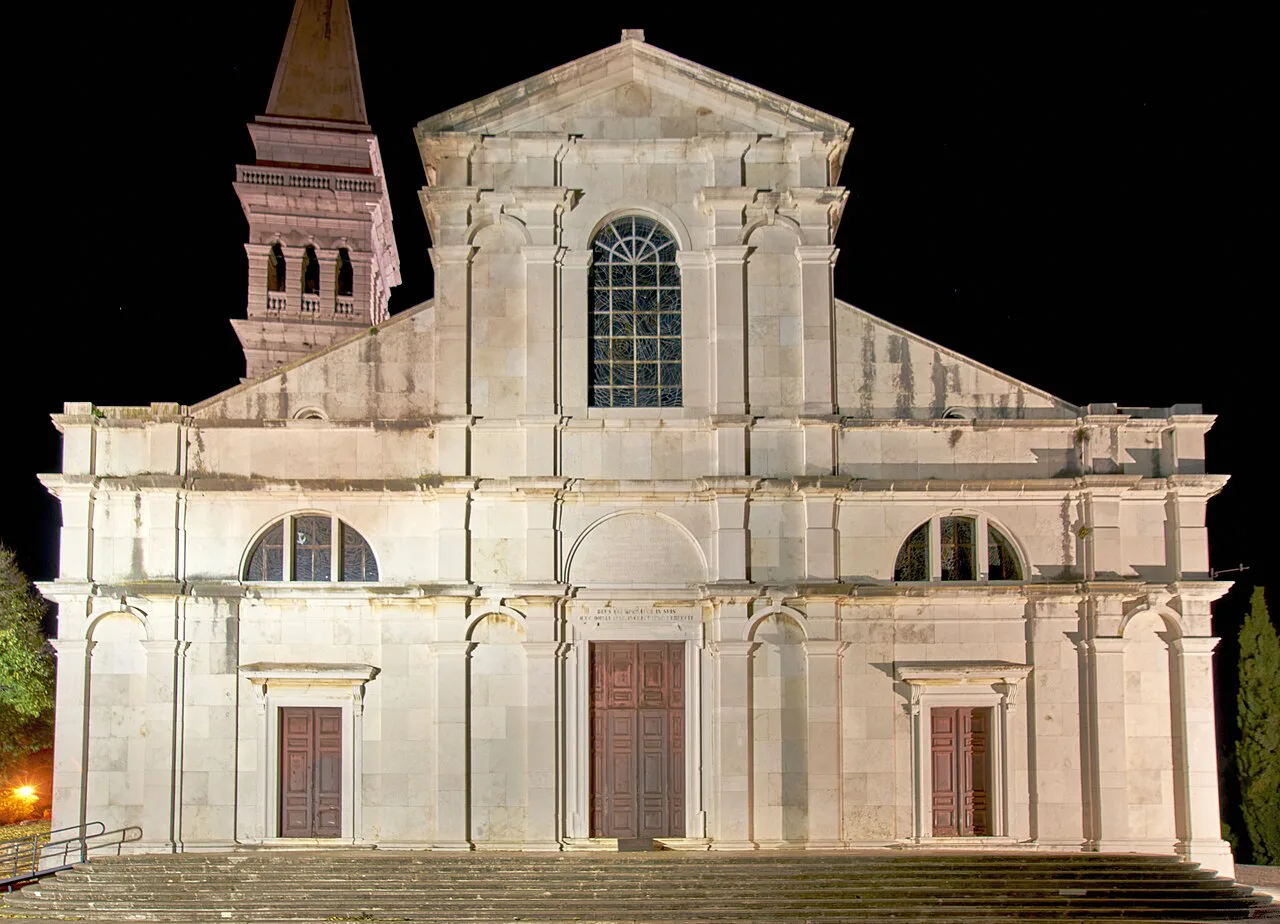
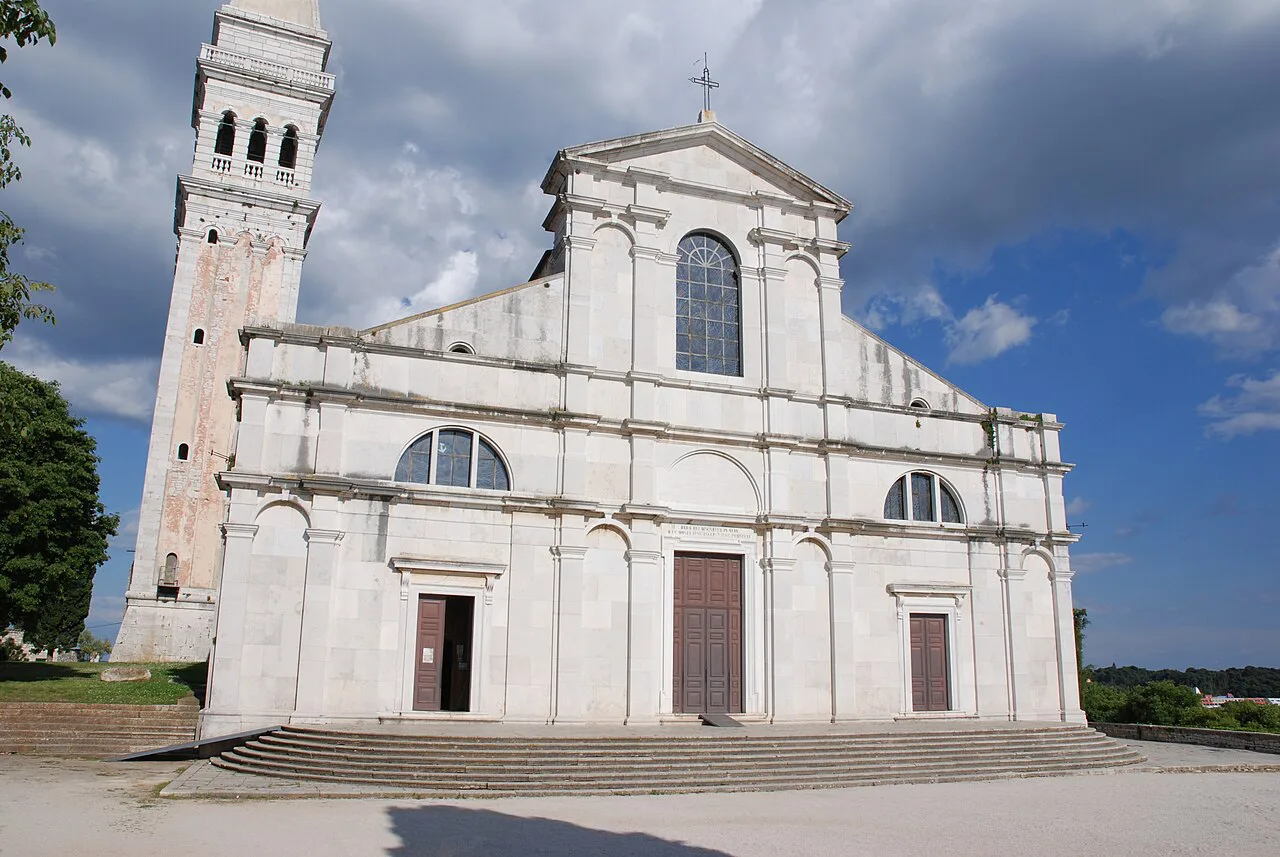
Ulica Grisia is the main historic lane of Rovinj's old town, a narrow cobbled climb lined with galleries, studios and open-air artist displays. It begins at Matteotti Square near the harbour side of the peninsula and rises towards the Church of St Euphemia, Rovinj, which sits on the highest point of the old town. Away from the exhibition day it works as an ordinary street of small galleries, and the broader Church of St Euphemia, Rovinj guide covers the building in more detail.
That position explains its character. Rovinj's old town is a compact knot of Venetian-era buildings on a former island, and Grisia is the most direct route from the square up to the church, so you pass the greatest density of historic facades in the shortest distance. The architecture along the way runs to Venetian Gothic and baroque frontages with painted shutters, which is part of why the lane photographs so well.

How to reach it: from Matteotti Square on foot into the old town
You reach Grisia on foot, and only on foot. From the waterfront near the harbour, Matteotti Square marks the modern edge of the old town and the foot of the lane; the walk from the square into the lower streets takes a couple of minutes. Buses stop close to the centre, and the old town's lanes are closed to normal traffic in practice because of their width and steps. The Rovinj Attractions: 7 Visitor Guides page sets this walk alongside the rest of the old town.
If you are coming from elsewhere in Istria, Rovinj is the base and the square is the landmark to aim for. The Balbi Arch (Balbijev luk), the old-town gate with the Venetian lion and a carved head, is nearby and makes a useful meeting point before you start up. Allow for the fact that you will be walking on stone, not pavement, for the whole ascent.
Walking the lane: the climb from the square to St Euphemia's Church
The climb is short in distance but continuous in gradient, with a mix of sloping cobbles and shallow steps as the lane rises towards the church. It is not a long hike: most visitors cover the street itself in 10 to 15 minutes without stopping. The effort comes from the surface and the heat rather than the height gained.
Take it in stages rather than pushing straight to the top. The lower stretch near Matteotti Square is the busiest and flattest; the middle section is where the galleries cluster; the final approach opens onto the church square with its view over the rooftops and the Adriatic. Reading the street this way also helps you decide where to spend your browsing time.

Art galleries and open-air artist displays along Grisia
Grisia is known for its galleries and for artists showing work along the lane. Small studios and open-air displays sit in the streets around the lower and middle sections, with work ranging from paintings and prints to craft pieces. Browsing is free; buying is optional, and there is no obligation to enter any gallery.
For the town's maritime and fishing heritage in a museum setting, the Batana House is within the old town and pairs naturally with a walk down from the church. It is a different kind of stop from the galleries, but it rounds out the picture of the town the street belongs to.
The view and the bell tower at the top of the street
The top of Grisia delivers you to the Church of St Euphemia, whose bell tower is modelled on St Mark's in Venice and dominates the skyline above the old town. From the church square you get the classic view back over the rooftops and the sea, which is the reward for the climb. The tower is the tallest point and the obvious final stop of the walk.
If you want to go inside the church or up the tower, check the current hours and any climbing fee at the church before you rely on them, since these change by season. Budget your time around the view even if you skip the tower. The square itself needs no ticket.
How long to allow, and the best time of day for fewer crowds
Give Grisia 30 to 45 minutes if you want the walk, a look at the galleries and the church square; add more if you climb the tower or stop to buy art. It works well as a morning walk before the day's heat builds, and as an evening stroll when the light falls across the rooftops.
Crowds are the main variable. Rovinj's old town is narrow, and when large numbers arrive the lane becomes slow going; early morning and late afternoon are the calmer windows. Summer heat on the cobbles is the other factor, so carry water for the climb.
The one day a year Grisia becomes an open-air exhibition: the Grisia event
For one day each year the street becomes an open-air exhibition, with artists displaying along Grisia from Matteotti Square up to the area around St Euphemia's Church. In 2025 that event fell on Sunday 24 August, with the exhibition open from 10:00 to 19:00, an official opening at 10:00 and the announcement of award-winning works at 19:00. A youth and new media exhibition ran at St Thomas Church, children's workshops took place in the park next to St Euphemia's, and the Gandusio Theatre hosted film screenings. Each year's programme is different, so treat those timings as a picture of how the 2025 day was structured rather than a schedule for any future year, and check the town's events calendar for the next edition.
Nearby sights to pair with the street: St Euphemia's Church and the old-town lanes
Pair Grisia with the lanes that run off it rather than treating the street in isolation. The old town's other main shopping and walking street, Carera, sits on the flatter, more modern side and connects well with a loop back to the harbour. The Balbi Arch makes a natural start or finish point at the old-town edge.
If you want a longer stretch of walking after the church, the Punta Corrente forest park lies beyond the town on the peninsula and offers shaded paths by the sea. It is a change of pace from the stone lanes and makes a sensible afternoon counterpart to a morning on Grisia.
Practical notes: cobbles, steps and summer heat
Wear shoes with grip. The lane is cobbled and stepped, and polished stone becomes slippery when wet or after a market morning. Sandals with smooth soles are the wrong choice for a street that climbs.
Time the walk around the heat and keep your load light. In high summer the stone holds warmth and there is little shade in the middle stretch, so a morning start is easier than midday. Carry a bottle rather than counting on fountains along the route.
Is Grisia worth the climb?
Yes, provided you go for what it is: a short, steep, historic lane of galleries leading to the best view in Rovinj's old town. It is not a long walk and it costs nothing to wander, so the morning or evening version fits easily around the rest of your day.
If you are planning the wider visit, our Rovinj Attractions: 7 Visitor Guides cover the church, the old-town gates, the museums and the peninsula park so you can order the day sensibly. Build Grisia into that plan rather than making a separate trip for it.