
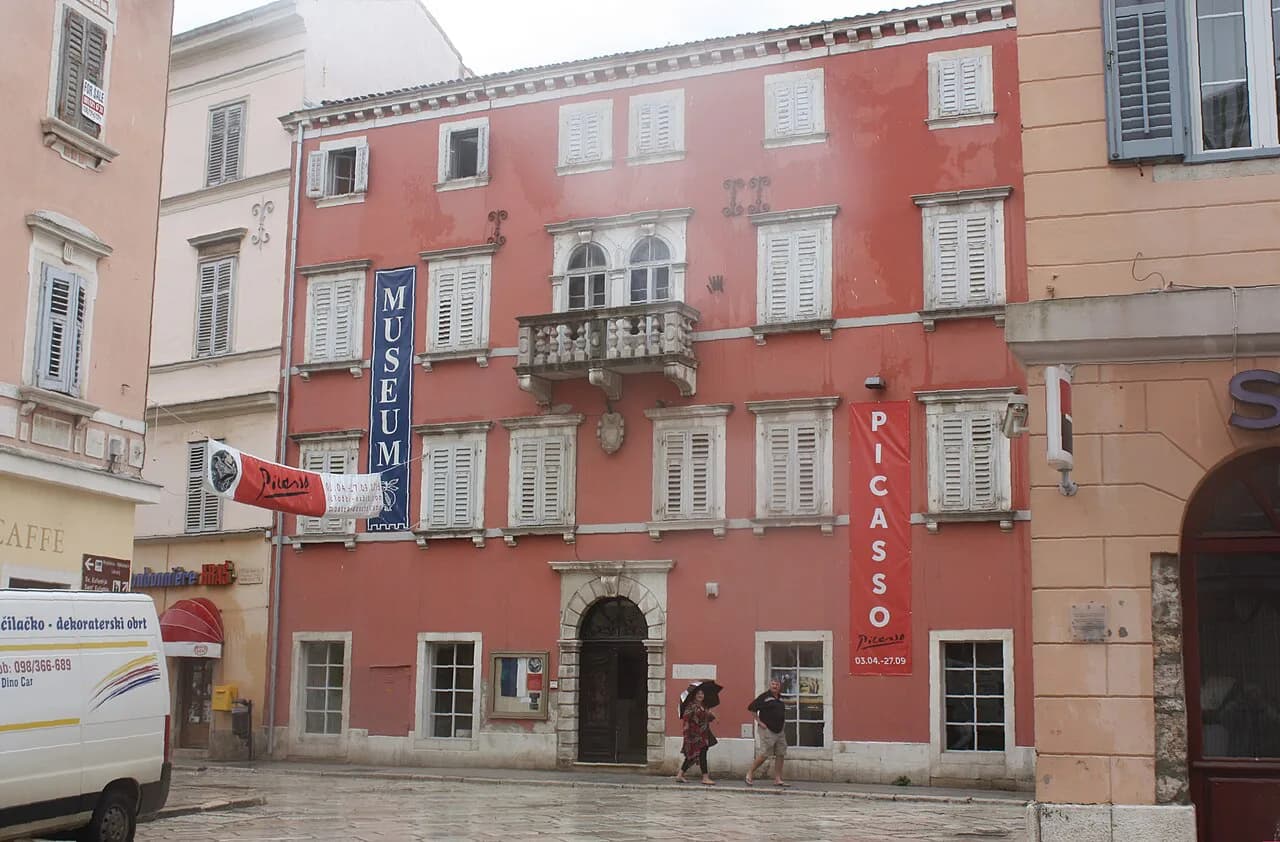
Rovinj Heritage Museum: a Visitor's Guide to the Califfi Palace

The Rovinj Heritage Museum is a four-floor circuit through local history, art and maritime life, housed in the Baroque Califfi Palace in the middle of the old town. Allow roughly an hour to ninety minutes if you read the labels, less if you are here for the paintings alone. This guide covers what sits on each floor, how to reach the palace on foot and which small museums nearby are worth pairing with it.
What the Rovinj Heritage Museum is and where it sits
The museum occupies a noble palace in the old town, a short walk uphill from the harbour front, and has been collecting since 1954. Because it sits inside the pedestrian tangle rather than on a suburban campus, it works best as part of a morning wandering the lanes rather than a separate outing.
The tourist board lists it among the town's principal museums, alongside the Batana House Eco Museum, the Center of Visual Arts and the Rovinj Aquarium. Rovinj's museums are small and close together, so pick two rather than trying to see them all, and give the Heritage Museum the longer slot.
The Califfi Palace: the building that houses the collection
The palace belonged to the Califfi family and carries the heavy Baroque detailing you see on Rovinj's grander townhouses: stone door frames, a central staircase and rooms built for display. Look up at the ceilings and doorways on the way between floors; the architecture is the reason this feels like a civic museum rather than a white-cube gallery.
Because the collection is spread over four levels, the building shapes how you move through it. Stairs connect the floors, so ask at the desk about lift access before buying a ticket if stairs are a problem, and expect stepped, cobbled lanes on the approach.

What is inside: fine art, maritime and ethnographic collections
The permanent displays divide into three strands: fine art and sculpture, a maritime collection covering fishing, boats and the sea, and ethnographic material on domestic life and craft. Together they read as a portrait of a community rather than a single-artist retrospective.
If your time is short, decide before you climb the stairs. Art-led visitors should head for the painting galleries and treat the rest as a bonus, while anyone travelling with children or interested in the town's working past will get more from the maritime and ethnographic rooms.
Rovinj's Roman and Venetian past in the permanent displays
Documents and objects trace Rovinj from its Roman roots through the Venetian centuries to its life as a fishing town. Read the Venetian material before you climb the Church of St Euphemia tower and the campanile view over the harbour makes more sense.
The Roman and pre-Venetian material is the driest for casual visitors, but it rewards a slow ten minutes. The objects themselves carry much of the story, so give the display cases a little patience before moving on to the paintings.
19th and 20th-century Croatian painters in the collection
Works by 19th and 20th-century Croatian painters hang across the upper floors, mixing portraits, landscapes and figure studies. Seeing them in palace rooms rather than a national gallery is the pleasure here: the scale is intimate and you can get close to the canvases.
Come with modest expectations of star names. This is a regional collection, not a survey of European painting, and its value lies in local context rather than blockbuster loans.
Temporary exhibitions and how they change what you see
The museum also stages temporary exhibitions, so the exact mix of rooms open on your visit will vary. On a short trip, ask at the desk which galleries are open when you arrive and plan your route around them.
A changing exhibition can justify a return visit in a different year, since the permanent floors alone take well under two hours. Save the museum for a cloudy morning and keep the sunny hours for the waterfront.
How long to allow for four floors
Budget about 60 to 90 minutes for a full pass through all four floors, including the stairs and a stop at the paintings. A highlights-only circuit takes nearer 40 minutes; a careful read of the maritime and ethnographic rooms can push past two hours.
Time your visit for the middle of the day, when the old town lanes are busiest and the museum offers shade and quiet. Mornings are better spent outdoors on Grisia Street, the stepped lane of galleries and studios climbing towards the church.
Getting there on foot from the old town and the harbour
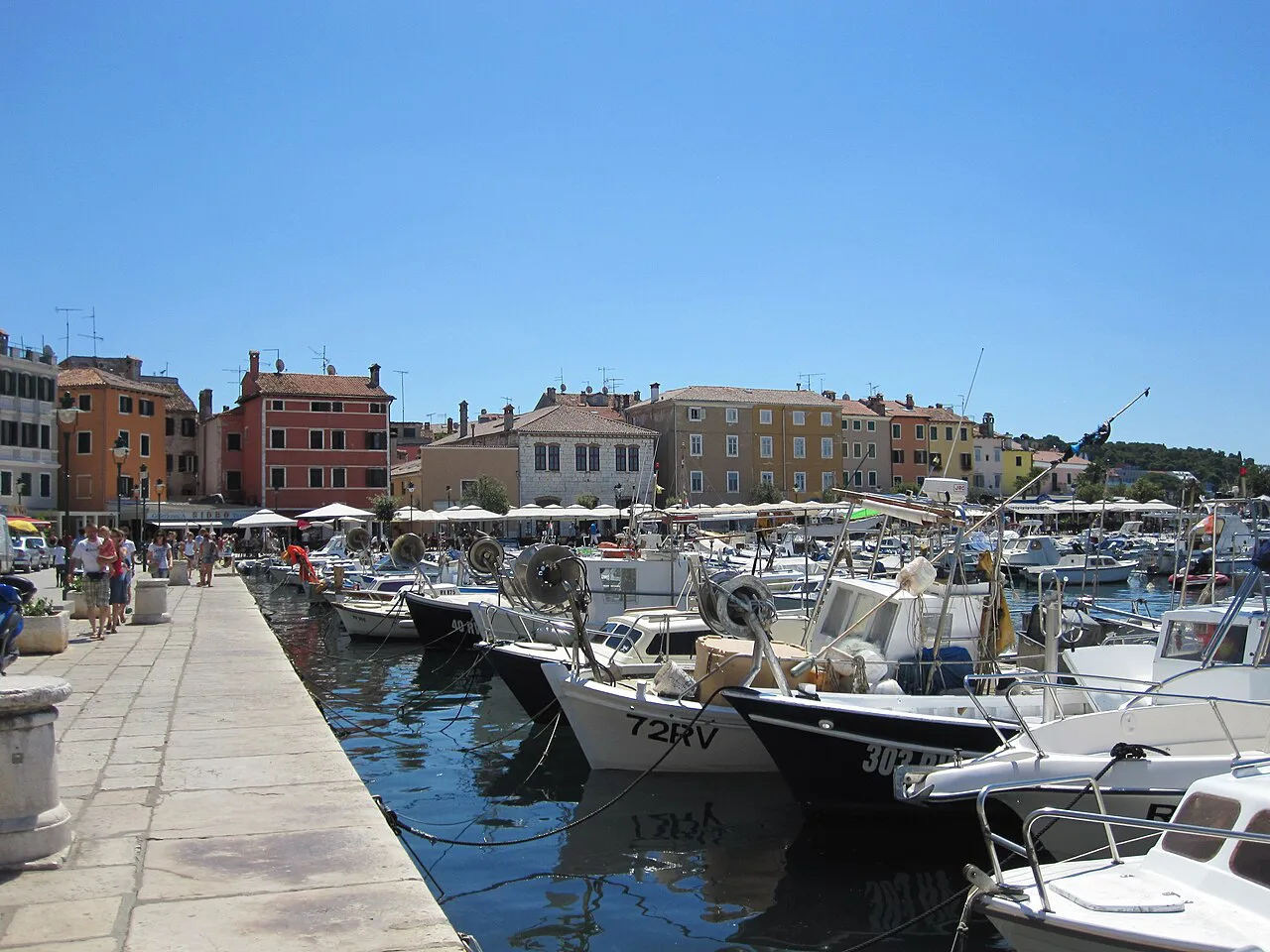
Everything in central Rovinj is walkable. From the harbour you pass through the Balbi Arch, the old town gate, and climb into the lanes; the museum is a few minutes further on within the same pedestrian core. Cars stay outside the old town, so plan on arriving on foot from wherever you park or stay.
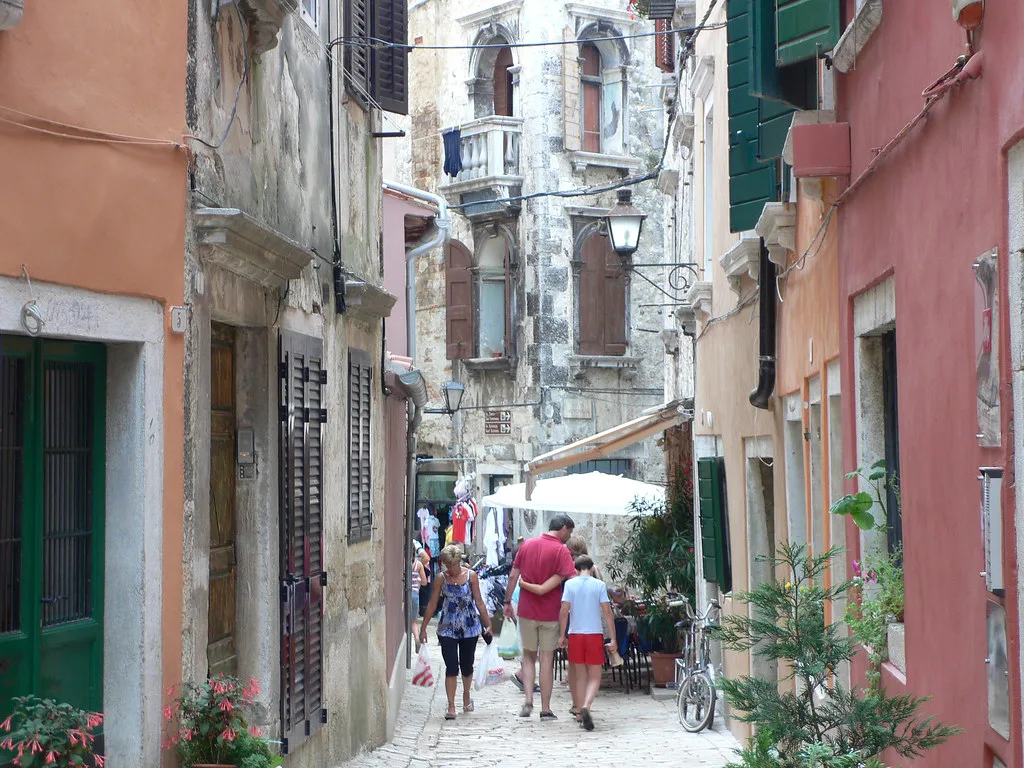
Wear shoes with grip. The lanes are polished stone and steep in places, and they stay slick after rain. Approaching from the Carera Street side is gentler than climbing the seaward steps, which makes it the better route for anyone with knees that complain on cobbles.
Tickets, opening hours and closures: where to confirm them
The museum's own site, muzej-rovinj.com, is the place to confirm ticket prices, opening hours and any seasonal closures before you go, because these change through the year. The tourist board's museum pages give a reliable overview of what is currently open in Rovinj.
Some online ticket platforms list the museum alongside walking tours and other experiences, but those packages are priced as group tours (GetYourGuide quotes a cultural walking tour for up to four people from about £232) rather than single admission. Buy at the door unless you specifically want a guided format.
Nearby: Batana House Eco Museum and the City Museum
Two other small museums sit within a few minutes' walk and make natural companions. The Batana House Eco Museum tells the story of the flat-bottomed batana boat and the fishing culture that shaped Rovinj, while the Rovinj-Rovigno City Museum is listed by the tourist board as the town's other history museum. Doing the Heritage Museum and one of these is a sensible half-day.
If you would rather stay outdoors, the Punta Corrente (Zlatni Rt) forest park south of town offers shaded paths a 20-minute walk from the centre, and it balances a museum morning nicely.
Is the Heritage Museum worth an hour of your Rovinj trip?
Yes, if you want context for the town rather than another hour on the waterfront. The Califfi Palace setting, the Croatian paintings and the maritime rooms give you a compact portrait of Rovinj in under two hours. Skip it if you are in town for a single afternoon and would rather spend the time on the church and the harbour.
Pair it with the Batana House if fishing history interests you, or with the church and the lanes if you are here for the look of the old town. Go early in the day or in the early afternoon lull, and confirm the day's opening hours and ticket price at the museum door or on its own site before setting out.
Frequently Asked Questions
Is the museum suitable for children?
The maritime and ethnographic rooms, with boats, fishing gear and domestic objects, hold children's attention better than the painting galleries. The stairs between four floors are the main challenge, so plan a shorter visit with younger children.
Can I buy tickets at the door?
Door admission is the simplest option, and group tour packages sold online are priced as tours rather than single entry. Check current admission at the museum door or on its own site.