Rovinj History: What to See and How the Old Town Came to Be
Rovinj began as an island and was joined to the mainland in 1763. Trace its Roman, Venetian and later history through the Old Town sights you can still see.
On this page
Rovinj is best understood as an island that stopped being one: the channel between the old island and the mainland was filled in 1763, and that single decision explains the town's dense, hilly centre. What follows is a short history of Rovinj told through the buildings and streets a visitor can still walk through, from the Roman-era settlement to the Venetian Baroque church on the summit. It covers the Old Town's 1963 monument designation, the fishing traditions that survive as living craft, and the archaeology scattered around the town.
Rovinj history in one answer: an island town joined to the mainland in 1763
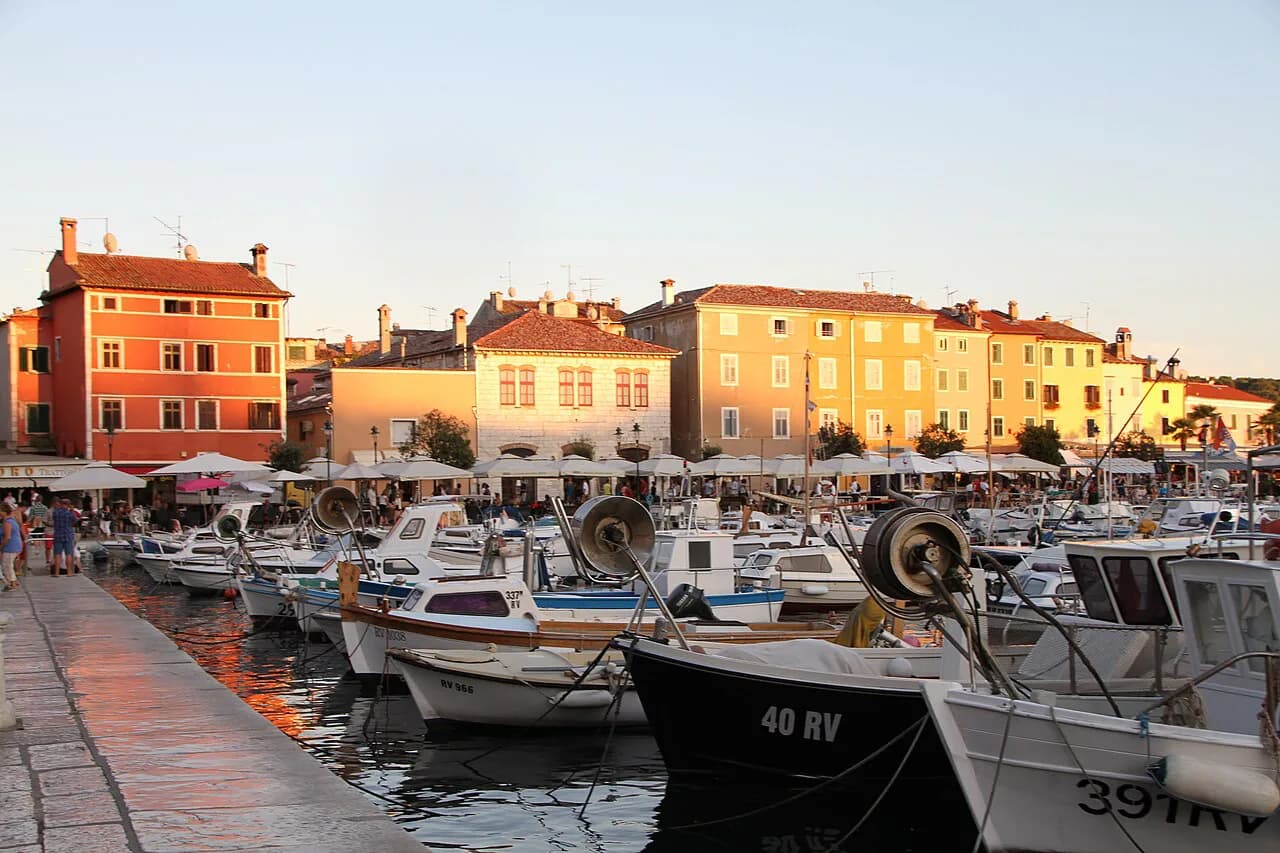
The town began life as a romantic island before being joined to the coast, and the decision to fill in the channel between island and mainland was taken in 1763. Until then, the settlement sat offshore, shielded by water on the seaward side and by strong defensive walls on the mainland approach. When the channel disappeared, Rovinj acquired the layout visitors meet today: houses packed tightly together, narrow lanes, small squares and a hill that has to be climbed.
That history is the reason the centre feels untouched by modern urbanism. The thoroughfares are too narrow for cars and too steep for anything but walking, so the town plan effectively preserves its medieval and Venetian shape. The main things to do in Rovinj cluster inside that small footprint, so work uphill from the harbour rather than trying to cover ground.
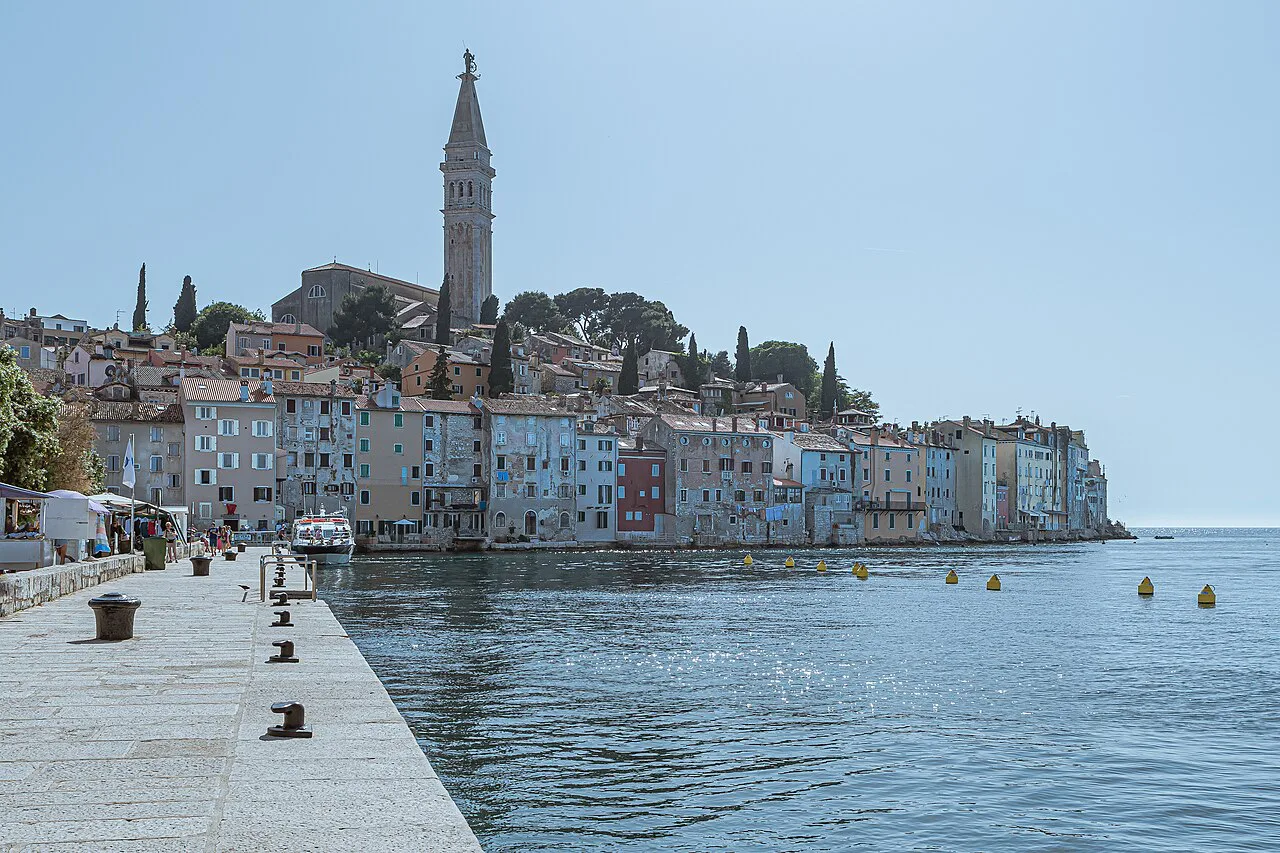
The Old Town as a visible record: cliffs, walls and chimneys
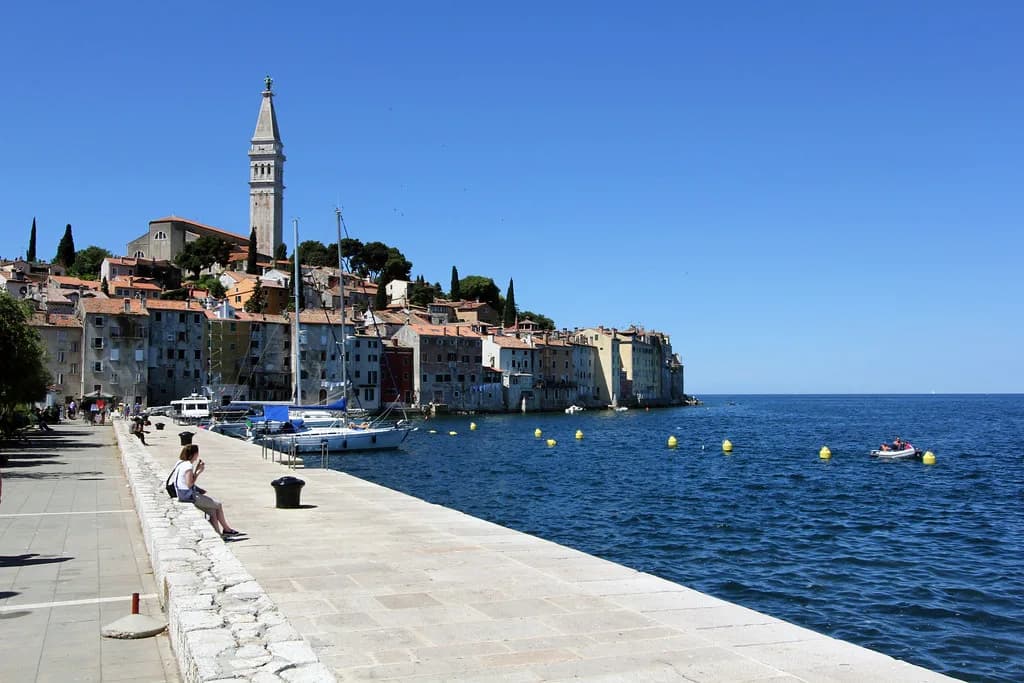
On the seaward side, houses built on the cliffs form the town's outer wall, while on the landward side strong defensive walls once did the same job. Chimneys are another characteristic feature of the Old Town, which was declared a monument of culture in 1963, and the dense housing and rooflines have been preserved to this day. Look up as you climb: the chimneys and the way the houses hug each other are as much the monument as any single church.
The practical consequence is that the old town rewards slow walking rather than a checklist. A loop from the harbour up through the lanes and back down takes in the walls, the cliffside houses and the squares without any special effort.
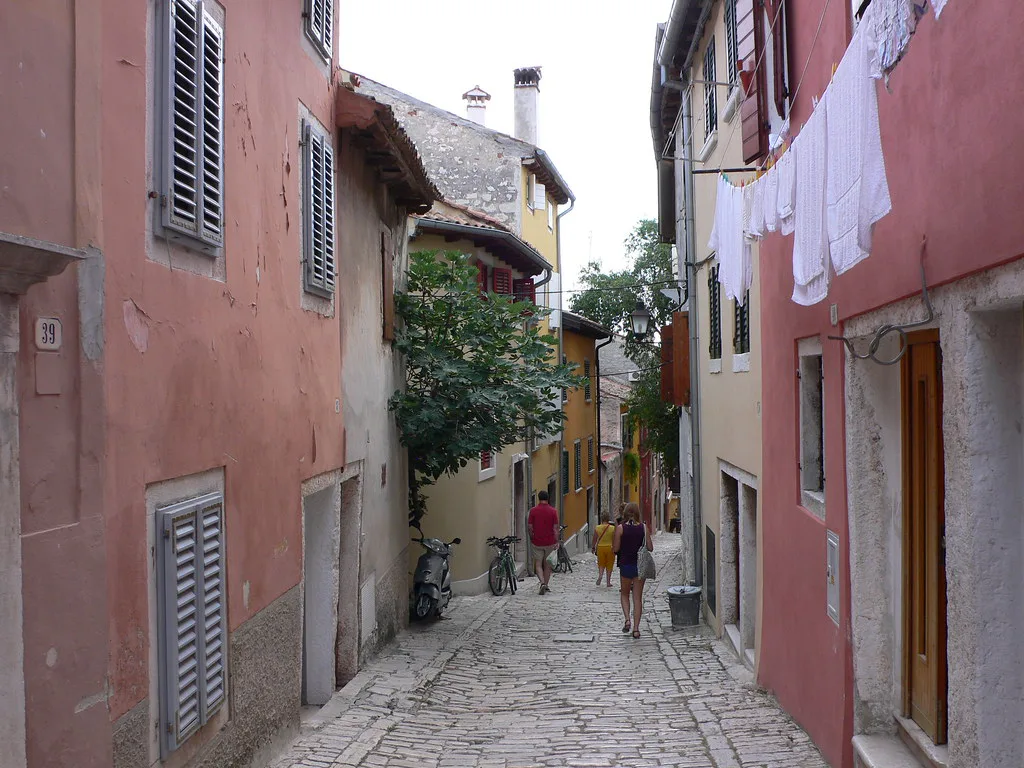
Roman and early roots: the island of Mons Albanus
Rovinj was originally the isle of Mons Albanus, and the first archaeological traces of civilisation there date back to the Bronze Age. The Old Town began to develop as far back as the 3rd century AD, when the island sat within the Roman world.
The town's written history has a longer shadow still: Rovinj already existed in the 2nd century, when it was captured by the Romans. For a visitor, this deep layer is mostly invisible in the modern streets, but it explains why the settlement clings to a defensible offshore rock in the first place.
The Church of St Euphemia: the legend and the landmark on the hill
Picturesque streets lead to the top of a small hill, where the largest and most significant monument in town stands: the Church of St Euphemia. The Venetian-style Baroque building is dedicated to the saint and martyr whose sarcophagus, according to legend, was miraculously washed ashore somewhere around AD 800. That story gives the town its patron and its skyline in one go.
The church is the natural end point of any walk through the centre, and the climb is the price of the view. Allow for the gradient, especially in the middle of a summer day, and start early if you want the lanes to yourself.
Balbi Arch and the gate into the Old Town
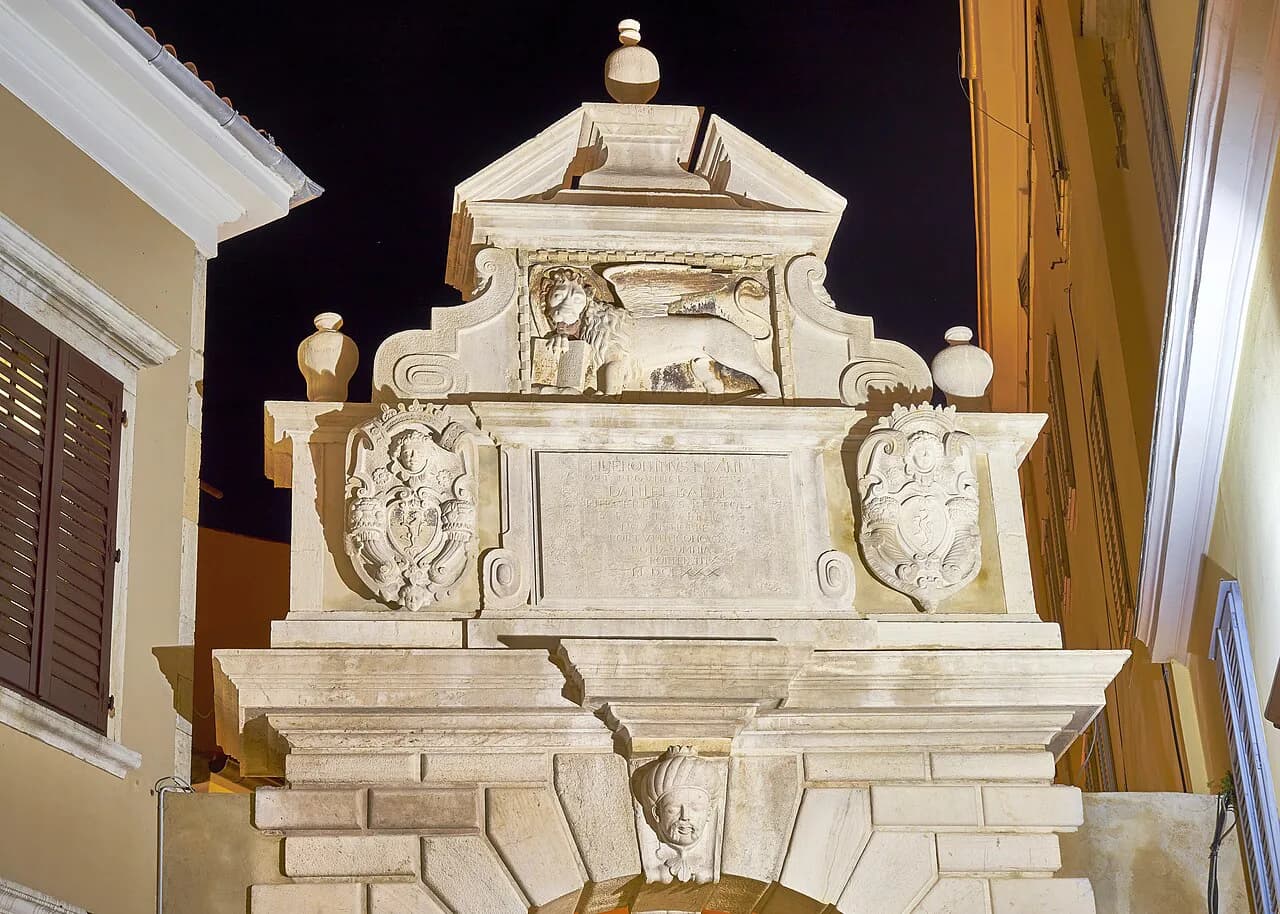
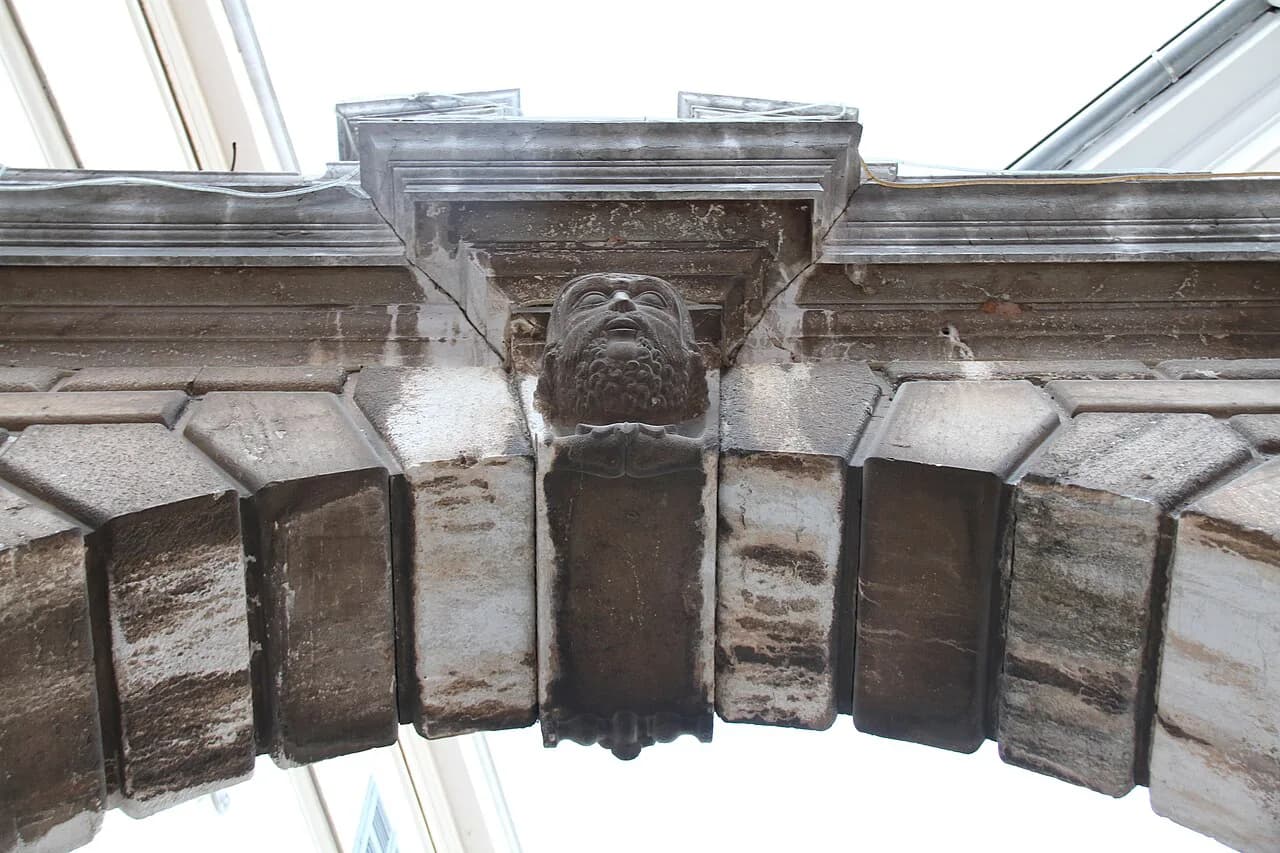
Step through the Balbi Arch and you enter the Old Town proper, leaving the modern waterfront behind. The arch marks the threshold between the mainland town that grew up after the channel was filled and the island settlement that came before it. Crossing it is a small but telling lesson in how Rovinj defended itself: the entrance was a controlled gap in the walls, not an open street.
Use the arch as your starting point rather than wandering in from the Riva, because the lanes beyond it lead naturally uphill towards the church. A self-guided route linking the gate, the lanes and the summit keeps you from doubling back on the steps.
Grisia: the street that becomes an open-air gallery
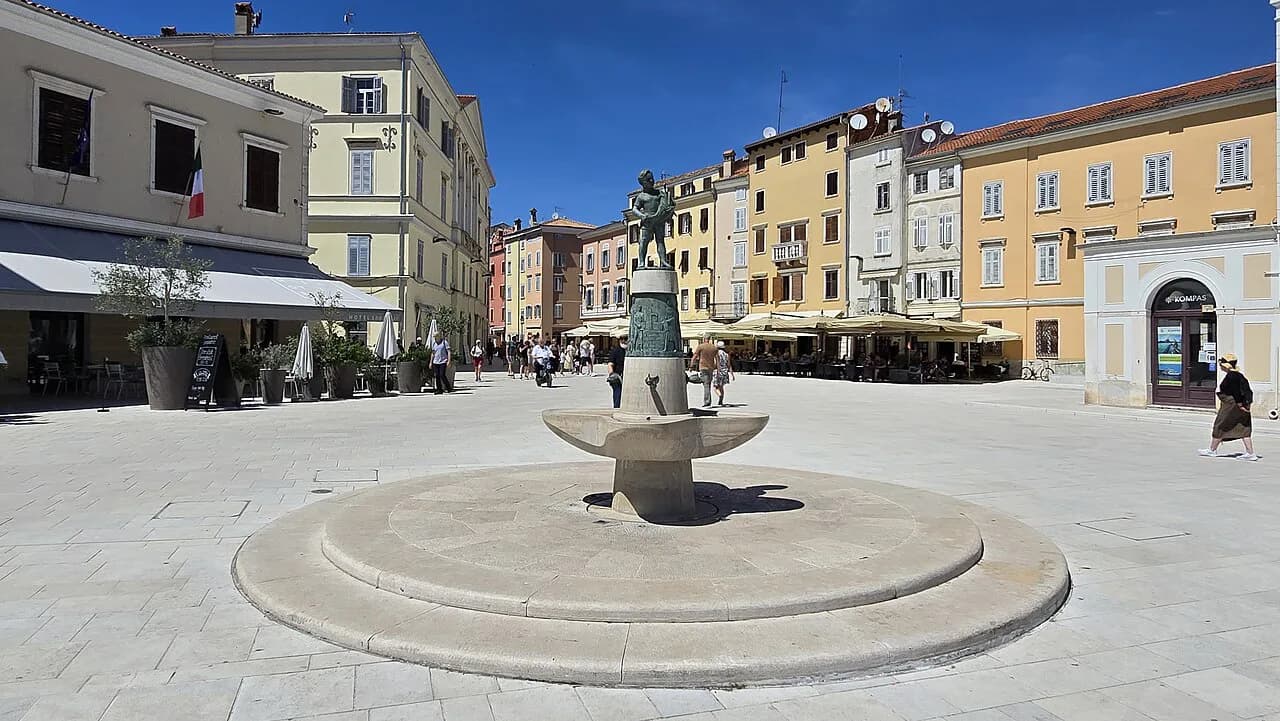
Beyond the arch, the narrow streets head towards Grisia, a paved and winding thoroughfare that is transformed into an outdoor art gallery every second Sunday in August, a cultural tradition dating back more than 50 years. During the rest of the year it is simply one of the best lanes in the centre for moving between the lower town and the church.
If you are in town on that day, expect the street to be busy and plan the rest of your walking around it. On ordinary days, Grisia is a useful spine for moving between the lower town and the church without losing your bearings.
The Rovinj Heritage Museum in the Palace of the Counts of Califfi
The Rovinj Heritage Museum occupies the Baroque Palace of the Counts of Califfi, and its collections range widely: works by Old Masters, archaeological finds from prehistoric, Roman and medieval times, material on the town's maritime and fishing traditions, and contemporary art. It is the one place in the centre where the layers of Rovinj history are laid out side by side.
Treat it as an indoor counterpart to the streets rather than a quick stop, and compare it with the town's other collections before deciding how to spend a wet or very hot afternoon.
Fishing, the batana and the bitinada: living heritage
Rovinj has always been oriented towards the sea, and its fishing tradition dating back centuries survives in two forms listed as protected intangible cultural heritage by the Croatian Ministry of Culture: the art of making batana boats and the bitinada, the melodic vocal style fishermen created during long hours on the water. Because their hands were busy with nets or repairs, they built an orchestral sound using only their voices.
The Batana House Eco Museum is where that heritage is presented, and during the summer months visitors can watch a batana being built. This is the part of Rovinj history that is still a working craft rather than a preserved ruin, and it sits naturally alongside a look at the town's boats and waterfront.
Beyond the centre: Monkodonja, Mušego and the Monfiorenzo Quarry
The archaeology around Rovinj is worth half a day of anyone interested in the deep past. Monkodonja is a hill-fort settlement inhabited between 2000 and 1200 BC, the burial mounds of Mušego lie nearby, and the Monfiorenzo Quarry is a protected geological monument of global value.
Closer to town, the Golden Cape, also known as Zlatni Rt or Punta Corrente Forest Park, and the Palud Swamp, an ornithological reserve with more than 200 bird species, show how the coast and hinterland were used and protected. These are outdoor sites, so pair them with a settled forecast rather than a tight schedule.
What the history means for your visit
The single most useful fact for planning is the 1763 channel filling: because the island became a hill within a town, everything worth seeing is stacked on a slope, and the climb to the Church of St Euphemia is unavoidable if you want the best of it. Wear shoes that cope with polished stone and allow more time than the distances suggest.
Summer brings the densest crowds into the narrow lanes, so early mornings and late afternoons make the historic centre far more legible. Boat trips around the Rovinj archipelago and the islands near Rovinj are the obvious complement when the town itself is packed.
Which part of Rovinj's past should you chase first?
Start with the Old Town itself, because the walls, the chimneys, the Balbi Arch and the climb to St Euphemia tell the island-to-mainland story without a ticket. Add the Rovinj Heritage Museum for the collections and the Batana House Eco Museum for the living craft, then decide whether Monkodonja and Mušego justify a trip inland.
The old town rewards a slow route rather than a hurried one, and the historic centre is compact enough that a single unhurried circuit covers most of what this history describes.
Explore more Rovinj guides
Frequently Asked Questions
How do you pronounce Rovinj?
The town's name is stressed on the second syllable, and English speakers usually render it close to ro-VEEN. The Italian form, Rovigno, still appears on signs and in the tourist board's own name, Rovinj-Rovigno.
How many people live in Rovinj?
The town is small enough that the historic centre is walkable in an hour or two, but the municipality extends well beyond the old island. For an official figure, the Croatian Bureau of Statistics publishes census results, which are the reliable source rather than any number quoted in passing.
Sources
Notes from the Croatian coast
Optional updates when our guides change.
You might also like
Continue reading
More guides you'll find useful