
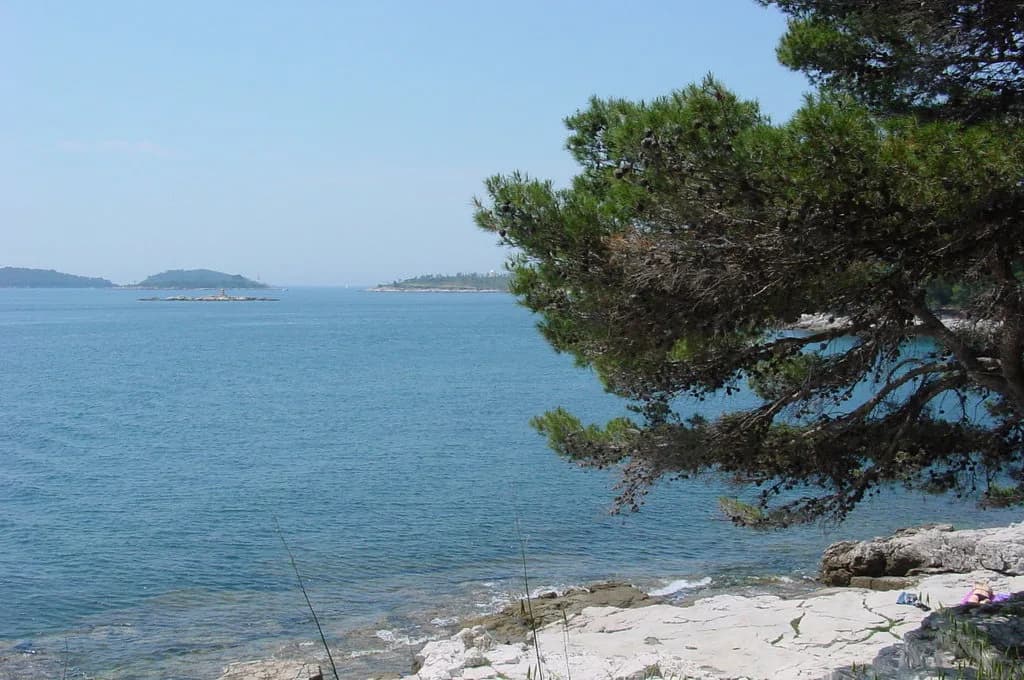
Zlatni rt, Rovinj: a guide to the Golden Cape forest park

Zlatni rt, also called Punta Corrente or the Golden Cape, is a protected forest park on the peninsula south of Rovinj old town, and it is the easiest half-day escape from the town centre. The park covers 52 hectares and begins about 15 minutes' walk from the centre, so you can reach it without a bus, car or boat. This guide sets out where the park sits, how its paths work, what is worth looking for inside it, and who will enjoy it most.
The land runs between the Lone and Škaraba bays and takes in the Montauro and Punta Corrente capes, which is why the park shields Rovinj and its harbour from the south. Treat it as a district of Rovinj rather than a single sight: there is no gate to tick off, just paths, trees, coves and a few old structures. That shape matters when you plan, because you can enter from several directions and leave by a different one.
Where Zlatni rt sits in Rovinj
The park occupies the coast south of the old town, wrapping around the bay of Lone on one side and Škaraba on the other, with the Montauro and Punta Corrente capes at its outer edges. Because it faces south, it forms a green buffer between the town and the open sea, which is exactly what makes it feel removed from the harbour bustle within minutes.
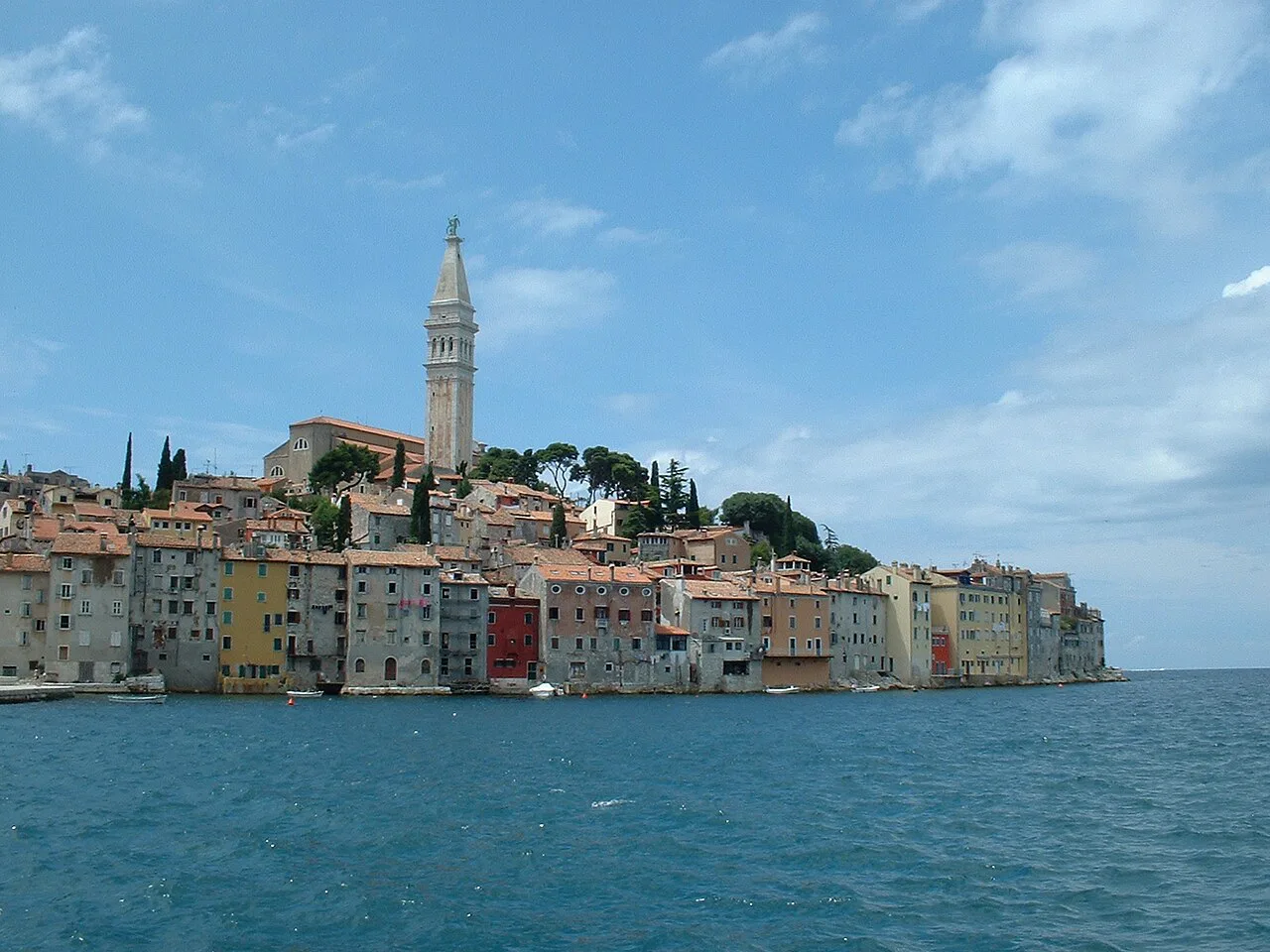
For orientation across the town, the waterfront Riva and the old-town lanes lie north of the park, while the Lone bay side has its own separate character. If you are working out how the districts fit together, the wider guide to Rovinj Neighborhoods sets Zlatni rt alongside those areas, and Valdibora Rovinj covers the harbour side of town where many walks begin.

Getting there on foot from the centre
Walking is the straightforward way in. From Rovinj centre the park is about a 15-minute walk, so the approach is short enough to do twice in a day if you want a morning in the trees and an afternoon in the old town.
Come on foot or by bicycle unless you have a reason to drive, because the appeal of the place is the transition from stone streets to pine shade and the walk itself is part of the visit. If you are staying inland, the Centener side of town is a sensible starting point for the approach south.

How the park is laid out
Inside, the park is a network of tree-lined paths, promenades, trails and meadows rather than a single circular route. That layout rewards a loose plan: pick a cape or a cove as your far point, follow the shade, and let the connecting paths bring you back.
Because the park is 52 hectares, allow more time than you would for a town square. Two to three hours covers a comfortable loop with stops; a half-day lets you add a swim and a slow exit along a different path.
What Hütterott planted, and why it matters
The park's character is the work of Georg Hütterott, a Trieste entrepreneur who bought plots in the Lone bay and on the Montauro and Punta Corrente capes from 1890 and began afforestation that turned the area into a rich arboretum. Pine, cypress and laurel dominate, but exotic species including Lebanese cedar, Douglas fir, ginkgo and eucalyptus were brought in or given to him as gifts.
Look for the Himalayan cedars arranged in a six-pointed star in front of the Punta Corrente meadow, the clearest sign that this was designed as a landscape park rather than left to nature. Hütterott also planned a health resort on the cape, an ambition recorded in a brochure of 1908, though the park is what survives.
The area was designated a protected natural rarity in 1948 and a forest park in 1961, a status it still holds. Read those dates as the park's history rather than as today's regulations.
Landmarks to use as waypoints
Scattered through the trees are structures worth steering by rather than studying at length: the pavilion built for Hütterott's wife still stands, as does the forester's house. You will also pass the remains of a small shipyard, old piers, a quarry, drystone walls and the long boundary wall that marked the edge of the estate.
Use them as markers on a loop: reach the quarry or the old piers, then follow the coast or the shade back towards town. They also give children something concrete to aim for between swims.
Walking, cycling and climbing
The park is used for walking, cycling and running, and it has exercise stations for those who want a workout among the pines. Free climbing is also possible here, which makes it unusually multi-purpose for a protected landscape so close to a town centre.
Paths are shared, so cyclists should slow near walkers and families, and climbers should treat the rest of the park as a quiet zone. Keep to marked routes rather than cutting through meadows, since the plantings are the reason the park exists.
If you are basing yourself in town and want the rest of the day planned around this walk, the guide to Rovinj Attractions covers the old-town sights within reach of the park's northern edge.
Swimming in the park's coves
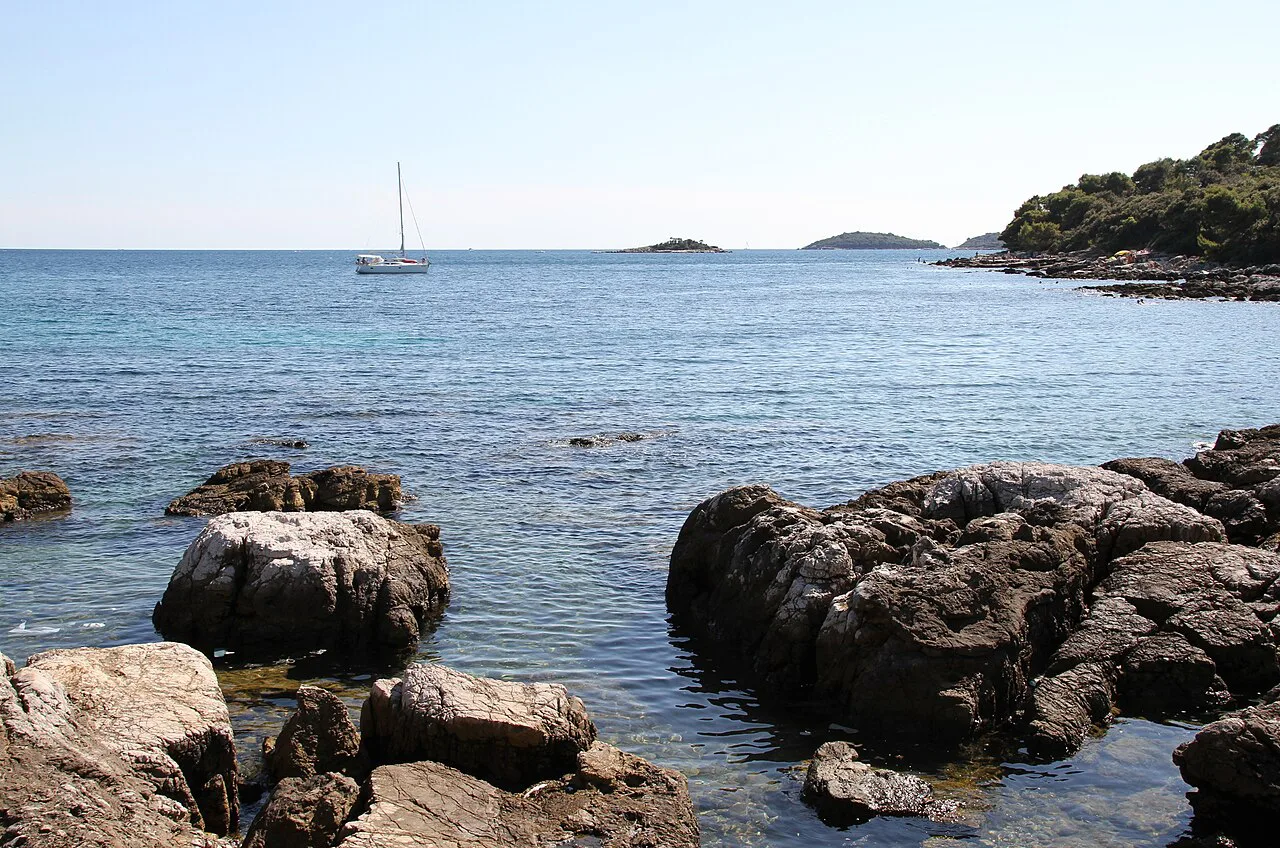
There is swimming inside the park, and the coves divide between rocky and pebbly ground. Rocky spots suit swimmers who want clear water and quiet, while the pebbly inlets are the easier choice for children and for anyone who prefers not to negotiate bare rock.
Bring footwear you can swim in, because the difference between a comfortable entry and an awkward one is usually a pair of water shoes. Pair a swim with a shaded path back rather than crossing open ground in the middle of the day.
Who Zlatni rt suits, and who it does not
The park rewards travellers who want shade, cool air and a walk with a swim at the end, and it works well for families who can split a morning between paths and a pebbly cove. It is less suited to anyone hoping for a serviced beach day with loungers and a promenade of cafés, or to those with limited mobility who need paved, level ground throughout.
There is a trade-off between the park's quiet and its facilities: summer brings beach bars and more people to the main coves, so the deeper paths and the outer capes stay calmer. If silence is the point of your visit, walk further from the entrances and go early.
Fitting Zlatni rt into a Rovinj trip
Treat the park as a half-day rather than an add-on: walk down from the old town in the morning, loop through the trees, swim, and come back through a different district. That way the old town, the harbour and the forest each get proper time instead of being squeezed together.
Late spring and early autumn give you the shade and the swimming without the peak-season press on the main paths. Embedded text removed. Confirm current details such as seasonal opening of facilities before you set out.
Is Zlatni rt worth half a day?
Yes, if you want a walk that feels like leaving town without leaving it: 52 hectares of pines and exotic plantings, a handful of old structures to steer by, and coves for a swim, all about 15 minutes from the centre. Skip it if you need a serviced beach or step-free paths.
Go early, take water shoes and aim for a far cape before turning back, and the park will give you the quietest hours of a Rovinj day.
Frequently Asked Questions
Is there an entrance fee for Zlatni rt?
The park is a protected forest park rather than a ticketed attraction, and it is reached on foot from Rovinj. Confirm any current arrangements for facilities inside the park before you go.
Can you cycle through Zlatni rt?
Cycling is one of the activities the park is used for, alongside walking, running and free climbing. Paths are shared with walkers, so ride slowly near families and keep to the routes.
Is Zlatni rt good for families with young children?
It can be, because the pebbly coves are easier for children than the rocky ones and the shade makes a morning walk comfortable. Take water shoes and expect to carry small children on some sections of path.
How long does it take to walk around Zlatni rt?
The park covers 52 hectares, so allow two to three hours for a loop with stops, or a half-day if you add a swim. Entering from the centre takes about 15 minutes on foot.