Rijeka Walking Tour: Old Town Route to Choose
Walk Rijeka on a self-guided route from Korzo through the Old Town to Trsat Castle, with timings and honest notes on steps, hills and crowds.
On this page
Rijeka rewards walkers because the centre is compact: the pedestrian Korzo runs through the middle, the Old Town's sights sit within a few minutes of it, and Trsat rises directly above the port. You can cover the city's headline sights on foot in half a day without a bus or a taxi, provided you save energy for the climb. This route runs them in walking order so you never double back: Korzo, the Roman Arch, the theatre and St Vitus, the Fish Market, then Trsat. For the streets at the heart of it, see Rijeka Old Town: A Walking Guide to the Centre; for the full picture of the city's sights, start with Things to Do in Rijeka: Old Town, Trsat Castle and the Waterfront.
Why Rijeka works as a walking city
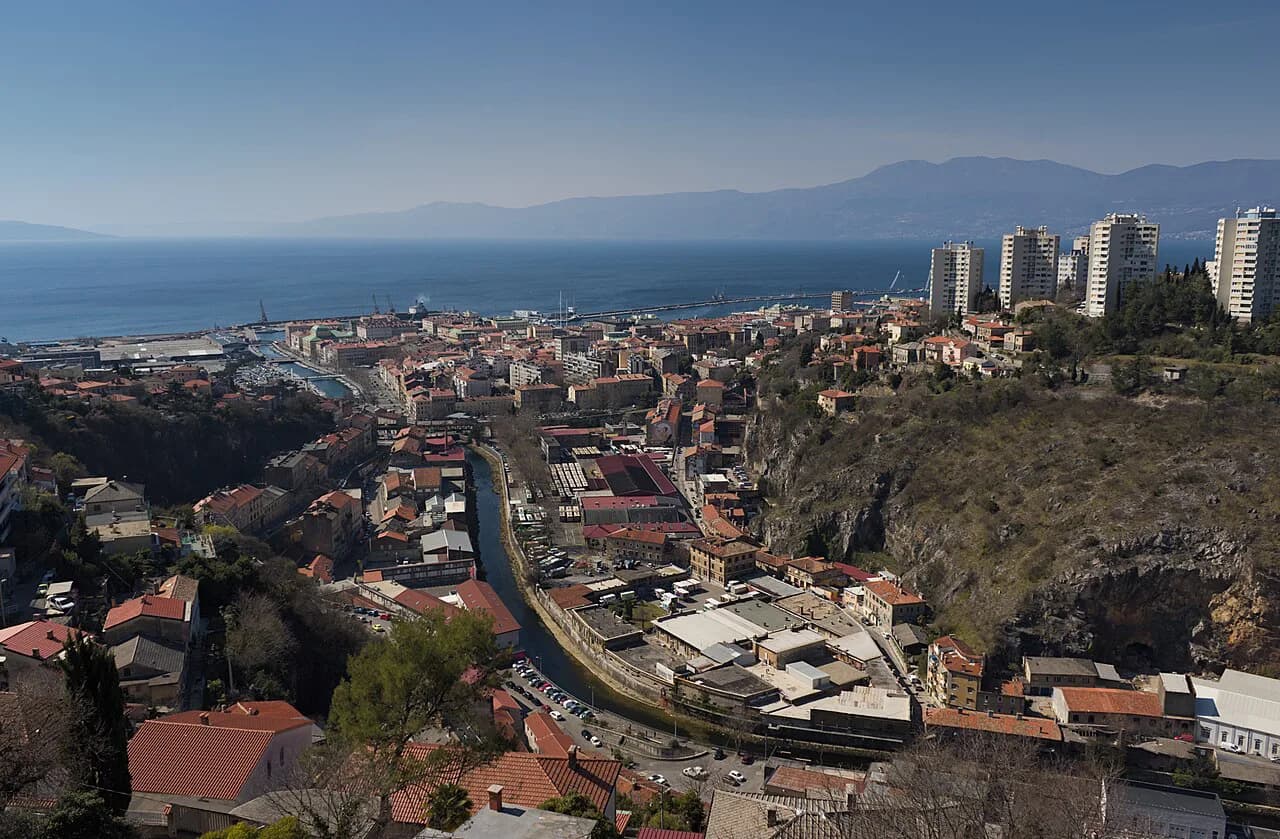
The name Rijeka means river in Croatian, a reference to the waterway that runs through the centre and empties into the bay, and the city grew around that crossing point. The result is a dense, level core of Habsburg-era streets, Austro-Hungarian façades and later Yugoslav buildings sitting side by side, with the hill of Trsat as the backdrop. You get a working port city rather than a museum piece, which is exactly why it suits a walk. For the streets at the heart of it, see Rijeka Old Town: A Walking Guide to the Centre.
The Korzo is the spine of the whole thing. It is pedestrian-only and packed with shops and cafés, which makes it the natural place to start, pause and finish. Everything below Trsat sits within easy reach of it, so the route is a loop with one deliberate climb at the end rather than a scatter of separate trips.
The route at a glance
Walk it in this order: Korzo and the City Clock, the Roman Arch, the Croatian National Theatre and the Church of St Vitus, the Fish Market, then the ascent to Trsat and Trsat Castle. The first four stops cluster tightly around the pedestrian centre; Trsat is the outlier, uphill and reached by a long run of steps. Treat the castle as the finale, not as an add-on squeezed between shops.
Allow most of a half day. A guided version of the city-centre walk is listed at one and a half hours, which covers Korzo and the main landmarks without the hill, while a private cultural tour runs from two and a half to four hours. Self-guided, with stops for coffee and the market, the centre alone fills two to three hours, and Trsat adds a further chunk for the climb, the castle and the view.
Stop 1 – Korzo and the City Clock
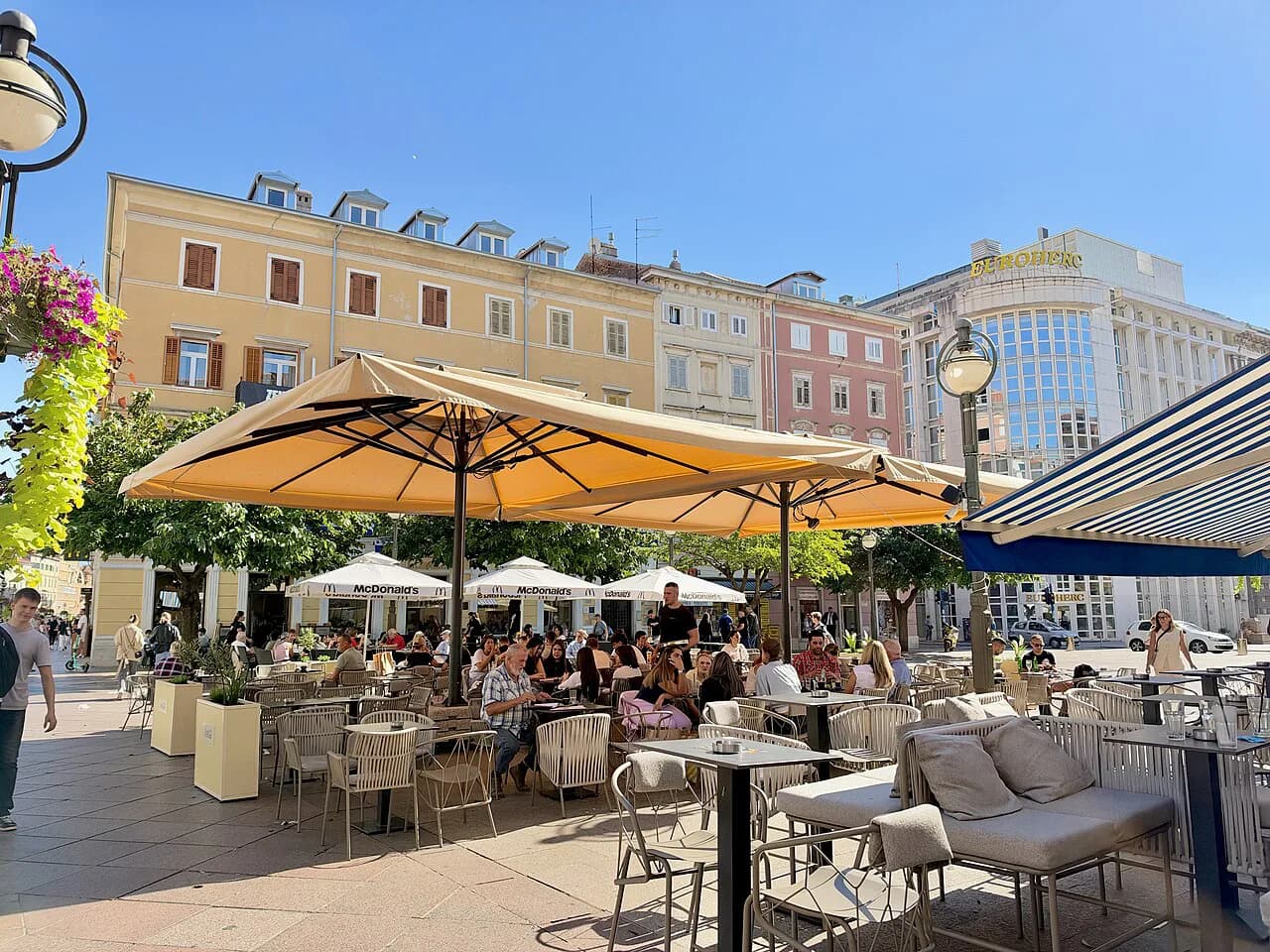
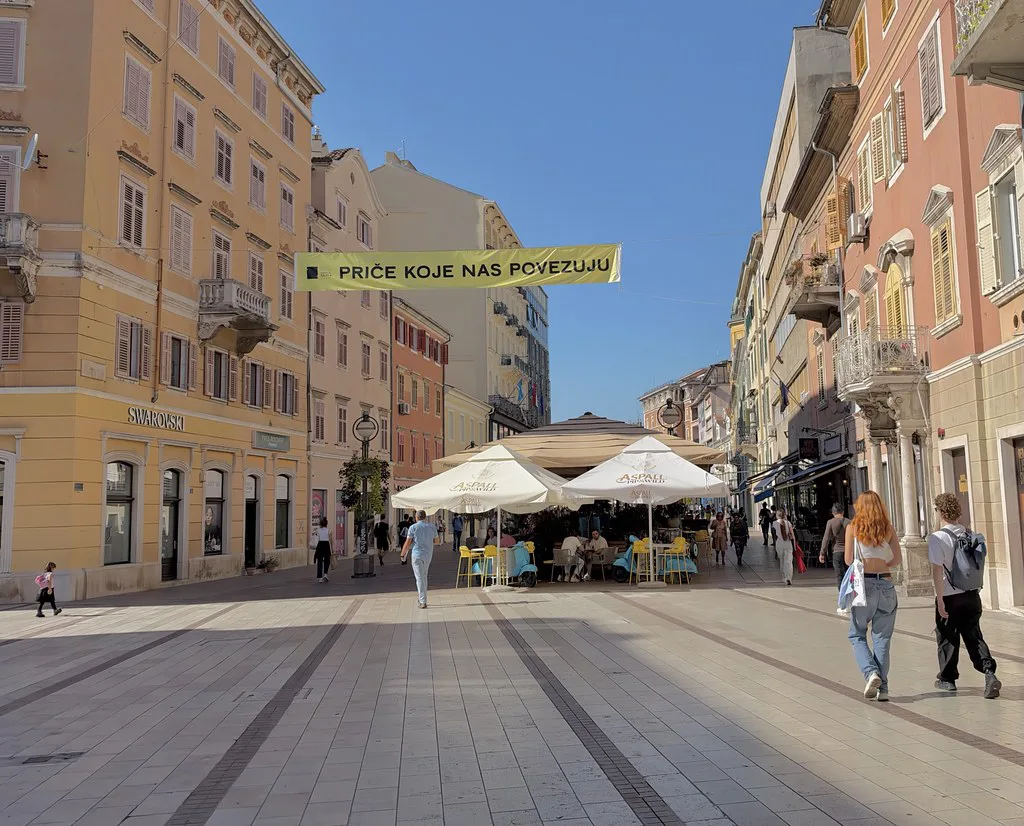
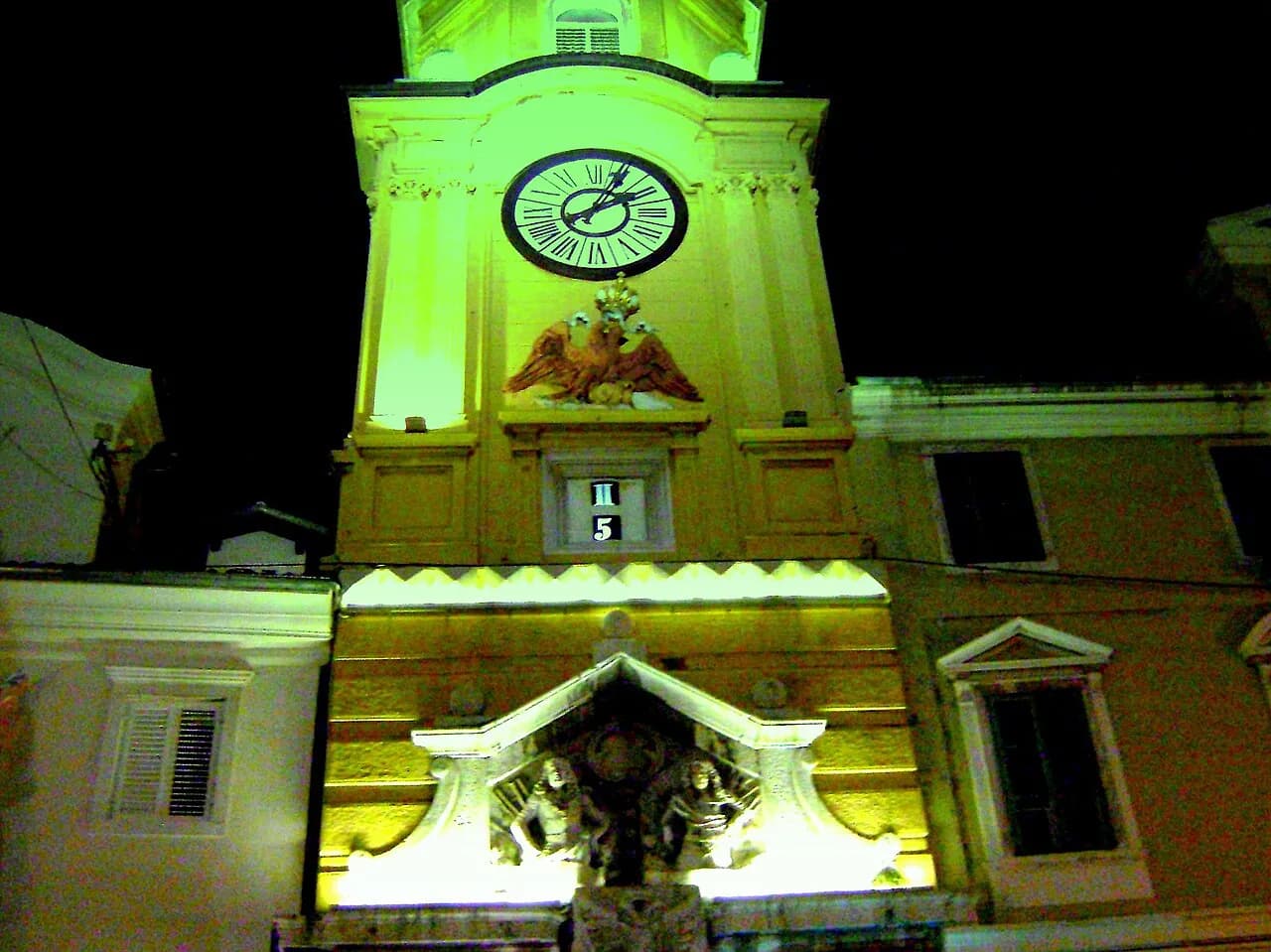
Start on the Korzo, Rijeka's pedestrian main street, and find the City Clock. This is the city's living room: coffee is taken slowly, the architecture shifts from ornate Habsburg frontages to plainer modern blocks as you walk, and the whole street is flat and easy underfoot. If you join a guided walk, this is the natural place for it to begin. For the surrounding streets, see Rijeka Old Town: A Walking Guide to the Centre.
Use the Korzo to get your bearings rather than to tick off a sight. Walk its length once, note the side streets opening off it, and pick a café for later. The buildings carry the story of the city's shifting rulers better than any single monument, and a slow pass with the street to yourself in the morning is worth more than a rushed one at midday.
Stop 2 – The Roman Arch
Near the Korzo sits a Roman arch, thought to date from the 4th century. That hedge matters: the dating is not settled, so treat the arch as a very old survivor rather than a precisely dated monument. What makes it striking is its setting, a fragment of Roman Rijeka embedded in a later shopping street, with the city's commercial life flowing past it.
Look up as well as straight ahead. The arch is easy to walk past because the surrounding buildings compete for attention, and the palimpsest effect, Roman stone under Habsburg brick, is the point. Take a couple of minutes rather than a guided explanation, then continue towards the theatre.
Stop 3 – The National Theatre and St Vitus
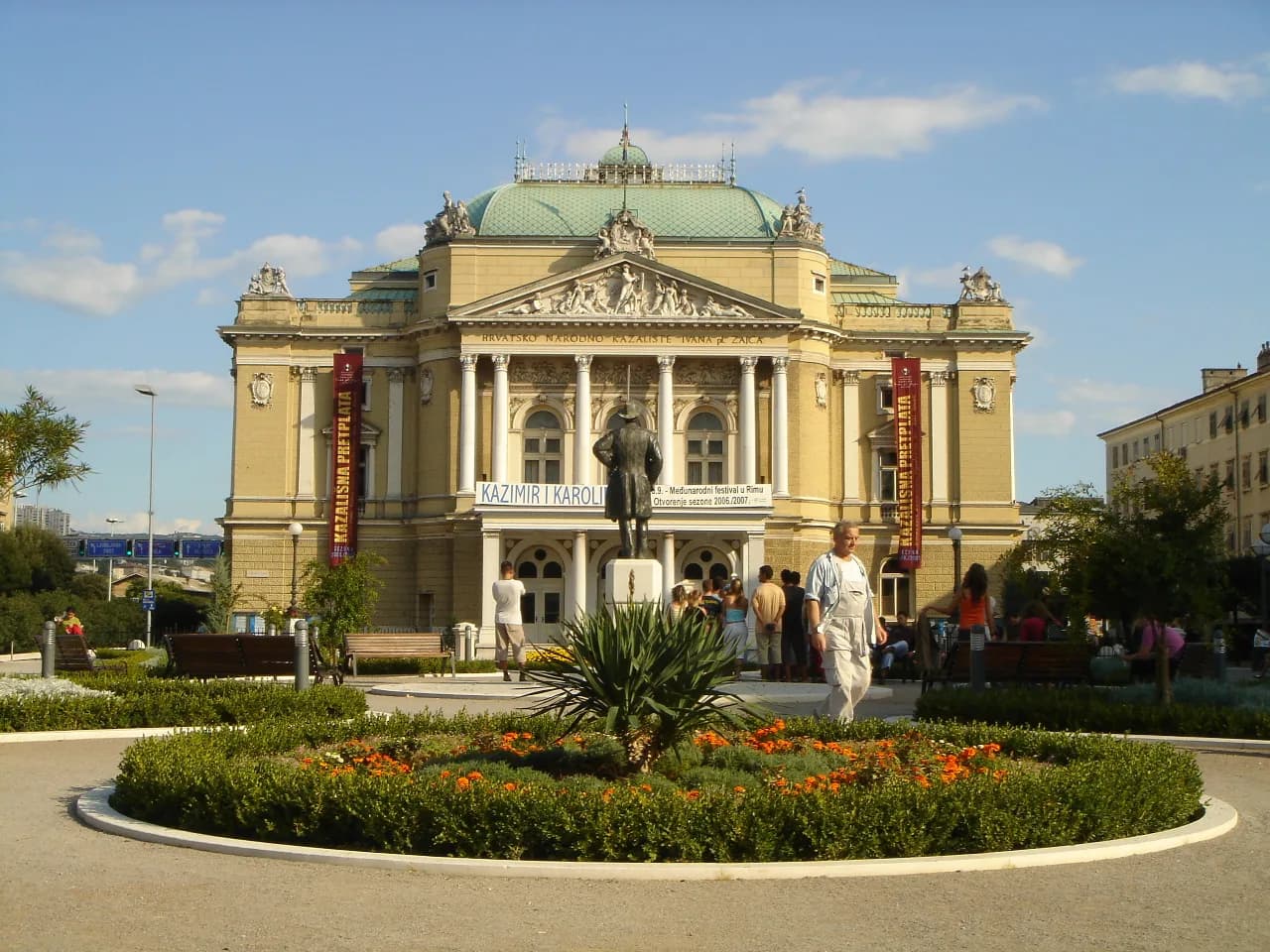
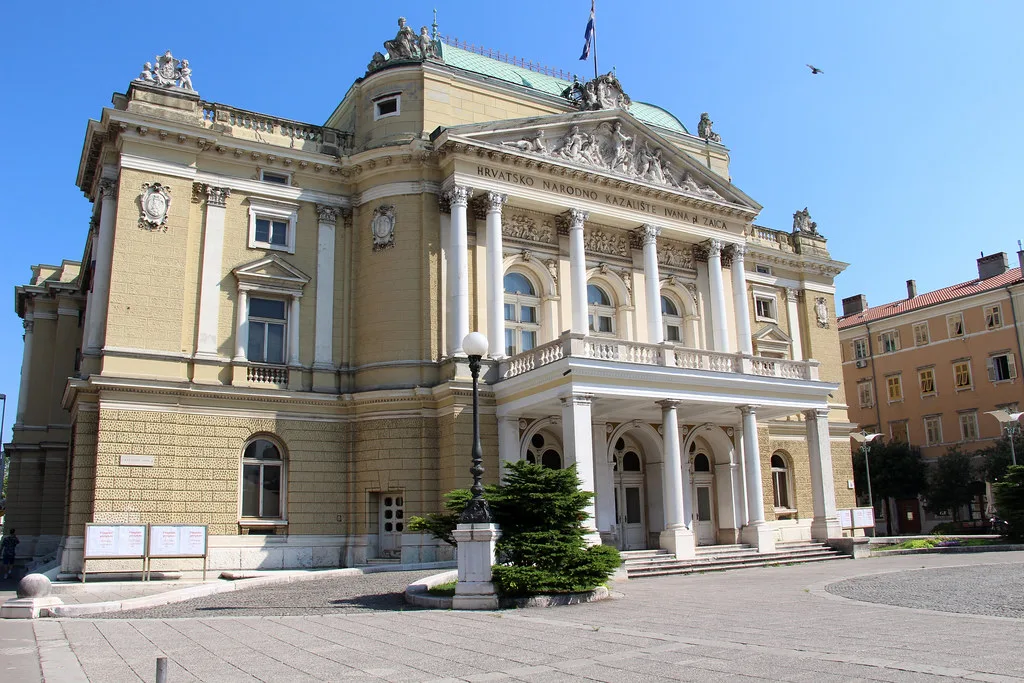
The Croatian National Theatre is ornate, and the Church of St Vitus is octagonal, an unusual shape for a city church. They sit close together just off the Korzo, so see them as one cluster instead of two separate errands. The theatre's façade is the photogenic set piece; the church's geometry is the curiosity, best appreciated by walking round the exterior rather than only facing the door.
This is the point where a guide earns their fee for some travellers. Architectural context, the city's Italian and Hungarian periods and the theatre's place in Rijeka's self-image are exactly what a good walker-with-a-guide supplies and a plaque rarely does. If the names and dates blur together, a short guided walk is a fair trade for an hour and a half of your afternoon.
Stop 4 – The Fish Market
Head for the Fish Market to see where the city actually lives. It is a working market, loud and pungent, with vendors calling out and the day's catch laid out in rows, and it is the sharpest contrast on the route to the polished Korzo. Go early if you want the full bustle.
The market rewards attention to detail rather than photography. Local catches from the Croatian Adriatic are the thing to look at, and the way people buy, haggle and carry their purchases tells you more about Rijeka than any monument. Go early in the morning for the fullest market, and check the market's own signage for the day's hours before you build the walk around it.
Stop 5 – Trsat and Trsat Castle
Trsat sits on the hill above the centre, the oldest part of the city, crowned by a castle that looks down over the port. The climb is the price of the panorama: expect a long run of steps and a sustained uphill stretch, which is why this stop comes last, when you have already seen everything downhill. Walkers who tackle it in reverse tend to arrive at the Korzo too tired to enjoy it. For the wider picture of the city's sights, see Things to Do in Rijeka: Old Town, Trsat Castle and the Waterfront.
The view from the top is the payoff, with the city spread out below, the harbour and its shipping in the foreground and the Adriatic beyond. Give yourself time to sit with it rather than turning straight round. The castle carries traces of its medieval origins and later rebuilding, and entry is not free, so budget for an admission ticket at the gate.
How long the route takes, and how much is uphill
Budget between three and five hours for the full route at a relaxed pace, including coffee, the market and time at the castle. The centre is flat and quick; the climb to Trsat is where the time and the effort go. If you are short of time, walk the centre and skip the hill rather than rushing both.
Almost all the ascent is concentrated in the final leg. That makes the route manageable for most walkers, since you can abandon the climb at any point and still have had a complete city visit. Anyone with knee trouble or small children in tow should treat Trsat as optional and enjoy the Korzo, the arch, the theatre cluster and the market instead.
Guided or self-guided
A guided Rijeka walking tour suits first-time visitors who want context, stories and the side streets they would otherwise miss, and it removes the navigation problem entirely. Norwegian Cruise Line lists a ship-excursion version at one and a half hours from $39 per person, quoted in US dollars, so compare it with local guides; that figure is not a euro price. A private cultural tour stretching from two and a half to four hours exists for travellers who want the pace and the questions tailored.
Self-guided is the better default for this route. The stops are close together, the Korzo makes orientation easy, and the freedom to linger at the Fish Market or cut the hill short is worth more than the commentary. Choose a guide when you want the Roman and Habsburg layers explained properly, or when the group includes someone who prefers a fixed plan and a set finish time.
When to walk it
Mornings are best: the Korzo is calm, the market is at its liveliest and the Trsat climb is cooler. Cruise-ship days fill the centre from mid-morning, so start early or save the Old Town for late afternoon. In high summer, walk the flat centre in the morning and leave the hill for the last hour of daylight.
Surfaces, steps and footwear
The centre is paved, flat and largely pedestrianised, so ordinary shoes or trainers are fine. The Trsat leg is the exception: a sustained climb with a lot of steps, some of it uneven. Wear something with grip rather than smooth soles, and carry water for the ascent.
Rijeka sits on the Kvarner Gulf, and the bura wind can arrive suddenly and make exposed stretches, particularly on the hill, genuinely hard going. Windproof layers and a secure grip on loose items are sensible; on a bura day, postpone Trsat and stay in the sheltered streets. The islands near Rijeka are a separate day out rather than part of this walk.
Should you climb to Trsat or stay in the centre?
Climb to Trsat Castle if you have the legs and the time, because the panorama over the port and the Adriatic is the image you will take home. Stay in the centre if you are short on time, travelling with young children or walking on a bura day; the Korzo, the Roman arch, the theatre and St Vitus and the Fish Market make a complete and satisfying half-day on flat ground.
Explore more Rijeka guides
Frequently Asked Questions
Is the walk to Trsat Castle difficult?
It is the only demanding part of this route. The centre is flat and pedestrianised, but Trsat sits above the city and the climb involves a long run of steps and a sustained uphill stretch. Take it slowly, carry water, wear shoes with grip and save it for the end of your walk.
Can you walk from Rijeka city centre to Trsat Castle?
Yes, Trsat Castle is reached on foot from the centre as the final leg of this route. There is no need for a bus or taxi if you are reasonably fit, but allow extra time for the ascent and the view, and skip it on a windy day when the exposed hill is uncomfortable.
How long does it take to walk around Rijeka?
The compact centre, covering the Korzo, the Roman arch, the theatre and St Vitus and the Fish Market, fills two to three hours at an unhurried pace. Add Trsat and the castle for a three to five hour half-day. Guided versions are much shorter, listed at one and a half hours for the centre.
What is there to see in Rijeka Old Town on foot?
On foot you can see the pedestrian Korzo with its City Clock, a Roman arch thought to date from the 4th century, the ornate Croatian National Theatre and the octagonal Church of St Vitus, and the working Fish Market. Trsat Castle sits uphill above the centre.
Sources
Notes from the Croatian coast
Optional updates when our guides change.
You might also like
Continue reading
More guides you'll find useful