Kvarner, Croatia: Rijeka, Opatija, Krk, Cres, Lošinj and Rab
Plan a Kvarner trip: how Rijeka and the Opatija riviera fit with the islands of Krk, Cres, Lošinj and Rab, how long each needs and how ferries link them.
On this page
Kvarner is best treated as a small island-hopping region wrapped around a mainland city, rather than a single destination. Rijeka and the Opatija riviera give you a compact urban base, while Krk is reached by road and Cres, Lošinj and Rab sit out in the northern Adriatic and depend on ferries and catamarans. This guide covers where the region sits, what each town and island is actually like on foot, how to order the crossings and how the bura wind and the seasons change the plan.
The key geography to hold in your head is that islands do not all behave the same way. Krk is connected directly to the mainland by a bridge, which makes it the most accessible island in the gulf, whereas Cres and Lošinj are joined to each other by a small bridge at Osor and are reached by sea. Treating that split seriously is the difference between a short city break and a week of island-hopping.
Where Kvarner sits on the Croatian coast
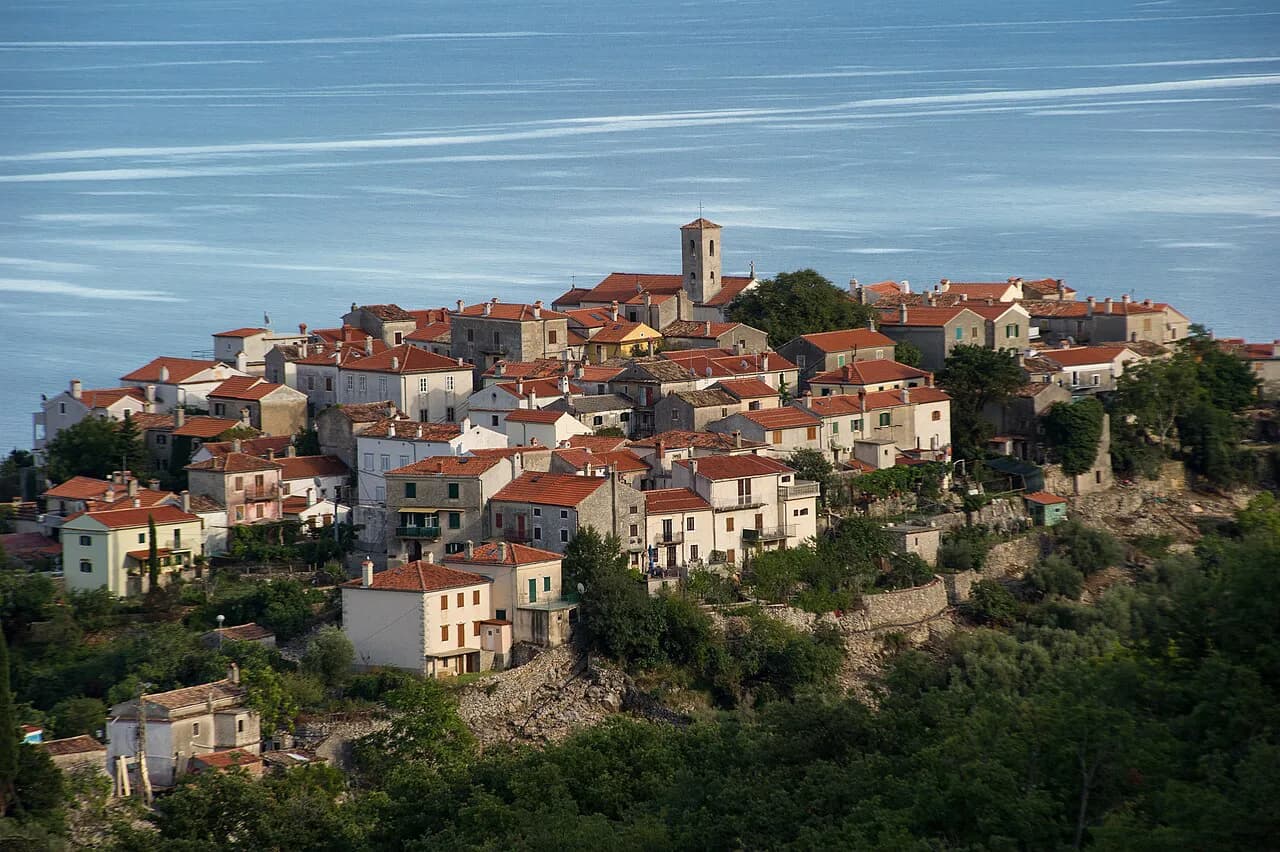
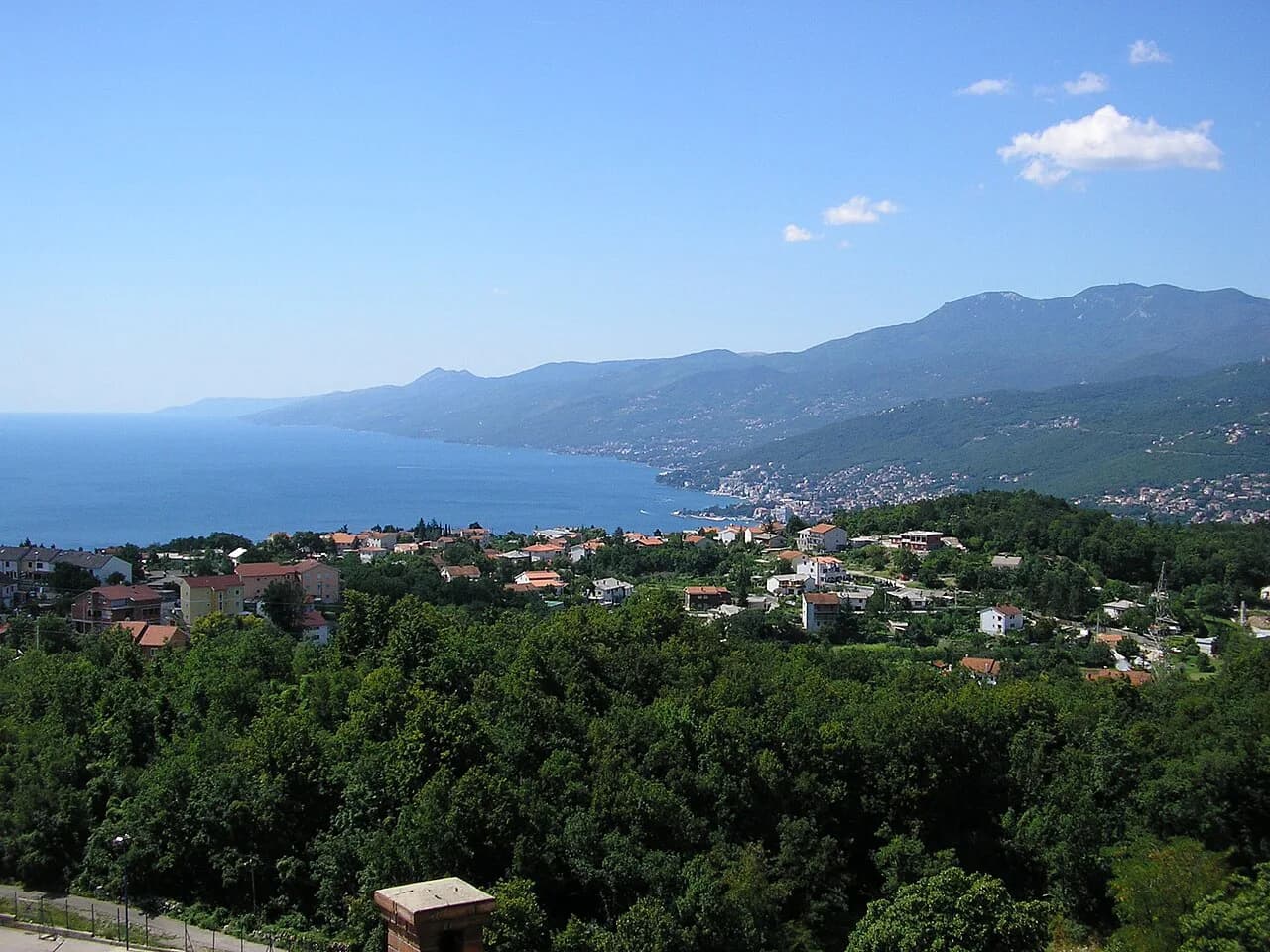
Kvarner occupies the northern stretch of the Croatian coast around the Gulf of Kvarner, with Rijeka as its mainland anchor and the islands of Krk, Cres, Lošinj and Rab offshore. Rijeka is in Croatia, on the coast south of Istria and north of Dalmatia, which is what makes the region a workable link between the two. The Kvarner islands are described as an archipelago of contrasting landscapes, cultures and microclimates, running from the bridge-linked shore of Krk to the cliffs of Cres and the pine forests of Lošinj.
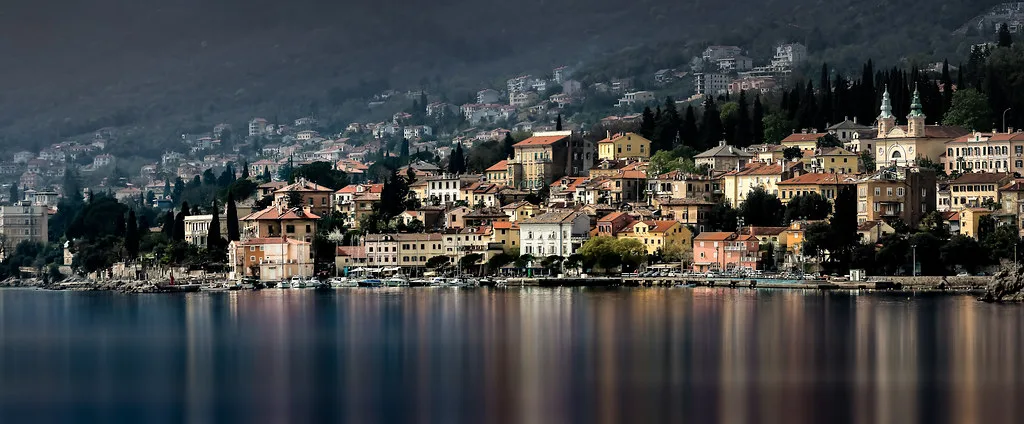
For planning purposes, split the region into two halves. The mainland half is Rijeka plus the Opatija riviera, running through Opatija, Volosko and Lovran, with Kastav in the hills just behind. The island half is Krk, Cres, Lošinj and Rab, each with its own old town, harbour and set of sights, and linked to the mainland by ferries and catamarans.
The fastest trips: what fits into one day from Rijeka or Opatija
A single day from Rijeka is best spent either in the city itself or along the riviera, not on an island. Rijeka's centre is compact enough to walk between the Korzo, the old town and the harbour, and the Opatija riviera can be taken in as a coastal run through Opatija, Volosko and Lovran. Trying to bolt Krk onto the same day leaves you with a rushed drive and little time in the old town.
From Opatija, Krk is the one island that genuinely works as a day out, because the bridge removes the ferry timetable from the equation. Even then, Krk old town, Vrbnik and Baška sit in different parts of the island, and Biserujka Cave adds another stop to the north. Pick two of those rather than all four.
How long to give the islands: Krk in a day against a night on Cres, Lošinj or Rab
Krk rewards a day if you accept a narrow focus, but an overnight lets you see the old town without the day-trip squeeze and still reach Vrbnik or Baška. Cres, Lošinj and Rab are different: each one has enough separate sights that a same-day return from the mainland spends more time in transit than on the island. Rab alone combines a peninsula old town, the Komrčar park forest and the northern resort area around Lopar.
A sensible shape for a week is two nights on the riviera, then three or four nights spread across the islands, using the linked geography to reduce crossings. Cres and Lošinj are joined at Osor, so you can move between them overland and treat them as one block. Krk, being bridged, is the easiest place to start or finish.
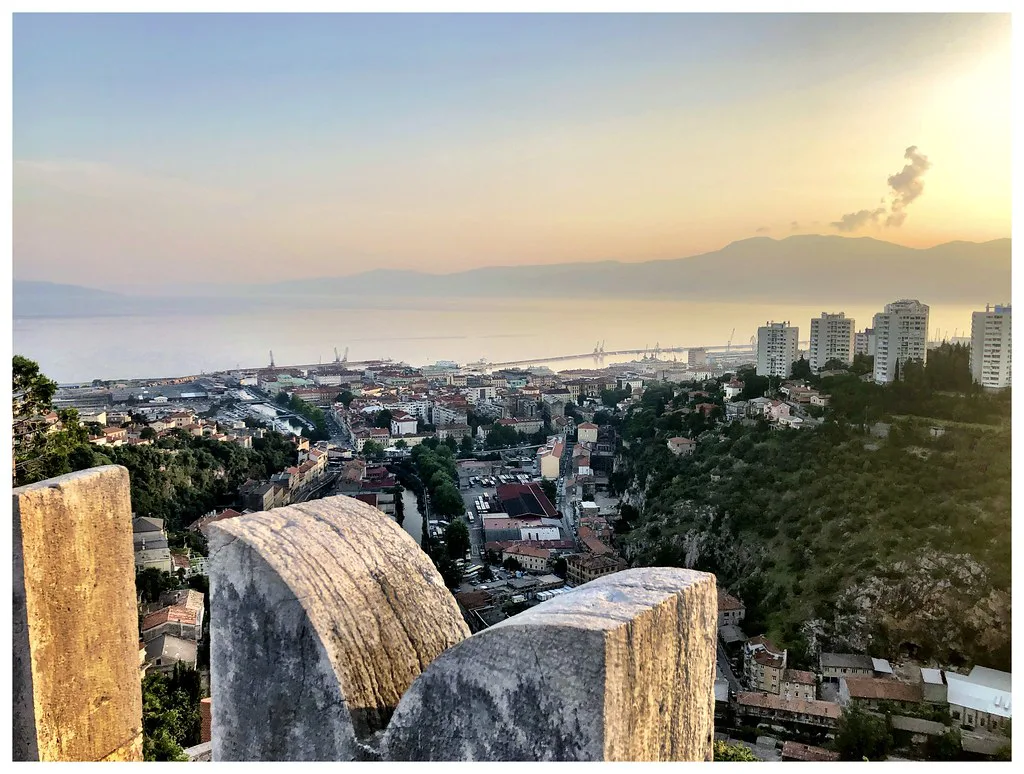
Rijeka: a compact centre where the Korzo meets the old town and the harbour
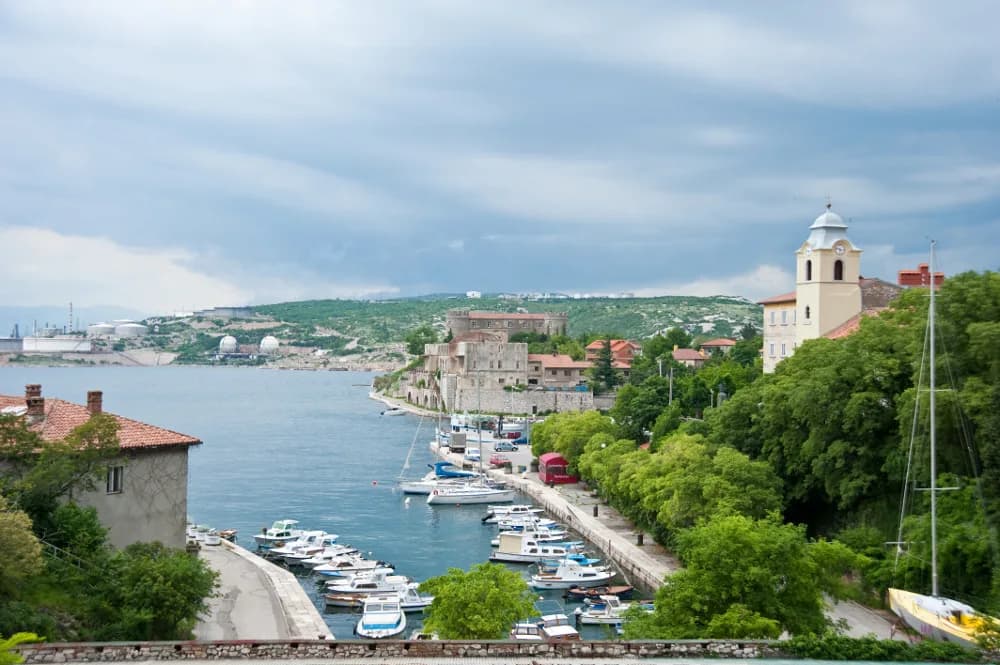
Rijeka is a working port city with a walkable core, and the Korzo is its spine — a long pedestrian street where the city's café life and shopping concentrate. From the Korzo you can drift into the old town, where the street pattern tightens around churches and Austro-Hungarian buildings, and then down to the harbour. Allow half a day on foot for the centre and a full day if you want a museum or two.
The city also works as a transport hub rather than only a sight in itself. Ferries and catamarans for the Kvarner islands leave from the Rijeka area, and the road and rail connections make it the natural first or last stop on a coastal route. Arriving by air, note that Rijeka Airport sits on Krk rather than in the city, which quietly shapes the order of your trip.
The Opatija riviera: Opatija's Lungomare walk, Volosko and Lovran
Opatija is the riviera's polished face, with the Lungomare, a seafront promenade that runs along the coast and connects the resorts. Walking it is the point of the place: the promenade passes villas, gardens and viewpoints, and you can cover stretches at a time rather than the whole route in one go. Opatija itself is dense with hotels and cafés, so it feels busier than the villages either side.
Volosko, just along the coast, is a tight knot of lanes above a small harbour and feels more like a fishing village than a resort. Lovran, further south, is quieter again and makes a good base if you want the Lungomare on your doorstep without Opatija's crowds. The whole riviera is short enough to link by local bus, taxi or a long walk in stages.
Kastav and the hills behind the riviera
Kastav sits in the hills directly above the riviera, and it is the half-day step inland that breaks up a coast-heavy itinerary. The old town is a compact cluster of stone lanes and squares on a ridge, with views down towards the sea. It is close enough to Opatija to combine with a riviera afternoon rather than needing a day of its own.
Go for the change of register as much as the sights: after the seafront promenades, the hill town gives you shade, stone and a slower pace. Parking is limited around the old core, so arriving early or using a local bus from the coast is the simpler approach.
Krk: the bridge-connected island of Krk old town, Vrbnik, Baška and Biserujka Cave
Krk old town is a walled cluster of Roman remains, medieval towers and the Frankopan Castle above a busy harbour, and it is the obvious first stop once you cross the bridge. The island's cultural weight is considerable: the Baška Tablet, an early Croatian stone monument, is kept in St Lucy's church at Jurandvor near Baška. Vrbnik sits on a cliff above the open sea, known for extraordinarily narrow streets.
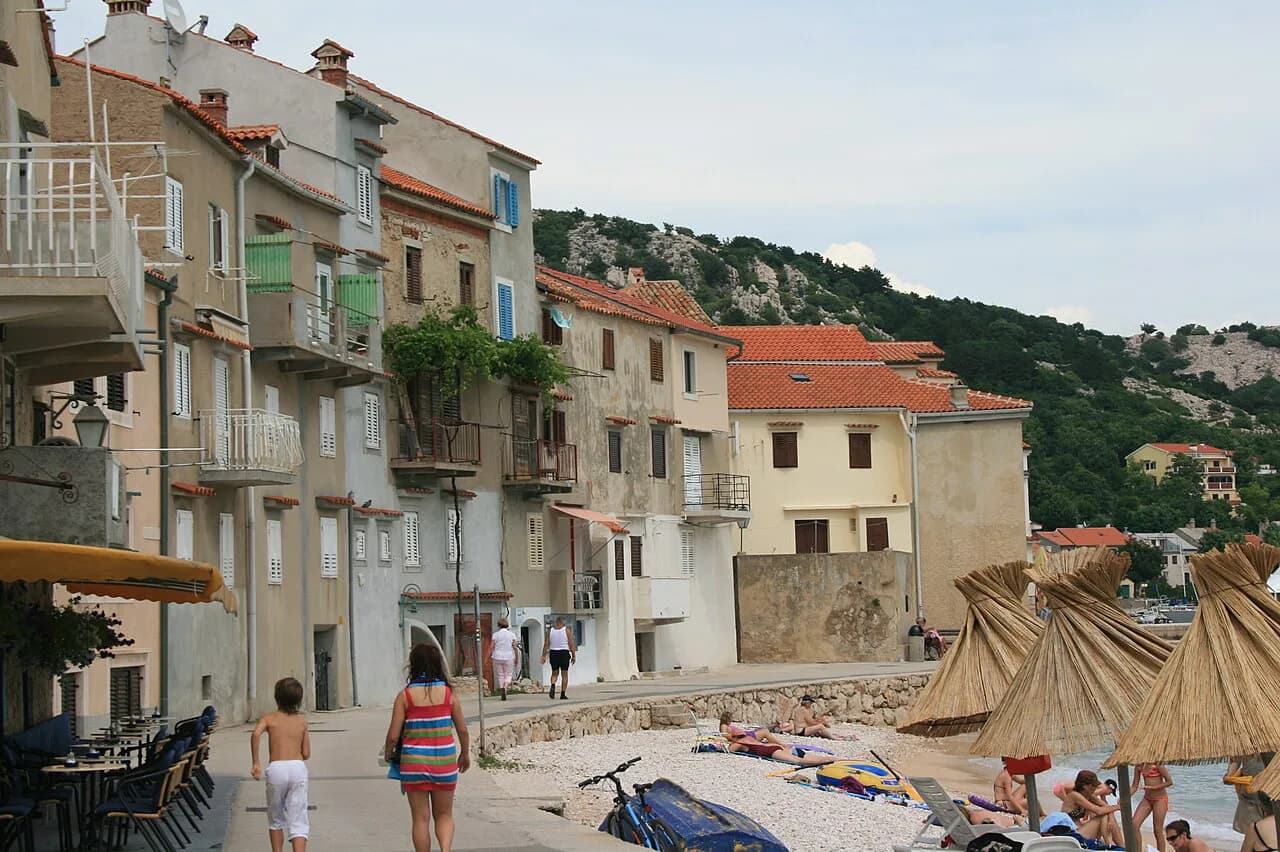
Baška, in the south, holds Vela Plaža, a long crescent of pebble and sand that is the island's main family draw. In the north, Biserujka Cave is the counterpoint to all that coast, with stalactites underground. The island is big enough that you should choose a corner per day rather than criss-cross it repeatedly.
Cres: Lubenice, Lake Vrana, Beli and the griffon vulture reserve
Cres is the wilder island of the group, and Lubenice is its signature: a stone village on a high cliff far above the sea, with Sveti Ivan beach below it. Inland, Lake Vrana is a protected freshwater source supplying drinking water across the archipelago, which tells you how seriously the island treats its landscape. The eco-centre at Beli runs an ornithological reserve for Eurasian griffon vultures, one of the last places in Europe where they nest on cliffs above salt water.
Plan Cres around distances, because the sights are spread out and the roads are slow. Lubenice, Lake Vrana and Beli do not sit together, so a car or a very selective itinerary is the realistic approach. This is the island where an overnight pays for itself.
Lošinj: Mali Lošinj, the Apoxyomenos Museum, Čikat Bay and the Blue World Institute
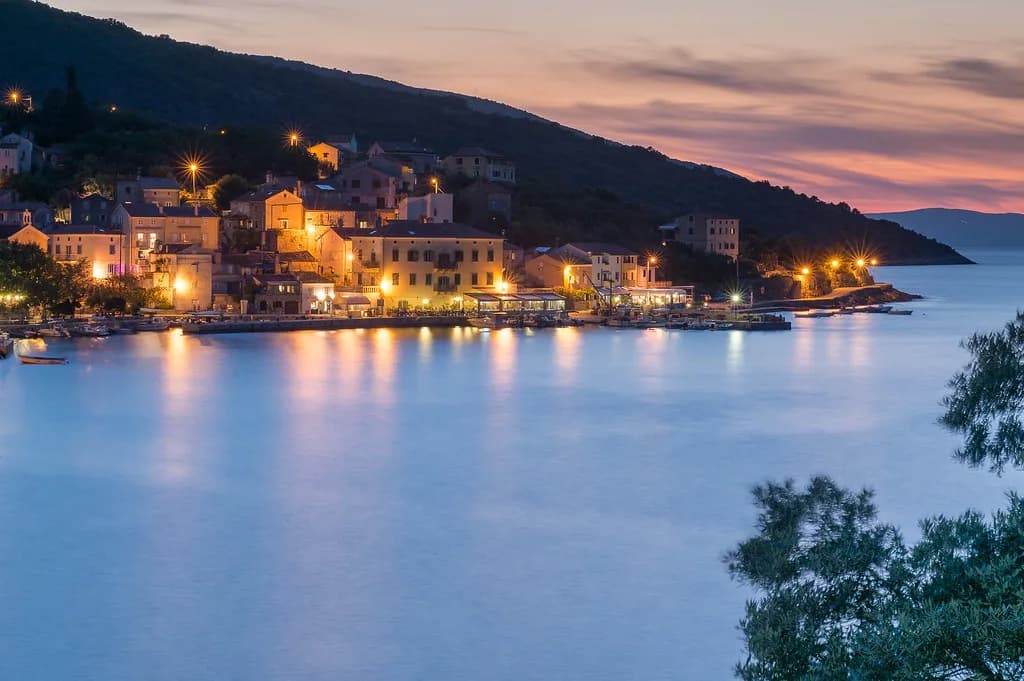
Lošinj has been a health resort since the Austro-Hungarian era, and Čikat Bay shows it: a curve of pine forest and century-old villas above the water. Mali Lošinj is the busy harbour town, and its Museum of Apoxyomenos holds a preserved ancient Greek bronze of an athlete recovered from the sea nearby. The island is also known for a remarkable number of aromatic plant species.
Wildlife is the other reason people come. The waters around Lošinj support a resident community of around 200 bottlenose dolphins, and the Blue World Institute in Veli Lošinj runs educational boat tours to see them in the wild. From Lošinj you can also reach the outlier islands — sandy Susak, car-free Ilovik and quiet Unije — by local boat.
Because Cres and Lošinj are joined at Osor, the practical move is to treat them as one stay rather than two separate crossings. Come over to Cres, work south, cross at Osor and finish on Lošinj.
Rab: the four bell towers, Komrčar park and the boat trips to Goli Otok and Sveti Grgur
Rab old town is built on a narrow peninsula, and its skyline of four medieval bell towers rising above stone roofs is the image the island trades on. The lanes inside are quiet and cobbled, and the Komrčar park forest gives deep shade just above the town. At the northern end, Lopar is a rare stretch of sandy coast, with Paradise Beach a long, shallow bay.
Boat trips from Rab run to the abandoned prison islands of Goli Otok and Sveti Grgur, which is the most sobering excursion in the region. Check sailing days and conditions before building a day around it. Rab works well as the eastern end of an island circuit, reached by ferry and left by a different crossing.
How the ferries and catamarans work, and which operator and crossing to use
Kvarner's crossings come in two useful types: vehicle ferries, which take cars and foot passengers on shorter hops, and fast catamarans, which link the mainland with the islands for foot passengers. The distinction matters because a catamaran gets you there quickly but not with a car, while a ferry is slower but carries everything.
Book directly with the ferry and catamaran companies rather than a resale site: they publish their own seasonal timetables, and schedules change between summer and the rest of the year. Build your island order around the crossings that actually run on your dates, not the other way round.
When to go: summer crowds against quieter spring and autumn
July and August bring the fullest ferries, the busiest harbours at Krk, Mali Lošinj and Rab, and the highest accommodation rates. Late spring and early autumn are the better trade for most travellers: the crossings still run, the old towns are walkable, and the heat is less punishing on exposed sites like Lubenice or the climb to Kastav.
Winter thins out the coast considerably, with seasonal closures among waterfront cafés and excursion boats. If your trip depends on a specific boat tour or a museum, check current prices and dates before you book the crossing.
Getting there: flying into Rijeka or Krk airport and the onward road and ferry moves
Rijeka Airport is on Krk, connected to the mainland by the bridge, which is why the island so often comes first or last on a Kvarner itinerary. Arriving there puts you within an easy drive of Krk old town and a straightforward run to the riviera. Coming by road from Istria or Dalmatia, Rijeka is the natural hinge.
From the mainland you then choose between a bridge crossing, a vehicle ferry or a catamaran, depending on whether you have a car and which island you want first. That single choice sets the shape of the whole trip.
How the bura wind and seasonal closures change a Kvarner itinerary
The bura is the cold, gusty northerly wind that affects this part of the Adriatic, and it can stop catamarans and small boats at short notice while leaving the bridge route to Krk open. Building one flexible day into an island-hopping plan is the practical hedge. It is also why a car plus a ferry gives you more resilience than a catamaran-only itinerary in marginal weather.
Seasonal closures are the other constraint, hitting excursion boats, seasonal cafés and some sights outside the summer months. Treat published seasonal schedules as fixed only for the season they cover, and confirm any tour you have built a day around.
Where to slot Kvarner into a longer Croatian coastal trip
Kvarner's position between Istria and Dalmatia makes it a natural bridge in a longer coastal route. Coming south from Istria, you reach Rijeka and the Opatija riviera first, then can add Krk by bridge and Cres, Lošinj or Rab by sea before continuing down the coast. Going the other way, Kvarner is a gentler, less crowded finish after the southern islands.
If you are comparing Kvarner with the southern Dalmatian islands, the difference is scale. Kvarner is compact, bridge-linked in part, and easier to cover in a few days. Places such as Hvar Attractions suit travellers who want a single island with more time to spend on it, while Kvarner rewards a short, multi-stop loop. For a wider comparison of island choices, our guide to the best islands in Croatia helps you weigh Kvarner against the rest of the coast.
Is Kvarner a city break or an island-hopping week?
Kvarner works as both, but not on the same timetable. If you have two or three days, keep to Rijeka, the Lungomare at Opatija and a bridged day on Krk. If you have a week, add an overnight on Cres and Lošinj, linked at Osor, with Rab as a separate eastern stop.
Decide the ferry question before anything else: car or no car, which operator, and which island first. That single decision determines whether the trip is a relaxed riviera break or a genuine island-hopping week, and it is far easier to settle before you start booking crossings. For the practical details, see the Lungomare Opatija.
Explore more Kvarner guides
Sources
Notes from the Croatian coast
Optional updates when our guides change.
You might also like
Continue reading
More guides you'll find useful