Plitvice Lakes National Park: Tickets, Hours & Visit Guide
Plan Plitvice Lakes with published 2026 ticket prices in euros, entrance and boat hours, park rules, season bands and how much time a visit really needs.
On this page
Plitvice Lakes National Park is an inland karst valley of terraced lakes linked by tufa barriers and waterfalls, toured on boardwalks with an electric boat and a panorama train included in the entrance ticket. Allow a full day for a one-day visit and two consecutive days if you want the Upper and Lower Lakes at an unhurried pace. This guide works through the park's published 2026 prices, entrance hours, boat and train timings and visitor rules, then sets out how to get there and which season band suits your trip.
The park sits well inland, in the Lika hills between Zagreb and Zadar, so it belongs in a land-based leg of an itinerary rather than a coastal one. It pairs naturally with a stop at Rastoke, the mill village on the Slunjčica, if you are driving between the coast and Zagreb. Ferries do not serve the park at all, and no amount of island planning will change that.
What a visit to Plitvice actually involves
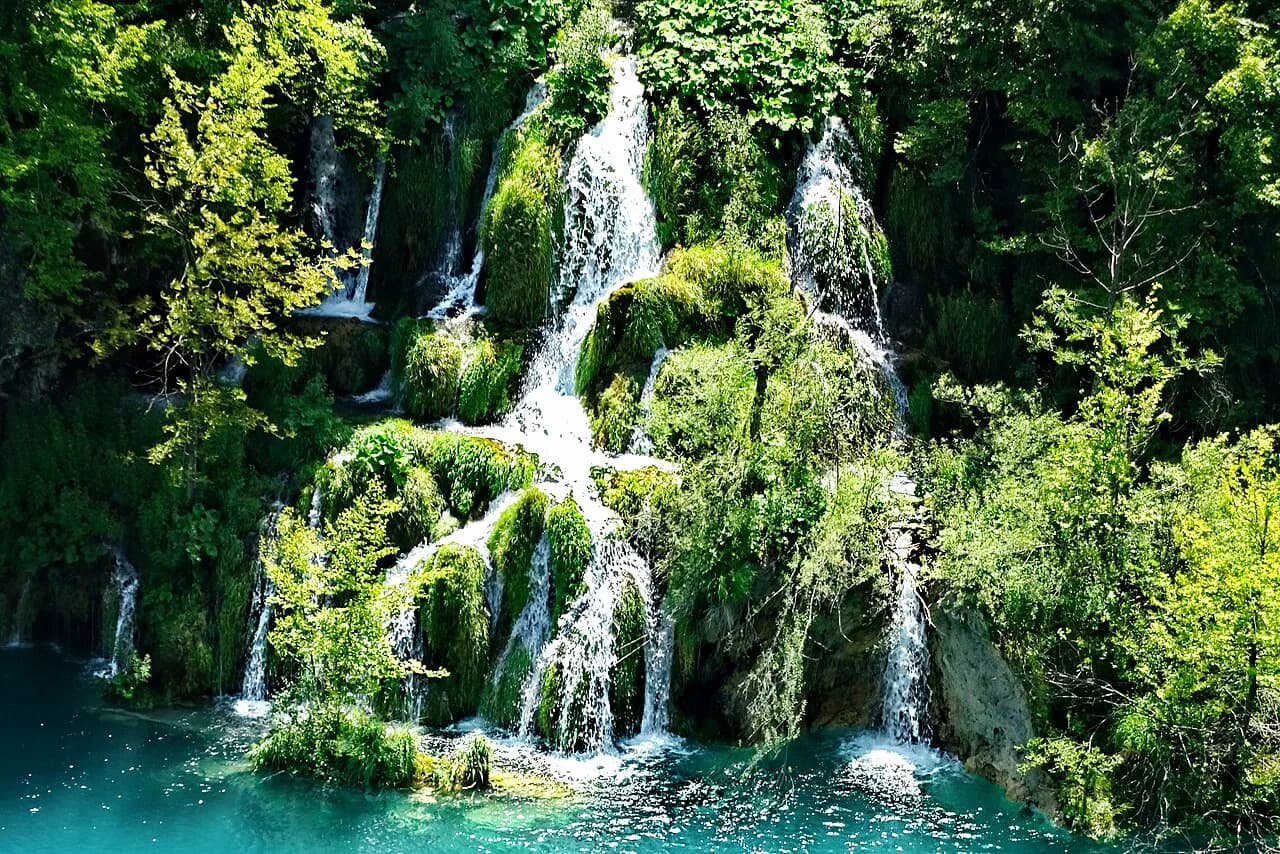
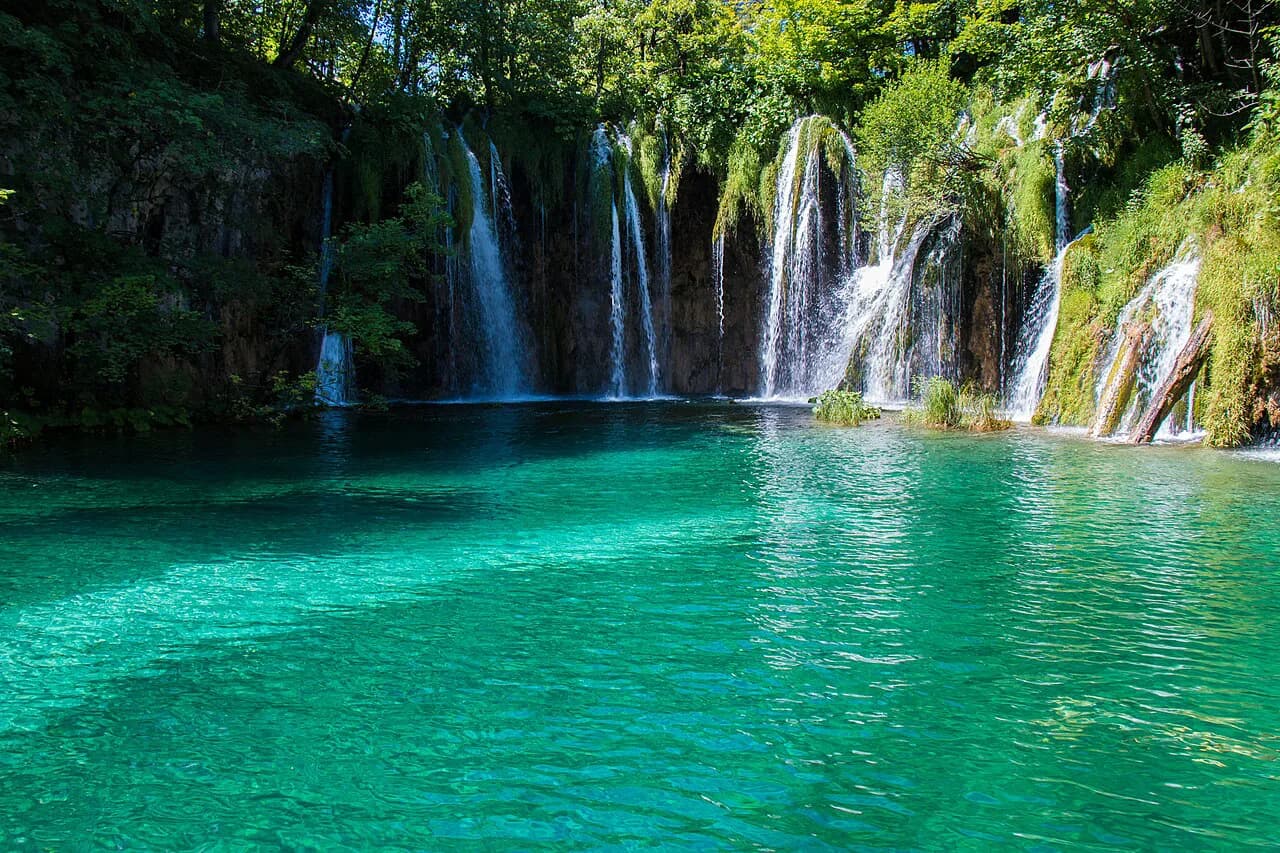
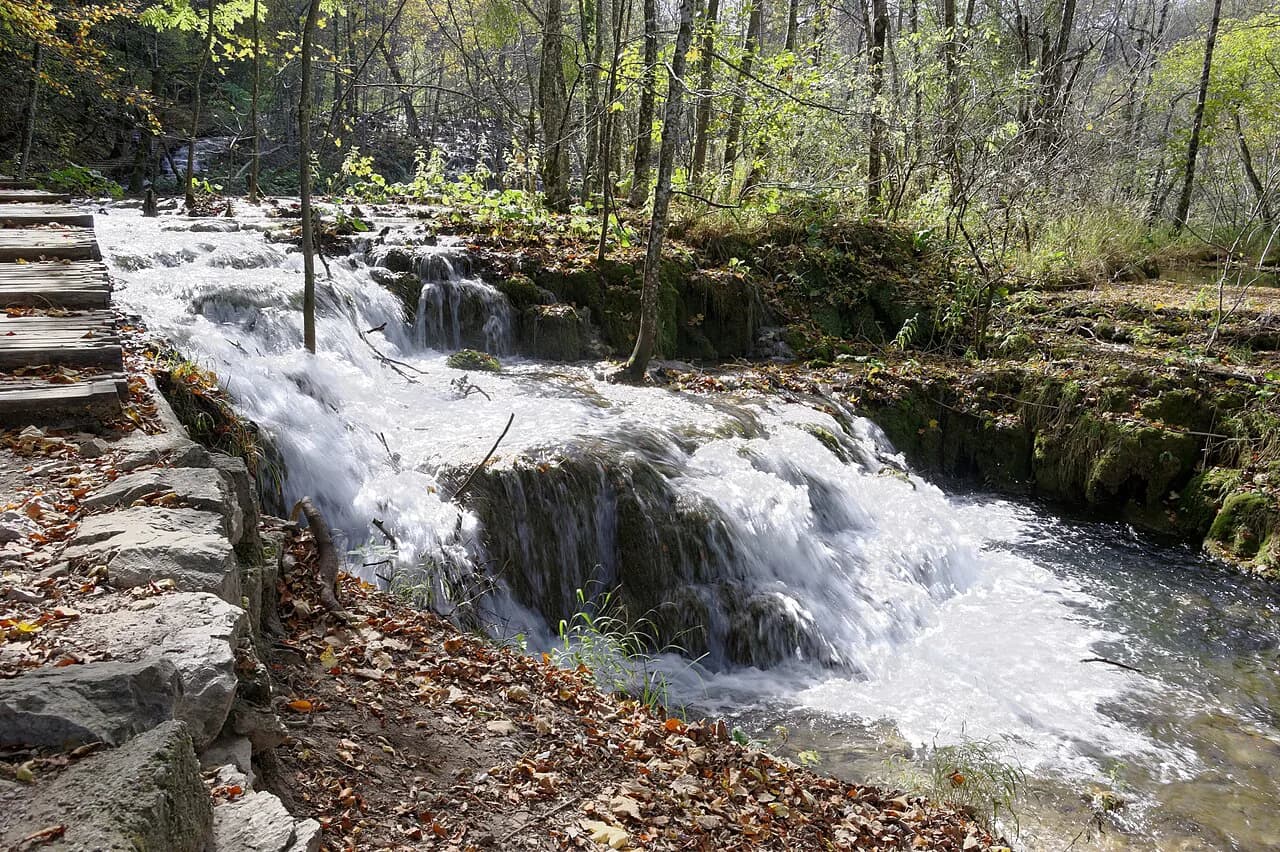
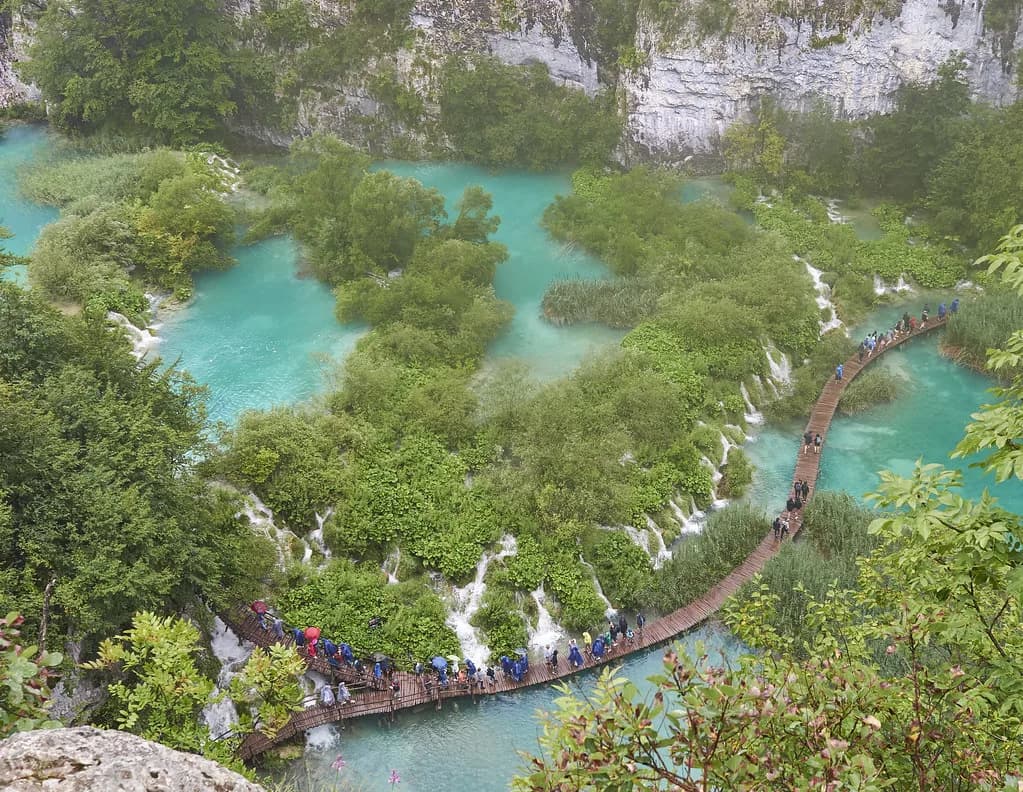
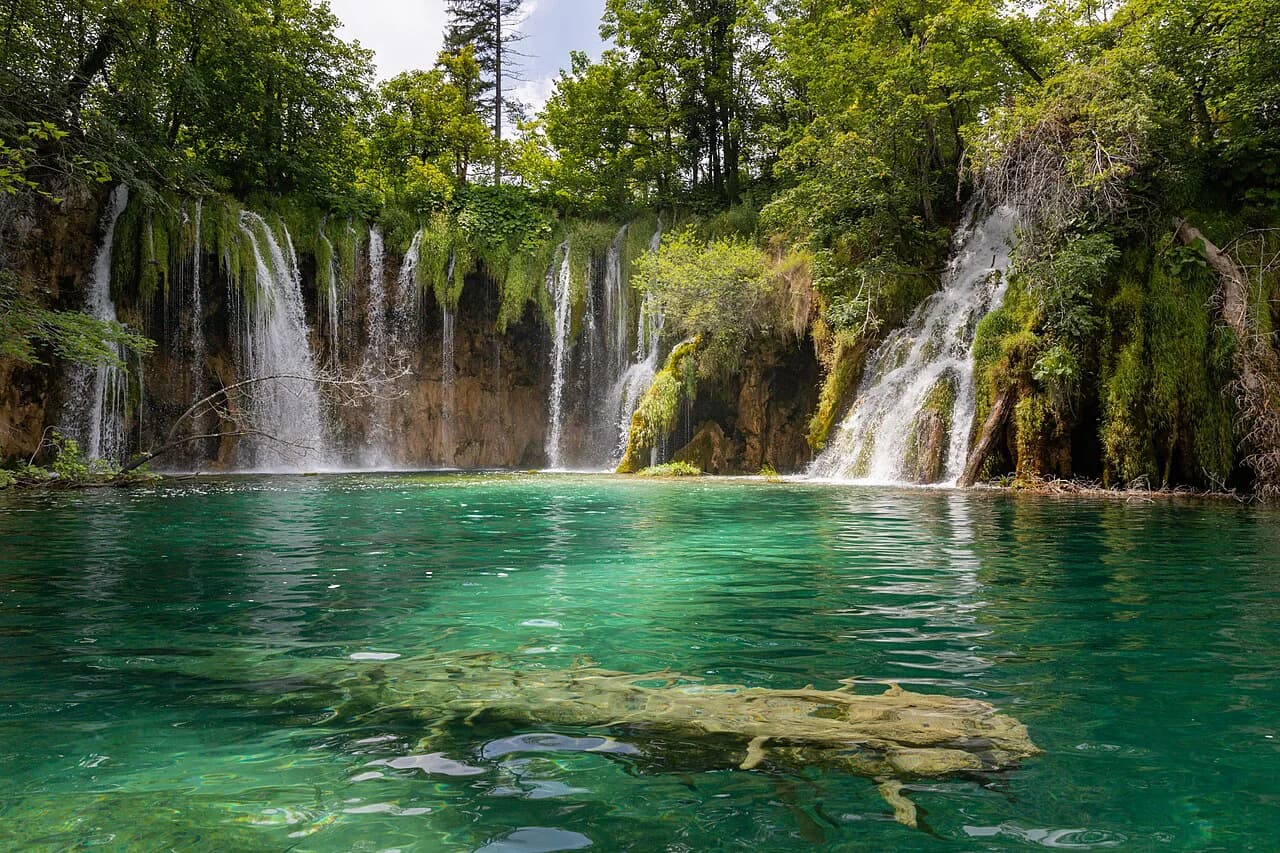
The lakes divide into the Upper Lakes, a broad chain of shallow basins fringed with forest, and the Lower Lakes, where the water cuts into a limestone gorge and the drops come thick and fast. Boardwalks run close to the water and over it, and the headline cascade sits in the Lower section, so the two halves give genuinely different walks. Your entrance ticket covers the electric boat and panorama train within the sightseeing programme you choose, plus visitor insurance and VAT, so boat crossings and train rides are not an extra cost once you are inside.
Routes are signed by letter and can be swapped at junctions, which means a partial day is feasible: pick either the Upper Lakes or the Lower Lakes and accept that you will not see the other properly. A full day gives you time to cross by boat and return on the train without rushing the boardwalk sections. Study the route diagram before you commit, because the letter codes decide how much climbing and doubling back you take on.
Ticket prices in 2026: day tickets, two-day tickets and the late-entry rate
The park publishes a 2026 price table in euros with three period bands: 1 January–31 March and 1 November–31 December at the cheapest rates, 1 April–31 May and 1 October–31 October in the middle, and 1 June–30 September at the top. For an adult day ticket the published 2026 prices are 10, 23 and 40 euros in those bands respectively. The summer band is then split by time of day: from 1 June to 31 August the 40-euro rate applies until 16:00 and a 25-euro rate after 16:00, and from 1 September to 30 September the cut-off moves to 15:00. Students pay 6, 14 and 25 euros across the bands, children aged 7 to 18 pay 4, 6 and 15 euros, and under-sevens go free.
The two-day ticket is valid for two consecutive days from the date of sale and costs 15 euros in the cheapest band, 39 euros in the shoulder band and 60 euros in summer for an adult, with student and child equivalents alongside. That makes a two-day visit in summer slightly dearer than one full-price day rather than double, which is the honest argument for staying overnight. Groups of 15 or more get a small reduction but must book in advance by email at least two days before arrival.
Two points catch people out. First, the after-16:00 summer rate is a day ticket for the remaining hours, so use it for an evening in the Lower Lakes rather than pretending it covers a full circuit. Second, the ticket must be validated at the entrance you selected and within the time slot you booked, so an open ticket bought for Entrance 1 will not get you through the gate at Entrance 2.
How the season bands affect the plan
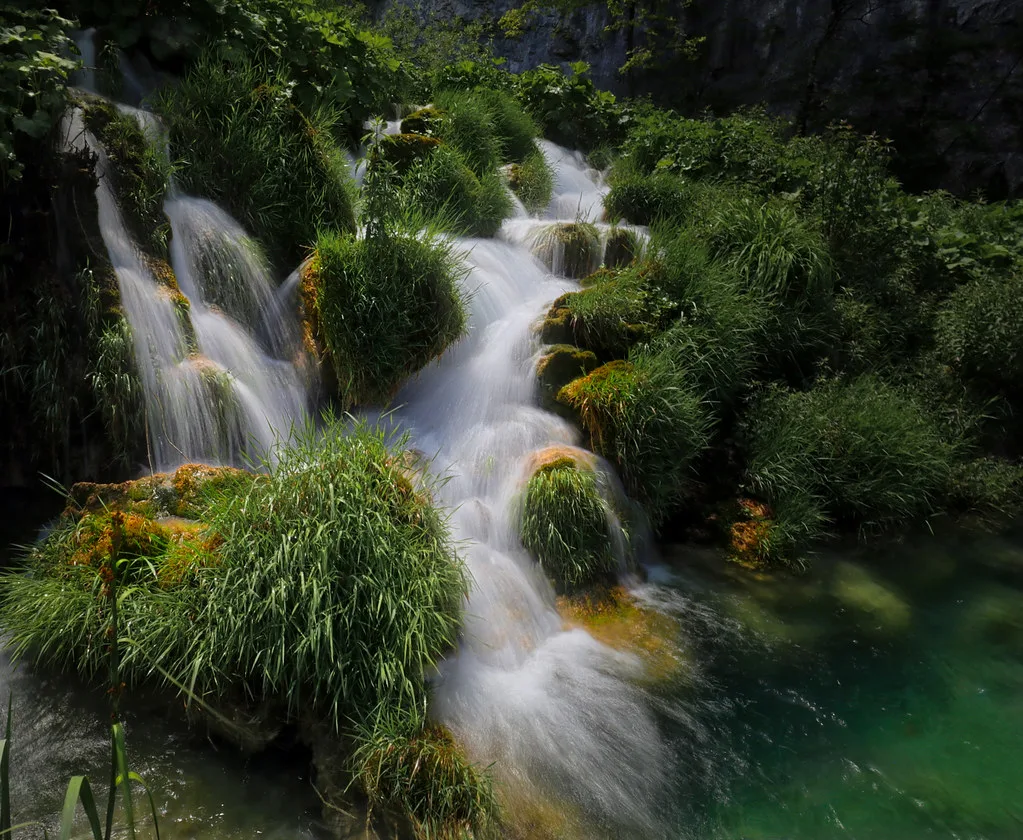
The winter band, 1 January–31 March and 1 November–31 December, is the cheapest by a wide margin at 10 euros for an adult day ticket. The trade-off is daylight and cold: most hospitality facilities are closed to visitors in the colder part of the year, and accommodation is available only at Hotel Jezero. On a short winter day, plan the Lower Lakes boardwalks for the middle hours and keep the walking ambitions modest. The shoulder bands of 1 April–31 May and 1 October–31 October give you the middle price of 23 euros for an adult day ticket. Spring brings high water and strong cascades after snowmelt; autumn brings beech colour and fewer coach groups. Either band is the sensible choice if you want the park without summer queues and are willing to accept changeable weather.
Summer pricing is where the timing decision gets real. Arriving for opening buys you the full circuit, and combining two summer day tickets against the two-day ticket makes the two-day option the cheaper route if you want both halves of the lakes at ease. If you only have an afternoon, the afternoon ticket is the value pick, but expect to see one section, not both.
Entrances, opening hours and parking
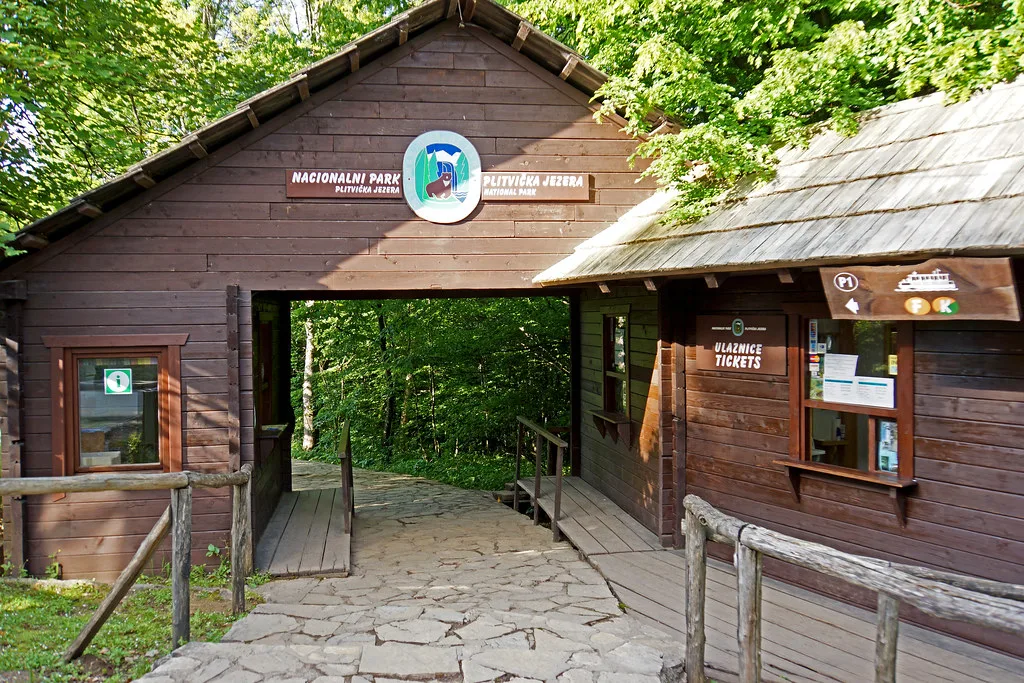
There are three practical entry points: Entrance I – Rastovača, Entrance II – Hladovina and the auxiliary entrance Flora near Entrance II. The published operating hours list the entrances and ticket desks as open 07:00–18:00, with ticket sales ending at 15:00, and the parking lots at Entrances 1 and 2 running 07:00–19:00. Hours shift through the year, so match your arrival to the pattern published for your date rather than to a remembered time.
Choose your entrance by which half of the lakes you want first: the two main gates serve different ends of the circuit, and the boat and train stations are laid out accordingly. If you are arriving late in the day, aim for the gate closest to the section you plan to walk so you do not spend your remaining light crossing the park. Note that exchange offices are closed at both entrances, so arrive with euros sorted.
Buying tickets online versus at the gate
The park encourages visitors to buy in advance through its ticketing website to cut waiting and person-to-person contact. Print the ticket or store it on your phone and have it validated at the chosen entrance within the booked period. Tickets are still sold at the gates unless the day is sold out, but a sold-out summer date leaves you with no fallback, so pre-booking removes the risk.
Students and visitors with a disability above 50 per cent need to show a valid card at the gate to get the reduced rate, and anyone entering as a licensed guide or tour manager should carry ID because cards are checked alongside tickets. Children under seven enter free, but they still need to be counted on the booking. The two-day ticket requires the visitor's name on it, so buy it in the name of the person travelling.
The electric boat and panorama train
The boat and train run to a published daily timetable with fixed intervals rather than on demand. On the long boat route, crossings are listed every 30 minutes in each direction, and the panorama train stops also run every 30 minutes, while the short boat route operates as needed within its window. Treat those intervals as the skeleton of your day: a missed crossing costs you half an hour of walking time.
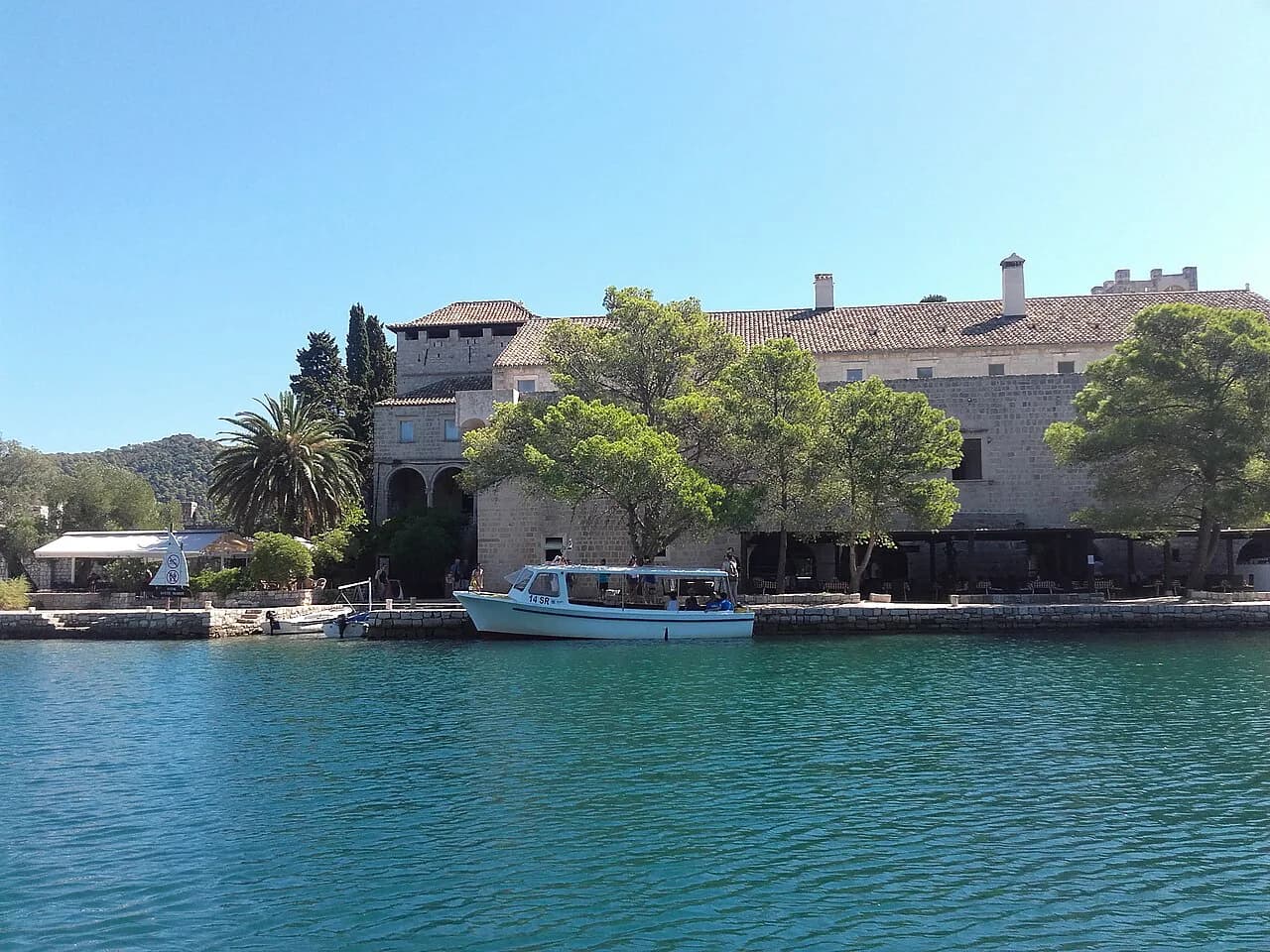
Both are already paid for by your entrance ticket, so there is no separate fare to budget and no reason to skip the boat to save money. The practical use is to link the far ends of the park and save your legs for the boardwalks, then ride the train back to your starting gate. Seasonal timings vary, so check the hours published for your date before you build a route around a specific crossing.
Park rules that catch visitors out
Swimming is banned throughout the National Park, and so is cycling; walking off the marked footpaths, lighting fires, fishing and camping are all prohibited, and dogs must stay on a lead. Drones are banned, including remotely controlled aircraft flown for filming. The rules exist to protect the tufa barriers that hold the lakes together, and rangers enforce them.
In practice this means swimwear stays in the bag, cyclists should leave the bike at their accommodation and families should brief children on staying behind the railings. Feeding animals and picking plants are also against the rules. Dogs are allowed only on a lead, so a parked dog in a hot car is not an alternative plan.
Getting to Plitvice from Zagreb or Split
The park lies on the main inland corridor between Zagreb and the Dalmatian coast, so it fits a road trip between the capital and Split or Zadar without a major detour. Driving gives you the most flexibility, since you control arrival time at the gate and can stop at Rastoke on the way. Public transport options exist along the same corridor, but they tie you to a timetable and drop you near the park rather than at a chosen boardwalk.
If you are coming from the coast, build the park in as a two-night inland leg rather than attempting it as a dash from an island. Coming from Zagreb, an early start puts you at a gate in the morning with a full day ahead. Ferry operators such as Jadrolinija have no role here; Plitvice is inland and reached by road only.
How much time and money to allow
Budget chiefly for the ticket and parking, since the boat and train are included in the ticket price. One adult summer day is priced at the standard rate or at a reduced rate, while two consecutive summer days on the two-day ticket are cheaper than buying two separate full-price day tickets. Add a full day of your trip for a one-day visit and two nights if you want both halves of the lakes at a civilised pace. In the cheapest winter band the same adult day ticket costs less, so the cost argument for a two-day stay disappears in low season. If you are working Plitvice into a longer Croatian trip that also takes in the coast, treat it as a deliberate inland stop of at least a night rather than a half-day add-on. A coastal itinerary built around Hvar or Poreč will need roughly a day removed to accommodate it properly, so sketch the timeline against a Croatia Itinerary: Plan a First Trip From 7 Days to 2 Weeks before you book.
Where Plitvice fits in a Croatian coast itinerary
Most readers arrive from the Adriatic, so the cleanest pattern is coast, then inland, then Zagreb or a return to the coast. Linking Plitvice to Hvar Attractions or Poreč Attractions in one trip is possible but stretches the driving, so be honest about how many hours you want behind the wheel. Two nights at the lakes, with an early gate arrival on the full day, is the version most people come back satisfied with.
If your trip is built around ferries and islands, remember that the park has no coastal connection and cannot be reached by boat. Slot it at the start or end of the trip, next to your Zagreb flight or your drive down to Dalmatia, rather than trying to break a ferry-hopping run in the middle. That ordering keeps the coastal legs intact and gives the lakes their own day.
Which Plitvice ticket should you book?
Book the standard full-price day ticket if you have a single day and want the whole circuit, and choose the after-16:00 rate only when you accept that one section is the realistic target. If you can stay two nights in summer, the two-day ticket beats two day tickets on price and gives you the Upper and Lower Lakes on separate mornings. In the shoulder and winter bands the one-day ticket is cheap enough that the two-day case rests on pace rather than money.
Whichever you choose, pick your entrance before you pay, buy in advance for summer dates, and arrive with euros because the entrance exchange offices are closed. That done, the park is straightforward: boardwalks, boat, train and no swimming.
Explore more Plitvice Lakes guides
Frequently Asked Questions
Can you swim in Plitvice Lakes National Park?
No. The park's rules prohibit swimming anywhere in the National Park zone, along with cycling, fishing, camping, lighting fires and walking off the marked footpaths. Dogs are allowed only on a lead, and drones are banned.
Do you need to pay separately for the boat and train at Plitvice?
No. The entrance ticket includes transport on the electric boat and panorama train within the sightseeing programme you choose, along with visitor insurance and VAT. Budget for the ticket and parking rather than separate boat fares.
Sources
Notes from the Croatian coast
Optional updates when our guides change.
You might also like
Continue reading
More guides you'll find useful