Rastoke: Croatia's Watermill Village at Slunj
Rastoke at Slunj is a watermill village where the Slunjčica pours over travertine into the Korana. See what to visit and how long the walk takes.
On this page
Rastoke is worth two to four hours, not the twenty-minute photo stop most drivers give it on the way to Plitvice Lakes. The village sits at Slunj, where the green Slunjčica river spills over travertine barriers into the Korana, and the settlement grew up around that water power rather than beside it, according to the Slunj tourist board. This guide covers what you actually see, the watermill and laundry history, the walking circuit through Slunj, and how to pair Rastoke with the lakes without rushing either.
What Rastoke is: mills and houses over travertine
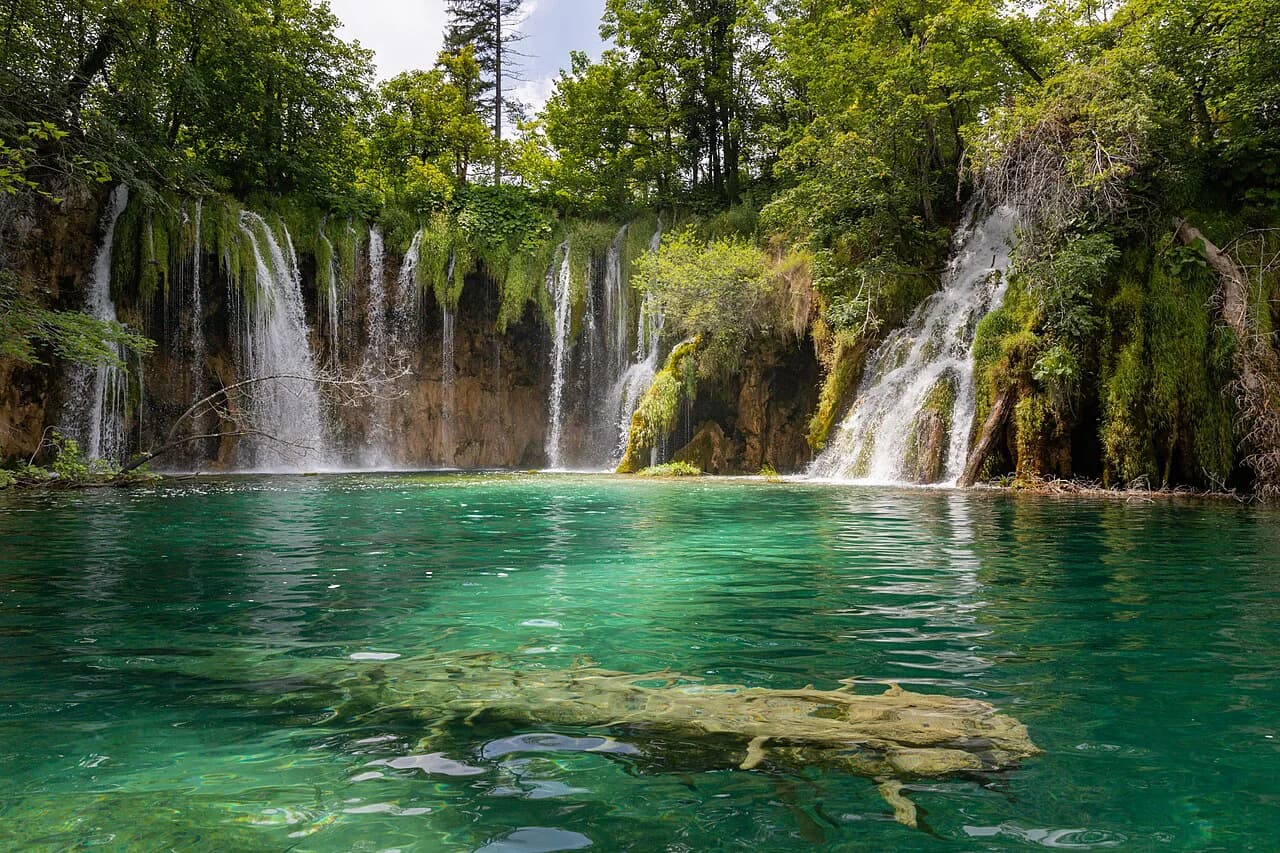
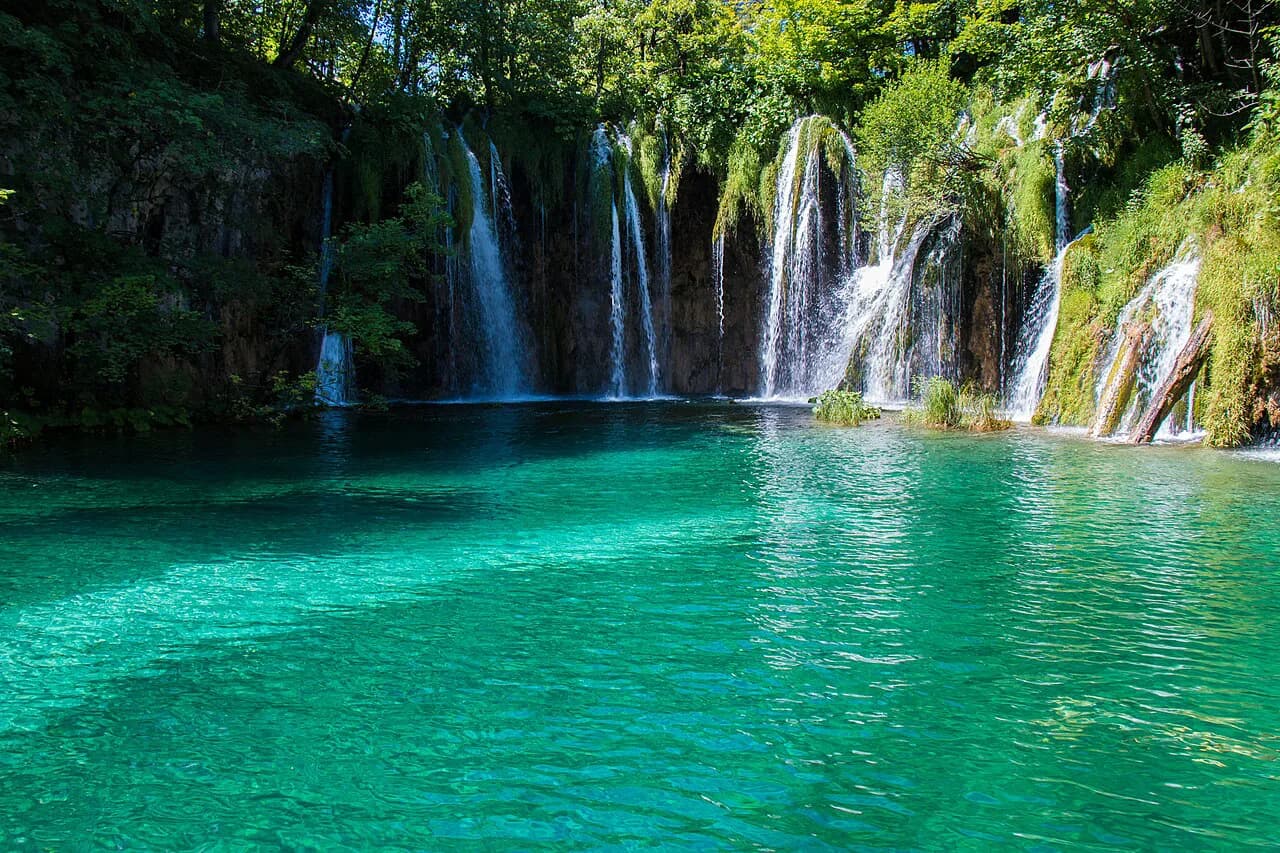
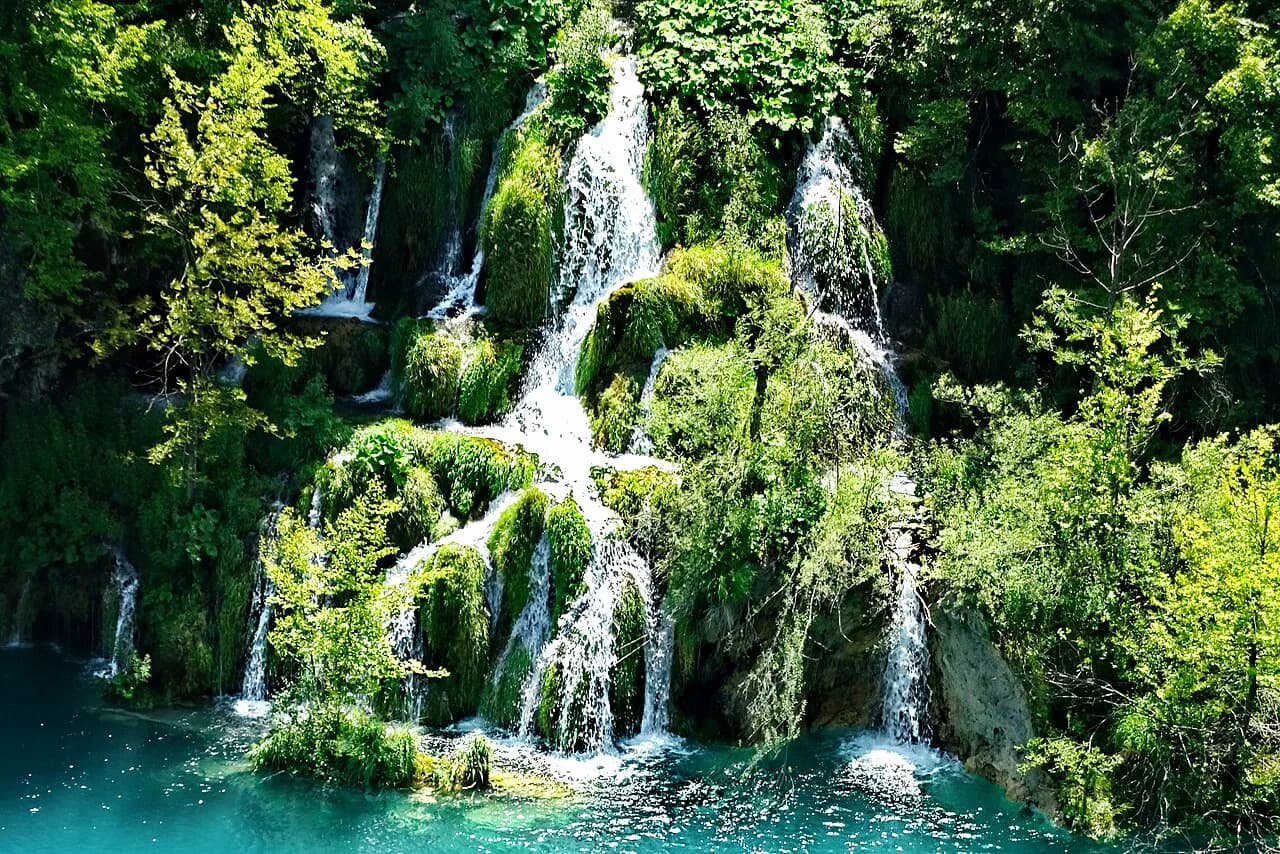
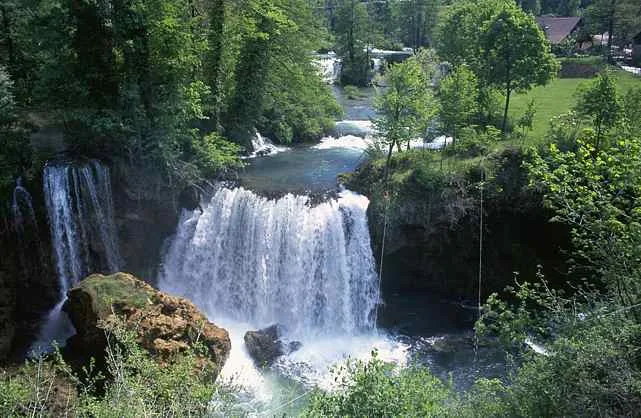
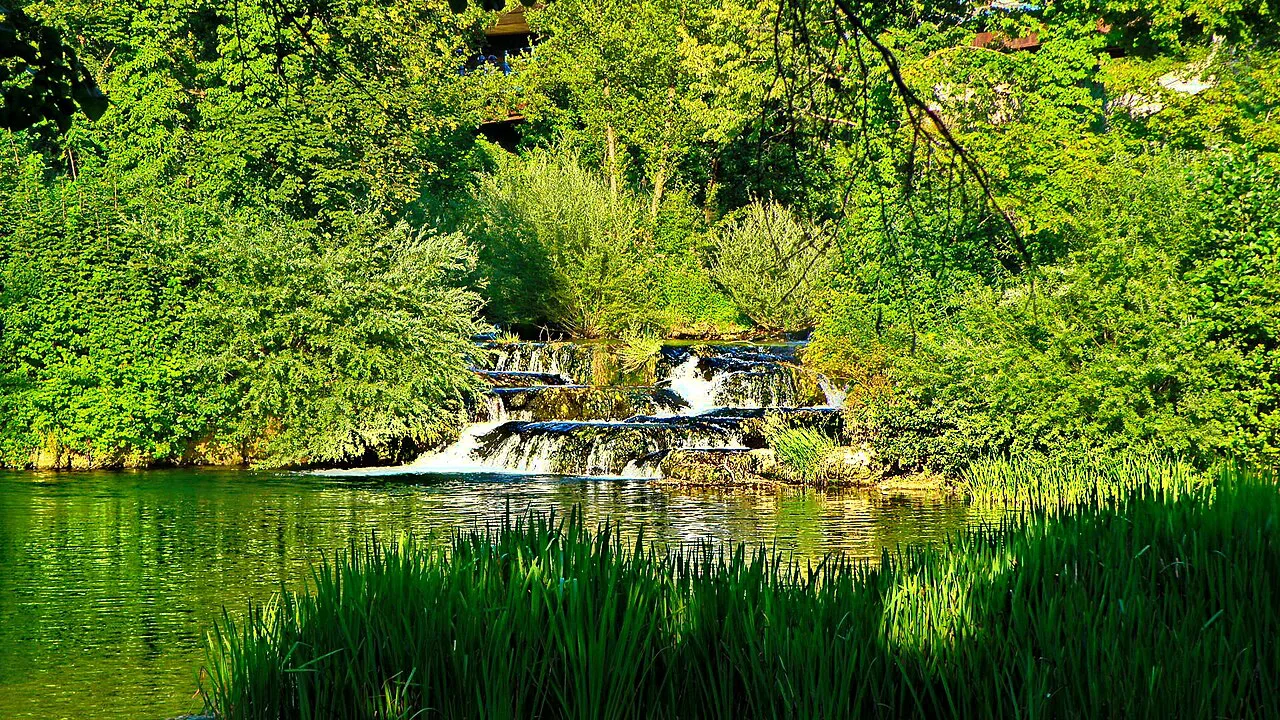
Rastoke is a compact settlement of wooden houses, mills and farm buildings perched on and between the cascades where the Slunjčica meets the Korana. The Slunjčica runs green and blue over travertine barriers, creating waterfalls, rapids, small lakes and cascades in a limestone landscape. That combination of natural travertine steps and built structures is what makes the place distinctive: this is not a single waterfall viewpoint but a lived-in village laid out across the water.
Records give the settlement's authentic construction heritage as dating from the 17th century, though it is believed to have existed earlier; most of the buildings you see were put up in the late 19th and early 20th centuries. Because the water was the only drive for the machinery, the mills are the reason the village exists in this shape at all. Heritage protection followed in 1962, when Rastoke was placed on the state list for cultural and historic heritage, and again in 1969, when it entered the register of immovable cultural monuments in Zagreb.
At the time the village was recorded for protection, Rastoke had 22 water mills, four fulling mills, seven wooden laundry baskets and 28 houses with their farm buildings. Those figures are a historical record of the village at its working peak, not a description of what stands today. Read them as a measure of how densely the water was used: every stretch of the Slunjčica had a job.
Why water power here was different
Before the mills, machines were driven by human or animal muscle; at Rastoke the river did the work instead, and it is this shift that the village's history turns on. Grain was ground by the water, and laundry was cleaned in deep wooden barrels drilled with holes, set beside the mills so the current tumbled the clothes clean long before washing machines existed. Look for those drilled baskets as you walk: they are the most tangible piece of everyday technology in the village.
The old hydroelectric plant, a small white house sitting on a waterfall, supplied the town with electricity in the early 20th century and now houses a fisherman's club. It is a useful landmark on the riverside walk and a reminder that Rastoke kept finding new uses for the same drop of water.
The walking circuit: Neralić statue to the Frankopan Fort
Start at the statue of Milan Neralić, the Slunj Olympian, which overlooks the river canyon and the Frankopan Fort. Head downhill towards the church, crossing the oldest square in Slunj, then take the far left corner of the square down to the banks of the Slunjčica. From the water you can continue to Moćan bridge and cross towards the Frankopan Fort, with benches and picnic tables along the way for a pause in sun or shade.
The circuit from the statue down through the square, over the bridge and up past the fort back to the road takes 20–45 minutes at an unhurried pace. Crossing to the left at the top brings you to Napoleon's weapons storage, a second fortification, and a view back over the river from the opposite bank. From there you can walk downhill to Rastoke itself or to the town beach on the Korana.
If you want a longer riverside stretch rather than the loop, take the narrow grassy path that meets the road by the river and follow it to the right. It brings you to a favourite picnic spot beside the old power plant. Continue past the plant on the narrow trail and it eventually leads to the source of the Slunjčica, known locally as the Slušnica, which is a far bigger walk than the village circuit and should be planned as one.
Rastoke and Slunj: stop or stay a while
Rastoke draws visitors off the road within a minute of the big curving bridge, and many treat it as a brief stop en route to Plitvice. The honest trade-off is that the waterfalls reward an hour and the rest of Slunj rewards several more, so a rushed stop means seeing the postcard and missing the town around it. Slunj offers river walks, cycling, water sports and quiet afternoons on a café terrace with water running underneath, all within the same small area.
The Slunj tourist information centre sits at Rastoke 2. On Thursday mornings a farmers market fills the old square in Slunj, a short walk from the water.
Combining Rastoke with Plitvice Lakes
Rastoke sits on the same road as Plitvice lakes National Park, which makes it a natural first or last stop of the day rather than a separate outing. The sensible pattern is to take the village and the Slunj river walk in the morning, then drive on to the lakes for the afternoon, or reverse it if you are coming from the coast. Doing both in a single rushed day is possible but leaves little time for the Upper Lakes or the quieter corners of the park.
Plitvice has its own ticketing and entry system, so sort your slot before you leave Slunj rather than arriving without one; the park's Plitvice lakes tickets are sold by the park authority, and the entry rules are theirs to set. If waterfalls are what brought you to this part of Croatia, the Rastoke cascades and the Plitvice lakes waterfalls make a coherent pair, but they are entirely different experiences: one is a small working village, the other a large protected karst system.
For planning the lake day, study a Plitvice lakes map before you go: the park is long and thin, and the entrances, boat crossing and shuttle stops determine which of the Upper Lakes and Lower Lakes you can realistically see in an afternoon.
What to check before you set out
Rastoke is an open village rather than a gated attraction, and no entry price or seasonal closure is published for the settlement itself, so budget nothing for admission and check the tourist board's site for anything current before travelling. The Slunjčica and Korana can run high after rain, which changes how much of the riverside path is comfortable. Sturdy shoes matter here: the travertine and the paths between the mills are uneven.
If you are heading on towards the coast after the lakes, the drive south through Lika is long and worth breaking; plan your Rastoke stop on the way out rather than trying to fit it in on arrival day. Families with children will find the village easy to walk and the picnic benches by the river a better bet than a restaurant table in high summer.
Should Rastoke be a stop or a half-day?
Give Rastoke a half-day if you are travelling between Zagreb and Plitvice, and a full stop if the mills and the Slunj river walk interest you. Arrive in the morning, walk the Neralić statue circuit first while the water is quiet, then use the information centre on Rastoke 2 for anything you need before driving on to the lakes.
Frequently Asked Questions
Is Rastoke worth visiting?
Yes, if you give it enough time. The waterfalls and the mill village take an hour or so, and the walking loop from the Milan Neralić statue down to the Slunjčica, over Moćan bridge and up past the Frankopan Fort takes 20–45 minutes. Treating it as a five-minute photo stop is what makes people think it was not worth the detour.
How long should you spend in Rastoke and Slunj?
Give the village and the short river circuit a couple of hours at least, and more if you want the riverside walk towards the source of the Slunjčica. Slunj itself rewards a slower pace, so a half-day is a better match than a quick roadside pause.
Can you visit Rastoke on the way to Plitvice Lakes?
Yes, Slunj is on the road from Karlovac towards Plitvice lakes National Park, which makes it a natural stop at the start or end of a lake day. Book your park entry slot for a fixed arrival time before leaving Slunj so the two do not collide.
Sources
Notes from the Croatian coast
Optional updates when our guides change.
You might also like
Continue reading
More guides you'll find useful