Baška, Krk: What to See, How Long to Stay and How It Fits a Coast Trip
A practical guide to Baška on Krk: the old centre, the Baška Tablet at Jurandvor, walks above the bay, how long to stay and how it fits a Croatian coast trip.
On this page
Give Baška a night, not an afternoon. The town on Krk's southern coast is easy to reduce to its long pebble bay, but the reason to stop is the pair of things behind it: a compact old centre above the water and the Glagolitic heritage that begins a short walk away at Jurandvor. This guide covers the layout, the Baška Tablet and St Lucy's church, the Glagolitic Alphabet Trail, the walks above the bay, how long to allow and how the town fits a wider coastal trip.
Where Baška sits on Krk and how it fits a coast trip
Baška occupies the southern tip of Krk, the large island in the Kvarner Gulf. That position makes it a natural end-point rather than a through-route: you come down to it, then climb back out. It is also a useful contrast to the island's northern towns, which face the mainland and the bridge rather than the water to the south.
On a Croatian coast trip, Baška works best as one stop on a Krk island loop rather than a standalone resort week. Pair it with a night in Krk town for the mainland ferries and the bridge, and consider the crossing to Cres or Lošinj if you are heading further south. The towns of the island's north-west coast, including Vrbnik and Punat, fill a day between.
Ferries and catamarans connect Krk with the mainland and neighbouring islands, but routes and seasonal frequencies are set by the operators, Jadrolinija among them. Check Jadrolinija's own site for the sailing that matches your date rather than relying on a printed guide. Arriving by car gives the most flexibility for the Jurandvor detour and the drive back up to the island's main road.
How the town is laid out: the old centre and Vela Plaža
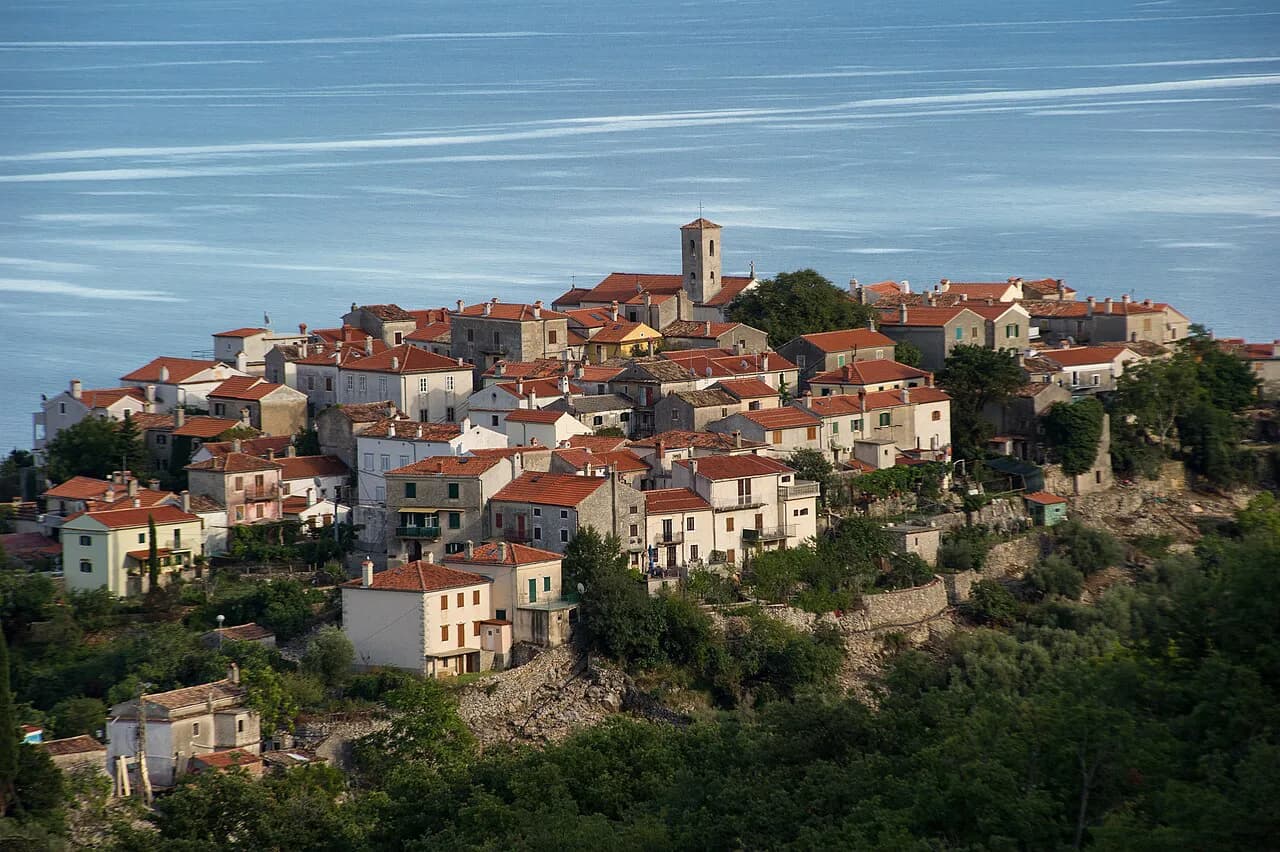
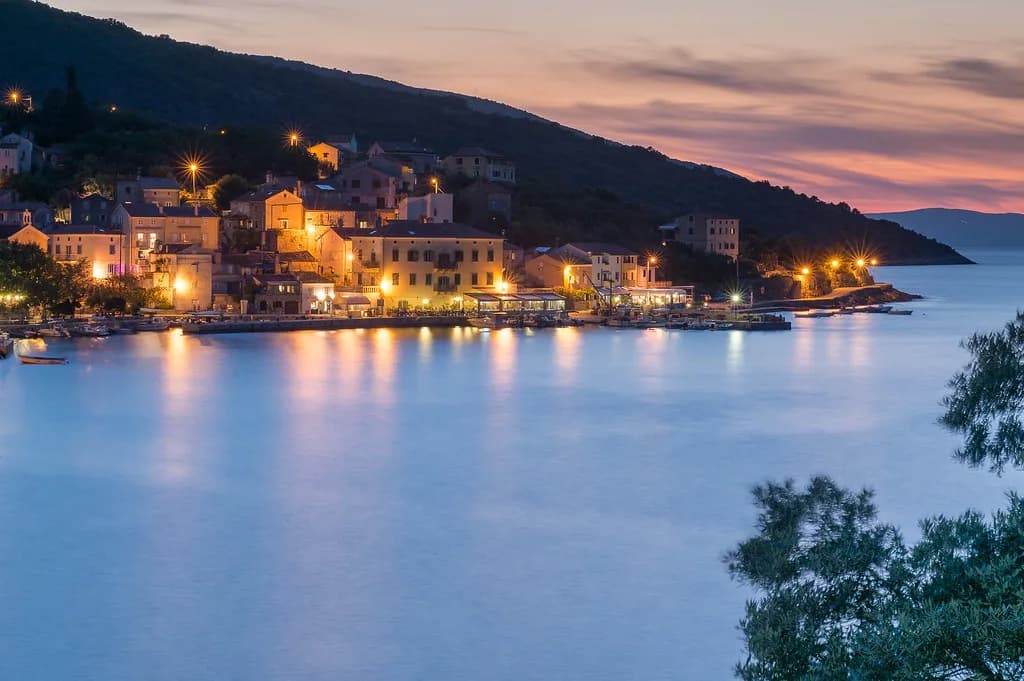
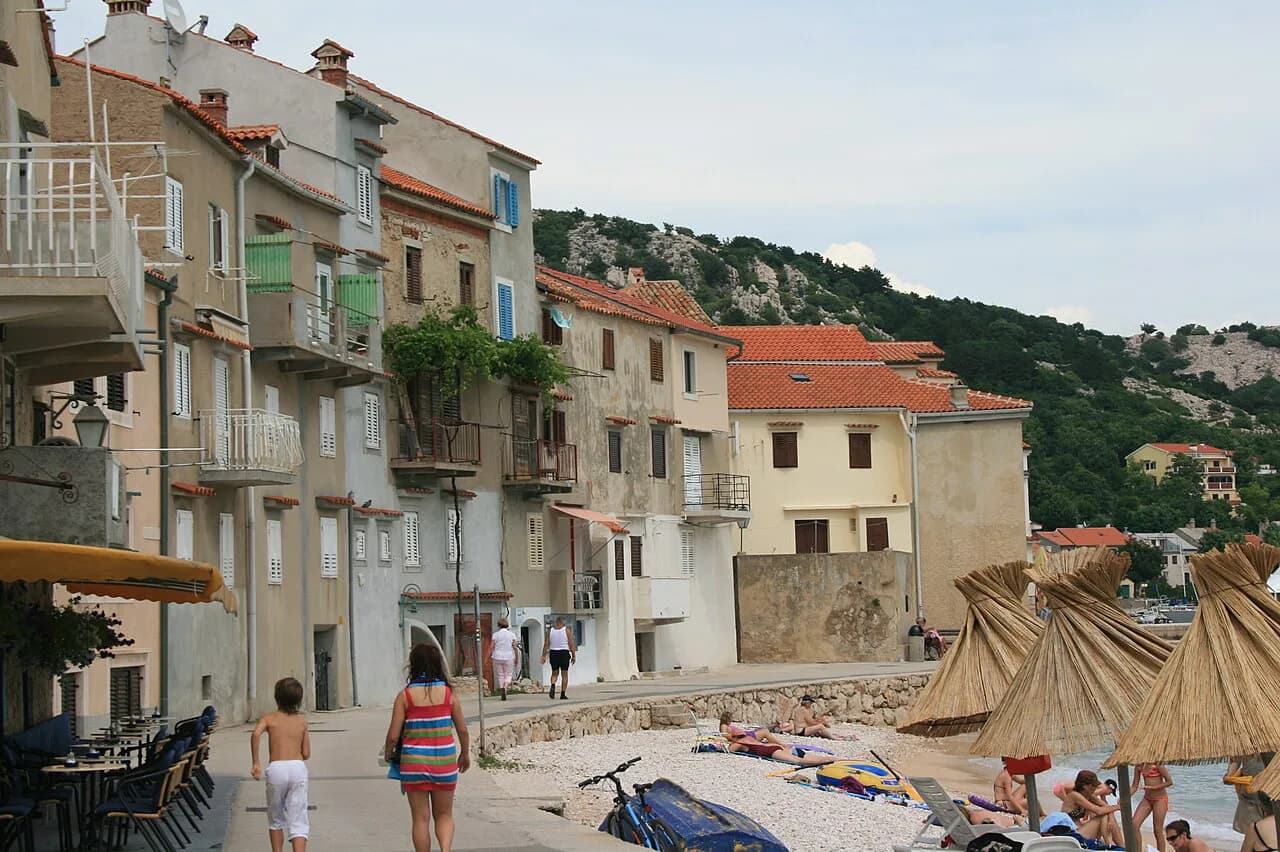
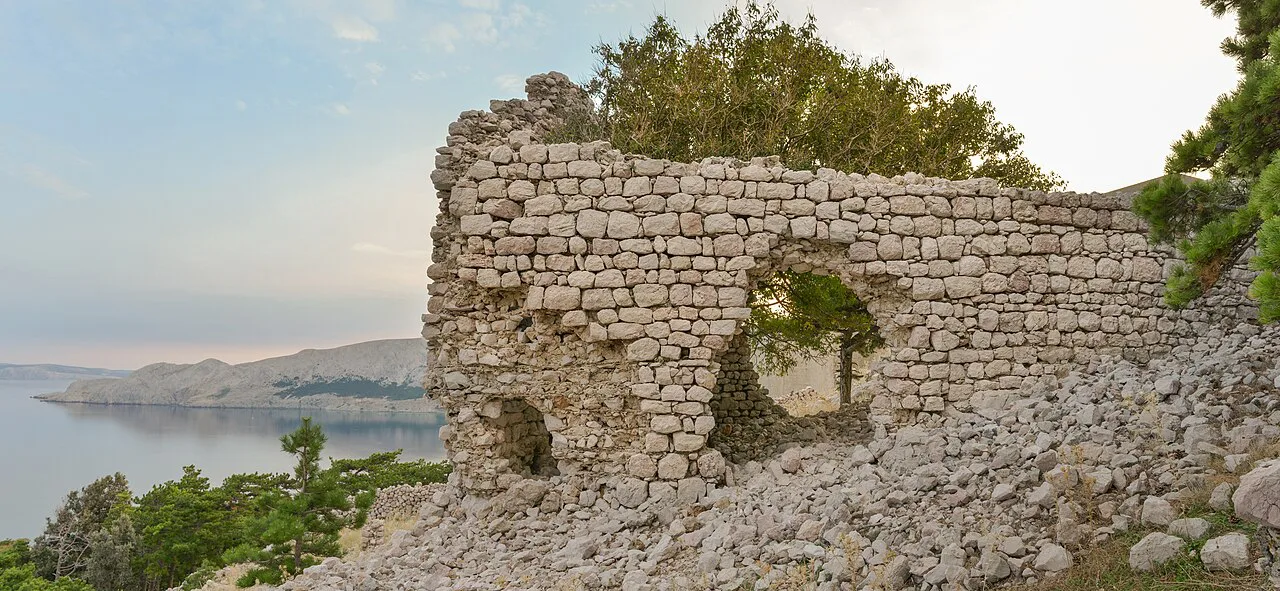
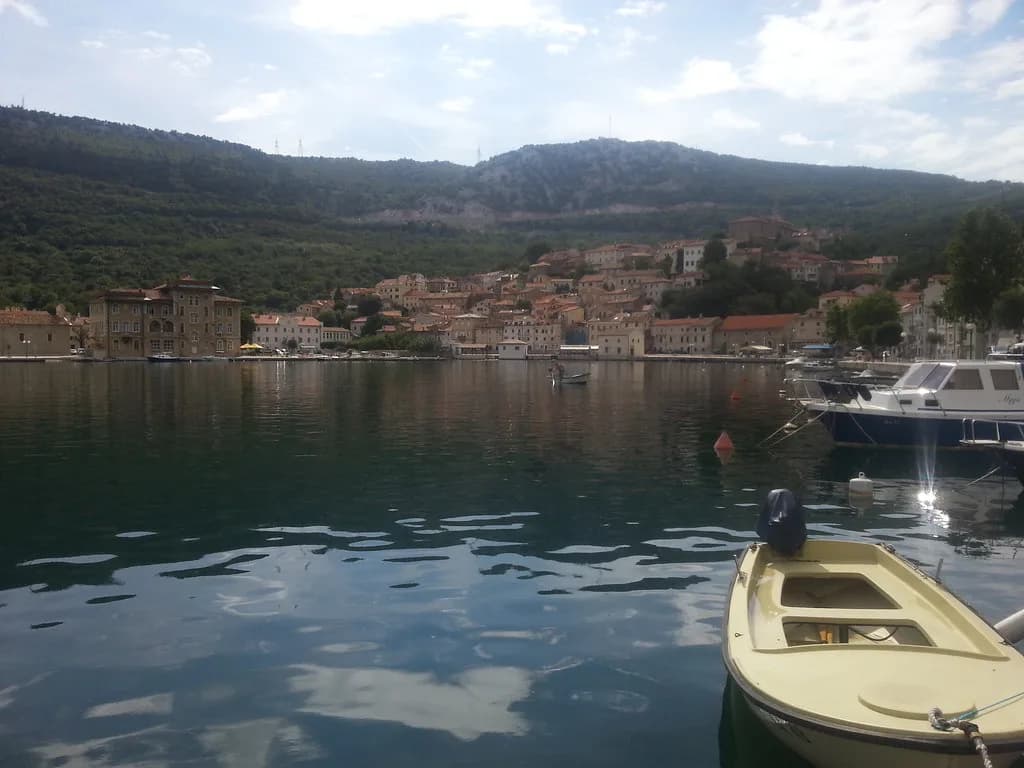
Baška's layout is simple to hold in your head. Vela Plaža, the long pebble beach, runs along the main bay; the town sits behind it; and the old centre climbs in narrow lanes above the waterfront. The town is small, and the surrounding landscape carries most of the interest beyond the waterfront itself.
Allow an hour to wander the lanes of the old centre on foot, looking at the stone houses and the small churches rather than ticking off sights. From the upper lanes the views open across the bay. The waterfront is where the town is busiest, and it is worth walking it early or late rather than at midday in high summer.
Vela Plaža is a pebble beach of about 1.8 kilometres stretching along the main bay, and it is pleasant for a swim before or after the walking. Treat it as the town's front garden rather than the reason for the trip.
The Baška Tablet and St Lucy's church in Jurandvor
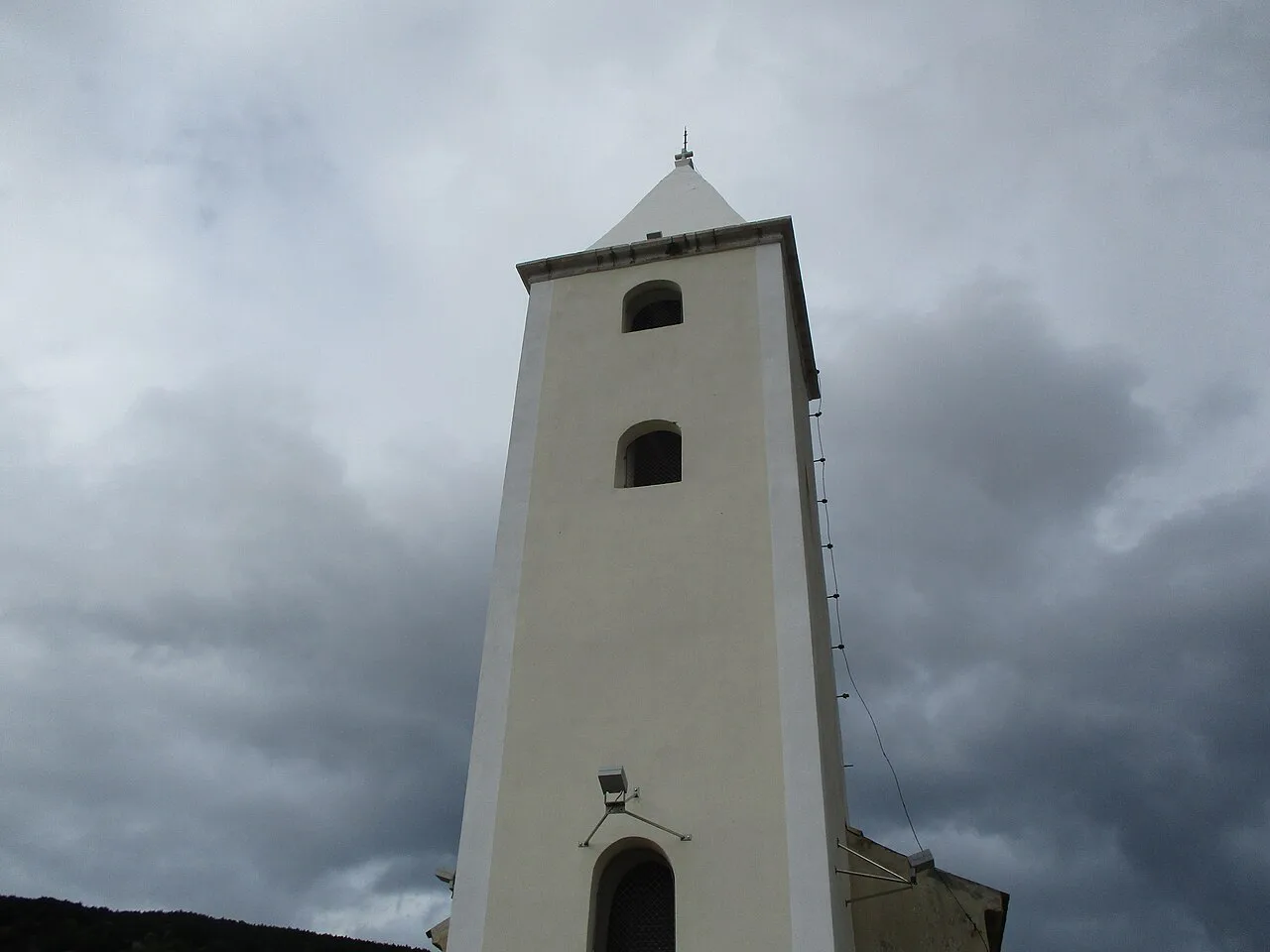
The Baška Tablet is a stone inscription in Glagolitic script: the script's heritage is the thread that runs through Baška's cultural story, and Jurandvor, the village inland from the bay, is where the church associated with it stands. Plan the heritage part of your day as its own errand rather than expecting to find it along the waterfront, and build the rest of your plan around that outing.
Jurandvor sits a short way inland from Baška, so the church of St Lucy and the return trip work as a focused outing from the bay. The tourist board treats it as part of the town's Glagolitic sights, and it is worth treating the visit as the anchor of a half day rather than a quick photo stop; check opening times when you arrive rather than counting on a fixed schedule.
The Glagolitic Alphabet Trail and the town's Glagolitic heritage
The Glagolitic Alphabet Trail is the town's second Glagolitic thread, and the tourist board publishes it as a downloadable programme alongside Camino Krk, so you can pick up the route notes before you set out. That makes it the right choice for travellers who want a themed walk rather than a single monument.
Both the Alphabet Trail and Camino Krk are long-distance in spirit, so decide before you start whether you are sampling a section or committing a full day. A partial walk on the Alphabet Trail fits alongside the Jurandvor visit, since both sit inland from the bay. Proper shoes matter more than on the waterfront: the ground above Baška is rough and exposed.
Walks above the bay and viewpoints over the town
The high ground behind Baška is where the views over the bay open up. The tourist board frames Baška's surroundings as outdoor ground for trekking, running, cycling, climbing, diving and sailing, and publishes outdoor brochures and maps to match, plus a map linking Baška with Punat and Stara Baška across the island.
Choose a short climb above the rooftops if you have an evening, or a longer loop into the hills if you have a full day. The ground above the bay is rough and exposed, so shade is scarce on a hot afternoon. Start early on warm days and carry water.
How long Baška needs: a half day, a full day or an overnight
A half day covers the old centre, the waterfront and the walk out to Jurandvor; a full day adds the Alphabet Trail or a climb above the bay. Staying overnight is the version to choose if you want the town without its day-trip crush. Baška's charms are spread between the settlement and its inland sites, so two nights lets you split the walking and the Glagolitic heritage across separate mornings.
The trade-off is simple. One night gives you the town at dusk and early morning, which are its best hours, but leaves either the church at Jurandvor or the ridge walk undone. Two nights covers both without rushing, provided the weather holds.
Getting there and moving on down the coast
Krk is reached by road from the mainland across the bridge, and Baška is a drive of some distance from the island's northern edge, which makes it a place you arrive at deliberately. Public transport on the island exists but is thin, and the Jurandvor detour and the hill walks are far easier with your own wheels.
Onward from Krk, the islands of the Kvarner — Cres, Lošinj and Rab among them — continue south, and The Kvarner Islands guide covers how the region's towns and crossings connect. If you are building a coast trip, the simplest order is Krk first, then south through the islands, checking each crossing with Jadrolinija before you commit to dates.
When to go: crowds, wind and seasonal rhythms
High summer is when Baška is at its busiest, with the waterfront filling as the day heats up and the beach crowd thickest at midday. Late spring and early autumn give you the walking and the Jurandvor visit in cooler conditions with more room in the old lanes. In the heat of July and August, mornings and evenings are the productive hours, and the afternoons are best given to shade or the sea.
The bura is the north-easterly wind that funnels through the Kvarner, and it can arrive quickly and is strongest on exposed ground, so the ridge above Baška is no place to be caught out by it. Cold, dry air behind it is a reason to pack a windproof layer even in summer. The sea in summer is generally warm enough for comfortable swimming, but treat any figure as a climate average rather than a forecast and check before you commit a day to the water.
What things cost in Baška, in euros
Croatia uses the euro, so prices in Baška are quoted in euros; any kuna figure you see is historical. Parking and ferry tickets are the main cash costs of a Baška stay, and each has its own rate: check the tourist board's practical pages and Jadrolinija's own site rather than budgeting from memory.
Walking the old centre and the waterfront costs nothing, and the Alphabet Trail and Camino Krk are outdoor routes. Budget your money for parking and any ferry crossing. For the wider island picture, Krk Island covers how the island's towns and roads connect.
Is Baška worth a night of your coast trip?
Yes, if you want more than a beach: Baška's old centre above the waterfront, the Glagolitic heritage at Jurandvor and the walks above the bay give you a full day and a half of things worth doing. It is a weaker choice as a pure beach stop, and a stronger one as a night or two on a Krk loop. Book the accommodation and check ferry sailings with Jadrolinija before you fix dates.
Explore more Kvarner guides
Frequently Asked Questions
Do I need a car to visit Jurandvor and St Lucy's church from Baška?
No. Jurandvor sits close enough to Baška that the church works as an outing inland from the bay, which is the simplest way to combine it with the old centre. A car saves time if you are also heading on to the ridge walks or other parts of Krk, but the town and church can be reached without one. Check the church door on arrival for opening hours.
Are the Glagolitic Alphabet Trail and Camino Krk the same thing?
No. The Alphabet Trail is a route through Baška's Glagolitic heritage, while Camino Krk is a separate long-distance walking route on the island. Visit Baška publishes both as downloadable programmes, so you can read the route notes and decide which suits your day.
How much time should I set aside for the old centre and waterfront?
An hour is enough to walk the lanes of the old centre and follow the waterfront, with extra time if you stop for a swim at Vela Plaža. Add the half day for Jurandvor and a full day if you also want the Alphabet Trail or a longer walk above the bay.
Sources
Notes from the Croatian coast
Optional updates when our guides change.
You might also like
Continue reading
More guides you'll find useful