Krk Island, Croatia: What to See and How Long to Stay
Krk island guide: what the golden island offers, from Krk town and Vrbnik to Baška and Košljun, plus how to arrive by bridge, ferry or nearby airport.
On this page
Krk is the Kvarner island to choose if you want island scenery without surrendering your car to a ferry timetable. It is the only one of Croatia's larger northern islands linked to the mainland by road, so a hire car from Rijeka or the airport rolls straight onto it. Allow two to three nights to see Krk town, Vrbnik, Baška and Punat without spending the whole time driving.
This guide covers what the island actually is, how its towns differ, how arrival by bridge, ferry or plane works, and how the bura changes a day on the water. It sticks to what the island's own tourist board publishes, plus the layout you need to judge driving times. Ferry and catamaran schedules move with the season, and Jadrolinija publishes the current ones.
What Krk island is and why it is called the golden island
Krk has carried the name Insula Aurea, the golden island, since ancient times, a label the island's tourist board ties to its mild Mediterranean climate, central position in the Kvarner bay and range of natural and cultural sights. It has also been called the cradle of Croatian culture. Visitors who expect a single highlight town should adjust: Krk is a spread-out island of several centres, each with a different character.
History here runs deep and compactly. The island was settled by Illyrian tribes and later the Greeks, a bishopric was established at Krk town by the 5th century, and the Frankopan family rose from local clans at the end of the 12th century to hold territory equal to roughly half of present-day Croatia at its height. The first known Frankopan was Dujam I, recorded in 1118, and the last was Fran Krsto Frankopan, executed in 1671.
Venetian rule began in 1480, when Krk became the last Adriatic island to fall to Venice after the noble Ivan Frankopan was taken into Venetian captivity. That long handover between Venetians, French, Austro-Hungarians, Italians and others explains the mixed layers you see in the towns rather than any single architectural style.
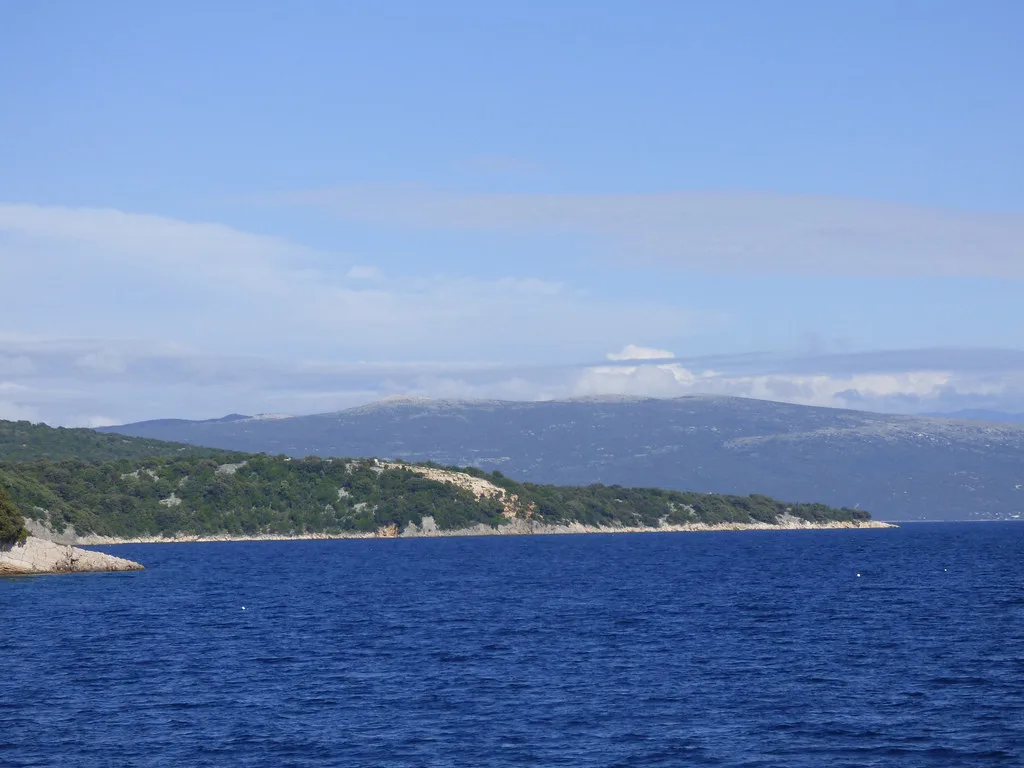
Where Krk sits in the Kvarner bay and how big it is
Krk lies in the centre of the Kvarner bay, about 30 kilometres from Rijeka, the region's transport and cultural centre. Its longest stretch runs 38 km and its widest 20 km, with a coastline of around 190 km, and the 45th parallel crosses the island. In practice that means nowhere is very far, but the coast road twists enough that a 30 km hop can take far longer than the map suggests.
The nearest mainland is only about a hundred metres away at the narrowest point, and the island's neighbours are Cres, Goli and Rab. Two smaller islands belong to it: Plavnik, with 17 km of coast, and the tiny Školjić, with just 400 m. The relief climbs from gentle coves and lagoons in the north-west to bare limestone and something close to mountain country in the south-east.
For planning, treat the island as a ring with spokes. Krk town and Omišalj sit towards the north, Vrbnik on the north-east coast, Punat and Košljun on the south-west, and Baška at the southern tip. If you are island-hopping rather than staying put, The Kvarner Islands guide covers how Krk fits with Cres, Lošinj and Rab.
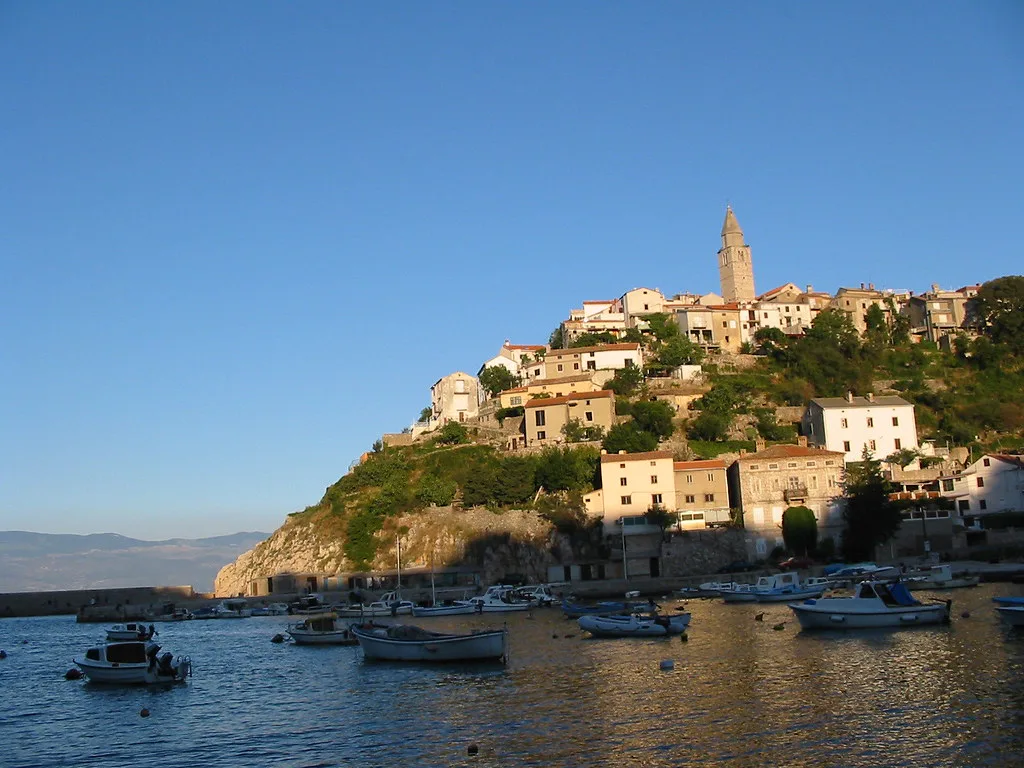
Getting to Krk: the bridge from the mainland
The Krk bridge is the reason this island feels different from its neighbours. The tourist board lists the road over the bridge as the land approach, alongside boats into the ports and marinas and a ferry to the Valbaska harbour. For anyone touring by car, that makes Krk the easiest island in the Kvarner to add to a mainland itinerary without booking a sailing.
The trade-off is that the bridge concentrates traffic. On summer changeover days the approach from Rijeka can slow to a crawl, and arriving mid-morning puts you in the worst of it. Crossing early or late in the day costs nothing and saves a queue, and it also puts you in Krk town before the coaches arrive.
Getting to Krk by ferry, boat and plane
The sea approach is the ferry to the Valbaska harbour, the island's link with the neighbouring island of Cres rather than with the mainland. Schedules shift between summer and winter, so check the sailing you actually intend to take. This route suits travellers coming down from Cres or Lošinj rather than a direct arrival from the mainland.
By air, Rijeka airport sits close to Omišalj on the island itself, which makes Krk unusually convenient for a fly-and-drive arrival. Coming from the UK or Ireland, that means a short transfer to your first night rather than a ferry connection. Smaller ports and marinas around the island accept visiting boats, and the harbours at Krk town and Punat are the obvious bases.
Krk town: the cathedral, the Frankopan castle and the harbour
Krk town is the island's capital in all but name, a walled knot of lanes above a harbour on the south-west coast. The bishopric formed by the 5th century left it with a cathedral complex, and the Frankopan castle anchors the upper town; together they give the place more weight than its size suggests. Give it half a day at least, more if you want the museums.
The layout rewards getting lost on purpose. The lanes inside the walls are pedestrian and short, the waterfront promenade, the Riva, is where the town opens out, and the castle above gives the orientation you need before wandering. Arrive early or after the afternoon peak, when day-trippers have gone and the cafés along the Riva thin out.
If you are basing yourself on Krk, the town works as a hub: it is close to the bridge, has the most services, and puts Punat and Vrbnik within easy reach. Travellers heading on to the quieter northern islands should look at the Lošinj: What to See, How to Get There and How Long to Stay for how the ferry chain connects.
Vrbnik and the Frankopan story
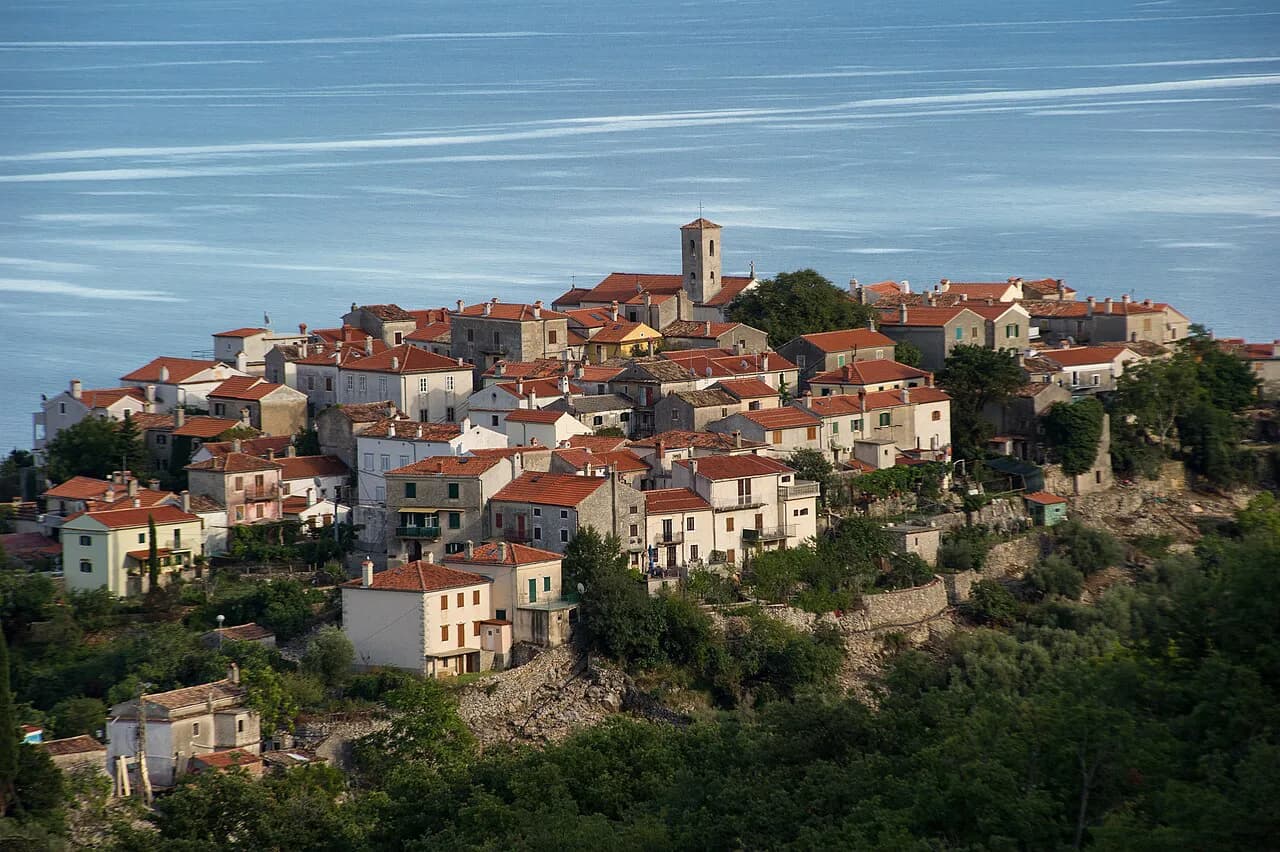
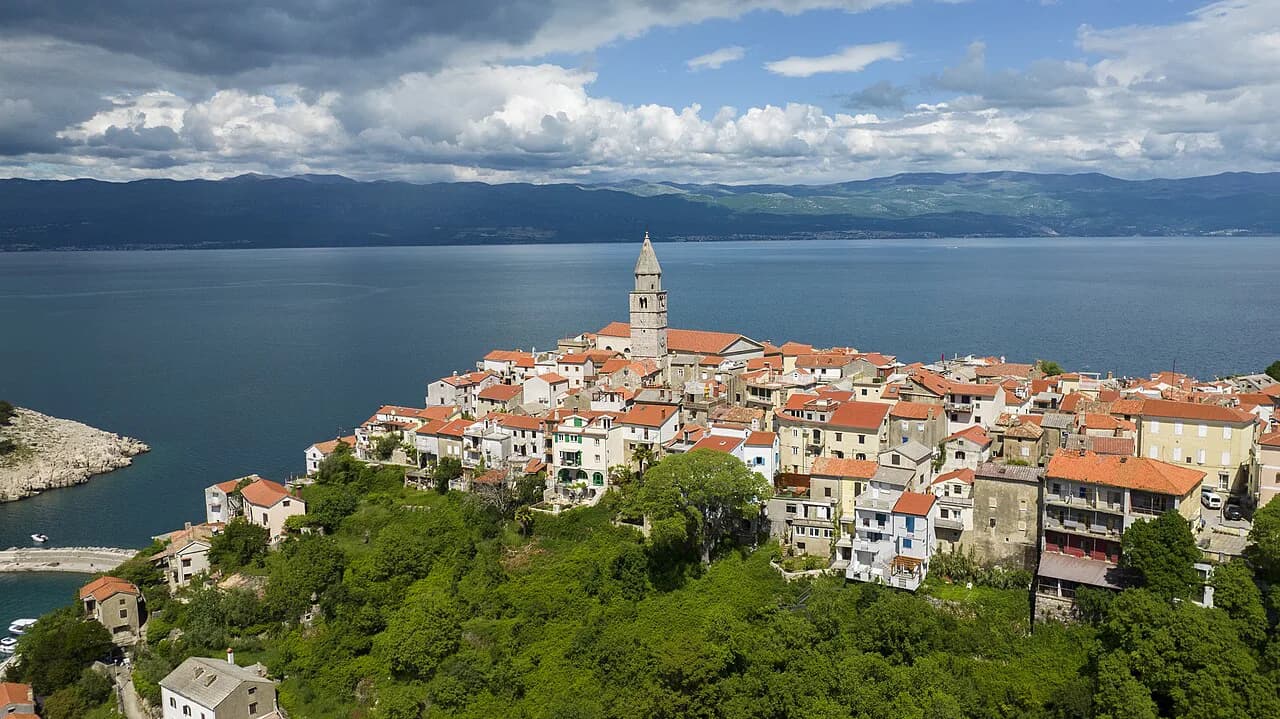
Vrbnik is the Frankopans' home village, perched above the sea on the north-east coast, and it is where the family's story starts rather than where it ends. The old town is compact and steep, with narrow passages and a clifftop position that gives views across the channel. It makes a natural pairing with Krk town for anyone following the Frankopan thread across the island.
Allow a couple of hours for the village itself, longer if you stop for lunch. Parking sits outside the historic core, so you walk in, and the climb back out is steeper than it looks. Vrbnik is busy in high summer, and its lanes are genuinely narrow, so an early start matters more here than almost anywhere else on the island.
Baška and the Baška lagoon
Baška sits at the southern tip of the island, at the end of the road and below the bare slopes that face the mainland. The Baška lagoon is the island's signature landscape, and it is also the only place in the world where the plant known as Barbašova lazarkinja grows, one of the rarities the island's flora is known for.
Because it is the far end of the island, Baška is best treated as a half-day or an overnight rather than a quick stop. The drive from Krk town is the longest on the island, and doing it twice in a day eats into your time. Arriving in the late afternoon gives you the town without the day-trip crowd.
Punat and the islet of Košljun
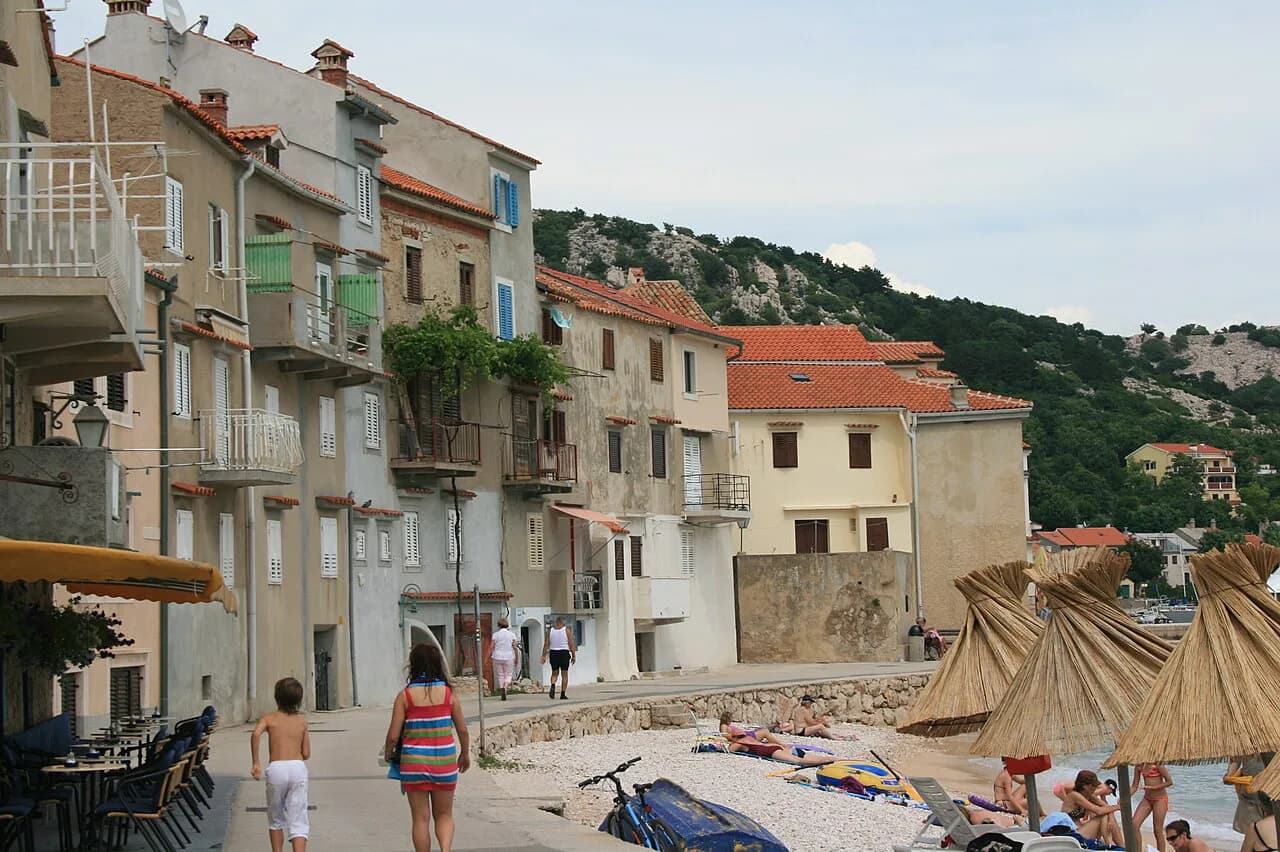
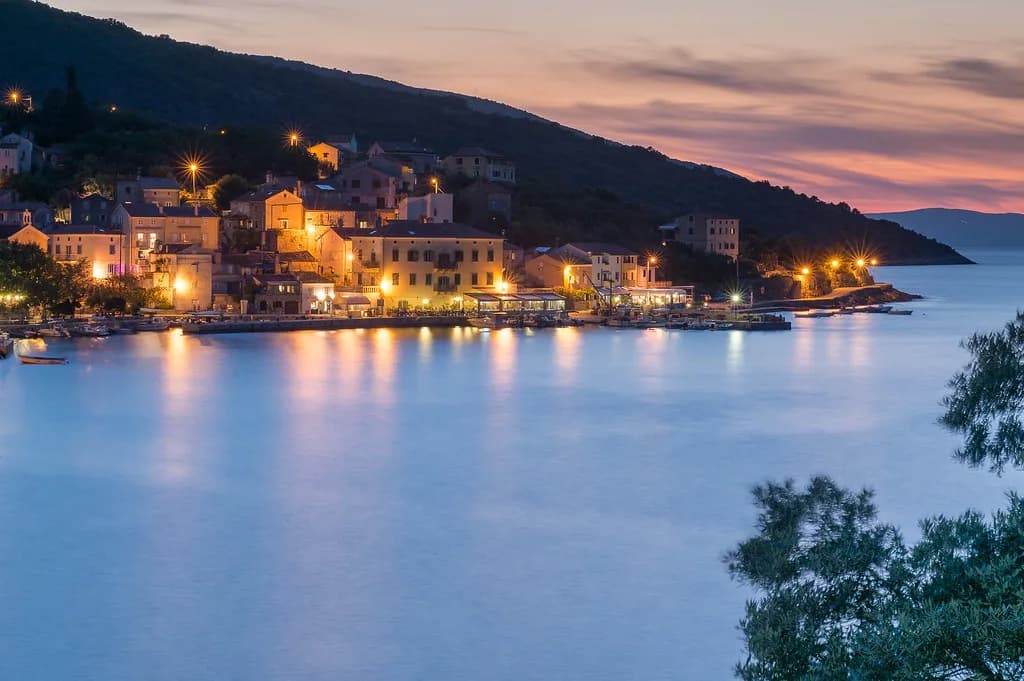
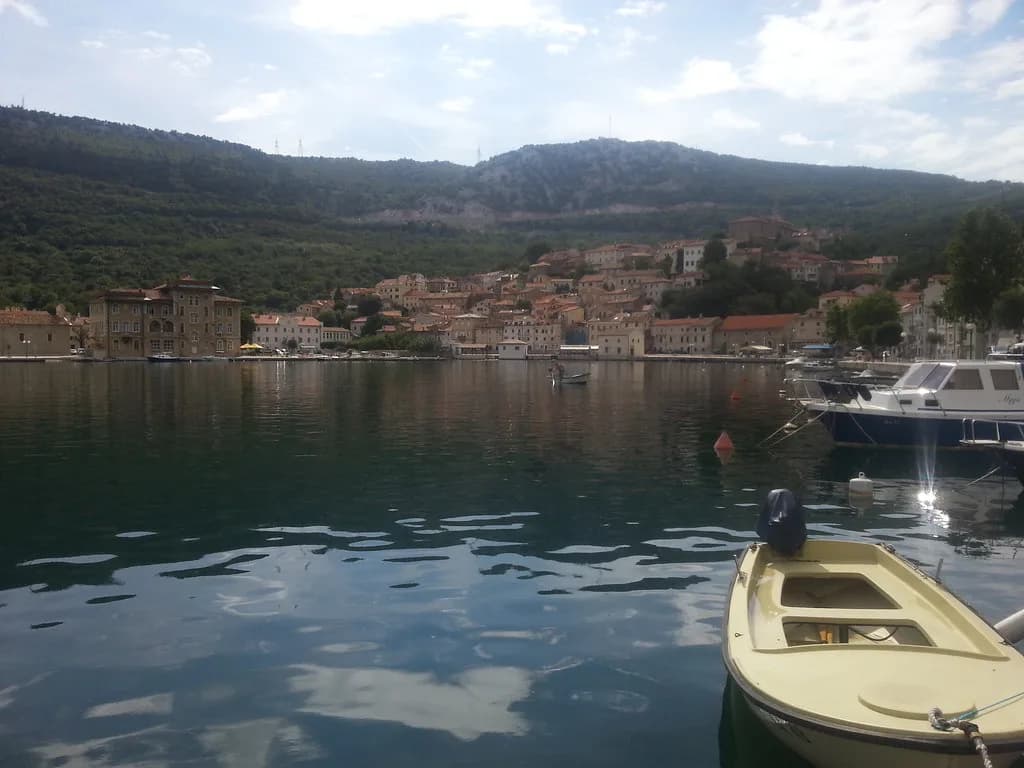
Punat is a working harbour town on the south-west coast, with a large bay and a marina that make it the island's main base for boats. Its real draw is Košljun, the small islet in the bay reached by a short boat crossing from Punat. The Franciscan monastery there has drawn pilgrims and scholars for centuries, and it is the kind of place that rewards an unhurried hour.
The crossing is short enough to do on a whim, but the island is small, so groups arrive in bursts. Go early in the day or late in the afternoon, and you will have the cloisters closer to yourself. Punat itself is a sensible base if you want boat access and easy parking without Krk town's bustle.
The island's landscape: Obzovi, the streams and the flora
Krk is not a flat island of beaches. Obzovi, at 570 m the highest point, is high enough that visitors can forget they are on an island at all, and the tourist board describes the relief as running from gentle coves in the north-west to bare limestone and near-mountain country in the south-east. There are three streams and two lakes on the island, unusual for the Adriatic.
The flora is the island's quiet claim to fame: around 1,400 species of land plants, close to half of Croatia's total, plus the Baška lagoon rarity. Birdlife ranges from eagles to steppe species. If you are choosing between islands on scenery alone, this variety is what separates Krk from a one-note beach island.
The bura, the jugo and the maestral: what the winds mean for a visit
Three winds shape a day on Krk. The bura blows cold and dry from the north-east, the jugo brings humid air from the south, and the maestral is the pleasant summer westerly that fills the afternoons. The tourist board names all three as part of the island's Mediterranean climate.
For a visitor, the bura is the one that changes plans: it can make exposed coastal walks and small-boat crossings uncomfortable, and it is most often felt on the bare eastern and southern slopes. The maestral, by contrast, is what makes a summer afternoon on the water pleasant. If you have booked a boat trip or a Košljun crossing, keep the day flexible and follow the advice of the boat crew on conditions.
How long to stay on Krk and how to get around the island
Two nights is the minimum for a first visit: one full day for Krk town and Punat with Košljun, one for Vrbnik and Baška. Three nights lets you add the island's interior and a slow morning without a schedule, which is when Krk is at its best. A single day trip from Rijeka is possible over the bridge, but you will see the towns from a car window.
A car makes an enormous difference. Public transport exists between the main settlements, but the connections are thin and built around school and work patterns rather than sightseeing. Driving times are governed by the winding coast road, not distance, so plan two or three stops a day rather than five.
If you are continuing around the Kvarner, the wider region is worth planning as a whole: Rijeka, the Opatija riviera and the islands of Krk, Cres, Lošinj and Rab all sit within a day of each other. Read more on the Kvarner region.
When to go and what summer crowds mean for the harbours
Krk's climate is mild Mediterranean, with hot summers and mild winters, and the island markets itself as a destination in every season. Practically, late May, June, September and early October give you warm sea and more space in the harbours, while July and August bring the crowds and the highest prices on the coast.
Summer on Krk is dominated by road traffic rather than cruise ships, since the island's guests mostly arrive by car. That means queues at the bridge and full car parks at Baška and Vrbnik rather than a sudden morning flood of passengers in Krk town. Harbour towns like Punat fill with moored boats in July and August, which is part of the appeal and part of the noise.
Is Krk worth it if you have already seen Dalmatia?
Yes, if you want a different Croatia: a Frankopan and Glagolitic history rather than Roman ruins, green interior and limestone ridges rather than a strip of beach, and the rare freedom of driving onto an island. For a car-based traveller who dislikes ferry logistics, it is a strong choice in the Kvarner.
No, if you want the postcard Dalmatian formula of a single walled town on the water, or if you have only one day and would spend it in traffic. In that case, look at what else the Kvarner offers and pick an island that matches the trip you are actually taking.
Explore more Kvarner guides
Frequently Asked Questions
Is Krk island worth visiting?
Yes for most travellers with a car and two or three nights to spare. Krk combines a walled harbour town, Frankopan history at Vrbnik, the Baška lagoon and the monastery islet of Košljun within a short drive of each other, and the bridge means no ferry booking. It suits people who value variety and easy access over a single showpiece resort.
Is Croatia an island?
No. Croatia is a mainland country with more than a thousand islands off its Adriatic coast, of which only a small number are inhabited. Krk is one of those islands, in the Kvarner bay, and unlike most of them it is connected to the mainland by a road bridge. The island's tourist board counts Krk among 1,185 Croatian islands.
What is Krk island famous for?
The golden island name, the Frankopan noble family and its unusually rich flora, with around 1,400 species of land plants. It is also known as the last Adriatic island to fall under Venetian rule, in 1480.
How do I get to Krk island?
Most visitors drive over the Krk bridge from the mainland near Rijeka, which takes you straight onto the island. There is also a ferry to the Valbaska harbour from the neighbouring island of Cres, and Rijeka airport sits close to Omišalj on the island itself.
Sources
Notes from the Croatian coast
Optional updates when our guides change.
You might also like
Continue reading
More guides you'll find useful