Novi Vinodolski Guide: Old Town, Frankopan Castle and the Vinodol Code
Plan a visit to Novi Vinodolski: the hilltop old town, Frankopan Castle, the church of St Philip and James, the Vinodol Code and how long the sights take.
On this page
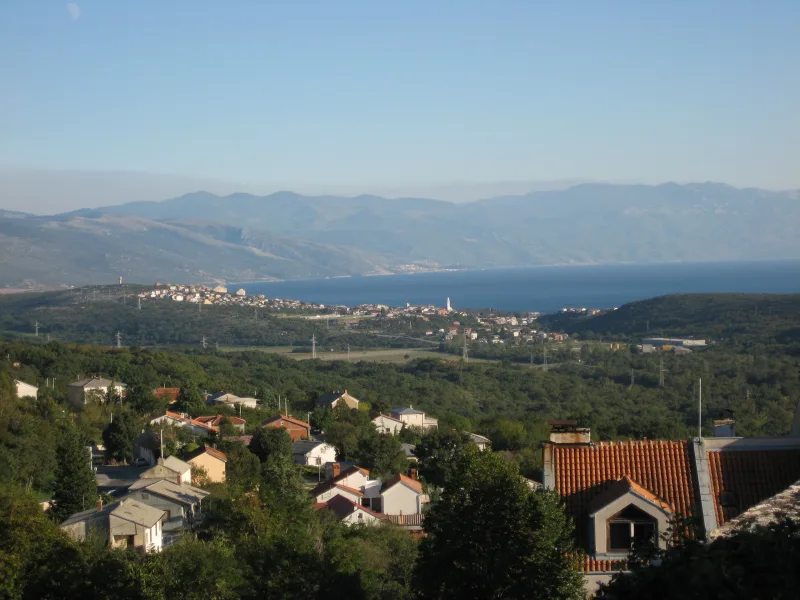
Novi Vinodolski rewards half a day, and a full day if you want the wider riviera as well. The old stone town sits on a hill above the sea bay at the mouth of the Ričina, where the Vinodol valley meets the Kvarner coast, and its sights cluster within a few minutes' walk of each other. This guide covers the layout of the upper town, the castle and the 1288 Vinodol Code written there, the churches around the parish square, a short walking route, and how the town fits a longer Croatian coast trip.
Treat it as a valley gateway rather than a beach base. The town grew where the Vinodol valley opens to the sea, and the dukes of Krk built it up after acquiring Modruš and Vinodol by royal charter in 1225.
How the old town is laid out
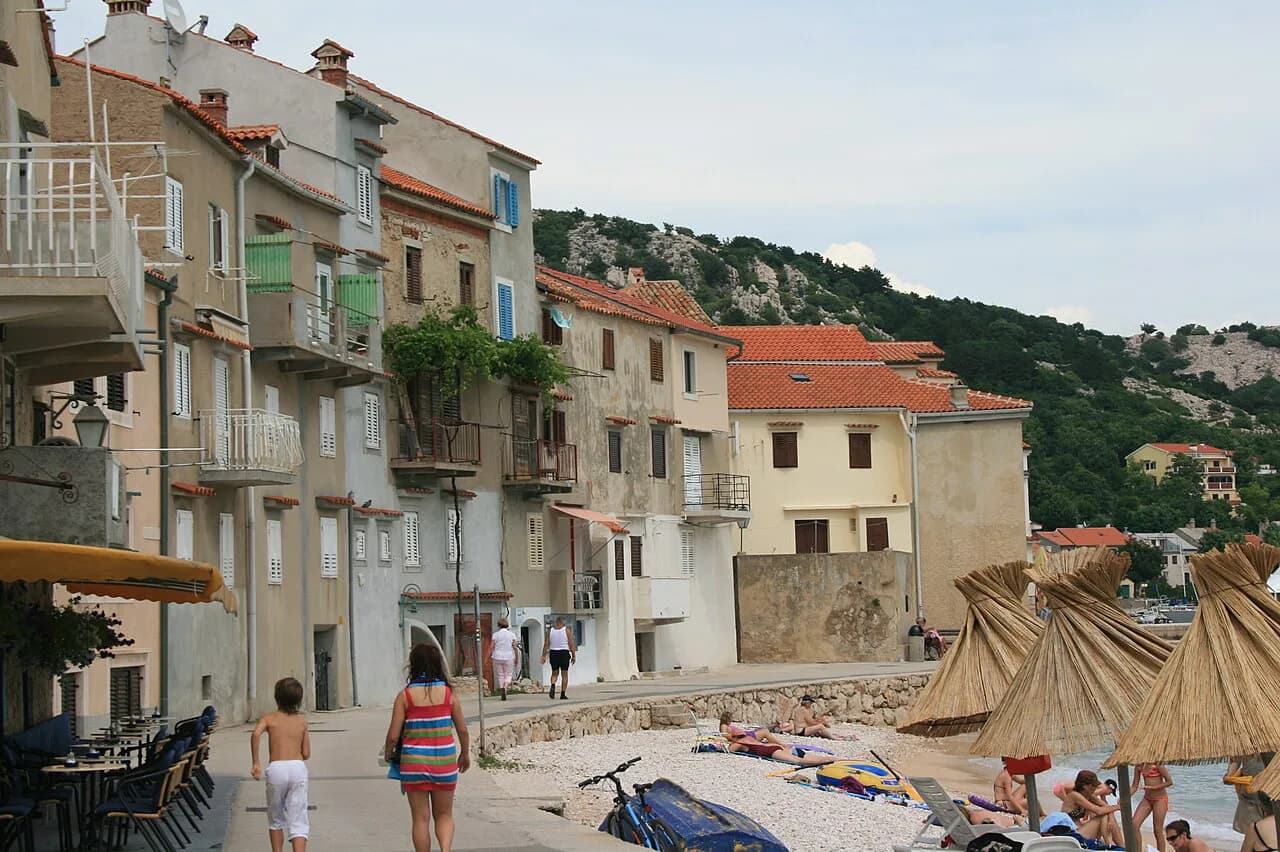
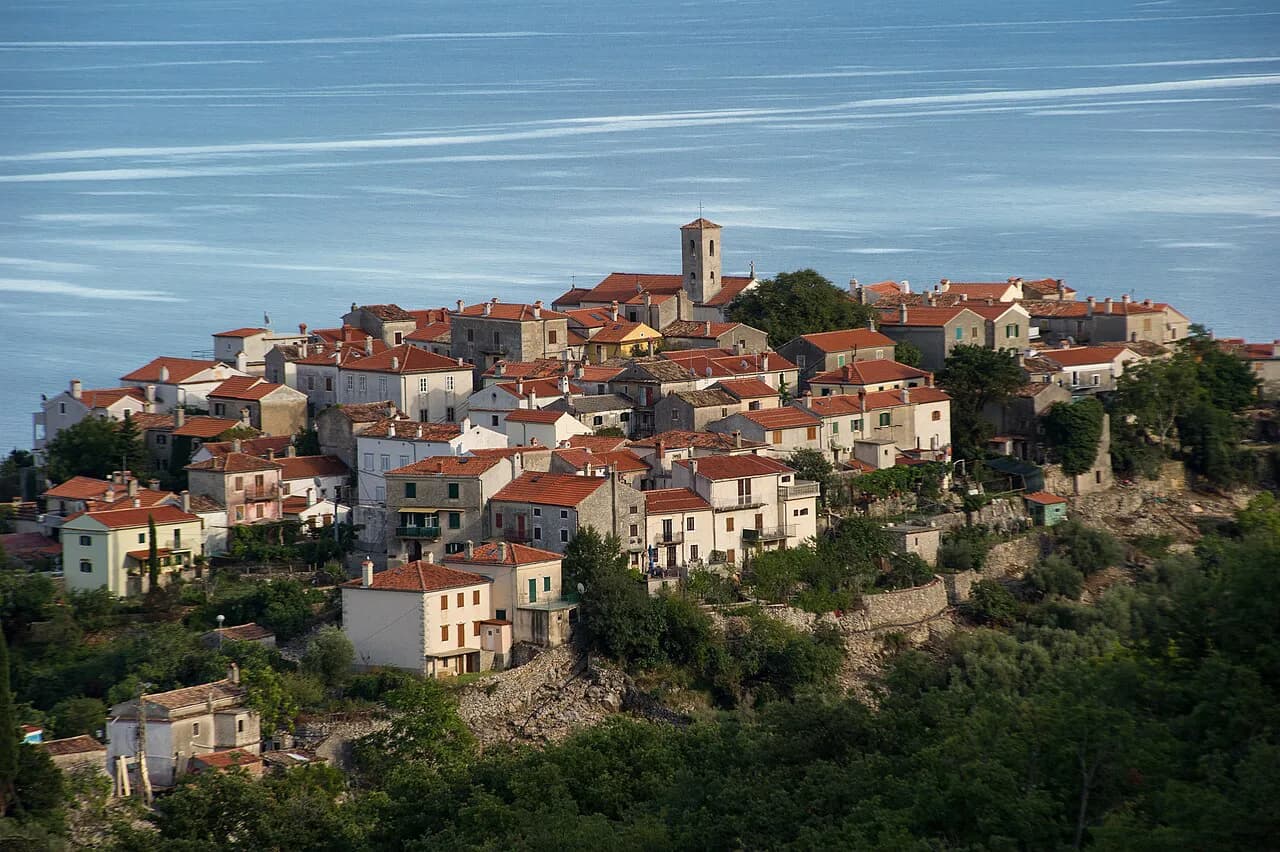
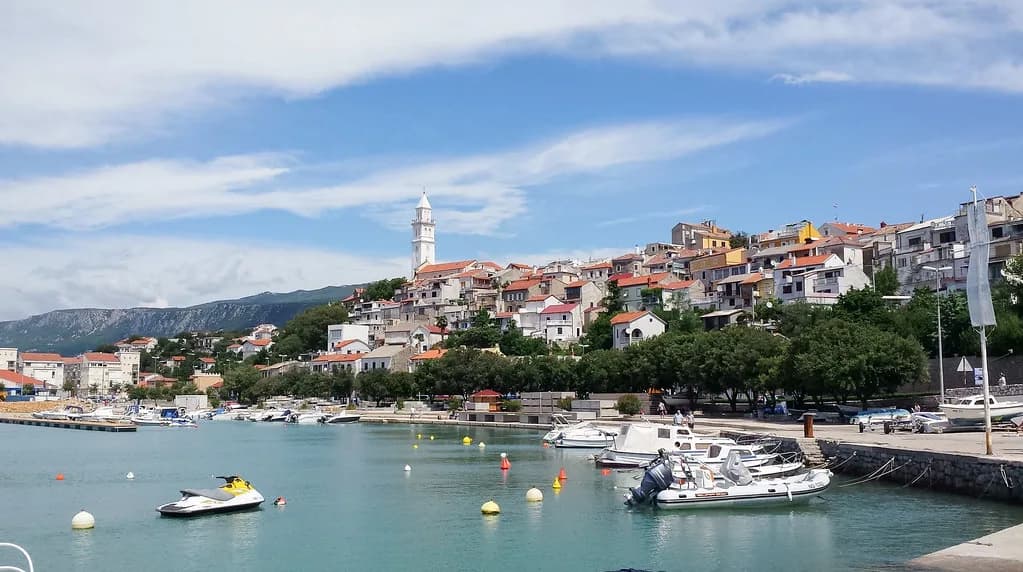
The historic core is a hilltop knot of solid stone houses pressed against one another, with narrow streets climbing to the parish church of St Philip and James. Its high white bell tower is the landmark you navigate by from the shore below. Expect steps and uneven paving throughout the upper town rather than level promenades.
Frankopan Castle sits inside the old town, and its main entrance today opens onto the Square of the Statute of Vinodol. That square is the practical place to start: castle, church square and the diocesan buildings all lie within a short walk. Below the hill, the waterfront is where you rejoin the coast after the climb.
Frankopan Castle: what survives and what it holds
The castle was built in the 13th century under the dukes of Krk, later known as the Frankopans, and it has had a rough history. Ottoman attacks burned the town in 1527 and 1530, and a Venetian force attacked in 1615 with 6 galleys, 36 boats and 3,000 soldiers, demolishing the main tower and destroying the salt pans at Soline.
In 1761 two-thirds of the castle was demolished to save on maintenance, which is why the building reads as fragments rather than a full fortress circuit. The south wing with the entrance and the east wing with two towers survive: the Turnac (Kvadrac) tower and the Rundel (Tondac) bastion tower, which once guarded the town walls and the Vela vrata gate.
Look for the single 15th-century Gothic biforium on the courtyard façade, the one architectural detail that betrays the building's age after later alterations. The Rundel tower was pulled down in 1892 and the castle was reworked as recently as 1922–1923, giving it its present shape.
Today the castle houses the National Museum and Gallery of Novi Vinodolski, the town reading room and library, and the town administration with the mayor's office. Treat it as a working civic building first and a monument second, and plan your look inside around the museum, since not every wing is open to visitors.
The Vinodol Code and why the castle matters
On 6 January 1288 the Statute of Vinodol was written in the Frankopan Castle, and it is described as the oldest legal monument in the Croatian language and Glagolitic script. That single fact is the strongest reason to climb to the castle rather than admire it from below.
You meet the code in town through names as much as objects: the castle entrance faces the Square of the Statute of Vinodol, and the town identifies itself with the document. The region's tourist board also presents Novi Vinodolski as the home of the Vinodol Law Code, one of the most important medieval European legal documents.
St Philip and James and the 36-metre bell tower
The church of St Philip and James was built in the 14th century as a three-nave basilica and served as the cathedral of the Diocese of Modruš or Krbava from 1493 to 1969. Its interior was reworked in the Baroque era and the façade in historicist style at the start of the 20th century.
Inside, the bishops' tombs are the detail worth seeking out. Bishop Kristofor Dubrovčanin, who fled Modruš with his chapter and died in Novi in 1499, lies before the high altar under a marble slab carved with a Bishop's figure and a Latin inscription, with the tombs of Bishops Ivan Krstitelj Caballini and Ivan Krstitelj Ježić flanking it.
On the outer wall of the sanctuary, two stones carry the year 1520 in mixed Arabic and Roman numerals together with Glagolitic script, most likely marking a rebuilding. The original bell tower in front of the church was demolished in 1909, and the present 36-metre tower rose on the site of the demolished church of St Fabian and Sebastian.
St Trinity, the Prepožitura and the diocesan core
Opposite the church stands the diocesan building, and not far away is the church of St Trinity (Svete Trojice), which holds a valuable sacral collection. The parish court, the Prepožitura, is a former episcopal residence, so a small area around the church square concentrates most of the town's ecclesiastical heritage.
Budget your time for this cluster rather than racing between individual doors. The sacral collection and the church interiors are the reason to slow down here, and the compactness means you can see the ensemble in one pass.
The Mažuranić connection
The Mažuranić brothers' house is one of the town's listed monuments, and the family's most famous figure matters well beyond Novi Vinodolski. Ivan Mažuranić was the first commoner to serve as Croatia's viceroy, a detail the regional tourist board singles out when introducing the town.
The Mažuranić family, the wealthy landowning families who settled in Novi and the Frankopans all shaped the town's history and traditions, and the old town's stone architecture reflects that ecclesiastical and secular patronage. Read the Mažuranić house as part of that civic story, alongside the castle and churches, rather than as a separate attraction.
A short walking route through the upper town
Start at the Square of the Statute of Vinodol, where the castle entrance opens, and take in the castle exterior and courtyard before walking on. Then follow the narrow streets to the parish church of St Philip and James and its bell tower, taking in the diocesan building opposite and the Prepožitura nearby.
Add the church of St Trinity and its sacral collection, and the Mažuranić house, before finishing back at the castle or dropping down to the waterfront. The distances are short but the ground is stepped and stony, so allow more time than the map suggests and wear shoes that cope with polished stone.
Beaches along the riviera are the obvious option if you want to combine the upper town with a swim, kept for later in the day after the stepped streets.
Views and the islet of Sveti Marin
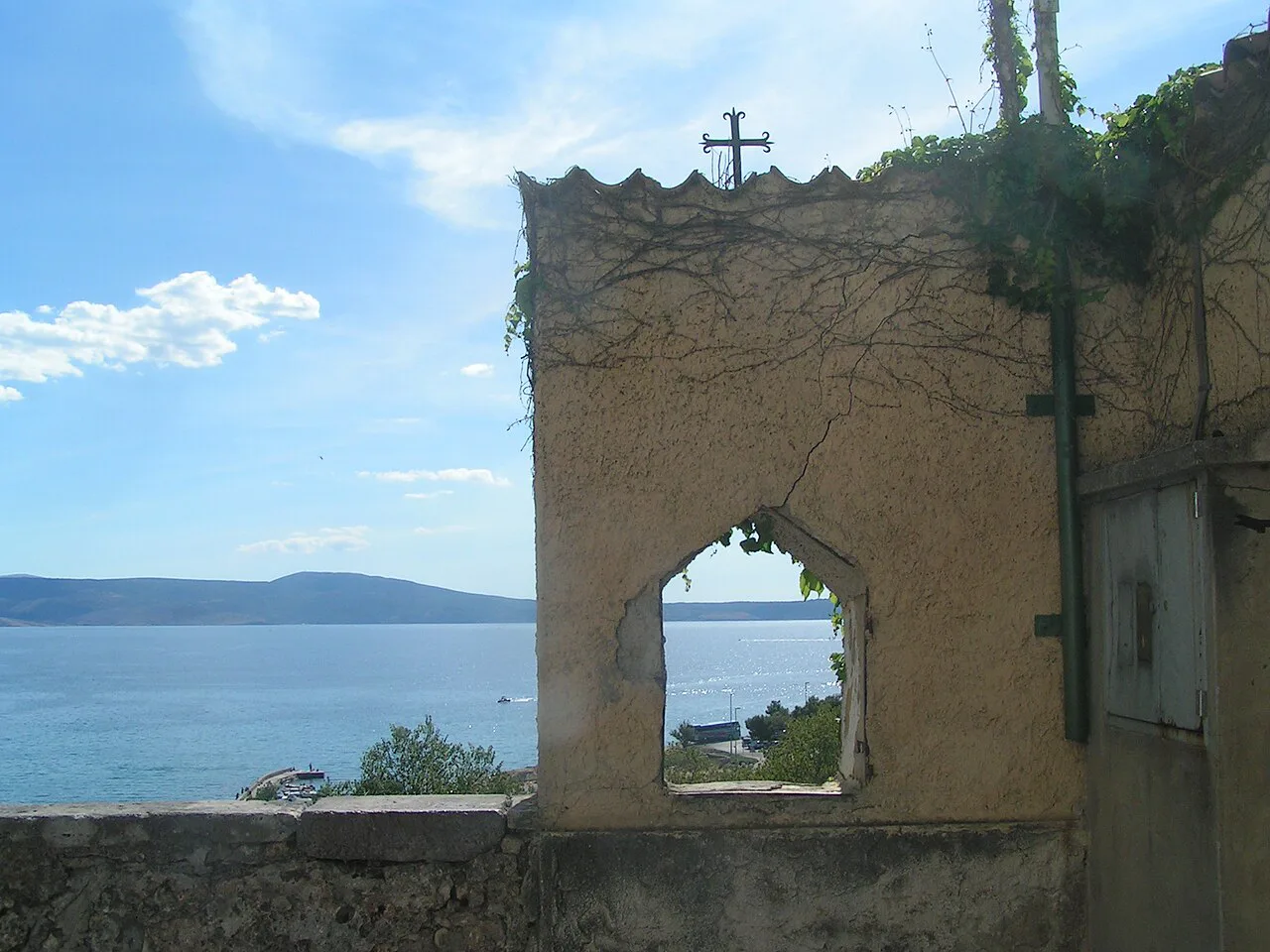
The old town's height is its advantage: the position above the bay gives views over the water and back across the rooftops and bell tower. The islet of Sveti Marin, with its Gothic chapel, is one of the landmarks associated with the town and often cited as a wedding venue.
The wider area also includes scenic viewpoints and the Celestial Labyrinths, which are built on astronomical and cosmic principles. These sit outside the compact upper core, so treat them as an addition to a full day rather than part of the half-day old town walk.
How long Novi Vinodolski needs
Half a day covers the old town core comfortably: the castle exterior and its courtyard, the parish church, St Trinity, the Prepožitura and the Mažuranić house, with time for the views. A full day makes sense if you add the wider riviera, the viewpoints and the islet, or pair the town with the Vinodol hinterland.
If your schedule is tight, prioritise the castle and the Vinodol Code story, then the church of St Philip and James. If you have longer, the surrounding coastal communities of Povile, Klenovica, Smokvica and Sibinj, and the inland villages of the Vinodol valley such as Breze, Krmpote, Donji and Gornji Zagon and Ledenice, spread the visit well beyond the hilltop.
When to go and how it fits a coast trip
Summer brings the heaviest pressure along this stretch of the Kvarner coast, and the upper town's narrow streets absorb crowds poorly. The shoulder months are generally easier for the stepped climb and the church interiors, and the town's cultural calendar runs through the year, including the Novi Carnival.
Novi Vinodolski sits between Crikvenica and the Vinodol valley, which makes it a natural stop on a Kvarner circuit rather than a standalone destination. It pairs with the Crikvenica riviera to the west and the hinterland villages above, and it fits neatly into a wider route along the coast from Opatija down through the towns of the Kvarner; see our Kvarner: a guide to Rijeka, the Opatija riviera and the islands of Krk, Cres, Lošinj and Rab and our guide to Senj further down the coast.
Sailing traffic is part of the local scene, and the town's marinas serve boaters as well as land-based visitors. If your trip is land-based, use the town as a cultural pause between coastal stops rather than a base for boat trips, and head out to the islands of Krk and Rab when the coast route turns to the water; our Kvarner islands guide covers that wider island group.
Is Novi Vinodolski worth the climb?
Yes, if you want history rather than a beach stop. The combination of a hilltop stone town, a fragmentary Frankopan castle that now serves as museum, library and Town Hall, and the 1288 Vinodol Code gives it more substance than its size suggests.
Go for the castle square and the churches first, allow half a day for the core and a full day for the riviera and hinterland, and check current museum opening details with the town tourist board before you travel. For the wider region see our guide to the Kvarner islands and the Krk island guide.
Explore more Kvarner guides
Frequently Asked Questions
How do you get to Novi Vinodolski?
The town sits on the Kvarner coast between Crikvenica and the Vinodol valley, close to the Ričina estuary, and is reached by road along the coastal route. Bus and road connections are listed with contact details on the Crikvenica-Vinodol tourist board site.
Is Novi Vinodolski worth visiting?
It is worth half a day for the old town alone. The hilltop stone core holds Frankopan Castle, now home to the town museum, library and administration, the 1288 Vinodol Code story, the church of St Philip and James with its 36-metre bell tower, the church of St Trinity, the Prepožitura and the Mažuranić house, all within a short stepped walk.
What is the Vinodol Code?
The Statute of Vinodol, written in Frankopan Castle on 6 January 1288, is described as the oldest legal monument in the Croatian language and Glagolitic script. The castle entrance faces the Square of the Statute of Vinodol, which takes its name from the document.
Sources
Notes from the Croatian coast
Optional updates when our guides change.
You might also like

Continue reading
More guides you'll find useful