Blaca Hermitage, Brač: How to Visit the Cliff Monastery
Blaca Hermitage is a 16th-century monastery built into a Brač cliff above the sea. Here is how you reach it, what you see inside and how long the walk takes.
On this page
Blaca Hermitage is a 16th-century monastery wedged into a cliff on the southern side of Brač, and every visit ends with a walk: roughly 30 to 45 minutes down from the road above, or the same kind of climb up from Blaca Bay if you arrive by boat. The site is a museum now, founded from a cave by Glagolitic monks and on Croatia's UNESCO Tentative List since 2007. This guide covers how the complex is laid out, the two ways in, what waits inside the museum and how to fit it into a day on the island.
What Blaca Hermitage is
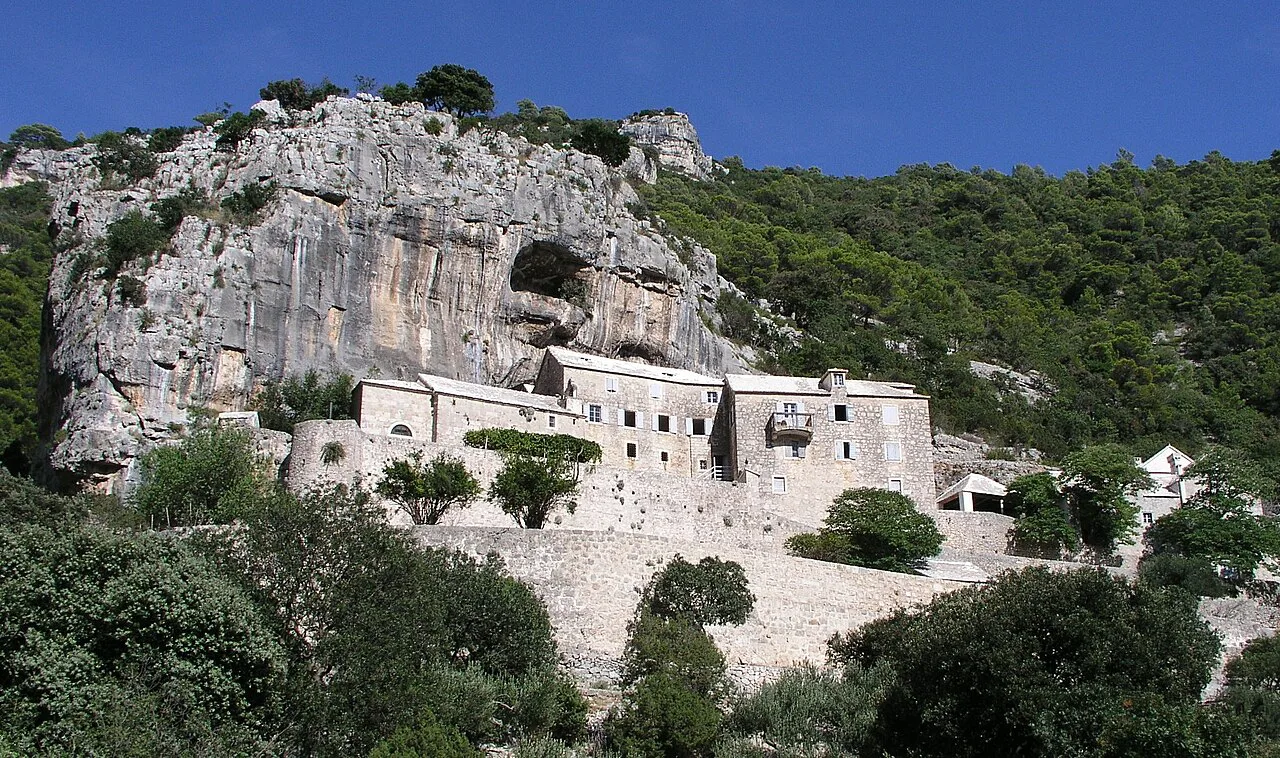
The hermitage began in 1551, when Glagolitic monks fleeing the Ottoman advance into their home region of Poljica took shelter in a cave on Brač's southern flank and built a church and monastery around it. Over the centuries the community turned the surrounding land to vines, honey and olive oil, and the complex grew into a centre of learning and science. UNESCO's tentative list entry describes it as far more than a monastic complex, having developed from that cave as its first shrine and dormitory.
The most striking legacy is intellectual rather than architectural. According to the local Bol guide, the monks assembled a library of more than 11,000 books, some of them rare, and ran a school for local children in Croatian and Latin. In the 19th century they built an astronomical observatory whose telescope the same guide describes as among the largest in Europe at the time. The last monk, Father Niko Miličević, died in 1963, and the site has been preserved as a museum since.
Where it sits and how the site is laid out
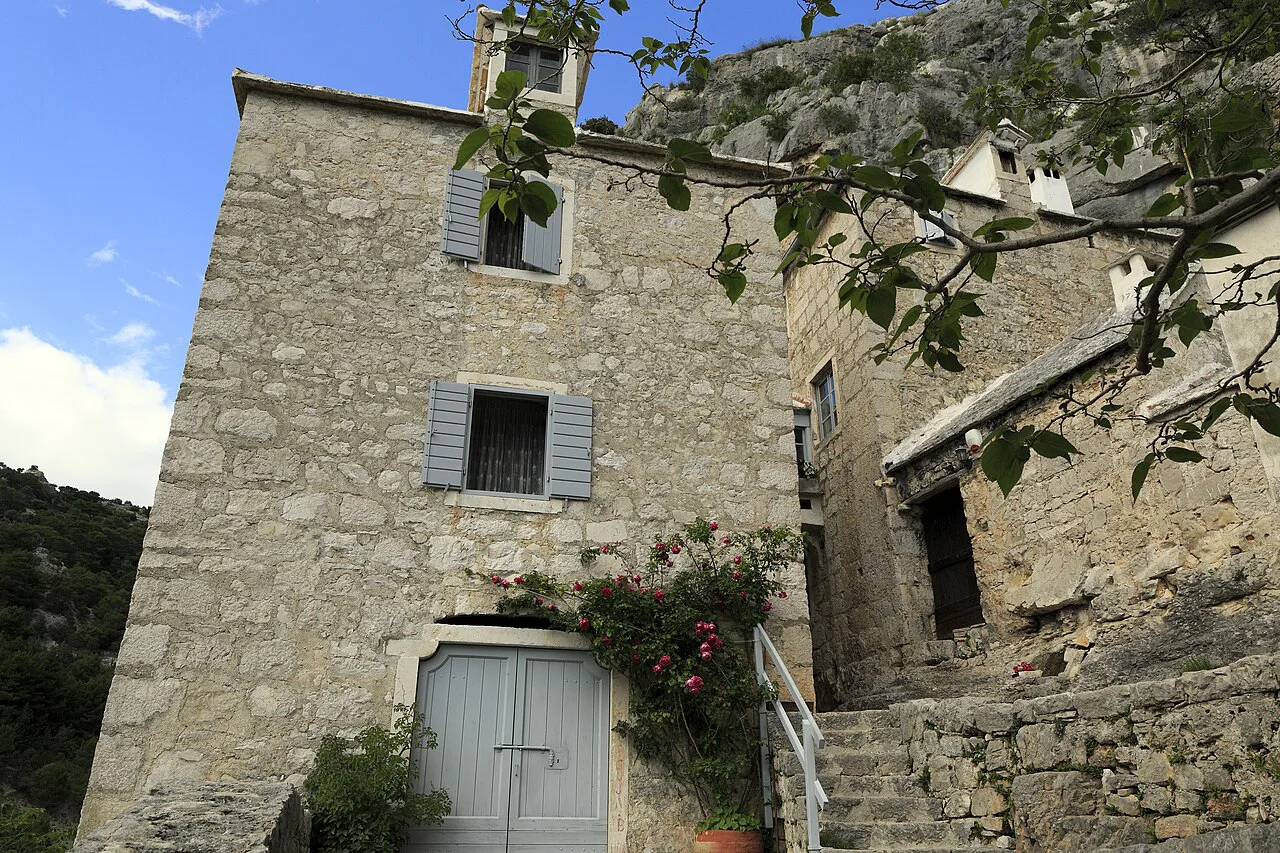
Blaca sits high on the steep southern cliffs of Brač, above the Adriatic and below the road that runs across the island's interior. The cave is the core of the complex: the church and monastery buildings were raised directly around and over it, so you walk into a compact cluster of stone rooms rather than a spread-out ruin. Terraced land falls away below the buildings, the product of centuries of cultivation on an unpromising slope.
Below the hermitage, Blaca Bay gives boat visitors their landing point and their first view of the buildings from sea level. Reaching the hermitage from either direction means a rough path, so the site rewards people who treat the walk as part of the visit rather than an obstacle before it. The wider island context, from the harbour towns to the interior villages, is set out in our Brač Island guide.
Two ways in: the road walk or the boat and climb
There are two practical approaches. You can drive to the marked turn-off on the road above the coast and walk down to the hermitage, or you can come by boat to Blaca Bay and walk up. Both routes involve a hike of 30 to 45 minutes according to the local guides, and both leave you facing the same return leg. The road approach gives you control over timing; the boat approach gives you the site from the sea but ties you to a schedule.
Whichever you choose, the descent is the easy half. The climb back to the road, or back down to the bay, is where summer heat and rough footing slow most people down, so build in more time than the outward walk took. Sturdy shoes matter more than any other kit on this path; sandals and smooth soles are a poor choice on loose stone.
The road approach from the island interior
Coming by car, you drive across Brač's interior to the marked turn-off above the southern coast, park, and walk down. The turn-off is not in a village, so plan your route before leaving the main roads; our Brač Island Map sets out the island's layout and the interior settlements you pass. Towns such as Škrip, Selca and Pučišća sit on or near the cross-island routes and make sensible stops on the way.
If you are based in Bol, the drive around to the turn-off is short but the road climbs away from the coast, and the walk down begins immediately on arrival. Allow for the return climb in the heat of the day, or start early enough that you are walking back up before the afternoon sun is at its strongest.
The boat approach from Bol
Excursion boats have traditionally run from Bol to Blaca Bay, landing passengers below the hermitage for a guided walk up of about 45 minutes before returning them to Bol. That boat service was suspended for 2025, so check with excursion operators in Bol whether crossings are running for your season before you build a day around it. Arriving by sea is the more dramatic approach, with the monastery coming into view above the bay, but it leaves you tied to the boat's timetable.
How long to allow, and the cost of the climb back up
Treat Blaca as a half-day rather than a quick stop. The walking alone takes time in each direction, and the museum warrants an unhurried hour or so if you want to take in the library, the instruments and the story of the last monk. Add the drive across the island and you have used a good part of a day.
The return climb is the real constraint in summer. Stone paths, full sun and no shade on the upper sections make the ascent feel considerably longer than the descent, so carry more water than you think you need, wear a hat and start early. In spring and autumn the same walk is far more comfortable, and the light on the cliffs is better for anyone carrying a camera.
Opening hours and tickets
Opening times and entry charges at the hermitage change with the season and with the museum's own arrangements, so confirm both with the site or your excursion operator before setting out. Carry euros ready: Croatia has used the euro since 2023, and kuna figures you may see in older guides are historical. Do not rely on buying water or food once you have started the walk; carry what you need from the start.
Inside the museum
The museum preserves the monks' working world rather than presenting a polished display of treasures. You see the library, paintings, musical instruments, clocks, weapons and astronomical equipment they accumulated, and the observatory where they studied the sky. Guided tours explain the site's history and the significance of the Glagolitic order, which used an ancient Croatian script.
The setting does much of the work. Because the buildings grew from a cave and cling to the cliff, the rooms feel improvised into the rock, and the views back over the Adriatic explain why the monks chose this refuge. It is a quiet, austere place, best appreciated without rushing.
The UNESCO tentative listing, added in 2007, recognises the site's cultural importance rather than gifting it resort polish. Expect a working heritage site, not an interpretation centre with facilities.
When to go
Spring and autumn are the best seasons for the walk: cooler temperatures make the climb back up manageable and the path is less crowded. Summer boat access has been suspended for 2025 and varies by season, so check before counting on it, and the summer heat turns the return leg into hard work. Coastal winds can make the sea uncomfortable on the southern shore. Morning visits work best in every season.
If you are staying in Bol, the town's own sights, including the famous pebble beach at Zlatni rat, fill the rest of a day easily. Our guide to Bol Croatia covers the town's layout, its harbour and how to spend time there around a hermitage trip.
What to wear and carry
Wear sturdy shoes with grip, take at least a litre of water per person, and add sun protection, a hat and a light layer for wind. Facilities at the hermitage are limited, so come self-sufficient and carry everything you need down the path and back up again. A small daypack is far better than a shoulder bag on the descent.
Bring cash in euros for any entry charge and small purchases, and keep your phone charged for the drive back across the island. If you are combining Blaca with a ferry day, our guide to Supetar, Brač's main ferry port, explains how arrivals by sea connect to the island's roads.
Pairing Blaca with the rest of your Brač day
Blaca works well as the anchor of an inland day. Drive across from Bol or Supetar, walk down to the hermitage, then stop at one of the stone villages on the way back: Škrip's old walls and Radojković tower, or Selca with its stonework traditions, both sit naturally on a loop through the interior.
Alternatively, start with the coast. Pučišća, with its white-stone harbour and quarrying heritage, is an easy morning before the climb to Blaca, or an easy afternoon after it.
For a higher viewpoint, Vidova gora, Brač's summit, offers a panorama over the island and the sea, though it adds distance to the day and should not be stacked on top of an already long walk in summer.
Common mistakes
The most frequent error is underestimating the return climb. People plan for the walk down, enjoy the museum, then find the ascent in full sun far harder than expected, especially with children or in midday heat.
Second is assuming a boat will be waiting. Excursions from Bol were suspended for 2025, and services vary by season, so check before you rely on one. Third is expecting facilities: there is no catering or water point you can count on at the hermitage, so arrive self-sufficient.
Which approach suits you?
Choose the road walk if you want control over timing and can start early enough to beat the heat on the return climb. Choose the boat if crossings are running for your season and you want the approach from the sea, accepting that you will be tied to a schedule and still face a climb.
Explore more Brač guides
Frequently Asked Questions
Can you drive all the way to Blaca Hermitage?
No. You drive to the marked turn-off on the road above the coast and then walk, which the local guides put at 30 to 45 minutes each way.
Is there anywhere to eat or buy water at the hermitage?
Do not count on it. Facilities are limited, so carry water and food with you and take everything back up the path.
How long does a visit to Blaca take?
Treat it as a half-day: the walk in each direction, plus an hour or so in the museum, plus the drive across Brač.
Sources
Notes from the Croatian coast
Optional updates when our guides change.
You might also like
Continue reading
More guides you'll find useful