Jelsa, Hvar: Harbour Town Guide, Sights and How Long to Stay
Jelsa on Hvar is a small harbour town with a stone waterfront, a shady park and a fortified parish church. See the sights and how long to allow.
On this page
Jelsa needs half a day to see properly and one night if you want to use it as a base on Hvar. The centre is compact: a wide harbour, a stone waterfront, a shady park and a fortified parish church sit within a few minutes of each other, so you can cover the core circuit on foot without a car. This guide sets out how the town is laid out, which sights are worth your time, how the catamaran and road links work, and how Jelsa compares with Hvar Town and Stari Grad.
Jelsa sits in the middle of Hvar Island, 9 km from the main ferry port at Stari Grad and 28 km from Hvar Town, both to the west, and 51 km from Sućuraj to the east along the D116 road. It was first recorded in the 14th century as a port serving the hill village of Pitve, three kilometres away on the northern slopes of Gozd hill. In 2011 it had 1,801 residents, fewer than Hvar Town's 3,771 and Stari Grad's 1,885, yet the Jelsa Council covers the widest area of any Hvar local authority.
What Jelsa is and where it sits on Hvar
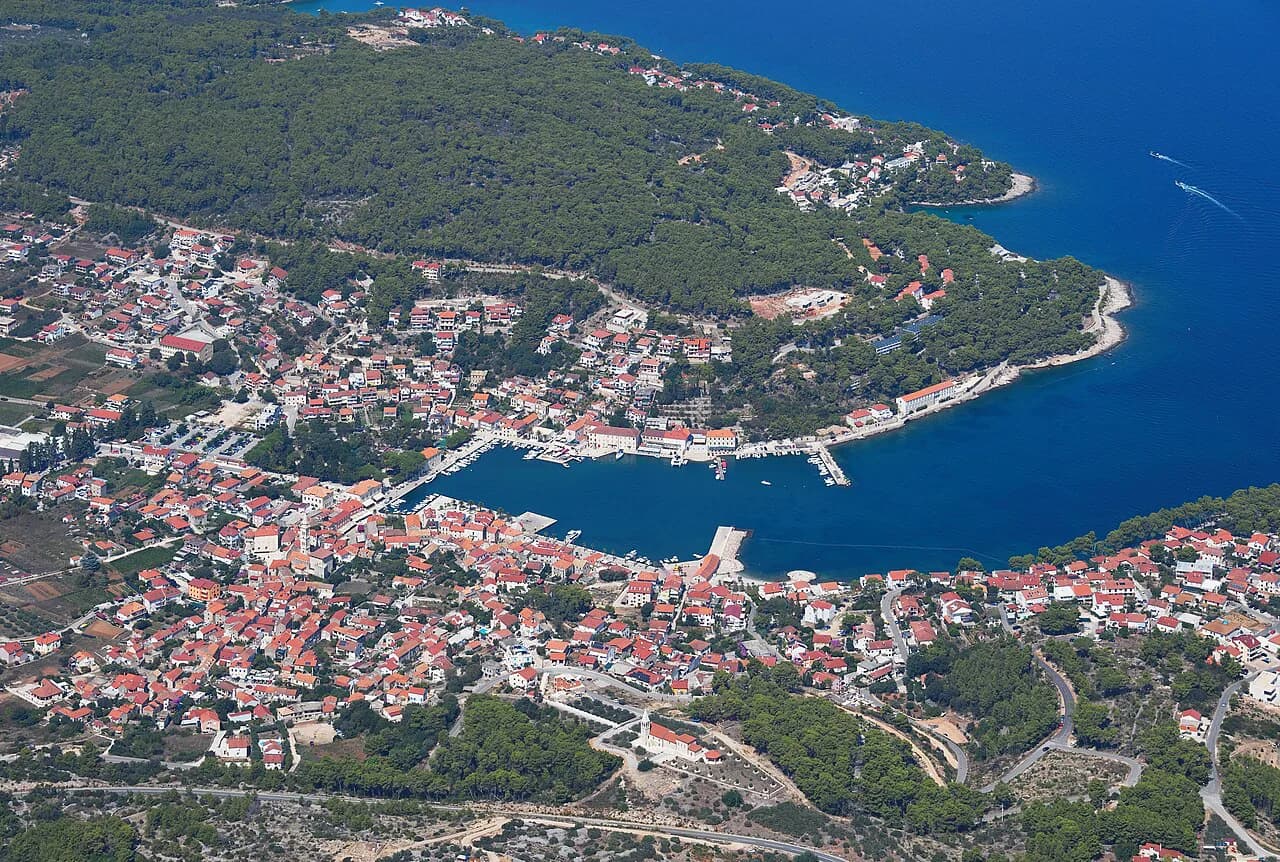
Jelsa is a small harbour town on Hvar's north coast, facing the mainland across the Hvar Channel, with the island's highest point, Sveti Nikola at 628 metres, rising inland to the south. The town grew around its harbour and a trading fleet: in the 19th century it ran ocean-going sailing ships and traded around the Mediterranean as far as Lampedusa, and the stone waterfront is the legacy of that period. Today it is a working base rather than a resort strip, with a renovated waterfront and a park of mature trees.
Because Jelsa is central, it splits the island neatly: Stari Grad and its ferry port lie one way, Hvar Town the other, and the D116 carries you east to Sućuraj. That position makes it a sensible base if you want to reach both ends of Hvar without long drives. The Jelsa Council also takes in twelve surrounding settlements, so the town works as a gateway to the villages and farmland in its ring. For more on the island as a whole, see these Things to Do on Hvar Island.
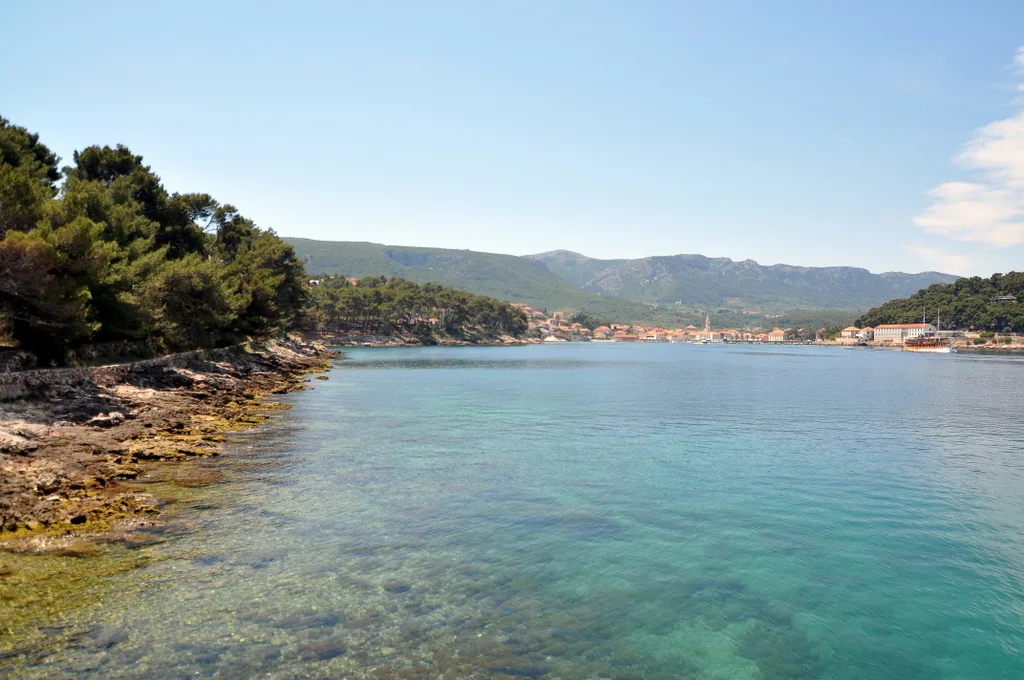
Jelsa's harbour, waterfront and Pjaca: how the centre is laid out
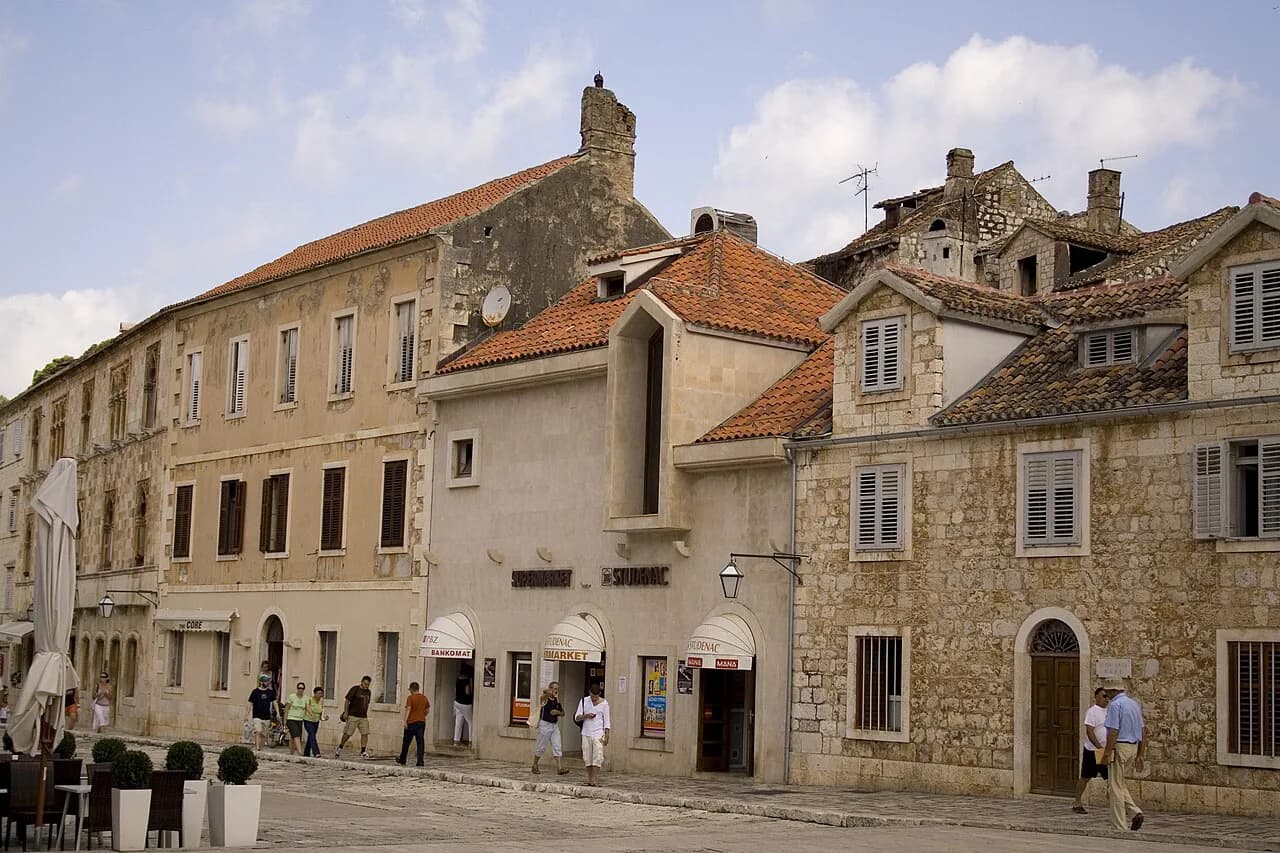
Think of Jelsa as three parallel strips. The harbour and renovated stone waterfront come first, then the lanes of Mala Banda and Vela Banda behind it, and then the Pjaca, the square properly named the Square of Croatian National Revival, with Jelsa Park alongside. Everything in that band is walkable in minutes, which is why a car is only useful for reaching the far side of the island.
The Pjaca holds the town's drinking fountain, installed by Mayor Jure Duboković-Nadalini in 1934. It is a practical stop as well as a local curiosity, because Jelsa has its own fresh-water springs, an unusual advantage for a town in the middle of a Dalmatian island. Water now arrives mainly by pipeline from the Cetina river on the mainland, with the town's springs added to the supply in high summer.
The municipal tourist board lists refill points for tap water in Jelsa, Vrboska, Zavala and Ivan Dolac, so bring a bottle rather than buying plastic. Orientation is straightforward: face the sea from the Pjaca and the harbour is ahead of you, with the park to one side. That makes the centre easy to learn in a single walk.
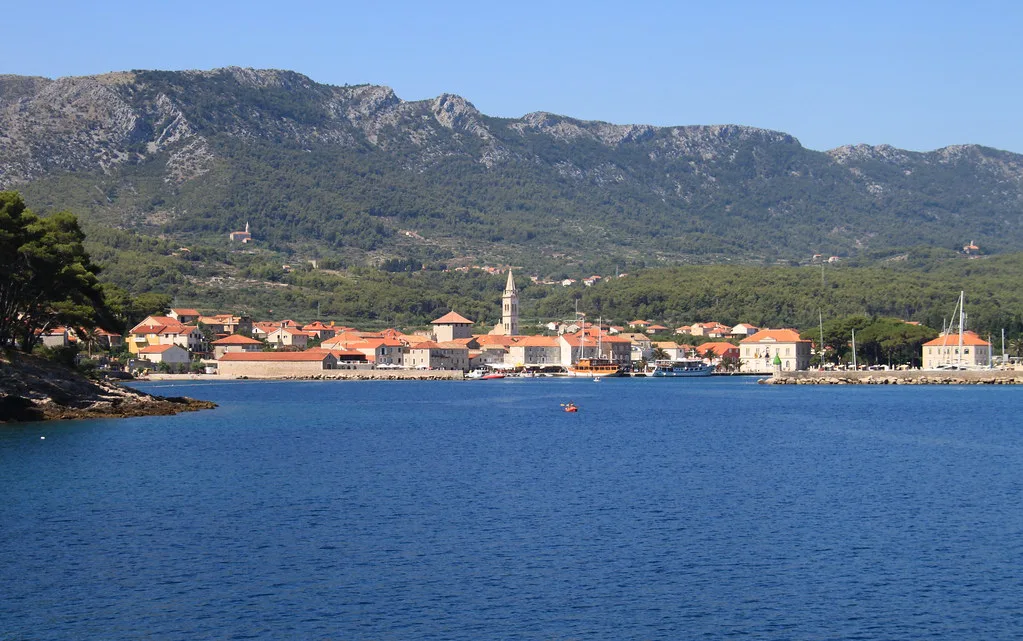
The sights worth your time: the fortified Church of Our Lady's Assumption, the Lapidarium and the Cross-Bearers' statue
The parish Church of Our Lady's Assumption is the centrepiece. Its origins reach back to the 14th century or earlier, and it was fortified in the 16th century against Ottoman attacks, which gives the building the solid, defensive look that sets it apart from Hvar's more ornamental churches. Step inside for the fabric of the building rather than for any scheduled display.
In the church courtyard, the Lapidarium holds carved artefacts and doubles as a summer venue for art and photography exhibitions. In the square in front stands a statue by Kuzma Kovačić, one of Croatia's leading sculptors, dedicated to the Cross-Bearers who carry crosses in the historic Za Križen procession. Check locally for Lapidarium opening times, since they vary through the season.
St. John's Chapel, the Jelsa Museum in the Dobrović House and the Juraj Dobrović Gallery fill out the cultural side, alongside several smaller chapels and shrines scattered around the settlement. Combine them into one loop from the Pjaca rather than treating each as a separate outing. Historic Jelsa also claims the first Croatian reading room and library on the Dalmatian islands, opened in 1868, which gained the right to fly the Croatian tricolour in 1878.
Jelsa Park, the Town Hall and the first Croatian library on the Dalmatian islands
Jelsa Park is the town's best answer to summer heat: mature trees of many species give deep shade a few steps from the waterfront. Use it as a rest stop rather than a destination in itself, and time your church and lane wandering for the middle of the day when the sun is strongest.
The Town Hall took over the library in 1896, when the collection moved there with a celebration marking its founding more than a quarter of a century earlier. The building was granted the right to fly the Croatian flag in 1907. Jelsa's school was among the first in Dalmatia to teach in Croatian, from 1880.
The Church of Our Lady of Health on the hill south of town
On a hill south of Jelsa stands the 16th-century Church of Our Lady of Health, the one sight that asks a short climb out of the centre. It gives you a look back over the harbour and roofs, and the walk up is a useful way to escape the crowded waterfront in peak season. Allow a leisurely half hour for the round trip from the Pjaca.
Vela Banda and Mala Banda: the stone lanes behind the waterfront
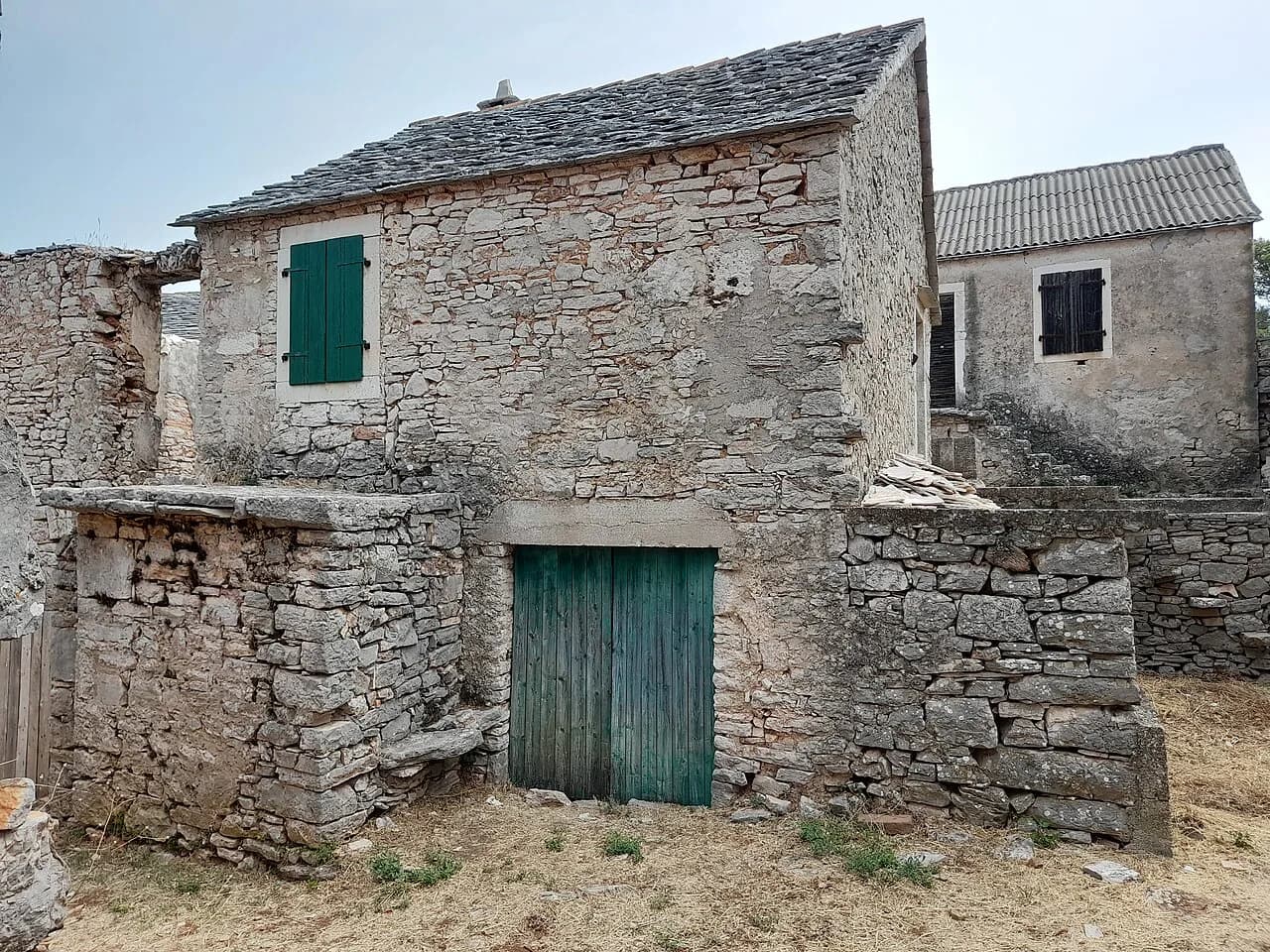
Mala Banda and Vela Banda are the stone lanes running behind the waterfront, the oldest residential fabric of the town and the most rewarding place to wander without a plan. Look for the details: carved lintels, small shrines and courtyards opening off the passageways. They are short, so treat them as a twenty-minute stroll folded into the harbour walk rather than a separate excursion.
Getting there: the catamaran to Bol and Split, and the road links to Stari Grad, Hvar Town and Sućuraj
A daily catamaran links Jelsa with Bol on Brač and with Split, weather permitting, so check current sailing times with the Jelsa Tourist Board before you build a plan around it. The vast majority of arrivals come by ferry instead, landing at Stari Grad and driving or taking a bus the 9 km to Jelsa.
By road, the D116 connects Jelsa west to Stari Grad and Hvar Town, and east to Sućuraj at the island's far end. Hvar Town is 28 km away and Sućuraj 51 km, distances that make a car genuinely useful if you want both in one trip. Without one, the centre and the surrounding villages are still manageable on foot and by local transport.
The ring of villages around Jelsa: Pitve, Vrboska and Vrisnik
Twelve settlements belong to the Jelsa Council, and they are agricultural villages rather than tourist satellites, which is exactly why they reward a half-day. Pitve, three kilometres inland on the slopes of Gozd hill, is the older settlement from which Jelsa grew. Vrboska, on the coast to the west, has a fortified church of Sv. Marija from the 15th century, built against the Turks and unlike anything else on this stretch of the Dalmatian coast.
Vrisnik and the other villages in the ring keep the farming landscape that has supported Jelsa for centuries: olives, vines and small plots rather than resorts. A car or bicycle makes the circuit comfortable, and it is the best use of a spare afternoon if the harbour has already had your morning.
How long Jelsa needs: half a day, a full day or a base for a few nights
Half a day covers the core circuit comfortably: the harbour and waterfront, the Bande lanes, the Pjaca and park, the fortified church with its Lapidarium, and the climb to Our Lady of Health. A full day adds the village ring. If you are choosing a base for several nights, Jelsa works well for the middle of the island, with Hvar Town and Stari Grad both within a short drive.
The trade-off is evenings. Jelsa is markedly quieter than Hvar Town, and its compact centre empties early outside the height of summer. Choose it for a calmer base and accept that the late-night bustle is elsewhere, or split your stay between the two.
When to go: summer heat, the bura and what closes out of season
Jelsa is exposed to the bura, the northerly wind, in winter, which is worth knowing if you are travelling outside the summer months. In high summer the heat argues for early starts and shaded afternoons in the park, and the town's own springs help top up the water supply when demand peaks.
The surrounding countryside has a hunting season, and the tourist board has previously warned walkers to take care on Sundays and Wednesdays while it runs. If you plan to walk the village ring or the slopes inland, check the dates before setting out. Beaches are within walking distance of Jelsa, more than at any other settlement on Hvar, which lets a car-free summer work.
Honest trade-offs: quiet compared with Hvar Town, and what you give up
The upside of Jelsa is space and calm: a wide harbour, a real park, a compact old centre and no scramble for the waterfront. The downside is that it lacks Hvar Town's concentration of sights and its long evenings. If your priorities are the fortified church, the lanes and an easy base for the island, Jelsa delivers; if you want nightlife and a crowd, it does not.
Jelsa vs Hvar Town and Stari Grad as a base
Hvar Town has scale and spectacle, with the most concentrated set of sights on the island, but it is also the busiest and the most expensive base. Stari Grad is the ferry port, which makes it the easiest arrival point, and it sits 9 km from Jelsa on the same road. Jelsa sits between the two in size terms, smaller than both by 2011 census figures, and offers the widest council area with its village ring.
For a first visit built around Hvar Town's sights, stay there or in Stari Grad and come to Jelsa for a day. For a slower trip that mixes churches, lanes and village countryside with easy access to the whole island, Jelsa is the better base. A car tilts the decision further towards Jelsa, since you can reach both ends of Hvar from the middle.
Which Hvar base fits your trip
Take Jelsa if you want a calm, compact harbour town as a base for the middle of Hvar, with the fortified church, the Bande lanes and the village ring as your core itinerary. Give it half a day as a stop, or a few nights as a base with a car for the rest of the island.
Choose Hvar Town instead if the sights and evenings matter more than space and quiet, and Stari Grad if a simple ferry arrival is your priority. Wherever you stay, confirm the Jelsa catamaran's operator and sailing days, and the Lapidarium's opening hours, before you finalise the trip.
Explore more Hvar guides
Frequently Asked Questions
How do you get from Jelsa to Hvar Town?
By road along the D116, which runs 28 km west from Jelsa to Hvar Town via Stari Grad. A car or local bus is the usual way; there is no direct boat link between the two within the town.
Is Jelsa a good base for exploring Hvar?
Yes if you want a calm, compact centre in the middle of the island. It sits 9 km from the Stari Grad ferry port and 28 km from Hvar Town, so you can reach both ends of Hvar, with a car making the far side much easier.
What is Jelsa known for?
A wide harbour and renovated stone waterfront, a shady park, the 16th-century fortified Church of Our Lady's Assumption with its Lapidarium, and the hilltop Church of Our Lady of Health. It also claims the first Croatian reading room and library on the Dalmatian islands, opened in 1868.
Sources
Notes from the Croatian coast
Optional updates when our guides change.
You might also like
Continue reading
More guides you'll find useful