Museums in Hvar: What to See and How Long to Allow
Hvar's heritage sites in the town: what the Franciscan monastery collection, Hvar Theatre and Arsenal hold, how long each takes and where to check prices.
On this page
Two sites in Hvar town carry most of the museum weight: the Franciscan monastery, with its painting, coin and amphora collections, and Hvar Theatre above the Arsenal on Trg sv. Stjepana. Allow an hour for each and you will have covered the substantial indoor collections without spending your whole day inside. This guide sets out what each one holds, how long to budget and the order to walk them from the square.
The town is compact enough that opening hours, not distance, decide your plan. Where a price or hour is given below it is tied to the period named beside it.
The short answer: which sites suit a short visit
If you have half a day, choose the Franciscan monastery first and Hvar Theatre second. The monastery sits an easy stroll from the main square along the waterfront, so it slots neatly into a morning before the heat and the cruise groups build. The theatre is right on the square, which makes it the natural second stop rather than a detour.
A one-day visitor should pick two rather than try everything. The collections are modest in scale but dense in objects, and fatigue sets in fast when you move between small rooms in summer heat.
Bear in mind that not every heritage building in the old town is open to visitors; the Arsenal, for one, is currently closed to visits.
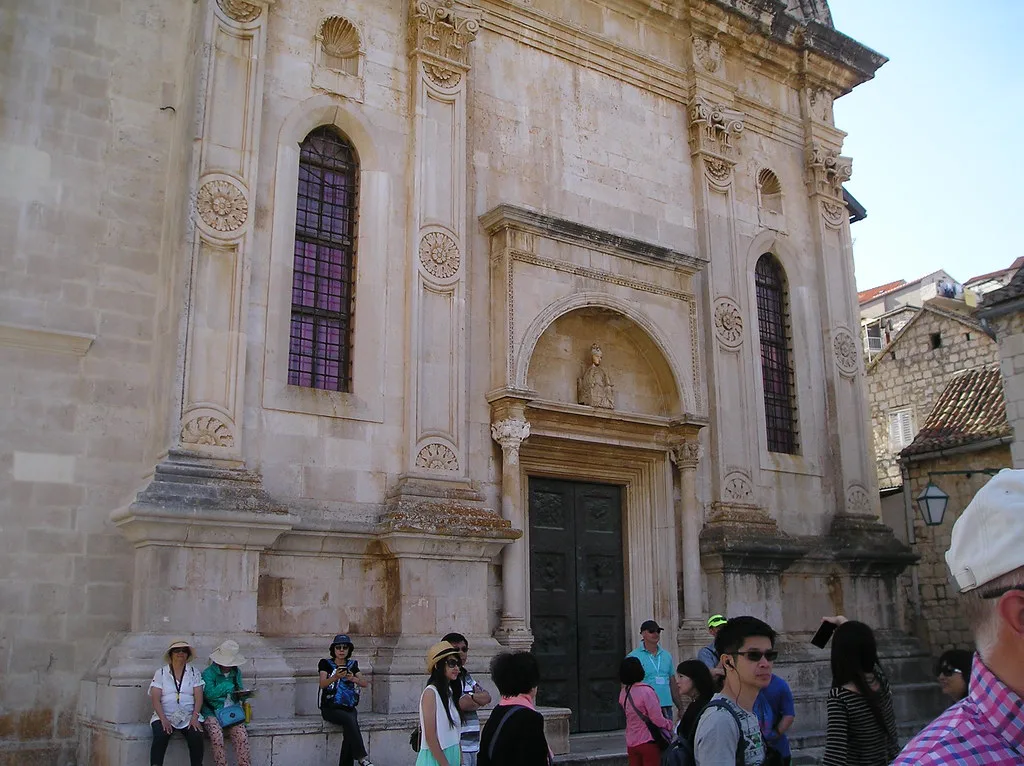
Hvar Theatre: what the building holds, hours and admission
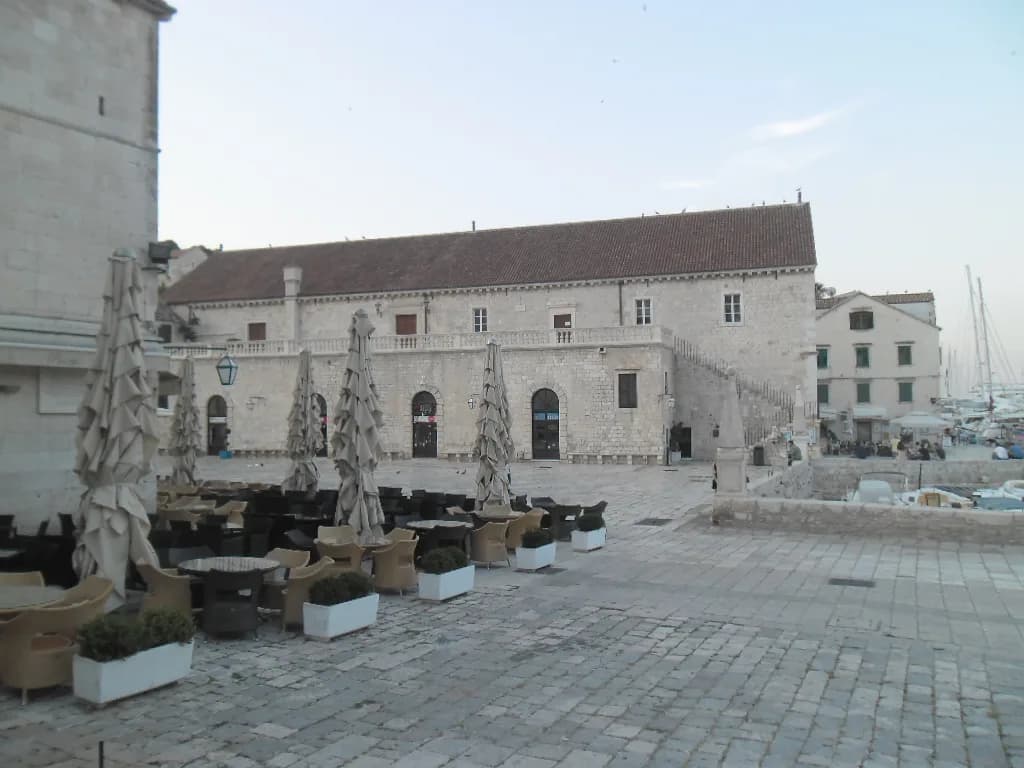
Hvar Theatre sits above the Arsenal on the northern side of Trg sv. Stjepana. The visit is short, covering the hall and the tiered seating. Allow 30 to 45 minutes if you read the displays, less if you simply look.
The Hvar Tourist Board's June 2026 notice on museum and heritage-site hours and fees lists the theatre's opening hours as 10:00 to 18:00 with an admission fee of 10 euros; treat those as the published figures for that notice and confirm before you travel.
The theatre rewards a look at the fabric of the building as much as the displays: the steep rake of the auditorium and the wooden tiers are the point. It is also the most weather-proof stop in town.
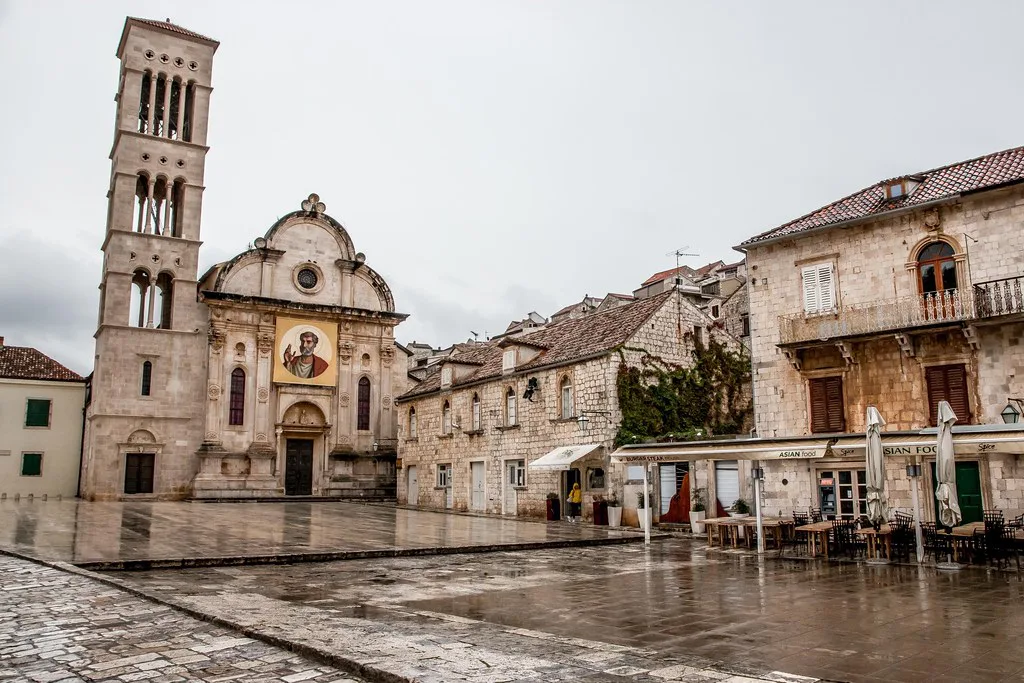
The Arsenal and Loggia: what you can actually visit
The Arsenal, the vaulted building beneath the theatre, is closed for visits according to the tourist board's June 2026 notice on museum and heritage-site hours and fees. Plan on admiring it from the square rather than booking time inside.
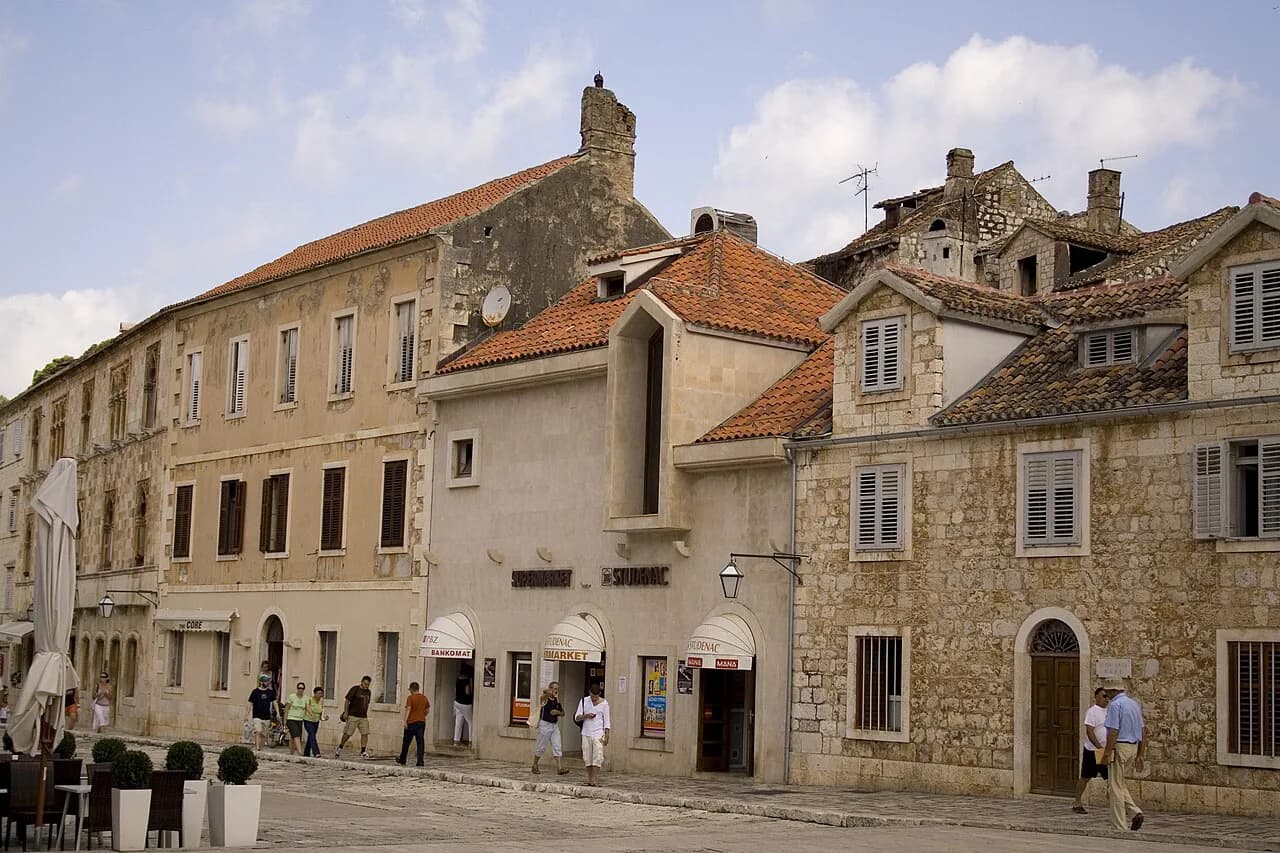
The Loggia beside it stands on the edge of the square, so it works as a pause between the theatre and the waterfront and frames a view of the square's arcaded facades.
This is where a little planning pays off: build your day around the two ticketed interiors and let the square's buildings fill the gaps. The old town's set pieces are within a couple of minutes of each other, so nothing here demands a taxi or a long walk. That compactness is also why Hvar Town works well as a base for the wider island.
The Franciscan monastery: the Last Supper, coins and the old cypress
The Franciscan monastery is the richest single collection in the town. Inside the monastery walls you will find Greek, Roman and Venetian coins, liturgical items, amphorae and an atlas by the ancient cartographer Ptolemaeus, along with paintings by Venetian artists including Francesco Santacroce and Palma Junior. Allow a full hour; the rooms are small but the display is closely packed.
The reason most people come is the enormous Last Supper, some two by eight metres, which dominates its room. Look closely at how it is painted, because the attribution is genuinely unsettled: some critics credit a painter from Ravenna, Matteo Ingoli, while others place it in the school of Palma Junior. That uncertainty is a good reason to spend a few minutes in front of it rather than walk past.
In the monastery garden stands a cypress said to be around 300 years old, which is worth a detour on your way out. The monastery keeps seasonal visitor hours, opening in the morning and again in the late afternoon with a long midday gap; the published pattern during the tourist season is 10:00 to noon and 17:00 to 19:00.
How long to allow, and a walking order from Trg sv. Stjepana
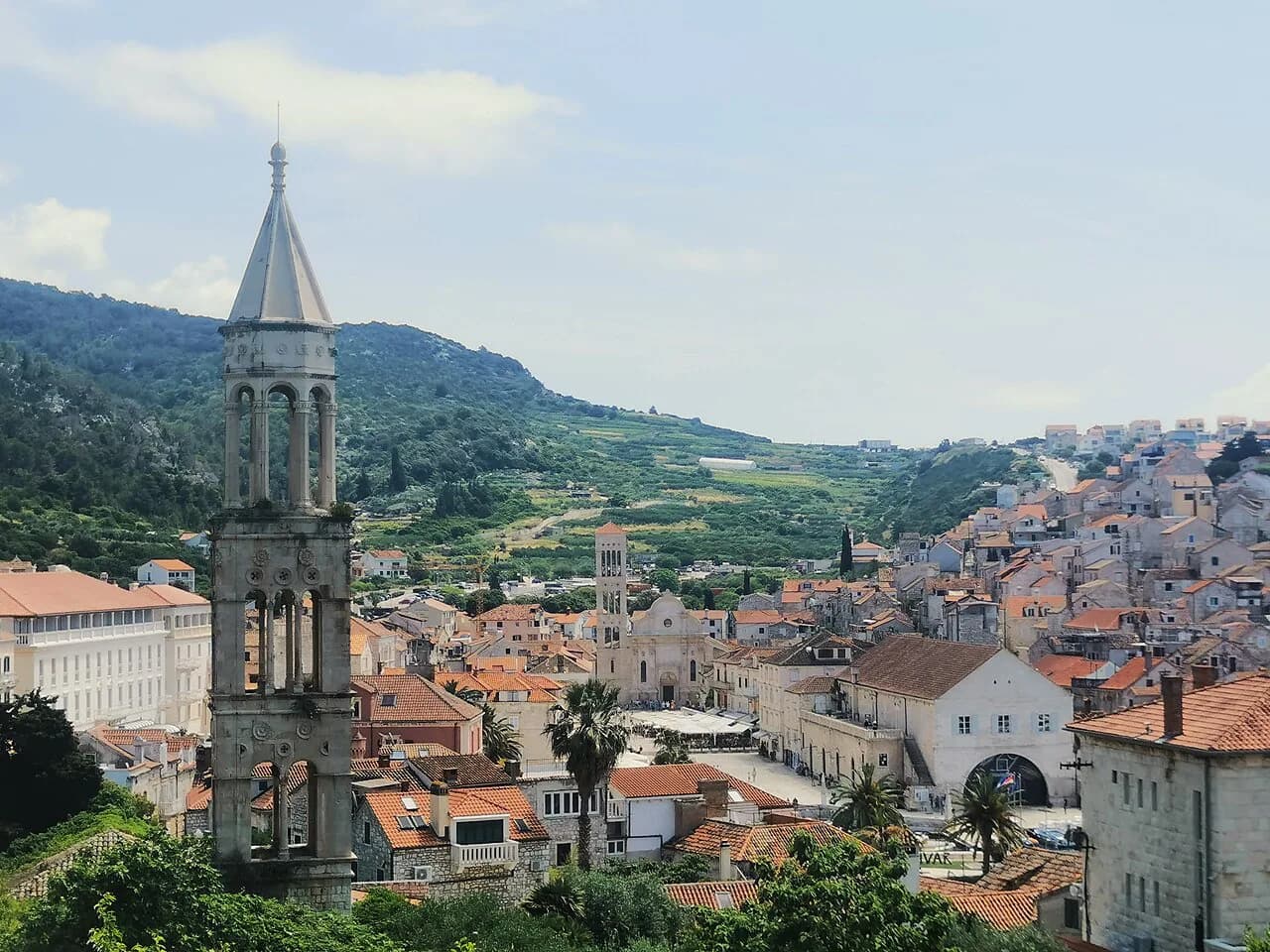
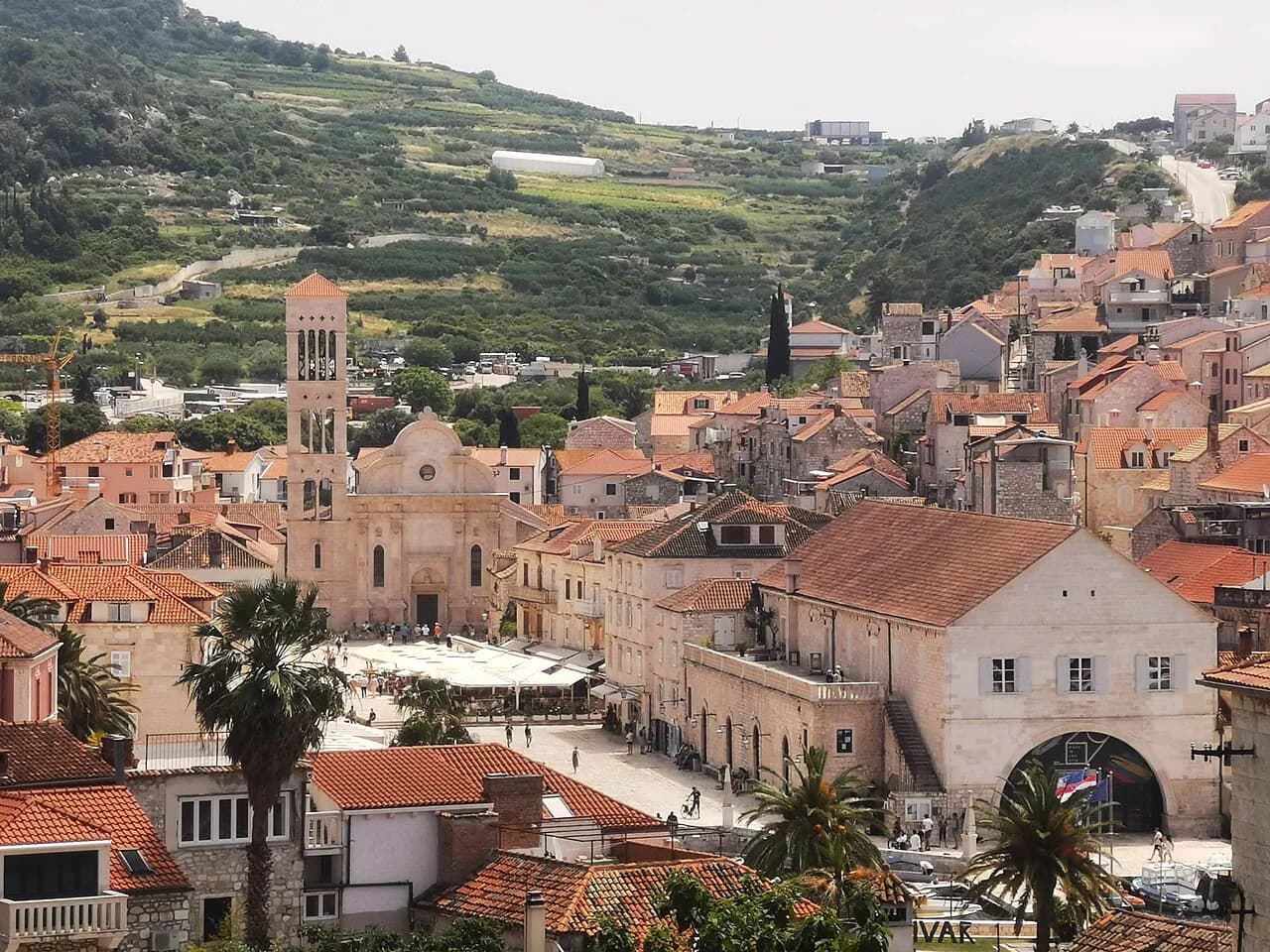
Start on Trg sv. Stjepana, the long square that anchors the old town, and take in the theatre and the Arsenal's exterior first. Then follow the waterfront for the short stroll to the Franciscan monastery, which the local guide describes as an easy walk along the sea from the square. This order puts the biggest collection last, when you have already absorbed the square's context.
Budget two to three hours for the whole circuit including pauses: 30 to 45 minutes at the theatre, an hour at the monastery, and the rest on the square and the waterfront. Add time if you want to sit with the Last Supper or read the coin labels properly. If your time is tighter, drop the theatre interior and keep the monastery.
Distances are short enough to walk everything, so no transport is needed inside the old town. This is one of the easier places on the Croatian coast to plan a culture morning without a car.
Seasonal hours and when a guide helps
Seasonal opening is the main risk to a museum day outside high summer. The monastery's published hours apply during the tourist season, with a midday closure, and the tourist board publishes hours and fees in notices rather than once for all time. If you are travelling in the shoulder months, check the current notice before making a site the centrepiece of your day.
A guide adds most at the monastery, where the coin collection, the Ptolemy atlas and the contested attribution of the Last Supper need explanation to mean anything. The theatre is legible on its own with its panels, and the square's architecture needs no interpreter at all.
For a wider sweep of what else competes for your time on the island, our guide to Hvar Attractions: 11 Visitor Guides covers the fortresses, viewpoints and outlying sights beyond the old town.
Tickets in euros, summer crowds and the bura
Admission is charged in euros, and the theatre fee published by the tourist board in its June 2026 notice was 10 euros. The monastery sets its own ticket; check at the door or with the tourist board.
Summer crowds follow the ferries and the cruise arrivals, so the monastery is calmest right at opening and again in the late-afternoon session. The midday gap is not a good time to arrive expecting to get in; it is a good time to be on the waterfront or in the square.
The bura, the cold northerly wind, can make the open square unpleasant even on a sunny day, while the theatre interior shelters you completely. Build flexibility into your plan so wind, not just rain, can reorder your stops.
Choosing between the monastery and the theatre
If you only have time for one, choose the Franciscan monastery: the Last Supper, the coins and the cypress give you more to look at than the theatre's single hall. Add the theatre if you have a second hour.
Walk it from Trg sv. Stjepana, keep an hour for the monastery and 30 to 45 minutes for the theatre, and leave the square's open sights for the gaps between ticketed entries. For the rest of the island, start with our Things to Do in Hvar guide and build outwards from the old town.
Explore more Hvar guides
Frequently Asked Questions
Do you need to book Hvar museum tickets in advance?
The Hvar Tourist Board and the local travel guide publish opening hours but do not set out a booking requirement for the theatre or the Franciscan monastery. The practical step is to confirm the hours for your dates with the Hvar Tourist Board and arrive early in a session.
How far is the Franciscan monastery from Hvar's main square?
It is a short waterfront walk from Trg sv. Stjepana, described by the local travel guide as an easy stroll along the sea from the square. The whole old-town circuit, including the theatre on the square, fits into a single morning without transport.
Are the Hvar museum sites open year-round?
The monastery keeps seasonal hours with a midday closure, and the theatre's opening times are published for specific periods rather than promised permanently. Outside high summer, confirm the current schedule before you plan a day around one building.
Sources
Notes from the Croatian coast
Optional updates when our guides change.
You might also like
Continue reading
More guides you'll find useful