Hvar Walking Tour: A Self-Guided Route Through the Old Town
Walk Hvar Town in order: the Piazza, St Stephen's Cathedral, the Arsenal and its theatre, the Groda lanes and the fortress, with timings and guided-tour advice.
On this page
Allow about two hours for the core walk through Hvar Town, or half a day if you add the climb to the fortress above the rooftops. The route below runs in walking order from the Piazza through the cathedral square, the Arsenal and its theatre, the Groda lanes and finally the Riva, so you can follow it without a map. Guided old-town walks of the same ground are described as roughly two hours and can take in the fortress, the cathedral, the lace monastery and the hidden streets, which tells you what a paid guide compresses into one session.
What follows is a stop-by-stop route rather than a list of sights: what to look at at each point, where the trade-offs lie between time, effort and heat, and the moments when a private guide adds something the streets cannot tell you themselves. The full menu of town sights sits in Things to Do in Hvar if you want to compare the walk against everything else on offer.
What the route covers, and how long it takes
The core circuit stays inside the old town: the Piazza, the cathedral and its palaces, the Arsenal and theatre, the Groda side streets and the harbour edge. Budget about two hours at an unhurried pace with a few stops for photographs. The fortress sits above the town and is the single biggest addition to the day, turning a two-hour walk into something closer to half a day once you allow for the climb, the time at the top and the descent.
Treat those figures as planning numbers, not a schedule. Half the pleasure of Hvar Town is turning into a lane because it looks interesting, and the old town rewards that. If you have only an hour, the cut-down version near the end keeps the essential stops and drops the climb.
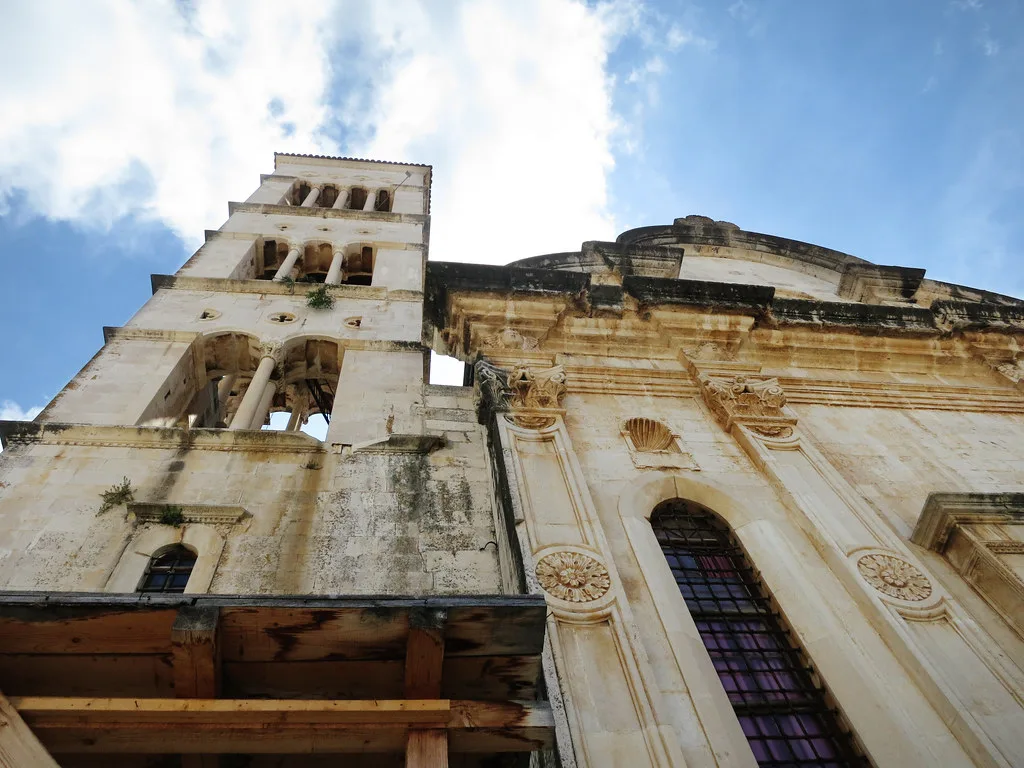
Start at the Piazza (Trg svetog Stjepana)
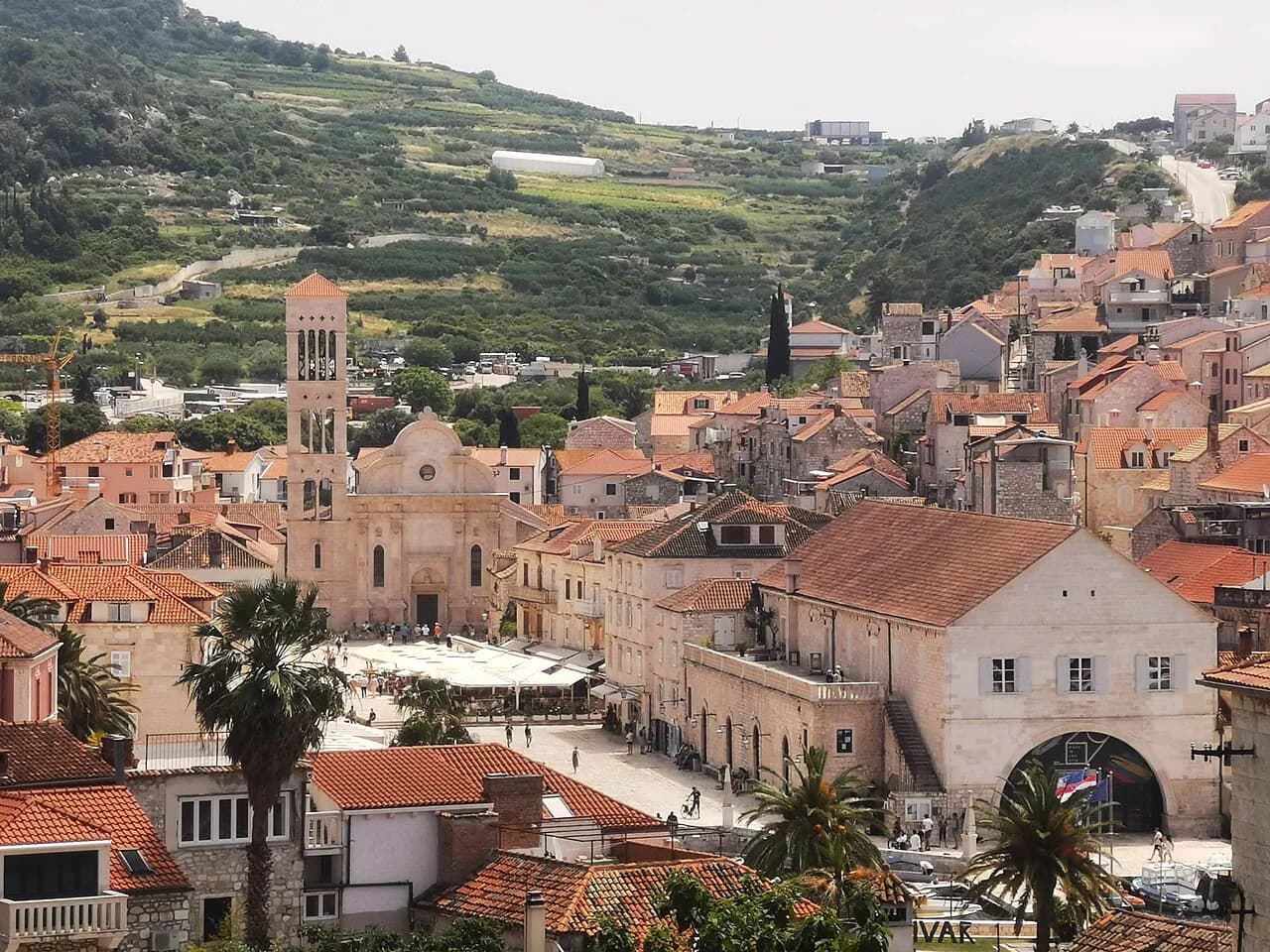
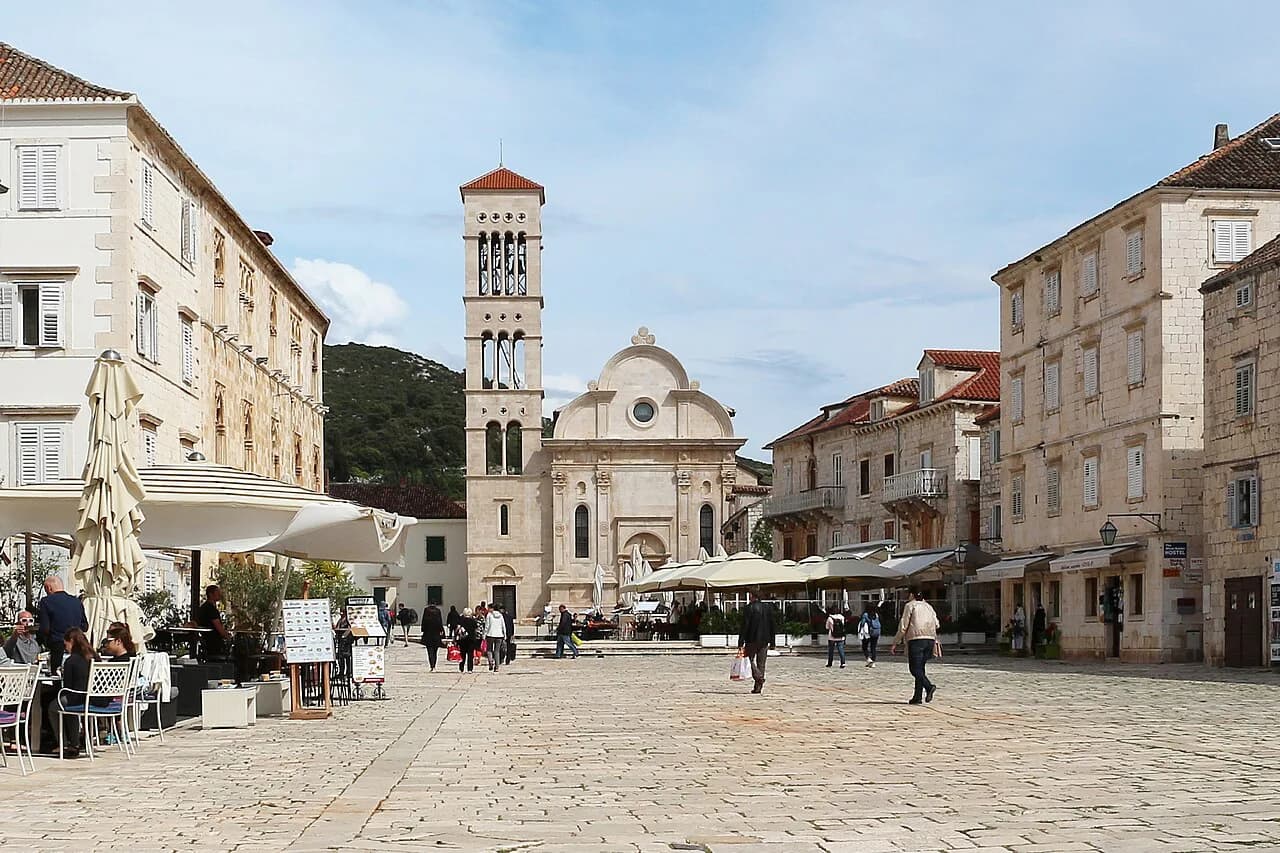
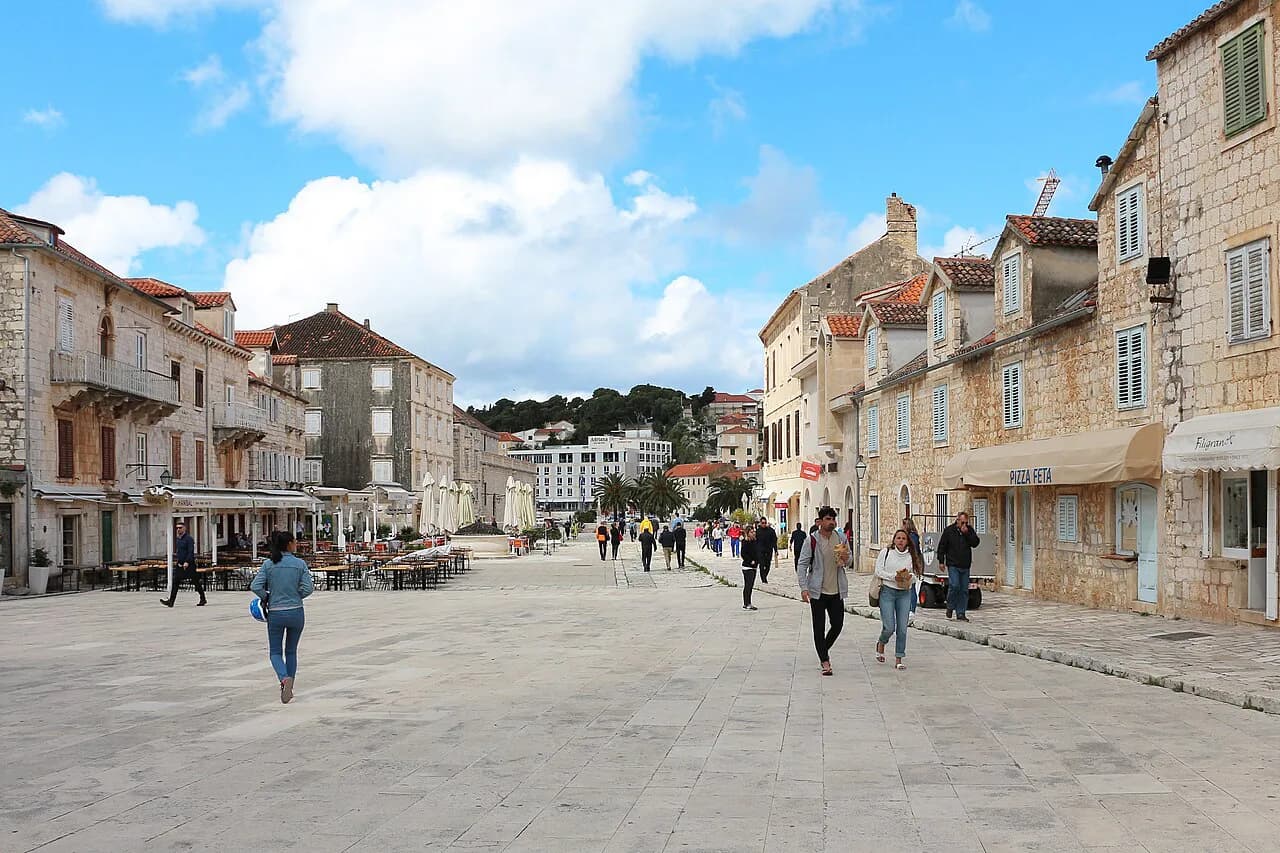
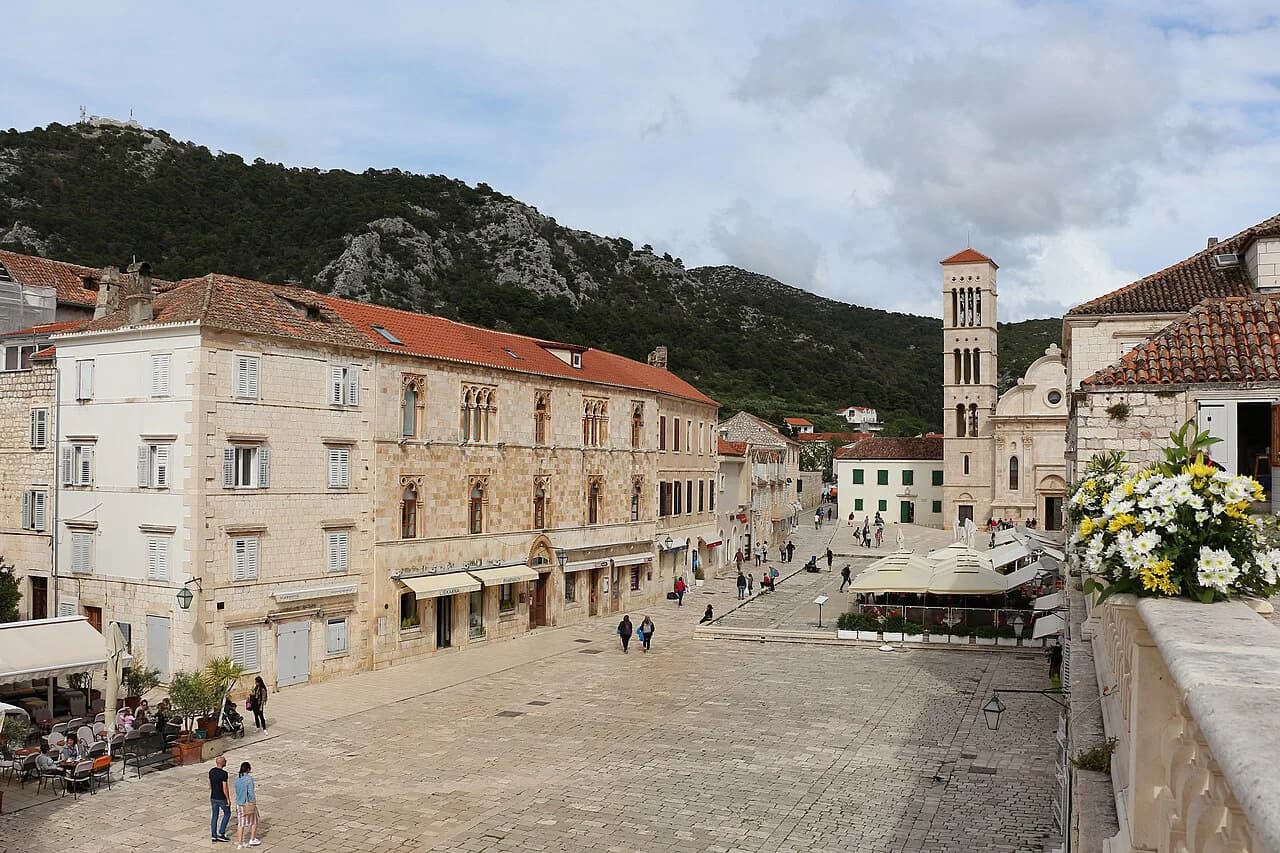
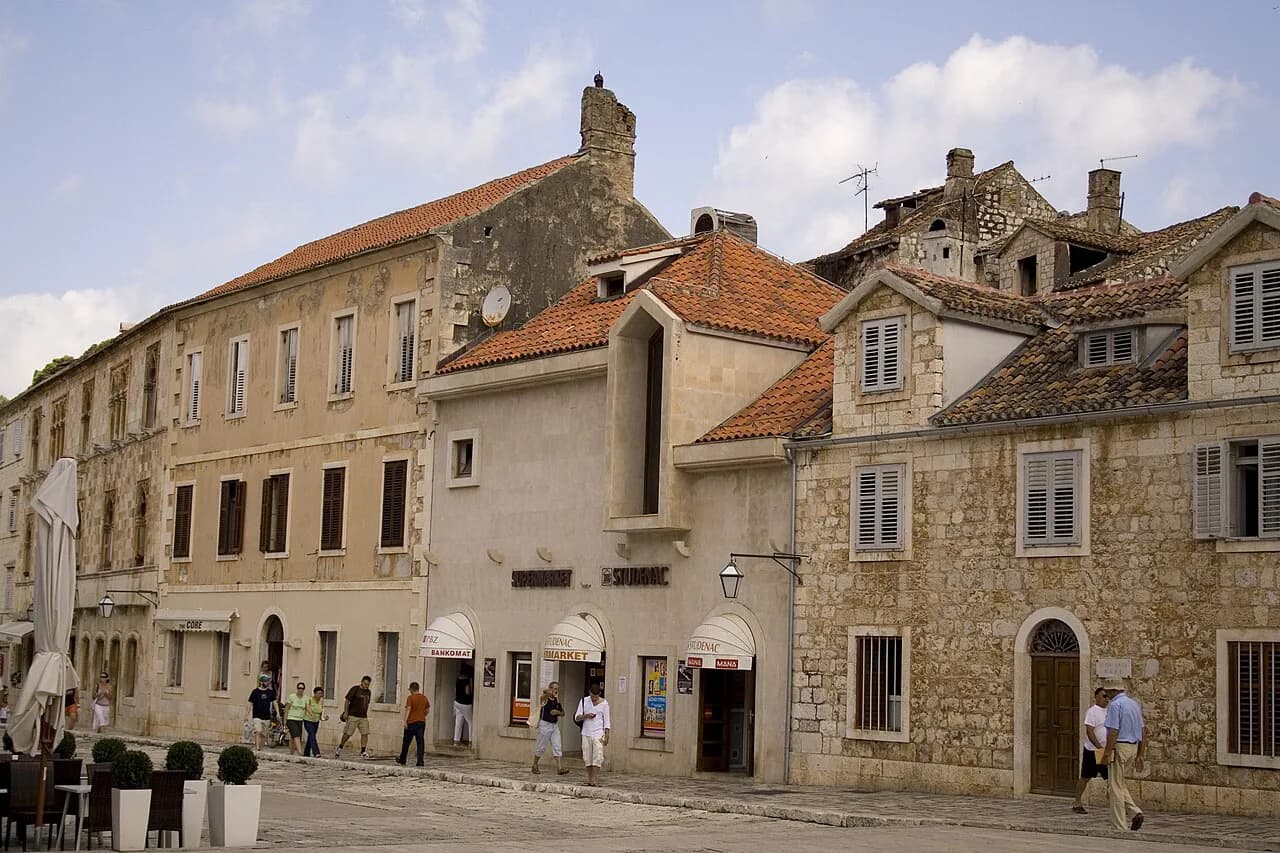
Begin on the Piazza, the long paved square that opens straight off the harbour and is the town's living room. Stand at the water end and look inland: the square narrows towards the cathedral, with palaces down both sides, which gives you the whole old town in one view before you walk into it. This is also where you feel the crowds most, because everyone arriving by boat crosses it first.
Look at the details rather than the postcard: the wells, the stone facades and the way the paving meets the buildings. The wider context of the town's squares and streets is set out in the guide to Hvar Old Town, useful if you want to branch off later.
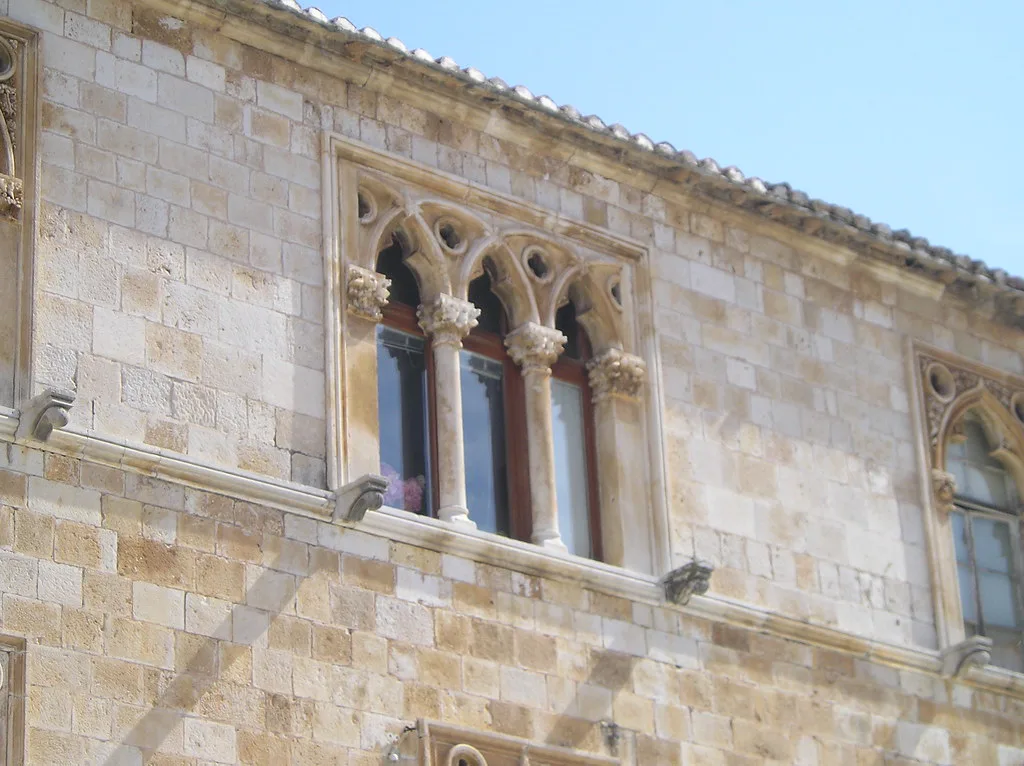
St Stephen's Cathedral and the palaces around it
St Stephen's Cathedral closes the landward end of the Piazza, and the palaces flanking the square are the other half of the stop. Private heritage walks in Hvar single out the cathedral and the Renaissance palaces as headline sights, and you can see why from the square itself: the ensemble reads as one composition rather than separate buildings. Walk the length of the square slowly and look up at the upper windows and balconies, which is where the domestic architecture shows.
If you want the deeper story behind the facades, the guide to Hvar history covers what to see in Hvar Town and Stari Grad, which is the right background reading before you start walking.
The Arsenal and the theatre above it
The Arsenal is the great block that once served as the town's communal store and gathering place, and the heritage tour of Hvar pairs it with the town's theatre, which that operator describes as the first public theatre in Europe — a claim worth taking in as you stand before it. The logic of the pairing is worth pausing over: the working space and the performance space belong to the same civic core, both opening off the main square.
Look at the doorway and the height of the structure from the Piazza, then walk round to see how it meets the lanes behind. If you want to see inside museums and civic buildings rather than admire them from outside, compare options in museums in Hvar before you set out, since time inside changes the shape of the day.
Into the Groda lanes
The older quarter behind the waterfront, the Groda, is where the walk becomes a wander. Hvar's heritage routes describe the old part of town by that name and describe the town as a gallery in the open air, which is a fair way to approach these side streets: palaces and churches packed into lanes barely wide enough for two people, with carved doorways at eye level rather than at the grand scale of the Piazza. Turn off the main flow and the crowds thin within a minute.
Whether you linger here or press on is the main judgement call of the day. A self-guided walker will pass through in twenty minutes; someone with an interest in stonework could lose an hour. Photography is best in the lanes when the sun is high and the alleys hold shade.
UNESCO heritage and the town's historic fabric
The heritage route is why the streets themselves, not only the individual buildings, are the attraction: the private heritage walks offered in Hvar describe the town as having numerous historical sites and landmarks protected by UNESCO. Much of the pleasure of the walk is in the fabric of the lanes and the palaces rather than any single ticketed interior, so give yourself time to look at doorways, windows and stonework as you go.
For how the town and island fit together geographically before you commit to a route, the Hvar map explains the layout.
The climb to the fortress: view against effort
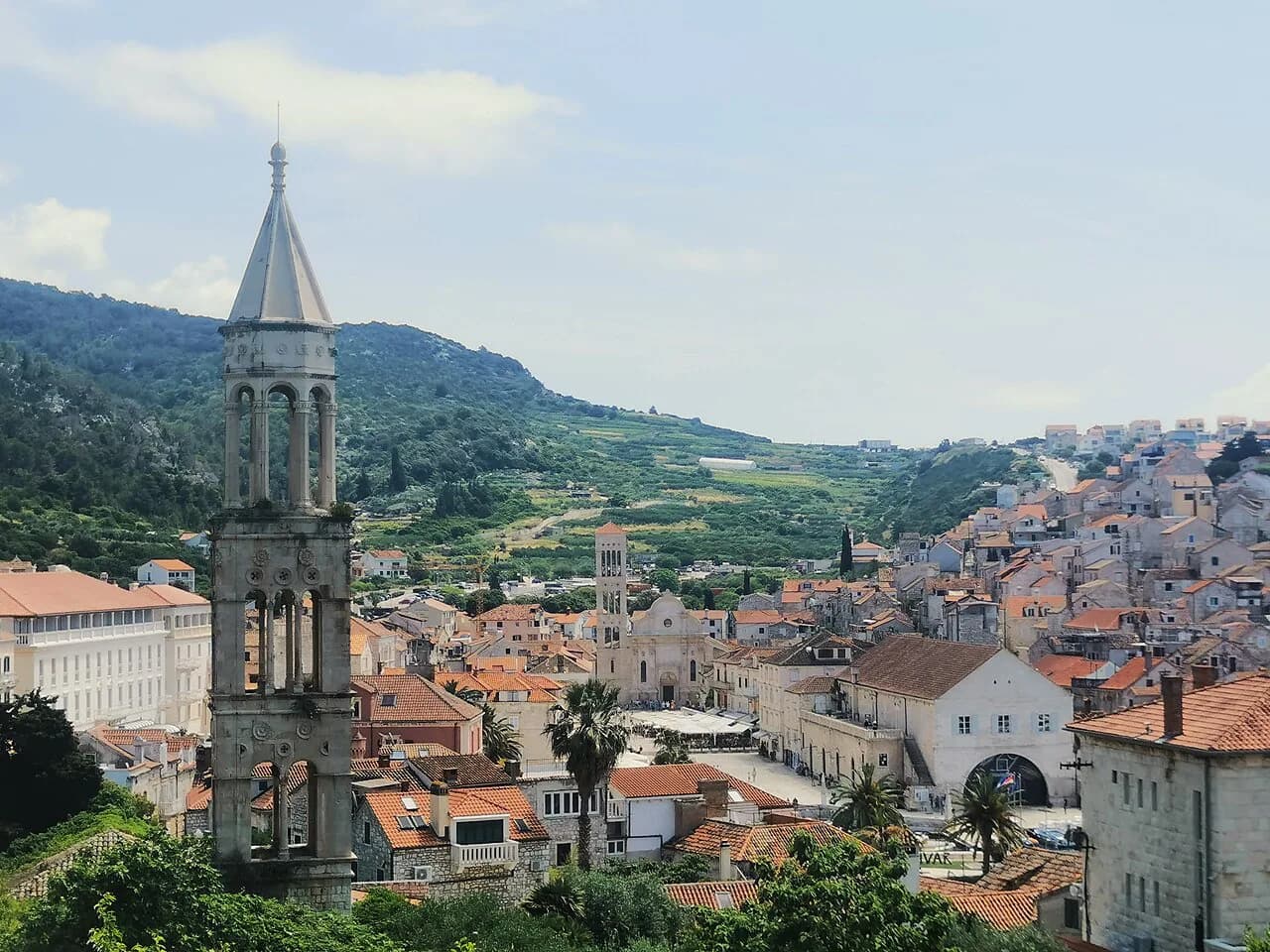
The fortress above the town is the one stop that costs real effort. The path climbs steadily from the town's upper edge, and the honest trade-off is simple: the view over the rooftops, the harbour and the Pakleni islands is the best in town, but the climb takes time out of the walk and is uncomfortable in midday summer heat. Do it early or late, or skip it and spend the time in the lanes instead.
For the wider menu of sights, including what else competes for the same hours, see Hvar Attractions, which shows how the fortress sits alongside the town's other stops.
Finish along the Riva and harbour
Come down to the Riva, the waterfront promenade, and walk the harbour edge to close the loop. From here you are looking across the water to the Pakleni islands, which explains why Hvar Town feels as much a port as a town: the boats, the stone quay and the square behind you all point the same way. It is the natural place to sit, review what you have seen and decide whether the afternoon goes to a boat.
When a guided tour is worth paying for
A private heritage walk makes sense if you want the sequence explained, the cathedral and palaces put in order and the lane-by-lane detail pointed out, and if you would rather not plan. The Hvar Heritage Walking Tour is a private guide product with a flexible duration, offered in English, Italian and Croatian, and its itinerary takes in the Piazza, the theatre, the cathedral, the Arsenal and the Renaissance palaces; book it through Private Guides and confirm the price and meeting details when you reserve. Separate guided old-town walks are described as around two hours.
Self-guided suits anyone who wants to stop for coffee, detour into shops or leave the route entirely. The trade-off is that you will walk past the theatre without knowing what it is, which is exactly what the stops above are for.
Heat, crowds and the bura
Summer middays are the enemy of this walk: the Piazza bakes, the fortress path has little shade and the lanes fill when boats arrive. Start early or walk in the late afternoon, and treat the middle of the day as indoor time. The bura, the cold northerly wind, can make the exposed harbour edge and the fortress path genuinely unpleasant even on a bright day, so keep a layer for the walk and save the sheltered lanes for a windy afternoon.
Outside high summer the same route is calmer and the light is better for the stone. Spring and autumn give you the town without the crush, which is when a two-hour walk actually takes two hours.
One hour, or a half day
With only an hour, walk the Piazza from the water end to the cathedral, turn into the Groda lanes for a short loop and finish on the Riva. Drop the fortress and the interior visits. With a half day, keep everything above, add the climb to the fortress and allow proper time in the lanes.
If the walk leaves you wanting the water, the Islands near Hvar guide explains what the Pakleni islands and the other crossings offer, and Hvar boat tours covers which trip to compare. Both are afternoon decisions best made from the Riva.
Self-guided or with a guide?
Walk it yourself if you have two hours, a rough idea of the order and the willingness to look up at the buildings. Pay for a private heritage walk if you want the theatre, cathedral and palaces explained in sequence and would rather not think about the route; confirm the price and meeting details directly with the operator.
Either way, start at the Piazza, end on the Riva and treat the fortress as an optional climb rather than a duty. That order is what makes Hvar Town work on foot.
Explore more Hvar guides
Sources
Notes from the Croatian coast
Optional updates when our guides change.
You might also like
Continue reading
More guides you'll find useful