
Pula Cathedral: What to See Inside and How Long It Takes

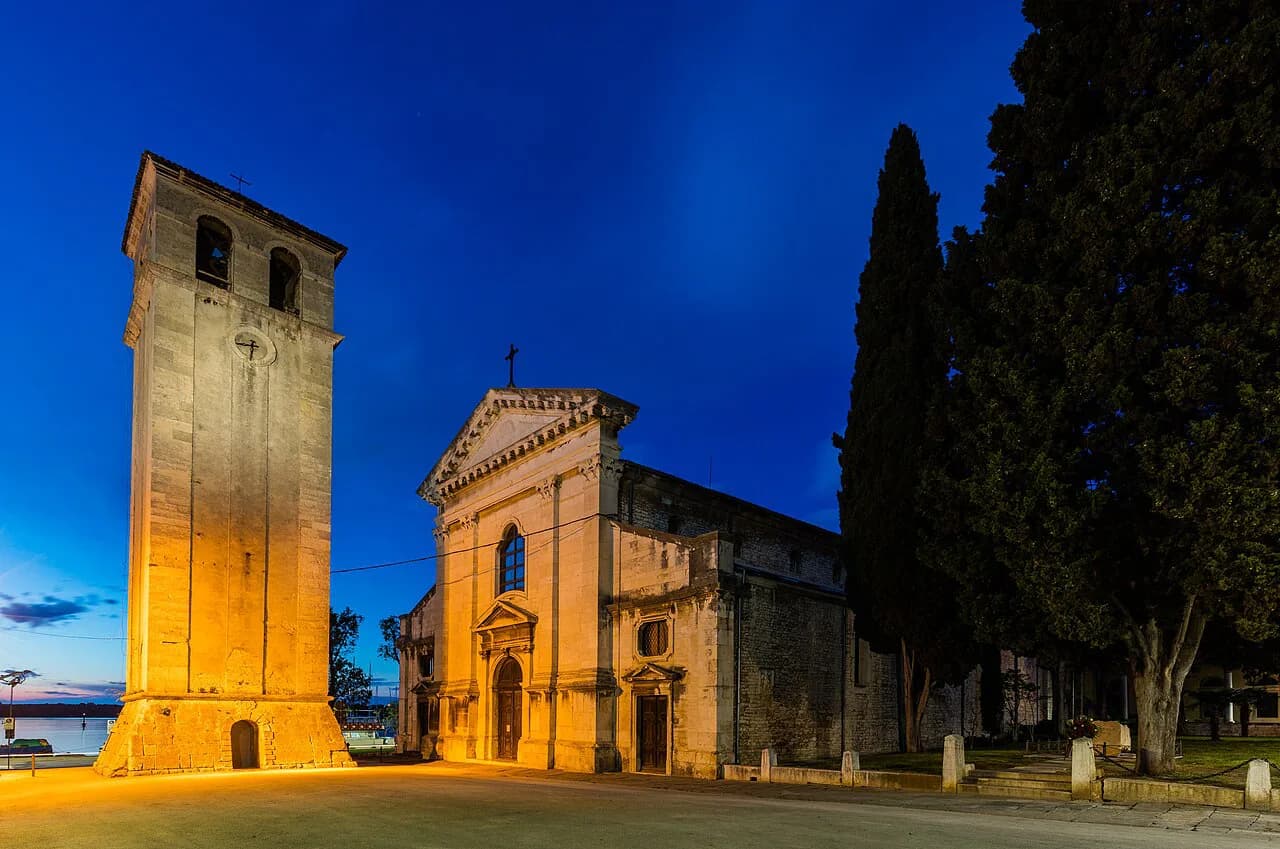
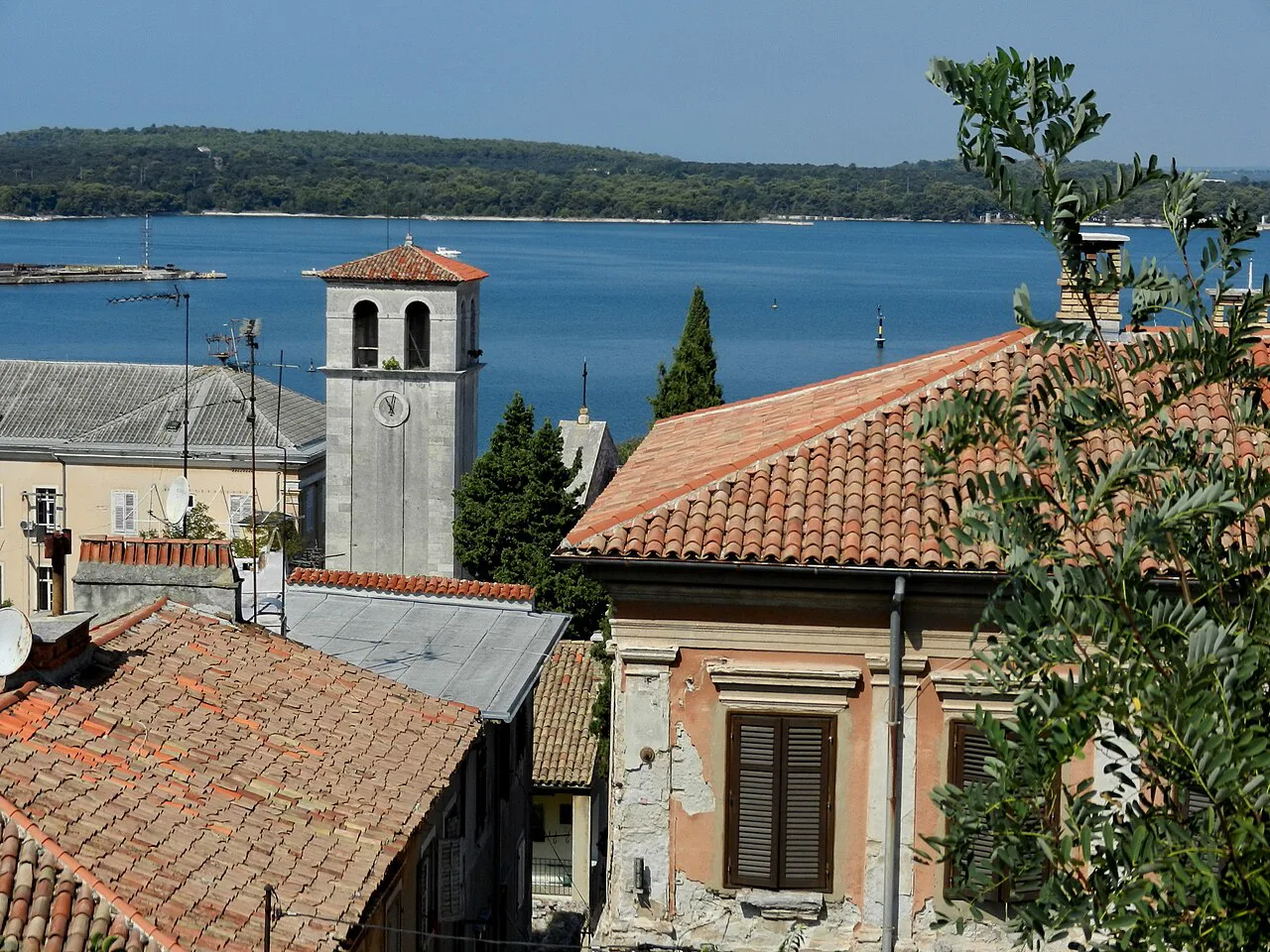
Pula Cathedral is a 30 to 45 minute stop, worthwhile for its Roman-era floor mosaics, its 1712 classical facade and the free-standing bell tower beside it rather than for size or spectacle. It stands on the south side of the Pula bay, at the foot of the hill crowned by the 17th-century Venetian fort. This guide covers where the cathedral sits, the climb from the harbour, what to look for inside, how the tower's dates fit together and which neighbouring churches are close enough to add.
Where Pula Cathedral sits in the city
The cathedral occupies the foot of the fort hill, a short walk above the waterfront and behind the Roman Forum, on the south side of the bay. That position matters more than any address: you approach from below, through the old town streets, and the building opens onto a small square rather than a grand piazza. Because the nave and tower sit tight against the slope, much of the cathedral's bulk only reveals itself when you reach the top of the street.
Plan the cathedral as part of a compact old-town circuit: Forum, cathedral, fort hill, then back down to the harbour. The distances are short but the gradient is real, and the paving is polished, so grip matters more than pace. If you are also visiting the Roman sights, the Pula Arena and the temples are best given their own slots rather than squeezed around the cathedral.

Getting there on foot from the Forum
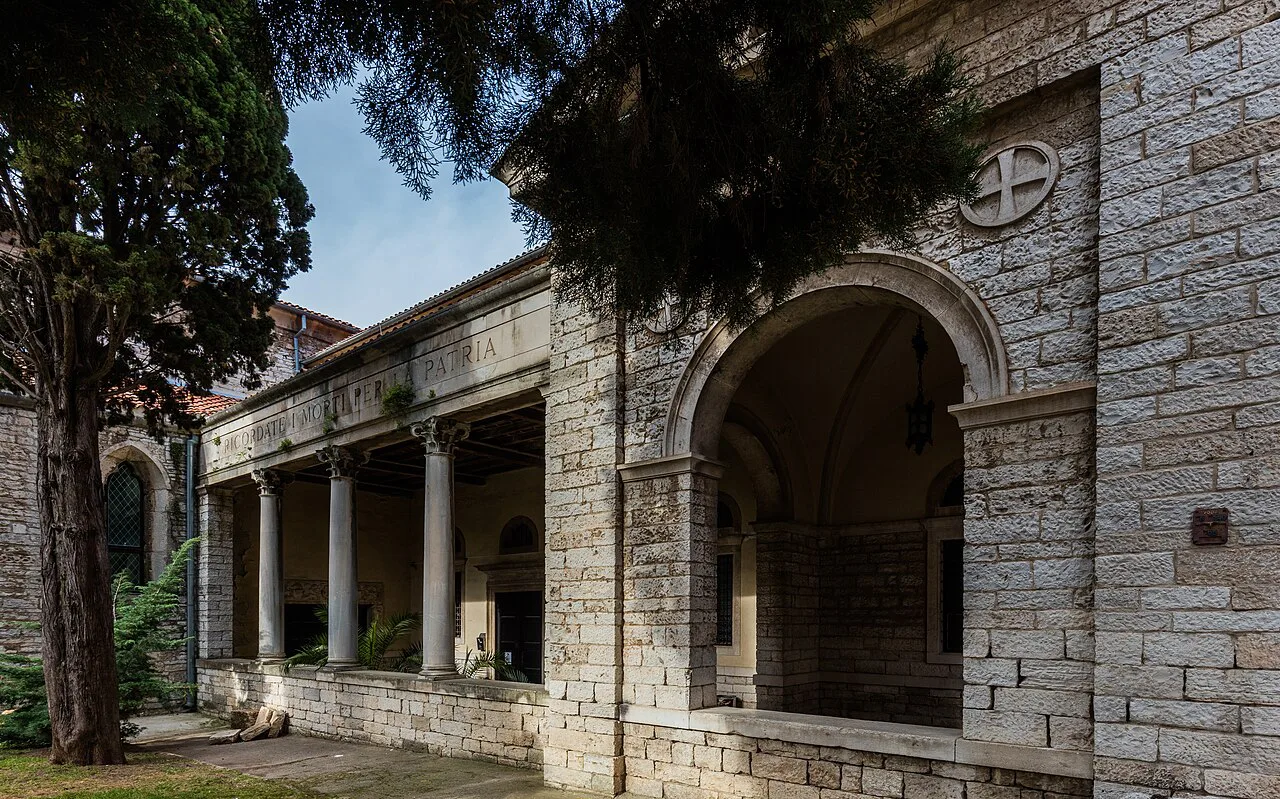
From the Roman Forum, head away from the water and uphill through the old town; the cathedral sits above and behind the temple frontage. For the Forum itself and the Temple of Augustus, Pula at its edge, both are worth their own slot before or after the climb. Allow 5 to 10 minutes of walking, more if you stop at the viewpoint partway up. The climb is short but stepped in places, which shapes a visit: arrive fresh rather than at the end of a long day of walking the city.
Travellers arriving by bus or ferry land on the harbour side, so the whole approach is upward. A useful sequence is to start at the Gate of Hercules, cross the old town to the Forum and continue up to the cathedral, which keeps the climb in one direction instead of doubling back. Wear shoes you can climb steps in; the old-town lanes are uneven stone.

The building's layers: Roman origins to the 1712 facade
Worship on this site reaches back to Roman times, and the first Christian churches here were built in the late 4th and early 5th century. Later generations enlarged and rebuilt on those foundations, so what you see now is a palimpsest rather than a single period building. The present classical facade was added in 1712, under Bishop Bottari, when restoration of the basilica and its Baroque bell tower was under way.
The cathedral was badly damaged again in the World War II bombing of Pula and was repaired by 1947. That post-war repair is the reason the interior reads cleaner and plainer than its age would suggest, and it explains why the mosaics survive as fragments rather than as a continuous floor. Keep those layers in mind when you look at the nave: you are seeing a long sequence of rebuilds compressed into one space.
Inside: mosaics, murals and what the war left
The interior's main draw is the surviving floor mosaic, of which only a small part remains, alongside traces of wall paintings. Look down as much as up: much of the interest is underfoot and roped off, so you view it from the edges of the aisle rather than walking across it. The gilded and painted furnishings are modest compared with the great Venetian churches further down the coast, so adjust expectations towards archaeology rather than spectacle.
Because the floor is protected and fragments are small, a quick glance from the door will undersell the building. Give yourself 15 to 20 minutes seated or standing inside, letting your eyes adjust, and read the interpretive panels where they are displayed. Photography without flash is the sensible default in a working church, and visitors should keep voices low when services are under way.
The bell tower: 1707, 1924 and whether to climb
The free-standing bell tower beside the cathedral was begun in 1707 and completed in 1924, which is why its lower stages and its crowning look so different in date. Treat those years as history rather than visiting information: they tell you what you are looking at, not when the tower is open. Whether you can climb it, and on what days, is a seasonal local decision.
Our own call is that the tower is worth the effort for the view over the bay and the fort hill if access is open on your day, but it is not the reason to come. If the tower is shut, the small square at its base still gives you the best upward view of the cathedral's facade and the campanile together. Ask at the cathedral or the tourist office on the day rather than building a plan around it.
How long to allow, and the honest trade-off
Budget 30 to 45 minutes for the cathedral and its immediate square, or an hour if you add the tower and sit for a while. A five-minute look from the doorway is the weakest option: you miss the floor mosaic and the sense of how the building has been rebuilt. Conversely, this is not a cathedral that rewards a half-day; the nearby Roman sights are where the time is better spent.
The trade-off is between depth and daylight. On a hot summer afternoon the shaded interior is a welcome pause, but the tower view is better in clearer morning light. If your time in Pula is one day, pair the cathedral with the amphitheatre and the Forum and leave the tower for a return. If you have two days, the cathedral plus the fort hill makes a satisfying half-day on foot.
Nearby churches on the same walk
The Church and Monastery of Saint Francis is the strongest companion visit, a 13th-century Franciscan complex with a 15th-century gilded altarpiece and a Roman mosaic showing a hippocampus. It sits within the old town, so it chains naturally with the cathedral without a detour. Check opening times at the door, as monastic churches often close in the middle of the day. For the wider set of sights around this part of town, see Pula Attractions: 5 Visitor Guides.
St. Spyridon Church, the Serbian Orthodox church whose present form dates to 1834, is a short walk away and gives a different register, with a richer painted interior than the cathedral. The Church of St. Anthony on Scalierova ul. is the third easy addition: built between 1929 and 1931, with a small adjoining monastery finished in 1934, it is a 20th-century contrast to everything else on the circuit.
Taken together, these three churches plus the cathedral fill an afternoon on foot without leaving the centre. If you only have time for one besides the cathedral, choose Saint Francis for its medieval fabric and mosaic. The other two are quick additions rather than destinations in their own right.
Opening times, entry and where to check
The cathedral is a working place of worship, so entry arrangements follow the parish rather than a ticketing website, and any charge or tower fee is set locally. Ask at the cathedral itself or at the Pula tourist office when you arrive, and read the noticeboard at the entrance before assuming access. If you are planning around a specific day, confirm before you travel rather than relying on an old listing.
Guided walking tours of the old town often include the cathedral exterior and the Forum, which suits travellers who want context without booking a separate church visit. These are commercial tours with their own schedules, so compare inclusions before paying.
Is Pula Cathedral worth the climb?
Yes, if you treat it as a 30 to 45 minute archaeological stop on the way up to the fort hill rather than a headline sight. The Roman-era floor fragments, the 1712 facade and the 1707 tower base justify the short climb from the Forum, and Saint Francis around the corner makes the detour pay. Skip it only if your day in Pula is already committed to the amphitheatre and the Forum.
Frequently Asked Questions
Is Pula Cathedral free to enter?
Entry arrangements are set by the parish, and the cathedral has not published a fixed admission charge for visitors. Ask at the entrance or at the Pula tourist office on the day, and treat any tower access as a separate question rather than assuming it is included.
How old is Pula Cathedral?
Christian worship on the site dates to the late 4th and early 5th century, with later enlargements and rebuilds on those foundations. The classical facade you see now was added in 1712, and the building was repaired after World War II bombing by 1947.
Can you climb the bell tower at Pula Cathedral?
The free-standing tower was begun in 1707 and completed in 1924, but access is a seasonal local decision rather than a permanent arrangement. Check at the cathedral or the tourist office on the day you visit instead of planning around an assumed climb.