
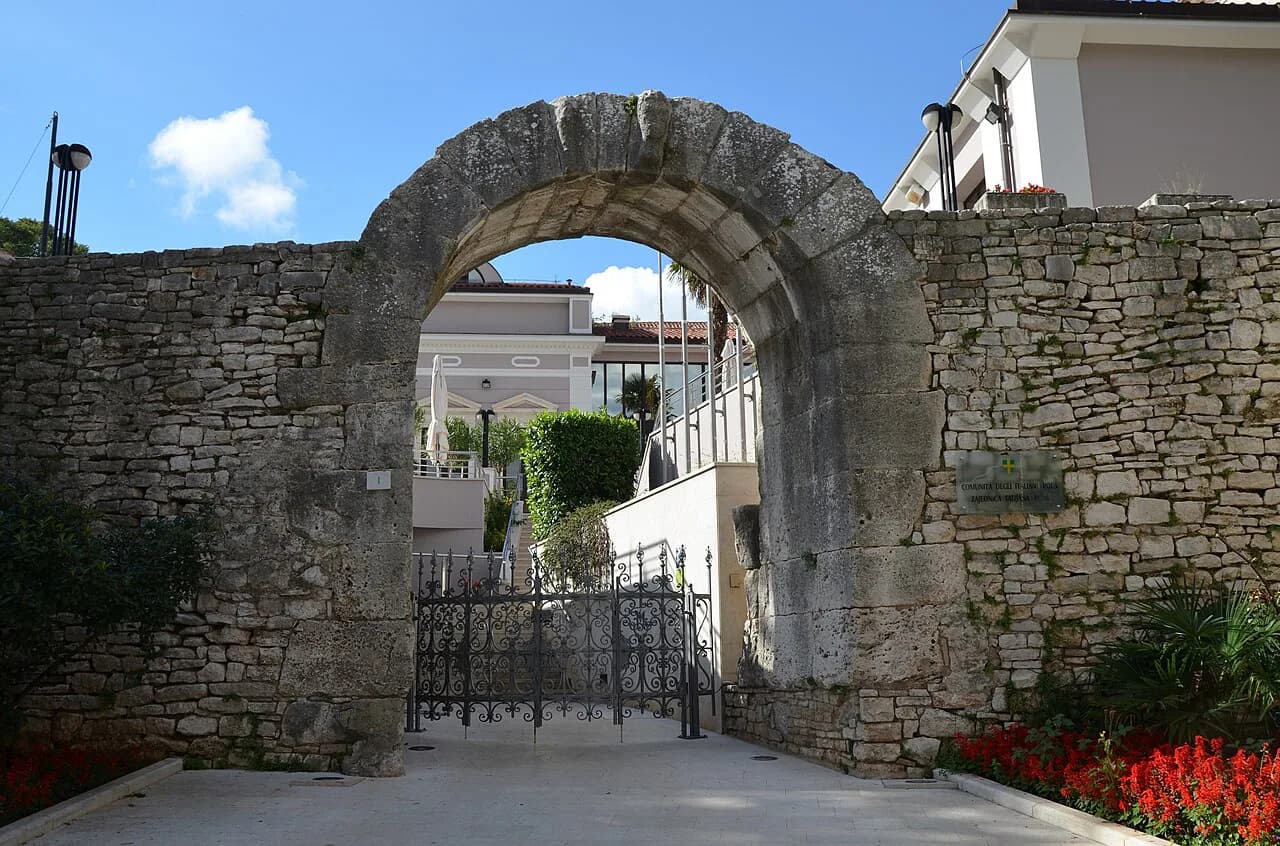
Gate of Hercules (Heraklova vrata), Pula

The Gate of Hercules (Heraklova vrata) is a small, plainly built Roman gate in the old town of Pula, and it takes about five minutes to see. It is one of the least elaborate of the city's Roman gateways, so treat it as a stop on a walk rather than a sight in its own right.
This guide covers where the gate stands in relation to the Forum and the harbour, what to look at when you arrive, how long to allow, and which Roman sights sit within a few minutes of it. It also explains how the gate fits into a short old-town circuit without back-tracking.
What the Gate of Hercules actually is
It is a Roman town gate built into Pula's surviving fortifications, constructed of uncarved stone blocks rather than dressed masonry. That rough construction is what makes it look so understated next to the city's triumphal arch.
The gate is usually described as architecturally modest, and any visit should be scaled to that. There is no interior to tour and no collection to see, so the whole experience is standing in front of the arch and reading the stonework.
Pula's Roman sights are gathered in the old town on the western side of the city, close to the coast, and the gate sits within that group rather than out on the edge. The city's official visitor overview lists the gate among the Roman monuments of the centre.
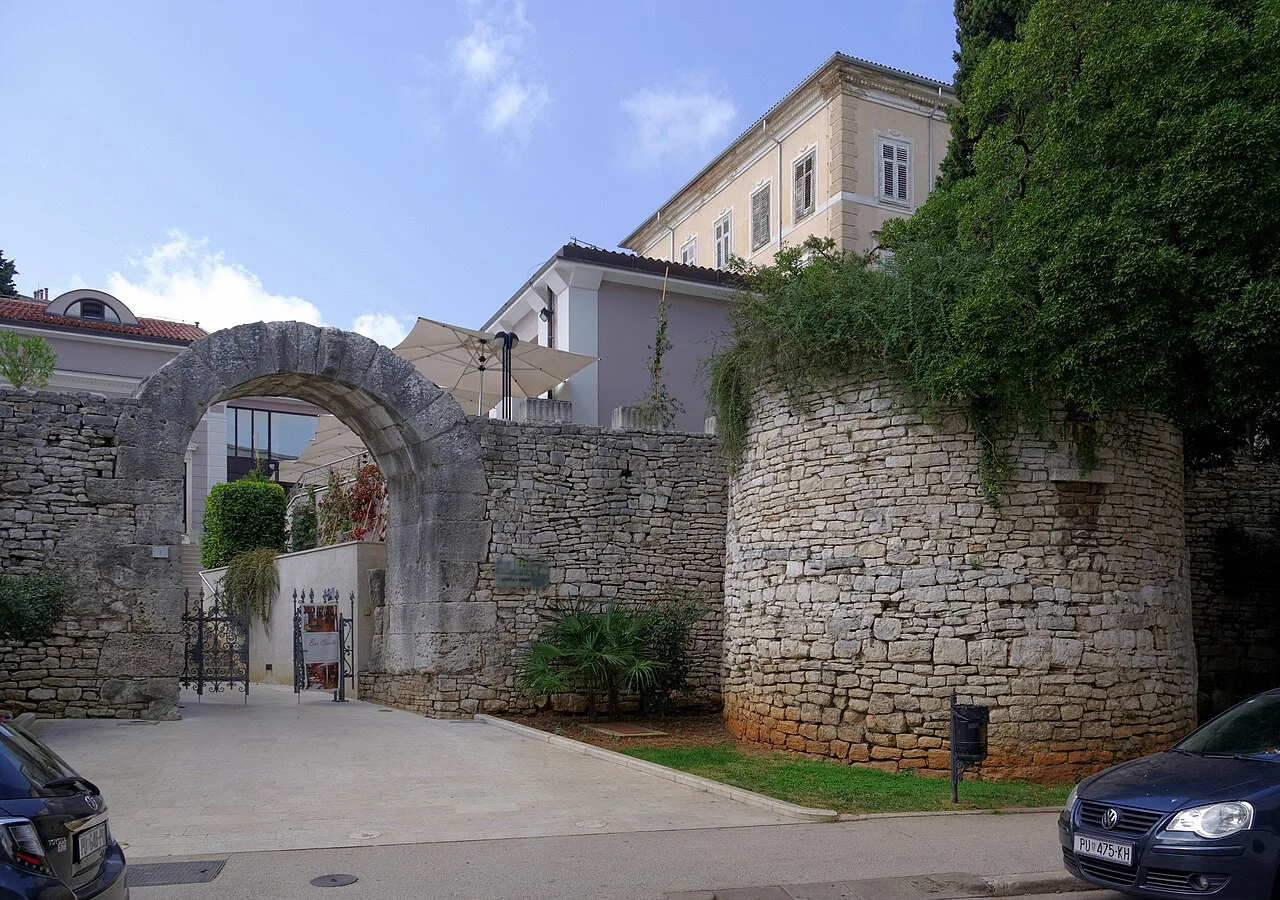

Where the gate stands in the old town
The gate is in Pula's old town, the part of the city that sits at the foot of the town hill on the western side of the centre, close to the coast, with the Forum as the easiest landmark to orient yourself by.
Because the gate is embedded in the old town fabric, you reach it on foot through the lanes rather than by heading for a separate site entrance. Approach from the Forum side and you will pass the city's other Roman remains on the way.
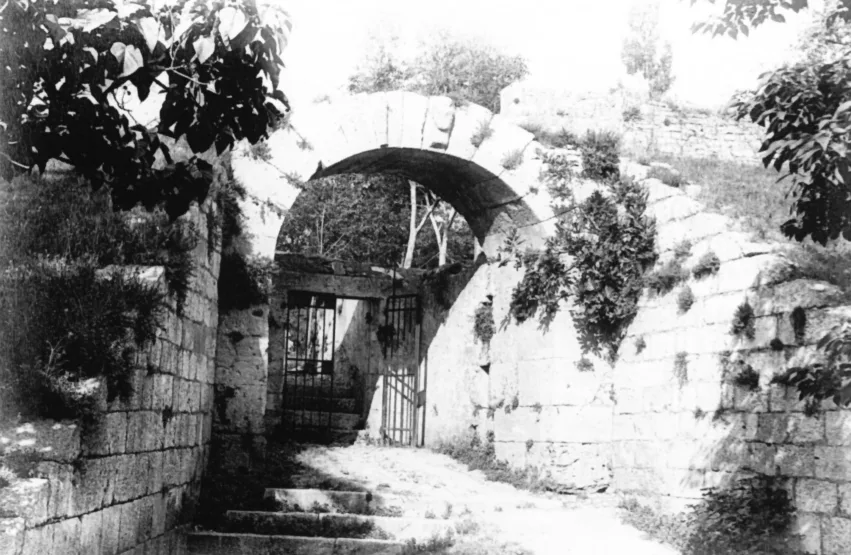

Getting there from the Forum, the Arena and the harbour
From the Forum, walk west into the lanes of the old town; the gate is a few minutes away on foot. Allow roughly five to ten minutes for the walk itself, and rather more if you stop at the Temple of Augustus on the square before setting off.
From the Arena, the walk is longer, crossing from the eastern side of the centre to the old town, so most visitors see the amphitheatre as a separate stop. The Arena Pula is the city's largest Roman monument and rewards a proper visit rather than a glance en route.
From the harbour, head inland and uphill into the old town; the gate lies in the lanes behind the waterfront. Keep the Forum as your aiming point and you will not need a map for the last stretch.
What to look for when you arrive
Look first at the stone itself. The gate is built of rough, uncarved blocks, which is why it reads as a piece of fortification rather than a monument, and the surrounding masonry shows the same working.
Then step back and take in the setting: the gate was part of the town's defences, built between two towers, most probably medieval, and it still sits within the built-up lanes rather than in open ground. That context is the point of the stop, more than any single carved detail.
If you want the fuller Roman story of Pula, the Archaeological Museum of Istria is one of the city's museums and fills in the background the gate itself cannot. Save it for a separate slot rather than trying to absorb it on the same stop.
How long to allow
Give the gate five minutes on its own. It is small, sits in a working street, and there is nothing to queue for, so padding it into a half-day makes no sense.
Allow an hour or so for a short old-town circuit that takes in the gate, the Forum and one or two other Roman remnants. That pace leaves time to look properly at the Temple of Augustus and still reach the waterfront before you tire.
Nearby Roman sights within a few minutes
The Forum is the obvious companion stop, with the Temple of Augustus standing on its northern side as the best-preserved of the square's temples. From there you can walk to the gate and back without any transport.
The Arch of the Sergii, known as Zlatna vrata (the Golden Gate), and the Twin Gate, Dvojna vrata, both belong to the same defensive story and lie close by in the old town. Together with the Gate of Hercules they help make the fragmentary remains of the city walls far easier to read.
Pula Cathedral sits in the same compact centre, so a short loop can take in the gate, the Forum and the cathedral without straying far. Keep the circuit tight and you will see more in an hour than a scattergun approach achieves in three.
Roman sights further out
The Arena stands apart from the old-town cluster and deserves its own visit. It is the monument every tour of the city starts and ends with, and it is on the eastern side of the centre rather than beside the gate.
The Small Roman Theatre is another of the city's Roman sights, listed alongside the gate and the city's other monuments in the official overview of Pula. It is a separate stop rather than something you pass on the way to the gate.
For a wider plan of what to see and in what order, the Pula Attractions: 5 Visitor Guides collection sets the gate alongside the city's larger sites. Use it to decide how much of Roman Pula fits your days.
When to go
Old-town lanes are where summer pressure shows, not at the gate itself. Cruise-ship days pack the Forum and the streets around it, so time your walk for early morning or later afternoon if you want the lanes quieter.
The bura, the cold north-easterly wind, funnels through exposed corners and open squares, and it can make standing about uncomfortable even on a bright day. A windproof layer earns its place on the walk between the Forum and the gate.
For the shape of the season, the Brijuni overview gives regional figures: summer air around 23°C and sea between 22°C and 25°C, with mild spring and autumn averages. Those are typical figures rather than a forecast, so check a forecast before a long day outdoors.
Is the Gate of Hercules free to see?
The gate stands in the old town as part of the street scene rather than behind a visitor entrance. There is no published gate, ticket desk or set visiting hours for it, so plan on seeing it from the lane.
Anything ticketed in Pula, such as the city's museums, is a separate booking, and prices for those are set by each institution. Confirm any charge on the venue's own page before you set out.
Does the Gate of Hercules earn a detour?
Yes, but only as part of a walk you were already taking. A five-minute stop between the Forum and the old-town lanes costs you almost nothing in time, and it turns three scattered fragments of Roman Pula into a coherent picture.
If your days in Pula are short, put the Arena and the Temple of Augustus first and fold the gate into the walk between them. If you have an hour to spare in the old town, start at the Forum and let the lanes lead you to the gate and back to the waterfront.
Frequently Asked Questions
Where is the Gate of Hercules in Pula?
It stands in Pula's old town, the part of the city at the foot of the town hill on the western side of the centre, in the lanes close to the Forum and within easy walking distance of the waterfront. Use the Forum as your landmark and walk into the old streets.
How long does it take to see the Gate of Hercules?
About five minutes as a standalone stop. Most visitors see it as part of a short old-town walk of roughly an hour that also takes in the Forum and the surrounding Roman remains.
Do you need a ticket for the Gate of Hercules?
No ticket desk or set visiting hours are published for the gate itself, which stands in the old town street scene. Ticketed sites such as Pula's museums are booked separately, so check each venue's own page for current charges.