One Day in Pula: A Walking Itinerary for Roman Ruins
Spend one day in Pula on foot: the Arena, Forum Square, the Arch of the Sergii and the Venetian fortress, with a fixed route and honest timings.
On this page
One day in Pula covers the essentials comfortably on foot: start at the Arena, walk down to Forum Square, then take the gates, the citadel and the cathedral through the afternoon before finishing on the waterfront. Almost everything sits inside a compact grid of streets, so you spend your hours in the sights rather than in transit. This route sets a walking order, gives realistic time at each stop and flags what a single day cannot include.
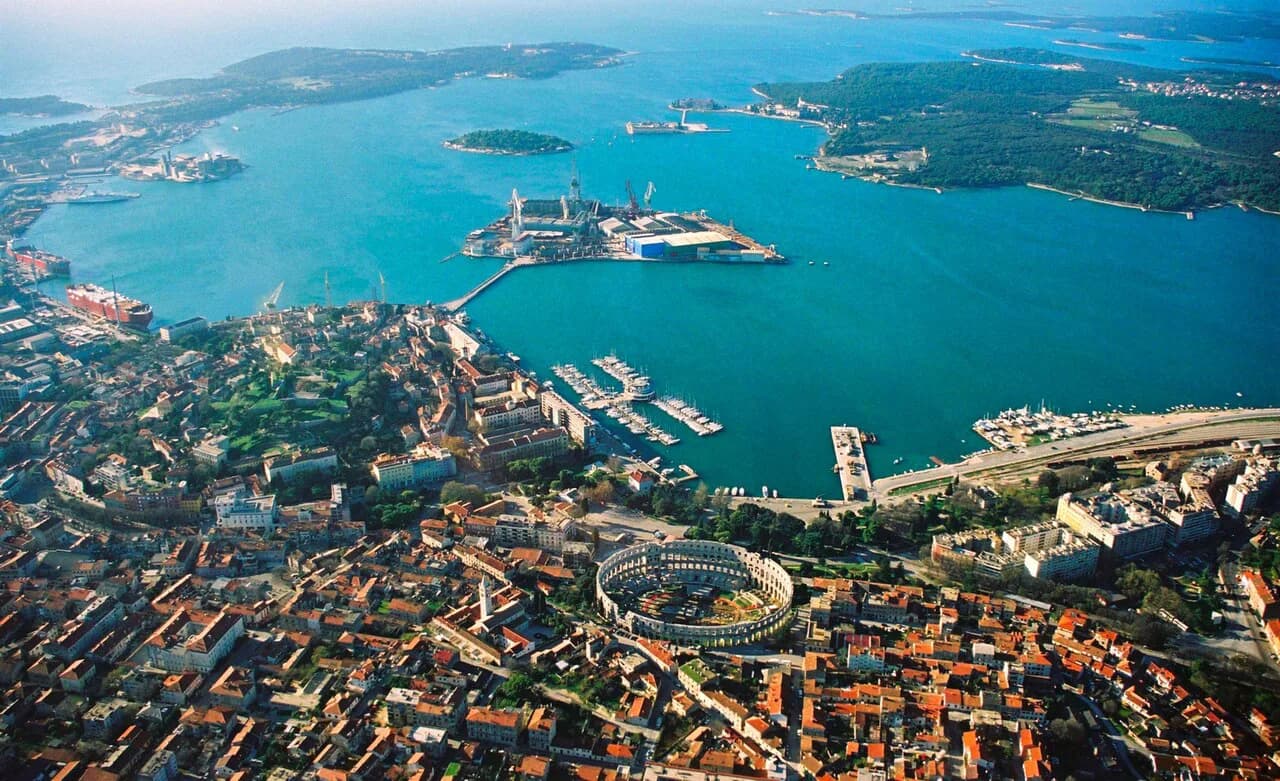
The shape is deliberately linear. The amphitheatre sits outside the old town near the harbour, and the Forum, the Roman gates and the hilltop fortress all lie uphill and north of it, so working in one direction removes backtracking. Plan roughly six to seven hours of sightseeing, plus lunch and an evening by the port.
Start at Pula Arena: the amphitheatre first
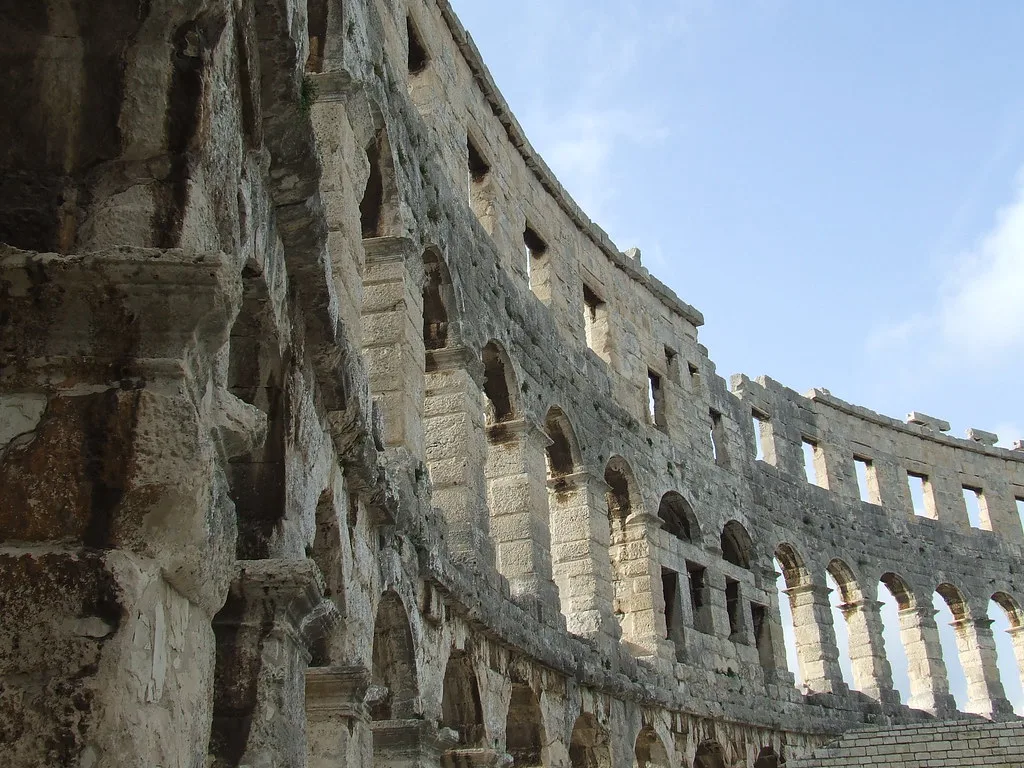
The Arena is the reason to give Pula a full day. Built in the 1st century AD, it keeps most of its outer limestone wall, and published accounts put its capacity at more than 23,000 spectators. The underground chambers that once held gladiators and wild animals now house a small museum with Roman wine and olive oil exhibits.
Allow 60 to 90 minutes if you go inside, and less if you circle the exterior, which is free. Adult admission is €10, with a reduced €5 rate for children, pupils and students. Hours vary by month and the ticket office closes an hour before the site does, so buy on the day at the entrance kiosk or online and check the season before you go.
Time your visit for opening or the last two hours before closing, when day-trippers have gone and the low light hits the arches. In high summer the middle of the day brings both heat and the fullest interior, so it is the slot to spend indoors or over lunch instead.
Down to Forum Square and the Temple of Augustus
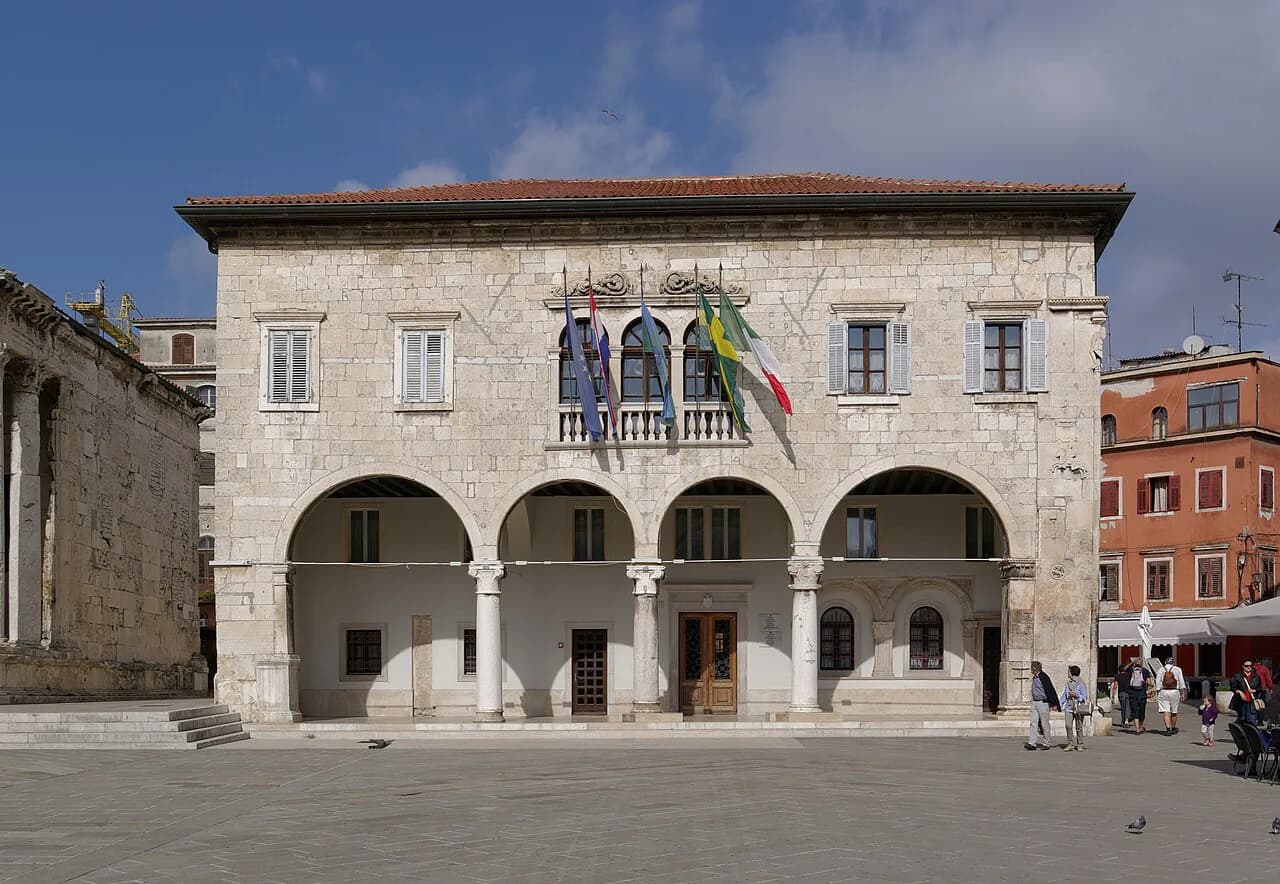
From the Arena it is about a ten-minute walk to the main square of the old town, and the change of scale is immediate. Forum Square is Pula's civic centre, framed by the Town Hall and the Temple of Augustus, and it holds the tourist information centre where you can pick up tickets for regional sights. Mornings here are quiet enough for coffee; evenings bring occasional live music and a craft market. Our Things to Do in Pula guide covers the rest of the old town in detail.
The Temple of Augustus is the Roman sight most people underestimate. Built during the emperor's lifetime, between 27 BC and his death in AD 14, it retains its columns and decorative stonework, and the interior displays Roman relics and statue fragments with labels in English among other languages. Give it 20 to 30 minutes, and treat the square itself as a free stop rather than a timed one.
The Arch of the Sergii and the Twin Gate
Leave the Forum on Sergijevaca street and you reach the Arch of the Sergii, a triumphal arch raised around 27 BC to honour Lucius Sergius Lepidus after the Battle of Actium and paid for by Salvia Postuma Sergia, whose name is still carved into the stone. It stood on the route of the Porta Aurea, the Golden Gate, and now sits framed by shops and cafés. The arch is free to see and needs only ten minutes.
A few minutes north, the Twin Gate, or Dvojna vrata, preserves two Roman arches from the 2nd century, one of ten gates in the ancient city wall and one of the few still standing. It is easy to walk past, so keep an eye out for the double opening rather than a single span. The Zerostrasse tunnel network, built in the early 1900s, lies close by and is now used as a museum and gallery space if you want a short detour.
Both gates stand on public streets in the old town, within a couple of minutes of each other, so cluster them with the walk uphill rather than making separate trips.
Lunch on Sergijevaca and Kandlerova streets
Sergijevaca and Kandlerova are the two old-town streets to build a midday break around, with the densest concentration of cafés, bakeries and small shops in the centre. Keep the pause to about an hour and take it in the hottest part of the afternoon, so that the Arena and the Forum are done before the sun is at its strongest. The rest of the day still has the mosaic, a monastery, a fortress and a cathedral in it.
Each afternoon stop is short, so a slow meal is the most common way to run out of light before the waterfront.
The Punishment of Dirce mosaic and St Francis
The Punishment of Dirce mosaic is the quiet highlight of the day for anyone interested in Roman domestic life. Dating from the 2nd or 3rd century, it depicts a mythological scene rarely shown in ancient art, and it is free to see at any hour because it lies exposed in the open. It takes minutes, so slot it in on the climb towards the hilltop rather than as a destination in its own right.
Just above the Forum stands the Church and Monastery of St Francis, founded in 1314, a Romanesque-Gothic building whose cloister garden offers shade and near silence in the middle of the old town. Inside are old stone arches and worn fresco fragments. Pop in for 15 to 20 minutes on the way up.
Pula Citadel and the Museum of Istria
The Venetians built the star-shaped fortress known as the Citadel, or Kaštel, between 1630 and 1633, and it remains the high point of the old town in the literal sense. The outer walls are free to walk, and the views take in the amphitheatre below and the coastline beyond, which makes the climb worthwhile even if you skip the interior. The site also tends to be quieter than the Forum and the Arena.
Inside, the Museum of Istria occupies the fortress. Allow 45 minutes to an hour if you go in, and treat the walls and the museum as a single stop rather than two.
The Cathedral and the small Roman theatre
The Cathedral of the Assumption of the Blessed Virgin Mary sits in the old town with a bell tower at its entrance, and entry is free. Churches have stood on the site since the Roman era, including early Christian buildings from the 4th century, and the present structure carries centuries of damage and repair. Fifteen minutes covers it respectfully.
Above the old town, the small Roman theatre survives as a fragment of the city's ancient entertainment quarter, tucked into the surrounding streets on the way down.
Evening on the waterfront at the Port of Pula
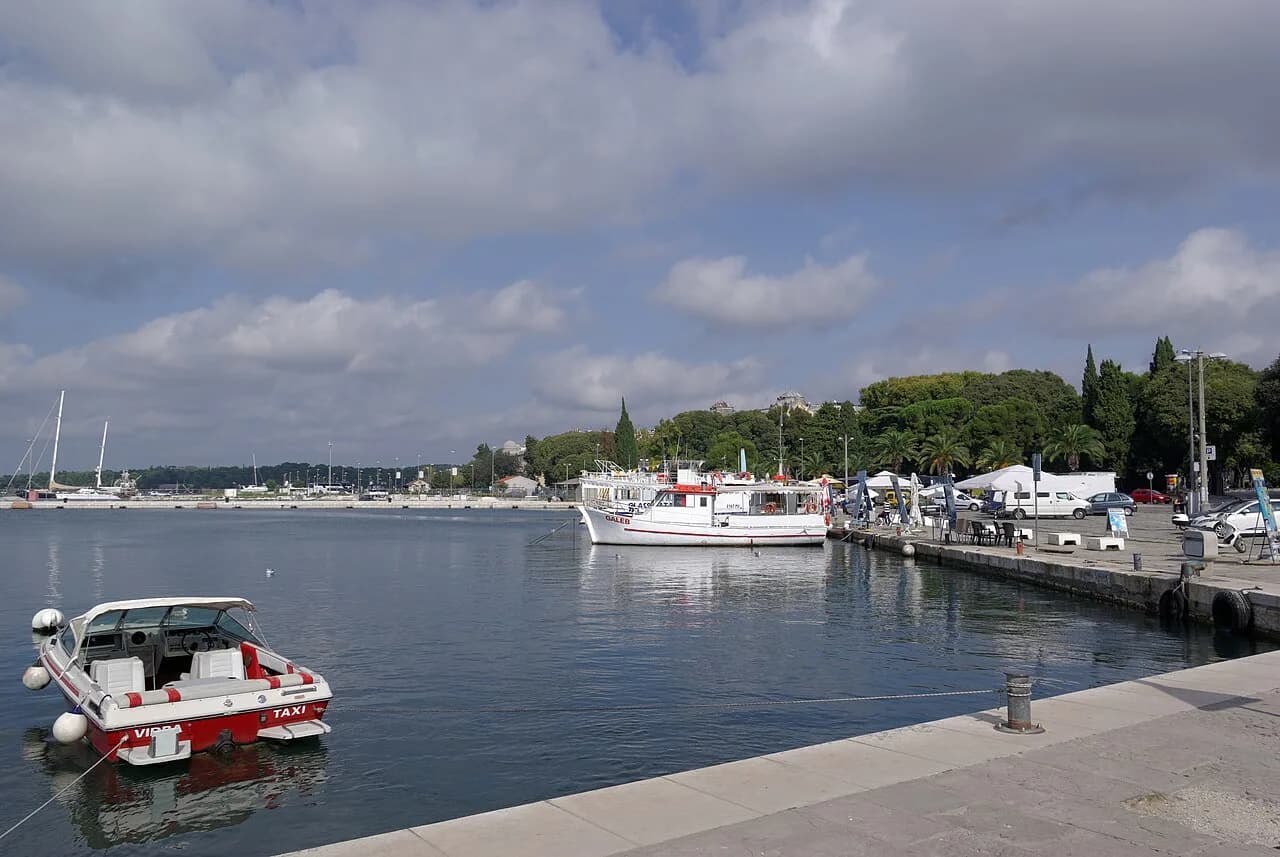
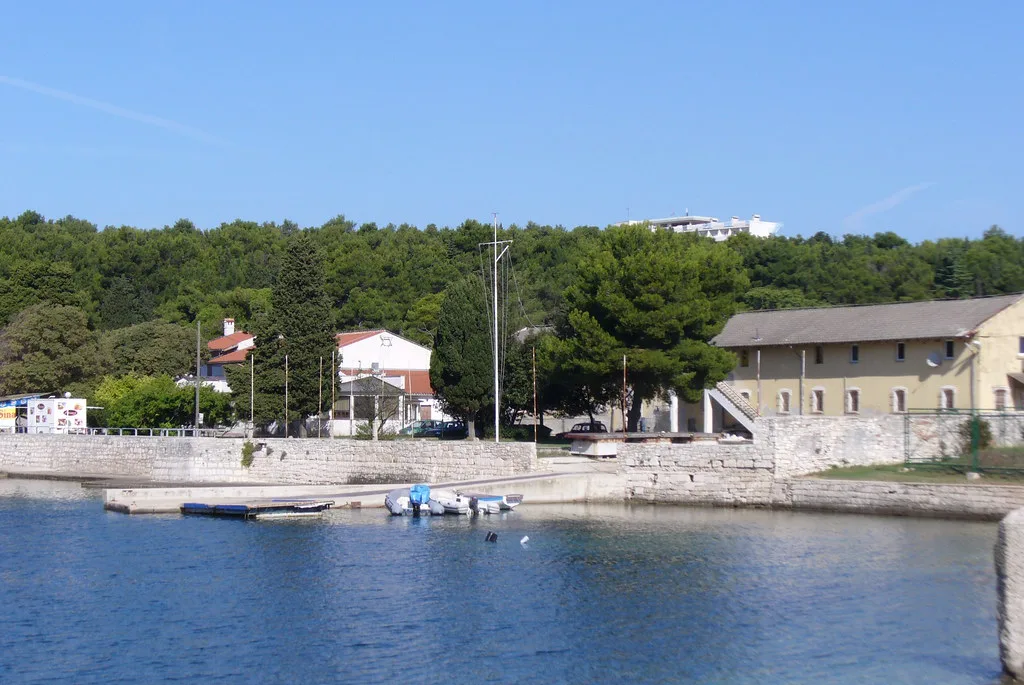
Come down to the Port of Pula for the evening. The seafront has benches facing the water, the historic port buildings and cranes that put on a periodic light show after dark, and the working harbour where ferries leave for other parts of Croatia and across to Italy. It is the natural close to a walking day, and it costs nothing.
If you have energy left, the Arena is a short walk away and looks entirely different lit up after dusk. A boat trip from the harbour is a better use of a second day than of this one, since departures eat the hours you need for the old town.
What one day in Pula leaves out
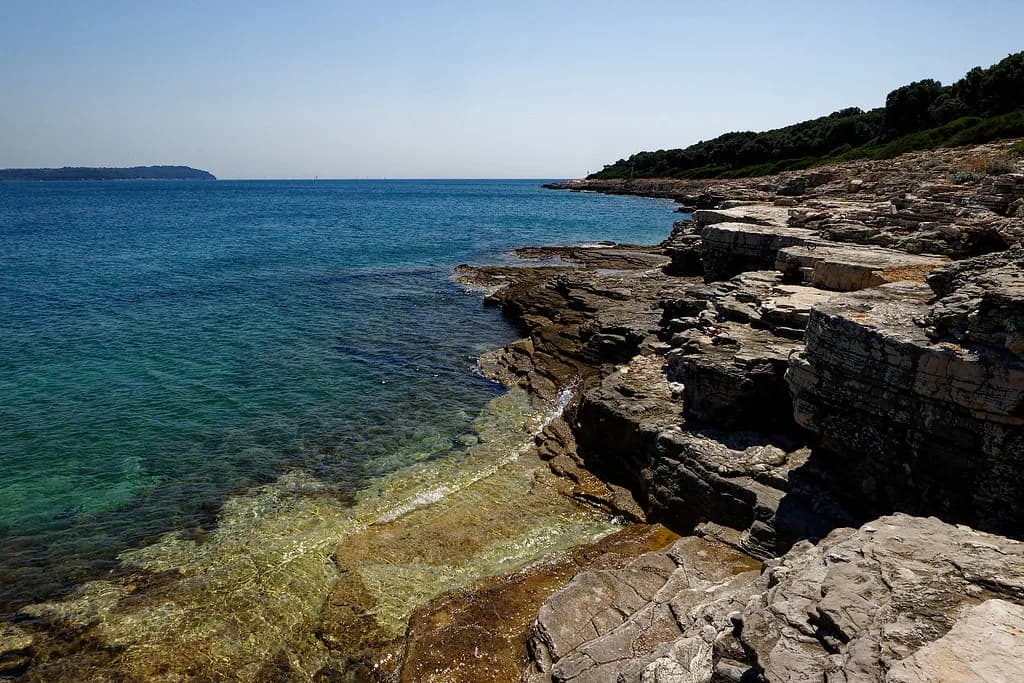
Brijuni National Park and Cape Kamenjak both sit beyond the city and take most of a day each once you count transport and boat crossings. Trying to add either turns a comfortable walking day into a rush, and the old town is what makes Pula distinctive. Leave them for a longer stay.
The coast south of the city, where the beaches lie along the Verudela peninsula and further out, is a trip beyond the old-town grid and does not fit.
Two days in Pula buys you the Arena interior without watching the clock, a proper sit-down in the museum, and one excursion beyond the city. One day gives you the Roman core and the Venetian fortress, which is the honest trade.
Should you give Pula one day or two?
One day in Pula works if you commit to the walking order: Arena first thing, Forum and the gates at midday, the mosaic, St Francis and the citadel through the afternoon, cathedral late, waterfront at dusk. The route is short enough that the only real risk is spending too long at the amphitheatre and arriving at the fortress as it closes.
Add a second day only if you want a boat crossing, a museum at leisure or time on the coast. Otherwise, spend the money on the Arena interior and treat the rest of the old town as free. Check the Arena's seasonal hours and ticket prices before you travel, as they change by month.
Explore more Pula guides
Sources
Notes from the Croatian coast
Optional updates when our guides change.
You might also like
Continue reading
More guides you'll find useful