Poreč Walking Tour: A Self-Guided Route Through the Old Town
A self-guided Poreč walking tour through the old town, with stops in order, walking times and what to look at, plus when a guided tour is worth booking.
On this page
Poreč is small, flat underfoot for most of the way and easy to cover on foot: an unhurried walking tour of the old town peninsula fits comfortably into a morning or a late afternoon. The route below runs from the landward entrance along the Roman street grid to Marafor, up to the Euphrasian Basilica and back down to the Riva, so you see the town in the order it grew rather than hopping between sights.
Plan on a comfortable two hours with a stop at the basilica, or half that if you cut the eastern lanes. This page covers the layout, the stops in sequence, where the walk shortens naturally, and how self-guided, audio and live guided options compare.
Where the walk starts and how the peninsula is laid out
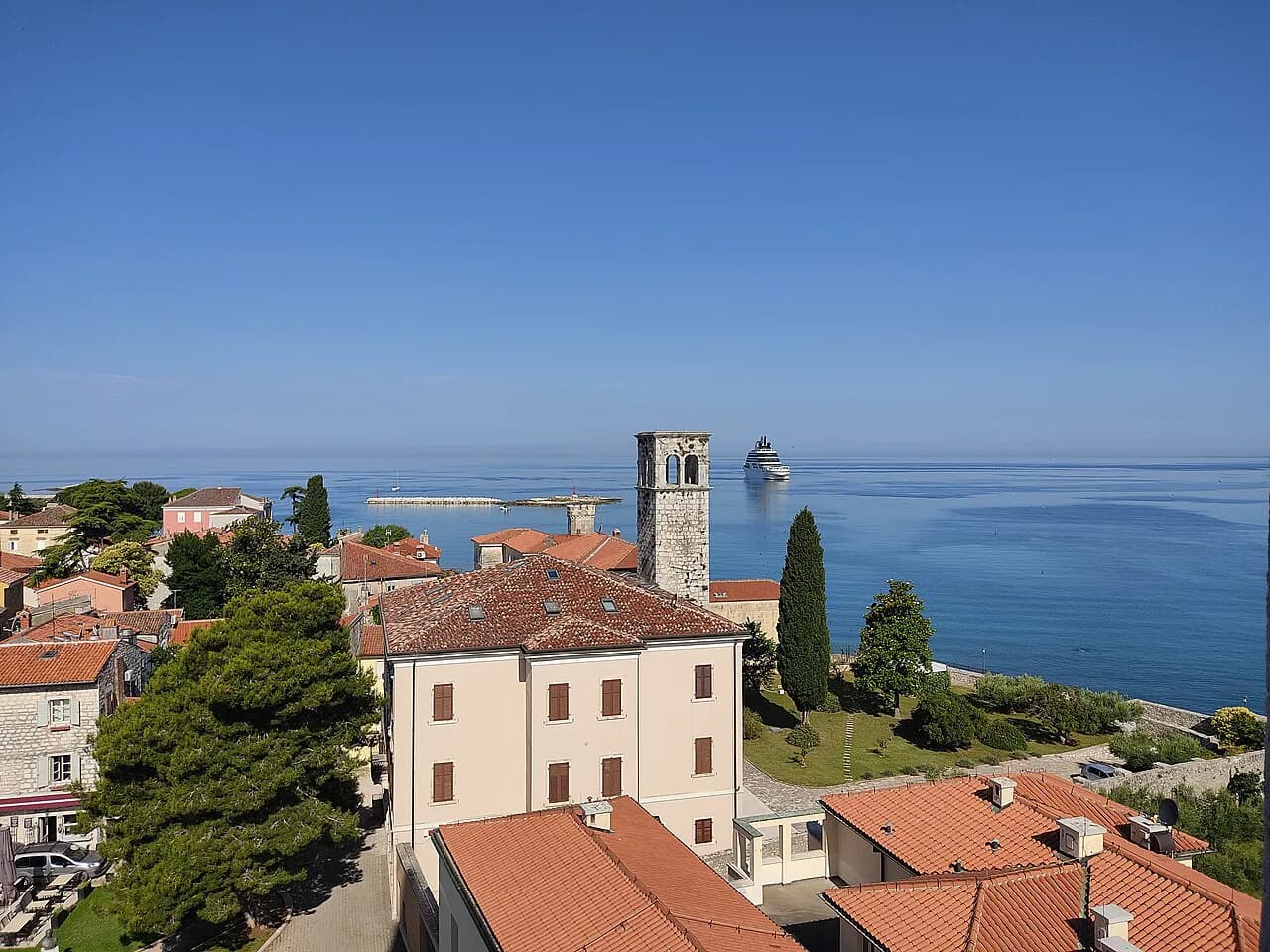
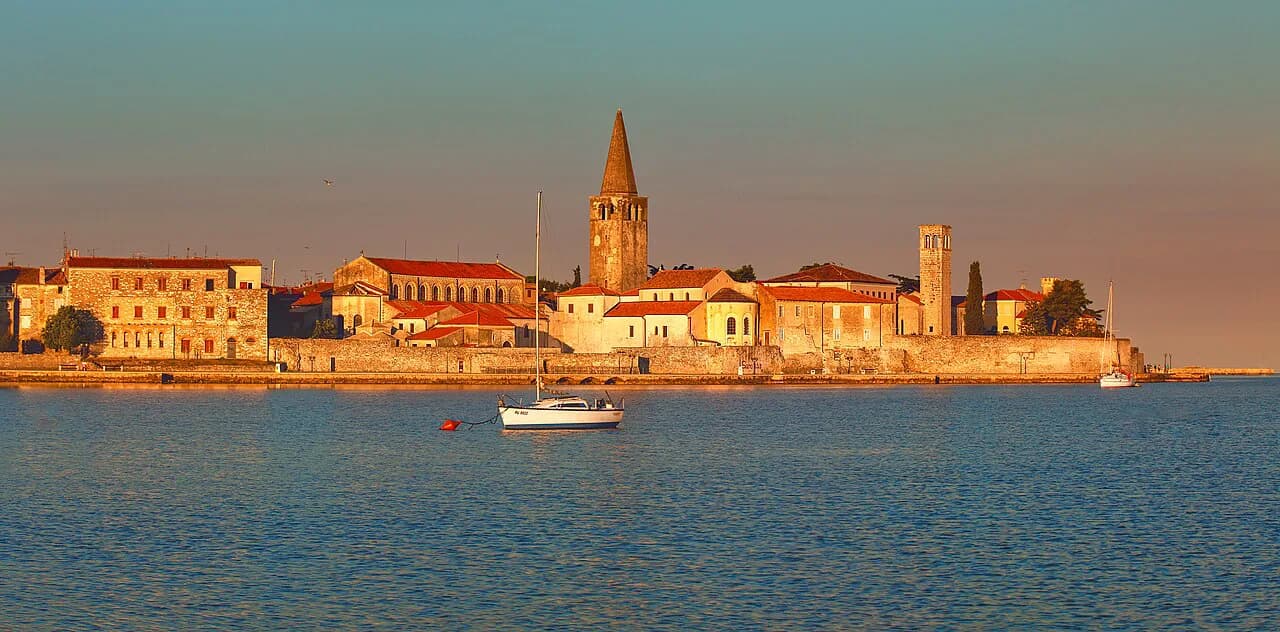
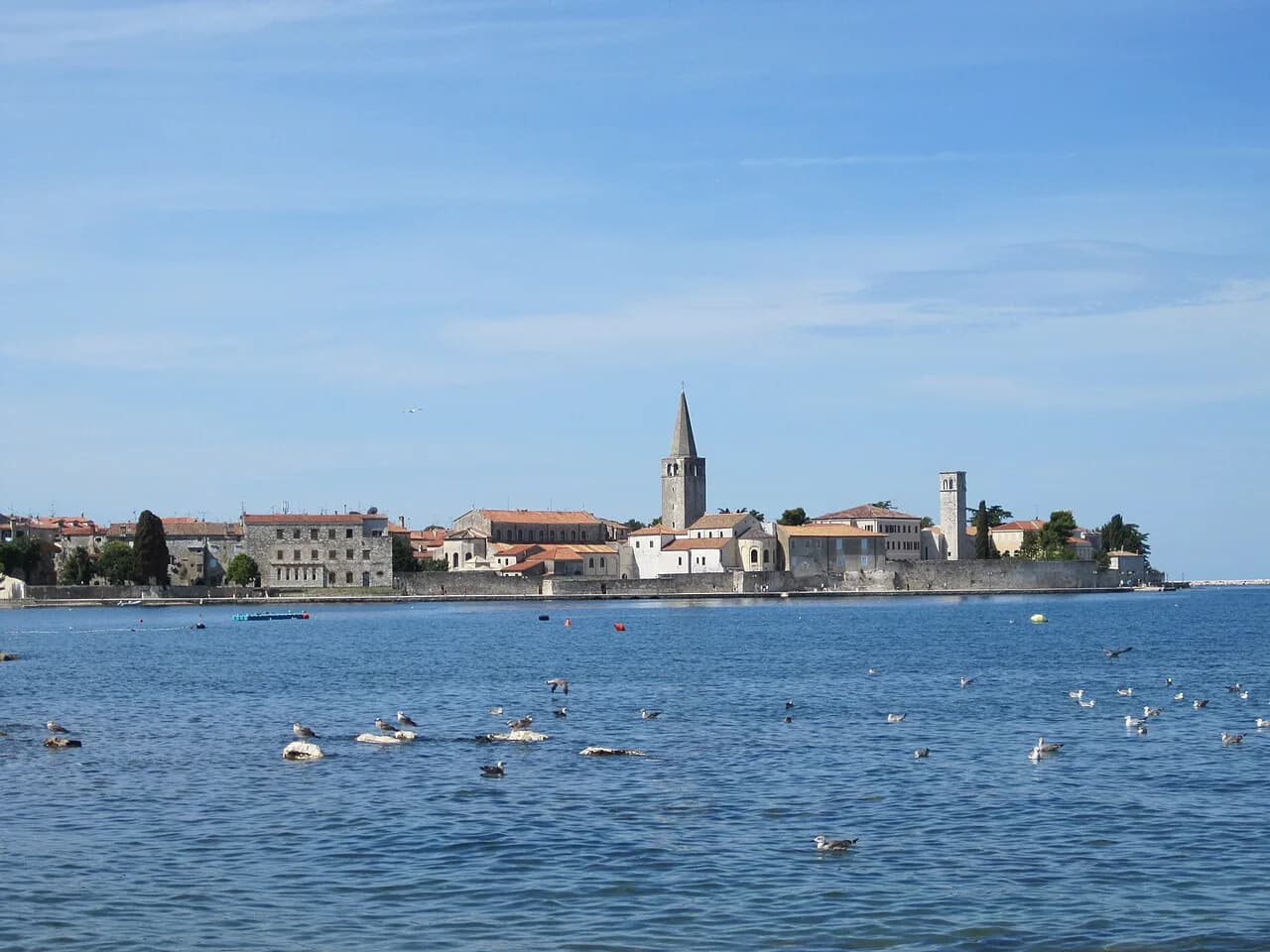
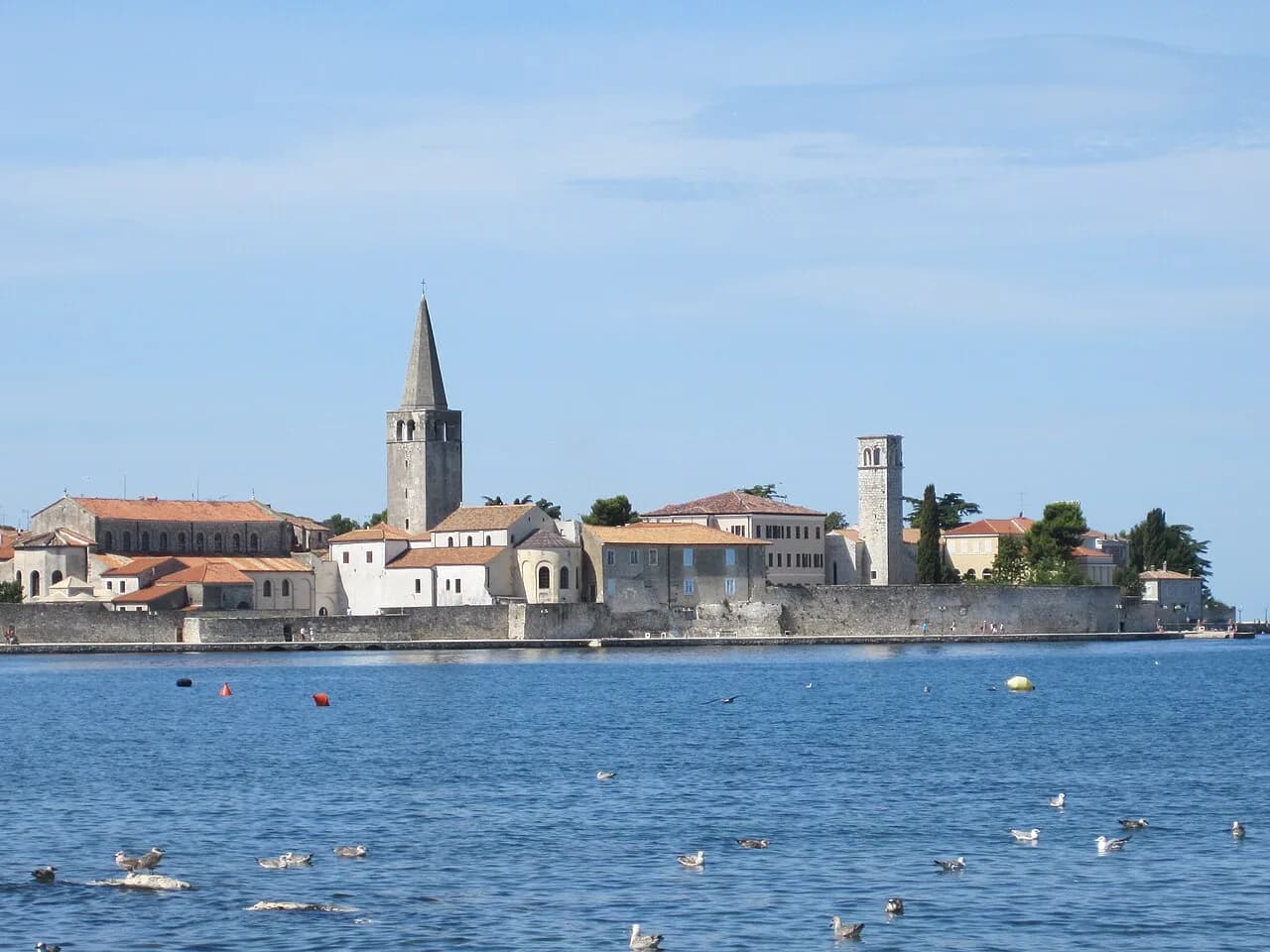
Poreč old town sits on a low peninsula with the sea on three sides, so orientation is straightforward. Start at the neck of the peninsula where the modern town meets the historic centre, near the bus station and the main approach roads, and walk seawards; the lanes tighten and the stone becomes older as you go.
Three spines organise the old town. The Decumanus runs down the middle of the peninsula, following the Roman street plan, with narrow Cardo lanes crossing it; Marafor, the old Roman forum square, sits towards the western tip; and the Riva, the waterfront promenade, wraps the southern and western edges and is where the town opens out to the sea.
Because everything funnels towards the tip, you cannot get seriously lost. The main hazard is drifting sideways into lanes that dead-end at the water, which costs you ten minutes and gives you a pleasant view of the fishing boats as compensation.
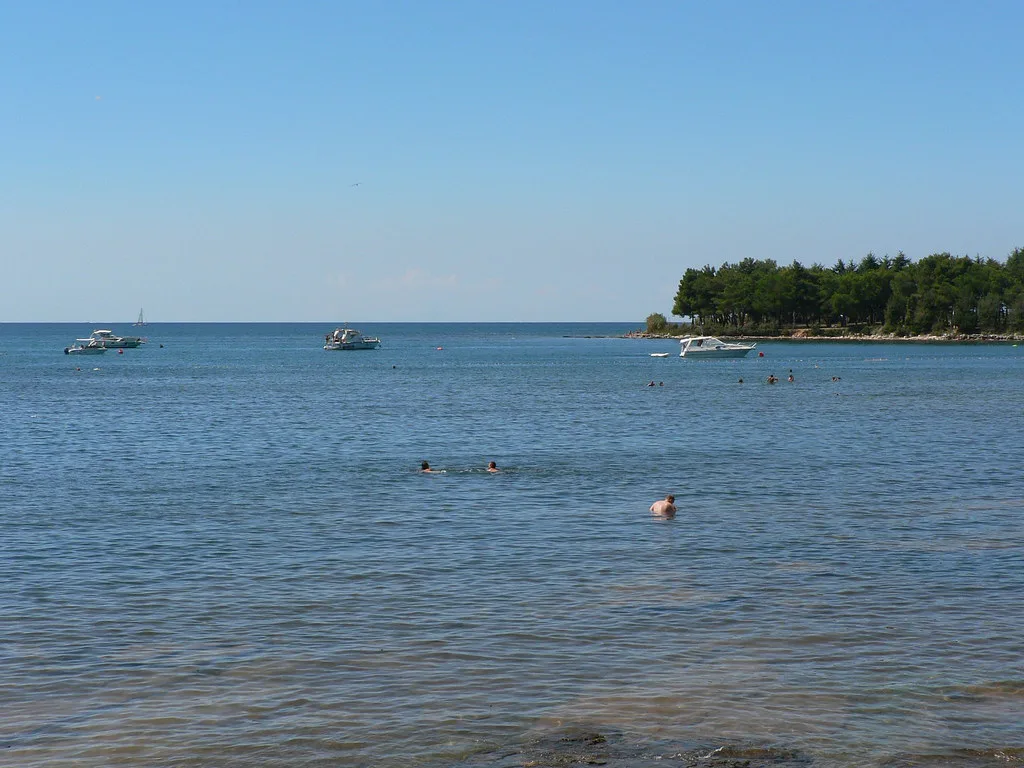
The route in order: Decumanus, Marafor, the basilica and the Riva
Follow this sequence and you get a logical loop rather than an out-and-back: enter at the peninsula neck, take the Decumanus west, reach Marafor, turn north-east to the Euphrasian Basilica, then descend south through the lanes to the Riva and walk the waterfront back eastwards. The whole circuit keeps returning you to the sea, which makes it easy to judge your position.
Treat the order as fixed only at the basilica, which has its own visiting hours and is the one stop where you may need to wait or come back; everything else is open-air. If the basilica is busy when you arrive, do the Marafor and harbourfront stretch first and return, rather than queueing in the sun.
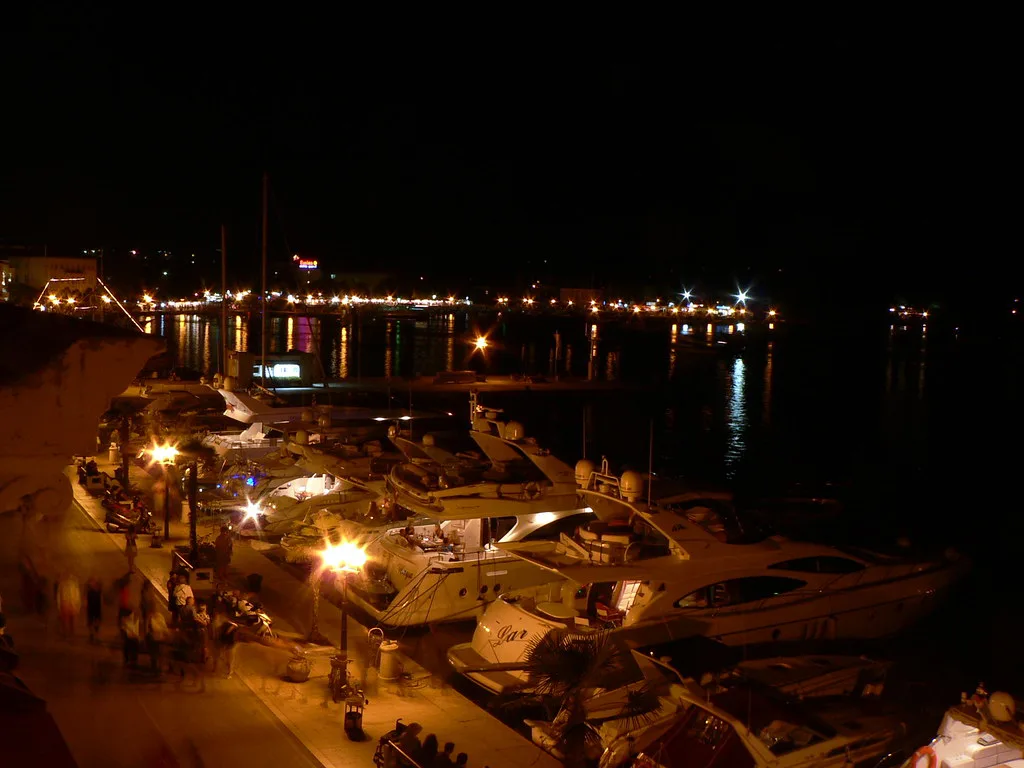
Stop by stop: what to look at and how long to allow
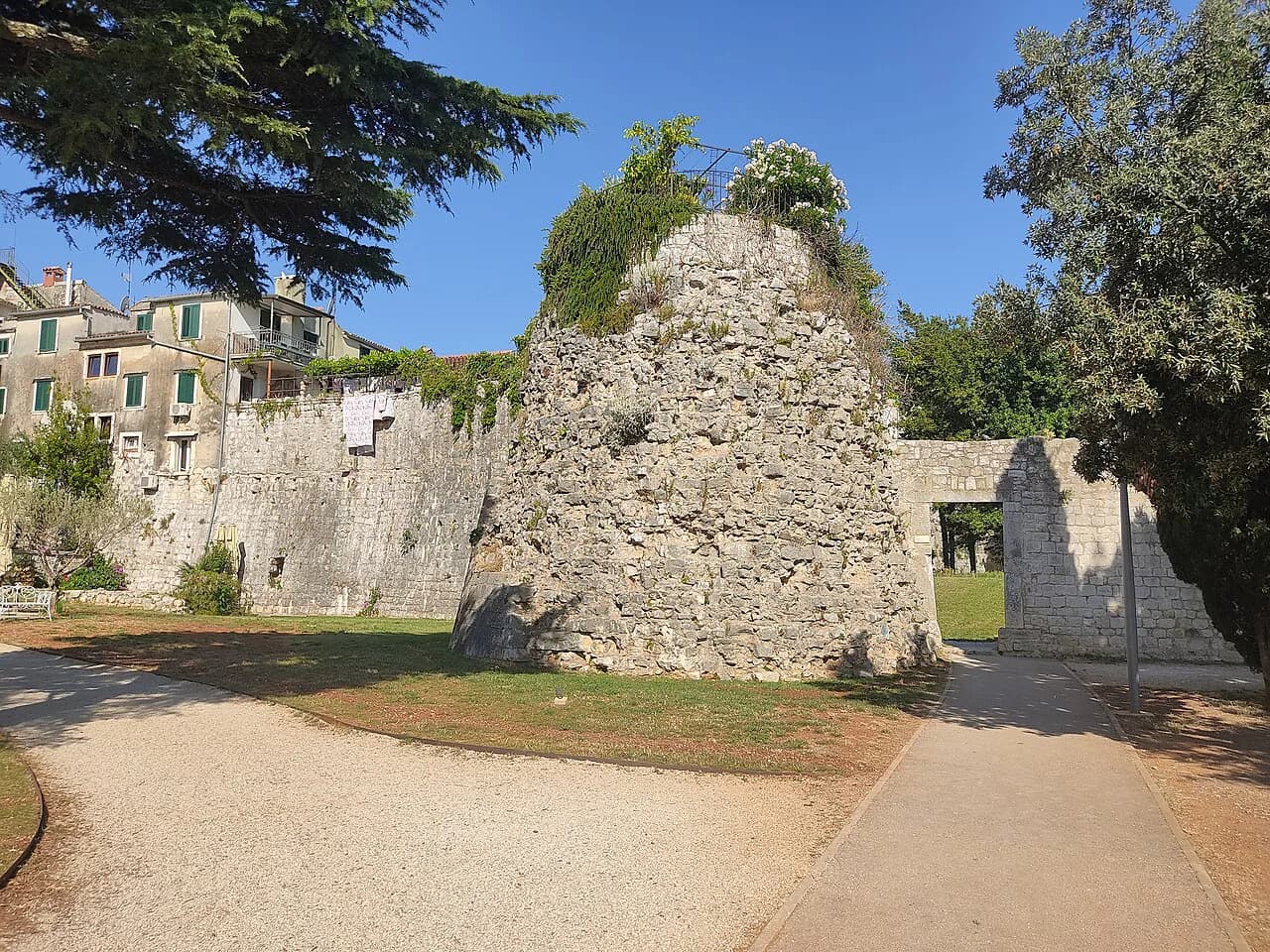
At the peninsula entrance, allow five minutes to notice how the town walled itself against the sea: the outer lanes are wider and plainer, the inner ones cobbled and shuttered. Push on rather than lingering, because the best stone is ahead.
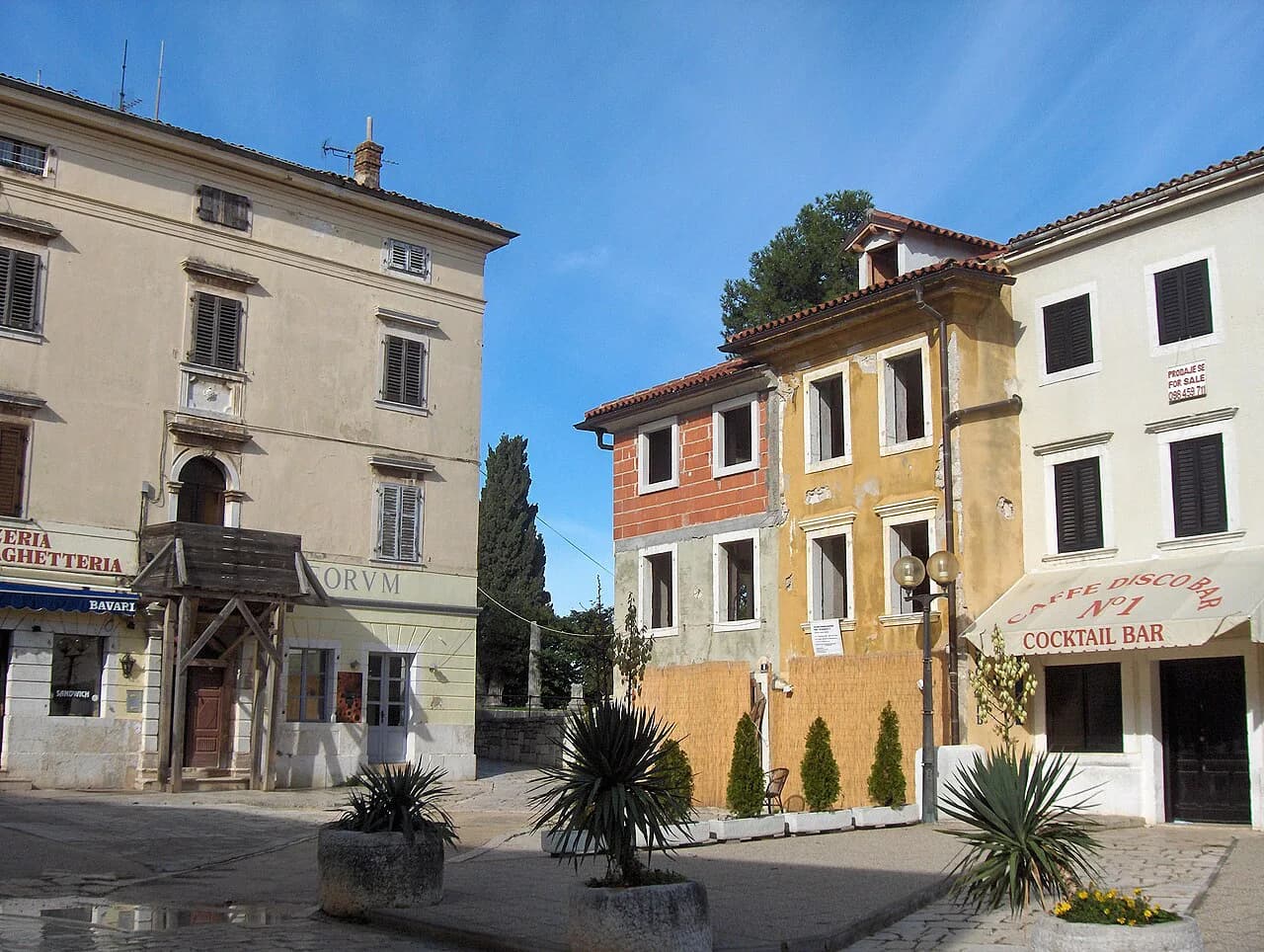
On the Decumanus, the point is the street itself: a straight, narrow Roman line with medieval and Venetian houses built tight against it, carved lintels, worn thresholds and the occasional fragment of earlier masonry set into a wall. Allow fifteen minutes of slow walking and looking up, because most of the detail is above door height.
Marafor is the old forum, now a small paved square with houses closed in around it and a scatter of Roman stonework in the paving and walls. Allow ten minutes to sit at the edge, read the shape of the square and pick out the reused antique fragments; it is a place to pause rather than an exhibit.
The Euphrasian Basilica is the walk's high point and the one complex where you should give yourself real time, an hour if you take the mosaics, the atrium and the Bishop's palace seriously. The sixth-century mosaic in the apse is the reason to come; the town's full set of eight attraction guides is the place to check current visiting times before you build the rest of the day around it.
Finish along the Riva, the seafront promenade, where the peninsula's edge gives you the whole harbour in one sweep and the light is best late in the day. Twenty minutes of gentle walking takes you back towards the entrance and closes the loop.
How long the full walk takes and where to shorten it
Two hours covers the circuit with a proper stop at the basilica; ninety minutes is realistic if you treat the basilica as a fifteen-minute look at the mosaics. Add time for coffee on Marafor or the Riva, which is the part most people remember.
To shorten the walk, cut the eastern lanes behind the basilica and the northern edge of the peninsula, both of which are residential and quiet. Keep the Decumanus, Marafor, the basilica and a stretch of the Riva, and you still get the shape of the town in under an hour.
When a guided or audio tour adds something
A self-guided walk gives you the streets but not the chronology, and Poreč's layers — Roman grid, Byzantine mosaics, Venetian houses — are exactly the sort of thing a guide explains better than a plaque. If you have one day in town, a live guide earns its place; if you have a week on the coast, the self-guided route plus a good read at the basilica is enough.
Live guided tours in Poreč are sold through booking platforms, where small-group walking options are listed with from-prices quoted in US dollars; those shown on GetYourGuide are indicative only and vary by group size and season. Check the price and language at the point of booking rather than budgeting from the listing.
Audio guides are the middle option: a self-guided Poreč tour delivered to your phone in more than thirty languages, letting you move at your own pace and replay the basilica section. It suits travellers who want commentary without a fixed departure time, at the cost of a human guide's ability to answer questions.
Free guided walks do run in Istria, but the ones publicised by Time Out for the interior hill towns — Pićan, Gračišće, Pazin, Tinjan and Sveti Lovreč — are not Poreč tours, and the June dates announced in 2024 are history rather than a current programme. Use them as an idea for a separate inland day, not as your Poreč plan.
Cobbles, summer heat, cruise mornings and the bura
The lanes are polished limestone cobbles, slick underfoot in rain and hard on thin soles; trainers or sandals with grip beat smooth leather. The basilica and its atrium involve steps, so leave the wheeled case at the accommodation.
In July and August, walk before ten or after five, because the Decumanus funnels heat and offers almost no shade. Carry water and plan the basilica interior for the hot middle of the day, when cool stone and mosaic ceilings are a relief rather than a rushed stop.
Cruise passengers come ashore in surges, and the basilica and Marafor fill quickly when a ship is in. Check the harbour on your first morning and time the walk for a quiet window if you can; the lanes behind the basilica stay empty even when the main square is busy.
The bura, the cold north-easterly wind, can make the exposed Riva raw even on a bright day, so keep a layer for the waterfront stretch and save the sheltered inner lanes for a windy afternoon.
Self-guided or guided for your Poreč day?
Walk Poreč yourself unless you want the history explained in sequence or have only one day. The self-guided loop from the peninsula neck along the Decumanus to Marafor, up to the Euphrasian Basilica and back along the Riva takes about two hours and needs no booking.
Book a live guide for a single-day visit with context you want explained, or an audio guide if you prefer to move freely with commentary in your own language. Confirm basilica visiting hours and any tour price in euros locally before you commit, then build the rest of the day around the walk rather than the other way round.
Explore more Poreč guides
Frequently Asked Questions
Is Poreč old town walkable?
Yes. The historic centre sits on a low peninsula and the main sights — the Decumanus, Marafor, the Euphrasian Basilica and the Riva — are within a compact area reached on foot. The ground is cobbled, with steps at the basilica complex.
Do you need a guide to see the Euphrasian Basilica?
No, you can visit the complex independently, and the mosaics speak for themselves. A guide or audio commentary adds the chronology of the Roman, Byzantine and Venetian layers, which is where most visitors want explanation.
Sources
Notes from the Croatian coast
Optional updates when our guides change.
You might also like
Continue reading
More guides you'll find useful