
Euphrasian Basilica, Poreč: mosaics, layout and visiting

Allow about an hour for the Euphrasian Basilica in Poreč, and rather more if you want to study the apse mosaics closely. The complex is a sixth-century episcopal group built by Bishop Euphrasius, and its cathedral is recognised as one of the best-preserved early Christian cathedrals anywhere. This page covers what stands where, what the mosaics show, and how to sequence the visit so you are not backtracking through the atrium.
What the Euphrasian Basilica is
The Euphrasian Basilica, Eufrazijeva bazilika in Croatian, is the cathedral church of Poreč, built in the sixth century under Bishop Euphrasius on the site of earlier Christian buildings. It is a rare survival of Byzantine culture on the Adriatic and the cathedral to which the adjoining episcopal palace belongs is inscribed as a UNESCO World Heritage Site. The parish that cares for it describes a settlement on a small peninsula with a harbour sheltered by islets, which is still the shape of the old town you walk through to reach the church.
Treat the complex as one place made of several parts rather than a single church interior. The basilica, the atrium in front of it, the baptistery, the bell tower and the Bishop's palace all belong to the same group. This basilica is one of eight sights covered in our Porec Attractions: 8 Visitor Guides, which is the place to start if you are building a wider plan for the town.
Where it sits in Poreč
The basilica stands inside the old-town peninsula, a short walk from the waterfront and from the grid of Roman streets that still shapes the centre. You approach on foot through narrow lanes, which means the building appears quickly and without a grand approach; the reward is the interior. Poreč is compact enough that the church sits within a few minutes of the harbour, the town squares and the main shopping streets.
The Decumanus is the Roman main street running through the old town, and it is the simplest spine to follow when you are orienting yourself. Walk Decumanus Poreč towards the cathedral end and you will pass the town's main squares and towers on the way, so the church fits naturally into a half-day circuit rather than needing its own expedition.
The mosaics in the apse and on the facade
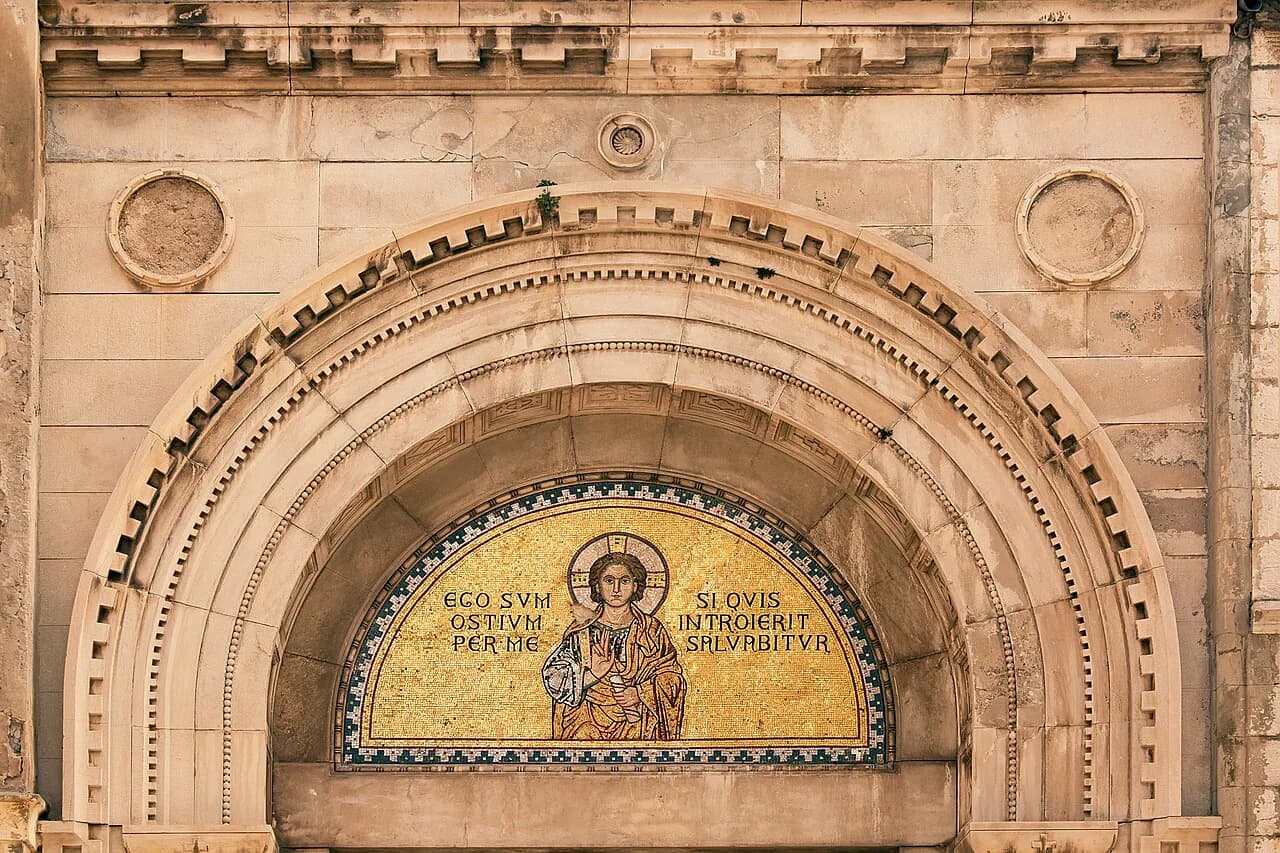
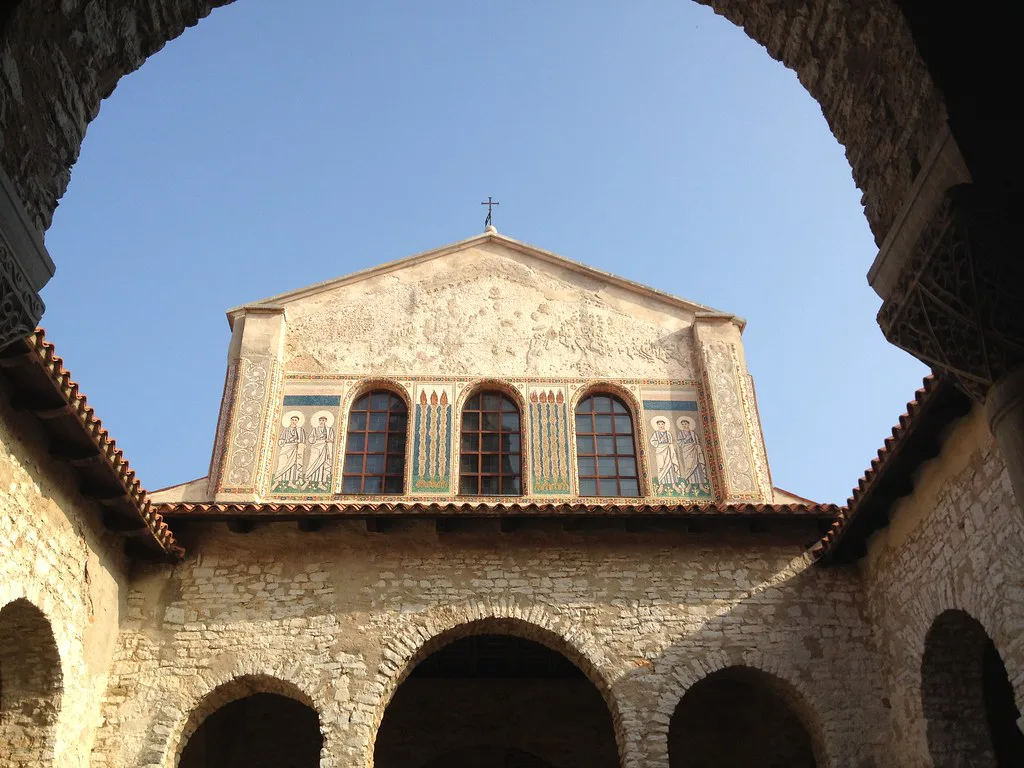
The apse mosaic is the reason most people come: a gold-ground composition of the Virgin and Child flanked by saints, with Bishop Euphrasius himself holding a model of the church. The figures are set in bands of glass and stone tesserae, and the faces read clearly from the floor of the nave even without binoculars. This is work of a quality you rarely see outside Ravenna, and it survives in place rather than in a museum case.
Look also at the facade and the interior surfaces around the apse, where the same decorative programme continues rather than stopping at the arch. Move to one side of the nave for a different angle on the figures, since the apse curve catches the light unevenly through the day. Photography inside is a common restriction in active churches, so check the notice at the entrance before you book a photography-heavy visit.
The Bishop's palace and the mosaics beneath the floor
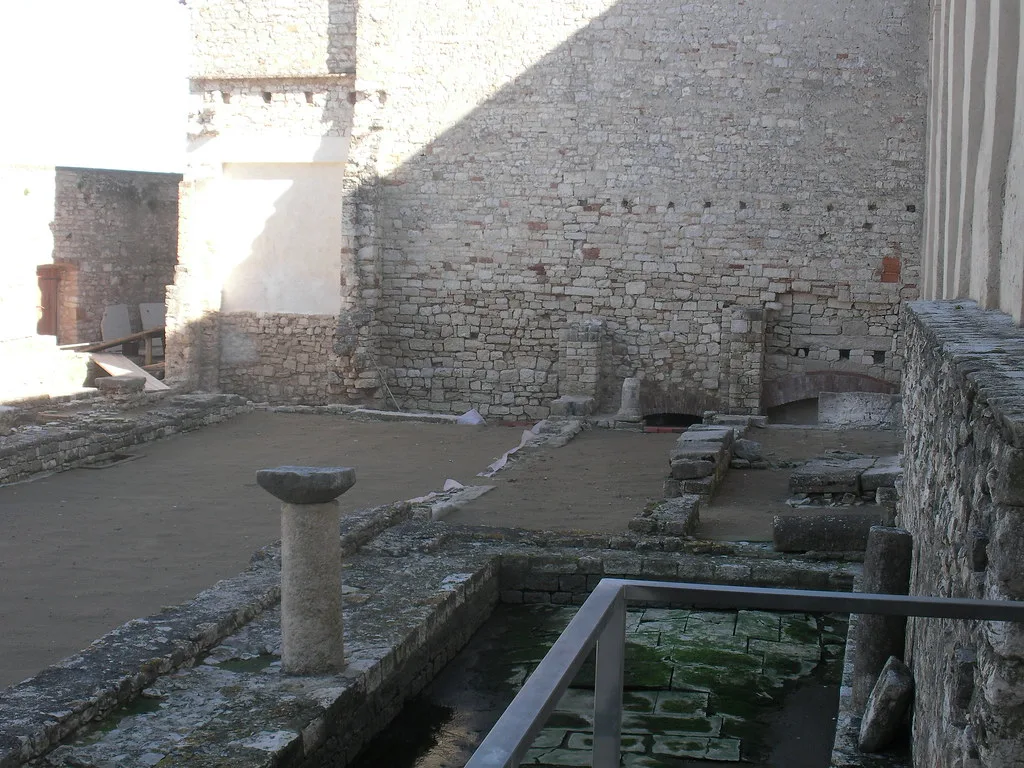
The episcopal palace attached to the cathedral was restored and reinterpreted on the basis of detailed research, work that won a Europa Nostra diploma in 2003. Archaeological and architectural investigation separated the original sixth-century fabric from later additions, which were removed, and the original windows and more than half of the structure and decoration of the ceremonial hall were preserved. Roman fragments, mosaic floors and sculpture from an earlier fourth- to fifth-century cathedral were found beneath the floors.
That ceremonial hall is a restored space used for meetings and symposiums, not a furnished period room, so adjust your expectations accordingly. Its value for a visitor lies in the surviving architecture and decoration rather than in display cases. The excavated material underneath is the other layer worth understanding: what you see in the basilica above replaced an earlier church whose mosaics still lie below floor level.
The atrium, baptistery and bell tower
A colonnaded atrium precedes the church, a forecourt of the kind early Christian basilicas were built with, and it sets up the transition from street to nave. Beyond it the baptistery holds its own mosaic decoration, smaller in scale than the apse but easier to study because you are close to it. The bell tower stands beside the cathedral and is the vertical marker for the whole complex when you are trying to find it from the lanes.
Climbing the tower is a separate decision from seeing the church, and access does not always follow the same pattern as the basilica itself. If a tower ascent matters to you, ask at the entrance before buying anything, because the answer shapes how much time you need.
How long to allow, and the best order
A sensible sequence is atrium first, then the nave and apse while your attention is fresh, then the baptistery and palace, and the tower last if it is open. Give the apse mosaic ten uninterrupted minutes rather than photographing it on the way past; the details of the donor figures and the lettering repay the pause. Forty-five minutes covers the essentials, ninety minutes covers everything at an unhurried pace.
If you are visiting in company or with children, the palace and excavated material make the better second half, since they explain how the site changed over centuries rather than repeating the impact of the mosaics. Keep the tower for a clear day, and drop it without regret if cloud is low over the rooftops.
Getting there and when the crowds arrive
Everything in central Poreč is walkable, and the basilica is reached on foot from the harbour and the main squares; you do not need transport once you are in the old town. Arrive early in the day or late in the afternoon for the quietest nave, and expect the middle of the day in high season to bring groups moving through in waves. When a large group enters, step aside into the atrium or the palace and come back rather than queueing behind them.
Poreč receives cruise visitors and coach parties in summer, so the rhythm of the town rather than the church's own timetable dictates how busy it feels. Note that this is an active Catholic parish, which means services take precedence over sightseeing at certain times. Dress respectfully and keep voices low in the nave.
Tickets and opening times
Check the parish website for the current arrangements before you travel, since times shift with the season and with the liturgical calendar rather than staying fixed year-round.
Budget for the ticket as part of your day in Poreč and treat any price you have read elsewhere as indicative until you see the current figure at the entrance. The complex is compact, so a single admission covers a concentrated experience rather than a sprawling site.
Nearby in the old town
Marafor Square (Trg Marafor) in Poreč is the old Roman forum area a few minutes away and makes a natural continuation once you leave the church. Its open space and cafés give you somewhere to sit and reset after the density of the interior. Pairing the two turns a single building into a morning.
The town's defensive towers sit along the same lanes and are worth a glance as you pass between the basilica and the waterfront. The Round Tower and the Pentagonal Tower are the kind of small stopping points that fill the gaps between the headline sights without eating your day.
Two smaller old-town buildings reward a short detour: the House of Two Saints and the Zuccato Palace, both close enough to fold into a loop back towards the harbour. Finish on the Riva, the waterfront promenade, where the peninsula opens out and the boats are moored.
Is the Euphrasian Basilica worth an hour of your day in Poreč?
Yes, and it earns more than an hour if you care about early Christian art. The apse mosaic alone justifies the visit, and the palace and excavated material give it a depth most single churches lack. Go early, work from atrium to apse to palace to tower, and skip the tower without guilt if the sky closes in.
Explore more Porec guides
Frequently Asked Questions
How do you pronounce Poreč?
The final letter is a soft 'ch', so the town sounds roughly like 'po-rech'. The same sound appears in other Istrian and Croatian names, so getting it right once helps you ask for directions.
Do I need to book tickets for the Euphrasian Basilica in advance?
Check the parish website for current visitor arrangements before travelling. Payments in Croatia are in euros.
Can I visit the Euphrasian Basilica on a Sunday?
It is an active parish church, so services take priority and access to the nave can be paused during Mass. Check the parish timetable for the day you plan to visit and work your sightseeing around it.
What should I see first inside the complex?
Start in the colonnaded atrium, then move to the nave for the apse mosaic while you are fresh. The baptistery and Bishop's palace follow, with the bell tower last if it is open that day.