
Zuccato Palace, Poreč: What to See at the Decumanus and Cardo Corner

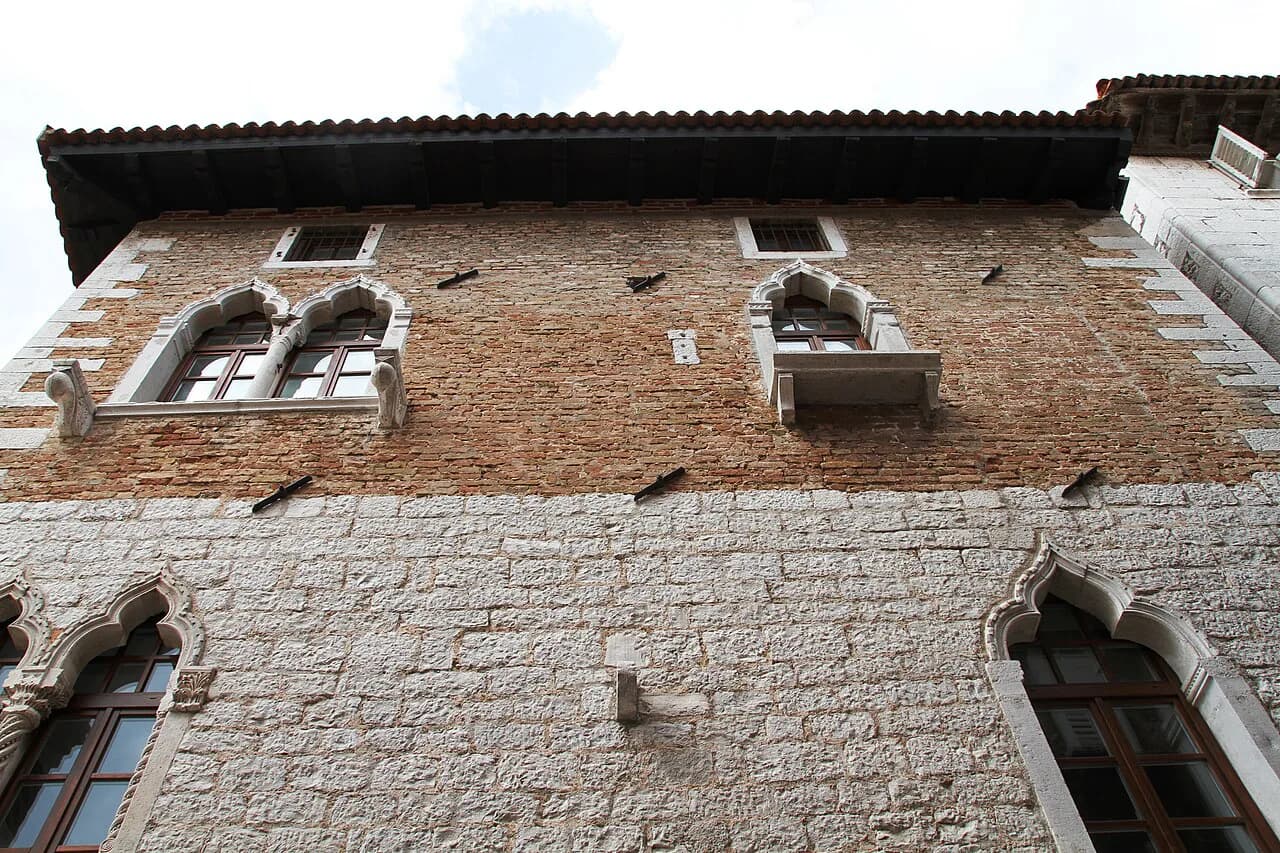
Zuccato Palace is a quick look rather than a destination in its own right: a Gothic palace on the corner of Decumanus and Cardo in the old town of Poreč, now occupied by a gallery. Allow a few minutes at the facade, and treat it as one stop on a walk that takes in the Roman street grid, the neighbouring palaces and the squares at the tip of the peninsula. This guide covers where the building sits, how to reach it on foot, what to look at and how to fit it into a half-day in the centre.
What Zuccato Palace is
The palace stands where Poreč's two principal Roman streets meet: Decumanus, the long main street, and Cardo, the cross street that cuts it. That corner position is what makes it worth seeking out, because the building reads as part of the grid rather than as an isolated monument. The tourist board describes the Zuccatto Palace as standing at the corner of Decumanus and Cardo, today a gallery, and places it among the relatively well preserved Gothic houses stretching into both streets.
For context on the street it stands on, the Decumanus is the Roman axis that still organises the old town, running the length of the peninsula and crossed by Cardo. Looking at the palace without that context reduces it to a decorated wall; knowing the cross makes the whole walk legible.

Where it sits in the Roman street grid
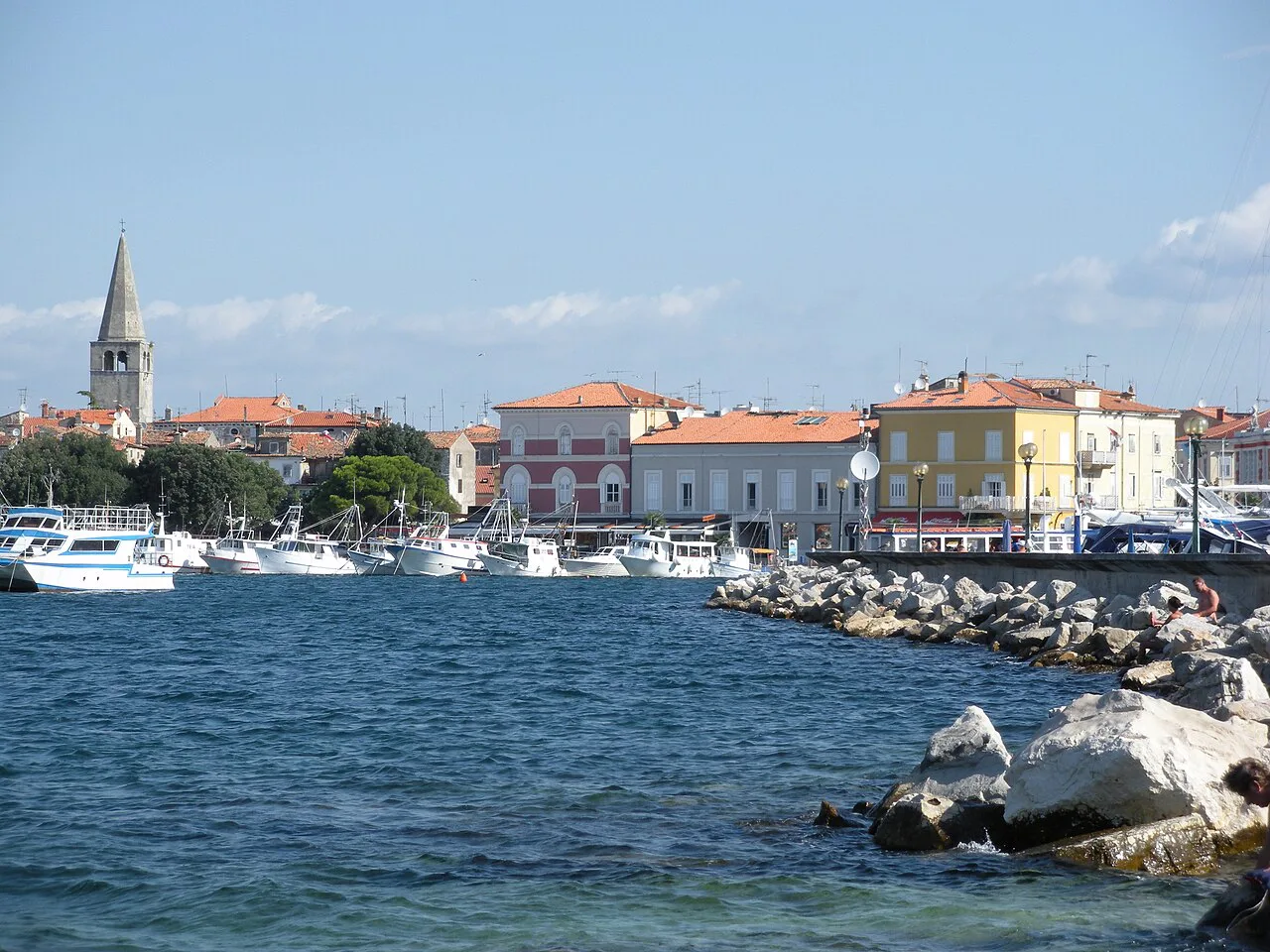
Poreč's centre occupies a small peninsula, and its street plan has kept the symmetrical geometry laid down in Roman times, with Decumanus running along the length and Cardo crossing it. Zuccato Palace marks that crossing, so if you can find the main street you are already most of the way there. Walk Decumanus from the harbour end and watch the corners rather than house numbers.
The tourist board describes the Zuccatto Palace by its corner position at Decumanus and Cardo rather than by a house number, while a gallery listing gives its address as Decumanus 4. Use the corner of the two streets as your marker rather than relying on a street number.

How to get there on foot
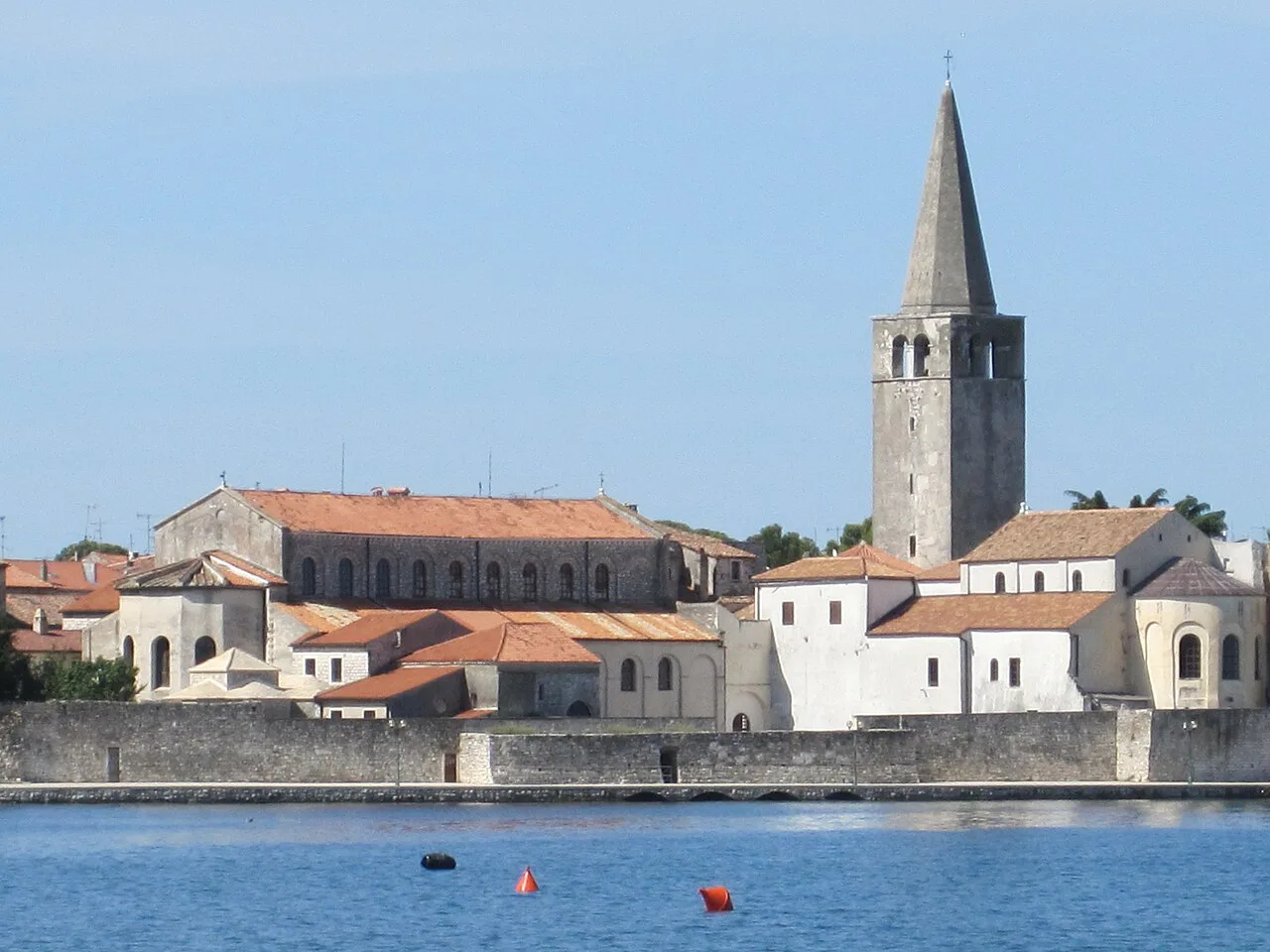
From the harbour, head inland into the peninsula and join Decumanus, then follow it until Cardo crosses. The walk is short and flat, all within the pedestrian old town. The Euphrasian Basilica, Poreč, the town's principal monument, makes a sensible starting or finishing point for the same stroll.
Cars stay outside the old town, so plan on arriving on foot from wherever you park or from the bus station. Wear shoes that cope with polished stone, which turns slippery in rain. Orientate yourself by the two streets, Decumanus and Cardo, rather than by following a single address.
The Gothic palaces around it
Zuccato Palace is one of several palaces built by wealthy families along the main street, some of which survive well. For a closer comparison of domestic Gothic on the same street, the Gothic Palace at Decumanus 5, dated 1473, has a stone facade in floral Gothic style with single and triple lancet windows. The tourist board also records palaces at numbers 10, 15 and 30 along Decumanus, and notes a number of relatively well preserved Gothic houses stretching into both Decumanus and Cardo near the Zuccatto Palace corner.
Walking the street with these addresses in mind turns a single facade into a small open-air lesson in domestic Gothic architecture along the main town street. Keep the 1473 date with Decumanus 5 only: the tourist board gives no construction date for the Zuccato corner itself.
What to see at the palace itself
Approach the visit as exterior-first. The attraction is the stone facades and the corner siting; the building is described as a gallery today, so what you can see inside depends on whether it is open when you pass. Gallery opening hours and any entry charge are not stated, so confirm them before relying on going inside.
The building's appeal is its position on the main street and its role in the Roman cross that divides the old town into quarters with Cardo. That is a fair summary of what the stop offers: architecture in context rather than exhibits. Photograph the corner from both streets, then move on.
How long to allow
Allow a few minutes at the palace itself, and rather longer for the whole Decumanus–Cardo walk if you stop at the other palaces. It does not justify a dedicated trip on its own. Pair it with the Euphrasian Basilica, Poreč and the squares at the western tip for a comfortable half-day; Porec Attractions: 8 Visitor Guides sets out the individual stops across the old town.
If you have only an hour in Poreč, prioritise the basilica and Marafor Square and take the palace in passing. If you have a full afternoon, slow down on Decumanus and read the facades. The trade-off is depth against breadth, and the palace rewards the slower version.
When to go
Decumanus and Cardo are narrow, and on summer days with cruise traffic and day visitors the corner can be crowded enough to make lingering awkward. Go early in the morning or towards the evening in July and August, when the same lanes are walkable and the stone facades are easier to see. Shoulder-season days in late spring and early autumn suit this kind of architecture-walking best.
Poreč's climate is typical of the northern Adriatic, with warm summers and mild shoulder months; treat any figures as averages rather than forecasts for your dates. Rain makes the polished limestone of the old town slippery, so keep the walk short if the weather turns.
Nearby stops within a few minutes
Marafor Square (Trg Marafor) in Poreč, the old Roman forum at the tip of the peninsula, is a few minutes away and the natural next stop. The Pentagonal Tower, the Canonica and the Istrian Assembly Hall are grouped among the town's heritage sights, all within the same compact centre.
Marafor Square, the old Roman forum, is the square to read up on before you arrive, rather than while standing in the middle of it. The Church of Our Lady of the Angels sits close enough to add to the same circuit without lengthening the walk much.
The House of Two Saints is another small heritage stop in the old town worth folding into the route. None of these takes long individually, which is exactly why they work better as a walk than as separate outings.
Is the corner worth the detour?
Yes, if you are already walking Decumanus, and no if it would be your reason for coming into town. Zuccato Palace is a short pause that pays off when you know the Roman cross of streets and have looked at the neighbouring palaces, including the separate Gothic Palace at Decumanus 5 nearby. Walk it early or late in summer, confirm gallery hours before planning to go inside, and let the Euphrasian Basilica, Poreč and Marafor Square (Trg Marafor) in Poreč carry the rest of your time.
Explore more Porec guides
Frequently Asked Questions
Where exactly is Zuccato Palace in Poreč?
It stands at the corner where Decumanus, the long main street of the old town, meets Cardo, the cross street. That corner of the two Roman streets is the best marker; a gallery listing gives the address as Decumanus 4, but the corner itself is the reliable clue.
Can you go inside Zuccato Palace?
The building is described as a gallery today, so what you can see inside depends on whether it is open when you pass. Opening hours and any entry charge are not stated here, so confirm before planning to go in; the exterior facades and the corner siting are the reliable draw.
Is it the same as the Gothic Palace at Decumanus 5?
No. The 1473 stone facade in floral Gothic with single and triple lancet windows belongs to the Gothic Palace at Decumanus 5, a separate building. The tourist board gives no construction date for the Zuccato corner, so keep the two apart.
How long do you need at Zuccato Palace?
A few minutes at the facade is enough. It works best as one stop on a walk of Decumanus and Cardo that takes in the other palaces, then folds into a half-day with the basilica and the squares at the tip of the peninsula.
When is the best time to visit the Decumanus and Cardo corner?
Go early morning or towards evening in July and August, when cruise and day traffic is lighter and the lanes are easier to walk. Late spring and early autumn suit this kind of architecture-walking, and rain makes the polished stone slippery, so keep the walk short if the weather turns.
What else is nearby?
Marafor Square, the old Roman forum at the tip of the peninsula, is a few minutes away, and the Church of Our Lady of the Angels and the House of Two Saints sit close enough to fold into the same circuit.