
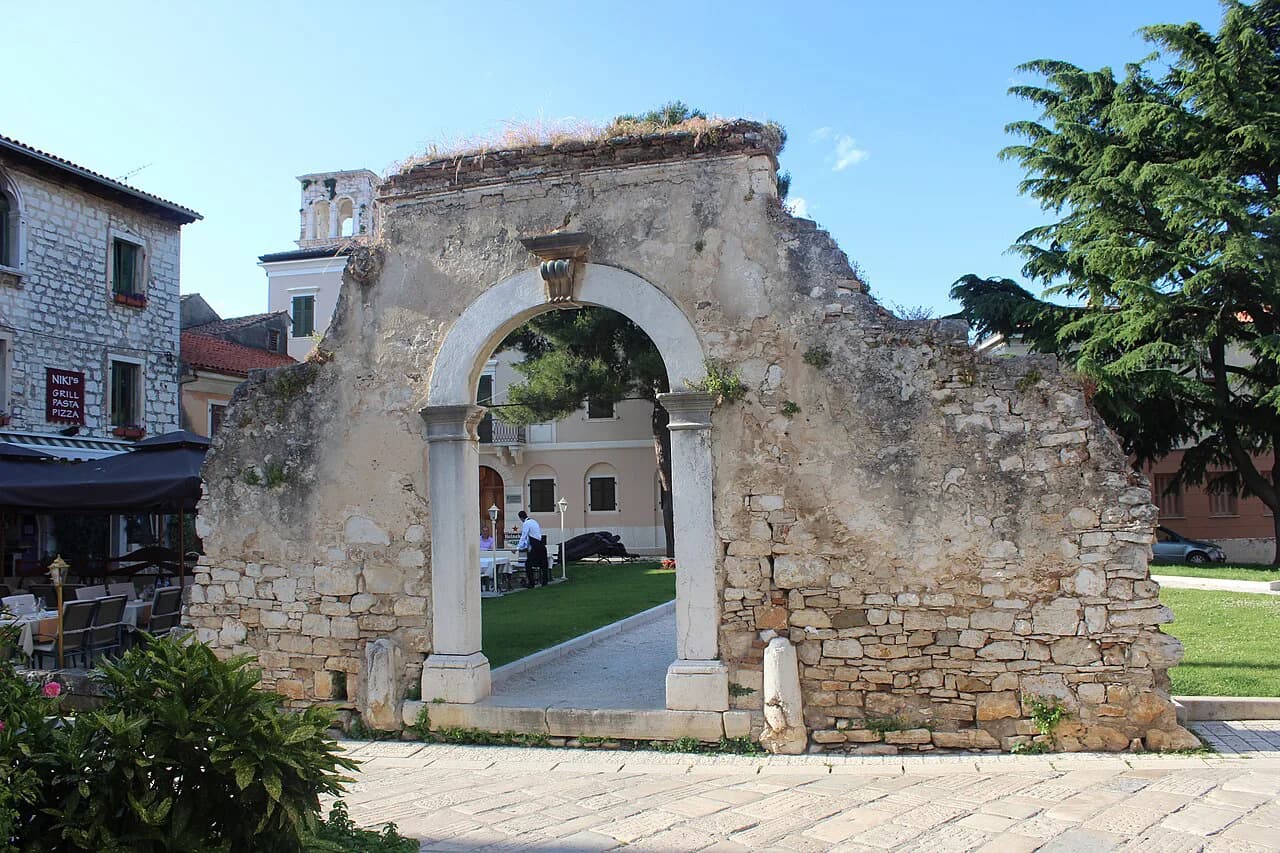
House of Two Saints (Kuća dva sveca), Poreč: A Visitor's Guide

The House of Two Saints is a Renaissance house in the old town of Poreč, counted among the town's secular monuments rather than a church. Plan it as an exterior sight on a walking route through the peninsula's lanes. This guide places it in the Roman street grid and shows how to combine it with the Euphrasian Basilica and Marafor Square.
Poreč's old town sits on a peninsula ringed by bulwarks and towers, laid out on the Roman grid of Decumanus and Cardo Maximus. The House of Two Saints belongs to that dense cluster of palazzi and townhouses. The full set of Porec Attractions: 8 Visitor Guides is worth a look if you want to plan the wider loop before you arrive.
What the House of Two Saints is
The name points to a Renaissance building in the profane, or secular, style found in Poreč, rather than a church. Istria's architectural heritage pages single it out as an example of that secular Renaissance manner, which is the right lens for looking at it.
It appears in the town's roll-call of old buildings alongside the Roman house, the Istrian Assembly, the Gothic palaces Zuccato and Manzini, the baroque Sinčić and Vergotini palaces and the neoclassical Polesini palace. That list is the most useful thing to carry: the house is one voice in a street of styles, not an isolated attraction.

Where it sits inside the old town
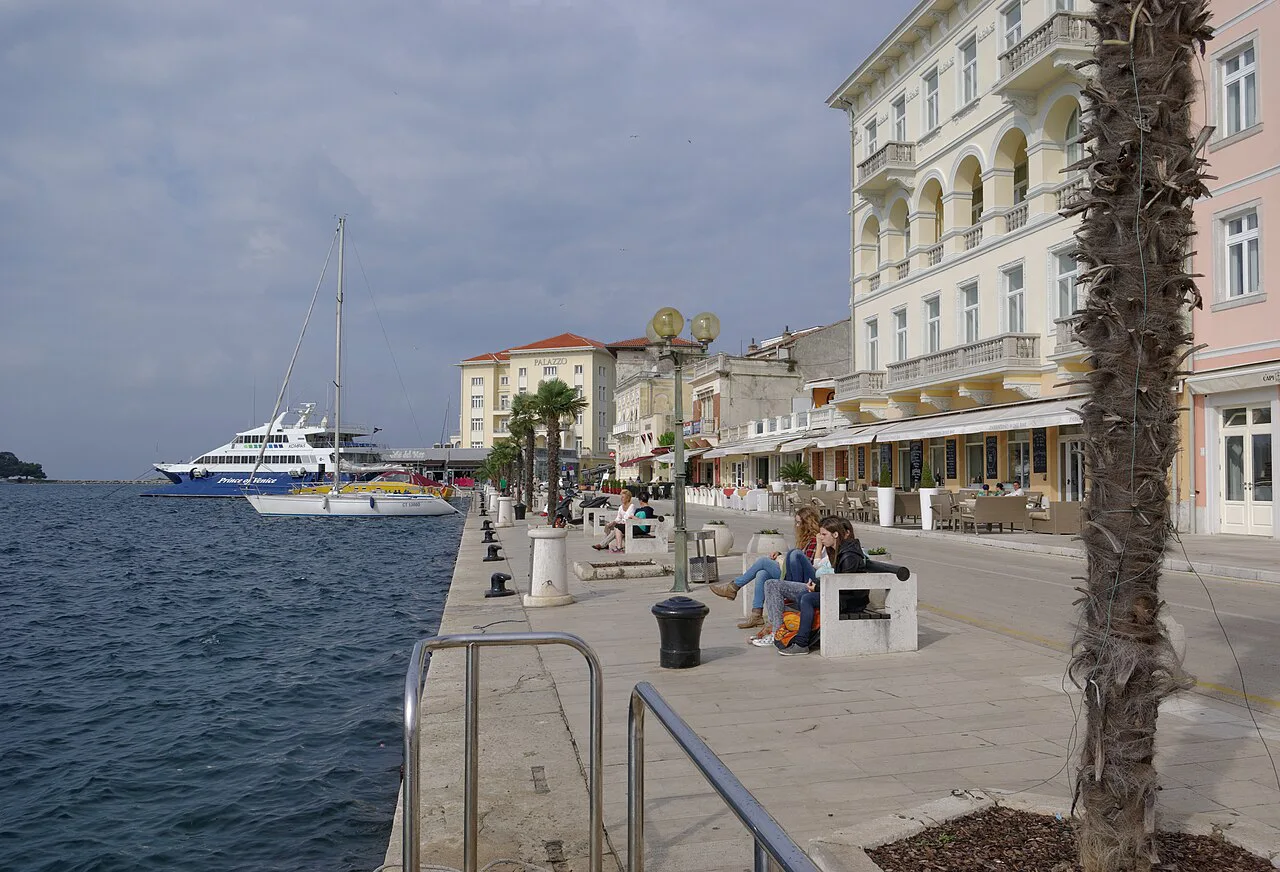
The old town occupies a peninsula surrounded by walls and towers, with its origins in the Roman municipium later known as Colonia Iulia Parentium. The House of Two Saints stands within that walled circuit, listed among the monuments of the historic centre.
Two Roman streets, the Decumanus and the Cardo Maximus, survive in their original geometric arrangement and still organise the lanes today. Use them as your compass: any heritage frontage in the centre is a short turn off one of these two lines.
Marafor, the oldest square and home to Marafor Square (Trg Marafor) in Poreč, keeps the remains of ancient temples beside it, and it sits in the same compact historic core as the house and the basilica. Walk the three together and you never leave the walled centre.

Finding it in the old town
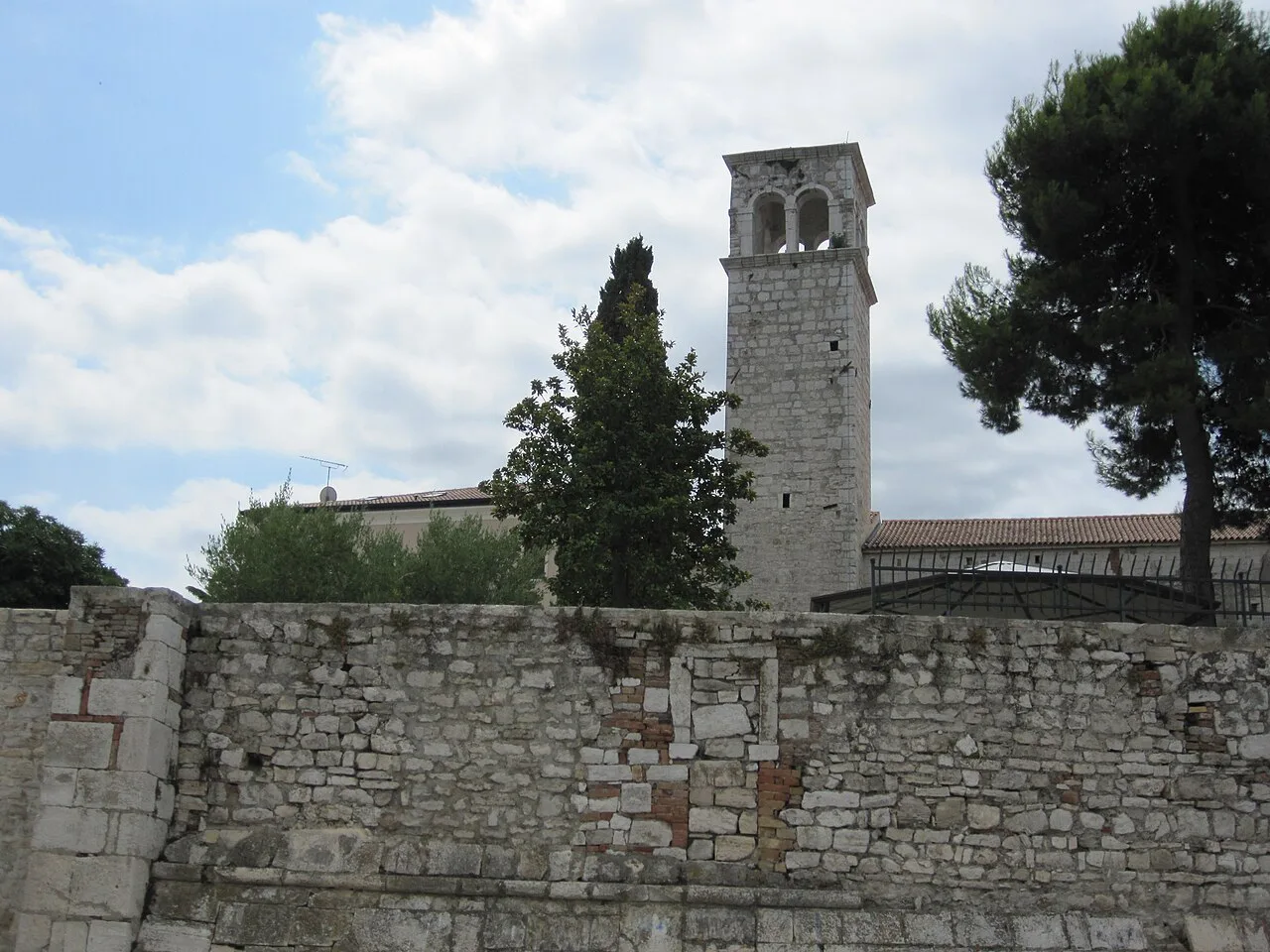
Arrive on the peninsula on foot and stay on foot; the lanes inside the walls are tight. Orient yourself by the Decumanus and Cardo Maximus, the two surviving Roman streets, and use them to move between the square and the basilica.
Coming from the bus station, aim first for the Euphrasian Basilica, Poreč, which is the easiest landmark to navigate by, then work through the lanes. The basilica, built in the 6th century under Bishop Euphrasia and the Emperor Justinian I, is the anchor most visitors can find without a map.
What to look at on the house itself
Read the front as a piece of secular Renaissance design, set against the later and earlier buildings pressing in on both sides. Its interest is architectural and urban, part of a continuous street wall rather than an open square.
Compare it with the medieval Romanesque House on Marafor Square, erected in the 13th century and altered several times since, and with the Gothic and baroque palaces named on the town's heritage list. Two or three fronts seen in sequence make the run of styles obvious in a way a single building cannot.
The lanes are narrow, so the light on the facades shifts through the day and the stonework reads differently depending on the hour and which side of the street you stand on.
How long to allow, and pairing it with the basilica
Allow a couple of hours for the centre on foot: the basilica complex first, then the lanes down to Marafor Square (Trg Marafor) in Poreč and back past the house. The basilica carries the weight of the visit, with its mosaics described as among the most beautiful and best preserved monuments of early Byzantine art in the Mediterranean.
The basilica complex is inscribed as part of the UNESCO World Cultural Heritage, listed since 1997, and includes archaeological remains and mosaics reaching back to the 3rd century as well as early Christian, early Byzantine and medieval material. Give it its own unhurried slot rather than a rushed half-hour shared with the lanes.
The basilica is the main ticketed sight on this route; the house is a street facade along the way rather than a place you enter.
Marafor Square and the Romanesque House nearby
Marafor is the oldest square in town and keeps the remains of ancient temples within the former walls. It is the natural place to pause after the house, with the Romanesque House on the square standing as a 13th-century counterpoint to the Renaissance front you have just seen.
The Romanesque House was renovated and extended several times over its history, a reminder that these facades are palimpsests rather than single-period designs. Look for the joins and later additions; they are often easier to spot on a smaller house than on a palace.
Marafor also gives you a clear meeting point if your group splits up in the lanes, since it is open, level and easy to find from the Decumanus. Use it as the start or end of the heritage loop rather than a mid-point.
When to go
Poreč's old town is tight, and the lanes around the house fill quickly once the day's visitors arrive. Early morning is the practical choice: the streets are quiet enough to look up at facades, and you can reach the basilica before the day's crowds build.
Midday in high summer is the least rewarding window for this sight, because narrow lanes in full sun offer little shade and the detail you came for is hard to see against the glare. At that hour, do the interiors and save the lanes for later.
Keep an eye on the bura, the cold north-easterly wind that can make exposed corners uncomfortable even on bright days. Inside the walled lanes you are mostly sheltered, but open stretches on the walk to and from the centre are not.
Practical points before you set out
Plan the house as street architecture on a walking route. Whether any part of the building can be entered is not something the town's heritage pages set out, so treat the facade as the visit.
Wear shoes that cope with polished stone, since the old-town lanes are smooth and can be slippery after rain. Carry water in summer and keep the walking route short: the centre is compact, and the pleasure is in slow looking rather than distance covered.
Is the House of Two Saints worth seeking out?
Yes, as a two-minute stop on a heritage loop that includes the basilica, Marafor and the Romanesque House, not as a standalone sight. Its value is comparative: a Renaissance secular front that makes the Gothic and baroque neighbours around it legible.
Build the walk around the Decumanus, start early, and put the basilica interior first. Budget for the sites that charge and treat the house as street detail on the way, viewed from the outside rather than entered.