
Round Tower Poreč: what to see and how long it takes

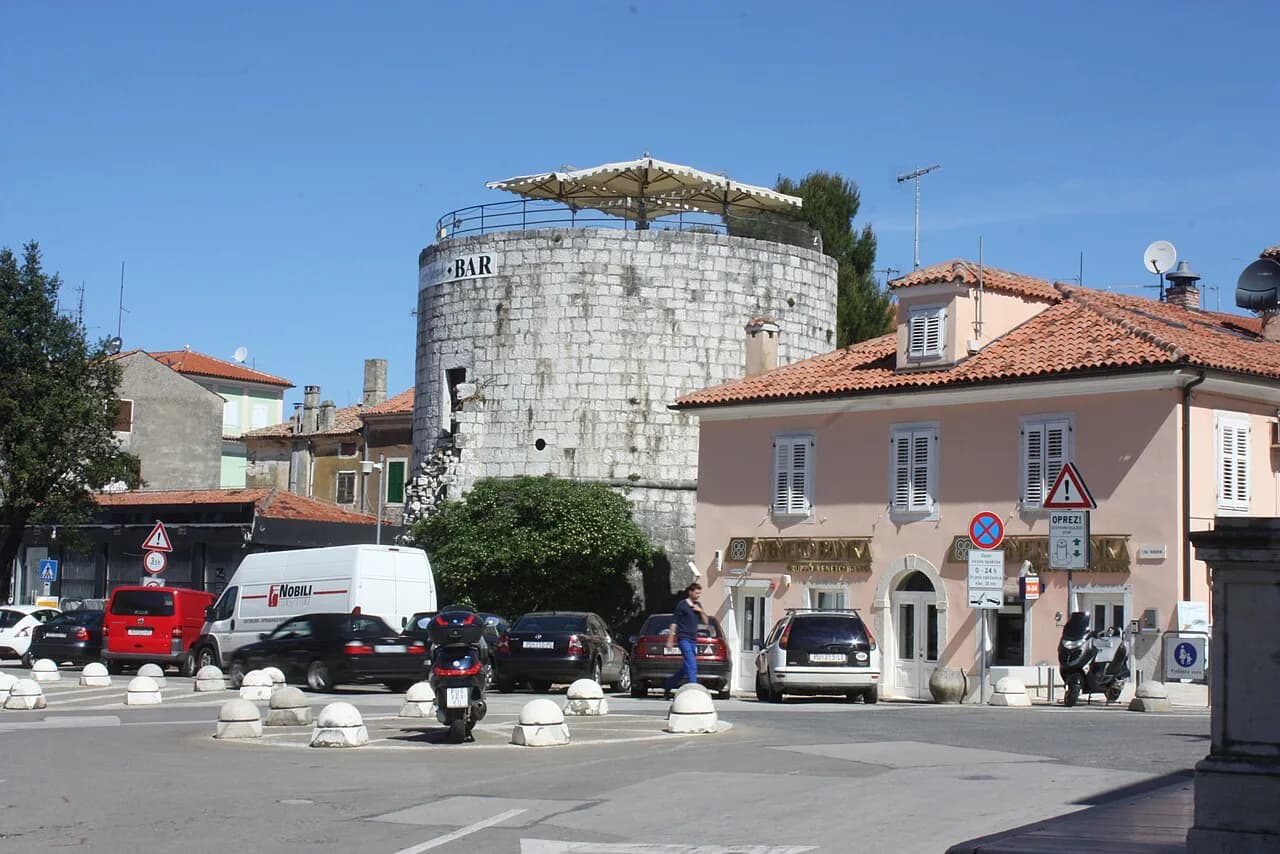
The Round Tower is one surviving piece of Poreč's medieval town ramparts and towers, and it takes minutes rather than hours to see. Treat it as a marker on a walk through the old town peninsula rather than a destination in its own right, and budget an hour or two for the circuit that includes it. This guide sets out where the tower sits off the Roman street grid, how to reach it on foot, and which nearby monuments deserve the bulk of your time.
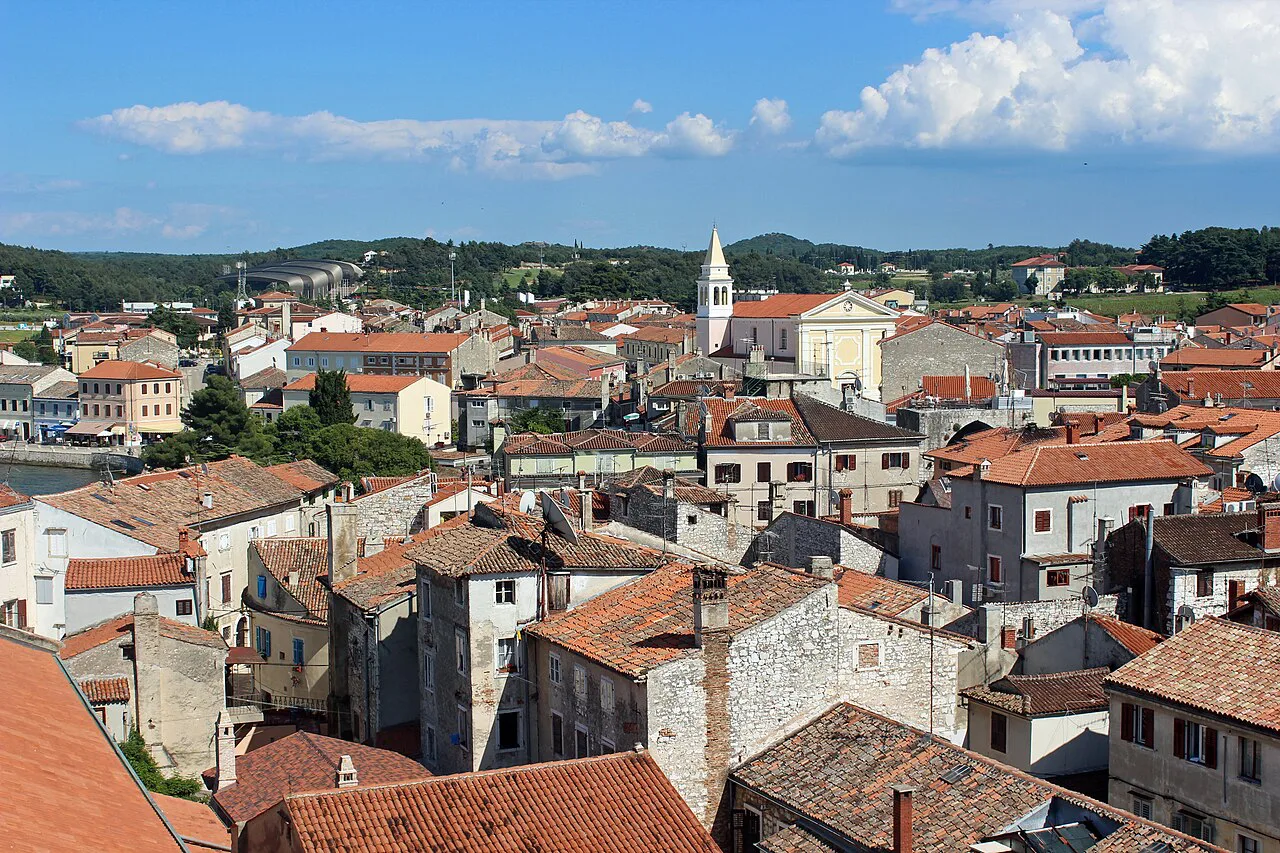
Poreč's centre is a compact peninsula surrounded by bulwarks and towers, founded in Roman times and still laid out on the original Decumanus and Cardo Maximus lines. That tight geometry is what makes a tower-to-basilica walk practical on foot, with no transport needed once you are inside the old town.
What the Round Tower is
The Round Tower belongs to the ring of defences that once enclosed the peninsula, of which part of the town ramparts and towers is still preserved. It is a surviving fragment of that circuit, so read it as evidence of how Poreč was walled rather than as a monument with an interior to tour.
The town's own heritage pages describe the centre as a peninsula girdled by walls and towers, but publish no visitor route, opening hours or entry arrangements for the Round Tower, so plan on seeing it from the street. Check with the tourist information centre in town if you want to know whether anything more is on offer on your dates.

Where it stands in the old town
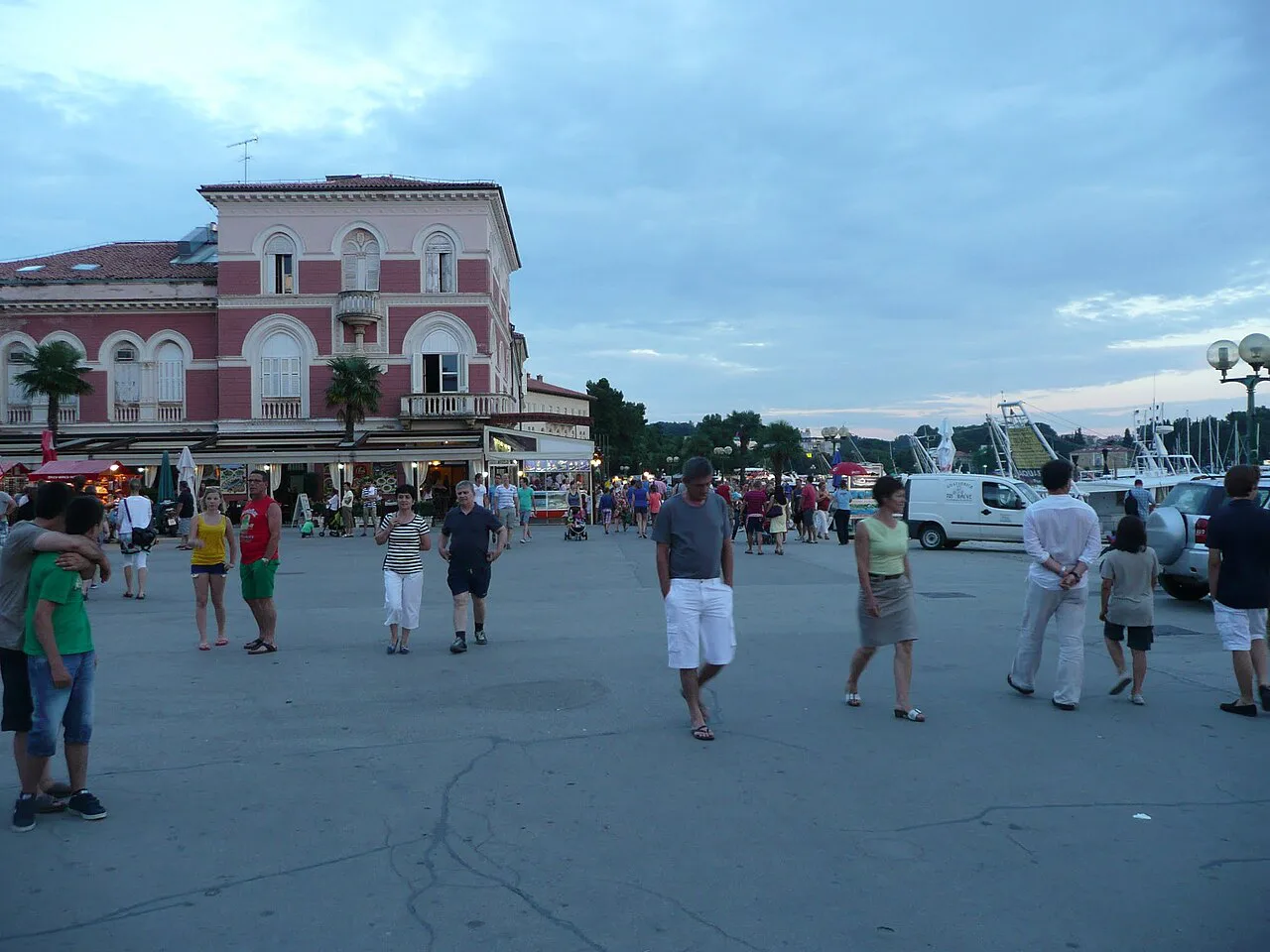
The tower sits within the former bulwarks of the old town, the area enclosed by the surviving walls and towers on the peninsula. Poreč's street plan is the Roman grid, with the Decumanus running lengthways through the centre and the Cardo Maximus crossing it, and the defences wrap around the outer edge of that grid.
Because the historic core is small and surrounded by water on the peninsula, you cannot get meaningfully lost: walk the Decumanus end to end and follow any lane towards the sea until you meet the wall line. Use the tower as a waypoint on that loop, not as a separate excursion.

How to reach it on foot
Come into the old town on foot and orient yourself on the Decumanus, the main street that still follows its original Roman alignment. From there, lanes lead off towards the former bulwarks, where the preserved wall sections and towers, the Round Tower among them, stand at the edge of the built-up centre.
Marafor Square, the oldest square in town, is the handiest inland reference point, with ancient temple remains preserved beside it. Approach the walls from the square or the Decumanus and you cover the tower without a detour, then carry on to the waterfront.
What you see around it: walls and the Pentagonal Tower
The value of the Round Tower is in the company it keeps: stretches of the old ramparts and further towers survive alongside it, which together show the shape of the medieval defences. Walk the outside line of the walls where you can, then step back inside to see how tightly the houses press against them.
Treat the surviving towers as a set rather than ticking off one. The Pentagonal Tower is the other named survivor of the circuit, and seeing it and the Round Tower in sequence makes the defensive logic clearer than any single stop.
The Roman street plan and the tower's place in it
Poreč began as a Roman town on the peninsula, founded as a municipium and later a colony under the name Colonia Iulia Parentium. The main streets of the old centre, the Decumanus and Cardo Maximus, are still preserved in their original geometrical arrangement, which predates the medieval walls and towers wrapped around them.
Keep the grid in mind as you walk. The straight main street and its crossing street tell you where you are relative to the walls, so the tower slots naturally into a route rather than interrupting it. The surviving defences are best understood as an outer edge drawn around that earlier plan.
How long to allow in the old town centre
Give the Round Tower a few minutes and the old town centre an hour or two. Within that, allow a proper block of time for the Euphrasian basilica Porec complex, whose mosaics are among the best preserved early Byzantine work in the Mediterranean and which has formed part of the UNESCO World Cultural Heritage since 1997.
A sensible sequence is the Decumanus first, the wall line and towers second, then the basilica, finishing at the waterfront. Going early or late in the day keeps the narrow streets manageable in high summer, when the peninsula fills up quickly.
Nearby: Marafor Square and the palaces on Decumanus
Marafor square Porec anchors the western end of the old town and preserves the remains of ancient temples within the former bulwarks. It is the natural first stop before or after the walls, and it puts the Roman origins of the town in front of you before you reach the medieval defences.
Along the Decumanus, wealthy families built their palaces on the main street, and a number survive, including the Gothic palace at Decumanus 5 with its two-storey stone facade and single- and triple-lancet windows. Others stand at numbers 10, 15 and 30.
The old town's monument list also takes in the Roman house, the House of Two Saints, the Istrian Assembly Hall, the Gothic palaces Zuccato and Manzini, the baroque palaces Sinčić and Vergotini and the neoclassical Polesini palace. Reading the facades as you walk gives the street far more interest than a quick pass to the walls.
Nearby: the Euphrasian Basilica and its mosaics
The Euphrasian Basilica was built in the 6th century on the site of an earlier Christian church, in the time of Bishop Euphrasia and the Emperor Justinian I. Its mosaics are the reason to come, and the complex also holds archaeological ruins and mosaics dating back to the 3rd century plus religious artefacts from the early Christian, early Byzantine and medieval periods.
Check the basilica's current opening times and ticket price with the parish or the town's tourist information centre before you go, as these are set locally rather than published in a fixed national schedule. Build the visit into the same old-town walk as the tower rather than treating it as a separate outing.
Is the Round Tower worth the detour?
Not on its own, but it costs you nothing extra in time if you are already walking the old town. The tower earns its place as part of the surviving ramparts, so fold it into a loop that takes in the Decumanus, Marafor Square and the Euphrasian Basilica, and you get the defensive history without sacrificing the sights that carry the real weight.
If you have only an hour, choose the basilica and the main street; if you have two, add the wall line and the towers. Either way, the peninsula is small enough that the Round Tower will be on your path rather than out of it.
Explore more Porec guides
Frequently Asked Questions
Do you need a ticket to see the Round Tower in Poreč?
The town's heritage pages describe the walls and towers as part of the old centre rather than as a ticketed attraction, so plan on seeing the Round Tower from the street as part of a walk around the peninsula. If you want to go inside any of the town's churches or museums on the same circuit, ask at the tourist information centre in town, since local operators set their own access rules and prices in euros.
How do you pronounce Poreč?
The final letter is a soft 'ch' sound, so the name comes out roughly as po-RECH rather than po-rek. The same rule applies across Istria and the Croatian coast: the háček on the c marks a distinct consonant, not an accent.
What is Poreč like for a first visit?
It is a compact peninsula town with a Roman street grid still in use, a ring of surviving medieval walls and towers, and the Euphrasian Basilica as its headline monument. The old centre is walkable end to end, so you can see the main street, the squares and the defences in half a day without any transport.
How far is Poreč from Rovinj?
Both sit on the Istrian coast and are usually linked by road, but journey times vary with the route and season. Allow for the fact that the coast road gets busy in high summer; check current bus or driving times before you set out.