Poreč Roman Ruins: What Survives and Where to Find It
Poreč's Roman past survives as a street grid and reused stone rather than one excavated site. Here is what to look for and how to walk it in an hour.
On this page
Poreč's Roman ruins are not a fenced archaeological park: what survives is the old town's street plan, a scatter of ancient masonry and Roman stone reused in later buildings. The skeleton is the Roman grid, with the Decumanus Maximus running east to west and the Cardo Maximus crossing it north to south, as the layout of the old town still shows. This guide covers what is worth pausing over and how to walk the grid in roughly an hour before or after the basilica; see our Things to Do in Poreč guide for the wider old-town circuit.
What the Roman ruins of Poreč actually are
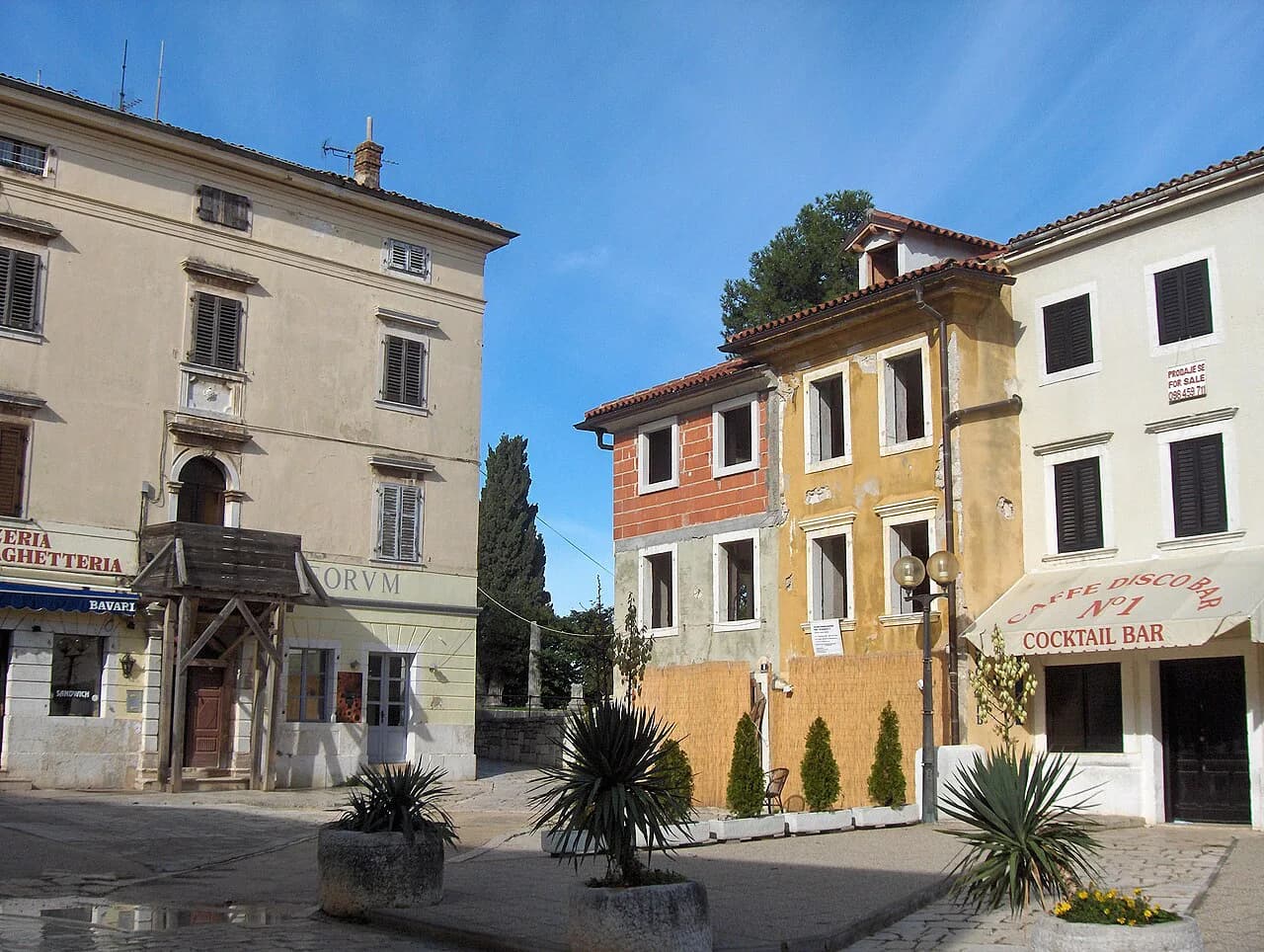
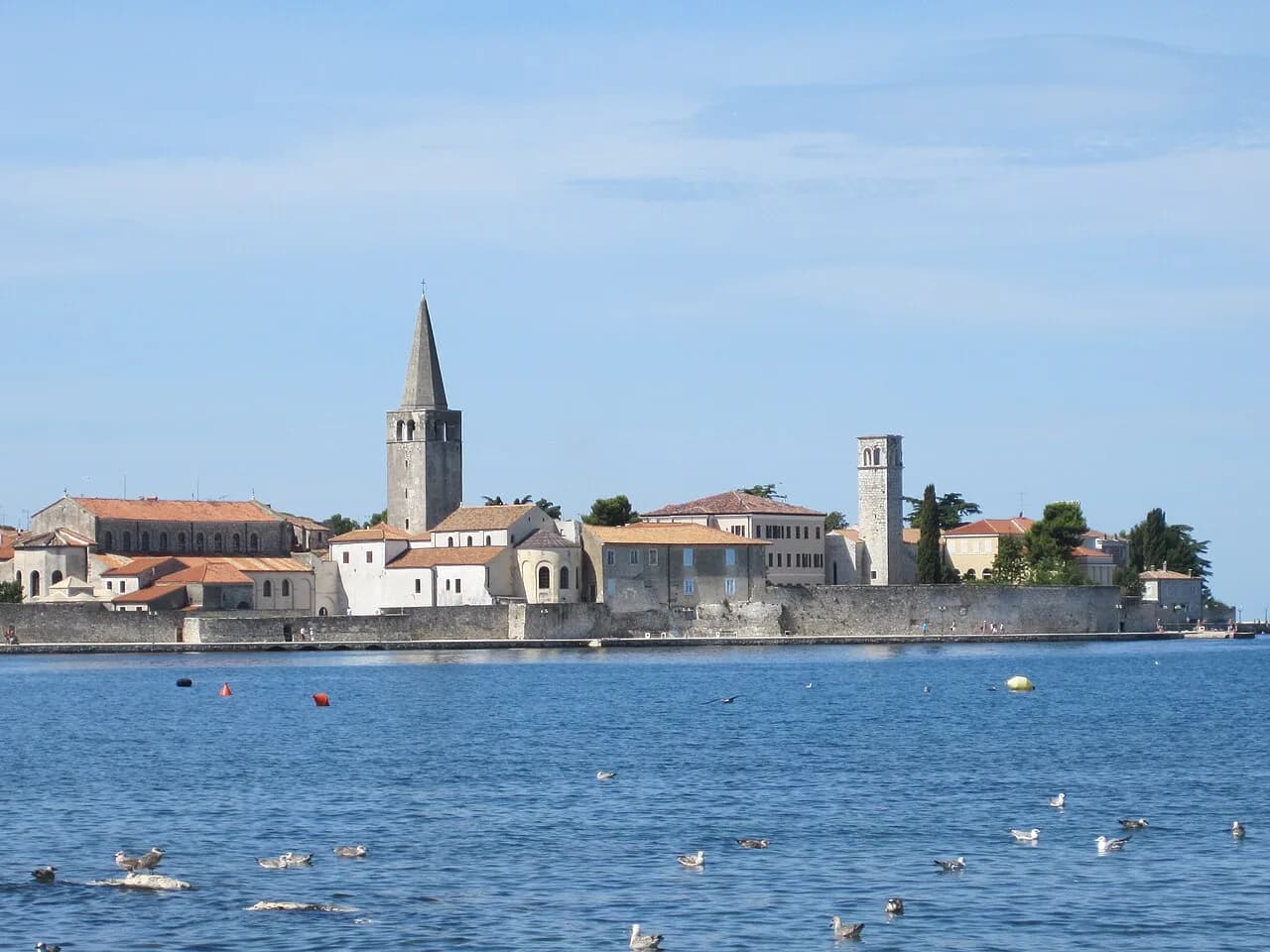
Roman Parentium left no Arena and no lone temple standing in a field. What you see instead is a compact peninsula town still built on its Roman plan, with Venetian-era houses lining streets the Romans laid out. The old town keeps a broadly symmetrical layout, with the Decumanus Maximus stretching east to west and the Cardo Maximus running north to south, and that surviving geometry is the main Roman sight in Poreč.
Treat the town as an open-air site rather than a ticketed attraction: you walk the streets, look at spolia set into facades and paving, and read the plan itself as the exhibit. The town's tourism portal frames Poreč as a city with a thousand-year history and leads with historical heritage, above all the basilica.
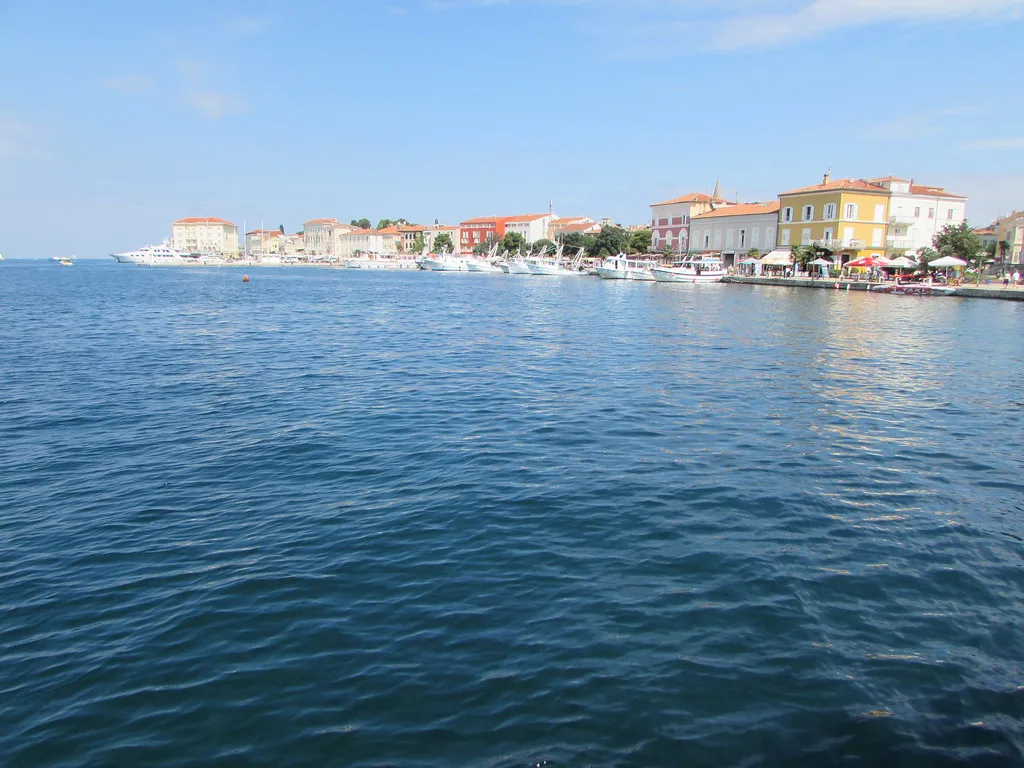
Why Roman Poreč is scattered through the old town
Poreč has been continuously occupied since Roman times, so later building happened on top of and around earlier building rather than on a clean site. Medieval and Venetian houses crowd the streets the Romans laid out, and cut Roman stone reappears in later church walls and doorways because it was cheaper to reuse than to quarry. You read Roman Poreč by looking at the shape of streets and at individual stones, not by buying a ticket to one enclosure.
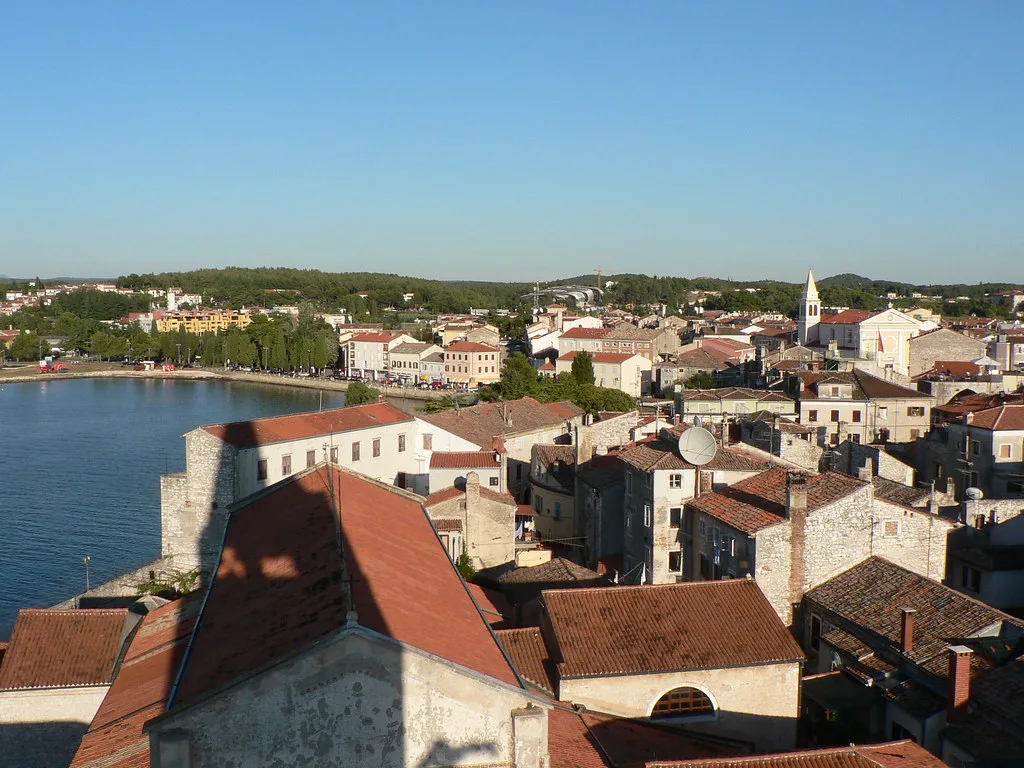
Decumanus Maximus: the east–west spine of the Roman street grid
Start on the Decumanus Maximus, the east–west street that was the main axis of Roman Parentium and is still the old town's principal thoroughfare. It runs roughly from the landward edge of the peninsula toward the seaward tip, lined with shops and facades whose ground floors follow the ancient line. Walk it end to end and you have covered the Roman spine in about ten minutes at an unhurried pace.
Look down as much as up: the street surfaces, thresholds and the way buildings step along the line tell you more about the Roman plan than any single facade. It is the busiest route through the centre, so an early start gives you the paving and proportions almost to yourself.
Cardo Maximus: the north–south crossing street
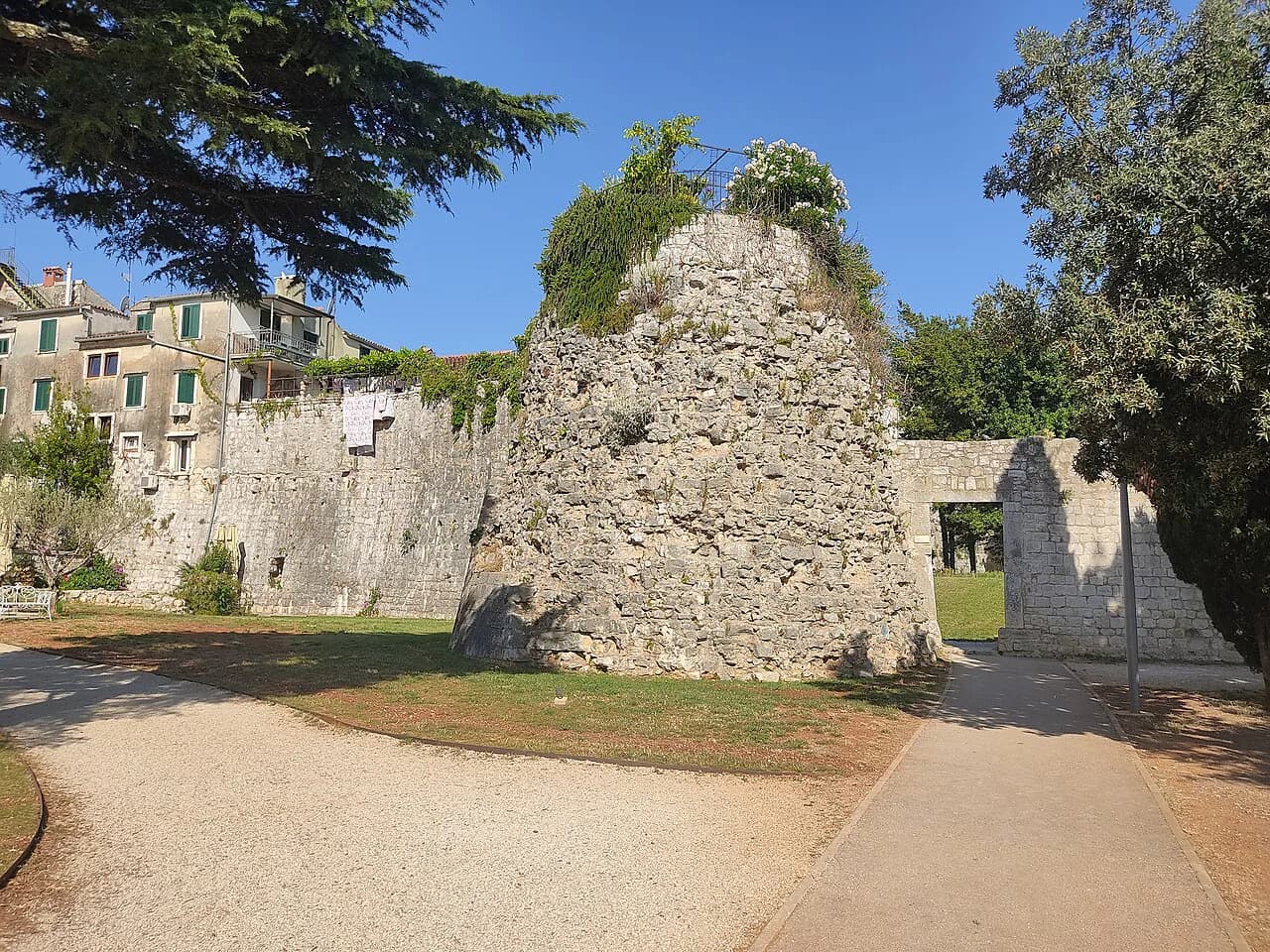
Poreč's old town and its environs hold the basilica complex, medieval walls and towers, and a scatter of reused classical stone, all of it fitted into the Roman street frame rather than presented as a separate Roman quarter. The interest lies in how classical material and street lines survive inside later buildings: a column reused in a wall, a facade built on an older footing.
Off the Cardo, narrow lanes lead toward the waterfront and the higher ground behind it, many of them medieval or later but fitted into the Roman frame. Wander one or two side alleys rather than only the main streets, because fragments of ancient masonry show up in unregarded corners.
The Roman ruins at the end of the Decumanus
At the seaward end of the Decumanus, just short of the water, a small group of Roman remains sits as an open site: the surviving masonry is read as the traces of a Roman villa.
Plan five to ten minutes here, reading the stone and its position rather than expecting an exhibition. Because it sits almost at the water's edge, it makes a natural full stop to the walk: you arrive along the Roman axis and end looking out to sea, roughly how the Roman town met the harbour.
Roman stones inside the Euphrasian Basilica complex
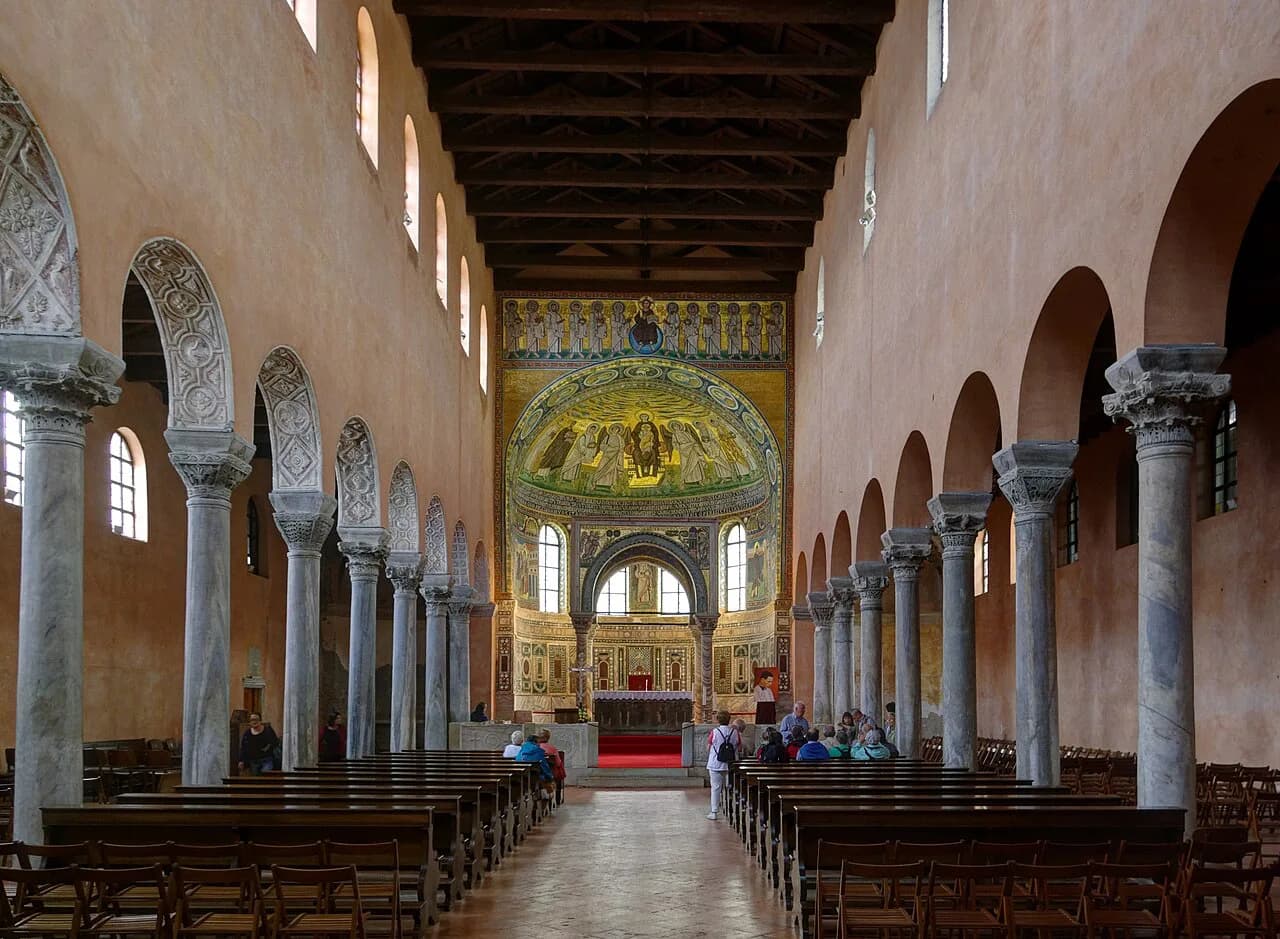
The Episcopal Complex is Poreč's UNESCO World Heritage monument, and its oldest parts reach back to the 4th century, while the basilica itself is a 6th-century building. That makes it the place where Poreč's late-Roman and early-Christian story is most legible, even though it is not an excavated Roman ruin.
The ancient material is in the walls, floors and foundations of the complex and its neighbours, not in a separate Roman monument behind it. Ticket prices and opening times change with the season, so confirm them at the entrance before you build a day around them.
Reused Roman stone in the basilica complex and old town
The basilica complex is the clearest place to see how classical and late-Roman material was absorbed into later building: columns, capitals and masonry are worked into the church and its neighbours rather than standing as a free-standing Roman structure. The interest lies in the conversions — how a classical building becomes a Christian one, how a facade is re-fronted, how an ancient column ends up in a later wall.
If you want the historical sequence set out properly, the town's heritage museum collections fill in the gaps the streets leave; our museums in Poreč guide covers what is where. Pair a museum stop with the walk so the loose stones you passed have dates attached.
Venetian houses built on Roman foundations
Much of what you see above ground is Venetian in style, with the characteristic houses that dominate the old town set within the Roman street frame. The Roman contribution is the alignment itself: the line of a street or a wall that predates the building beside it. Knowing this stops the old town reading as purely medieval.
A guided walk is the efficient way to have those buried layers pointed out, since the reused stone carries no signage. If you prefer to go alone, walk the grid once quickly for orientation and then again slowly, looking only at ground level; our Poreč walking tour guide sets out a route.
Walking the Roman street plan: route and timing
Start at the landward end of the Decumanus Maximus, follow it to the waterfront remains, then double back to the Cardo Maximus crossing and walk north and south along it. Add the basilica complex and a loop of two or three side lanes, and the whole thing fits into an hour to ninety minutes on foot; see our Things to Do in Poreč guide for the wider old-town circuit. The distances are short because the peninsula is small, so the constraint is how long you linger, not how far you walk.
How long the ruins need and how to combine them with the basilica
The Roman fabric alone takes under an hour, and on its own it can feel thin if you have travelled specifically for it. That is the honest trade-off: pair the grid walk with the basilica and, if you want more, a museum, and the half-day fills properly. Budget two to three hours for the combination, more if you stop for coffee on the Decumanus.
Crowds, cruise days and the best time of day to walk the grid
Poreč is one of the most visited towns in Croatia, and in summer the centre fills through the middle of the day, with the crush at its worst in late July and the first half of August. Because the Roman sights are streets rather than a gated site, crowds affect the experience directly, so go early morning or late afternoon to see the paving and proportions without that pressure.
In high summer the old town absorbs a concentrated flow of day visitors through the middle of the day, and the narrow lanes off the Cardo Maximus are where you escape it. Walk the grid early rather than at the height of the afternoon if you want the paving and proportions to yourself.
What the ruins cost and how to see them in the rain
Walking the Roman street grid carries no gate or ticket, and the streets have no set opening time; the small open fragment at the end of the Decumanus is likewise unenclosed. The basilica complex is a separate, ticketed monument with seasonal hours, so check the current price and times at the entrance rather than budgeting from an old figure.
Wet weather is the moment to move indoors: the basilica interior and the town's museum collections keep the historical thread going while the lanes empty out. Polished stone streets become slippery in rain, so take the main axes and skip the steep side passages.
Is the Roman walk worth it on its own?
Not on its own, no: the Roman remains are fragments and a street plan, absorbing for half an hour of deliberate looking and underwhelming if you expect a monument. Build the walk into a morning with the basilica and you get a coherent picture of Poreč from late antiquity to the Venetian town.
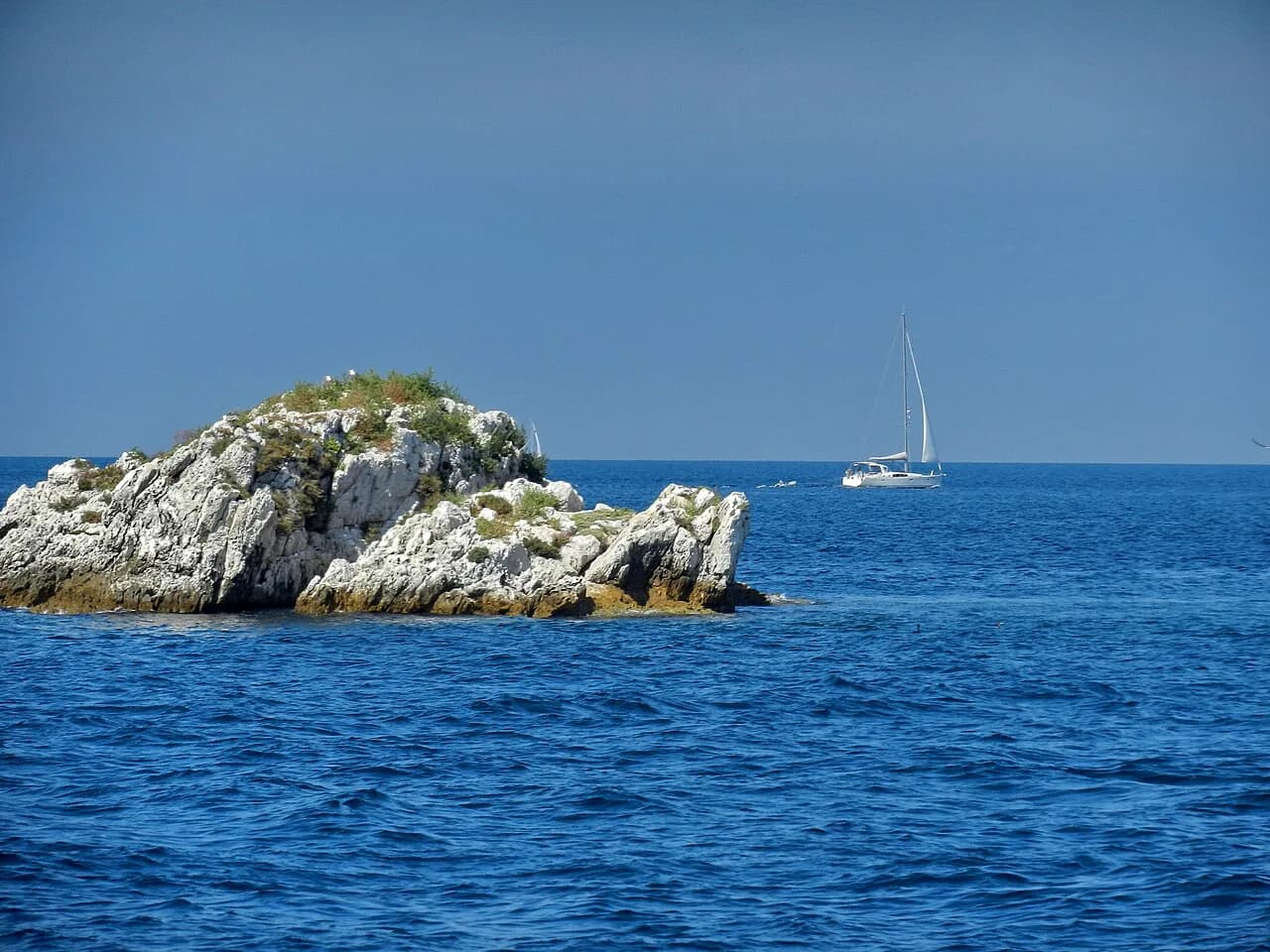
If you want the water instead of the stones, the same peninsula gives you a paddle out to the islets and the Lim Channel with local operators, which is a better use of an afternoon than a second lap of the grid.
Explore more Poreč guides
Frequently Asked Questions
Do you need tickets to see the Roman ruins?
No for the streets and the open, unenclosed fragment near the waterfront — those are public and carry no ticket, and the streets have no set opening hours. The Euphrasian Basilica complex is a separate ticketed monument with seasonal hours, so check its current price and times at the entrance before you go.
Where exactly are the Roman ruins in Poreč?
They are not in one place. The Roman town survives as the street grid of the old town peninsula, with the Decumanus Maximus running east to west and the Cardo Maximus crossing it north to south, plus a small open group of Roman masonry near the waterfront at the seaward end of the Decumanus. Walk those two streets and the lanes between them to see the Roman layer.
How long does the Roman walk take?
Under an hour for the grid and the waterfront fragment at a relaxed pace. Most visitors get more out of it by combining the walk with the basilica and, if they want the full sequence, a museum, which turns it into a half-day rather than a quick loop.
Sources
Notes from the Croatian coast
Optional updates when our guides change.
You might also like
Continue reading
More guides you'll find useful