Museums in Pula: Which Ones Are Worth Your Time
A practical guide to museums in Pula, from the Arena and Zerostrasse to the Archaeological Museum and MEMO, with what each holds and how long to allow.
On this page
Pula suits a single museum day rather than a week of them, and the best of the city can be covered in two: the Arena and the Temple of Augustus for Roman Pula, then the Archaeological Museum and either MEMO or the Museum of Contemporary Art for everything after. Nearly all of it sits inside the old centre, so you move between collections on foot rather than by bus. This guide sets out what each museum holds and which ones to drop when time is tight.
The city's own tourism office lists Pula's museums and galleries, including the Arena, the Temple of Augustus, Zerostrasse, the Archaeological Museum, the Historical and Maritime Museum and the Museum of Contemporary Art of Istria, so it is a sensible starting point for current opening arrangements. Pula also has more small galleries than most visitors expect.
What Pula's museums cover
Three layers of history sit almost on top of each other here. Roman Pula gave the city its amphitheatre, forum temple and mosaics; the Habsburg era left the Kastel fortress and the Austro-Hungarian navy; the twentieth century produced a distinctive local culture that MEMO documents room by room. That range means a short visit can cover one layer well rather than skimming all three.
Treat the monuments and the museums differently. The Arena and the Temple of Augustus are visits in their own right, while the Archaeological Museum and the Maritime Museum explain what you have already walked past. Budget for the monument tickets first and the indoor collections second, and check the tourism office listings for the current opening pattern before you commit a day.
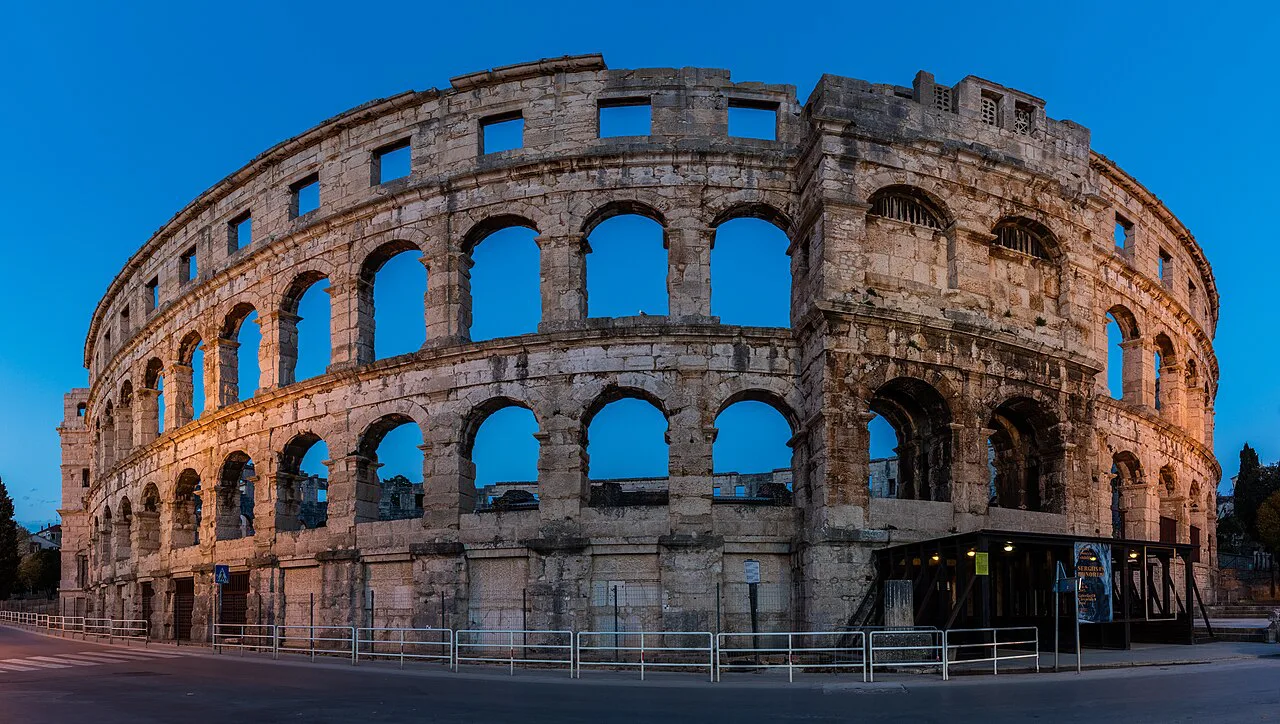
Arena — Amphitheater: Pula's Roman monument
The Arena is the one sight in Pula nobody skips. Its outer arcade of arches rises on the harbour side of the centre, and the interior still holds a ring of seating and the underground chambers where gladiators and animals were held. Allow about an hour if you walk the whole circuit and read the panels, less if you only want the view from the upper tiers.
In summer the Arena doubles as a concert and film venue, so parts of the interior can be curtained off or closed on event days. Go early in the morning to have the stone mostly to yourself, and keep an eye on cruise-ship arrivals, which tend to push tour groups through mid-morning.
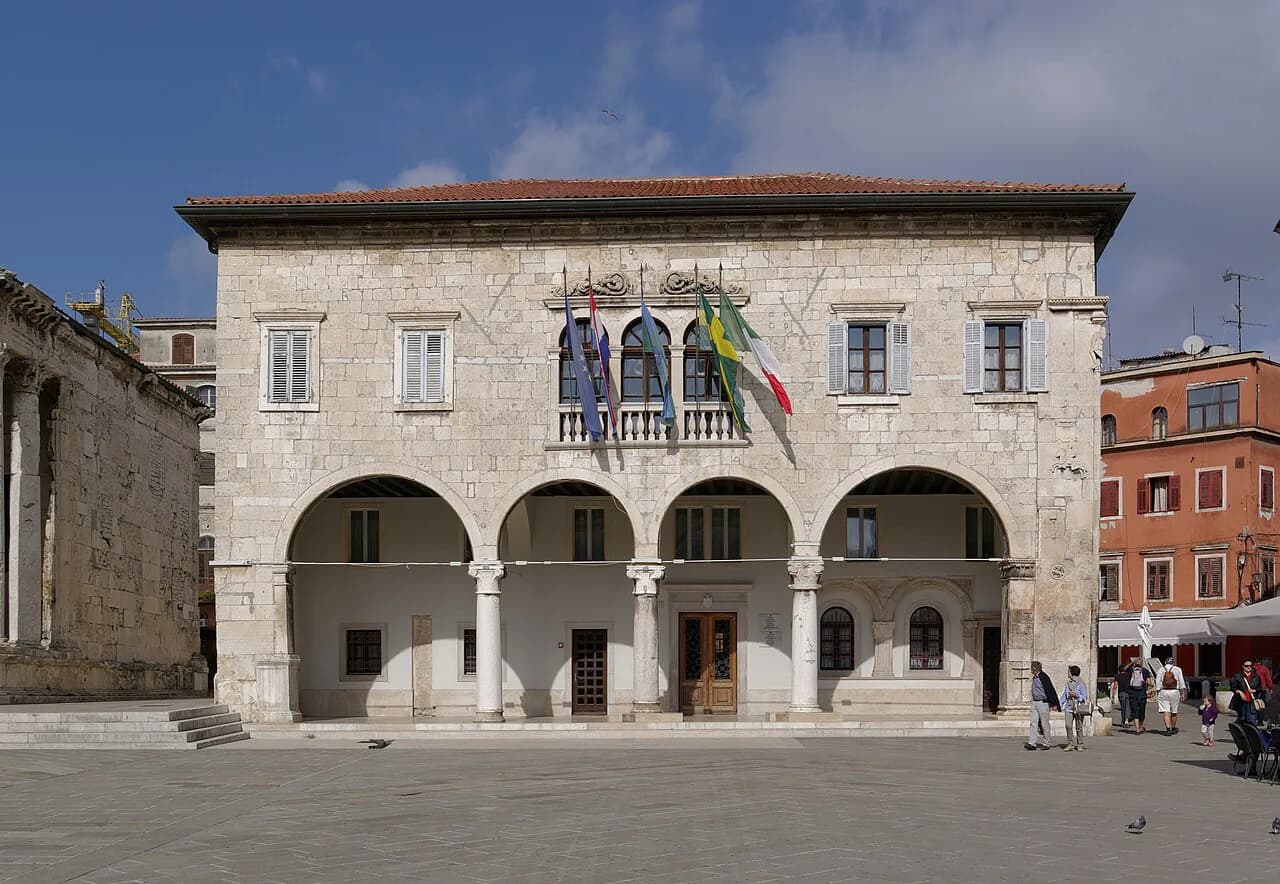
Temple of Augustus on the forum
The Temple of Augustus stands on the forum, the main square of Roman Pula, and is one of the best-preserved Roman temples on the eastern Adriatic. It was built in the first century and later served as a church and a granary before returning to its Roman form. The colonnade is short and intimate, so twenty minutes covers the exterior and the small collection inside.
Because the temple sits on the open square, it works as a stop between other sights rather than a destination. Combine it with a coffee on the forum and with the nearby city galleries, which cluster on the streets behind the square.
The underground galleries Zerostrasse, Carrarina 3 and Carrarina 1
Zerostrasse is a network of Habsburg-era tunnels and galleries beneath the city centre, with entrances at Carrarina 3 and Carrarina 1. The passages were built as shelters and storage and now host exhibitions and events; the cool air and dim light make them a good stop on a hot afternoon. Allow forty minutes for the walk-through and whatever display is installed.
The entrances are easy to miss because they open straight off the street, so look for the numbered doorways on Carrarina rather than a large museum frontage. Zerostrasse appears among the tourism office's museum and gallery listings; opening arrangements are worth confirming before a special trip.
Archaeological Museum of Istria in the Kastel fortress
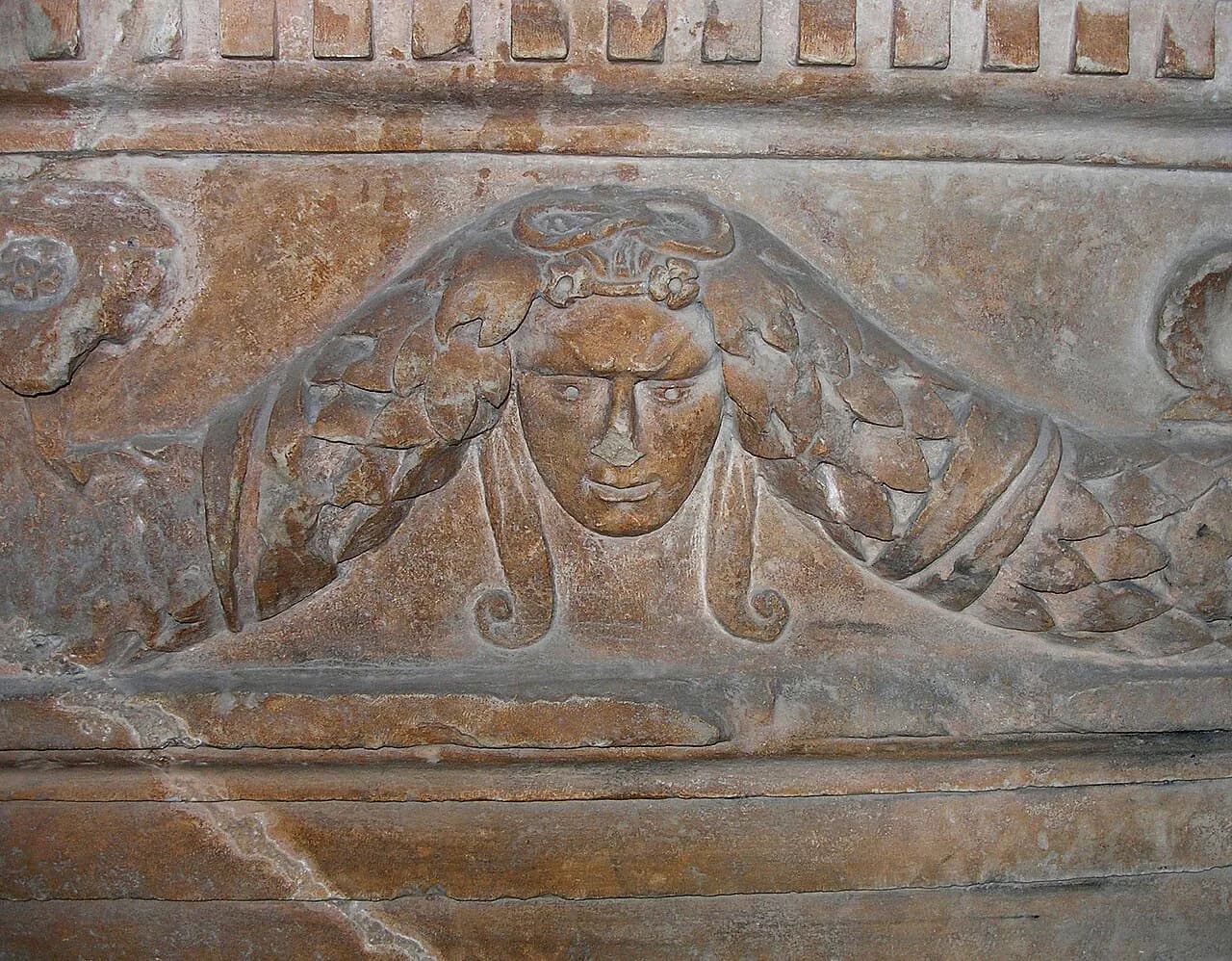
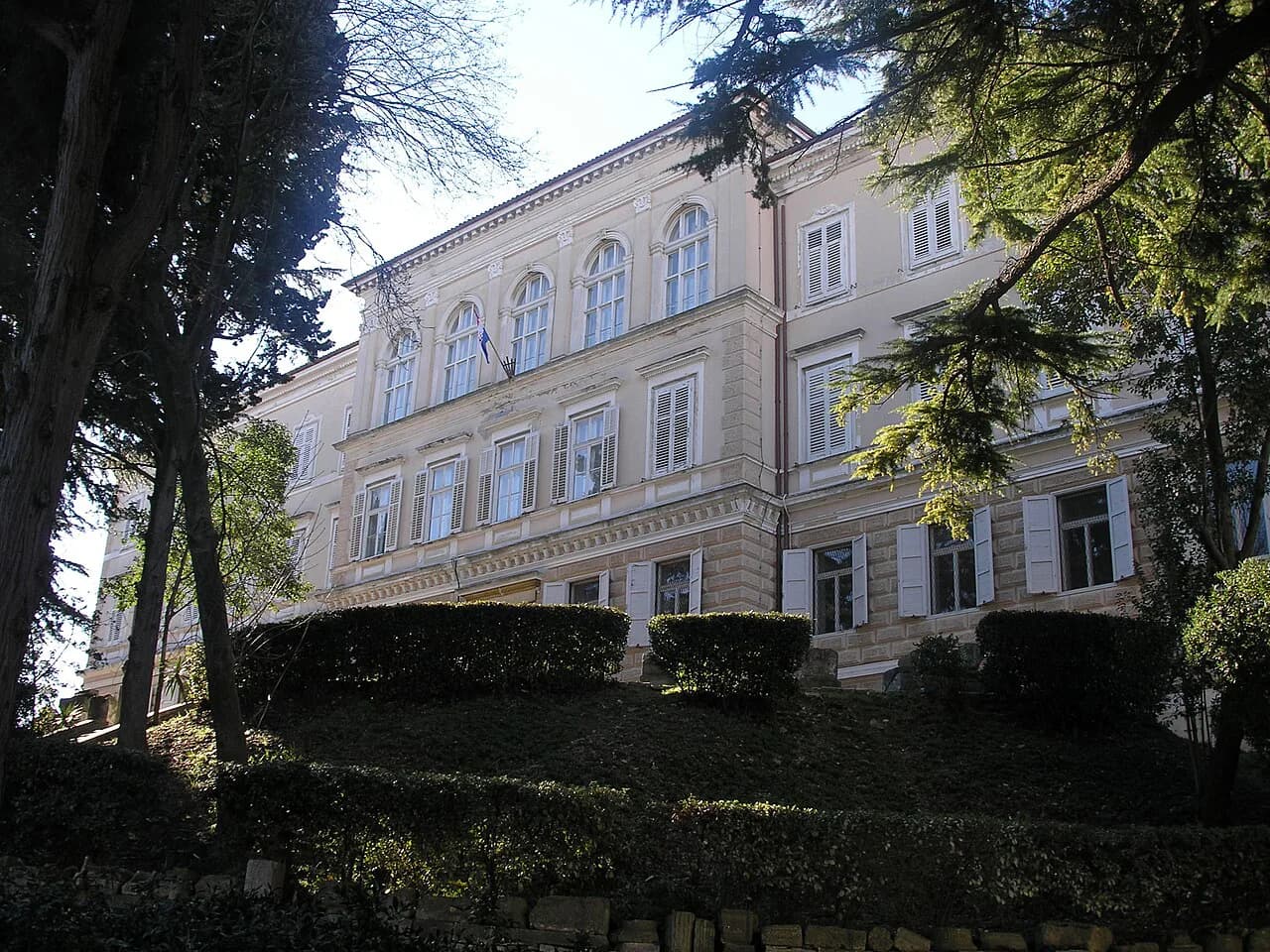
The Archaeological Museum of Istria occupies the Kastel, an Austro-Hungarian fortress on the hill above the centre, and its collection runs from prehistory through the Roman period to the early modern era. The Roman holdings are the strength: mosaics, inscriptions and sculpture that fill in the story behind the Arena and the forum. The building itself is part of the visit.
Allow two hours if you read the labels, closer to an hour for a brisk pass. The hill walk from the forum takes only a few minutes and is worth it for the fortress setting alone. Check the museum's current opening days with the tourism office before climbing up.
Historical and Maritime Museum of Istria
The Historical and Maritime Museum of Istria covers the Habsburg period, the Austro-Hungarian navy and the region's shipbuilding and fishing trades. It is the place to make sense of Pula's years as a major naval port, a period that shaped much of the city outside the Roman core. Expect ship models, charts, uniforms and photographs rather than interactive displays.
An hour is enough for most visitors, longer if you have an interest in naval history. It pairs naturally with the smaller maritime collections nearby and with the Archaeological Museum, which sits in the same upper part of town.
Museum of Contemporary Art of Istria on Ul. Svetog Ivana
The Museum of Contemporary Art of Istria on Ul. Svetog Ivana 1 shows modern and contemporary work by artists from Istria and beyond in temporary exhibitions. It is a small, quiet museum, best treated as a change of pace between the Roman and Habsburg sights rather than a headline stop. One listing gives opening hours of 10:00 to 19:00, but confirm them with the museum before you go, as they shift with the season.
Allow forty-five minutes unless a temporary show catches your eye. The address is a short walk from the Arena, which makes it an easy add-on to a Roman morning.
Museum Olei Histriae — the House of Istrian Olive Oil
Museum Olei Histriae tells the story of Istrian olive oil from cultivation to pressing, with historic equipment and displays on the region's groves. Tastings and workshops are part of the visit, so it appeals to travellers who want something sensory between the stone monuments. It is a compact museum and works well on a wet or windy day.
Allow around an hour including a tasting. Because it is food-focused, it sits awkwardly with a tight schedule that is already heavy on indoor stops; pick it or MEMO rather than both if you only have one afternoon.
MEMO Museum and Letterpress Gallery: everyday life from the 1950s to the 1980s
MEMO, the Museum of Everyday Life and Good Memories, recreates a Pula family's life from the 1950s to the 1980s through a street, a square and an apartment. Period objects such as a black-and-white television, an early computer and the small Fiat known locally as the Fićo fill the rooms. The letterpress gallery attached to it adds a working print shop to the visit.
This is the most engaging museum in Pula for travellers with children, and the nostalgia works even if you did not grow up in Yugoslavia. Allow an hour, more if you read every label. It is one of the best choices for a bura day when the waterfront is too windy to enjoy.
Maritime Collection Gallerion and the Memorial Room of the Imperial and Royal Navy
Two smaller collections, the Maritime Collection Gallerion and the Memorial Room of the Imperial and Royal Navy with its Marine Library, dig deeper into Pula's naval past. They are the kind of specialist rooms that reward a specific interest rather than a general wander. If the Historical and Maritime Museum has whetted your appetite, these fill in the detail.
Allow half an hour each at most, and check opening arrangements with the tourism office, as small collections often run limited hours. They are best folded into an upper-town loop with the Archaeological Museum.
Smaller galleries: HDLU Istria, the City Gallery and Sacred Hearts
Pula's gallery scene is scattered but rewarding: Gallery HDLU Istria, the City Gallery and the Museum – Gallery Sacred Hearts all sit within the centre and show changing exhibitions of Croatian art. Several smaller spaces, including Poola Gallery and Makina Gallery, add to the list.
Pick one or two rather than trying to tick them all off. The City Gallery and Sacred Hearts sit close enough to the forum to combine with the Temple of Augustus.
How to group Pula's museums on foot in one or two days
For a single day, start at the Arena when it opens, walk to the Temple of Augustus on the forum, then climb to the Kastel for the Archaeological Museum. Finish with MEMO or the olive oil museum depending on your mood. That route keeps you in the centre and avoids backtracking.
With two days, add the Historical and Maritime Museum, a gallery or two and Zerostrasse on the second morning. While individual opening days are not set out here, the tourism office lists these sites among Pula's museums and galleries. Keep the afternoons for the waterfront and the Arena's exterior rather than another indoor collection, which preserves the freshness of the museum visits.
Summer crowds, cruise-ship days and the bura
July and August bring cruise-ship groups into the centre mid-morning, so the Arena and the forum are busiest then. Book the indoor museums for the middle of the day or a wet afternoon, and use early mornings for the monuments. The bura, the cold north-easterly wind, can close the waterfront and make the exposed Roman sights uncomfortable, which is when MEMO and Zerostrasse come into their own.
Which Pula museums to pick first
If you have one day, give it to the Arena, the Temple of Augustus and the Archaeological Museum, with MEMO as a rainy-day substitute for the olive oil museum. If you have two days, add the Maritime Museum and Zerostrasse. Everything else is a bonus for a third visit or a slow afternoon. For the wider set of things to see and do in Pula, see our guide to Things to Do in Pula.
Check the tourism office listings the week before you travel, as opening days and seasonal closures shift with the calendar, and allow for the indoor collections closing on some days of the week.
Explore more Pula guides
Sources
Notes from the Croatian coast
Optional updates when our guides change.
You might also like
Continue reading
More guides you'll find useful