Free Things to Do in Pula: Roman Sights That Cost Nothing
Free things to do in Pula: the Arch of the Sergii, Twin and Hercules gates, the Roman floor mosaic and a loop around the Arena's outer walls.
On this page
Pula gives you an unusually rich half-day of sightseeing for nothing: the outer circuit of the Arena, the Forum square, the Arch of the Sergii, the Twin and Hercules gates and a Roman floor mosaic all cost nothing to view. Ticketed sights such as the Arena interior, the Temple of Augustus museum and the Zerostrasse tunnels are the exceptions, and you can decide on those once you are there. This guide orders the free stops into a walk and flags where the paid add-ons sit, alongside the wider Things to Do in Pula and a guide to Pula Old Town.
What you can see in Pula for free
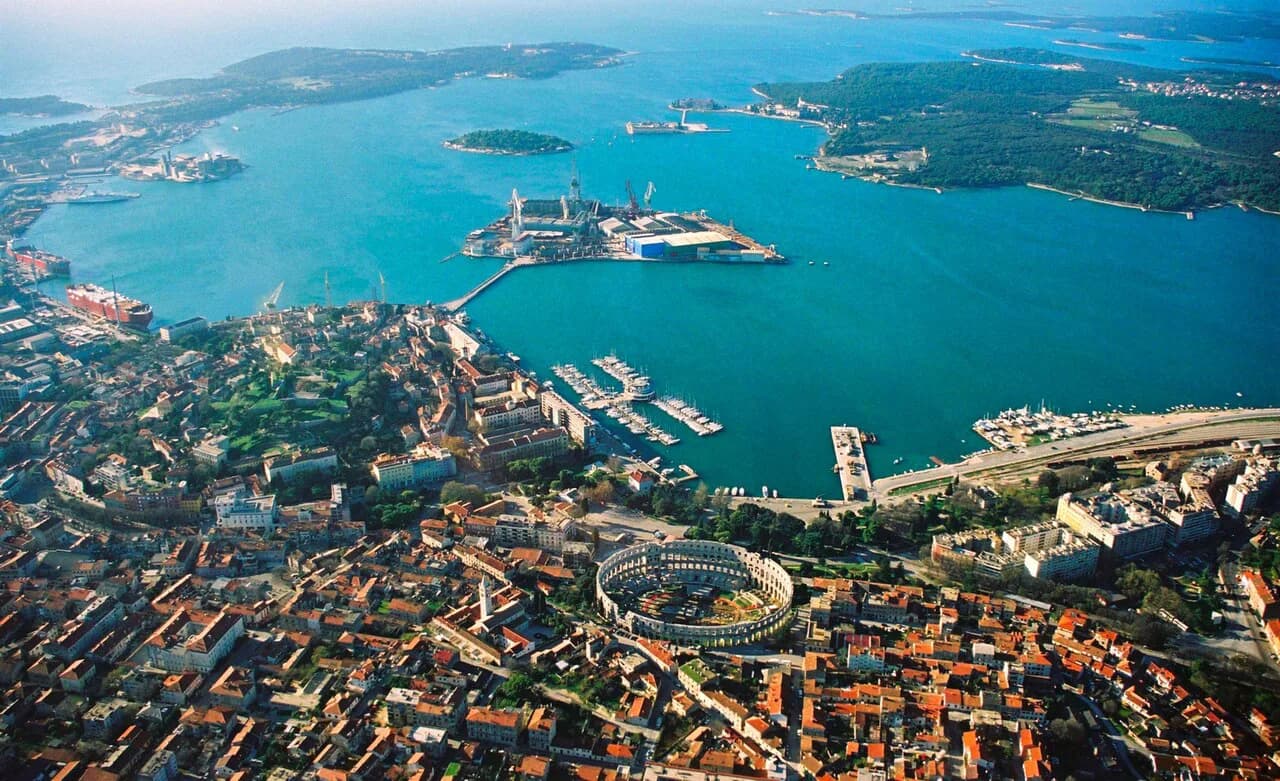
Pula is a working port and shipyard city as much as a tourist destination, with Roman remains scattered through the streets rather than fenced off in a single site. That is what makes it good value: you meet the city's history on ordinary pavements and squares while walking between cafés and shops. Most of the headline Roman sights sit within a few minutes of each other, so this free itinerary needs very little planning.
The free sights fall into two main clusters: the Arena on its hillside with the Forum and the streets around Ul. Sergijevaca, and the smaller relics off the centre such as the floor mosaic and the chapel remains. The Arena's exterior, the Roman gates and the arch are described as free to see, while the mosaic can be visited at no cost. Grouping them by cluster is the key to keeping a day's walking sensible.
Walk the outside of the Pula Arena
The Arena was completed in the 1st century AD and is one of the last Roman amphitheatres with walls standing on all sides, which is why it dominates the city's image of itself. A public footpath loops right around the outside, so you can look in through the arches and get close to the stonework without buying anything. A couple of cafés on the upper side let you sit with the amphitheatre in view.
Allow about fifteen minutes for the outside circuit with time for photos; the interior, which holds an exhibition in the underground area where gladiators once fought, is the paid part. The Arena still hosts concerts and events, so temporary staging and seating can block the arches and spoil photographs during a build-up. The Arena guide covers the paid visit if you decide to go in.
The Forum and the Temple of Augustus
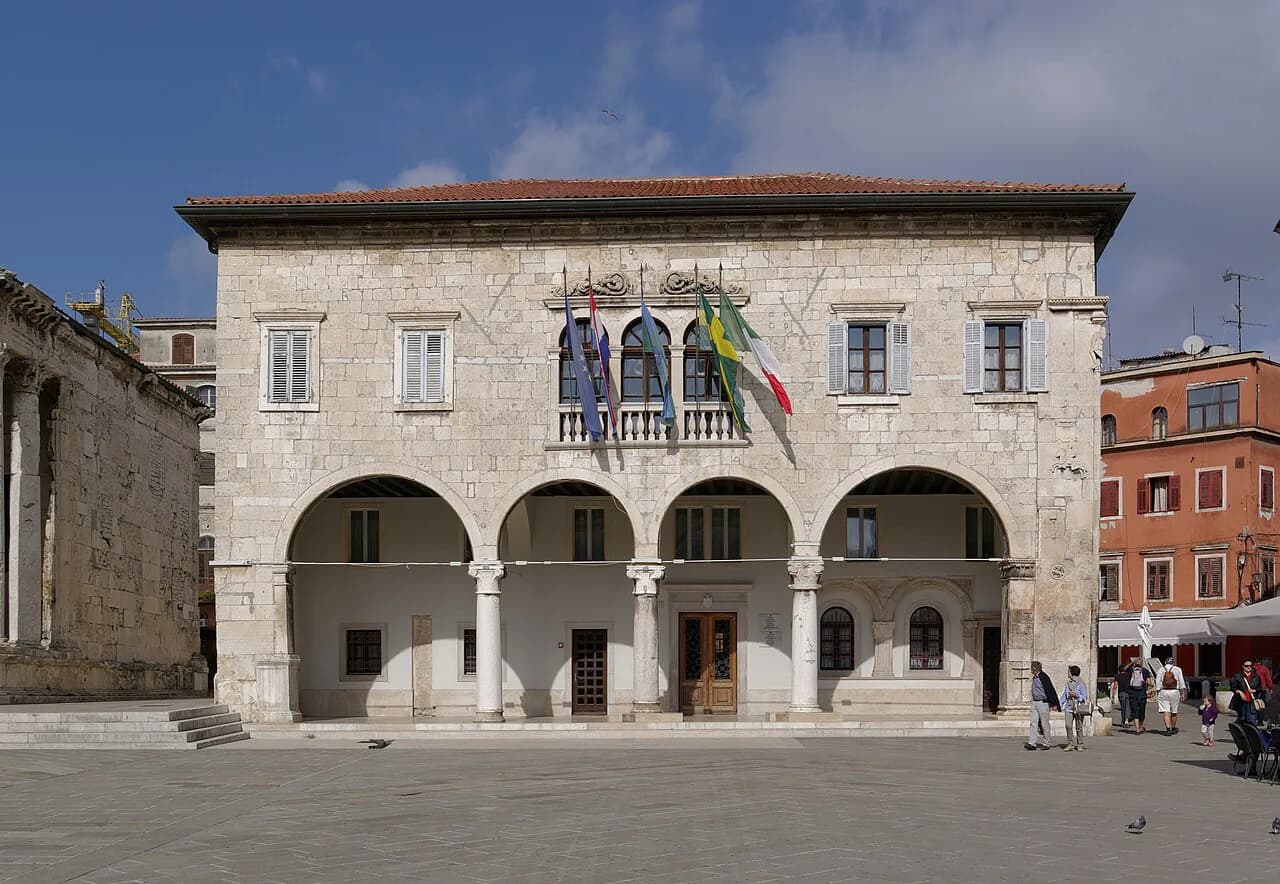
The Forum, Trg Forum, has been Pula's main square for around two thousand years and remains the civic heart, with the Town Hall and its flags on one side. The Temple of Augustus stands on the square and its Corinthian columns are part of the free public setting; the temple houses a small museum, which is a separate paid step to settle on the day.
Sitting on the square with a coffee is the classic Pula pause, with cafés facing the temple directly. This is the natural midpoint of a free morning: the Arena is a short walk uphill, and the old-town lanes run off the square towards the Arch of the Sergii.
The Arch of the Sergii on Ul. Sergijevaca
The Arch of the Sergii, raised around 29 BC, marks the entrance to the narrow lanes of the old town and is free to see. It is a passing sight rather than a destination: a minute to look up at the reliefs and carry on down Ul. Sergijevaca, the main pedestrian street. The James Joyce monument stands nearby, a nod to the writer's time in the city, and Pula Old Town covers the rest of the lanes.
Treat the arch as the gateway to the old town rather than a stop in itself, and use the street beyond it for the shops and cafés that fill the lanes.
Twin Gate and Hercules Gate
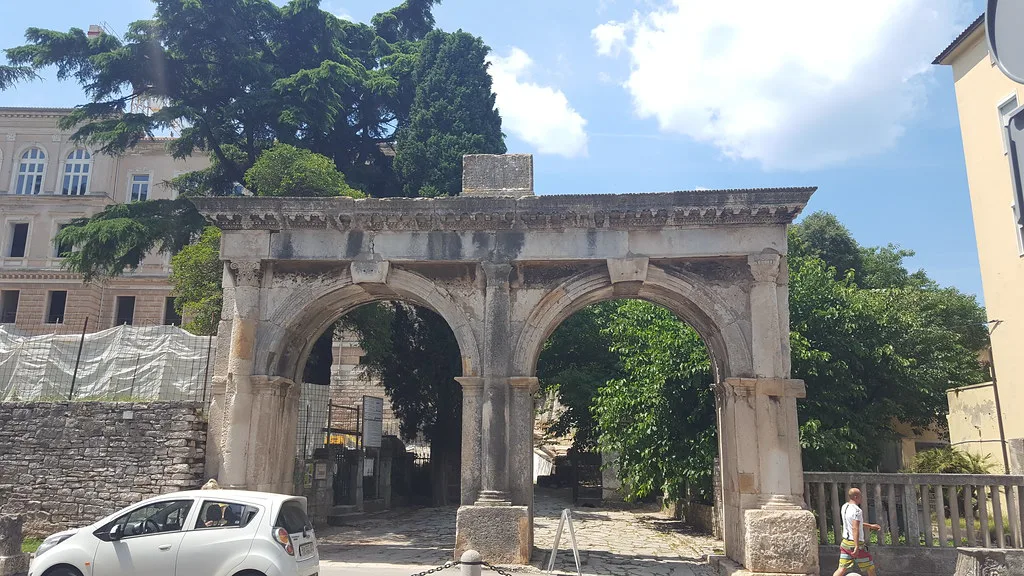
The Twin Gate is another piece of Roman masonry still standing in the street, worth a photo and little more; a minute or less covers it. The Hercules Gate is slightly further out of the way and set back from the road, which makes it the better of the two for unhurried photographs. Both are free to see and both sit naturally on a route between the Arena and the old town.
The Roman floor mosaic off the car park
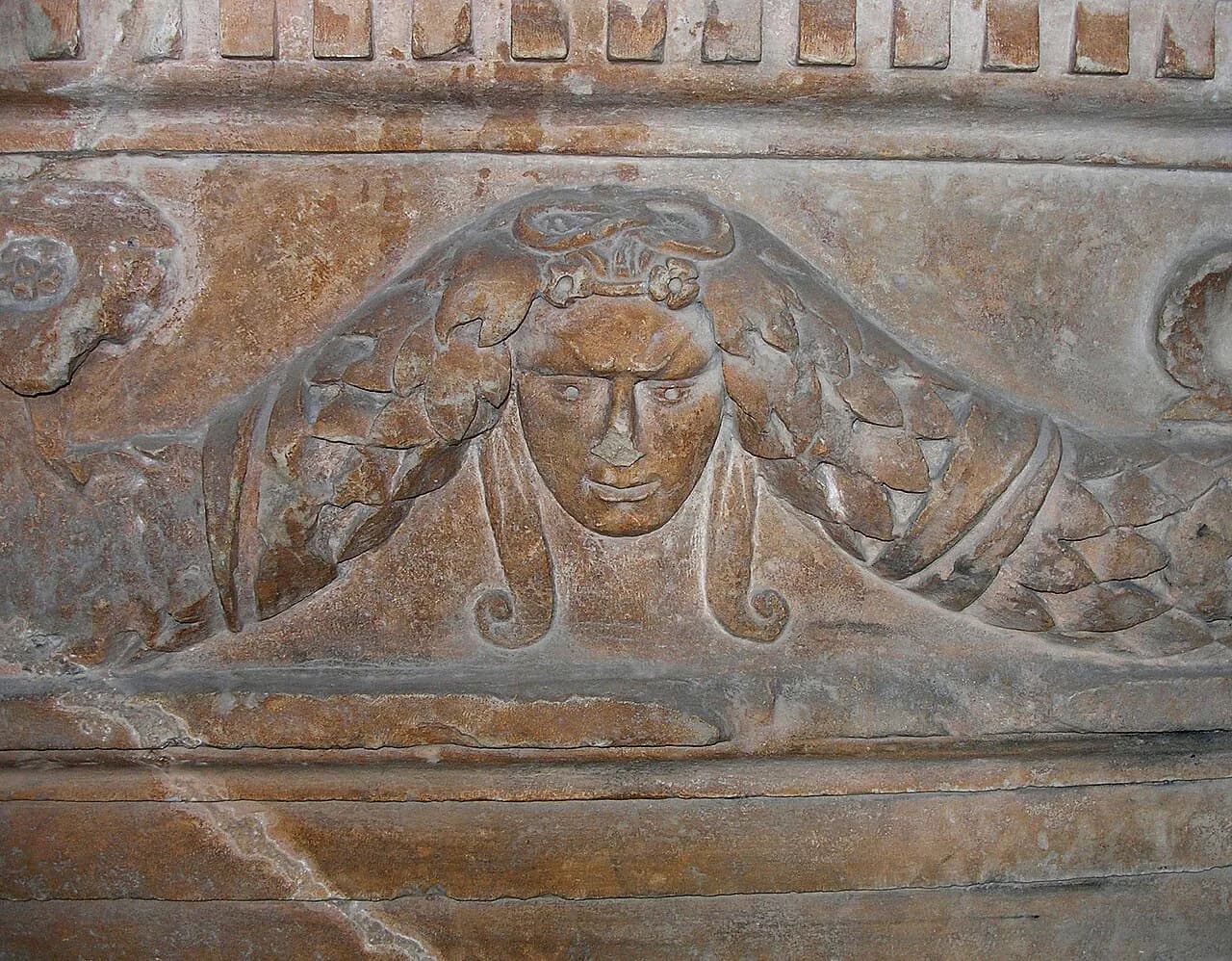
A Roman floor mosaic, thought to have been the floor of a house and around 2,000 years old, sits at the back of a car park off the narrow streets of Pula. It was buried for centuries and came to light after a World War II bomb hit the area. Visiting costs nothing, and five minutes is enough once you have found it.
Finding it is the challenge: look for a small brown sign mounted on top of a wall beside the car park, then look down, because the mosaic lies in its original setting with the city grown up around it. It is displayed where it was found rather than in a museum case, set a few feet below today's street level.
Pula Cathedral and the Chapel of St. Maria Formosa
Pula Cathedral, officially the Cathedral of the Assumption of the Blessed Virgin Mary, dates to the 5th century and occupies the site of a former temple to Jupiter and a Roman bath. Its 1707 bell tower was built using stone taken from the Arena, a detail worth knowing as you look at the two buildings on the same day.
Not far from the mosaic stand the remains of an early Byzantine basilica, of which only the Chapel of St. Maria Formosa survives, with the outline of the larger church still visible in the ground around it. It is a quiet stop rather than a sight to plan around, best folded into the same leg as the mosaic.
Fortress Kaštel and the hilltop lanes
The public lanes climbing above the old town are free to wander, and the walk up gives you an overview of the centre that is useful before you decide what to revisit.
Fortress Kaštel, the hilltop fort above the old town, is a separate sight from the free public streets that climb towards it, so treat it as an optional extra with its own access arrangements rather than a guaranteed free stop.
A self-guided walking loop of the old town
Start at the Arena, walk its outer circuit, then follow the shop-lined street into Old Town, past the cathedral. Continue to the Forum for the Temple of Augustus and the Town Hall, then take Ul. Sergijevaca through the Arch of the Sergii, picking up the Twin and Hercules gates on the way. Finish with the mosaic and the chapel remains, then climb the public lanes above the old town for the view.
The order matters less than the shape: keep the Arena and the Forum in one block and the mosaic with the chapel in another, so you are not crossing the centre twice. Everything on the loop is reachable on foot and the walking itself is the activity.
How long the free sights take
Realistic timings are short at the individual monuments: a minute or less at the Arch of the Sergii, the Twin Gate and the Hercules Gate, five minutes at the mosaic, and around fifteen minutes around the Arena's exterior. The Forum and cathedral each take as long as you want to linger, and the free half-day comes from the sum of many small stops plus the walking between them.
If you have only an afternoon, cut the mosaic and chapel and concentrate on the Arena, Forum and old-town lanes. With a full day, add the climb up the public lanes for the view and a slow coffee on the Forum.
What is not free: the Arena interior and the tunnels
The Arena interior is ticketed and includes access to an exhibition in the underground gladiator area; walking around the outside remains the free option. Zerostrasse, the network of First World War tunnels built under Pula, also charges admission and holds exhibitions inside.
The tunnels are the better choice on a hot or wet day, since they are underground and take around twenty to thirty minutes to walk through. Decide on the day based on the weather and how much you want to spend.
Should you build your Pula day around the free sights?
Yes, if your priority is Roman Pula on a budget: the Arena exterior, Forum, gates, mosaic and cathedral exterior make a genuinely full half-day at no cost, and the walk between them is the point. Pay only for the Arena interior if you want the underground exhibition, and for the tunnels if the weather turns.
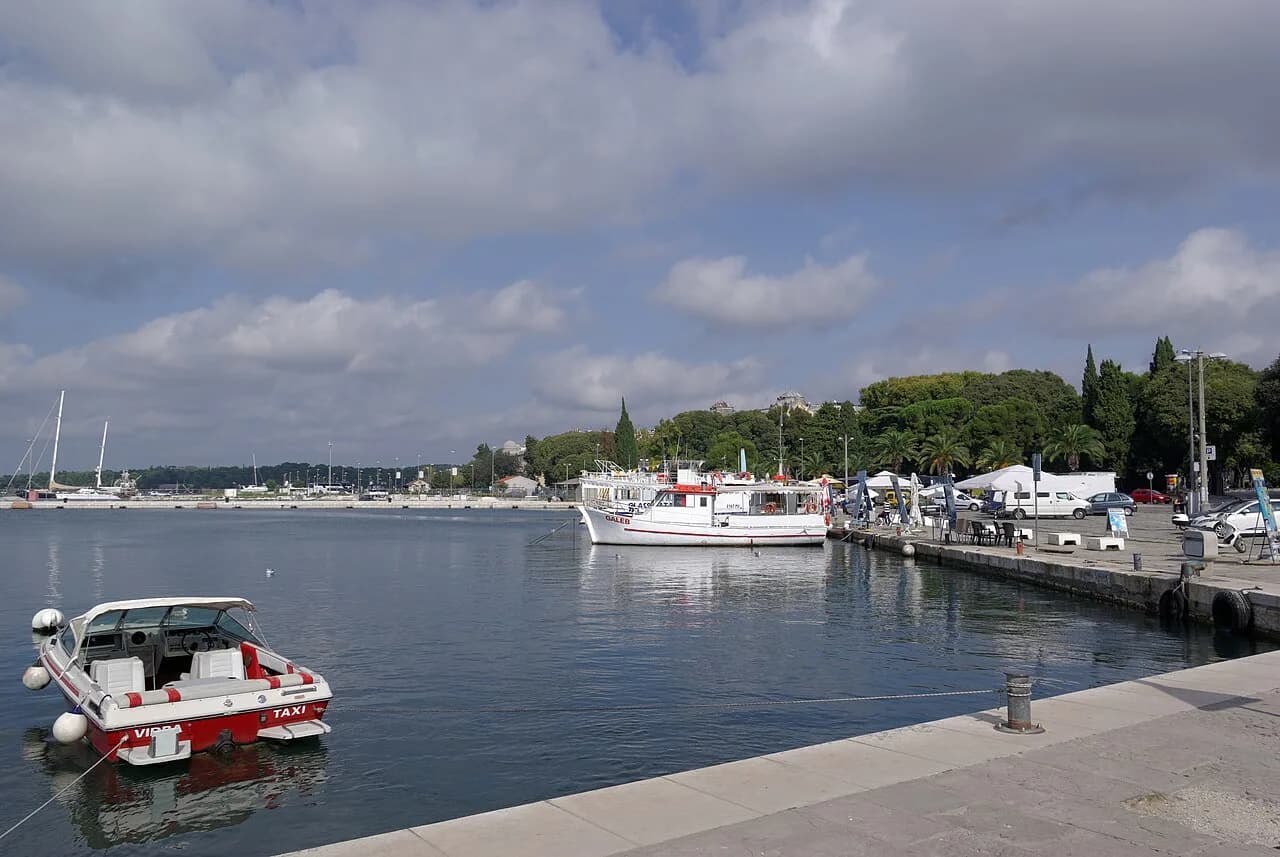
Plan the loop for the morning before the heat and the tour groups build, and leave the hilltop walk for the late afternoon light. Beyond the old town, a boat trip is a separate, paid day out rather than part of this walk.
Explore more Pula guides
Frequently Asked Questions
How many days in Pula is enough?
One full day covers the free Roman loop comfortably: the Arena exterior, the Forum, the old-town gates, the floor mosaic and the cathedral exterior, with time for the hilltop lanes. Add a second day if you want the Arena interior, the Zerostrasse tunnels, another museum or a boat trip, since each of those takes its own slot.
Is Pula worth visiting for a short trip?
Yes. Pula packs a Roman amphitheatre, a Forum with a temple, Roman gates and a 2,000-year-old mosaic into a compact, walkable centre, so even an afternoon gives you something substantial. If your time is very short, concentrate on the Arena, the Forum and Ul. Sergijevaca.
Are there free things to do in Pula at night?
The squares and Roman monuments are outdoors, so the Forum, the Arena's exterior and the old-town lanes can be seen after dark at no cost. The Arena also hosts concerts and events, which turn the building into a venue on some nights; check what is on before planning an evening around it.
Sources
Notes from the Croatian coast
Optional updates when our guides change.
You might also like
Continue reading
More guides you'll find useful