Mljet National Park: Tickets, Lakes and Getting There
Plan Mljet National Park around the Great and Small Lakes, St Mary's island and the Pomena or Polače entrances, with tickets and boat crossings explained.
On this page
Mljet National Park protects the western end of Mljet, where Veliko jezero and Malo jezero sit inside pine-covered slopes, and a single ticket covers the lakes, the marked paths, parking at Vrbovica, the electric train and one return solar-boat crossing to Sveta Marija. Allow half a day at the absolute minimum and a full day to do it justice; a night on the island turns a rushed ferry dash into a proper stay. This guide covers what the ticket includes, the two lake entrances, the walks and monastery, and how ferry and catamaran connections shape the trip.
The park authority publishes an annual 2026 price list, so the costs and inclusions here follow that document rather than kuna-era prices. Entry after 16:00 carries a 25% reduction on adult, child and student day tickets bought at the park, which suits anyone already staying nearby.
Where Mljet National Park sits on the island
Mljet runs roughly parallel to the Pelješac peninsula, and the park claims the western portion around the lakes, Polače and the harbour at Pomena. Sobra, Babino Polje, Saplunara and the eastern coves lie outside the boundary, so a room near Sobra is not a room inside the park and you still pay the entrance fee to see the lakes.
The park authority runs the visitor infrastructure: the ticket desk, the boat to Sveta Marija, the train and the marked trails. Mljet is one of several protected areas covered in the guide to Croatia's national parks, where it sits alongside the Kornati archipelago and the northern parks.
What the ticket covers
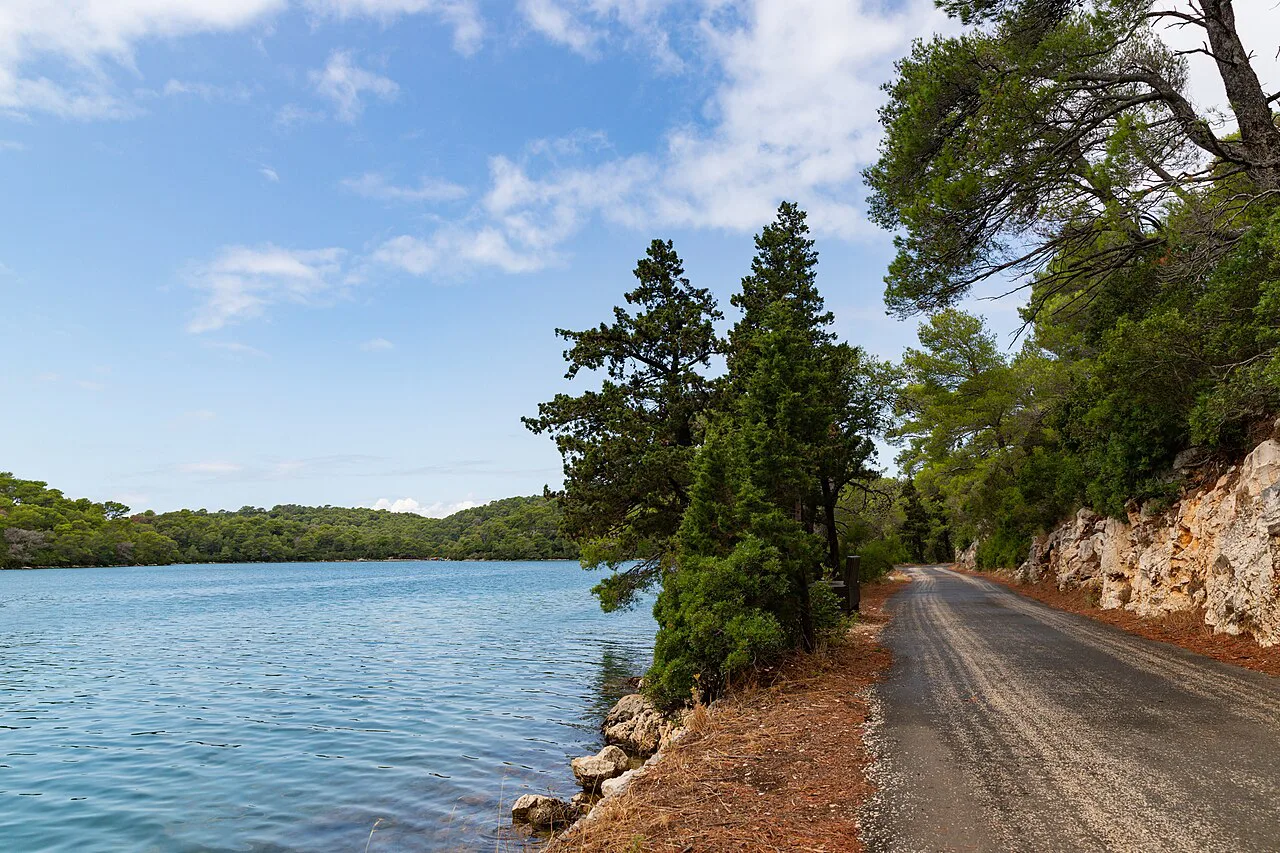
The ticket is a package rather than a gate fee. Every visitor ticket includes one return crossing on the solar boat to Sveta Marija in Veliko jezero, a single visit to all the park's land sites, walking on the marked paths around both lakes, the forest trails from Malo jezero to Pomene and from Vrbovica to Polače, the trail to the Montokuc viewpoint, and parking at Vrbovica for day visitors and for guests staying nearby without private parking; electric-train transport is covered too.
Visitors arriving by their own boat must buy the land ticket separately to reach the lakes, because the vessel ticket covers neither Veliko jezero and Malo jezero nor the land sites. Groups of more than nine must give written notice to the park's tourist service to book the excursion, which also helps reduce queues for the boat.
Pomena and Polače: choosing your entrance
The two practical arrival points are Pomena and Polače, and which you use depends on how you come. Pomena is the harbour village on the open sea at the western edge, a short walk from the lakes and the closest thing to a park gate for foot passengers. Polače lies on the sheltered channel facing Pelješac, with Roman villa remains nearby, and is the natural entry by car or by a boat crossing into that channel; Pomena, Mljet is worth reading if you plan to sleep at the gate.
Vrbovica, on the lake side, provides the parking the ticket covers, so drivers should park there and walk or take the train rather than expect to reach the water by car. Polače, Mljet explains how the village, its Roman remains and the channel crossing fit together if that is your entry point.
Veliko jezero, Malo jezero and the marked paths
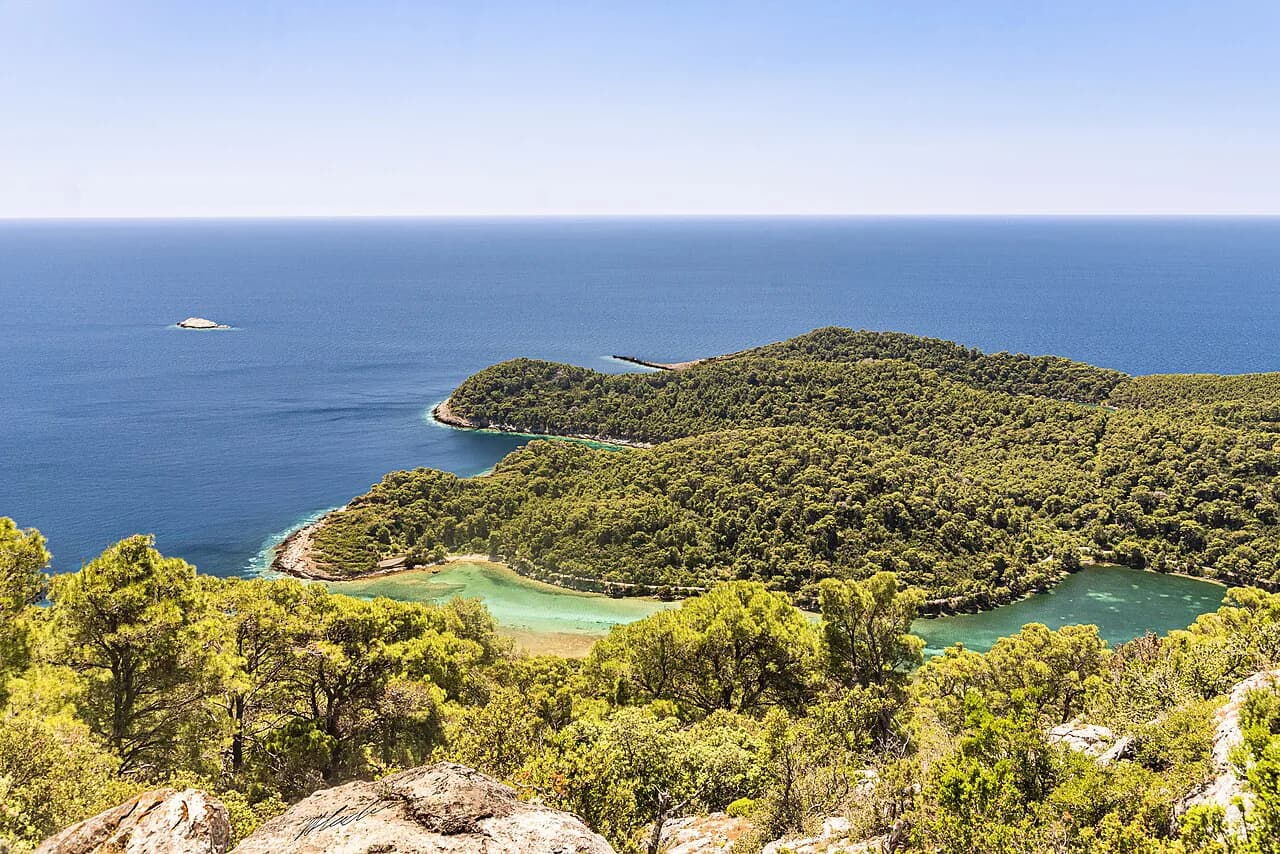
Veliko jezero is the larger western basin holding Sveta Marija, and Malo jezero connects to it by a narrow channel; footpaths run around both, with forest trails from Malo jezero towards Pomene and from Vrbovica towards Polače. The lakes are saltwater, linked to the sea, so the water is clear and green rather than a freshwater swimming hole.
The best short climb is the trail to the Montokuc viewpoint, included in the ticket, looking down over both lakes and the wooded ridges between them. Paved paths near the water are easy going while the forest trails are dirt and roots, and a second viewpoint, Veliki gradac, also appears on the park's list of included trails.
St Mary's island and its Benedictine monastery
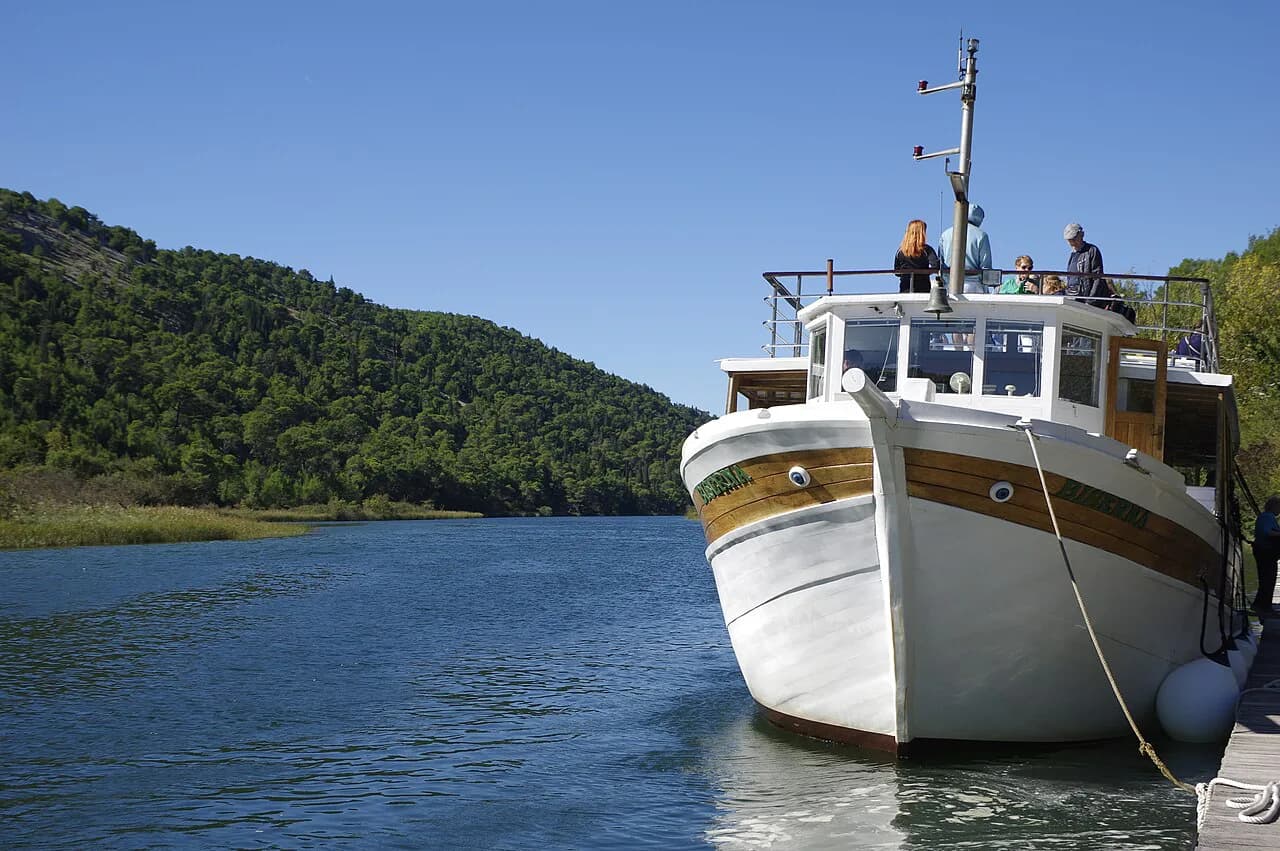
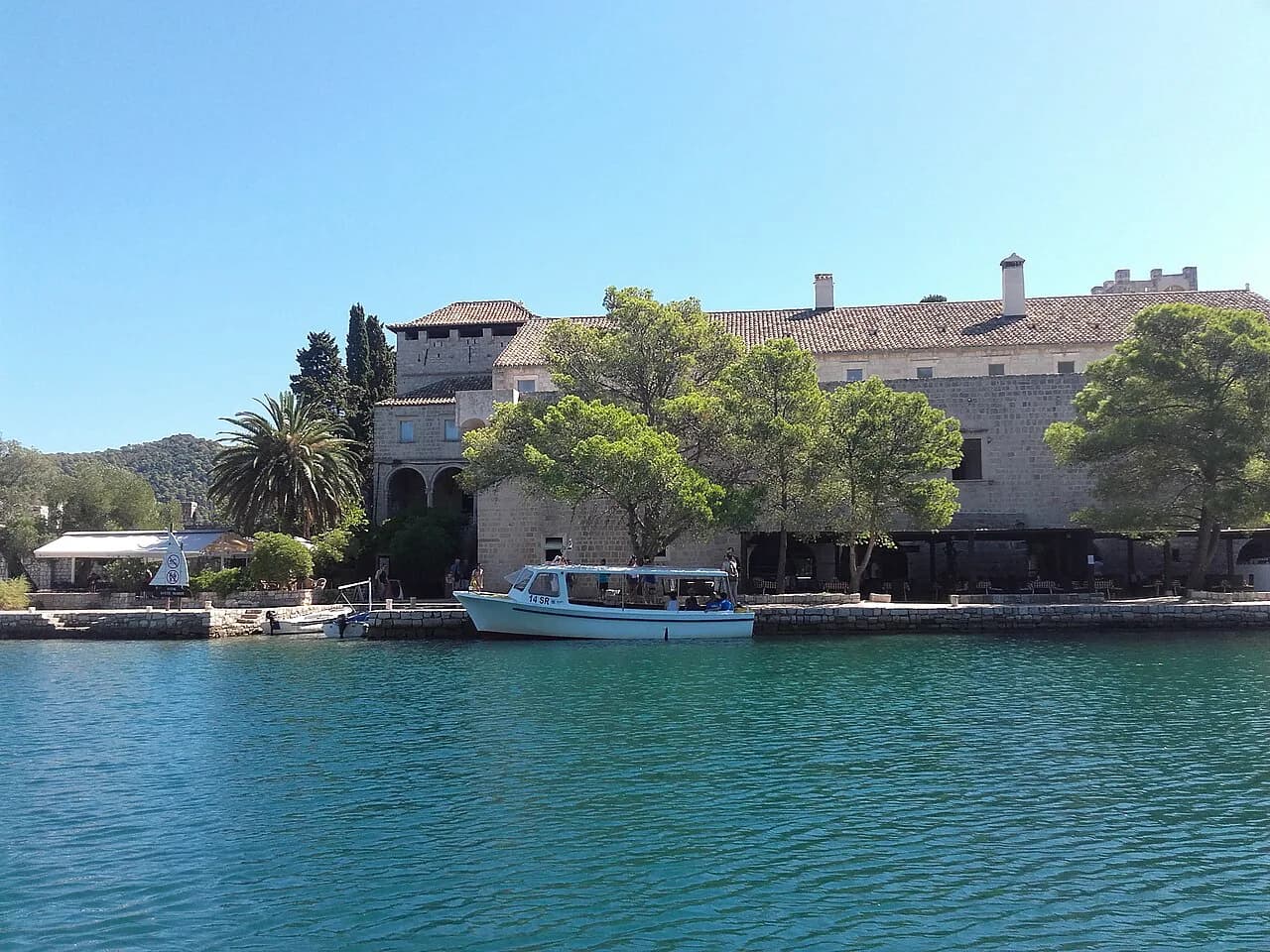
Sveta Marija sits in Veliko jezero and holds a Benedictine monastery complex, the park's chief cultural sight, reached on the return solar-boat crossing the ticket covers. Boats run to a published timetable rather than continuously, so check departures at the ticket desk on arrival and build the lakeside walk around them.
The island is small and the visit short, so treat it as a pause in the day rather than a separate outing. The monastery, the landing and what you actually see ashore are covered on that page in more detail.
Getting there by ferry and catamaran
Mljet has no airport, so arrivals come by sea on car ferries and passenger catamarans, with the main gateways at Sobra, Pomena and Polače. Sobra is the principal ferry port but sits well east of the park, so you need a bus, taxi or hire car onward to the lakes. Which lines call at which port, and on which days, changes by season, so check the Jadrolinija timetable before booking accommodation.
From Dubrovnik the journey means a crossing to the island and then road or boat transport west to the lakes; there is no bridge to Mljet, though the Pelješac bridge has shortened mainland road approaches. Match your crossing to the entrance you intend to use, since sailings vary by season and are not published by the park.
How long to allow, and where to sleep
A day trip from Dubrovnik or Korčula fits the lakes and the monastery but spends much of the day in transit. Sleeping in Pomena or Polače gives an early start, an evening on the water after the excursion boats have gone and time for the Montokuc climb; two nights allows a bicycle circuit plus the forest trail towards Pomene.
Mljet works best as an overnight stop between Dubrovnik and Korčula or Pelješac rather than a there-and-back detour. If your itinerary is built around protected water, Kornati National Park is the other Croatian archipelago park worth comparing, while Telašćica Nature Park on Dugi Otok offers a salt lake and cliffs in a smaller, quieter setting.
Cycling and the electric train
Bicycles are the efficient way to link the lakes with the entrances: the tracks around Veliko jezero and Malo jezero are gentle, and the forest trail to Pomene makes a half-day loop from the water, with bikes hired locally in Pomena and Polače. The electric train, covered by the ticket and running to a published schedule, shuttles visitors between the entrance areas and the lakeside for anyone who would rather not walk the connecting road.
Neither the train nor the boat runs on a hop-on, hop-off basis, so plan the sequence: train or walk in, boat to the island, lakeside circuit, then back out well before the last departure. Brijuni National Park, reached by boat from Fažana near Pula, works in a very different way with its own ferry and land transport arrangements.
Swimming, boats and the rules that matter
Swimming from the designated areas is one of the pleasures of the park, and the lakes are calm and sheltered salt water. Visitors arriving in their own craft need the separate vessel ticket, and anchoring at the park is governed by its own price list and nautical rules rather than the general Croatian regime; the land ticket remains necessary to go ashore at the lakes.
Written notice is required for groups of more than nine, and any guided interpretation must be requested in writing from the park's tourist service and confirmed in advance. Booked services normally need cancelling at least 24 hours ahead or they are charged in full, which is worth knowing when ferry times are uncertain.
When to go: crowds, boats and the bura
Midsummer brings the most boat traffic to the lakes, and the middle of the day is busiest because excursion groups arrive together. Early mornings and late afternoons are calmer, and the park's promotional periods also carry a 35% ticket reduction, so check whether your dates fall inside one before paying full price.
The bura, the cold north-easterly wind, can stop small boats and make the crossing to the island uncomfortable, while the southern jugo brings cloud and choppy water; the lakes stay sheltered in most conditions, but the open approach to Pomena is more exposed. Ferry and catamaran frequencies thin outside the main season, so plan dates around the Jadrolinija published timetable rather than the other way round.
Is Mljet National Park worth the crossing?
Yes, if you treat the lakes as a full day or an overnight stay rather than a quick stop between ferries. One ticket covers the solar boat to the monastery island, the marked paths around Veliko jezero and Malo jezero, parking and the electric train, which saves buying each element separately, though seasonal crossings, the long approach from Dubrovnik and midsummer crowds are real trade-offs.
Pick Pomena if you arrive on foot or want the shortest walk to the water, Polače if you come by car or through the sheltered channel, and stay the night if you want Montokuc and the Pomene trail without watching the clock. Check the park's price list for the current year and confirm your sailing with Jadrolinija before fixing dates.
Explore more Croatia guides
Sources
Notes from the Croatian coast
Optional updates when our guides change.
You might also like
Continue reading
More guides you'll find useful