Brijuni National Park: Tickets, Boats and What You See
A practical guide to Brijuni National Park, covering ticket options, the boat from Fažana, the safari park and what you can realistically see in one visit.
On this page
Brijuni National Park is an archipelago of fourteen islands off western Istria, and you visit it on a single island: Veliki Brijun, reached only by the park's own boat from Fažana. Plan a half-day, because the standard guided excursion runs to a fixed four-hour slot that includes the crossing, a guide, an hour on the tourist train and the safari park. This guide covers the two ticket types, the 2026 prices by season, what the train route and the walking stretch show you, and who the place suits least.
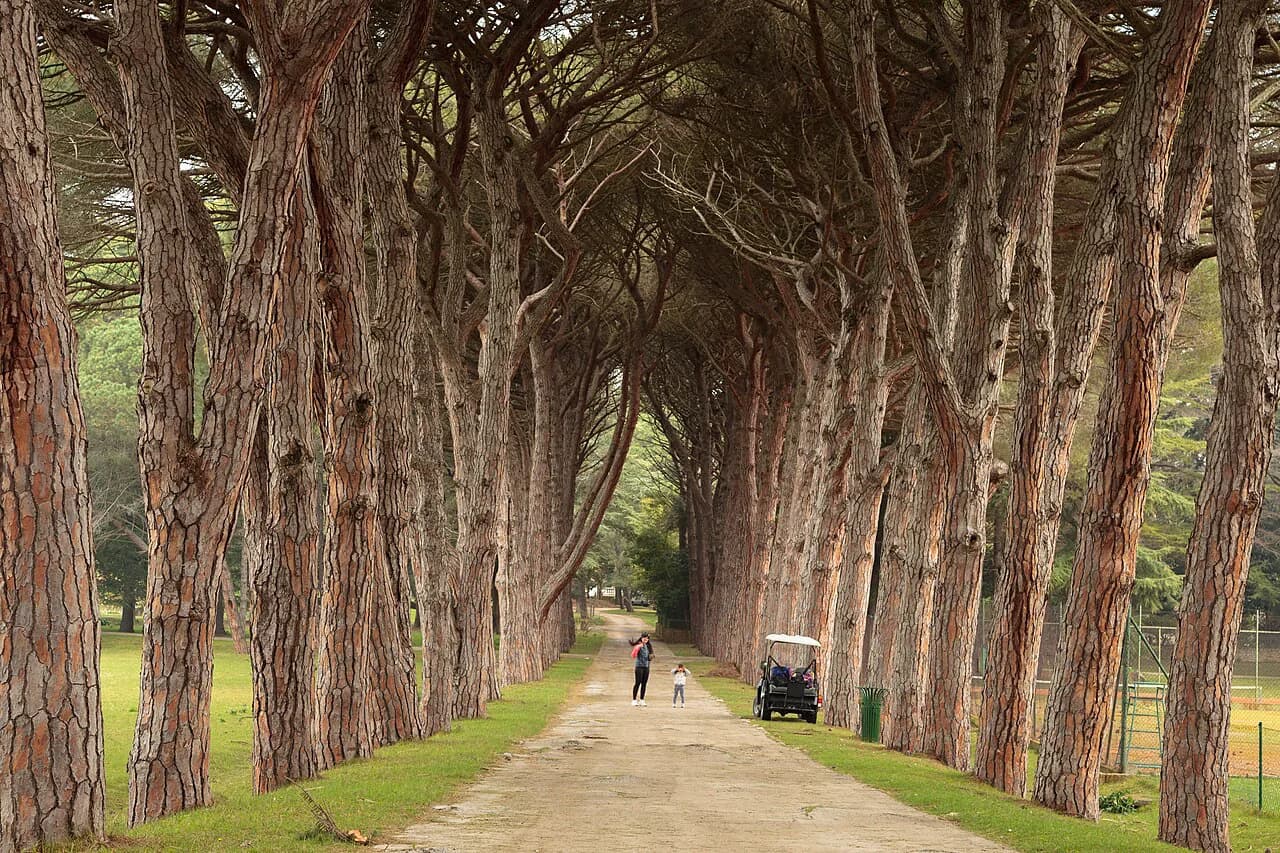
Most of the park is sea: of roughly 3,395 hectares only about 743 are dry land, and the National Park boundaries set in 1999 take in the seabed as well as the islands. Veliki Brijun is the largest and most indented, with Mali Brijun next door and Vanga, Tito's private island, closed to visitors. The landscape is clipped meadow, holm oak, umbrella pine and sequoia rather than the bare karst of the Dalmatian islands, the result of more than a century of designed parkland.
Where you enter: the boat from Fažana
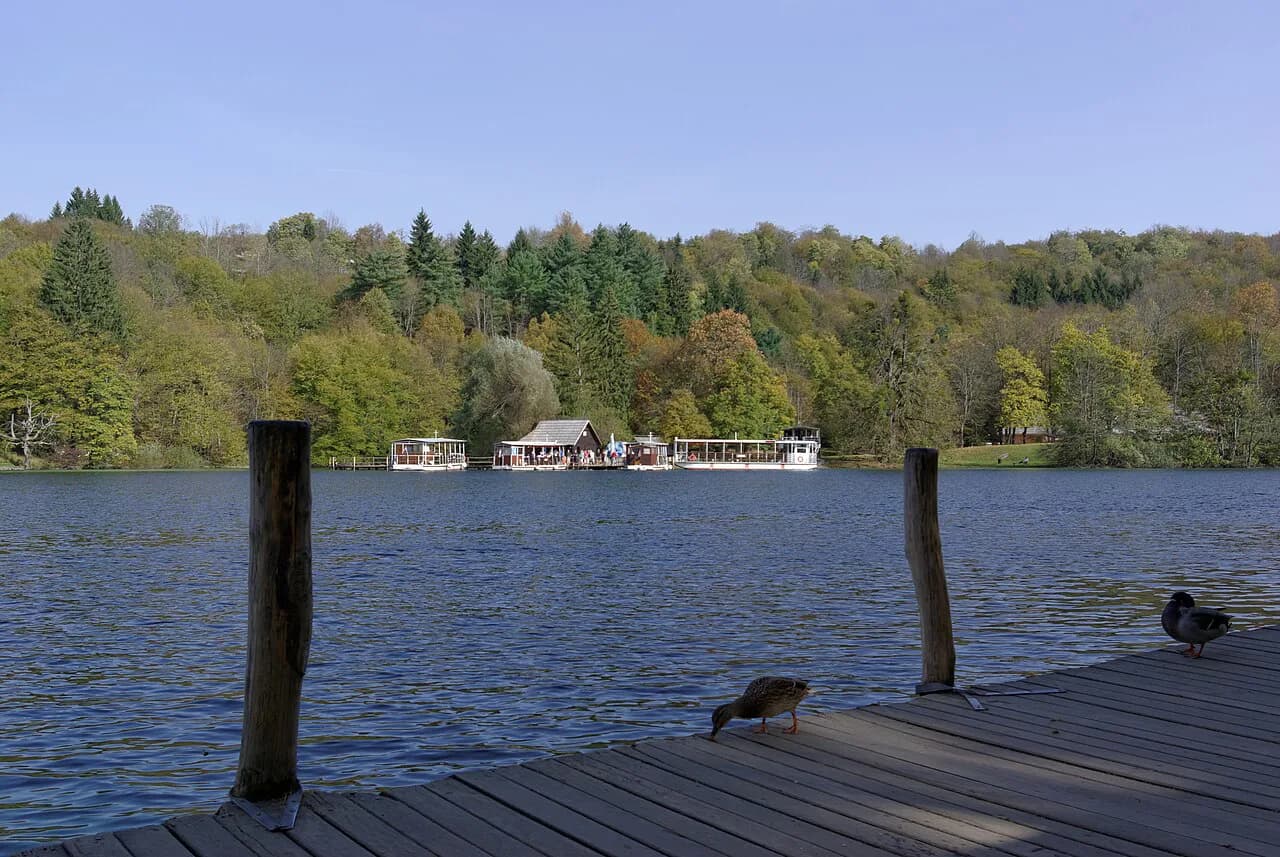
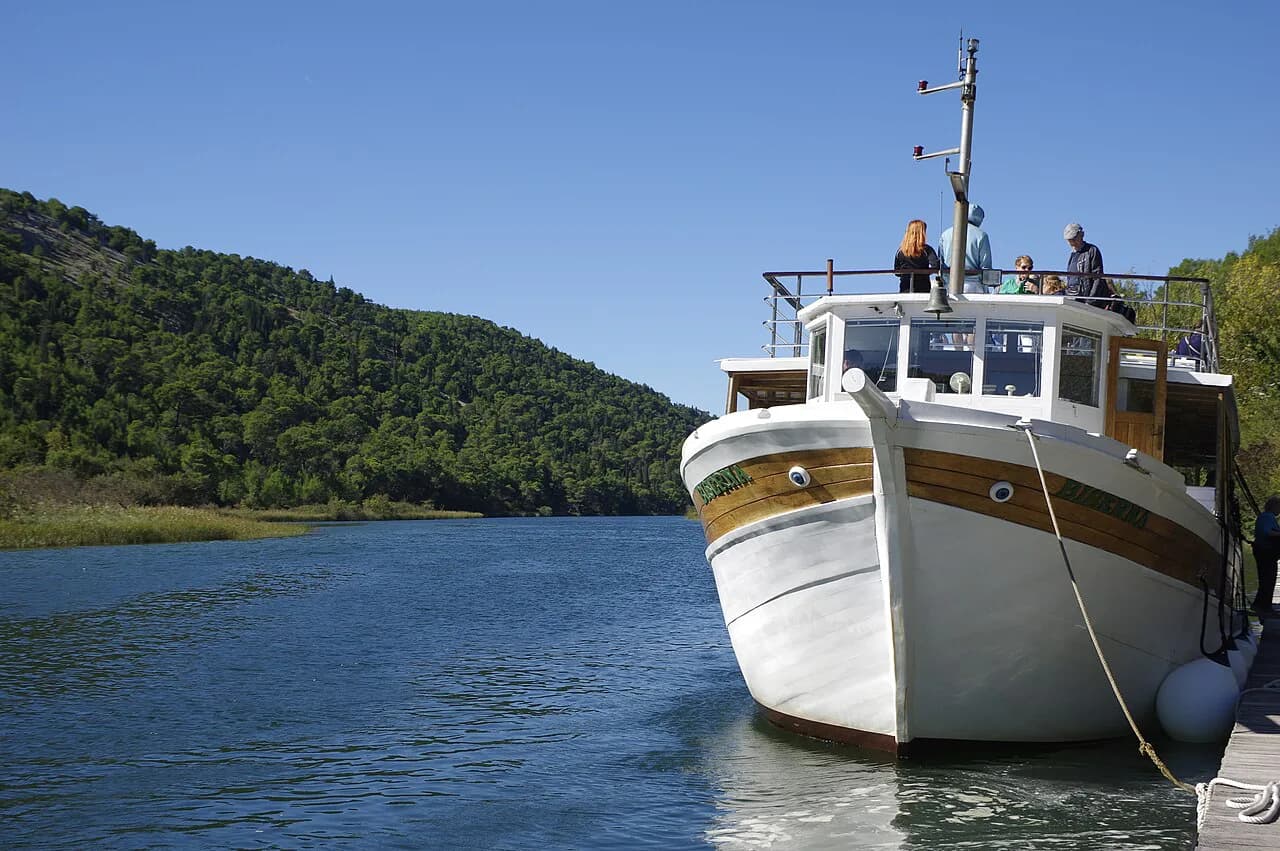
Every visitor arrives on the park boat from Fažana, a short crossing across the channel just north of Pula's port entrance, and the timetable governs the whole day. Brijuni sells timed entry: you board the hour printed on your ticket and you cannot stay on for a later boat because you liked a bay. That single rule is the difference between a relaxed afternoon and a rushed one, so pick your slot around the heat rather than around lunch.
Fažana itself is a small fishing harbour a few kilometres north-west of Pula, easily reached by road from Pula, Rovinj or Poreč, and the park office where reduced tickets are collected sits at Brionska 10 in the village. Arrive with time to park and walk to the quay; the boat will not wait, and the return crossing is tied to your slot.
The two ticket types, and which suits you
The guided excursion is the default: a four-hour package with the boat, a guide, an hour on the tourist train, the safari park and the museum displays, and guides work in Croatian, English, German, Italian and Russian. Language slots, not boat seats, are what fill first, so book ahead if you need an English-language departure on a specific day.
The self-guided option, sold with the Brijuni Pocket Guide app, gives you the same island without the group: the boat, the sights on your phone, and the ground covered on foot or on a rented bike or electric car. The saving is smaller than it looks, and off-season it is only a few euros against the guided rate, so you are trading a guide for freedom rather than saving real money. First-timers who came for Tito and the Roman ruins get more from the guide, because those layers need explaining and the train covers ground you would otherwise walk in the heat.
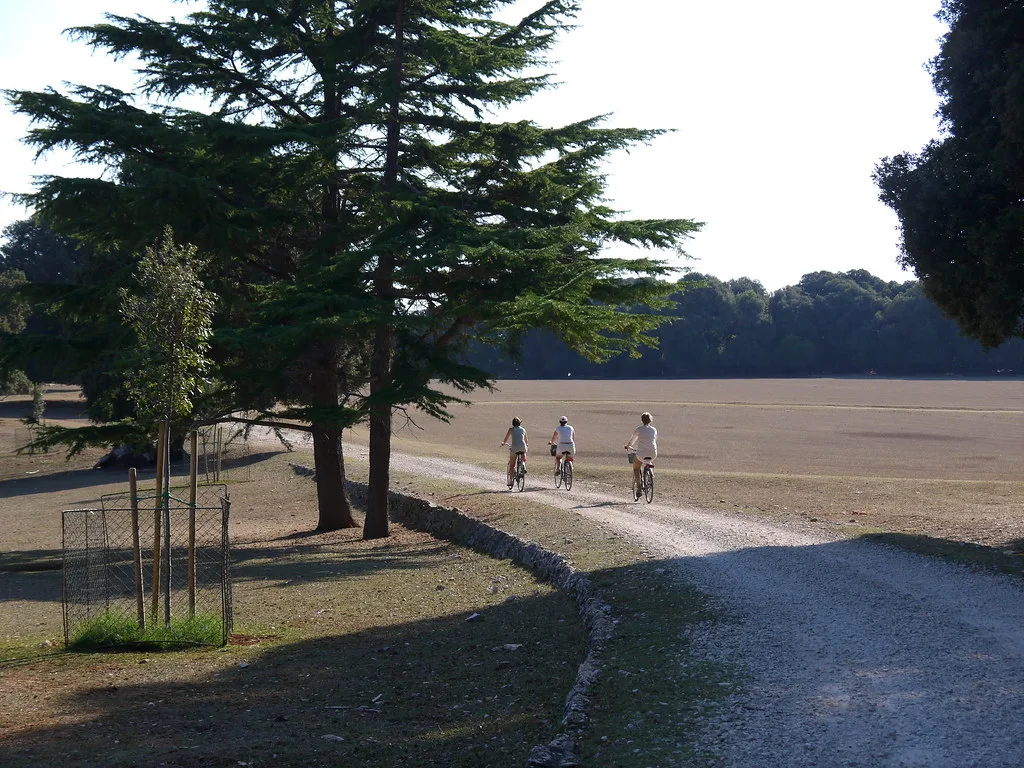
Choose the app ticket if you are returning, travelling with restless children or allergic to group pace: hire a bike and head for the quiet bays on the west coast. The park keeps around 300 bikes and concedes they sometimes run short in high season, so self-guided visitors should aim for an early departure. Electric cars are booked with the concessionaire, who quotes the rate.
What a ticket costs in 2026
Brijuni publishes two seasons, and the gap between them is wide enough to plan around. In 2026 a guided excursion costs fifty euros per adult from June to September and thirty-five euros the rest of the year; students and visitors aged 65 and over pay forty euros in summer and thirty off-season, and children aged 7 to 18 pay twenty and fifteen. Under-sevens go free, insurance and VAT are included, and hotel guests get twenty per cent off.
The self-guided app ticket in 2026 is forty euros for an adult in summer and thirty off-season, with children at fifteen and thirteen. A dog ticket costs fifteen euros, but dogs are barred from the safari park, the train and the museums, so it only belongs with a self-guided visit. The park runs occasional promotions; a 2026 cut on Veliki Brijun for the first fortnight of July was a one-off, and promo codes do not stack with other discounts.
Reduced tickets are not sold online at all: students, pensioners and visitors with a disability book by email and collect at the park office half an hour before departure. In July and August a separate evening self-guided entry lets you cross later in the day for a lower rate than the daytime app ticket.
What you see on the tourist train
The train does the heavy lifting on the guided excursion, heading north past the golf course to the safari park and back down the western side past the empty enclosures of the old zoo. The safari park stretches along nine hectares on the northern edge of Veliki Brijun and mixes Istrian breeds with exotic imports: ostrich, peacock, llama, zebra and the Istrian ox, the Boškarin.
The route also passes Vanga, Tito's private island, still state property and closed to visitors, so you see it from the train and that is that. The train stops at the Roman villa in Verige Bay on the southern side of the bay, a summer residence with two peristyles and temples to Neptune, the Capitoline Triad and Venus, now part of the Roman Emperors Route.
Walking the last stretch
The final part of the guided slot is on foot: the museum displays, St German's church and the Boathouse, where the island doctor once lived. The Mediterranean garden laid out by Paul Kupelwieser and Alois Zuffar holds 169 labelled species of native and exotic plants, with QR codes so you can read about each one as you pass.
For a sea view without the group, an educational underwater trail runs for about 45 minutes from Verige Bay, and a 13.3-kilometre asphalt bike trail loops through the exhibition areas and past the golf course. Both suit the self-guided ticket better than the fixed excursion slot, which leaves little spare time for either.
The layers underneath: Romans, Byzantines and an ancient olive
Brijuni rewards anyone interested in how a Mediterranean island accumulates history. After the first villa at Dobrika Bay in the first century BC, a later villa rustica lasted until the end of the fourth century; at the start of the fifth the settlement spread and defensive walls went up as a Byzantine castrum. St Mary's basilica was built beside it for the growing population, with a sanctuary ending in a rectangular apse, and the church of St Peter followed in the sixth century.
The old olive tree is the quiet star: carbon analysis puts it at roughly 1,600 years old, it split in a storm in the 1970s and the wounds were filled with concrete, and it still fruits. The annual crop is about thirty kilograms of olives, yielding around four litres of extra Virgin oil.
Getting to Brijuni from the rest of Istria
The park entrance is the Fažana quay, and Fažana sits just north of Pula, which is the natural base for the trip. If you are touring the coast, Brijuni slots neatly between Pula's Roman sights and the Venetian towns further north, and it is the kind of stop that works best as a booked half-day rather than something squeezed between two others. Croatia's other national parks reward the same approach: Kornati National Park is reached by boat from the mainland near Biograd na Moru and is entirely marine, while Mljet National Park is walked and cycled around its lakes.
Honest trade-offs: crowds, heat and the fixed pace
The guided excursion is efficient and sometimes feels like it. You share the train, the safari park and the museum with a full group, and the four-hour slot does not flex if a bay or a bench tempts you. In July and August the island fills up, and the open, clipped landscape offers little shade on the walking stretch, so a morning slot beats an afternoon one.
The evening entry in high summer is the sleeper option for anyone who wants the island without the daytime crowd, but it is self-guided, so you lose the commentary. Whichever ticket you take, the return boat is tied to your slot and there is no lingering for a later crossing.
Is Brijuni worth visiting, and who it suits least
For first-time visitors to Istria with an interest in Roman ruins, Austro-Hungarian history or Tito's Yugoslavia, Brijuni is one of the better half-days on this coast, and the guided ticket earns its price through the explanations alone. Anyone who wants to wander freely, swim quietly and set their own pace should take the app ticket and a bike, and expect to trade the guide for the freedom.
It suits least those who dislike fixed timetables, groups and heat, and families with very small children may find the four-hour slot long. If that is you, the mainland and Croatia's other national parks will give you a more relaxed day for the same effort.
Which Brijuni ticket to book
Book the guided excursion for a first visit: the four-hour slot, the train and the English-speaking guide make sense of layers that are easy to walk past unread, and 2026 pricing rewards anyone travelling outside June to September. Take the self-guided app ticket if you have been before, want the quiet western bays, or are travelling with children who will not sit through a group pace.
Either way, fix your date around the boat slot from Fažana, because the timetable rather than the ticket decides how the day runs. For the wider picture of what else is worth a half-day on the coast, start with Croatia's National Parks and work out which ones fit your route.
Explore more Croatia guides
Frequently Asked Questions
How long is the boat ride to Brijuni?
The crossing from Fažana to the quay on Veliki Brijun is short, and the 2026 guided excursion price covers it as part of a four-hour package that also includes the guide, the tourist train and the safari park. The boat departs to a timetable tied to your timed entry slot, so check the departure time printed on your booking.
Can you swim on Brijuni Island?
Swimming is not part of the standard guided excursion, which runs to a fixed four-hour slot built around the train, the safari park and the museum displays. Self-guided visitors on the app ticket have more freedom to reach the quiet bays on the west coast, but the return boat is still tied to your booked slot.
Sources
Notes from the Croatian coast
Optional updates when our guides change.
You might also like
Continue reading
More guides you'll find useful